More like Godzilla
anchored on:science fictionour worldcontemporarytensesurvivalbig city+1 more
but
- The Andromeda Strain
series2 books1969
similar bysurvivalscience fictioncontemporarytense+2 more
Michael Crichton's 1969 novel The Andromeda Strain follows a team of scientists racing to contain a lethal extraterrestrial microorganism that crash-lands in Arizona, told in the clinical, document-driven style that helped establish the techno-thriller genre. Daniel H. Wilson's authorized 2019 sequel The Andromeda Evolution revisits the same threat five decades later. Together the two books form a two-part outbreak story separated by a fifty-year gap in publication.
- Cell
Stephen Kingstandalone novel2006
similar bysurvivalscience fictioncontemporarytensedarkour world+1 more
In Cell, King taps into readers fears of technological warfare and terrorism. Mobile phones deliver the apocalypse to millions of unsuspecting humans by wiping their brains of any humanity, leaving only aggressive and destructive impulses behind. Those without cell phones, like illustrator Clayton Riddell and his small band of "normies," must fight for survival, and their journey to find Clayton's estranged wife and young son rockets the book toward resolution.
- Footfall
Larry Niven & Jerry Pournellestandalone novel1985
similar bysurvivalscience fictioncontemporarytenseour world
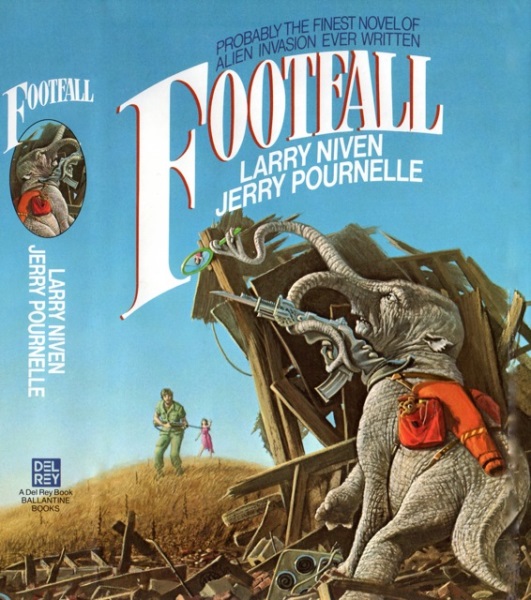
When aliens travel to Earth from Alpha Centauri, differences between alien and human psychology result in an unprovoked invasion, and the resulting resistance results in the aliens' use of a devastating weapon.
- The Kraken Wakes
John Wyndhamstandalone novel1953
similar bysurvivalscience fictiontensedarkour world
" Behind a spectacular meteor shower actually hides the beginning of an invasion by a mysterious and powerful alien race. Earth's life is disrupted by the attacks of extraterrestrials whose war machines, emerging from the depths of the oceans, seem indestructible. The coalitioned forces of the whole world are worthless, powerless in the face of the indecipherable and deadly plans of a superior intelligence, capable of bringing the entire planet to the brink of catastrophe" Goodreads May 20, 2022
- Dreamcatcher
Stephen Kingstandalone novel2001
similar bysurvivalscience fictioncontemporarytensedark
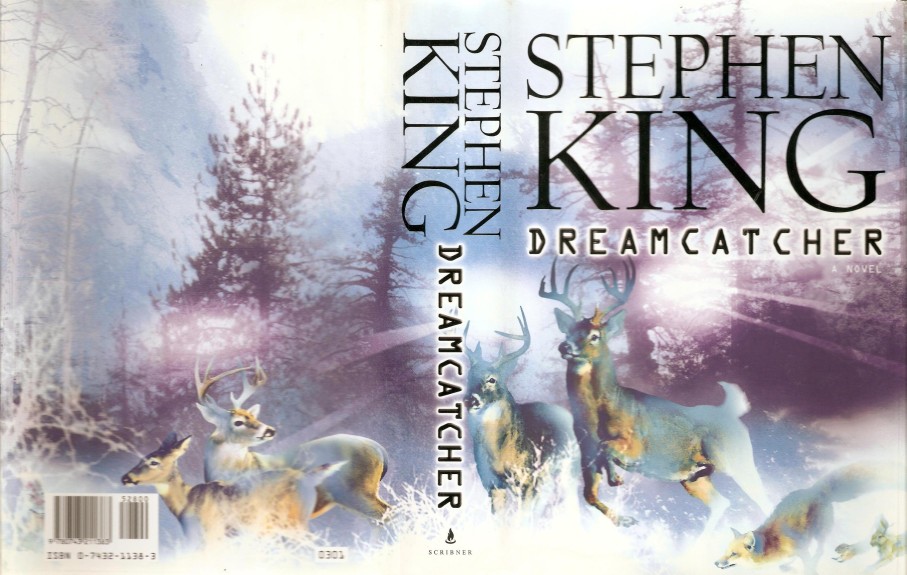
Dreamcatcher is a 2001 science fiction horror novel by American writer Stephen King, featuring elements of body horror, suspense and alien invasion. The book, written in longhand, helped the author recuperate from a 1999 car crash, and was completed in half a year. According to the author in his afterword, the working title was Cancer. His wife, Tabitha King, persuaded him to change the title. A film adaptation was released in 2003.
- Make Room! Make Room!
Harry Harrisonstandalone novel1966
similar bysurvivalscience fictiondarktenseour worldbig city
Make Room! Make Room! is a 1966 science fiction novel written by Harry Harrison exploring the consequences of both unchecked population growth on society and the hoarding of resources by a wealthy minority. It was originally serialized in Impulse magazine.
- Under the Dome
Stephen Kingstandalone novel2009
similar bysurvivalscience fictioncontemporarytensedark
A small town in Maine finds itself suddenly cut off from the outside world by an impenetrable barrier, and the clash of personalities of the trapped people takes its inexorable devastating course.
- Prey
Michael Crichtonstandalone novel2002
similar bysurvivalscience fictioncontemporarytenseour world+1 more
Prey is the thirteenth novel by Michael Crichton under his own name and his twenty-third novel overall. It was first published in November 2002, making it his first novel of the twenty-first century. An excerpt was first published in the January–February 2003 issue of Seed magazine. Prey brings together themes from two earlier Crichton best-selling novels, Jurassic Park and The Andromeda Strain, and serves as a cautionary tale about developments in science and technology: in particular, nanotechnology, genetic engineering, and distributed artificial intelligence.
- The Swarm
Frank Schätzingstandalone novel2004
similar bysurvivalscience fictioncontemporarytensedarkour world
The Swarm is a science fiction novel by German author Frank Schätzing. It was first published in 2004 and soon became a bestseller.
- The Triffids
series3 books1951
similar bysurvivalscience fictiondarkour world+1 more
John Wyndham's The Day of the Triffids (1951) opens with a meteor-shower-like event that leaves most of Britain's population blind, throwing civilization into collapse just as triffids, an aggressive and mobile species of poisonous plant, become free to hunt the helpless survivors. Simon Clark's authorized sequel The Night of the Triffids (2001) picks up a generation later, narrated by the original protagonist's son as he confronts a new triffid-dominated world, and John Whitbourn's The Age of the Triffids extends the shared setting further still. Together the three novels form a loose post-apocalyptic trilogy built on Wyndham's original premise rather than a tightly plotted single story.
- The Wanderer
Fritz Leiberstandalone novel1964
similar bysurvivalscience fictioncontemporarytenseour world
The Wanderer is a science fiction novel by American writer Fritz Leiber, published as a paperback original by Ballantine Books in 1964. It won the 1965 Hugo Award for Best Novel.
- Ancestor
Scott Siglerstandalone novel2007
similar bysurvivalscience fictioncontemporarytensedarkour world
Ancestor is a science fiction thriller novel by American writer Scott Sigler. The novel was released in podcast format in 2006, with it also being released in print via Dragon Moon Press in 2007. Ancestor was later re-released by Crown Publishing in 2010.
- The Fog
James Herbertstandalone novel1975
similar bysurvivalcontemporarytensedarkour world+1 more
The Fog is a horror novel by English writer James Herbert, published in 1975. It is about a deadly fog that drives its victims insane when they come into contact with it.
- The Killer Thing
Kate Wilhelmstandalone novel1967
similar bysurvivalscience fictioncontemporarytensedarkour world
A robot destroys its inventor and programs itself to kill all life. How much must be sacrificed to stop it?
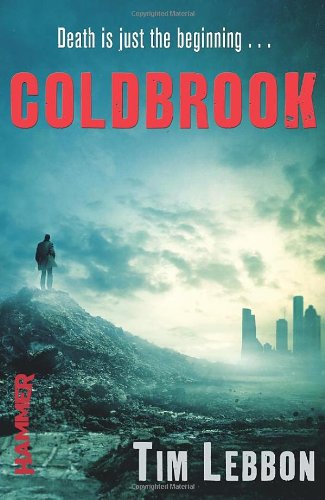
- Coldbrook
Tim Lebbonstandalone novel2012
similar bysurvivalscience fictioncontemporarytensedarkour world
The world as we know it has changed forever. The reason is Coldbrook. The facility lay deep in Appalachian Mountains, a secret laboratory called Coldbrook. Its scientists had achieved the impossible: a gateway to a new world. Theirs was to be the greatest discovery in the history of mankind, but they had no idea what they were unleashing.
- Rats
series4 books1974
completed
similar bysurvivalcontemporarydarktensebig city+2 more
The Rats, James Herbert's 1974 debut novel, imagines a plague of giant mutant rats overrunning London, told through a rotating cast of victims and survivors in the tradition of British disaster horror. It was followed by two sequels, Lair and Domain, which widen the outbreak first to the countryside and then to a besieged, apocalyptic city, completing a three-book trilogy.
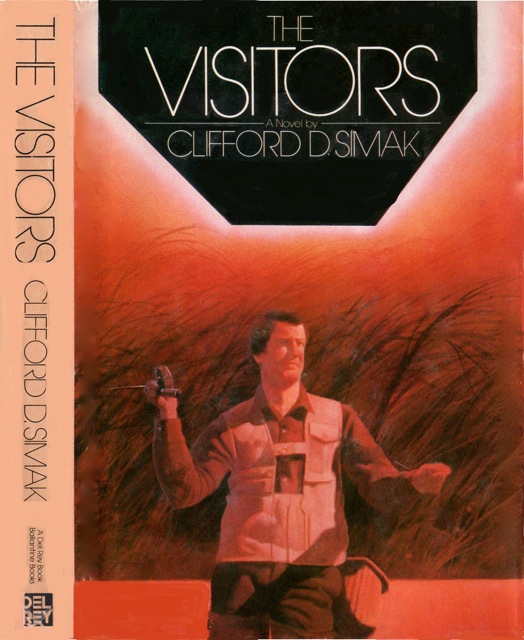
- The Visitors
Clifford D. Simakstandalone novel1980
similar bysurvivalscience fictioncontemporarytenseour world
WorldCat: Intelligent, alien creatures arrive on Earth from outer space, threatening world stability and presaging the destruction of civilization.
- Midnight
Dean R. Koontzstandalone novel1989
similar bysurvivalscience fictioncontemporarytensedark
A wealthy tech entrepreneur, intending to create superhumans by infecting them with nanotech to assist their physical and mental abilities, picks a California town as his secret pilot project, but things go terribly wrong.
- I Am Legend
Richard Mathesonstandalone novel1954
similar bysurvivalscience fictiondarktenseour world
The last human survivor of the vampire epidemic has to maintain his defences against their onslaught, while attempting to research the cause and possibly solution to the plague. Robert Neville is the last living man on Earth... but he is not alone. Every other man, woman and child on the planet has become a vampire, and they are hungry for Neville's blood. By day he is the hunter, stalking the undead through the ruins of civilization. By night, he barricades himself in his home and prays for the dawn. How long can a man survive like this?
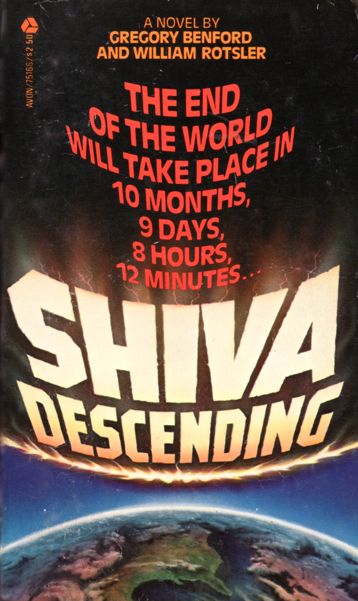
- Shiva Descending
Gregory Benford & William Rotslerstandalone novel1980
similar bysurvivalscience fictioncontemporarydarktenseour world
Doomsday scenario from a cloud of meteorites
- City at World's End
Edmond Hamiltonstandalone novel1951
similar bysurvivalscience fictiondarktenseour world
An experimental atomic weapons test in small-town America goes catastrophically wrong, hurling the entire town of Middletown, buildings, streets and all, untold ages into Earth's future, to a time when the sun is dying and humanity's last city struggles on beneath a darkening sky. Cut off from everything and everyone they knew, the townspeople have to find a way to survive in a world that has nothing left to spare for latecomers. Edmond Hamilton's novel strands a slice of mid-century America at the literal end of the world.
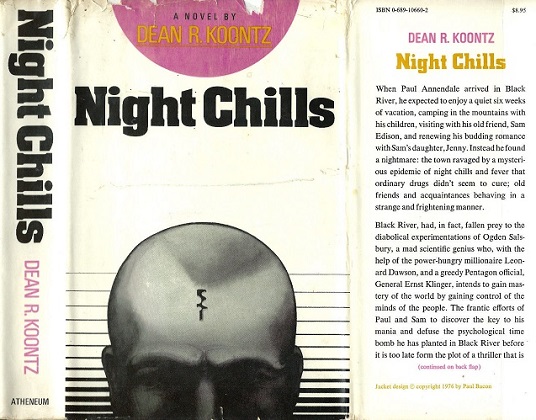
- Night Chills
Dean R. Koontzstandalone novel1976
similar bysurvivalscience fictioncontemporarytensedark
A single father and his 2 children, along with the father's love interest and her father, stumble upon a plot to perfect mind control via scientific means and must stop it before it is extended to everyone in the world.
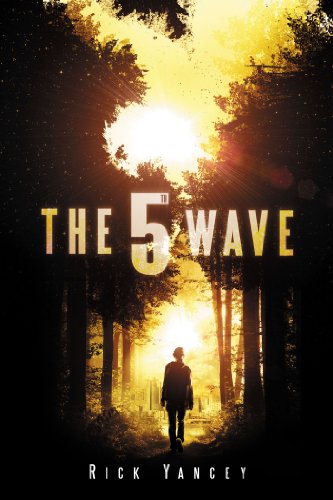
- The 5th Wave
series4 books2013
similar bysurvivalscience fictiontensedark+1 more
Rick Yancey's The 5th Wave opens after a series of escalating alien attacks has already devastated Earth's population and infrastructure, following sixteen-year-old survivor Cassie Sullivan as she searches for her younger brother while trying to work out who, among the remaining humans, can still be trusted. The trilogy is young-adult science fiction that treats its alien-invasion premise as a survival and paranoia story more than a war story.
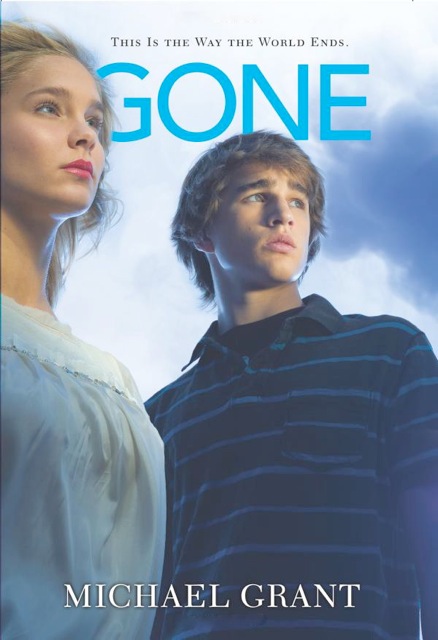
- Gone
series9 books2008
similar bysurvivalscience fictiontensedarkcontemporary
Michael Grant's Gone series begins when everyone aged fifteen and older vanishes without warning from a swath of the California coast, trapping the town of Perdido Beach inside an impenetrable barrier the survivors call the FAYZ. As children develop strange powers and food and order break down, Sam Temple and his rival, his twin brother Caine, become central to the fight for survival against human threats and the monstrous Gaiaphage. Six books (Gone through Light) close the original story; a follow-up Monster trilogy, set years later, follows a new outbreak of mutation-causing powers and a new generation of characters.