Loreful
HomeDiscover
Search series, authors…⌘K
Loreful

Reading orders for SF/F series and shared universes — with your place kept in every one.

Explore

UniversesSeriesWorksAuthorsAtlas

Help

FAQAboutSite map

Account & legal

Sign inCreate accountPrivacyTerms

Data

Built on ISFDB, Wikipedia, Wikidata and Open Library. Curated reading orders carry their reasoning on the page; the rest follow publication order. Data sources & licenses

© Loreful · data: ISFDB · CC BY

More like Gog

anchored on:literary & general

but

Mood

The mood the book leaves you in.

  • The reading experience is propelled by journeys, exploration, and physical risk; excitement and forward momentum dominate over dread or introspection.
  • Joy and loss are deliberately mixed; the resolution grants characters something real while taking something else away, leaving warmth and sorrow together.
  • The book demands work from the reader — dense prose, difficult structure, unfamiliar ideas, or morally uncomfortable material — as part of its intended effect.
  • Grim events, cruelty, or despair dominate the atmosphere, and the book does not soften them with comfort or comic relief.
  • The atmosphere is quietly unsettling — wrongness, unease, and the uncanny pervade the book without necessarily escalating into overt horror.
  • The book is built to move the reader; character feeling is foregrounded and major scenes aim at a strong emotional response.
  • Humor is a primary aim and the prose plays for laughs — comic situations, wit, or dialogue produce sustained comedy, not occasional levity.
  • The book insists that things can improve; effort and decency are shown to matter, and the arc bends toward better outcomes even through hardship.
  • The book teaches as it goes — real facts, history, science, or craft are conveyed in enough depth that learning is part of the reading experience.
  • The book is designed to uplift and motivate, presenting perseverance or achievement in a way that invites the reader to aspire or act.
  • The overall register is cheerful and easygoing; stakes are kept gentle and the book avoids dwelling on pain or dread.
  • Withheld information drives the experience; the book sustains enigmas and secrets the reader wants resolved, whatever its genre.
  • The book is contemplative and inward-looking, giving more weight to thought, memory, and meaning than to external events.
  • The book works as comfort reading — low tension, a soothing pace, and an atmosphere the reader can unwind in.
  • Grief, loss, or melancholy set the dominant register, and the book lets sorrow stand rather than resolving it into comfort.
  • Sustained suspense is the point; the book keeps the reader braced for what happens next through danger, pressure, or impending revelation.
  • Playful invention and charm define the register — fanciful conceits, light absurdity, and a narration that delights in its own oddity.

About

What the story runs on.

  • Stories in which extraterrestrial beings are central — as characters, cultures, or the object of the plot.
  • Stories structured as a quest — a journey undertaken to find, deliver, or destroy something of great import.
  • Stories in which staying alive against nature, catastrophe, or scarcity is the central problem.
  • Stories of lovers kept apart by law, family, faith, or station, where the obstacle to love is the plot.
  • Stories of growing up — a young protagonist crossing from childhood into adult knowledge and responsibility.
  • Stories about who a character truly is — self-discovery, doubled lives, and the search for a self.
  • Stories about mourning — living through the death of a loved one and what loss does to the survivors.
  • Stories in which a buried family truth — hidden parentage, crimes, or shames — surfaces and reorders the present.
  • Stories driven by maneuvering for power — factions, conspiracies, and statecraft conducted in shadow.
  • Stories about rising against rulers — uprisings, resistance movements, and revolutions and their aftermaths.
  • Stories in which war itself is the subject — combat, occupation, and what warfare does to soldiers and civilians.
  • Stories organized around investigating a killing — the case, the clues, and the pursuit of the killer, in any genre's clothing.

Shelf

Where it sits in the library.

    • Fiction built on magic or other supernatural elements that have no scientific explanation.
    • Secondary-world fantasy at large scale, where the fate of nations or the world turns on the protagonists' struggle.
    • Fantasy set in a recognizably modern city or contemporary world where the supernatural intrudes on everyday life.
    • Fantasy that blends in horror's atmosphere and imagery, keeping a fantastical frame around grim or frightening material.
    • Action-driven fantasy following warriors or rogues with personal stakes against sorcerous threats, rather than world-spanning conflicts.
    • Fantasy set in a real historical period or a close analogue of one, with magic woven into the era.
    • Fantasy in which protagonists cross from the ordinary world into another world through a portal or similar passage.
    • Fiction that retells or reworks a traditional fairy tale in a new form or setting.
    • Fantasy drawing directly on myths, legends, and folklore, retelling them or building on their figures and logic.
    • Fantasy of ghosts, vampires, shapeshifters, psychics, and similar phenomena, usually set in an otherwise ordinary world.
    • Fiction mixing science-fictional trappings with overtly magical or impossible elements in one setting.
    • Low-stakes fantasy emphasizing comfort, community, and everyday pleasures over conflict and peril.
    • Speculative fiction of pervasive moral ambiguity, violence, and cynicism that rejects heroic conventions — fantasy and SF alike.
      • Fiction that extrapolates from science and technology — future societies, space travel, or speculative inventions — within at least nominally natural laws.
      • Science fiction of interstellar scope — starships, galactic polities, and adventure across star systems.
      • Science fiction committed to scientific rigor, where technical plausibility constrains the story.
      • Science fiction centered on armed forces and warfare, told largely from a military point of view.
      • Science fiction of networked, corporate-dominated near futures, pairing high technology with social decay.
      • Science fiction styled on nineteenth-century steam-powered technology, often in a Victorian or pseudo-Victorian setting.
      • Fiction depicting an oppressive or catastrophic society, presented as a warning.
      • Fiction set after civilization's collapse, following survivors in the ruins of the old world.
      • Fiction in which characters move between past and future, and the mechanics or consequences of that travel drive the plot.
      • Fiction exploring a world where a historical event went differently and history diverged from ours.
      • Science fiction about humanity's first encounter and communication with an alien intelligence.
      • Science fiction in which extraterrestrial forces attack or occupy Earth and humanity resists.
      • Fiction whose primary aim is to frighten or unsettle the reader through dread, menace, or the monstrous.
      • Horror of vast, indifferent, incomprehensible entities before which humanity is insignificant, in the Lovecraft tradition.
      • Horror of decaying houses, buried family secrets, and oppressive atmosphere in the Gothic literary tradition.
      • Horror centered on hauntings and the returning dead.
      • Horror located in the mind — paranoia, obsession, and unreliable perception rather than external monsters.
      • Horror built around the reanimated dead and survival amid their outbreaks.
      • Horror defined by explicit, transgressive gore that refuses to cut away from violence.
      • Speculative fiction of the strange and uncanny that resists both natural explanation and standard genre categories.
      • Fiction organized around solving a crime or puzzle, typically following an investigator toward the identification of a culprit.
      • A puzzle-first mystery that lays out clues so the culprit's identity can be deduced before the reveal.
      • Crime fiction of moral ambiguity, fatalism, and hard-edged style, set among the corrupt and the doomed.
      • A mystery following the realistic routines of police work — forensics, interviews, and case-building.
      • A gentle mystery with an amateur sleuth, a small community, and violence kept off the page.
      • A mystery set in a past era, where the investigation works within that period's methods and society.
      • Fast-paced fiction driven by imminent danger, pursuit, or high-stakes conspiracy, built to sustain tension.
      • A thriller of espionage — agents, tradecraft, and intelligence services in conflict.
      • A thriller centered on lawyers and the courtroom, where litigation carries the suspense.
      • A thriller driven by detailed contemporary or near-future technology, often military or scientific.
      • A thriller whose tension comes from mental states and manipulation between characters rather than external action.
      • Fiction whose central plot is a romantic relationship and its development toward an emotionally satisfying resolution.
      • Romance in which one or both partners are supernatural beings, blending fantasy elements into the love story.
      • A fantasy-romance hybrid in which the romantic arc and the fantasy plot carry equal weight.
      • Romance set in a past era, with courtship shaped by the period's society and manners.
      • Romance set in the present day, without supernatural or historical elements.
      • Fiction set in a real past period, where the historical setting materially shapes characters and events.
        • General and literary fiction emphasizing prose style, character interiority, or formal ambition over genre plot conventions.
        • Fiction in a realistic world where magical events occur and are treated as ordinary, in the tradition of Latin American literature.
        • Fiction that ridicules people, institutions, or society in order to criticize them.
        • Fiction of dreamlike, irrational imagery and logic that breaks from realistic representation.
        • Fiction that plays with narrative convention through metafiction, fragmentation, and self-reference.
        • Fiction propelled by journeys, exploration, and physical peril, where action and survival carry the plot.
        • Adventure fiction of ships and seafaring — naval engagements, voyages, and life at sea.
        • Fiction of the American frontier West — gunmen, ranchers, and lawmen, typically in the late nineteenth century.
        • Fiction centered on soldiers, campaigns, and the experience of warfare, historical or imagined.
          • Fiction written primarily to amuse, using comedic situations, wit, or parody as its organizing principle.
            • Multi-generational fiction following a family or dynasty across decades, with inheritance and kinship as the through-line.
              • Fiction whose world runs on explicit game mechanics — levels, stats, and skills that characters can see and exploit.
                • Fiction about costumed or superpowered heroes and their conflicts with comparable villains.

                Practical

                How long a commitment, whether it stands alone, and whether it has finished.

                Tap a chip to ask for it · tap again to rule it out · once more to clear. Numbers show what would be left.

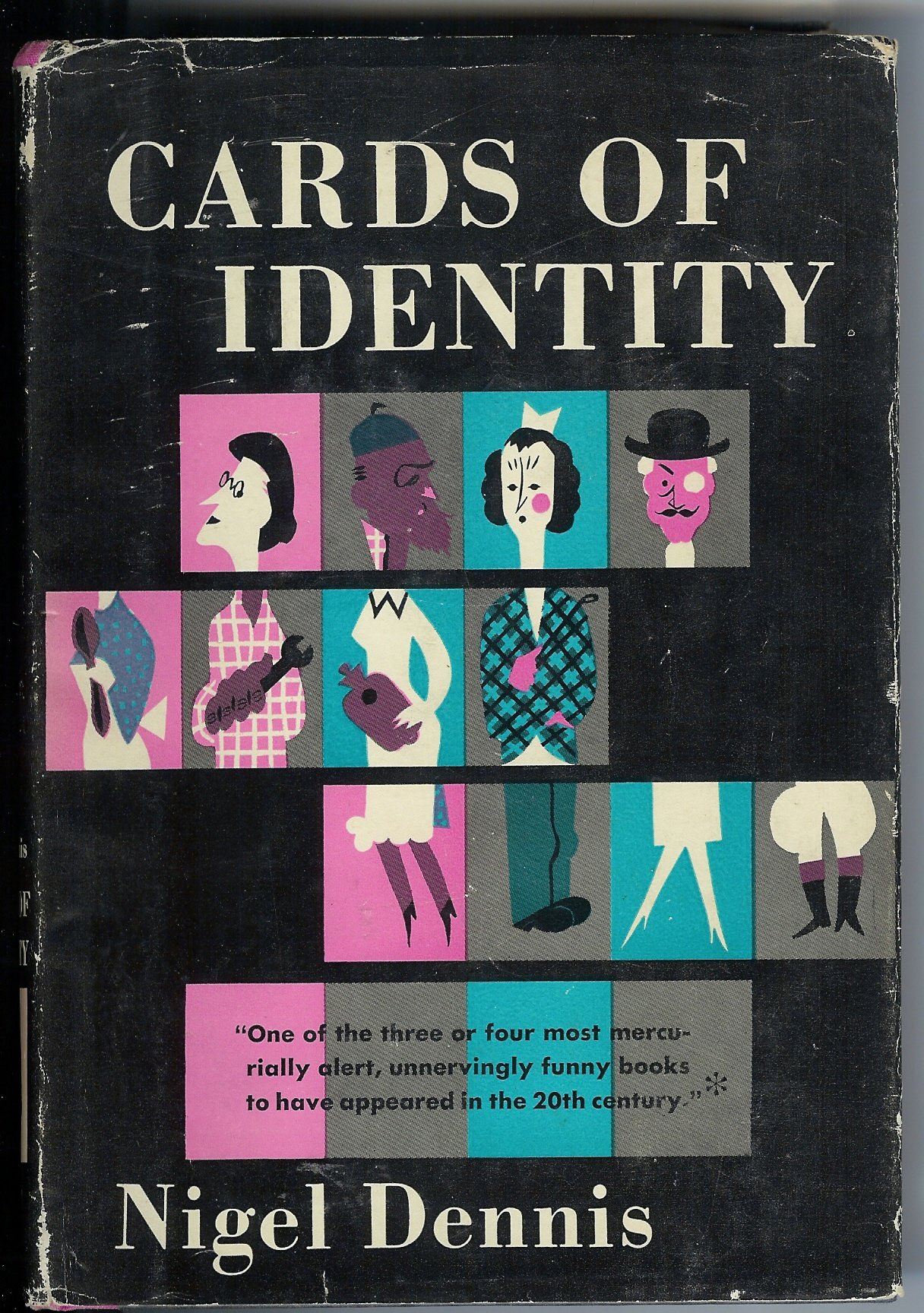
                • Cover of Cards of Identity
                  Cards of Identity

                  Nigel Dennis · standalone novel · 1955

                  similar bychallengingliterary & generalbritish islesmid 20th centuryidentitysatire+1 more

                  Cards Of Identity is a novel by Nigel Dennis, first published in 1955 by Weidenfeld & Nicolson in the UK and Vanguard Press in the US. A satire on psychology, identity theory and class prejudice, the novel is centred on the Identity Club, a group of men who call themselves psychologists and meet once a year to present case histories promoting their chosen theory of identity. The case histories are in fact fictional representations of a character in line with their theoretical biases, rather than analyses of real patients. Surrounding this plot is the story of the local townspeople, who are brainwashed into being servants for the Identity Club. The book culminates with the performance of a pastiche Shakespearian play, The Prince of Antioch.

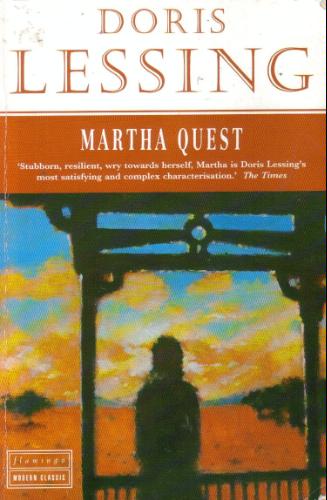
                • Cover of Children of Violence
                  Children of Violence

                  series · 5 books · 1952

                  completed

                  similar byliterary & generalmid 20th centuryidentity+3 more

                  Children of Violence is a sequence of five semi-autobiographical novels by British Nobel Prize in Literature-winner Doris Lessing: Martha Quest (1952), A Proper Marriage (1954), A Ripple from the Storm (1958), Landlocked (1965), and The Four-Gated City (1969). The novels "are strongly influenced by Lessing's rejection of a domestic family role and her involvement with communism." Lessing identified the series as a bildungsroman.

                • Cover of Gravity's Rainbow
                  Gravity's Rainbow

                  Thomas Pynchon · standalone novel · 1973

                  similar bychallengingpolitical intrigueliterary & generalbritish isles

                  Gravity's Rainbow is a 1973 postmodern novel by Thomas Pynchon. The narrative is set primarily in Europe at the end of World War II and centers on the design, production and dispatch of V-2 rockets by the German military. In particular, it features the quest undertaken by several characters to uncover the secret of a mysterious device, the Schwarzgerät, which is slated to be installed in a rocket with the serial number "00000".

                • Cover of Messiah
                  Messiah

                  Gore Vidal · standalone novel · 1954

                  similar bychallengingpolitical intrigueliterary & generalmid 20th centurysatire

                  Messiah is a satirical novel by Gore Vidal, first published in 1954 in the United States by E.P. Dutton. It is the story of the creation of a new religion, Cavism, which quickly comes to replace the established but failing Christian religion.

                • Cover of England, England
                  England, England

                  Julian Barnes · standalone novel · 1998

                  similar bychallengingliterary & generalbritish islesidentitysatire+1 more

                  England, England is a satirical postmodern novel by Julian Barnes, published and shortlisted for the Booker Prize in 1998. While researchers have also pointed out the novel's characteristic dystopian and farcical elements, Barnes himself described the novel as a "semi-farce".

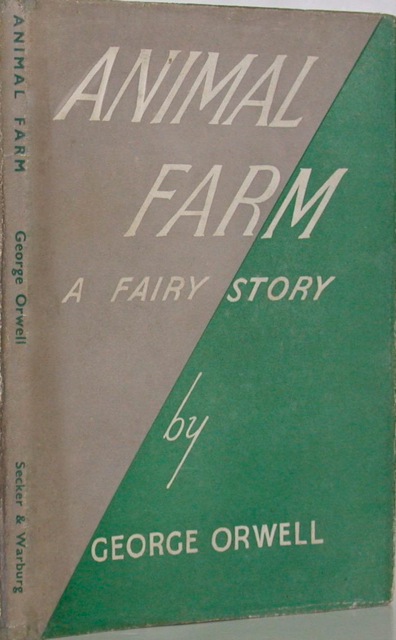
                • Cover of Animal Farm: A Fairy Story
                  Animal Farm: A Fairy Story

                  George Orwell · standalone novel · 1945

                  similar bypolitical intriguebritish islesmid 20th centurysatire+1 more

                  WorldCat: "Fueled by Orwell's intense disillusionment with Soviet Communism, Animal Farm is a nearly perfect piece of writing, both an engaging story and an allegory that actually works. When the downtrodden beasts of Manor Farm oust their drunken human master and take over management of the land, all are awash in collectivist zeal."

                • Cover of Millennium People
                  Millennium People

                  J. G. Ballard · standalone novel · 2003

                  similar bychallengingliterary & generalbritish islessatire+1 more

                  Millennium People is a novel by British writer J. G. Ballard, published in 2003. The novel is the story of a rebellion in the middle classes in an enclave of Greater London.

                • Cover of The New Machiavelli
                  The New Machiavelli

                  H. G. Wells · standalone novel · 1910

                  similar bypolitical intrigueliterary & generalbritish islesidentity+1 more

                  The New Machiavelli is a 1911 novel by H. G. Wells that was serialised in the English Review in 1910. Because its plot notoriously derived from Wells's affair with Amber Reeves and satirised Beatrice and Sidney Webb, it was "the literary scandal of its day."

                • Cover of The Third Policeman
                  The Third Policeman

                  Flann O'Brien · standalone novel · 1967

                  similar bychallengingliterary & generalbritish islesmid 20th century+1 more

                  The Third Policeman is a novel by Irish writer Brian O'Nolan, writing under the pseudonym Flann O'Brien. It was written in 1939 and 1940, but after it initially failed to find a publisher, the author withdrew the manuscript from circulation and claimed he had lost it. The book remained unpublished at the time of his death in 1966. It was published by MacGibbon & Kee in 1967.

                • Cover of The Crying of Lot 49
                  The Crying of Lot 49

                  Thomas Pynchon · standalone novel · 1966

                  similar byliterary & generalmid 20th century+3 more

                  The Crying of Lot 49 is a novel by the American author Thomas Pynchon. It was published by J. B. Lippincott & Co. on April 27, 1966. The shortest of Pynchon's novels, the plot follows Oedipa Maas, a young Californian woman who begins to embrace a conspiracy theory as she possibly unearths a centuries-old feud between two mail distribution companies. One of these companies, Thurn and Taxis, actually existed; operating from 1806 to 1867, Thurn and Taxis was the first private firm to distribute postal mail. Like most of Pynchon's writing, The Crying of Lot 49 is often described as postmodernist literature. Time magazine included the book in its list of the 100 best English-language novels from 1923 to 2005.

                • Cover of Universe of Gulliver
                  Universe of Gulliver

                  universe · 34 books · 1726

                  Start hereGulliver's Travels · Start here

                  similar bysatire+1 more

                  A ship's surgeon with appalling luck keeps washing up in countries that have solved the problem of being human in some appalling new way. Lilliput, where the great question of the age is which end of an egg to break. Brobdingnag, where a king hears out a description of Europe and concludes that its inhabitants are the most pernicious race of little odious vermin. Laputa, floating and abstracted above the island it taxes. And the land of the Houyhnhnms, where the horses are rational and the humans are not. Jonathan Swift published it in 1726 as a genuine traveller's account, and the trick worked. What is collected here is that book and its long afterlife: the eighteenth-century continuations printed as further Travels into Several Remote Nations, the Victorian retellings that trimmed it down to a story about a giant tied up by tiny people, and the picture-book Lilliputs that followed. It is satire with a smile on and a knife behind it — precise, patient, and colder the further in you read. The first two voyages are the ones everybody knows; the fourth is the one that changes what the first two meant. Read Gulliver's Travels whole and in order if you can, and treat the abridgements gathered here as what they are: souvenirs from the shallow end.

                • Cover of Crash
                  Crash

                  J. G. Ballard · standalone novel · 1973

                  similar bychallengingliterary & generalbritish isles+1 more

                  Crash is a novel by J. G. Ballard, first published in 1973 with a cover designed by Bill Botten. It follows a group of car-crash fetishists who, inspired by the famous crashes of celebrities, become sexually aroused by staging and participating in car accidents.

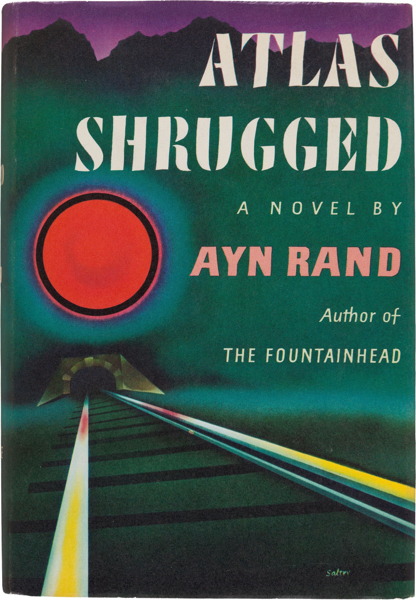
                • Cover of Atlas Shrugged
                  Atlas Shrugged

                  Ayn Rand · standalone novel · 1957

                  similar bychallengingpolitical intriguemid 20th century+1 more

                  Atlas Shrugged is a 1957 novel by Ayn Rand. It is her longest novel, the fourth and final one published during her lifetime, and the one she considered her magnum opus in the realm of fiction writing. She described the theme of Atlas Shrugged as "the role of man's mind in existence" and it includes elements of science fiction, mystery, and romance. The book explores a number of philosophical themes from which Rand would subsequently develop Objectivism, including reason, property rights, individualism, rational egoism, and laissez-faire capitalism and depicts what Rand saw as the evil of altruism and governmental coercion. Of Rand's works of fiction, it contains her most extensive statement of her philosophical system.

                • Cover of Enderby
                  Enderby

                  series · 4 books · 1963

                  completed

                  similar byliterary & generalbritish islesmid 20th centuryidentity+2 more

                • Cover of Jerry Cornelius
                  Jerry Cornelius

                  series · 50 books · 1965

                  similar bychallengingidentity+3 more

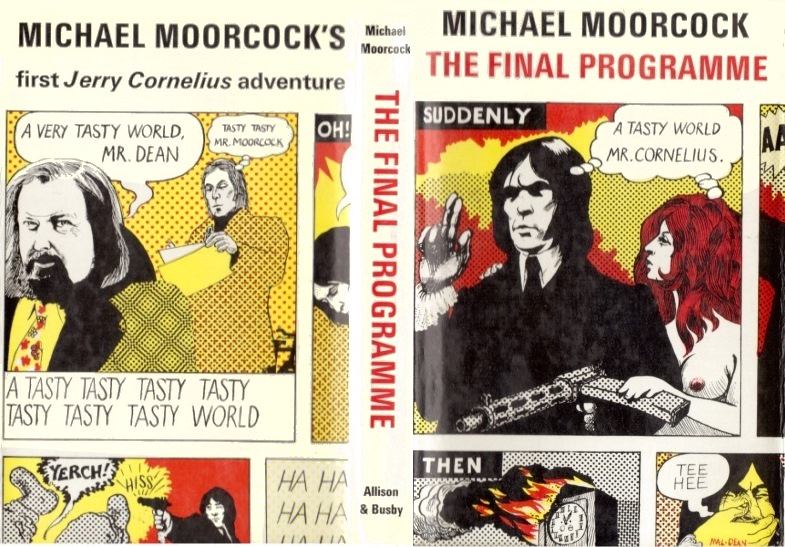
                  Jerry Cornelius is a fictional character created by English author Michael Moorcock. The character is an urban adventurer and an incarnation of the author's Eternal Champion concept. Cornelius is a hipster of ambiguous and occasionally polymorphous gender. Many of the same characters feature in each of several Cornelius books, though the individual books have little connection with one another, having a more metafictional than causal relationship. The first Jerry Cornelius book, The Final Programme, was made into a 1973 film starring Jon Finch and Jenny Runacre. Notting Hill in London features prominently in the stories.

                • Cover of Deptford Trilogy
                  Deptford Trilogy

                  series · 3 books · 1970

                  completed

                  similar byliterary & generalmid 20th centuryidentity+2 more

                • Cover of Island
                  Island

                  Aldous Huxley · standalone novel · 1962

                  similar bychallengingliterary & generalmid 20th century+1 more

                  Island is a 1962 utopian manifesto and novel by English writer Aldous Huxley, the author's final work before his death in 1963. Although it has a plot, the plot largely serves to further conceptual explorations rather than setting up and resolving conventional narrative tension.

                • Cover of The Fall of Kelvin Walker
                  The Fall of Kelvin Walker

                  Alasdair Gray · standalone novel · 1985

                  similar bychallengingliterary & generalbritish islesmid 20th centuryidentitysatire

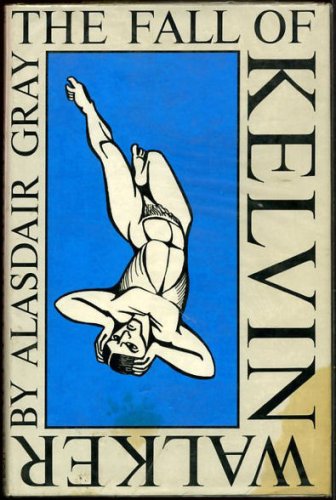
                  The Fall of Kelvin Walker: A Fable of the Sixties is a 1986 novel by Scottish writer Alasdair Gray. The book was adapted from Gray's earlier play of the same title. It was originally published by Canongate in 1985 and the revised text was published by Penguin Books in 1986, ISBN 978-0807611449.

                • Cover of The Private Memoirs and Confessions of a Justified Sinner
                  The Private Memoirs and Confessions of a Justified Sinner

                  James Hogg · standalone novel · 1824

                  similar bychallengingliterary & generalbritish islesidentity

                  The Private Memoirs and Confessions of a Justified Sinner: Written by Himself: With a detail of curious traditionary facts and other evidence by the editor is a novel by the Scottish author James Hogg, published anonymously in 1824.

                • Cover of Cloud Atlas
                  Cloud Atlas

                  David Mitchell · standalone novel · 2004

                  similar bychallengingliterary & generalbritish islesidentity

                  Cloud Atlas, published in 2004, is the third novel by British author David Mitchell. The book combines metafiction, historical fiction, contemporary fiction and science fiction, with interconnected nested stories in different writing styles that take the reader from the remote South Pacific in the 19th century to the island of Hawaii in a distant post-apocalyptic future. Its title references a piece of music by Toshi Ichiyanagi.

                • Cover of Concrete Island
                  Concrete Island

                  J. G. Ballard · standalone novel · 1974

                  similar bychallengingliterary & generalbritish islesidentity

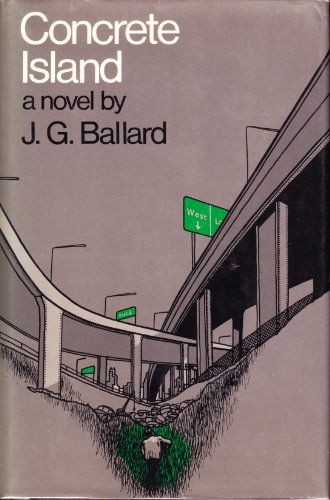
                  Architect Robert Maitland crashes his car onto a stretch of wasteland trapped between three converging motorways -- visible from thousands of cars, reachable by none of them. Injured and unable to climb back to the road, Maitland adapts to life on what he starts calling the Island, scavenging food thrown from car windows, and discovers he isn't alone: a runaway sex worker hiding in a bunker, and a brain-damaged former circus acrobat, both long past expecting rescue. What begins as a survival story turns into a question of whether Maitland even wants to leave. A J. G. Ballard novel of urban isolation, grouped with Crash and High-Rise.

                • Cover of Lord of the Flies
                  Lord of the Flies

                  William Golding · standalone novel · 1954

                  similar byliterary & generalmid 20th century+1 more

                  Lord of the Flies is the 1954 debut novel of British author William Golding. The plot concerns a group of prepubescent British boys who are stranded on an uninhabited island and their disastrous attempts to govern themselves that lead to a descent into savagery. The novel's themes include morality, leadership, and the tension between civility and chaos.

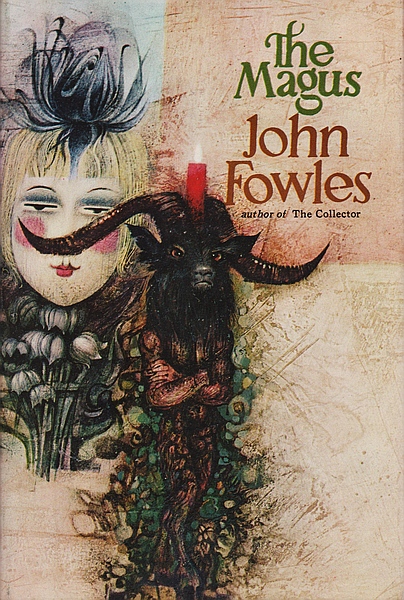
                • Cover of The Magus
                  The Magus

                  John Fowles · standalone novel · 1965

                  similar bychallengingliterary & generalmid 20th centuryidentity

                  The Magus (1965) is a postmodern novel by British author John Fowles, telling the story of Nicholas Urfe, a young British graduate who is teaching English on a small Greek island. Urfe becomes embroiled in the psychological illusions of a master trickster, which become increasingly dark and serious. Considered an example of metafiction, it was the first novel written by Fowles but his third book to be published. A revised edition was published in 1977.

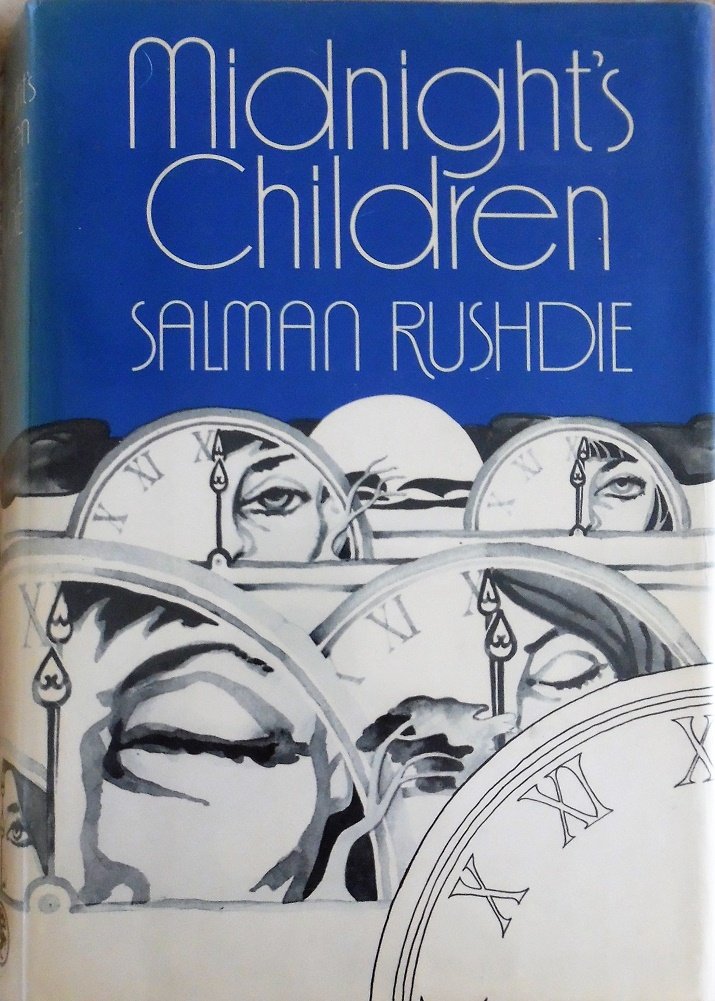
                • Cover of Midnight's Children
                  Midnight's Children

                  Salman Rushdie · standalone novel · 1980

                  similar bypolitical intrigueliterary & generalmid 20th centuryidentity

                  WorldCat: The life of a man born at the moment of India's independence becomes inextricably linked to that of his nation and is a whirlwind of disasters and triumphs that mirror modern India's course.