Loreful
HomeDiscover
Search series, authors…⌘K
Loreful

Reading orders for SF/F series and shared universes — with your place kept in every one.

Explore

UniversesSeriesWorksAuthorsAtlas

Help

FAQAboutSite map

Account & legal

Sign inCreate accountPrivacyTerms

Data

Built on ISFDB, Wikipedia, Wikidata and Open Library. Curated reading orders carry their reasoning on the page; the rest follow publication order. Data sources & licenses

© Loreful · data: ISFDB · CC BY

More like Grave Creatures

anchored on:urban fantasynorth americacontemporaryparanormalbig city

but

Mood

The mood the book leaves you in.

  • The reading experience is propelled by journeys, exploration, and physical risk; excitement and forward momentum dominate over dread or introspection.
  • Joy and loss are deliberately mixed; the resolution grants characters something real while taking something else away, leaving warmth and sorrow together.
  • The book demands work from the reader — dense prose, difficult structure, unfamiliar ideas, or morally uncomfortable material — as part of its intended effect.
  • Grim events, cruelty, or despair dominate the atmosphere, and the book does not soften them with comfort or comic relief.
  • The atmosphere is quietly unsettling — wrongness, unease, and the uncanny pervade the book without necessarily escalating into overt horror.
  • The book is built to move the reader; character feeling is foregrounded and major scenes aim at a strong emotional response.
  • Humor is a primary aim and the prose plays for laughs — comic situations, wit, or dialogue produce sustained comedy, not occasional levity.
  • The book insists that things can improve; effort and decency are shown to matter, and the arc bends toward better outcomes even through hardship.
  • The book teaches as it goes — real facts, history, science, or craft are conveyed in enough depth that learning is part of the reading experience.
  • The book is designed to uplift and motivate, presenting perseverance or achievement in a way that invites the reader to aspire or act.
  • The overall register is cheerful and easygoing; stakes are kept gentle and the book avoids dwelling on pain or dread.
  • Withheld information drives the experience; the book sustains enigmas and secrets the reader wants resolved, whatever its genre.
  • The book is contemplative and inward-looking, giving more weight to thought, memory, and meaning than to external events.
  • The book works as comfort reading — low tension, a soothing pace, and an atmosphere the reader can unwind in.
  • Grief, loss, or melancholy set the dominant register, and the book lets sorrow stand rather than resolving it into comfort.
  • Sustained suspense is the point; the book keeps the reader braced for what happens next through danger, pressure, or impending revelation.
  • Playful invention and charm define the register — fanciful conceits, light absurdity, and a narration that delights in its own oddity.

About

What the story runs on.

  • Stories about minds with paranormal abilities — telepathy, telekinesis, precognition, empathy — and how societies handle those who have them.
  • Stories centered on vampires — blood-drinking undead — whether as predators, love interests, or protagonists.
  • Stories in which staying alive against nature, catastrophe, or scarcity is the central problem.
  • Stories of lovers kept apart by law, family, faith, or station, where the obstacle to love is the plot.
  • Stories in which a friendship — its making, testing, or loss — is the emotional center.
  • Stories of growing up — a young protagonist crossing from childhood into adult knowledge and responsibility.
  • Stories about who a character truly is — self-discovery, doubled lives, and the search for a self.
  • Stories about mental unraveling — descent into madness, delusion, and minds at war with themselves.
  • Stories about mourning — living through the death of a loved one and what loss does to the survivors.
  • Stories in which a buried family truth — hidden parentage, crimes, or shames — surfaces and reorders the present.
  • Stories driven by maneuvering for power — factions, conspiracies, and statecraft conducted in shadow.
  • Stories organized around investigating a killing — the case, the clues, and the pursuit of the killer, in any genre's clothing.

Shelf

Where it sits in the library.

    • Fiction built on magic or other supernatural elements that have no scientific explanation.
    • Secondary-world fantasy at large scale, where the fate of nations or the world turns on the protagonists' struggle.
    • Fantasy set in a recognizably modern city or contemporary world where the supernatural intrudes on everyday life.
    • Fantasy that blends in horror's atmosphere and imagery, keeping a fantastical frame around grim or frightening material.
    • Action-driven fantasy following warriors or rogues with personal stakes against sorcerous threats, rather than world-spanning conflicts.
    • Fantasy set in a real historical period or a close analogue of one, with magic woven into the era.
    • Fantasy in which protagonists cross from the ordinary world into another world through a portal or similar passage.
    • Fiction that retells or reworks a traditional fairy tale in a new form or setting.
    • Fantasy drawing directly on myths, legends, and folklore, retelling them or building on their figures and logic.
    • Fantasy of ghosts, vampires, shapeshifters, psychics, and similar phenomena, usually set in an otherwise ordinary world.
    • Fiction mixing science-fictional trappings with overtly magical or impossible elements in one setting.
    • Low-stakes fantasy emphasizing comfort, community, and everyday pleasures over conflict and peril.
    • Speculative fiction of pervasive moral ambiguity, violence, and cynicism that rejects heroic conventions — fantasy and SF alike.
      • Fiction that extrapolates from science and technology — future societies, space travel, or speculative inventions — within at least nominally natural laws.
      • Science fiction of interstellar scope — starships, galactic polities, and adventure across star systems.
      • Science fiction committed to scientific rigor, where technical plausibility constrains the story.
      • Science fiction centered on armed forces and warfare, told largely from a military point of view.
      • Science fiction of networked, corporate-dominated near futures, pairing high technology with social decay.
      • Science fiction styled on nineteenth-century steam-powered technology, often in a Victorian or pseudo-Victorian setting.
      • Fiction depicting an oppressive or catastrophic society, presented as a warning.
      • Fiction set after civilization's collapse, following survivors in the ruins of the old world.
      • Fiction in which characters move between past and future, and the mechanics or consequences of that travel drive the plot.
      • Fiction exploring a world where a historical event went differently and history diverged from ours.
      • Science fiction about humanity's first encounter and communication with an alien intelligence.
      • Science fiction in which extraterrestrial forces attack or occupy Earth and humanity resists.
      • Fiction whose primary aim is to frighten or unsettle the reader through dread, menace, or the monstrous.
      • Horror of vast, indifferent, incomprehensible entities before which humanity is insignificant, in the Lovecraft tradition.
      • Horror of decaying houses, buried family secrets, and oppressive atmosphere in the Gothic literary tradition.
      • Horror centered on hauntings and the returning dead.
      • Horror located in the mind — paranoia, obsession, and unreliable perception rather than external monsters.
      • Horror built around the reanimated dead and survival amid their outbreaks.
      • Horror defined by explicit, transgressive gore that refuses to cut away from violence.
      • Speculative fiction of the strange and uncanny that resists both natural explanation and standard genre categories.
      • Fiction organized around solving a crime or puzzle, typically following an investigator toward the identification of a culprit.
      • A puzzle-first mystery that lays out clues so the culprit's identity can be deduced before the reveal.
      • Crime fiction of moral ambiguity, fatalism, and hard-edged style, set among the corrupt and the doomed.
      • A mystery following the realistic routines of police work — forensics, interviews, and case-building.
      • A gentle mystery with an amateur sleuth, a small community, and violence kept off the page.
      • A mystery set in a past era, where the investigation works within that period's methods and society.
      • Fast-paced fiction driven by imminent danger, pursuit, or high-stakes conspiracy, built to sustain tension.
      • A thriller of espionage — agents, tradecraft, and intelligence services in conflict.
      • A thriller centered on lawyers and the courtroom, where litigation carries the suspense.
      • A thriller driven by detailed contemporary or near-future technology, often military or scientific.
      • A thriller whose tension comes from mental states and manipulation between characters rather than external action.
      • Fiction whose central plot is a romantic relationship and its development toward an emotionally satisfying resolution.
      • Romance in which one or both partners are supernatural beings, blending fantasy elements into the love story.
      • A fantasy-romance hybrid in which the romantic arc and the fantasy plot carry equal weight.
      • Romance set in a past era, with courtship shaped by the period's society and manners.
      • Romance set in the present day, without supernatural or historical elements.
      • Fiction set in a real past period, where the historical setting materially shapes characters and events.
        • General and literary fiction emphasizing prose style, character interiority, or formal ambition over genre plot conventions.
        • Fiction in a realistic world where magical events occur and are treated as ordinary, in the tradition of Latin American literature.
        • Fiction that ridicules people, institutions, or society in order to criticize them.
        • Fiction of dreamlike, irrational imagery and logic that breaks from realistic representation.
        • Fiction that plays with narrative convention through metafiction, fragmentation, and self-reference.
        • Fiction propelled by journeys, exploration, and physical peril, where action and survival carry the plot.
        • Adventure fiction of ships and seafaring — naval engagements, voyages, and life at sea.
        • Fiction of the American frontier West — gunmen, ranchers, and lawmen, typically in the late nineteenth century.
        • Fiction centered on soldiers, campaigns, and the experience of warfare, historical or imagined.
          • Fiction written primarily to amuse, using comedic situations, wit, or parody as its organizing principle.
            • Multi-generational fiction following a family or dynasty across decades, with inheritance and kinship as the through-line.
              • Fiction whose world runs on explicit game mechanics — levels, stats, and skills that characters can see and exploit.
                • Fiction about costumed or superpowered heroes and their conflicts with comparable villains.

                Practical

                How long a commitment, whether it stands alone, and whether it has finished.

                Tap a chip to ask for it · tap again to rule it out · once more to clear. Numbers show what would be left.

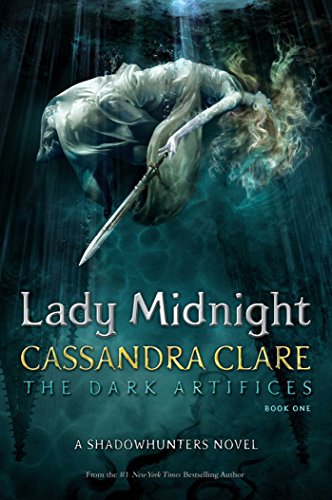
                • Cover of The Dark Artifices
                  The Dark Artifices

                  series · 4 books · 2016

                  part of The Mortal Instruments

                  similar bycontemporaryurban fantasynorth americabig city+1 more

                  The Dark Artifices is a trilogy written by Cassandra Clare. The series is chronologically the fourth series in The Shadowhunter Chronicles and a sequel to The Mortal Instruments. It is set in Los Angeles. The series consists of three books: Lady Midnight, Lord of Shadows and Queen of Air and Darkness, in that particular order. Centered around the protagonist, Emma Carstairs, the series follows her journey as a Shadowhunter at the Los Angeles Institute, and her life with her best-friend and parabatai, Julian Blackthorn, and his family. The series is about a sacred bond of "parabatai", two bonded Shadowhunters, and it is more valuable than any bond in this world. This bond makes the two more powerful and strong, but there is only one drawback - it is forbidden to fall in love with your parabatai. It so happens that Emma and Julian, two parabatai, have fallen in love. The Dark Artifices is a trilogy about their struggle against their enemies and how the two protagonists deal with their forbidden love and the resulting consequences. The series is told from the point-of-view of the various different characters in the story.

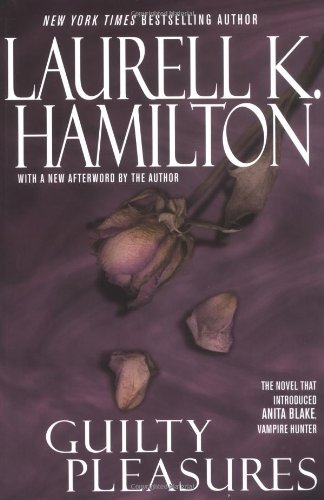
                • Cover of Anita Blake
                  Anita Blake

                  series · 42 books · 1993

                  similar bycontemporaryurban fantasynorth america+2 more

                  Anita Blake: Vampire Hunter is a series of urban fantasy novels, short stories, and comic books by Laurell K. Hamilton. The books have sold more than six million copies; many have made The New York Times Best Seller list.

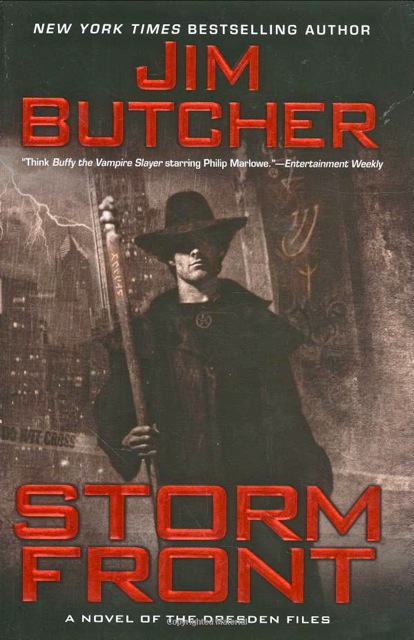
                • Cover of The Dresden Files
                  The Dresden Files

                  series · 56 books · 2000

                  similar bycontemporaryurban fantasynorth americabig city

                  The Dresden Files is an urban fantasy series written by American author Jim Butcher. The novels are narrated from the first-person perspective of Harry Dresden, a private detective and wizard, as he investigates supernatural disturbances in contemporary Chicago. The first entry, Storm Front, was published in 2000 by Roc Books.

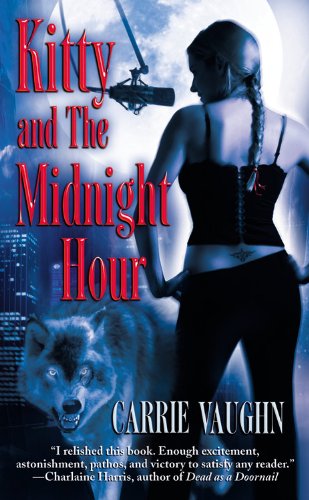
                • Cover of Kitty Norville
                  Kitty Norville

                  series · 62 books · 2001

                  similar bycontemporaryurban fantasyparanormalnorth america+1 more

                  Kitty Norville is the main character of a series of novels by Carrie Vaughn. She is a werewolf who hosts a popular syndicated radio phone-in show based in Denver called "The Midnight Hour". The program focuses on supernatural issues, beings and creatures she encounters.

                • Cover of The Hollows
                  The Hollows

                  series · 39 books · 2004

                  similar bycontemporaryurban fantasynorth america+2 more

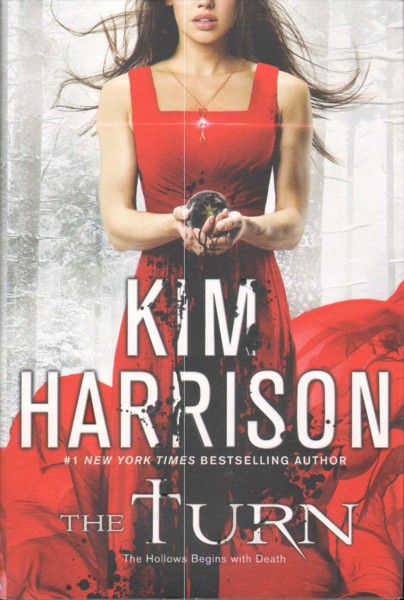
                  The Hollows is a series of urban fantasy novels by Kim Harrison, originally published by HarperCollins Publishers and by Ace Books since 2020. The series includes 18 novels, numerous novellas and short stories, two graphic novels, and one compendium resource; a 19th novel, Absolute Demon, is forthcoming in 2027.

                • Cover of The Morganville Vampires
                  The Morganville Vampires

                  series · 40 books · 2006

                  completed

                  similar bycontemporaryurban fantasyparanormalnorth america

                  The Morganville Vampires is a series of young adult urban fantasy/vampire novels written by Rachel Caine. The novels feature Claire Danvers, a student at Texas Prairie University, and her housemates in the vampire-controlled city of Morganville, Texas. While the mayor of Morganville is human, the population co-exist with a group of vampires. Morganville is also home to an unusually large number of second-hand thrift stores.

                • Cover of Perfect Circle
                  Perfect Circle

                  Sean Stewart · standalone novel · 2004

                  similar bycontemporaryurban fantasyparanormalnorth americabig city

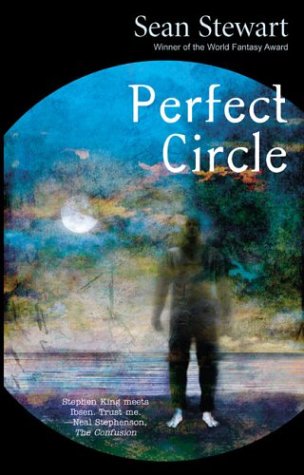
                  From the Publisher's Website: "William "Dead" Kennedy has problems. He's haunted by family, by dead people with unfinished business, and by those perfect pop songs that you can't get out of your head. He's a 32-year-old Texan still in love with his ex-wife. He just lost his job at Pet-Co for eating cat food. His air-conditioning is broken, there's no good music on the radio, and he's been dreaming about ghost roads. When Will's cousin ("My dad married your Aunt Dot's half-sister") calls in the middle of the night about a dead girl haunting his garage, it seems like an easy way to make a thousand dollars. But nothing is ever that simple, especially when family is involved. Will's mother is planning a family reunion of epic proportions. Will's ex-wife is married to a former Marine. His twelve-year-old daughter Megan thinks Will needs someone to look after him. And recently his dead relatives seem to want something from him."

                • Cover of The Dark Elite
                  The Dark Elite

                  series · 3 books · 2009

                  similar bycontemporaryurban fantasynorth americabig city+1 more

                • Cover of Gale Family
                  Gale Family

                  series · 3 books · 2009

                  similar bycontemporaryurban fantasynorth america+2 more

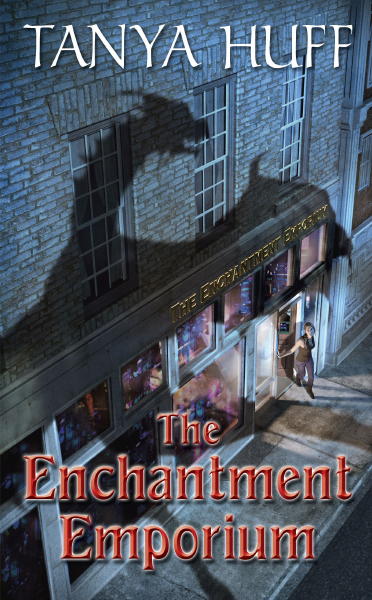
                  Tanya Huff's urban fantasy trilogy follows Alysha Gale, a member of a Canadian family whose charms can reshape reality, after she inherits her grandmother's junk shop in Calgary and discovers it doubles as a gateway into the fae world. Across The Enchantment Emporium, The Wild Ways, and The Future Falls, different Gale women take the lead as the family is repeatedly called on to contain magical trouble the ordinary world can't handle.

                • Cover of Becket Walker
                  Becket Walker

                  series · 2 books · 2016

                  similar bycontemporaryurban fantasyparanormalnorth americabig city

                • Cover of October Daye
                  October Daye

                  series · 42 books · 2009

                  similar bycontemporaryurban fantasynorth america+1 more

                  October Daye is a New York Times Best Selling series of urban fantasy novels by American author Seanan McGuire. They follow October "Toby" Daye, a half-fae changeling and reluctant hero of the realm.

                • Cover of War for the Oaks
                  War for the Oaks

                  series · 2 books · 1987

                  similar bycontemporaryurban fantasynorth americabig city

                  Emma Bull's 1987 urban fantasy debut follows Minneapolis rock singer Eddi McCandry after a faerie noble conscripts her into the ancient war between the Seelie and Unseelie Courts, forcing her to keep her band and her life together while fighting a battle she never asked for in her own city. Widely credited with helping found the urban fantasy genre, it won the Locus Award for Best First Novel.

                • Cover of 666 Charing Cross Road
                  666 Charing Cross Road

                  Paul Magrs · standalone novel · 2011

                  similar bycontemporaryurban fantasyparanormalnorth americabig city

                  Shelley didn't expect her posh new boyfriend Daniel to be enthralled by the quintessence of evil. She's preoccupied with the surprise success of Bessie, the lifelike centrepiece of her Manhattan museum show. Her great-aunt Liza is busy ordering spooky old books from the dusty vaults below Charing Cross Road, while her friend Jack prefers brand-new books and his brand-new lover. When a little leather book arrives, Liza finds it repellent, but doesn't realise it's stained with vampire blood - until too late. Its arcane magic brings Bessie to life, and gives Daniel unimaginable power. As Daniel's supremacy grows, everyone's lives are infected. Soon the vicious vampire infestation rife in NYC threatens to spread to London - and only Bessie and her new friends can stop it.

                • CV
                  Chicagoland Vampires Universe

                  series · 25 books · 2009

                  similar bycontemporaryurban fantasynorth americabig city

                • Cover of InCryptid
                  InCryptid

                  series · 53 books · 2012

                  similar bycontemporaryurban fantasynorth america+2 more

                  InCryptid is a series of urban fantasy novels by American author Seanan McGuire, published by DAW Books. They follow multiple generations of a family of cryptozoologists who protect supernatural beings from discovery by humankind.

                • Cover of Angel
                  Angel

                  series · 38 books · 1999

                  part of Buffyverse

                  similar bycontemporaryurban fantasyparanormalnorth americabig city

                • Cover of Lily Bound
                  Lily Bound

                  series · 1 book · 2017

                  similar bycontemporaryurban fantasyparanormalnorth america

                • Cover of The Convergence Saga
                  The Convergence Saga

                  series · 3 books · 2021

                  similar bycontemporaryurban fantasynorth america+2 more

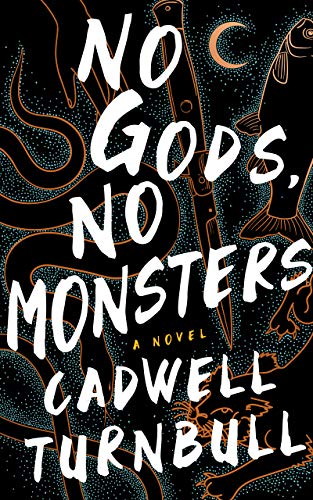
                  No Gods, No Monsters opens Cadwell Turnbull's Convergence Saga trilogy with a premise where hidden monsters choose to reveal themselves publicly in search of safety, told through a multi-perspective structure that widens out to a whole community's reaction. The novel folds in questions of social and political unrest alongside identity, power, and community, treating the reveal as a fault line running through ordinary lives. Two further novels, We Are the Crisis and A Ruin, Great and Free, continue the same unfolding story.

                • Cover of Cheshire Red Reports
                  Cheshire Red Reports

                  series · 2 books · 2011

                  similar bycontemporaryurban fantasynorth americabig city+1 more

                • Cover of Brooklyn Shadows
                  Brooklyn Shadows

                  series · 3 books · 2011

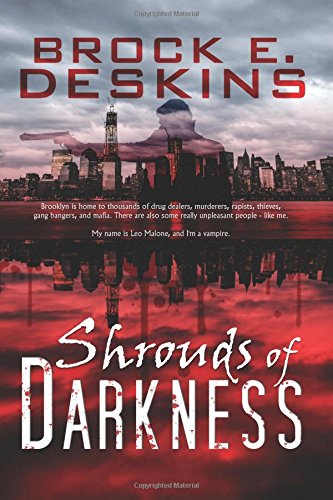
                  similar bycontemporaryurban fantasyparanormalbig citynorth america

                • Cover of Fault Lines (Tim Powers)
                  Fault Lines (Tim Powers)

                  series · 3 books · 1992

                  similar bycontemporaryurban fantasynorth america+1 more

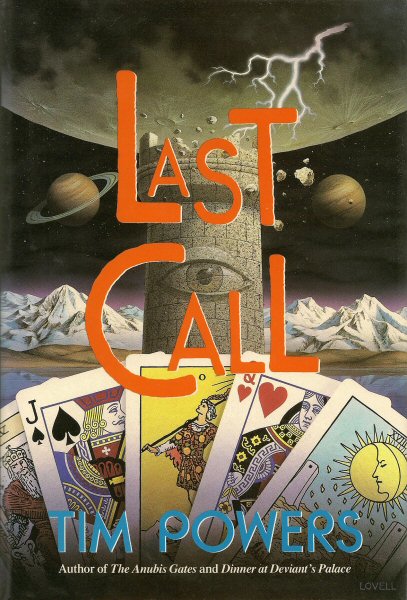
                  Tim Powers' Fault Lines novels (Last Call, 1992; Expiration Date, 1996; Earthquake Weather, 1997) are loosely connected supernatural thrillers set in a hidden-magic version of California. Last Call builds its occult conflict around a tarot-based magic system playing out between Los Angeles and Las Vegas; Expiration Date is only obliquely tied to it; and Earthquake Weather draws the threads of both earlier books into a single closing story.

                • Cover of The Curse Workers
                  The Curse Workers

                  series · 3 books · 2010

                  similar bycontemporaryurban fantasynorth america+2 more

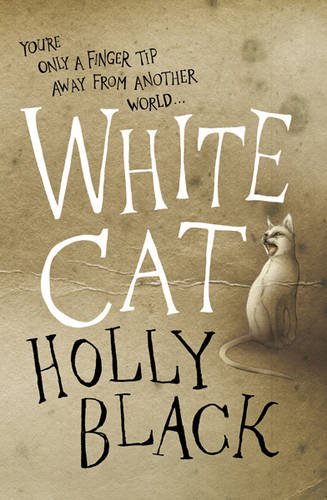
                  Holly Black's Curse Workers trilogy is set in an alternate America where 'curse work' — magic that harms or transforms through touch — is illegal, enforced through gloves and Prohibition-era-style crime families. It follows Cassel Sharpe, the only non-worker in a family of con artists and workers, as he tries to stay out of his family's schemes despite his own hidden connection to their world. The series runs from White Cat through two further novels.

                • Cover of Case Files of Justis Fearsson
                  Case Files of Justis Fearsson

                  series · 6 books · 2014

                  similar bycontemporaryurban fantasynorth america+2 more

                • Cover of Alchemy of Secrets
                  Alchemy of Secrets

                  series · 1 book · 2025

                  similar bycontemporaryurban fantasynorth americabig city

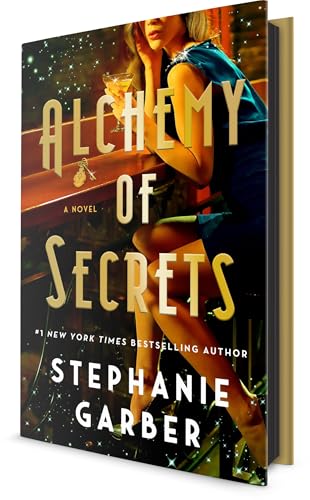
                  Alchemy of Secrets follows Holland St. James, a young woman convinced that magic is real, who tracks down a local urban legend called the Watch Man and is told she will die at midnight the next day unless she finds an ancient object called the Alchemical Heart. Pulled into a hidden magical Los Angeles alongside a stranger who claims her missing sister sent him to protect her, Holland has to work out who is lying to her before the clock runs out. Stephanie Garber wrote it as a standalone 2025 novel rather than the start of a numbered series.