More like Gravity
anchored on:science fictionthriller & suspenseplague and pandemicspace stationnear futuretense+4 more
but
- Aftermath (Charles Sheffield)
series2 books1998
completed
similar bynear futuretensescience fictiondarksurvivalspace+3 more
Charles Sheffield's Aftermath duology opens with a near-future Earth devastated by a nearby supernova's radiation, which knocks out electronics and forces survivors to rebuild without most modern technology. Starfire continues years later as a second, larger stellar threat approaches and humanity must recover enough capability to respond. Sheffield, a physicist by training, grounds both books in hard-science consequences of the disaster rather than treating it as mere backdrop.
- At the End of Everything
Marieke Nijkampstandalone novel2022
similar bynear futuretenseplague and pandemicscience fictiondarksurvivalthriller & suspense
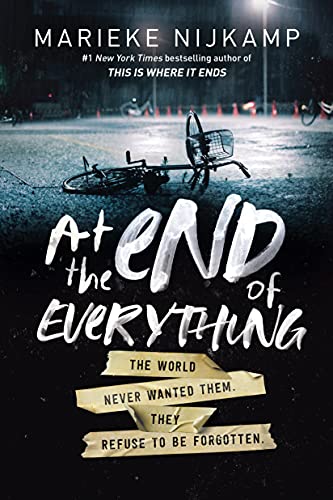
The Hope Juvenile Treatment Center is ironically named. No one has hope for the delinquent teenagers who have been exiled there; the world barely acknowledges that they exist. Then the guards at Hope start acting strange. And one day…they don't show up. But when the teens band together to make a break from the facility, they encounter soldiers outside the gates. There's a rapidly spreading infectious disease outside, and no one can leave their houses or travel without a permit. Which means that they're stuck at Hope. And this time, no one is watching out for them at all. As supplies quickly dwindle and a deadly plague tears through their ranks, the group has to decide whom among them they can trust and figure out how they can survive in a world that has never wanted them in the first place.
- The Last Gasp
Trevor Hoylestandalone novel1983
similar bynear futuretensescience fictiondarksurvivalplague and pandemicthriller & suspense
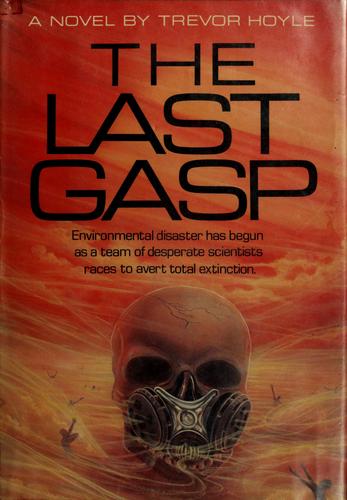
From the flaps of the Crown first edition: "When British marine biologist Gavin Chase stepped out into the windswept wastes at the Halley Bay antarctic research station one morning, the last thing he expected to see was a sled team coming out of nowhere carrying a half-mad, half-frozen Russian scientist babbling an incomprehensible warning. But that warning would threaten the future of the human race and force Chase to make some of the hardest decisions of his life. Months later, at a Geneva environmental conference, Chase meets Cheryl Detrick, the daughter of Theo Detrick, the grand old man of diatom research. Chase, the Detricks, and Soviet scientist Boris Stanovnik theorize that the oxygen-producing microscopic plants of the world's oceans are dying and the level of atmospheric pollutants has finally exceeded the ability of the planet's ecology to recycle them. There is also good reason to believe that the superpowers are planning to wage a new type of environmental warfare. Sooner or later there will be nothing left to breathe. So begins a race against the future. Chase and Cheryl, now lovers, struggle to avert ecological catastrophe as agents of the military-industrial complex hunt them down... and as a growing belt of unbreathable gases spreads outward from the equator, uprooting millions. Their enemies are Lloyd Madden, an insane military mastermind planning to seed the earth with poison and then repopulate it with a race of mutants, and Joseph Earl Gelstrom, a wealthy chemical manufacturer who has Cheryl's father killed to hide his involvement. But Gelstrom himself falls victim to pollution sickness, and he repents. To raise money to finance a research team, Chase must make an unholy alliance with the dying Gelstrom, but this is too much for Cheryl, who leaves him. As more and more of the world becomes uninhabitable, as industries and governments collapse and chaos reigns, as the oceans fill up with dioxin, as the climate changes and mutant life-forms encroach upon the last refuges of humankind, Chase leads a last desperate mission to find and rescue Cheryl and to lead his team of scientists to safety."
- The Fireman
Joe Hillstandalone novel2016
similar bynear futureplague and pandemicscience fictiondarktensesurvival
The Fireman is a novel set in a post-apocalyptic time by American author Joe Hill. The novel, Hill's fourth, tells the tale of a deadly spore that has infected most of the world's population. Hill first spoke of the novel in 2013 in promotional interviews for his then-new novel NOS4A2. The novel was released on May 17, 2016.
- Afterland
Lauren Beukesstandalone novel2020
similar bynear futuretenseplague and pandemicscience fictiondarksurvivalthriller & suspense
Afterland is a 2020 science fiction novel by South African writer Lauren Beukes. It takes place during "Manfall", a 2020 pandemic which has killed off almost all the world's men. Three years later In the United States, Cole and her twelve-year-old son, Miles are trying to flee to their home in South Africa. Miles is one of the few surviving males, and is sought after by US government researchers and boy traffickers.
- The Running Man
Stephen Kingstandalone novel1982
similar bynear futuretensescience fictiondarksurvivalthriller & suspense
The Running Man is a dystopian thriller novel by American writer Stephen King, first published under the pseudonym Richard Bachman in 1982 as a paperback original. It was collected in 1985 in the omnibus The Bachman Books. The novel is set in a dystopian United States during the year 2025, in which the nation's economy is in ruins and world violence is rising. The story follows protagonist Ben Richards as he participates in the reality show The Running Man, in which contestants win money by evading a team of hitmen sent to kill them.
- Slow Apocalypse
John Varleystandalone novel2012
similar bynear futuretenseplague and pandemicscience fictiondarksurvivalthriller & suspense
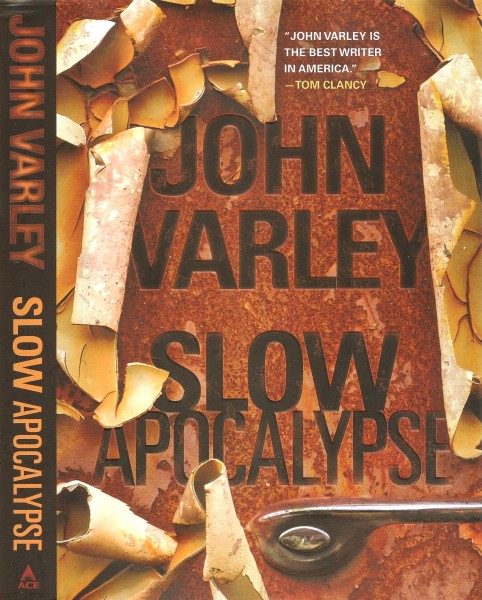
"Despite wars with Iraq and Afghanistan, as well as 9/11, the United States' dependence on foreign oil has kept the nation tied to the Middle East. A scientist has developed a cure for America's addiction--a slow-acting virus that feeds on petroleum, turning it solid. But he didn't consider that his contagion of an Iraqi oil field would spread to infect the fuel supply of the entire world ... In Los Angeles, screenwriter Dave Marshall heard this scenario from a retired U.S. Marine and government insider who acted as a consultant on Dave's last film. It sounded as implausible as many of his scripts, but the reality is much more frightening than anything he can envision. An ordinary guy armed with extraordinary information, Dave hopes his survivor's instinct will kick in so he can protect his wife and daughter from the coming apocalypse that will alter the future of Earth--and humanity ..."--
- Have Space Suit - Will Travel
Robert A. Heinleinstandalone novel1958
similar bynear futurescience fictiontensespace explorationsurvivalspace
From the back cover of the Del Rey 9th printing: "Skyjacked - Everything happened at once. One minute Kip Russell was walking about in his own backyard, testing out an old space suit and dreaming about going to the moon - and the next he was out cold and the captive of an insidious space pirate. The whole thing seemed like a very bad dream until he discovered he wasn't the only prisoner on board. Then the reality of the situation became inescapable. He - along with the daughter of a world-renowned scientist and a beautiful creature from an alien planet - had been skyjacked by a monstrous extraterrestrial and they were on their way to the Moon... a journey toward a fate worse than death!"
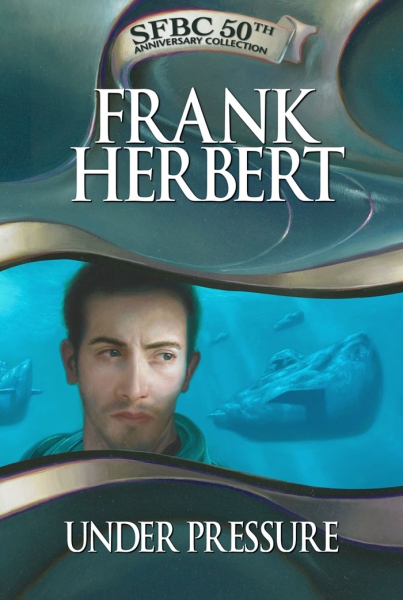
- Under Pressure
Frank Herbertstandalone novel1956
similar bynear futuretensescience fictiondarksurvivalthriller & suspense
From back cover Del Rey paperback September 1978: FOUR MEN Were on board the atomic subtug Fenian Ram S1881. They were on a mission to steal vitally needed oil from underwater deposits in enemy territory -- a mission from which none of the last twenty tugs had returned... FOUR MEN Fighting a war a mile and half under the ocean, isolated by the unrelenting pressure of the water and by their own hellish fears... FOUR MEN Who knew everything they had to know about one another -- except which one of them was the saboteur who could destroy them all!
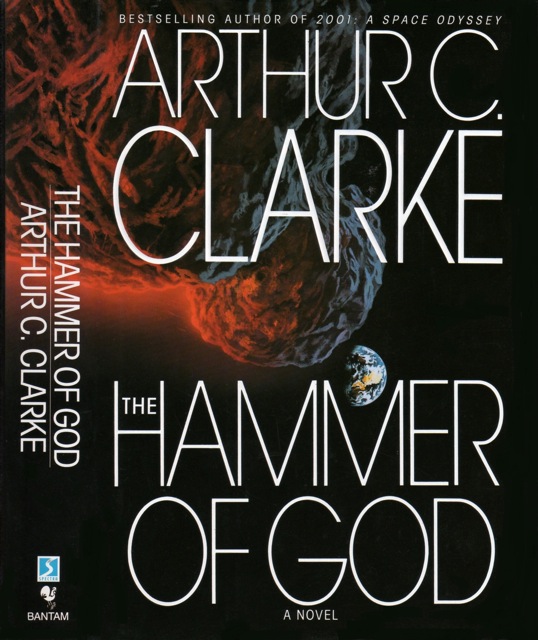
- The Hammer of God
Arthur C. Clarkestandalone novel1993
similar bynear futuretensescience fictionspace explorationsurvivalspace
The Hammer of God is a science fiction novel by Arthur C. Clarke originally published in 1993. Set in the year 2109, it deals with the discovery of an asteroid to be on course to collide with Earth and depicts the mission for deflecting the asteroid by using fusion thermal rockets.
- The Martian
series2 books2012
similar bynear futurescience fictiontensespace explorationsurvival
Andy Weir's novel The Martian, first self-published in 2011 before a commercial re-release, follows astronaut Mark Watney after he is stranded alone on Mars when his crew presumes him dead and departs. Using scientific improvisation and dark humor, Watney works to keep himself alive long enough for a rescue to reach him. It is a single, self-contained survival story.
- Marooned
Martin Caidinstandalone novel1964
similar bynear futuretensescience fictionsurvivalthriller & suspensespace
Marooned is a 1964 science fiction thriller novel by American writer Martin Caidin, about a crewed spacecraft stranded in Earth orbit, oxygen running out, and only an experimental craft available to attempt a rescue. A film based on the novel led Caidin to prepare a revised version of it in 1968. The film was released in 1969, four months after the Apollo 11 mission, with the revised novel sold by book stores a few weeks earlier.
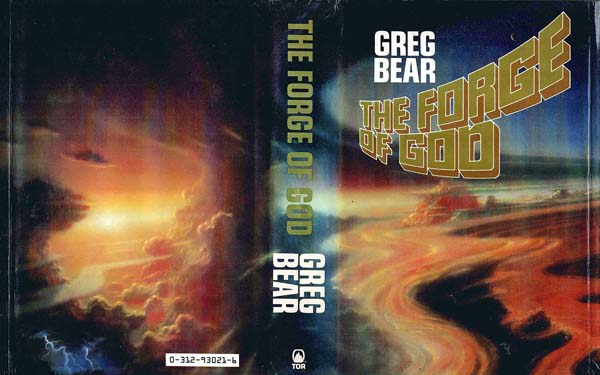
- Forge of God
series2 books1987
completed
similar byscience fictiondarktensesurvival+3 more
The Forge of God (1987) is Greg Bear's science fiction novel about Earth's discovery that it is the target of an incomprehensible, overwhelming alien attack, following scientists and ordinary people as they try to understand what is destroying the planet. Its 1992 sequel, Anvil of Stars, follows a group of young survivors sent on a mission of interstellar retaliation, continuing directly from the first book's ending.
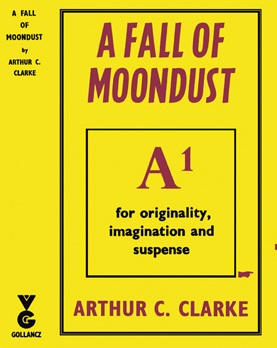
- A Fall of Moondust
Arthur C. Clarkestandalone novel1961
similar bynear futuretensescience fictionsurvival+1 more
From the back cover of the Harbrace paperback: "The action of A Fall of Moondust takes place almost a century from now when tours on the moon are a common occurrence. One of the high points of each tour is a cruise around the Sea of Thirst, a body of volcanic dust, in a specially designed vessel called the Selene On a perfectly routine voyage one day the Selene suddenly disappears. How do you locate a small tourist "cruiser" buried beneath fifty feet of dust? If you find it, how do you rescue the passengers and crew? If you are on board, how do you feel and what do you do while brave men and expert technicians join forces in a race against time? Sustained excitement, lively humor, and an engaging cast of characters make this one of Arthur C. Clarke's most intriguing novels."
- Dark Matter (Teri Terry)
series3 books2017
similar bynear futuretenseplague and pandemicscience fictiondarksurvival+1 more
- The Passage
series3 books2010
similar bynear futuredarktensesurvivalscience fiction+1 more
The Passage is a novel series by Justin Cronin. There are three published books in the series. The film rights were acquired by Fox Entertainment Group in 2007 for adaptation into a film trilogy, but after 12 years of development and planning, it was changed to a television series, which premiered in January 2019 and was canceled after the first season.
- The Long Loud Silence
Wilson Tuckerstandalone novel1952
similar bynear futureplague and pandemicscience fictiondarktensesurvival
Publisher's description: Tomorrow's war -- the war that could not be. The army of the United States was stationed along the length of the Mississippi River, guns pointed east -- with orders to shoot anyone attempting to cross. For the Final War was not a war of the ultimate bomb, of atomic hell. It was a war of the tiny germ, the filterable virus, the disease that came to conquer a nation -- and stayed to damn a world."
- The Andromeda Strain
series2 books1969
similar bytenseplague and pandemicscience fictionsurvival+1 more
Michael Crichton's 1969 novel The Andromeda Strain follows a team of scientists racing to contain a lethal extraterrestrial microorganism that crash-lands in Arizona, told in the clinical, document-driven style that helped establish the techno-thriller genre. Daniel H. Wilson's authorized 2019 sequel The Andromeda Evolution revisits the same threat five decades later. Together the two books form a two-part outbreak story separated by a fifty-year gap in publication.
- The Last Centurion
John Ringostandalone novel2008
similar bynear futurescience fictiondarktensesurvivalplague and pandemic
The Last Centurion is a 2008 stand-alone novel by John Ringo. It is written in "blog style" from the point of view of a U.S. Army officer known as "Bandit Six". The novel is set in a post apocalyptic world that has been ravaged by a brief ice age and disease.
- Colony
Ben Bovastandalone novel1978
similar bynear futurescience fictiontensesurvivalspace station+1 more
Colony continues the story Ben Bova began in Millennium, following astronaut-turned-administrator Chet Kinsman years later as the head of an orbiting space habitat that has become Earth's only real refuge from a planet buckling under overpopulation, food shortages and unrest. Getting a place in the habitat is a matter of life and death for millions who will never be chosen, and as Earth's governments grow more desperate to control or dismantle the colony outright, Kinsman has to decide how far he'll go to protect the world he's built off-world. Bova later folded both novels together into the omnibus The Kinsman Saga. Part of Ben Bova's Chet Kinsman series.
- Maze Runner
series11 books2009
similar bytensescience fictionnear futuresurvival+2 more
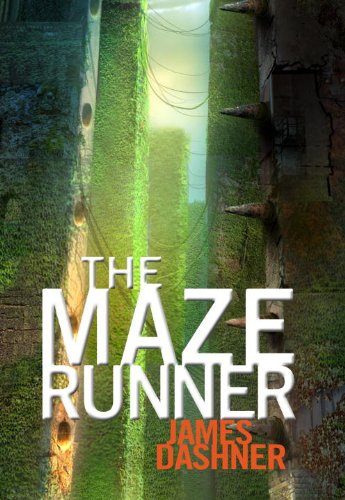
The Maze Runner is a series of young adult dystopian science fiction novels written by American author James Dashner. The series consists of the trilogy The Maze Runner (2009), The Scorch Trials (2010) and The Death Cure (2011), as well as two prequel novels, The Kill Order (2012) and The Fever Code (2016). A novella titled Crank Palace (2020) and a companion book titled The Maze Runner Files (2013) have also been released. A sequel trilogy in the series titled The Maze Cutter takes place 73 years following the events of The Death Cure and consists of the novels The Maze Cutter (2022), The Godhead Complex (2023), and The Infinite Glade (2025).
- Black Moon
Kenneth Calhounstandalone novel2014
similar bynear futureplague and pandemicscience fictiondarktensesurvival
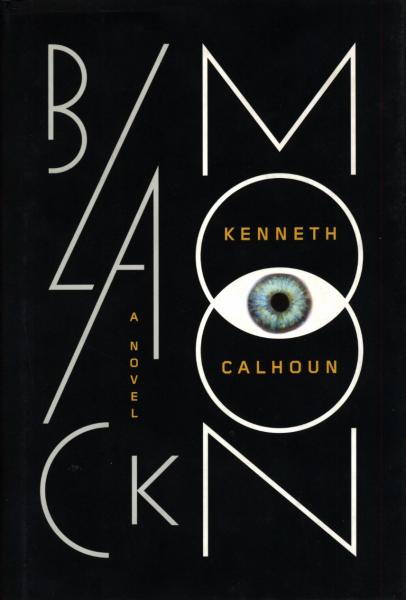
Insomnia has claimed everyone Biggs knows. Even his beloved wife, Carolyn, has succumbed to the telltale red-rimmed eyes, slurred speech and cloudy mind before disappearing into the quickly collapsing world. Yet Biggs can still sleep, and dream, so he sets out to find her.
- Saturn's Race
Larry Niven & Steven Barnesstandalone novel2000
similar bynear futuretensescience fictiondarksurvivalthriller & suspense
The future is a strange and dangerous place. Chaz Kato can testify to that. He is a citizen of Xanadu, a near-future perfect society hosting the wealthiest men and women on future Earth. Along with his fellow citizens on this artificial island, Kato bears the burden of a dark secret that the outside world would be shocked to hear. Avid Minky, Kato's oldest friend, is a reclusive biological genius, who resides in the bizarre underwater village below the island. Grotesquely distorted by an array of cybergenetic gear, he surrounds himself with composite life forms - dolphins and white sharks with grafted arms and organic computer links. Lenore Myles is a student when she travels to Xanadu and gets herself involved with Chaz Kato. When Kato unwittingly lends her his access codes, Lenore stumbles upon the grisly truth behind Xanadu's glittering facade. Lenore, not knowing whom to trust, is soon on the run, hunted down by Saturn, a mysterious entity that moves aggressively to contain the security breach. With the interests of the world's wealthiest people at stake and powerful technology at Saturn's fingertips, Lenore is in a race for her life, against a truly formidable foe. (from the front dust jacket flap of the Tor Books first edition)
- Make Room! Make Room!
Harry Harrisonstandalone novel1966
similar bynear futurescience fictiondarktensesurvival
Make Room! Make Room! is a 1966 science fiction novel written by Harry Harrison exploring the consequences of both unchecked population growth on society and the hoarding of resources by a wealthy minority. It was originally serialized in Impulse magazine.