More like Gravity's Rainbow
anchored on:literary & generalpostmoderneuropeearly 20th centurychallengingpolitical intrigue+5 more
but
- Time's Arrow
Martin Amisstandalone novel1991
similar byearly 20th centurywarchallengingdarkliterary & generaleuropehistorical fictionnonlinear narrative
From Amazon description: In this icy, knife's-edge story of a life that progresses backward through time, unfolding into one of the darkest episodes of the 20th century, Amis ("at his intriguing, heedful, and powerful best" —Time Out), finds a chillingly original approach to the Holocaust in fiction • From the acclaimed author of Zone of Interest "The narrative moves with irresistible momentum.... [Amis is] a daring, exacting writer willing to defy the odds in pursuit of his art." —Newsday Tod. T. Friendly is living his life in reverse. Doctor Friendly has just died, but he moves "out of blackest sleep" to find himself surrounded by doctors and on the deathbed of a man in whose body he is imprisoned. After weeks of improving in the hospital, he is sent home to his affable, melting-pot, primary-colors existence in suburban America. As Friendly breaks up with his lovers in a prelude to seducing them and mangles his patients before he sends them home, his life races backward toward the one appalling moment in modern history when such reversals make sense. From the fresh-cut lawns of his retirement to the hustle of New York, and then back to the boat which reverses his course to the war-torn Europe Friendly came from, Amis brings the steeliest nerve to the job of realizing the novel's inevitable logic. Trapped in his body from grave to cradle, Friendly's consciousness can only watch as he struggles to make sense of the good doctor's most ambitious project yet—the final solution.
- Angel Down
Daniel Krausstandalone novel2025
similar byearly 20th centurychallengingwardarkeuropeliterary & generalhistorical fictionstream of consciousness
Angel Down is a World War I novel, written as a single unbroken sentence, by American author Daniel Kraus. The protagonist is a draft dodger and then an army private who encounters an angel on the battlefield. It was published by Atria Books, an imprint of Simon & Schuster, in July 2025. The book won the 2026 Pulitzer Prize for Fiction.
- The War in the Air
H. G. Wellsstandalone novel1908
similar byearly 20th centurypolitical intriguewareuropescience fiction+2 more
The War in the Air: And Particularly How Mr. Bert Smallways Fared While It Lasted is a military science fiction novel written by H. G. Wells and published in 1908.
- Slaughterhouse-Five or the Children's Crusade: A Duty-Dance with Death
Kurt Vonnegut & Jr.standalone novel1969
similar bywardarkliterary & generaleuropescience fictionnonlinear narrative+1 more
Vonnegut opens in his own voice, describing the twenty years it took him to face writing about surviving the firebombing of Dresden as a POW. He then hands the story to Billy Pilgrim, an awkward, fatalistic American chaplain's assistant swept into the Battle of the Bulge and captured by German forces alongside a soldier who dies blaming him for it. Imprisoned in a disused slaughterhouse in Dresden, Billy survives the firebombing that follows, and, we're told upfront, has also come 'unstuck in time,' living his life out of order, including a stretch on the alien world of Tralfamadore. Vonnegut's best-known novel folds war memoir into science fiction and black comedy.
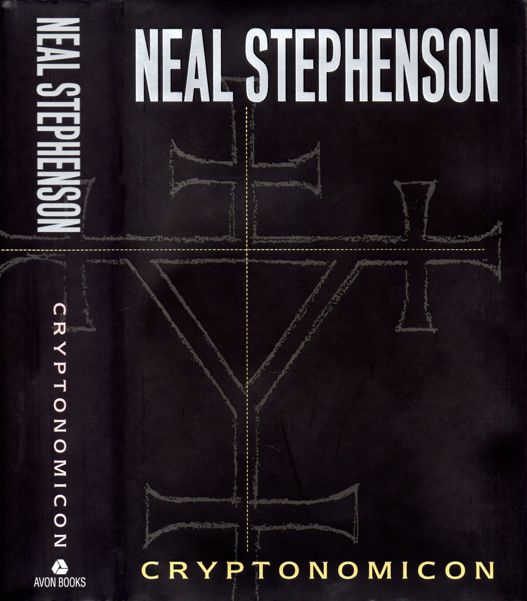
- Cryptonomicon
Neal Stephensonstandalone novel1999
similar bywarearly 20th centurychallengingeuropehistorical fictionmultiple pov+1 more
There are two main timelines in this novel. This first is during World War II, and follows the lives of three cryptologists: Lawrence Pritchard Waterhouse (American), Alan Turing (British), and Rudolf von Hacklheber (German), as well as the strange exploits of Detachment 2702. The second timeline takes place during the present, filled with the offspring of the main characters in the first timeline. They are preoccupied with the construction of a data haven.
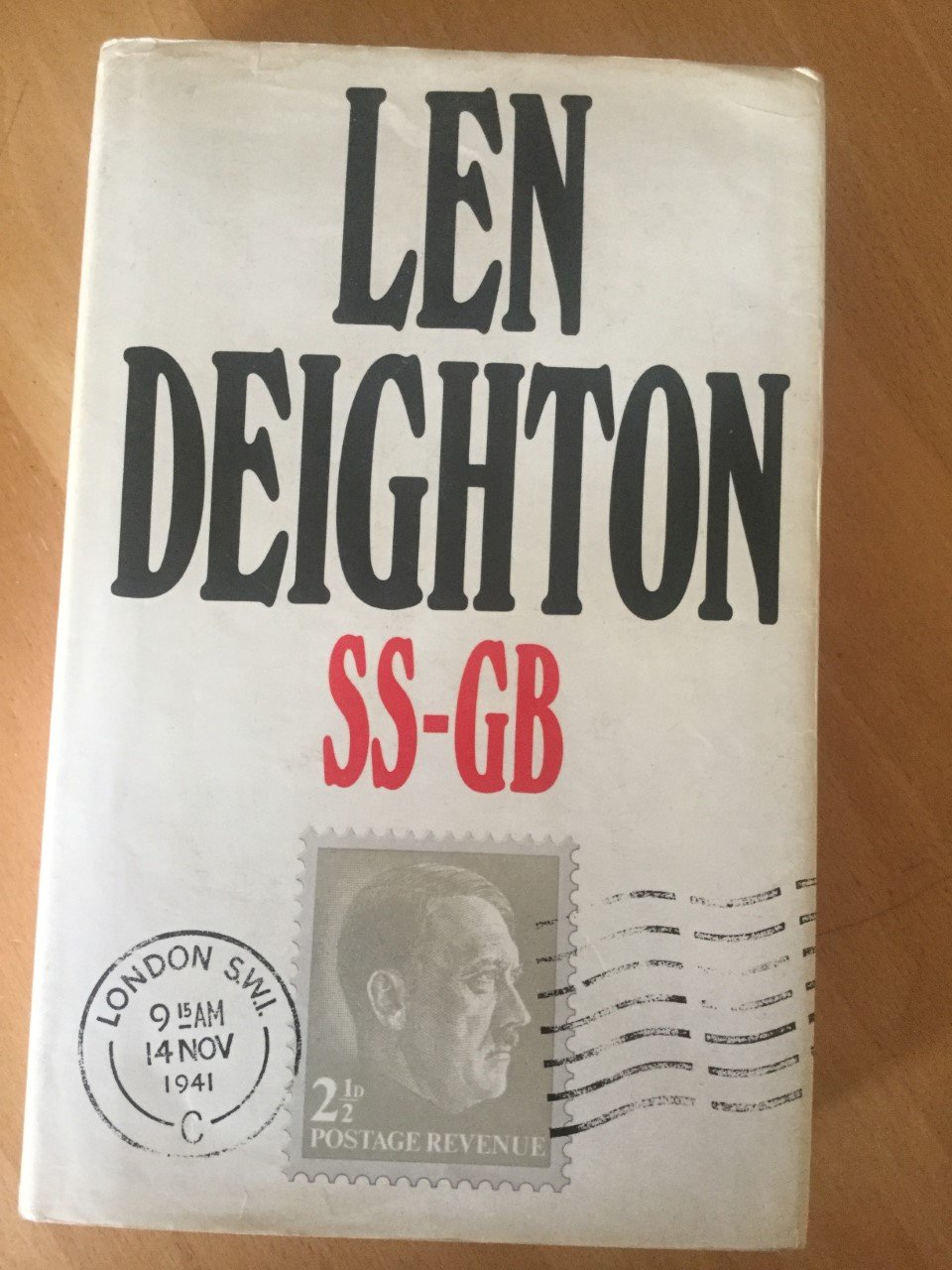
- SS-GB
Len Deightonstandalone novel1978
similar byearly 20th centurypolitical intriguedarkbritish islesscience fiction+1 more
It's November 1941 in a Britain that lost the war: Operation Sea Lion succeeded, Churchill was executed, and the King is a prisoner in his own Tower of London. Detective Superintendent Douglas Archer, still working homicide for the Metropolitan Police under German occupation, catches what looks like a routine case, a well-dressed man murdered above an antiques shop, until the body's oddities point toward something far more dangerous than burglary gone wrong. Archer's investigation collides with occupation politics, the British resistance, and rival factions of the SS and the German Army, each wanting the case to go a different way. Len Deighton's alternate-history spy thriller.
- Against the Day
Thomas Pynchonstandalone novel2006
similar byearly 20th centurychallengingpolitical intrigueliterary & generaleuropehistorical fictionmultiple pov+1 more
Against the Day is an epic historical novel by Thomas Pynchon, published on November 21, 2006. The narrative takes place between the 1893 Chicago World's Fair and the time immediately following World War I and features more than 280 characters spread across the United States, Europe, Mexico, Central Asia, Africa and, according to the book jacket blurb written by Pynchon, "one or two places not strictly speaking on the map at all." Like its predecessors, Against the Day is an example of historiographic metafiction or metahistorical romance. At 1,085 pages, it is the longest of Pynchon's novels to date.
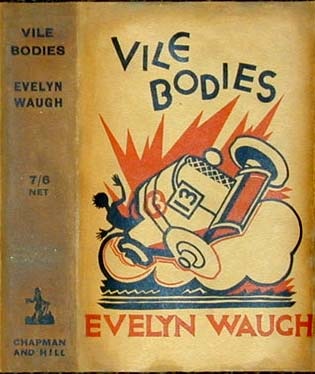
- Vile Bodies
Evelyn Waughstandalone novel1930
similar byearly 20th centurywardarkeuropeliterary & generalbritish isles
Some of the Bright Young Things of Waugh's other satiric novels appear in this work set slightly in the future; apparently light-hearted to begin with, it ends bleakly with its inept protagonist alone on an apocalyptic European battlefield.
- A Fable
William Faulknerstandalone novel1954
similar byearly 20th centurychallengingwareuropeliterary & general+1 more
A Fable is a 1954 novel written by the American author William Faulkner. He spent more than a decade and tremendous effort on it, and aspired for it to be "the best work of my life and maybe of my time". It won the Pulitzer Prize and the National Book Award. Historically, it can be seen as a precursor to Joseph Heller's Catch-22.
- Between the Wars
series4 books1981
similar byearly 20th centurywarhistorical fiction+4 more
The Pyat Quartet, also known as Between the Wars, is a tetralogy of historical fiction novels by English author Michael Moorcock comprising Byzantium Endures, The Laughter of Carthage, Jerusalem Commands and The Vengeance of Rome published from 1981 to 2006.
- The War That Came Early
series6 books2009
similar byearly 20th centurypolitical intriguewareuropemultiple pov+1 more
The War That Came Early is a six-novel series by Harry Turtledove depicting an alternate history of World War II. As is typical of Turtledove's alternate histories, the narrative follows a large cast of both fictional and historical characters.
- Todd Family
series2 books2013
similar byearly 20th centurywarliterary & generalbritish isleshistorical fiction+2 more
Kate Atkinson's Life After Life gives Ursula Todd, born on a snowy night in 1910, a strange gift: whenever she dies, she's born again into a slightly altered version of the same life, gradually piecing together enough intuition across her many deaths to try to change the course of the twentieth century's worst events. The companion novel A God in Ruins turns to Ursula's brother Teddy, a bomber pilot, following his one, single life forward from the war through old age. The two books share a family and a set of preoccupations -- memory, war, chance -- without forming a conventional sequential series.
- Dawn of Fear
Susan Cooperstandalone novel1970
similar byearly 20th centurywardarkeuropebritish isleshistorical fiction
"A study not a story, really, demonstrating--decisively--just what the title says." --Kirkus Reviews 1970-09-01 "Dawn of Fear (1970) is a[n] effective though nonfantastic Young Adult novel set during World War Two." --SFE3
- The Foreshadowing
Marcus Sedgwickstandalone novel2005
similar byearly 20th centurywardarkeuropebritish isleshistorical fiction
The Foreshadowing is a historical fiction novel by Marcus Sedgwick published in 2005. It takes place during the beginning of World War I, following a 17-year-old British girl named Sasha who has premonitions of death.
- The White Hotel
D. M. Thomasstandalone novel1981
similar byearly 20th centurychallengingeuropeliterary & generalhistorical fictionnonlinear narrative
The White Hotel is a novel written by the British (Cornish) poet, translator and novelist D. M. Thomas. It was first published in January 1981 by Gollancz in the United Kingdom and in March 1981 by The Viking Press in the United States.
- The Lady of the Shroud
Bram Stokerstandalone novel1909
similar byearly 20th centurypolitical intrigueeurope+1 more
Rupert Sent Leger inherits his eccentric uncle's fortune on one condition: he must spend a year living in the family's castle in the Blue Mountains, a small, embattled corner of the Balkan coast under threat from Turkish forces. Determined to earn the trust of his new neighbors, Rupert arms the local mountain people for their own defense, and soon finds his castle visited at night by a beautiful woman in a wet burial shroud, who claims sanctuary from the cold and offers no explanation of who, or what, she might be. Bram Stoker's follow-up to Dracula trades outright horror for Ruritanian romance and adventure, blending gothic atmosphere with political intrigue.
- A Man Lies Dreaming
series3 books2014
similar byearly 20th centurychallengingdarkeuropeliterary & general+1 more
Lavie Tidhar's A Man Lies Dreaming imagines Adolf Hitler as a washed-up private detective working the seedy edges of 1930s London, in a timeline where the Nazi party never took power in Germany, framed by chapters narrated from within a concentration camp. The Lunacy Commission returns to related alternate-history material. The novel uses pulp-noir pastiche to force an uncomfortable historical inversion rather than playing it for straightforward genre fun.
- Mother Night
Kurt Vonnegut & Jr.standalone novel1962
similar bywardarkliterary & generaleurope+1 more
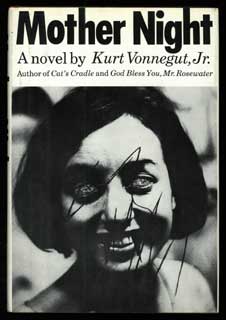
Howard W. Campbell Jr., an American playwright who grew up in Germany, writes his memoirs from an Israeli prison cell awaiting trial for war crimes. As the Nazis rose to power, Campbell stayed on, married a German actress, and was recruited by an American agent to serve as a double agent, broadcasting Nazi propaganda over the radio while secretly passing coded intelligence to the Allies. The catch, as Campbell tells it, is that he became one of the war's most effective propagandists in the process, whatever his loyalties. Kurt Vonnegut's darkest novel asks what a person becomes when the mask he wears for a cause is indistinguishable from his face.
- The Beardless Warriors
Richard Mathesonstandalone novel1960
similar byearly 20th centurywardarkeuropehistorical fiction
The Beardless Warriors is a 1960 World War II novel by American writer Richard Matheson. It was based on his experiences as a young infantryman in the 87th Division in France and Germany.
- Red Shift
Alan Garnerstandalone novel1973
similar bychallengingwarliterary & generalbritish isleshistorical fictionnonlinear narrative
Quoting that 1978 review article by Brian Lee: Red Shift [after The Owl Service] was again about the relationship between two adolescents, but interwoven in their love story were two other strands: one about a group of Roman legionaires 'going tribal' among warring factions of the British (the parallel and the brutal language are obviously those of the Americans among the Viet Cong and the Viet Minh); the other strand is about the massacre of a village on the Welsh border during the Civil War.{{BREAK}} Undoubtedly, Red Shift is a brilliantly written and gripping book. The difficulty about it is that Garner makes no concessions to his readers (and on the book jacket he makes it clear that it is for children). It is told almost entirely in cryptic conversation with minimal clues to the identity of the speakers. He switches from strand to strand of the story without warning. The book cannot be understood and appreciated at one hasty reading. It is worth serious study, but will children persevere? In her introduction to the 1973 edition of Children's Books of the Year, critic and reviewer Elaine Moss says: Spurred on by the publication of Alan Garner's literary crossword puzzle Red Shift ... many of us asked ourselves where children's publishing should end and adult begin? For Children's Books of the Year I have drawn the line below Red Shift and excluded it ... Alan Garner, in deliberately choosing an avant-garde form, is also choosing an advanced, sophisticated audience for his book. Alan Garner himself seems to have come around to this view. This year a television adaptation of Red Shift was screened at peak viewing time with no mention of the fact that it was originally published as a children's novel. [end quotation from the review article; ellipses by Lee]
- How Few Remain Universe
series11 books1997
similar byearly 20th centurywarpolitical intrigue+1 more
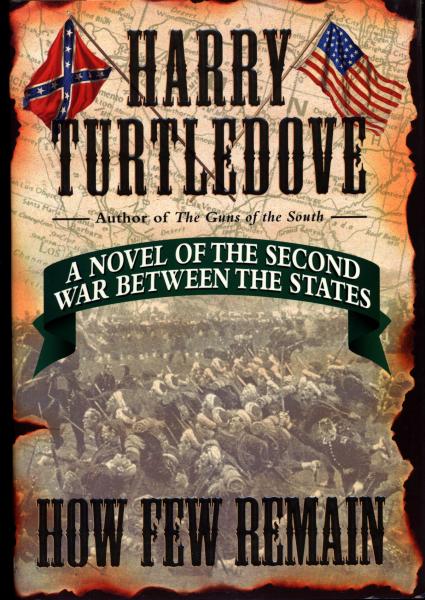
How Few Remain opens Harry Turtledove's Southern Victory timeline, imagining a North America where the Confederacy won the Civil War. Set mostly in 1881-1882, it follows political and military figures on both sides of a divided continent as old grievances resurface into a new war. It's a single novel here, but the starting point for a much longer alternate-history sequence Turtledove extended across both twentieth-century world wars.
- Germanica
Robert Conroystandalone novel2015
similar byearly 20th centurypolitical intriguewareuropescience fiction+1 more
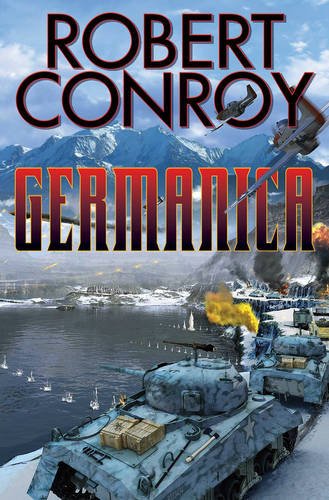
Germanica is an alternate history novel written by Robert Conroy. It was published by Baen Books online as an ebook on August 16, 2015 before being published as a physical book on September 1, 2015. As Conroy had died eight months before the book was published, it was released posthumously.
- The Leviathan Trilogy
series3 books2009
similar byearly 20th centurywareuropescience fiction+2 more
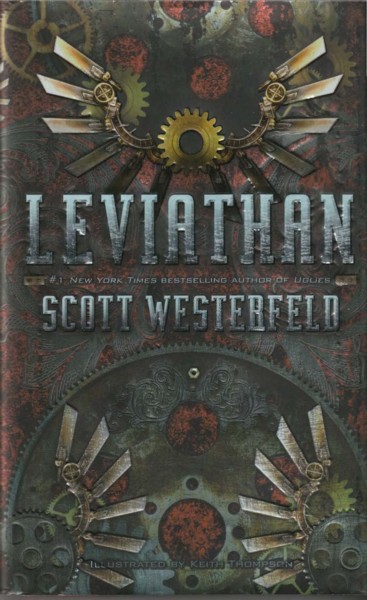
Set in an alternate First World War, Leviathan splits the belligerents into Clankers, who fight with mechanical walkers, and Darwinists, who fight with fabricated living creatures built from spliced DNA. Scott Westerfeld follows a British girl disguised as a boy to serve on a living airship and the exiled heir to the Austro-Hungarian throne as their paths collide, continuing across Behemoth and Goliath. Keith Thompson's illustrations are integral to all three books, alternating text chapters with illustrated sequences.
- Barney Custer
series3 books1914
completed
similar byearly 20th centurypolitical intrigueeurope+2 more
Barney Custer is an American farmer from Nebraska who travels to the small European kingdom of Lutha only to discover he's the spitting image of its unstable ruler, King Leopold. Edgar Rice Burroughs's The Mad King drops him into court intrigue on the eve of World War I, as a scheming uncle's plot for the throne and a budding romance with a princess force Barney to impersonate the king he resembles. It's a standalone Ruritanian adventure rather than an ongoing series.