Loreful
HomeDiscover
Search series, authors…⌘K
Loreful

Reading orders for SF/F series and shared universes — with your place kept in every one.

Explore

UniversesSeriesWorksAuthorsAtlas

Help

FAQAboutSite map

Account & legal

Sign inCreate accountPrivacyTerms

Data

Built on ISFDB, Wikipedia, Wikidata and Open Library. Curated reading orders carry their reasoning on the page; the rest follow publication order. Data sources & licenses

© Loreful · data: ISFDB · CC BY

More like Gray Widow's Web

anchored on:contemporarynorth america

but

Mood

The mood the book leaves you in.

  • The reading experience is propelled by journeys, exploration, and physical risk; excitement and forward momentum dominate over dread or introspection.
  • Joy and loss are deliberately mixed; the resolution grants characters something real while taking something else away, leaving warmth and sorrow together.
  • The book demands work from the reader — dense prose, difficult structure, unfamiliar ideas, or morally uncomfortable material — as part of its intended effect.
  • Grim events, cruelty, or despair dominate the atmosphere, and the book does not soften them with comfort or comic relief.
  • The atmosphere is quietly unsettling — wrongness, unease, and the uncanny pervade the book without necessarily escalating into overt horror.
  • The book is built to move the reader; character feeling is foregrounded and major scenes aim at a strong emotional response.
  • Humor is a primary aim and the prose plays for laughs — comic situations, wit, or dialogue produce sustained comedy, not occasional levity.
  • The book insists that things can improve; effort and decency are shown to matter, and the arc bends toward better outcomes even through hardship.
  • The book teaches as it goes — real facts, history, science, or craft are conveyed in enough depth that learning is part of the reading experience.
  • The book is designed to uplift and motivate, presenting perseverance or achievement in a way that invites the reader to aspire or act.
  • The overall register is cheerful and easygoing; stakes are kept gentle and the book avoids dwelling on pain or dread.
  • Withheld information drives the experience; the book sustains enigmas and secrets the reader wants resolved, whatever its genre.
  • The book is contemplative and inward-looking, giving more weight to thought, memory, and meaning than to external events.
  • The book works as comfort reading — low tension, a soothing pace, and an atmosphere the reader can unwind in.
  • Grief, loss, or melancholy set the dominant register, and the book lets sorrow stand rather than resolving it into comfort.
  • Sustained suspense is the point; the book keeps the reader braced for what happens next through danger, pressure, or impending revelation.
  • Playful invention and charm define the register — fanciful conceits, light absurdity, and a narration that delights in its own oddity.

About

What the story runs on.

  • Stories in which extraterrestrial beings are central — as characters, cultures, or the object of the plot.
  • Stories structured as a quest — a journey undertaken to find, deliver, or destroy something of great import.
  • Stories in which staying alive against nature, catastrophe, or scarcity is the central problem.
  • Stories of lovers kept apart by law, family, faith, or station, where the obstacle to love is the plot.
  • Stories in which a friendship — its making, testing, or loss — is the emotional center.
  • Stories of growing up — a young protagonist crossing from childhood into adult knowledge and responsibility.
  • Stories about who a character truly is — self-discovery, doubled lives, and the search for a self.
  • Stories about mourning — living through the death of a loved one and what loss does to the survivors.
  • Stories in which a buried family truth — hidden parentage, crimes, or shames — surfaces and reorders the present.
  • Stories driven by maneuvering for power — factions, conspiracies, and statecraft conducted in shadow.
  • Stories in which war itself is the subject — combat, occupation, and what warfare does to soldiers and civilians.
  • Stories organized around investigating a killing — the case, the clues, and the pursuit of the killer, in any genre's clothing.

Shelf

Where it sits in the library.

    • Fiction built on magic or other supernatural elements that have no scientific explanation.
    • Secondary-world fantasy at large scale, where the fate of nations or the world turns on the protagonists' struggle.
    • Fantasy set in a recognizably modern city or contemporary world where the supernatural intrudes on everyday life.
    • Fantasy that blends in horror's atmosphere and imagery, keeping a fantastical frame around grim or frightening material.
    • Action-driven fantasy following warriors or rogues with personal stakes against sorcerous threats, rather than world-spanning conflicts.
    • Fantasy set in a real historical period or a close analogue of one, with magic woven into the era.
    • Fantasy in which protagonists cross from the ordinary world into another world through a portal or similar passage.
    • Fiction that retells or reworks a traditional fairy tale in a new form or setting.
    • Fantasy drawing directly on myths, legends, and folklore, retelling them or building on their figures and logic.
    • Fantasy of ghosts, vampires, shapeshifters, psychics, and similar phenomena, usually set in an otherwise ordinary world.
    • Fiction mixing science-fictional trappings with overtly magical or impossible elements in one setting.
    • Low-stakes fantasy emphasizing comfort, community, and everyday pleasures over conflict and peril.
    • Speculative fiction of pervasive moral ambiguity, violence, and cynicism that rejects heroic conventions — fantasy and SF alike.
      • Fiction that extrapolates from science and technology — future societies, space travel, or speculative inventions — within at least nominally natural laws.
      • Science fiction of interstellar scope — starships, galactic polities, and adventure across star systems.
      • Science fiction committed to scientific rigor, where technical plausibility constrains the story.
      • Science fiction centered on armed forces and warfare, told largely from a military point of view.
      • Science fiction of networked, corporate-dominated near futures, pairing high technology with social decay.
      • Science fiction styled on nineteenth-century steam-powered technology, often in a Victorian or pseudo-Victorian setting.
      • Fiction depicting an oppressive or catastrophic society, presented as a warning.
      • Fiction set after civilization's collapse, following survivors in the ruins of the old world.
      • Fiction in which characters move between past and future, and the mechanics or consequences of that travel drive the plot.
      • Fiction exploring a world where a historical event went differently and history diverged from ours.
      • Science fiction about humanity's first encounter and communication with an alien intelligence.
      • Science fiction in which extraterrestrial forces attack or occupy Earth and humanity resists.
      • Fiction whose primary aim is to frighten or unsettle the reader through dread, menace, or the monstrous.
      • Horror of vast, indifferent, incomprehensible entities before which humanity is insignificant, in the Lovecraft tradition.
      • Horror of decaying houses, buried family secrets, and oppressive atmosphere in the Gothic literary tradition.
      • Horror centered on hauntings and the returning dead.
      • Horror located in the mind — paranoia, obsession, and unreliable perception rather than external monsters.
      • Horror built around the reanimated dead and survival amid their outbreaks.
      • Horror defined by explicit, transgressive gore that refuses to cut away from violence.
      • Speculative fiction of the strange and uncanny that resists both natural explanation and standard genre categories.
      • Fiction organized around solving a crime or puzzle, typically following an investigator toward the identification of a culprit.
      • A puzzle-first mystery that lays out clues so the culprit's identity can be deduced before the reveal.
      • Crime fiction of moral ambiguity, fatalism, and hard-edged style, set among the corrupt and the doomed.
      • A mystery following the realistic routines of police work — forensics, interviews, and case-building.
      • A gentle mystery with an amateur sleuth, a small community, and violence kept off the page.
      • A mystery set in a past era, where the investigation works within that period's methods and society.
      • Fast-paced fiction driven by imminent danger, pursuit, or high-stakes conspiracy, built to sustain tension.
      • A thriller of espionage — agents, tradecraft, and intelligence services in conflict.
      • A thriller centered on lawyers and the courtroom, where litigation carries the suspense.
      • A thriller driven by detailed contemporary or near-future technology, often military or scientific.
      • A thriller whose tension comes from mental states and manipulation between characters rather than external action.
      • Fiction whose central plot is a romantic relationship and its development toward an emotionally satisfying resolution.
      • Romance in which one or both partners are supernatural beings, blending fantasy elements into the love story.
      • A fantasy-romance hybrid in which the romantic arc and the fantasy plot carry equal weight.
      • Romance set in a past era, with courtship shaped by the period's society and manners.
      • Romance set in the present day, without supernatural or historical elements.
      • Fiction set in a real past period, where the historical setting materially shapes characters and events.
        • General and literary fiction emphasizing prose style, character interiority, or formal ambition over genre plot conventions.
        • Fiction in a realistic world where magical events occur and are treated as ordinary, in the tradition of Latin American literature.
        • Fiction that ridicules people, institutions, or society in order to criticize them.
        • Fiction of dreamlike, irrational imagery and logic that breaks from realistic representation.
        • Fiction that plays with narrative convention through metafiction, fragmentation, and self-reference.
        • Fiction propelled by journeys, exploration, and physical peril, where action and survival carry the plot.
        • Adventure fiction of ships and seafaring — naval engagements, voyages, and life at sea.
        • Fiction of the American frontier West — gunmen, ranchers, and lawmen, typically in the late nineteenth century.
        • Fiction centered on soldiers, campaigns, and the experience of warfare, historical or imagined.
          • Fiction written primarily to amuse, using comedic situations, wit, or parody as its organizing principle.
            • Multi-generational fiction following a family or dynasty across decades, with inheritance and kinship as the through-line.
              • Fiction whose world runs on explicit game mechanics — levels, stats, and skills that characters can see and exploit.
                • Fiction about costumed or superpowered heroes and their conflicts with comparable villains.

                Practical

                How long a commitment, whether it stands alone, and whether it has finished.

                Tap a chip to ask for it · tap again to rule it out · once more to clear. Numbers show what would be left.

                • Cover of The Blue Ant Trilogy
                  The Blue Ant Trilogy

                  series · 3 books · 2003

                  similar bycontemporarythriller & suspensebig city+3 more

                  Hubertus Bigend is a fictional character appearing in the third trilogy of novels of science fiction and literary author William Gibson. Bigend is the antihero of Gibson's Pattern Recognition (2003), Spook Country (2007) and Zero History (2010). In an interview Gibson says "I've always had a sense of Bigend as someone who presents himself as though he knows what's going on, but who in fact doesn't. It's just my sense of the subtext of the character: he's bullshitting himself, at the same time as he's bullshitting all of us."

                • Cover of Dark Matter
                  Dark Matter

                  Blake Crouch · standalone novel · 2016

                  similar byidentitytensecontemporarythriller & suspensenorth americaour world

                  Jason Dessen, college physics professor, husband and father, is kidnapped and taken to a parallel universe where his counterpart had dedicated his life to inventing a method of traveling between an infinity of parallel universes.

                • Cover of Castle Rock
                  Castle Rock

                  series · 16 books · 1978

                  similar bycontemporarynorth america+1 more

                  Castle Rock is the fictional Maine town that links a cluster of otherwise separate Stephen King novels and novellas, including The Dead Zone, Cujo, The Dark Half, Needful Things, and Elevation. Rather than telling one continuous story, the books share a setting and occasional recurring figures, such as Sheriff Alan Pangborn, while each follows its own self-contained plot and cast. Any title can be read on its own without needing the others.

                • Cover of Jumper
                  Jumper

                  series · 6 books · 1992

                  similar bytensecontemporary+3 more

                  Jumper follows David Rice, a teenager who discovers he can teleport anywhere he's been and uses the power to escape an abusive home, only to find that ability alone doesn't solve the harder problems of finding his absent mother, building an honest relationship, or staying off the radar of people who'd exploit him. Steven Gould's series continues across Reflex, Impulse, and Exo, later following his and his wife's daughter as a second-generation jumper. A 2008 film loosely adapted the first novel.

                • Cover of The Fury
                  The Fury

                  series · 4 books · 1976

                  similar bytensecontemporarythriller & suspense+2 more

                  John Farris's The Fury centers on a teenage girl and boy with escalating psychic and telekinetic powers who become targets of a covert government program trying to weaponize them. The 1976 novel, adapted into Brian De Palma's 1978 film, gave rise to a string of later sequels following the same family's psychic bloodline across decades. Farris writes it as paranoid conspiracy thriller as much as horror, with the powers themselves treated as a violent, destabilizing force.

                • Cover of Airhead
                  Airhead

                  series · 3 books · 2008

                  similar byidentitycontemporarynorth america+3 more

                • Cover of Richard Forthrast
                  Richard Forthrast

                  series · 2 books · 2011

                  similar bynorth americaour world+3 more

                  Neal Stephenson's Richard 'Dodge' Forthrast novels open with Reamde, a globe-spanning thriller that starts when ransomware inside an MMORPG economy pulls Richard's extended family into a real-world hostage crisis involving hackers, jihadists and Russian mobsters. The sequel Fall; or, Dodge in Hell shifts registers entirely, following Richard's digitally preserved mind after death into an afterlife simulation built from his scanned brain. The two books share a protagonist and family but differ sharply in genre and scale.

                • Cover of In the Night Room
                  In the Night Room

                  Peter Straub · standalone novel · 2004

                  similar byidentitytensecontemporarythriller & suspensenorth americaour world

                  In the Night Room is a 2004 horror-thriller novel by American author Peter Straub, a sequel to his 2003 book Lost Boy, Lost Girl. The work was first published in hardback on October 26, 2004, through Random House and it won the 2004 Bram Stoker Award for Novel. Straub encountered some difficulties while writing In the Night Room and had written several different passages for the work before growing bored with each version before writing it using the same technique he used for its predecessor in which he "reached down inside the book and turned it inside out."

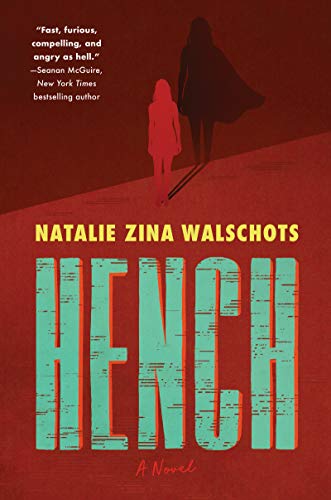
                • Cover of Hench
                  Hench

                  Natalie Zina Walschots · standalone novel · 2020

                  similar byidentitycontemporarysuperheronorth americabig city+1 more

                  Hench is a 2020 superhero fiction novel by Natalie Zina Walschots.

                • Cover of October Daye
                  October Daye

                  series · 42 books · 2009

                  similar bycontemporarynorth america+3 more

                  October Daye is a New York Times Best Selling series of urban fantasy novels by American author Seanan McGuire. They follow October "Toby" Daye, a half-fae changeling and reluctant hero of the realm.

                • Cover of Icarus Project
                  Icarus Project

                  series · 2 books · 2009

                  similar byidentitytensecontemporarysuperhero+4 more

                • Cover of The Merchant Princes
                  The Merchant Princes

                  series · 14 books · 2004

                  similar bytensecontemporaryour world+1 more

                  The Merchant Princes is a science fantasy and alternate history series of nine novels by British writer Charles Stross. In the series, there exist a number of parallel worlds, all of which are on the same geographical Earth but with different societies at different points of development. Members of a certain bloodline can travel between these worlds along with their immediate possessions. The series largely follows Miriam Beckstein, a technology journalist raised in a familiar "normal" Earth, who discovers she was born in a parallel world and is a member of this bloodline. She quickly becomes entangled in political maneuvering and assassination plots with her estranged family. Miriam uses modern technology and investigative journalism to attempt to stay a step ahead.

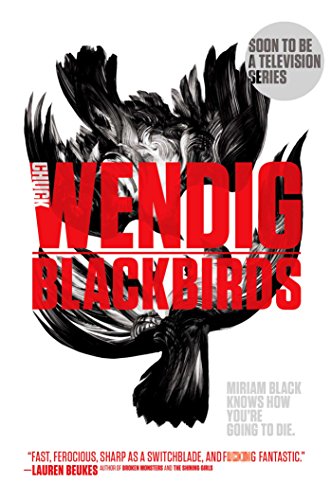
                • Cover of Miriam Black
                  Miriam Black

                  series · 8 books · 2012

                  similar bycontemporarynorth america+2 more

                • Cover of The Mask
                  The Mask

                  Dean R. Koontz · standalone novel · 1981

                  similar byidentitytensecontemporarythriller & suspensenorth america

                  The Mask is a thriller novel by American writer Dean Koontz originally released under the pseudonym Owen West in 1981. Koontz later re-released the novel under his own name.

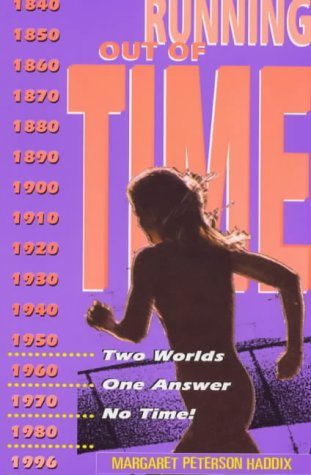
                • Cover of Running Out of Time
                  Running Out of Time

                  series · 2 books · 1995

                  similar bytensecontemporarynorth america+2 more

                  Margaret Peterson Haddix's Running Out of Time follows Jessie, who believes she lives in the frontier village of Clifton, Indiana, in 1840 — until a diphtheria outbreak kills several children and her mother reveals the truth: it is actually 1996, and Clifton is a reconstructed historical tourist village cut off from the outside world. Sent by her mother on a desperate mission for real medicine, Jessie discovers a modern world stranger and more threatening than she imagined, with her own life on the line. Falling Out of Time continues her story.

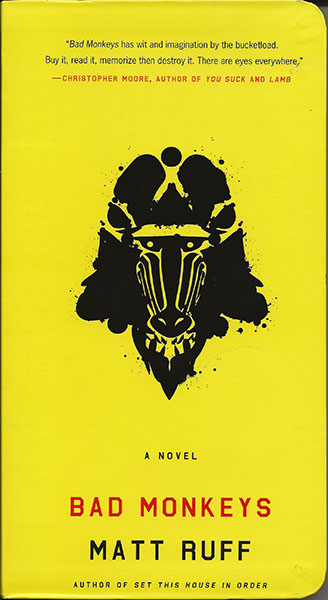
                • Cover of Bad Monkeys
                  Bad Monkeys

                  Matt Ruff · standalone novel · 2007

                  similar byidentitytensecontemporarythriller & suspensenorth america

                  Bad Monkeys is a 2007 psychological thriller novel by American author Matt Ruff. It received mixed reviews in national media, but was subsequently optioned for film.

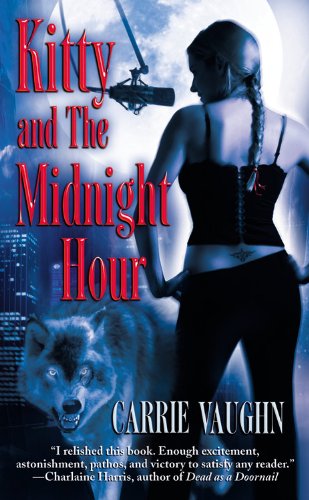
                • Cover of Kitty Norville
                  Kitty Norville

                  series · 62 books · 2001

                  similar bycontemporarynorth america+3 more

                  Kitty Norville is the main character of a series of novels by Carrie Vaughn. She is a werewolf who hosts a popular syndicated radio phone-in show based in Denver called "The Midnight Hour". The program focuses on supernatural issues, beings and creatures she encounters.

                • Cover of The Great Cities
                  The Great Cities

                  series · 3 books · 2016

                  similar bycontemporarynorth americabig city+3 more

                  N. K. Jemisin's Great Cities duology imagines that great cities can awaken as living, sentient avatars defending themselves against extradimensional threats. It began as her short story 'The City Born Great' before expanding into The City We Became (2020) — her first novel after completing the Broken Earth trilogy — and its sequel, The World We Make.

                • Cover of John Cleaver
                  John Cleaver

                  series · 8 books · 2009

                  similar bytensecontemporarynorth america+2 more

                • Cover of Locked in Time
                  Locked in Time

                  Lois Duncan · standalone novel · 1985

                  similar byidentitytensecontemporarythriller & suspensenorth america

                  Locked in Time is a 1985 suspense novel by Lois Duncan. The story centers around Nore, a seventeen-year-old girl who moves into a new home with her father and her new stepfamily. Soon after she meets her stepmother, stepbrother, and stepsister for the first time, Nore begins to suspect something is not quite right about her stepfamily. The author states that the novel explores some of the issues surrounding having eternal life. Duncan says she developed the idea for the novel when one of her daughters was thirteen years old and was having issues with her body image. Duncan mentions that her daughter was "taking everything out" on her, and she began to wonder what it would be like if her daughter never outgrew her adolescence.

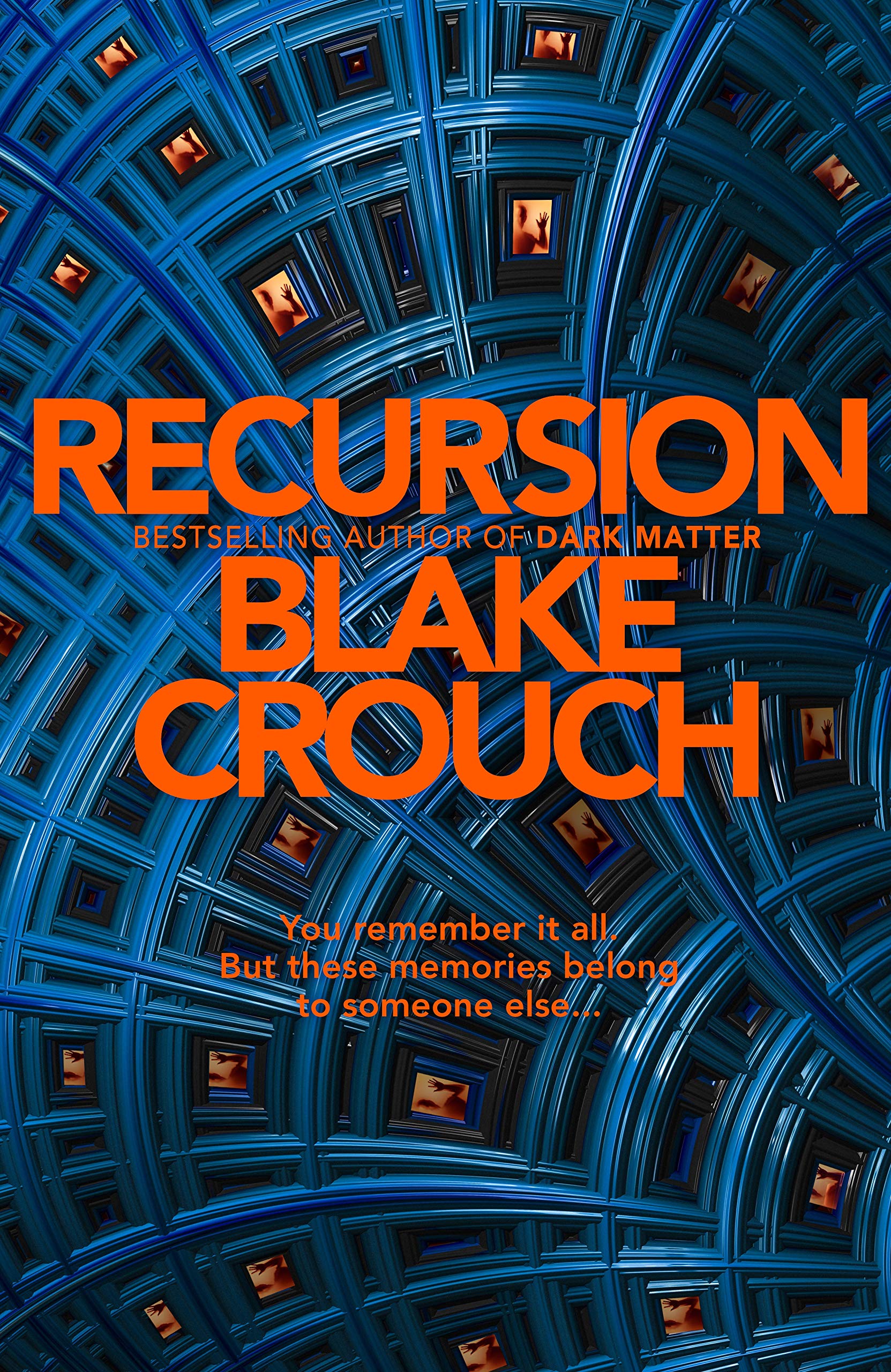
                • Cover of Recursion
                  Recursion

                  Blake Crouch · standalone novel · 2019

                  similar byidentitytensecontemporarythriller & suspensenorth americaour world

                  Recursion is a thriller science fiction novel by American writer Blake Crouch, first published in the United States in June 2019 by the Crown Publishing Group, a subsidiary of Penguin Random House. The novel explores themes of memory, identity, and time.

                • Cover of The Dark Fields
                  The Dark Fields

                  Alan Glynn · standalone novel · 2001

                  similar byidentitytensecontemporarythriller & suspensenorth americabig city

                  The Dark Fields is a 2001 techno-thriller novel by Irish writer Alan Glynn. It was re-released in March 2011 under the title Limitless, in order to coincide with its 2011 film adaptation.

                • QL
                  Quantum Logic

                  series · 7 books · 1990

                  completed

                  similar bytense+1 more

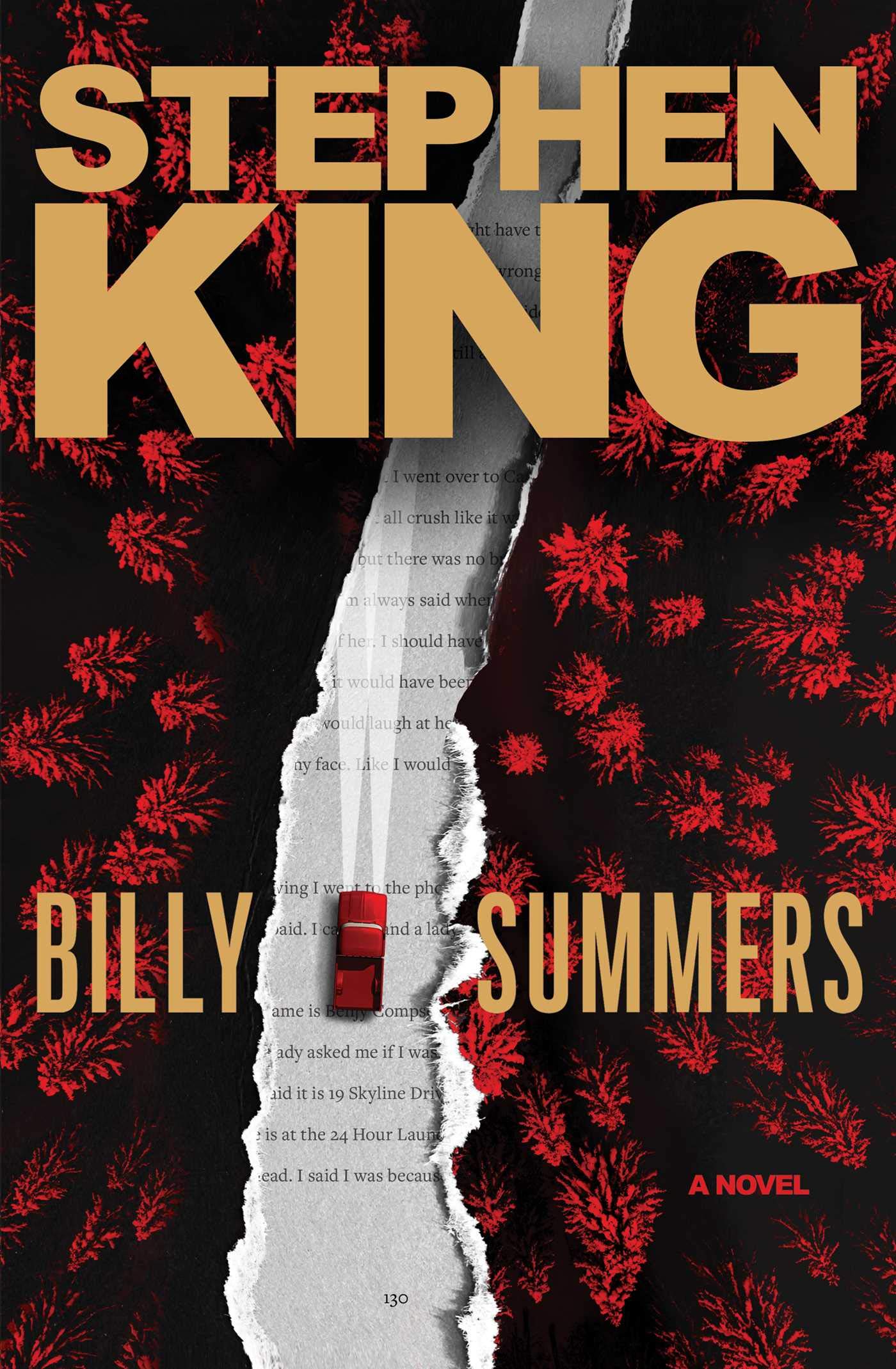
                • Cover of Billy Summers
                  Billy Summers

                  Stephen King · standalone novel · 2021

                  similar byidentitytensecontemporarythriller & suspensenorth america

                  Billy Summers is a crime novel written by American author Stephen King, published by Scribner on August 3, 2021.