Loreful
HomeDiscover
Search series, authors…⌘K
Loreful

Reading orders for SF/F series and shared universes — with your place kept in every one.

Explore

UniversesSeriesWorksAuthorsAtlas

Help

FAQAboutSite map

Account & legal

Sign inCreate accountPrivacyTerms

Data

Built on ISFDB, Wikipedia, Wikidata and Open Library. Curated reading orders carry their reasoning on the page; the rest follow publication order. Data sources & licenses

© Loreful · data: ISFDB · CC BY

More like Grim Shadows

anchored on:historical fantasynorth americaearly 20th centuryparanormalghost storiesromance+4 more

but

Mood

The mood the book leaves you in.

  • The reading experience is propelled by journeys, exploration, and physical risk; excitement and forward momentum dominate over dread or introspection.
  • Joy and loss are deliberately mixed; the resolution grants characters something real while taking something else away, leaving warmth and sorrow together.
  • The book demands work from the reader — dense prose, difficult structure, unfamiliar ideas, or morally uncomfortable material — as part of its intended effect.
  • Grim events, cruelty, or despair dominate the atmosphere, and the book does not soften them with comfort or comic relief.
  • The atmosphere is quietly unsettling — wrongness, unease, and the uncanny pervade the book without necessarily escalating into overt horror.
  • The book is built to move the reader; character feeling is foregrounded and major scenes aim at a strong emotional response.
  • Humor is a primary aim and the prose plays for laughs — comic situations, wit, or dialogue produce sustained comedy, not occasional levity.
  • The book insists that things can improve; effort and decency are shown to matter, and the arc bends toward better outcomes even through hardship.
  • The book teaches as it goes — real facts, history, science, or craft are conveyed in enough depth that learning is part of the reading experience.
  • The book is designed to uplift and motivate, presenting perseverance or achievement in a way that invites the reader to aspire or act.
  • The overall register is cheerful and easygoing; stakes are kept gentle and the book avoids dwelling on pain or dread.
  • Withheld information drives the experience; the book sustains enigmas and secrets the reader wants resolved, whatever its genre.
  • The book is contemplative and inward-looking, giving more weight to thought, memory, and meaning than to external events.
  • The book works as comfort reading — low tension, a soothing pace, and an atmosphere the reader can unwind in.
  • Grief, loss, or melancholy set the dominant register, and the book lets sorrow stand rather than resolving it into comfort.
  • Sustained suspense is the point; the book keeps the reader braced for what happens next through danger, pressure, or impending revelation.
  • Playful invention and charm define the register — fanciful conceits, light absurdity, and a narration that delights in its own oddity.

About

What the story runs on.

  • Stories in which extraterrestrial beings are central — as characters, cultures, or the object of the plot.
  • Stories structured as a quest — a journey undertaken to find, deliver, or destroy something of great import.
  • Stories in which staying alive against nature, catastrophe, or scarcity is the central problem.
  • Stories of lovers kept apart by law, family, faith, or station, where the obstacle to love is the plot.
  • Stories in which a friendship — its making, testing, or loss — is the emotional center.
  • Stories of growing up — a young protagonist crossing from childhood into adult knowledge and responsibility.
  • Stories about who a character truly is — self-discovery, doubled lives, and the search for a self.
  • Stories about mourning — living through the death of a loved one and what loss does to the survivors.
  • Stories in which a buried family truth — hidden parentage, crimes, or shames — surfaces and reorders the present.
  • Stories driven by maneuvering for power — factions, conspiracies, and statecraft conducted in shadow.
  • Stories in which war itself is the subject — combat, occupation, and what warfare does to soldiers and civilians.
  • Stories organized around investigating a killing — the case, the clues, and the pursuit of the killer, in any genre's clothing.

Shelf

Where it sits in the library.

    • Fiction built on magic or other supernatural elements that have no scientific explanation.
    • Secondary-world fantasy at large scale, where the fate of nations or the world turns on the protagonists' struggle.
    • Fantasy set in a recognizably modern city or contemporary world where the supernatural intrudes on everyday life.
    • Fantasy that blends in horror's atmosphere and imagery, keeping a fantastical frame around grim or frightening material.
    • Action-driven fantasy following warriors or rogues with personal stakes against sorcerous threats, rather than world-spanning conflicts.
    • Fantasy set in a real historical period or a close analogue of one, with magic woven into the era.
    • Fantasy in which protagonists cross from the ordinary world into another world through a portal or similar passage.
    • Fiction that retells or reworks a traditional fairy tale in a new form or setting.
    • Fantasy drawing directly on myths, legends, and folklore, retelling them or building on their figures and logic.
    • Fantasy of ghosts, vampires, shapeshifters, psychics, and similar phenomena, usually set in an otherwise ordinary world.
    • Fiction mixing science-fictional trappings with overtly magical or impossible elements in one setting.
    • Low-stakes fantasy emphasizing comfort, community, and everyday pleasures over conflict and peril.
    • Speculative fiction of pervasive moral ambiguity, violence, and cynicism that rejects heroic conventions — fantasy and SF alike.
      • Fiction that extrapolates from science and technology — future societies, space travel, or speculative inventions — within at least nominally natural laws.
      • Science fiction of interstellar scope — starships, galactic polities, and adventure across star systems.
      • Science fiction committed to scientific rigor, where technical plausibility constrains the story.
      • Science fiction centered on armed forces and warfare, told largely from a military point of view.
      • Science fiction of networked, corporate-dominated near futures, pairing high technology with social decay.
      • Science fiction styled on nineteenth-century steam-powered technology, often in a Victorian or pseudo-Victorian setting.
      • Fiction depicting an oppressive or catastrophic society, presented as a warning.
      • Fiction set after civilization's collapse, following survivors in the ruins of the old world.
      • Fiction in which characters move between past and future, and the mechanics or consequences of that travel drive the plot.
      • Fiction exploring a world where a historical event went differently and history diverged from ours.
      • Science fiction about humanity's first encounter and communication with an alien intelligence.
      • Science fiction in which extraterrestrial forces attack or occupy Earth and humanity resists.
      • Fiction whose primary aim is to frighten or unsettle the reader through dread, menace, or the monstrous.
      • Horror of vast, indifferent, incomprehensible entities before which humanity is insignificant, in the Lovecraft tradition.
      • Horror of decaying houses, buried family secrets, and oppressive atmosphere in the Gothic literary tradition.
      • Horror centered on hauntings and the returning dead.
      • Horror located in the mind — paranoia, obsession, and unreliable perception rather than external monsters.
      • Horror built around the reanimated dead and survival amid their outbreaks.
      • Horror defined by explicit, transgressive gore that refuses to cut away from violence.
      • Speculative fiction of the strange and uncanny that resists both natural explanation and standard genre categories.
      • Fiction organized around solving a crime or puzzle, typically following an investigator toward the identification of a culprit.
      • A puzzle-first mystery that lays out clues so the culprit's identity can be deduced before the reveal.
      • Crime fiction of moral ambiguity, fatalism, and hard-edged style, set among the corrupt and the doomed.
      • A mystery following the realistic routines of police work — forensics, interviews, and case-building.
      • A gentle mystery with an amateur sleuth, a small community, and violence kept off the page.
      • A mystery set in a past era, where the investigation works within that period's methods and society.
      • Fast-paced fiction driven by imminent danger, pursuit, or high-stakes conspiracy, built to sustain tension.
      • A thriller of espionage — agents, tradecraft, and intelligence services in conflict.
      • A thriller centered on lawyers and the courtroom, where litigation carries the suspense.
      • A thriller driven by detailed contemporary or near-future technology, often military or scientific.
      • A thriller whose tension comes from mental states and manipulation between characters rather than external action.
      • Fiction whose central plot is a romantic relationship and its development toward an emotionally satisfying resolution.
      • Romance in which one or both partners are supernatural beings, blending fantasy elements into the love story.
      • A fantasy-romance hybrid in which the romantic arc and the fantasy plot carry equal weight.
      • Romance set in a past era, with courtship shaped by the period's society and manners.
      • Romance set in the present day, without supernatural or historical elements.
      • Fiction set in a real past period, where the historical setting materially shapes characters and events.
        • General and literary fiction emphasizing prose style, character interiority, or formal ambition over genre plot conventions.
        • Fiction in a realistic world where magical events occur and are treated as ordinary, in the tradition of Latin American literature.
        • Fiction that ridicules people, institutions, or society in order to criticize them.
        • Fiction of dreamlike, irrational imagery and logic that breaks from realistic representation.
        • Fiction that plays with narrative convention through metafiction, fragmentation, and self-reference.
        • Fiction propelled by journeys, exploration, and physical peril, where action and survival carry the plot.
        • Adventure fiction of ships and seafaring — naval engagements, voyages, and life at sea.
        • Fiction of the American frontier West — gunmen, ranchers, and lawmen, typically in the late nineteenth century.
        • Fiction centered on soldiers, campaigns, and the experience of warfare, historical or imagined.
          • Fiction written primarily to amuse, using comedic situations, wit, or parody as its organizing principle.
            • Multi-generational fiction following a family or dynasty across decades, with inheritance and kinship as the through-line.
              • Fiction whose world runs on explicit game mechanics — levels, stats, and skills that characters can see and exploit.
                • Fiction about costumed or superpowered heroes and their conflicts with comparable villains.

                Practical

                How long a commitment, whether it stands alone, and whether it has finished.

                Tap a chip to ask for it · tap again to rule it out · once more to clear. Numbers show what would be left.

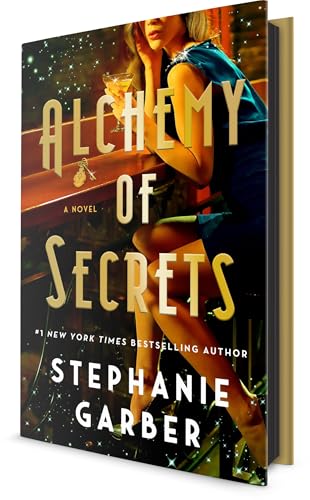
                • Cover of Alchemy of Secrets
                  Alchemy of Secrets

                  series · 1 book · 2025

                  similar bymagical artifactsmysteriousnorth americabig city

                  Alchemy of Secrets follows Holland St. James, a young woman convinced that magic is real, who tracks down a local urban legend called the Watch Man and is told she will die at midnight the next day unless she finds an ancient object called the Alchemical Heart. Pulled into a hidden magical Los Angeles alongside a stranger who claims her missing sister sent him to protect her, Holland has to work out who is lying to her before the clock runs out. Stephanie Garber wrote it as a standalone 2025 novel rather than the start of a numbered series.

                • Cover of Theodosia
                  Theodosia

                  series · 4 books · 2007

                  similar bymagical artifactsmysteriousearly 20th centuryhistorical fantasy

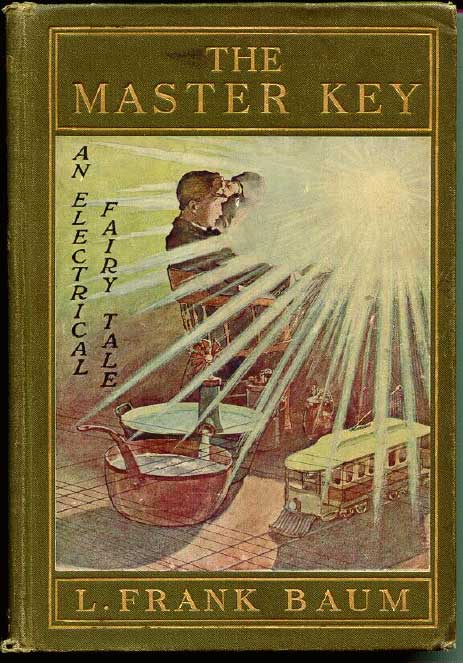
                • Cover of The Master Key: An Electrical Fairy Tale
                  The Master Key: An Electrical Fairy Tale

                  L. Frank Baum · standalone novel · 1901

                  similar bymagical artifactsearly 20th centurynorth america

                  Rob Joslyn is an amateur electrical tinkerer, wiring up batteries and motors with more enthusiasm than skill, when one bungled experiment does something no wiring diagram predicted: it summons the Demon of Electricity. Impressed rather than angry, the Demon offers Rob an extraordinary deal -- three gifts a week for three weeks, devices harnessing electrical power beyond anything on Earth -- and leaves the boy to decide what to do with power most adults could never be trusted with. What follows tests Rob's judgment as much as his ingenuity, gift by increasingly dangerous gift. L. Frank Baum's venture into science fiction, published between Oz books.

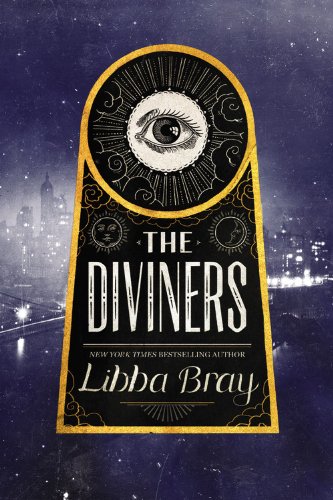
                • Cover of The Diviners
                  The Diviners

                  series · 4 books · 2012

                  similar byearly 20th centuryeerienorth americahistorical fantasybig city+1 more

                • Cover of Many Dimensions
                  Many Dimensions

                  Charles Williams · standalone novel · 1931

                  similar bymagical artifactseeriemysterious

                  Many Dimensions is the second of the novels of the supernatural by Charles Williams. The original publisher was Victor Gollancz Ltd in 1931. Following Williams' death it was republished by Faber & Faber in 1947 in the UK and in 1949 by Pellegrini & Cudahy in the US. In 1952 it was issued in the Penguin Books green-covered Mystery & Crime series.

                • Cover of Claimed
                  Claimed

                  Francis Stevens · standalone novel · 1966

                  similar bymagical artifactsearly 20th centuryeerie

                  From the flaps of the Avalon edition: "It was in the first decade of the twentieth century that the British merchant sailing ship, Portsmouth Belle, was thrown off her course by undersea volcanic convulsions, and entered an area of floating scoria and ashes. For three days the vessel plowed through this area, her best speed being three knots despite a fair breeze, with all canvas set; and on the second day, an island was sighted. The Portsmouth Belle's instruments had been affected in some way by the seismic disturbances; it was not possible to estimate her location by other than dead reckoning. If this was correct, there should be no island here. And all the appearances, as the ship approached, were of an area of land thrown up recently by volcanic action. It was, in fact, a mass of dark, chocolate-colored rock, striated with metallic red, all coated with ashes. Some of the ash had been washed away by rain since the upheaval, and the rock, in the distance, gave the appearance of ruins. Indeed, the captain of the Portsmouth Belle thought, these might be the remains of some ancient city. They were too far away to investigate under the circumstances. A landing indicated many hot, ill-smelling fissures, from which poisonous vapors might be coming. Captain Charles Jessamy and Seaman James Blair were the only ones to set foot, briefly, on the island; and Blair asked the skipper's permission to carry away a keepsake. Scattered about the surface were many irregular blocks and ball-shaped masses of greenish-black lava. One of the smaller blocks had a very regular rectangular shape; the lava was deep-green in color, flecked with brilliant scales of matallic scarlet. Jessamy gave Seaman Blair permission to take it away and keep it. The Portsmouth Belle was lost before returning to port, but Blair and the others aboard were saved. By that time, in attempting to saw the block open, Blair discovered a great casket inside. He concealed it from the others. And the events which followed were such that, in terror, he sold the casket to a curio-shop dealer. Thus it passed into the hands of the fabulously wealthy Jesse Robinson, whose creed was, "What I want, I get - and what I get, I keep." And with Robinson's keeping of the box, despite Blair's attempt to warn him and urge him to sell it back, the terror passed to the Robinson household, to his niece, Leilah, and to young John Vanaman, M.D., whom Leilah summoned to look after her uncle. For some being, some thing, claimed this box; and whatever the being was, it had tremendous powers of illusion. Night after night, sitting beside old Robinson, Dr. Vanaman heard the surge of the sea, saw the waves emerge under closed doors and flood the room, and soon found that this was only the beginning of the manifestation. What was the secret of the box, of a substance which no one could identify? What was the writing on the box, the symbols which seemed to be on whatever side one turned it, then to sink down into the middle of the box? Why did the owner of the curio ship, who had had the box for a short time, suddenly disappear with a large sum of money, then reappear, obviously insane, leading a blooded white horse, which he had purchased for several thousand dollars? What did he mean by his ravings about the "archangel"?"

                • Cover of War in Heaven
                  War in Heaven

                  Charles Williams · standalone novel · 1930

                  similar bymagical artifactsearly 20th century+1 more

                  War in Heaven is a 1930 novel written by Charles Williams. It is the first of his supernatural novels that C. S. Lewis styled "spiritual shockers" and T. S. Eliot called "supernatural thrillers".

                • Cover of The Lady of the Shroud
                  The Lady of the Shroud

                  Bram Stoker · standalone novel · 1909

                  similar byearly 20th centuryeeriemysteriousromance

                  Rupert Sent Leger inherits his eccentric uncle's fortune on one condition: he must spend a year living in the family's castle in the Blue Mountains, a small, embattled corner of the Balkan coast under threat from Turkish forces. Determined to earn the trust of his new neighbors, Rupert arms the local mountain people for their own defense, and soon finds his castle visited at night by a beautiful woman in a wet burial shroud, who claims sanctuary from the cold and offers no explanation of who, or what, she might be. Bram Stoker's follow-up to Dracula trades outright horror for Ruritanian romance and adventure, blending gothic atmosphere with political intrigue.

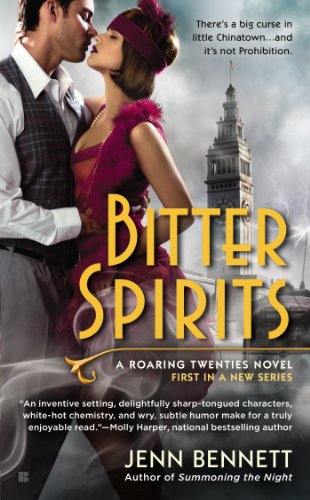
                • Cover of Roaring Twenties
                  Roaring Twenties

                  series · 3 books · 2014

                  similar byearly 20th centurynorth americahistorical fantasy+7 more

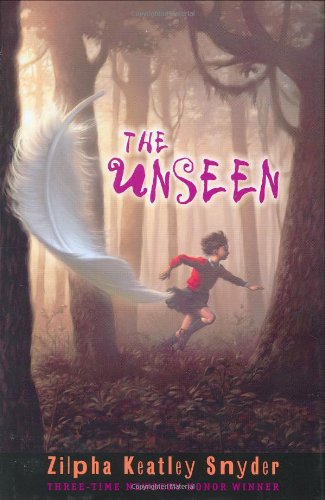
                • Cover of The Unseen
                  The Unseen

                  Zilpha Keatley Snyder · standalone novel · 2004

                  similar bymagical artifactseeriemysterious

                  Xandra Hobson has always been fascinated by magic. So when she rescues a beautiful wounded bird, she is convinced that the glowing white feather it leaves behind must be magical. When she brings the feather to school, she is surprised to find that Belinda is interested in it, too. Belinda is a weird girl whom everybody makes fun of. Xandra doesn't want to be seen with her, but Belinda seems to know something about the feather--so Xandra decides to befriend her. Belinda calls the feather a key.But a key to what? And how does it work? When Xandra tries to use the key, she becomes aware of an unseen world, full of phantoms. Some are soft and cuddly, like the young animals she has rescued. But others are terrifying monsters. Could the key's magic be evil? Xandra needs Belinda to help her explore the unseen, but she also needs to learn to help herself if the key is to become a gift and not a nightmare.From the Hardcover edition.

                • Cover of New York Circulating Material Repository
                  New York Circulating Material Repository

                  series · 3 books · 2010

                  similar bymagical artifactsnorth americabig city+3 more

                • Cover of The Montglane Service
                  The Montglane Service

                  series · 2 books · 1989

                  similar bymagical artifactsmysteriousnorth america

                • Cover of The Enchanted Castle
                  The Enchanted Castle

                  E. Nesbit · standalone novel · 1907

                  similar bymagical artifactsearly 20th century

                  On a dull school holiday, siblings Jerry and Jimmy and their friend Kathleen stumble across a grand, hidden estate in the countryside, with a lake, marble statues, and a maze at its heart. Inside the maze they find what looks like a sleeping princess, who claims the castle is enchanted and shows them a ring that grants invisibility -- until it works, and the panicked 'princess' turns out to be Mabel, the housekeeper's niece, playing a game gone further than intended. The ring's magic turns out to be entirely real, answering the children's own careless, half-formed wishes. One of E. Nesbit's best-loved fantasies for children.

                • Cover of Weaveworld
                  Weaveworld

                  Clive Barker · standalone novel · 1987

                  similar bymagical artifactseerie

                  Weaveworld is a 1987 dark fantasy novel by English writer Clive Barker. It is about a magical world, known as the Fugue, which has been hidden inside a carpet to safeguard it from both inquisitive humans and hostile supernatural foes. Two humans become embroiled in the fate of the Fugue, attempting to save it from those who seek to destroy it. The book was nominated in 1988 for the World Fantasy Award for Best Novel.

                • Cover of The Peculiarities
                  The Peculiarities

                  David Liss · standalone novel · 2021

                  similar byearly 20th centuryeeriemysterioushistorical fantasybig city

                  All of his life, Thomas Thresher has been free of obligation and responsibility, but that is over now. He is a twenty-three-year-old man whose best days are behind him. Thomas's older brother Walter has trapped him in a tedious clerical job at the family bank in London, and Thomas is expected to wed a wealthy young woman in whom he has no interest. But Thomas has more serious problems than those of a disaffected young man. There are irregularities at the bank he cannot explain. His childhood friend has mysteriously turned up dead. Worse, a verdant skin malady has infected him: leaves have begun sprouting on his skin. Thomas must conclude that it is due to the long-rumored Peculiarities. London's famous grey fog has been concealing a rash of unnatural afflictions--and worse, the murderous Elegants. As Thomas grows leafier, the conspiracies surrounding him become more apparent. He cannot determine whom to trust: his own family; his banking co-workers and superiors; the beautiful widow of his companion; the woman he is to marry. Or perhaps a lycanthropic medium; the members of a secret occult society...or even Aleister Crowley.

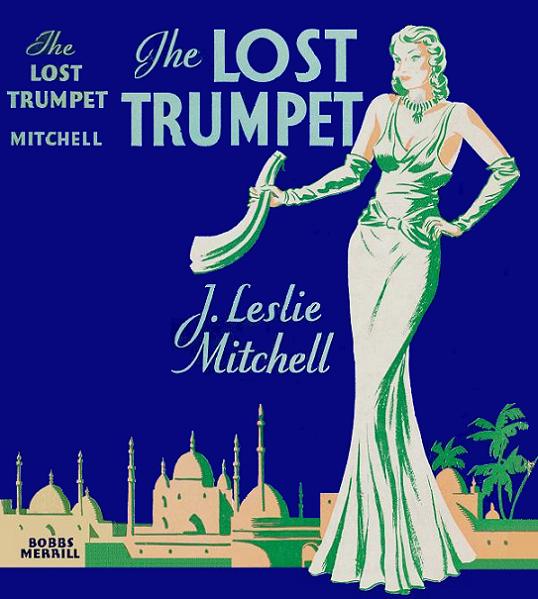
                • Cover of The Lost Trumpet
                  The Lost Trumpet

                  J. Leslie Mitchell · standalone novel · 1932

                  similar bymagical artifactsearly 20th centurymysterious

                  In modern day (1932) Cairo two American archeologists mount an expedition to find the great horn, which blown by Joshua, crumbled the walls of Jericho.

                • Cover of The Lost Stradivarius
                  The Lost Stradivarius

                  J. Meade Falkner · standalone novel · 1895

                  similar bymagical artifactseerieghost stories

                  The Lost Stradivarius (1895), by J. Meade Falkner, is a short horror novel about ghosts and the evil that can be invested in an object, in this case an extremely fine Stradivarius violin. It has been described as "one of Falkner's three celebrated novels" and as a "psychic romance".

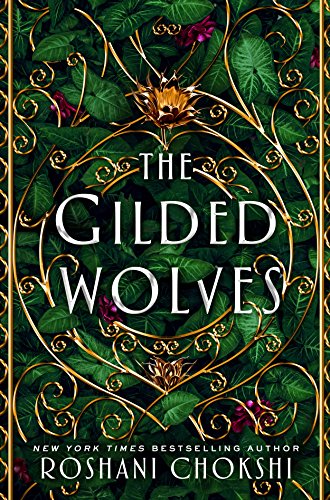
                • Cover of The Gilded Wolves
                  The Gilded Wolves

                  series · 3 books · 2019

                  similar bymagical artifactshistorical fantasy+2 more

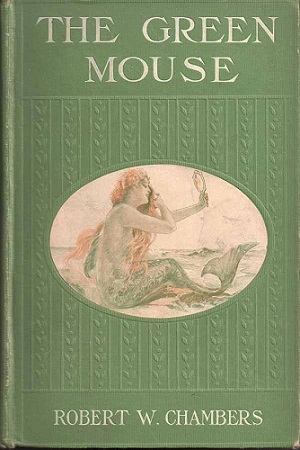
                • Cover of Green Mouse
                  Green Mouse

                  series · 7 books · 1904

                  completed

                  similar bymagical artifactsearly 20th centuryromance

                • Cover of Hidden Treasure
                  Hidden Treasure

                  Jessie Burton · standalone novel · 2025

                  similar bymagical artifactsearly 20th centurymysterious

                  "For the people who live on the banks of the Thames, the river is a living, breathing thing. It can take your treasures. It can hide your treasures. And, sometimes, it can give them back. Bo and Billy are two children who have never met. Billy is an orphan. Bo's dad died when she was small and now her brother is off to war. Both children are poor, but they have each found half of a priceless treasure, given up by the river. A treasure which - when the pieces are reunited - holds the power to give back to one of them the most precious thing they have ever lost. But should the treasure be put back together again? And why has the river given it up now?" (Amazon UK)

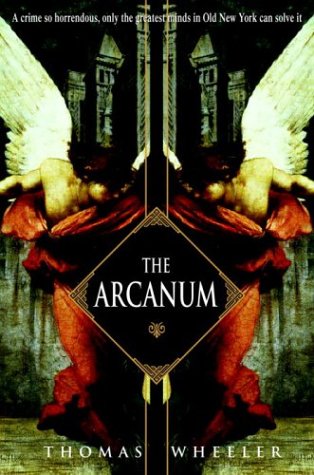
                • Cover of The Arcanum
                  The Arcanum

                  Thomas Wheeler · standalone novel · 2004

                  similar byearly 20th centuryeeriemysteriousnorth americahistorical fantasy

                  The Arcanum is a 2005 novel by Thomas Wheeler. Set in 1919 it concerns the last case of occult-busters Sir Arthur Conan Doyle, Harry Houdini, H. P. Lovecraft, and voodoo queen Marie Laveau.

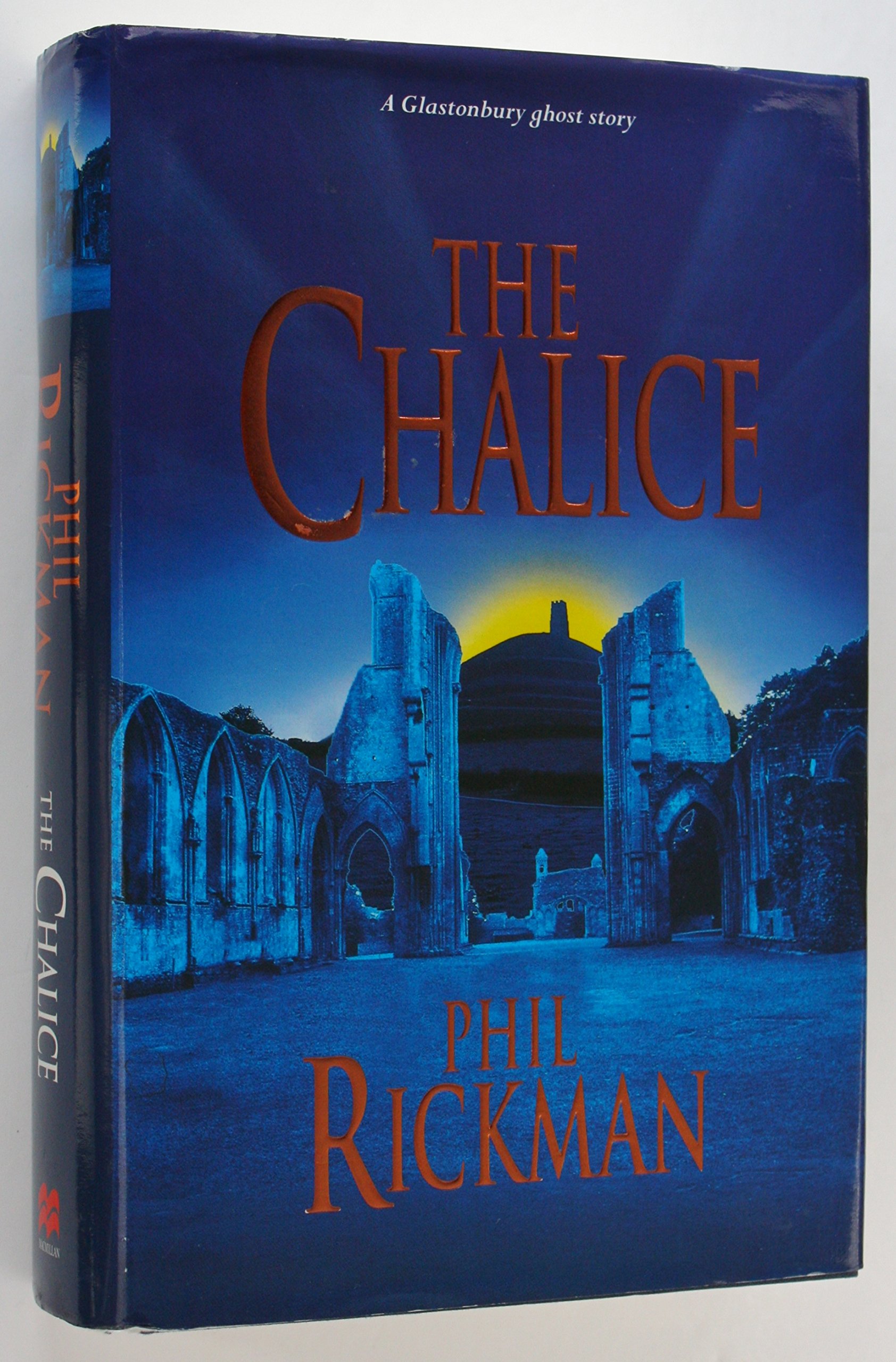
                • Cover of The Chalice
                  The Chalice

                  Phil Rickman · standalone novel · 1996

                  similar bymagical artifactseeriemysterious

                  Glastonbury, legendary resting place of the Holy Grail, is a mysterious and haunting town. But when plump, dizzy Diane Flitch returns home, it's with a sense of deep unease — and not only about her aristocratic family's reaction to her broken engagement and her New Age companions. Plans for a new motorway have intensified the old bitterness between the local people and the 'pilgrims', so already the sacred air is soured. And, as the town becomes increasingly split by violence and death, Diane, local bookseller Juanita Carey and the writer Joe Powys must now face up to the worst of all possibilities: the existence of an anti-Grail — the dark chalice.

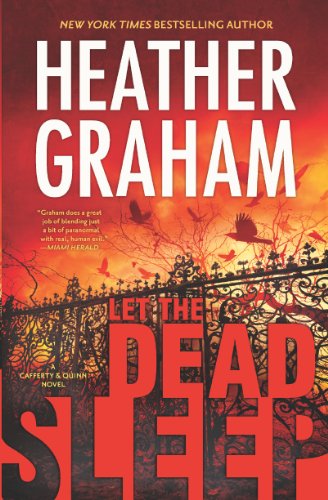
                • Cover of Cafferty and Quinn
                  Cafferty and Quinn

                  series · 4 books · 2013

                  similar bymysteriousnorth americaparanormal+4 more

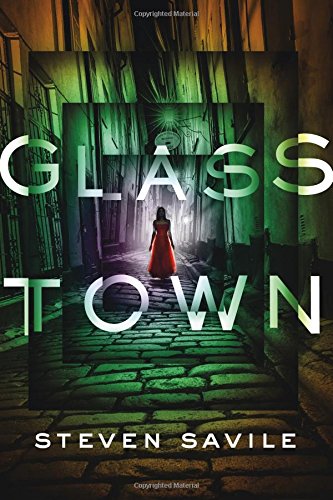
                • Cover of Glass Town
                  Glass Town

                  Steven Savile · standalone novel · 2017

                  similar byearly 20th centuryeeriemysterioushistorical fantasybig city

                  "In 1924, two brothers both loved Eleanor Raines, a promising young actress from the East End of London. She disappeared during the filming of Alfred Hitchcock's debut, Number 13, which itself is now lost. It was the crime of the age, capturing the imagination of the city: the beautiful actress never seen again, and the gangster who disappeared the same day. Generations have passed. Everyone involved is long dead. But even now their dark, twisted secret threatens to tear the city apart. Joshua Raines is about to enter a world of macabre beauty, of glittering celluloid and the silver screen, of illusion and deception, of impossibly old gangsters and the fiendish creatures they command, and most frighteningly of all, of genuine magic." --