More like Halfskin
anchored on:science fictionour worldnear future
but
- Library of America P. K. Dick Collection
series9 books1962
completed
similar byscience fictionnear future+3 more
- Blade Runner Universe
series6 books1968
similar byscience fictiondarknear futureidentity+2 more
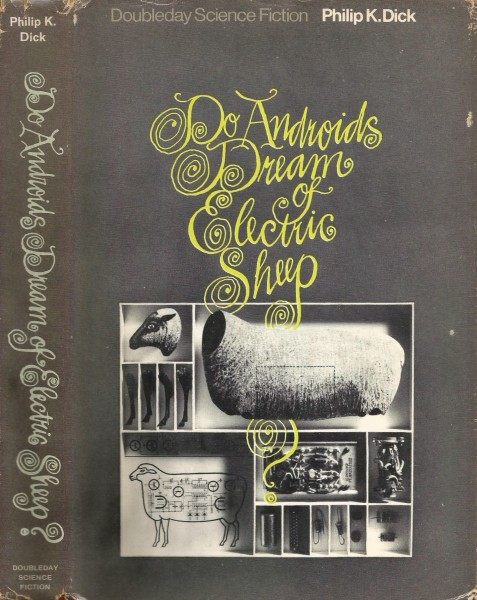
Philip K. Dick's 1968 novel Do Androids Dream of Electric Sheep? follows bounty hunter Rick Deckard as he tracks escaped androids through an irradiated, near-abandoned San Francisco, using the hunt to probe questions of empathy and what separates human from machine. The novel became the basis for Ridley Scott's 1982 film Blade Runner, and Marvel Comics later published an illustrated adaptation of that film. Together the two trace the story's path from prose original to screen and comic-page adaptation.
- The Twilight of Briareus
Richard Cowperstandalone novel1974
similar byscience fictiondarkour worldnear futuregenetic engineeringidentitytense
It took the light of the supernova Briareus Delta one hundred and thirty-two years to cross space to the Solar System. But the night it exploded in our sky was a night that would never be forgotten in the history of the world. For in that bath of cosmic particles, all things changed. Not only the weather and the flora and fauna, but humanity itself received what seemed to be its death sentence. Sterility signalled the end of man, until the strange children known as the Zeta-mutants began to appear. Richard Cowper, author of Clone and other sf novels, has produced in this new novel a gripping story of how one man coped with the terrible dilemma of his world - how he attempted to solve the problem of the girls with the amber eyes and what he did when he found out what he himself had become during The Twilight of Briarseus. (from the back cover of the DAW Books first printing)
- Stand on Zanzibar
John Brunnerstandalone novel1968
similar byscience fictiondarkour worldnear futuregenetic engineering
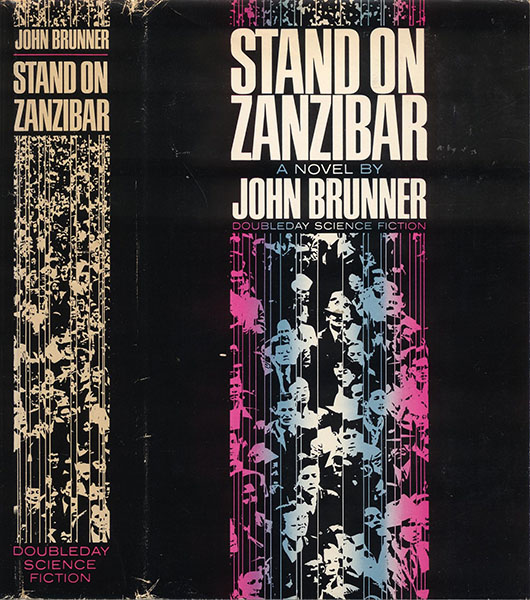
Stand on Zanzibar is a dystopian New Wave science fiction novel written by John Brunner and first in part published in New Worlds magazine in 1967 and in book form in 1968. The book won a Hugo Award for Best Novel at the 27th World Science Fiction Convention in 1969, as well as the 1969 BSFA Award and the 1973 Prix Tour-Apollo Award.
- Sprawl Trilogy
series10 books1981
similar byscience fictiondarknear futuretense
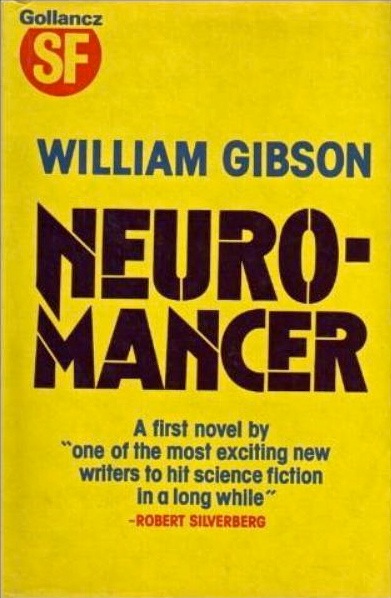
The Sprawl Trilogy is William Gibson's foundational cyberpunk sequence: Neuromancer (1984), in which hacker Case is drawn into a high-stakes heist alongside an artificial intelligence and a damaged ex-soldier, followed by Count Zero (1986) and Mona Lisa Overdrive (1988), which widen the same near-future world of corporate power and networked cyberspace to new characters. Johnny Mnemonic, an early short story set in the same fictional milieu, predates the novels and introduces the courier Molly Millions before her role in the trilogy. Together these works established much of cyberpunk's visual and thematic vocabulary.
- A Clockwork Orange
series4 books1962
completed
similar byscience fictiondarknear futureour world+1 more
Anthony Burgess's 1962 novel is narrated by Alex, a teenage gang leader in a near-future Britain gripped by a youth subculture of extreme violence, recounting his crimes in Nadsat, an invented slang blending English with Russian-derived words. After his crimes catch up with him, Alex is made the subject of a controversial state program meant to forcibly reform his behavior, and the novel uses his ordeal to question whether imposed goodness is worth the loss of free will. It is a standalone novel.
- The Idlewild Trilogy
series3 books2003
similar byscience fictiondarknear futuregenetic engineeringidentityour world
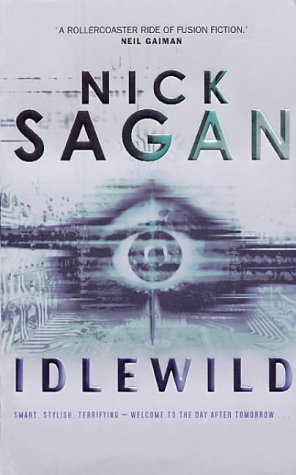
Nick Sagan's Idlewild trilogy opens with Idlewild (2003), a science-fiction novel that alternates between mid-21st-century interludes and events a generation later, following humanity's ten last survivors, cast in a modern mythological framework as god-like figures. It continues across Edenborn and Everfree.
- The Child Garden
Geoff Rymanstandalone novel1989
similar byscience fictiondarkour worldnear futuregenetic engineering+1 more
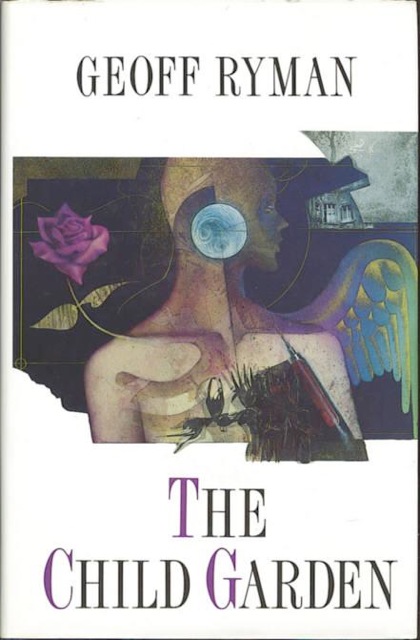
The Child Garden is a 1989 science fiction novel by Canadian writer Geoff Ryman.
- Dogs of War (Adrian Tchaikovsky)
series3 books2017
similar byscience fictionour worldnear future+4 more
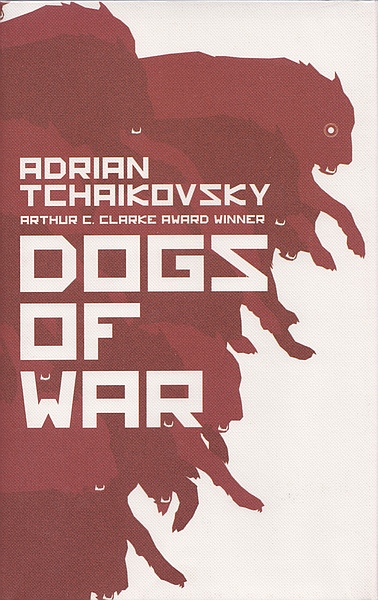
Adrian Tchaikovsky's Dogs of War follows Rex, a genetically engineered "Good Boy" - a hulking bioform supersoldier built for a private military contractor - as he begins to question the nature of his own obedience and personhood after his handler disappears. Dogs of War, Bear Head, and Bee Speaker widen from that first book's battlefield into questions of AI rights, corporate power, and non-human consciousness across a near-future Earth. The trilogy uses its engineered-animal soldiers to interrogate free will and loyalty rather than play them as straightforward action heroes.
- Brave New World
series8 books1932
similar byscience fiction+4 more
Aldous Huxley's 1932 novel imagines a future World State where reproduction, social caste, and desire are all engineered before birth, and the population is kept content through conditioning, sleep-hypnosis, and a mood-altering drug called soma. The story follows the disruption this seemingly stable order suffers when an outsider raised beyond its reach is brought into it, exposing what the society traded away for comfort and order. Some editions pair the novel with Huxley's own 1958 nonfiction essay collection, Brave New World Revisited, which reassesses the book's ideas rather than continuing its story.
- The Zap Gun
Philip K. Dickstandalone novel1967
similar byscience fictiondarkour worldnear future+2 more
The Zap Gun is a 1967 science fiction novel by American writer Philip K. Dick. It was first published as the two-part serial Project Plowshare in Worlds of Tomorrow in 1965 and 1966, before Pyramid Books issued it in paperback under its present title. The novel originated in a title-first commission devised by Pyramid editor Don Bensen and was written in 1964 during a period of rapid production in Dick's career.
- Blood Music
Greg Bearstandalone novel1985
similar byscience fictiondarkour worldnear futuregenetic engineering
Blood Music is a 1985 science fiction novel by American writer Greg Bear. It is an expanded version of a short story of the same title, originally published in the June 1983 issue of Analog and the winner of both the 1983 Nebula and 1984 Hugo awards for Best Novelette. The novel won the 1986 Prix Apollo Award, given to the best science fiction novel published in France during the preceding year, under the title La Musique du sang.
- Patternist
series6 books1976
completed
similar byscience fictiondarkgenetic engineering+3 more
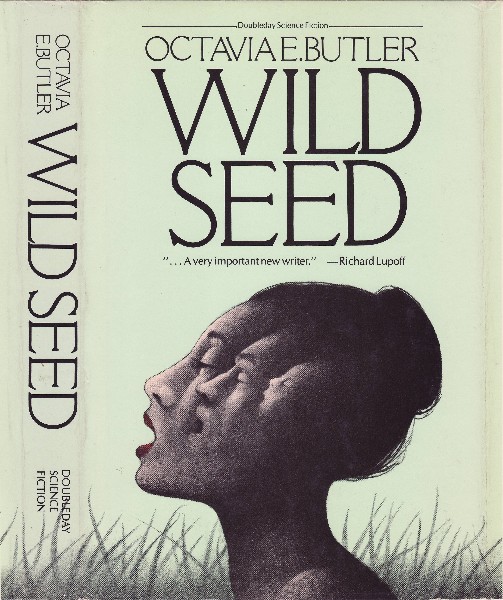
The Patternist series is a group of science fiction novels by Octavia E. Butler that detail a secret history continuing from the Ancient Egyptian period to the far future that involves telepathic mind control and an extraterrestrial plague. A profile of Butler in Black Women in America notes that the themes of the series include "racial and gender-based animosity, the ethical implications of biological engineering, the question of what it means to be human, ethical and unethical uses of power, and how the assumption of power changes people."
- The Windup Universe
series3 books2005
similar byscience fictiondarknear futuregenetic engineeringour world+1 more
- Unwind Dystology
series5 books2007
similar byscience fictiondarknear futuregenetic engineeringtense+2 more
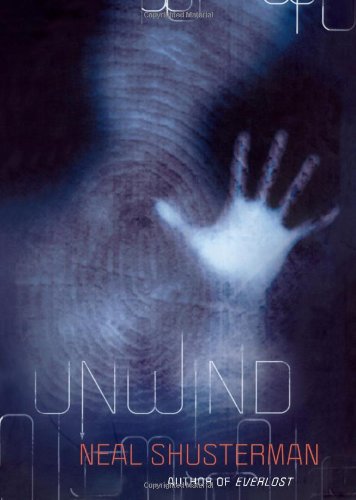
Neal Shusterman's Unwind Dystology opens in a United States reshaped by the resolution to a war over reproductive rights: parents can retroactively have a teenager "unwound," their body disassembled for transplant on the premise that nothing technically dies since every part lives on in someone else. The first novel follows three teens fleeing that fate, and the sequels widen the same dystopia's cast and consequences across a four-book arc plus companion material. It is grim speculative fiction built to ask hard bioethical questions rather than offer comfort.
- Ship Breaker
series3 books2010
similar byscience fictiondarknear futuretense+3 more
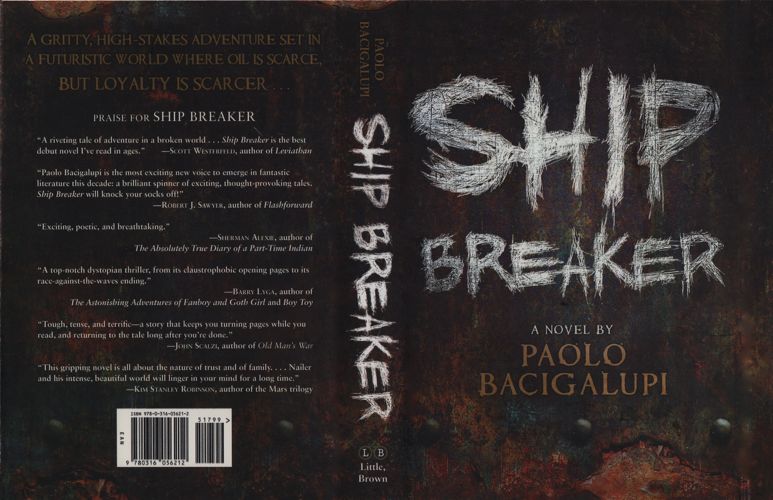
Nailer works a light-crew scavenging copper wire and scrap from beached oil tankers on a Gulf Coast reshaped by rising seas and vanished order, until a wrecked clipper ship washes ashore carrying a half-drowned girl from the wealthy world he'll never belong to. Paolo Bacigalupi's Ship Breaker follows Nailer as helping her pulls him out of his abusive father's orbit and into a much larger, more dangerous game involving her family's fortune. The sequels The Drowned Cities and Tool of War widen the same flooded, resource-scavenging future to new characters and coastlines.
- Shadrach in the Furnace
Robert Silverbergstandalone novel1976
similar byscience fictiondarknear futureidentityour world+1 more
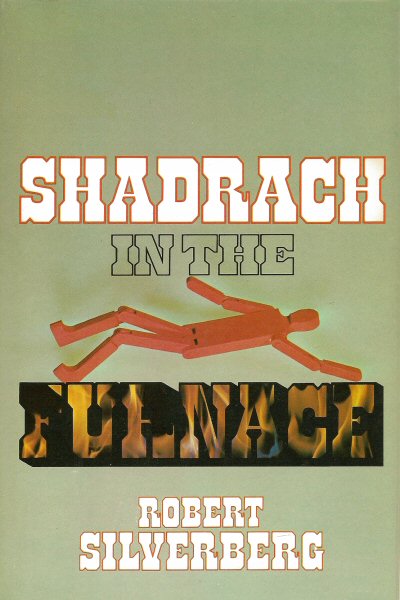
Shadrach in the Furnace is a science fiction novel by American writer Robert Silverberg, first published as a serial in Analog Science Fiction and Fact magazine in the August, September, and October 1976 issues. It was subsequently published by Bobbs Merrill in 1976. The novel was nominated in 1976 for the Nebula Award, and in 1977 for the Hugo Award.
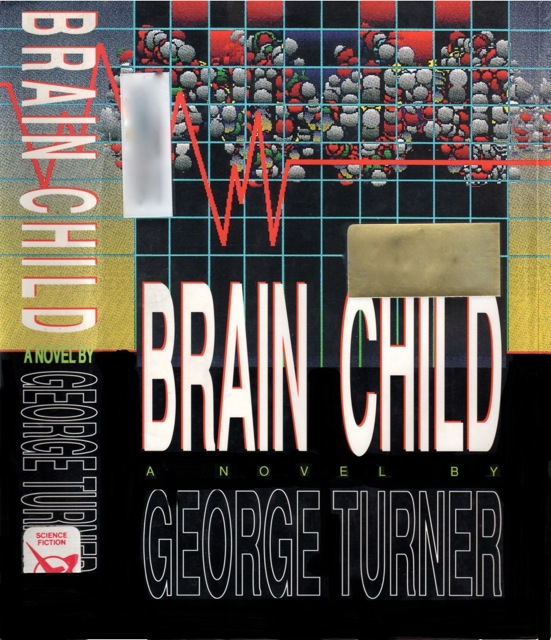
- Brain Child
George Turnerstandalone novel1991
similar byscience fictiondarkour worldnear futuregenetic engineeringidentity
From the rear flap of the William Morrow first edition: Now, in Brain Child, Turner has created an intense novel of murder and science that sounds the great themes of human identity and the nature of intelligence. Set a few decades in the future, he tells the story of a man searching for his roots and, through layers of discovery, the story of a complex and astounding scientific experiment. David Chance has been raised in an orphanage and, now an adult, finds that he is the child of a man genetically altered before birth by a group of scientists experimenting in increasing human intelligence and creativity. But his father is dead. He pursues the search for the true nature of his father and, through it, the true nature of the experiments and the survivors of the final disaster that ended them. Chance exposes his roots and find them entangled in horror, deceit, vengeance, and perverse scientific illumination. Peace and self-knowledge are achieved only at great risk and terrible cost.
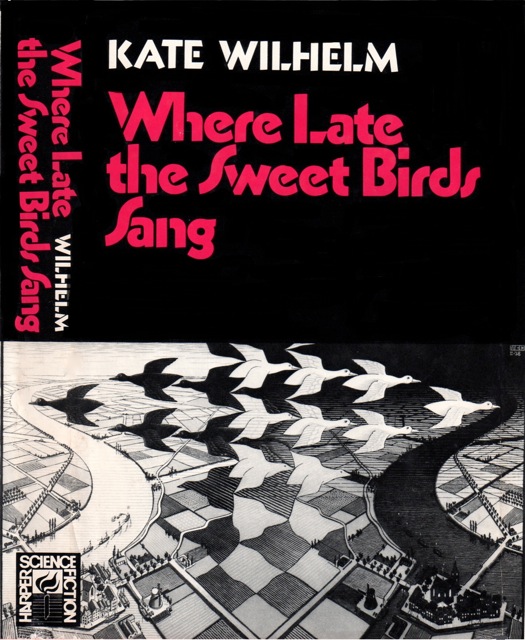
- Where Late the Sweet Birds Sang
Kate Wilhelmstandalone novel1976
similar byscience fictiondarkour worldnear future+1 more
Where Late the Sweet Birds Sang is a science fiction novel by American writer Kate Wilhelm, published in 1976. The novel is composed of three parts, "Where Late the Sweet Birds Sang," "Shenandoah," and "At the Still Point," and is set in a post-apocalyptic era, a concept popular among authors who took part in the New Wave Science Fiction movement in the 1960s.
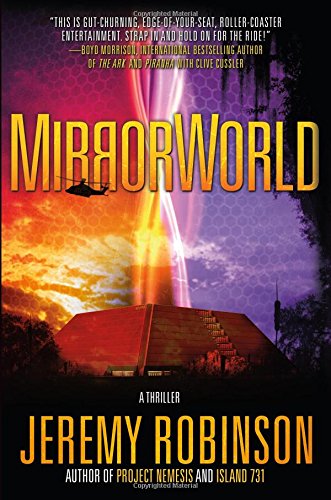
- MirrorWorld
Jeremy Robinsonstandalone novel2015
similar bydarkscience fictionour worldnear futuregenetic engineeringidentitytense
"Crazy has no memory and feels no fear. Dangerous and unpredictable, he's locked away in SafeHaven, a psychiatric hospital, where he spends the long days watching Wheel of Fortune and wondering what the outside world smells like. When a mysterious visitor arives and offers him a way out Crazy doesn't hesitate to accept. But outside the hospital Crazy is faced with a world on the brink of nuclear annihilation, and find himself relocated to Neuro Inc., a secretive corporation with strange government ties. When he discovers evidence of human experimentation he escapes with a syringe, the contents of which are unknown to him but precious to Neuro. Cornered and with a complete disregard for the results, Crazy makes himself indispensable by injecting the substance into his leg. As the substance enters his bloodstream, though, his eyes are opened to a world beyond human experience, where fear is a tool and the shadows hide the source of mankind's nightmares. Struggling to understand his new abilities, Crazy allies himself with the company he fled and begins peeling back the layers of his past, the brewing war between worlds, how he can stop it and what he did to start it. With Crazy, Robinson, whose trademarked pacing and inventive plots have been highly praised by bestselling authors like Jonathan Maberry, Scott Sigler and James Rollins, treats readers to a wildly imaginative, frenetically paced thriller exploring the origins of fear"--
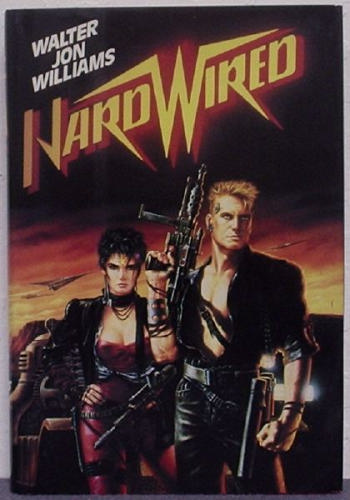
- Hardwired
series3 books1986
similar byscience fictionnear futureour worldtense+2 more
Walter Jon Williams' Hardwired (1986) is an early and influential cyberpunk novel. Voice of the Whirlwind, published three years later, is a loosely connected follow-up set in the same future, sharing its technological and political backdrop with a different cast of characters.
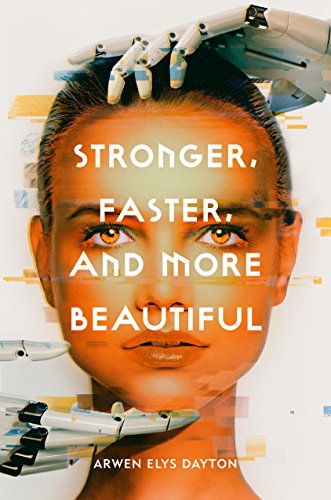
- Stronger, Faster, and More Beautiful
Arwen Elys Daytonstandalone novel2018
similar byscience fictionour worldnear futuregenetic engineeringidentity+1 more
Stronger, Faster and More Beautiful is a 2018 science fiction novel by Arwen Elys Dayton. It explores the ethical question of how far humans will go in their pursuit of physical perfection. It was well received critically, with Tom Shippey of the Wall Street Journal citing it as one of the best science fiction novels of 2018, and has won a number of awards.
- Clone
Richard Cowperstandalone novel1972
similar byscience fictionour worldnear futureidentitytense+1 more
History's first clones: Alvin, Bruce, Colin, and Desmond - Spawned in a dangerous 21st century experiment, there were brought into a world where educated apes did manual labor and the government encouraged suicide as a method of population control. Their existence as clones was unknown to anyone - even to each other - known only to their creator. But then came the strange, haunting visions, the peculiar psychic sensations that drew them closer and closer together - revealing one and for all the mysterious secret they shared that would change the world! (from the back cover of the Pocket Books edition)
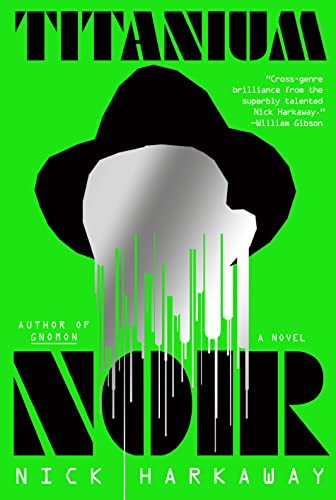
- Titanium Noir
series2 books2023
similar byscience fictionnear futureour world+2 more
Titanium Noir follows a detective investigating a murder among 'Titans' - a wealthy elite who use a rejuvenation treatment that also makes them larger and more powerful than ordinary people - in a city shaped by the treatment's social and criminal fallout. Nick Harkaway's novel, followed by a second book, Sleeper Beach, blends hardboiled detective fiction with science-fictional body horror.