More like Hallucinating
anchored on:science fictionour world
but
- Childhood's End
Arthur C. Clarkestandalone novel1953
similar byscience fictionnear futureour worldidentity+2 more
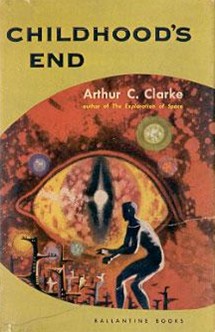
Childhood's End is a 1953 science fiction novel by the British author Arthur C. Clarke. The story follows a peaceful alien invasion of Earth by mysterious Overlords, whose arrival begins decades of apparent utopia under indirect alien rule, at the cost of human identity and culture.
- The Lathe of Heaven
Ursula K. Le Guinstandalone novel1971
similar byeeriescience fictionnear futureour worldbig city+1 more
The Lathe of Heaven is a 1971 science fiction novel by American writer Ursula K. Le Guin, first serialized in the American science fiction magazine Amazing Stories. It won the 1972 Locus Award for Best Novel and was a finalist for the 1971 Nebula Award for Best Novel and 1972 Hugo Award for Best Novel. Two television film adaptations were released: the PBS production, The Lathe of Heaven (1980), and Lathe of Heaven (2002), a remake produced by the A&E Network.
- Library of America P. K. Dick Collection
series9 books1962
completed
similar byscience fictionnear future+4 more
- Time Out of Joint
Philip K. Dickstandalone novel1959
similar byeeriescience fictionvirtual realitymadnessour worldidentity
Time Out of Joint is a science fiction novel by American writer Philip K. Dick, first published in novel form in the United States in 1959. An abridged version was also serialised in the British science fiction magazine New Worlds Science Fiction in several installments from December 1959 to February 1960.
- The Drowned World
J. G. Ballardstandalone novel1962
similar byeeriescience fictionnear futuremadnessbig city+1 more
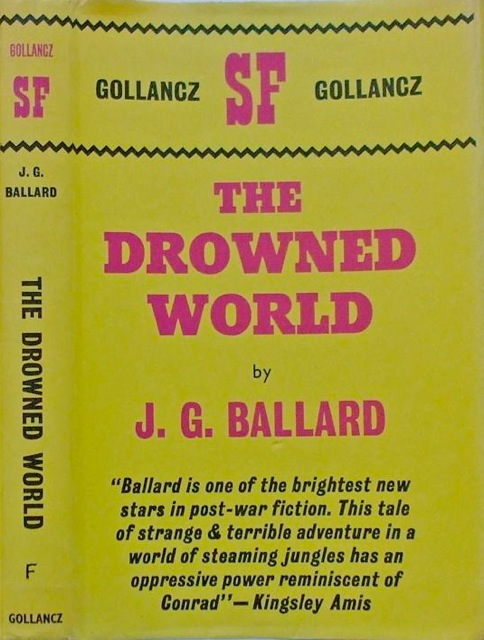
The Drowned World is a 1962 science fiction novel by J. G. Ballard. It first appeared in shortened form in the January 1962 issue of the UK edition of Science Fiction Adventures and was published in book form later that year by Victor Gollancz Ltd in London; an American edition followed from Berkley Medallion. Critics have grouped The Drowned World with Ballard's early science-fiction novels as part of an "ambiguous apocalypse" sequence that also includes The Drought and The Crystal World, from the period in which he was developing the ideas he described as "inner space". Set in a future in which solar radiation has melted the polar ice caps and transformed London into a flooded tropical lagoon, the novel follows biologist Robert Kerans as he becomes increasingly drawn toward the altered environment rather than toward restoring the old social order.
- The Dream Master
Roger Zelaznystandalone novel1966
similar byscience fictionnear futurevirtual realityour worldidentity+1 more
The Dream Master (1966) is a science fiction novel by American writer Roger Zelazny, based on the novella He Who Shapes. Zelazny's original title was The Ides of Octember. He Who Shapes won the 1965 Nebula Award for Best Novella.
- Vurt
series4 books1993
similar byscience fiction+7 more
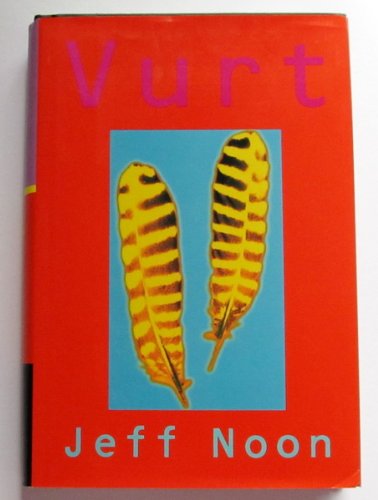
In Jeff Noon's alternate Manchester, an entire subculture has formed around Vurt: a hallucinogenic, colour-coded feather that plunges users into a shared alternate reality as vivid and dangerous as real life. Vurt follows Scribble and his gang, the Stash Riders, on a search for his sister, lost somewhere inside a Vurt trip gone catastrophically wrong. The sequel Pollen continues directly from its fallout, while Noon's other novels of the period, including Automated Alice and Nymphomation, circle the same fevered, drug-soaked version of the city.
- Night of Delusions
Keith Laumerstandalone novel1972
similar byscience fictionnear futurevirtual realitymadnessour world+2 more
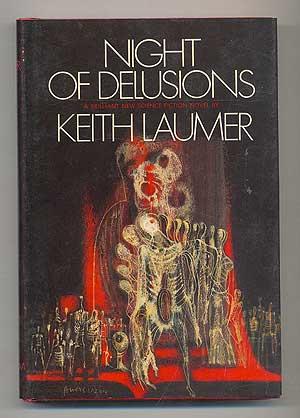
A soldier of fortune named Florin, whose earlier adventures have left his mental faculties in a precarious state, is hired to bodyguard one Lance Bardell, a Senator whose own mental state is utter chaos. In exploring Bardell's delusions, Florin must enter the Dream Machine - which assaults not merely the senses but reality itself. Plunging into and out of hair-raising adventures, combating an extra-galactic threat to Earth's existence, as well as defending his own sanity, Florin comes to astonishing discoveries about the universe he lives in and defends - and about himself! (adapted from the text published with the first edition)
- Only Forward
Michael Marshall Smithstandalone novel1994
similar byscience fictionnear futurevirtual realitybig cityidentitycyberpunk+1 more
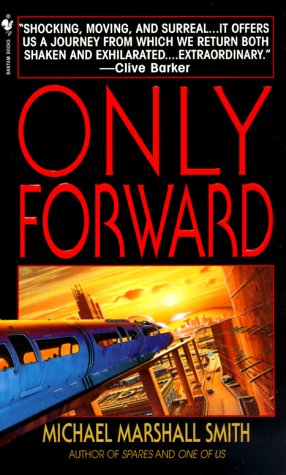
Only Forward is a science fiction novel by English writer Michael Marshall Smith; his debut novel, it was first published in 1994 by HarperCollins. It was the winner of the August Derleth Award (1995) and Philip K. Dick Award (2000).
- Ice
Anna Kavanstandalone novel1967
similar byeeriescience fictionmadnessour world+1 more
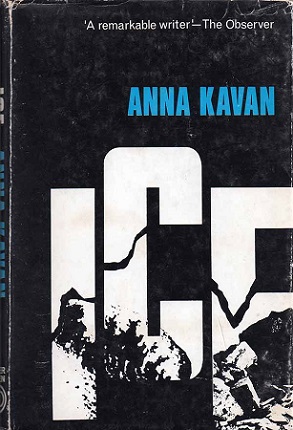
Ice is a novel by British writer Anna Kavan, published in 1967. Ice was Kavan's last work to be published before her death, the first to land her mainstream success, and remains her best-known work. Generally regarded as genre-defying, it has been labelled a work of science fiction, Nouveau roman, and slipstream fiction.
- Dream Thief
Stephen R. Lawheadstandalone novel1983
similar byscience fictionnear futuremadness+2 more
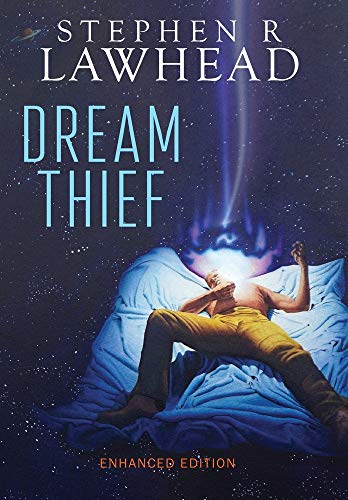
Dr. Spencer Reston, a scientist doing dream research aboard the space station, Gotham, begins having unexplained blackouts and concludes that someone is deliberately tampering with his mind.
- A Clockwork Orange
series4 books1962
completed
similar byscience fictionnear futureour worldbig city+2 more
Anthony Burgess's 1962 novel is narrated by Alex, a teenage gang leader in a near-future Britain gripped by a youth subculture of extreme violence, recounting his crimes in Nadsat, an invented slang blending English with Russian-derived words. After his crimes catch up with him, Alex is made the subject of a controversial state program meant to forcibly reform his behavior, and the novel uses his ordeal to question whether imposed goodness is worth the loss of free will. It is a standalone novel.
- The Collected Stories of Philip K. Dick
series11 books1987
completed
similar byscience fictionour worldidentity+2 more
The Collected Stories of Philip K. Dick is a collection of 118 science fiction stories by American writer Philip K. Dick. It was first published by Underwood-Miller in 1987 as a five volume set. See Philip K. Dick bibliography for information about the mass market reprints.
- Eye in the Sky
Philip K. Dickstandalone novel1957
similar byeeriescience fictionmadnessour worldidentity
Eight visitors touring a particle-accelerator facility are caught in a catastrophic malfunction, a collapsing platform, a burst of radiation, that leaves them all unconscious. When protagonist Jack Hamilton, an engineer recently fired over Red Scare-era suspicions about his wife's politics, comes to, the world around him is subtly, then not so subtly, wrong: physics bends to fit one fellow victim's religious convictions, then to another's paranoid fears, as the group cycles through what turn out to be shared hallucinations built from each other's private belief systems. Philip K. Dick's early novel about how differently people actually see the same world.
- The Night Mayor
Kim Newmanstandalone novel1989
similar byeeriescience fictionnear futurevirtual realitybig citycyberpunk
Welcome to the City made from a dream. But this isn't any dream; it is the dark and haunting nightmare of a killer. It is the near future and old-fashioned movies, or "flatties", have been replaced by Dreams, virtual reality scenarios written by professional Dreamers. When infamous criminal Truro Daine escapes imprisonment, he flees into the City, an artificial world of his own creation, where he rules as the all-powerful Night Mayor.
- We Can Build You
Philip K. Dickstandalone novel1972
similar byscience fictionnear futureour worldidentity+2 more
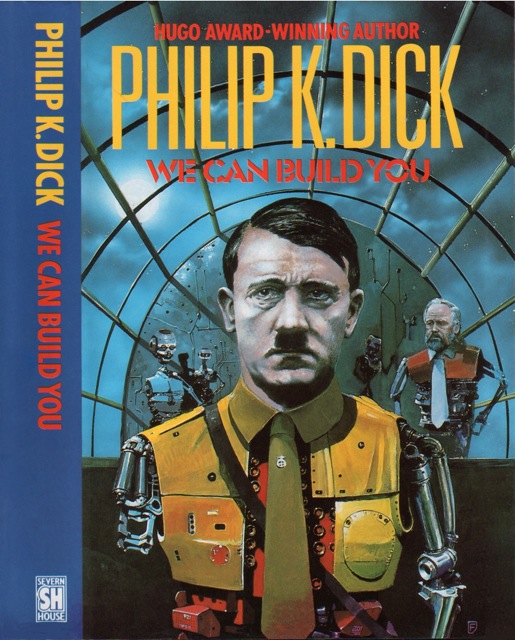
We Can Build You is a 1972 science fiction novel by American writer Philip K. Dick. Written in 1962 as The First in Our Family, it remained unpublished until appearing in serial form as A. Lincoln, Simulacrum in the November 1969 and January 1970 issues of Amazing Stories magazine, re-titled by editor Ted White. The novel was issued as a mass market paperback original by DAW Books in 1972, its final title provided by publisher Donald A. Wollheim. Its first hardcover edition was published in Italy in 1976, and Vintage issued a trade paperback in 1994.
- Ubik: The Screenplay
Philip K. Dickstandalone novel1985
similar byscience fictionnear futureour world+2 more
Named one of Time's 100 Best Books, Ubik is a mind-bending, classic novel about the perception of reality from Philip K. Dick, the Hugo Award-winning author of The Man in the High Castle. “From the stuff of space opera, Dick spins a deeply unsettling existential horror story, a nightmare you’ll never be sure you’ve woken up from.”—Lev Grossman, Time Glen Runciter runs a lucrative business — deploying his teams of anti-psychics to corporate clients who want privacy and security from psychic spies. But when he and his top team are ambushed by a rival, he is gravely injured and placed in “half-life,” a dreamlike state of suspended animation. Soon, though, the surviving members of the team begin experiencing some strange phenomena, such as Runciter’s face appearing on coins and the world seeming to move backward in time. As consumables deteriorate and technology gets ever more primitive, the group needs to find out what is causing the shifts and what a mysterious product called Ubik has to do with it all. “More brilliant than similar experiments conducted by Pynchon or DeLillo.”—Roberto Bolaño
- Southern Reach Trilogy
series4 books2014
similar byeeriescience fictionmadnessour world+1 more
The Southern Reach Series is a series of novels by the American author Jeff VanderMeer first published in 2014—Annihilation, Authority, Acceptance, and Absolution. The series takes its name from the secret agency that is central to the plot. In 2013, Paramount Pictures bought the movie rights for the series, and a film adaptation of Annihilation was made with Alex Garland as writer-director. The film was released in 2018. The most recent book in the series, Absolution, was released on 22 October 2024.
- Dhalgren
Samuel R. Delanystandalone novel1975
similar byeeriescience fictionmadnessbig cityidentity
Dhalgren is a 1975 science fiction novel by American writer Samuel R. Delany. It features an extended trip to and through Bellona, a fictional city in the American Midwest cut off from the rest of the world by an unknown catastrophe. It is number 33 on the 20th Century's Greatest Hits: 100 English-Language Books of Fiction list.
- Sprawl Trilogy
series10 books1981
similar byscience fictionnear futurevirtual realitybig citycyberpunk
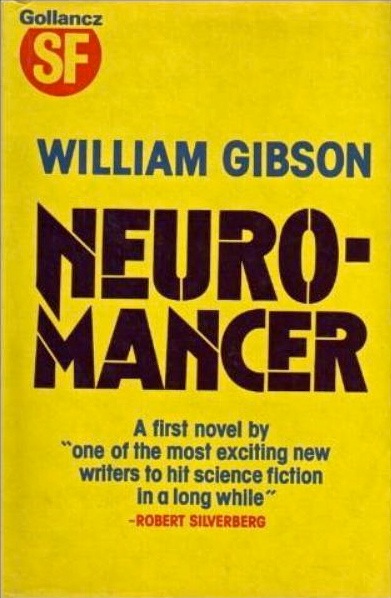
The Sprawl Trilogy is William Gibson's foundational cyberpunk sequence: Neuromancer (1984), in which hacker Case is drawn into a high-stakes heist alongside an artificial intelligence and a damaged ex-soldier, followed by Count Zero (1986) and Mona Lisa Overdrive (1988), which widen the same near-future world of corporate power and networked cyberspace to new characters. Johnny Mnemonic, an early short story set in the same fictional milieu, predates the novels and introduces the courier Molly Millions before her role in the trilogy. Together these works established much of cyberpunk's visual and thematic vocabulary.
- Donnerjack
Roger Zelazny & Jane Lindskoldstandalone novel1997
similar byscience fictionnear futurevirtual realityidentity+3 more
Donnerjack is a science fiction novel begun by American author Roger Zelazny and completed after his death by his companion Jane Lindskold. It was published in 1997.
- Deadpan Allie
series6 books1981
similar byscience fictionnear futurevirtual realityour worldidentity+3 more
- Bridge Trilogy
series4 books1990
similar byscience fictionnear futurebig citycyberpunk+1 more
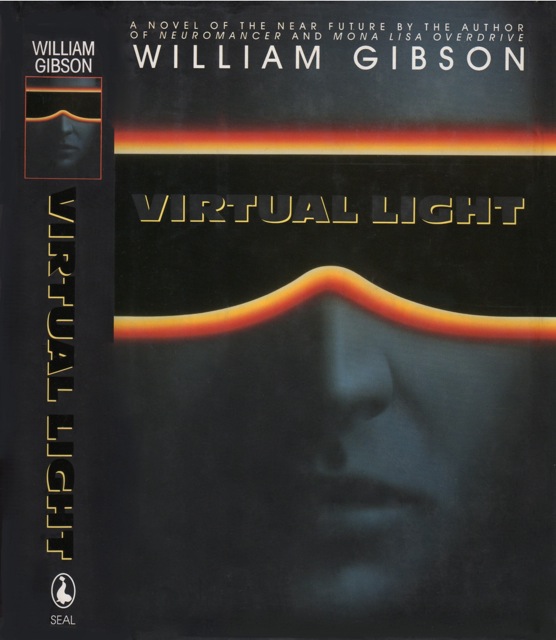
The Bridge trilogy is a series of novels by William Gibson, his second after the successful Sprawl trilogy. The trilogy comprises the novels Virtual Light (1993), Idoru (1996) and All Tomorrow's Parties (1999). A short story, "Skinner's Room", was originally composed for Visionary San Francisco, a 1990 museum exhibition exploring the future of San Francisco.
- Borne
series3 books2017
similar byeeriescience fictionnear futurebig city+2 more
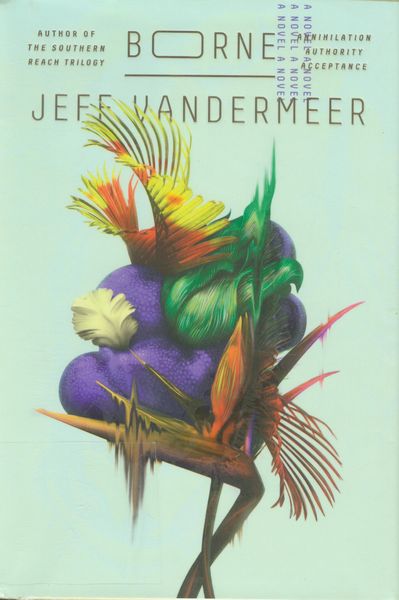
Borne is set in a ruined, biotech-poisoned city dominated by a giant flying bear named Mord, where a scavenger finds a strange organism she names Borne and raises it, only to discover it may be more dangerous - and more alive - than she expected. Jeff VanderMeer's series continues with the related novels The Strange Bird and Dead Astronauts, set in the same devastated world.