Loreful
HomeDiscover
Search series, authors…⌘K
Loreful

Reading orders for SF/F series and shared universes — with your place kept in every one.

Explore

UniversesSeriesWorksAuthorsAtlas

Help

FAQAboutSite map

Account & legal

Sign inCreate accountPrivacyTerms

Data

Built on ISFDB, Wikipedia, Wikidata and Open Library. Curated reading orders carry their reasoning on the page; the rest follow publication order. Data sources & licenses

© Loreful · data: ISFDB · CC BY

More like Hallucination Orbit

but

Mood

The mood the book leaves you in.

  • The reading experience is propelled by journeys, exploration, and physical risk; excitement and forward momentum dominate over dread or introspection.
  • Joy and loss are deliberately mixed; the resolution grants characters something real while taking something else away, leaving warmth and sorrow together.
  • The book demands work from the reader — dense prose, difficult structure, unfamiliar ideas, or morally uncomfortable material — as part of its intended effect.
  • Grim events, cruelty, or despair dominate the atmosphere, and the book does not soften them with comfort or comic relief.
  • The atmosphere is quietly unsettling — wrongness, unease, and the uncanny pervade the book without necessarily escalating into overt horror.
  • The book is built to move the reader; character feeling is foregrounded and major scenes aim at a strong emotional response.
  • Humor is a primary aim and the prose plays for laughs — comic situations, wit, or dialogue produce sustained comedy, not occasional levity.
  • The book insists that things can improve; effort and decency are shown to matter, and the arc bends toward better outcomes even through hardship.
  • The book teaches as it goes — real facts, history, science, or craft are conveyed in enough depth that learning is part of the reading experience.
  • The book is designed to uplift and motivate, presenting perseverance or achievement in a way that invites the reader to aspire or act.
  • The overall register is cheerful and easygoing; stakes are kept gentle and the book avoids dwelling on pain or dread.
  • Withheld information drives the experience; the book sustains enigmas and secrets the reader wants resolved, whatever its genre.
  • The book is contemplative and inward-looking, giving more weight to thought, memory, and meaning than to external events.
  • The book works as comfort reading — low tension, a soothing pace, and an atmosphere the reader can unwind in.
  • Grief, loss, or melancholy set the dominant register, and the book lets sorrow stand rather than resolving it into comfort.
  • Sustained suspense is the point; the book keeps the reader braced for what happens next through danger, pressure, or impending revelation.
  • Playful invention and charm define the register — fanciful conceits, light absurdity, and a narration that delights in its own oddity.

About

What the story runs on.

  • Stories in which a machine intelligence — an AI, computer mind, or sentient program — is a central character or the story's driving problem.
  • Stories in which extraterrestrial beings are central — as characters, cultures, or the object of the plot.
  • Stories driven by deliberate modification of genomes — designer organisms, engineered humans, and the consequences of remaking life.
  • Stories about venturing into space to explore — survey missions, astronauts, and the frontier of the unknown beyond Earth.
  • Stories about settling other planets or habitats — founding, sustaining, and governing colonies off Earth.
  • Stories about minds with paranormal abilities — telepathy, telekinesis, precognition, empathy — and how societies handle those who have them.
  • Stories in which staying alive against nature, catastrophe, or scarcity is the central problem.
  • Stories of growing up — a young protagonist crossing from childhood into adult knowledge and responsibility.
  • Stories about who a character truly is — self-discovery, doubled lives, and the search for a self.
  • Stories driven by maneuvering for power — factions, conspiracies, and statecraft conducted in shadow.
  • Stories about rising against rulers — uprisings, resistance movements, and revolutions and their aftermaths.
  • Stories in which war itself is the subject — combat, occupation, and what warfare does to soldiers and civilians.

Shelf

Where it sits in the library.

    • Fiction built on magic or other supernatural elements that have no scientific explanation.
    • Secondary-world fantasy at large scale, where the fate of nations or the world turns on the protagonists' struggle.
    • Fantasy set in a recognizably modern city or contemporary world where the supernatural intrudes on everyday life.
    • Fantasy that blends in horror's atmosphere and imagery, keeping a fantastical frame around grim or frightening material.
    • Action-driven fantasy following warriors or rogues with personal stakes against sorcerous threats, rather than world-spanning conflicts.
    • Fantasy set in a real historical period or a close analogue of one, with magic woven into the era.
    • Fantasy in which protagonists cross from the ordinary world into another world through a portal or similar passage.
    • Fiction that retells or reworks a traditional fairy tale in a new form or setting.
    • Fantasy drawing directly on myths, legends, and folklore, retelling them or building on their figures and logic.
    • Fantasy of ghosts, vampires, shapeshifters, psychics, and similar phenomena, usually set in an otherwise ordinary world.
    • Fiction mixing science-fictional trappings with overtly magical or impossible elements in one setting.
    • Low-stakes fantasy emphasizing comfort, community, and everyday pleasures over conflict and peril.
    • Speculative fiction of pervasive moral ambiguity, violence, and cynicism that rejects heroic conventions — fantasy and SF alike.
      • Fiction that extrapolates from science and technology — future societies, space travel, or speculative inventions — within at least nominally natural laws.
      • Science fiction of interstellar scope — starships, galactic polities, and adventure across star systems.
      • Science fiction committed to scientific rigor, where technical plausibility constrains the story.
      • Science fiction centered on armed forces and warfare, told largely from a military point of view.
      • Science fiction of networked, corporate-dominated near futures, pairing high technology with social decay.
      • Science fiction styled on nineteenth-century steam-powered technology, often in a Victorian or pseudo-Victorian setting.
      • Fiction depicting an oppressive or catastrophic society, presented as a warning.
      • Fiction set after civilization's collapse, following survivors in the ruins of the old world.
      • Fiction in which characters move between past and future, and the mechanics or consequences of that travel drive the plot.
      • Fiction exploring a world where a historical event went differently and history diverged from ours.
      • Science fiction about humanity's first encounter and communication with an alien intelligence.
      • Science fiction in which extraterrestrial forces attack or occupy Earth and humanity resists.
      • Fiction whose primary aim is to frighten or unsettle the reader through dread, menace, or the monstrous.
      • Horror of vast, indifferent, incomprehensible entities before which humanity is insignificant, in the Lovecraft tradition.
      • Horror of decaying houses, buried family secrets, and oppressive atmosphere in the Gothic literary tradition.
      • Horror centered on hauntings and the returning dead.
      • Horror located in the mind — paranoia, obsession, and unreliable perception rather than external monsters.
      • Horror built around the reanimated dead and survival amid their outbreaks.
      • Horror defined by explicit, transgressive gore that refuses to cut away from violence.
      • Speculative fiction of the strange and uncanny that resists both natural explanation and standard genre categories.
      • Fiction organized around solving a crime or puzzle, typically following an investigator toward the identification of a culprit.
      • A puzzle-first mystery that lays out clues so the culprit's identity can be deduced before the reveal.
      • Crime fiction of moral ambiguity, fatalism, and hard-edged style, set among the corrupt and the doomed.
      • A mystery following the realistic routines of police work — forensics, interviews, and case-building.
      • A gentle mystery with an amateur sleuth, a small community, and violence kept off the page.
      • A mystery set in a past era, where the investigation works within that period's methods and society.
      • Fast-paced fiction driven by imminent danger, pursuit, or high-stakes conspiracy, built to sustain tension.
      • A thriller of espionage — agents, tradecraft, and intelligence services in conflict.
      • A thriller centered on lawyers and the courtroom, where litigation carries the suspense.
      • A thriller driven by detailed contemporary or near-future technology, often military or scientific.
      • A thriller whose tension comes from mental states and manipulation between characters rather than external action.
      • Fiction whose central plot is a romantic relationship and its development toward an emotionally satisfying resolution.
      • Romance in which one or both partners are supernatural beings, blending fantasy elements into the love story.
      • A fantasy-romance hybrid in which the romantic arc and the fantasy plot carry equal weight.
      • Romance set in a past era, with courtship shaped by the period's society and manners.
      • Romance set in the present day, without supernatural or historical elements.
      • Fiction set in a real past period, where the historical setting materially shapes characters and events.
        • General and literary fiction emphasizing prose style, character interiority, or formal ambition over genre plot conventions.
        • Fiction in a realistic world where magical events occur and are treated as ordinary, in the tradition of Latin American literature.
        • Fiction that ridicules people, institutions, or society in order to criticize them.
        • Fiction of dreamlike, irrational imagery and logic that breaks from realistic representation.
        • Fiction that plays with narrative convention through metafiction, fragmentation, and self-reference.
        • Fiction propelled by journeys, exploration, and physical peril, where action and survival carry the plot.
        • Adventure fiction of ships and seafaring — naval engagements, voyages, and life at sea.
        • Fiction of the American frontier West — gunmen, ranchers, and lawmen, typically in the late nineteenth century.
        • Fiction centered on soldiers, campaigns, and the experience of warfare, historical or imagined.
          • Fiction written primarily to amuse, using comedic situations, wit, or parody as its organizing principle.
            • Multi-generational fiction following a family or dynasty across decades, with inheritance and kinship as the through-line.
              • Fiction whose world runs on explicit game mechanics — levels, stats, and skills that characters can see and exploit.
                • Fiction about costumed or superpowered heroes and their conflicts with comparable villains.

                Practical

                How long a commitment, whether it stands alone, and whether it has finished.

                Tap a chip to ask for it · tap again to rule it out · once more to clear. Numbers show what would be left.

                • Cover of Flowers for Algernon
                  Flowers for Algernon

                  Daniel Keyes · standalone novel · 1966

                  similar bylonelinessscience fiction

                  A man with a low IQ becomes the subject of an experimental medical procedure which raises his IQ well over genius level.

                • Cover of I Am Legend
                  I Am Legend

                  Richard Matheson · standalone novel · 1954

                  similar bylonelinessscience fiction

                  The last human survivor of the vampire epidemic has to maintain his defences against their onslaught, while attempting to research the cause and possibly solution to the plague. Robert Neville is the last living man on Earth... but he is not alone. Every other man, woman and child on the planet has become a vampire, and they are hungry for Neville's blood. By day he is the hunter, stalking the undead through the ruins of civilization. By night, he barricades himself in his home and prays for the dawn. How long can a man survive like this?

                • Cover of The Man Who Fell to Earth
                  The Man Who Fell to Earth

                  Walter Tevis · standalone novel · 1963

                  similar bylonelinessscience fiction

                  The Man Who Fell to Earth is a 1963 science-fiction novel by American writer Walter Tevis. Published by Gold Medal Books as a paperback original, it was Tevis's second novel, following The Hustler. The novel follows Thomas Jerome Newton, an extraterrestrial from the drought-stricken planet Anthea, who comes to Earth hoping to build a spacecraft that can save the surviving members of his species.

                • Cover of Way Station
                  Way Station

                  Clifford D. Simak · standalone novel · 1963

                  similar bylonelinessscience fiction

                  The human operator of a transfer station for aliens traveling between planets, kept secret from the human race, deals with discovery by the US government and interplanetary political crisis, as well as his own emotional issues.

                • Cover of Dhalgren
                  Dhalgren

                  Samuel R. Delany · standalone novel · 1975

                  similar bylonelinessscience fiction

                  Dhalgren is a 1975 science fiction novel by American writer Samuel R. Delany. It features an extended trip to and through Bellona, a fictional city in the American Midwest cut off from the rest of the world by an unknown catastrophe. It is number 33 on the 20th Century's Greatest Hits: 100 English-Language Books of Fiction list.

                • Cover of Dying Inside
                  Dying Inside

                  Robert Silverberg · standalone novel · 1972

                  similar bylonelinessscience fiction

                  Dying Inside is a 1972 science fiction novel by American writer Robert Silverberg. It was first serialized in Galaxy in 1972 and published in book form by Charles Scribner's Sons later that year. The novel follows David Selig, a middle-aged telepath in contemporary New York City, as the mind-reading ability that has shaped his life begins to disappear.

                • Cover of Gladiator
                  Gladiator

                  Philip Wylie · standalone novel · 1930

                  similar bylonelinessscience fiction

                  Gladiator is a science fiction novel by American author Philip Wylie, first published in 1930. The story concerns a scientist who invents an "alkaline free-radical" serum to "improve" humankind by granting the proportionate strength of an ant and the leaping ability of the grasshopper. The scientist injects his pregnant wife with the serum and his son Hugo Danner is born with superhuman strength, speed, and bulletproof skin. Hugo spends much of the novel hiding his powers, rarely getting a chance to openly use them.

                • Cover of The Purple Cloud
                  The Purple Cloud

                  M. P. Shiel · standalone novel · 1901

                  similar bylonelinessscience fiction

                  Around 1900, the author receives a packet of writings of a psychic, who recounts her vision of the multi-decade diary of an arctic explorer of the future, the first to reach the north pole; but during his multiyear trek, an unknown eruption temporarily poisons the atmosphere with cyanide, killing all human and animal life, sparing only the arctic latitudes and leaving him the last man on earth.

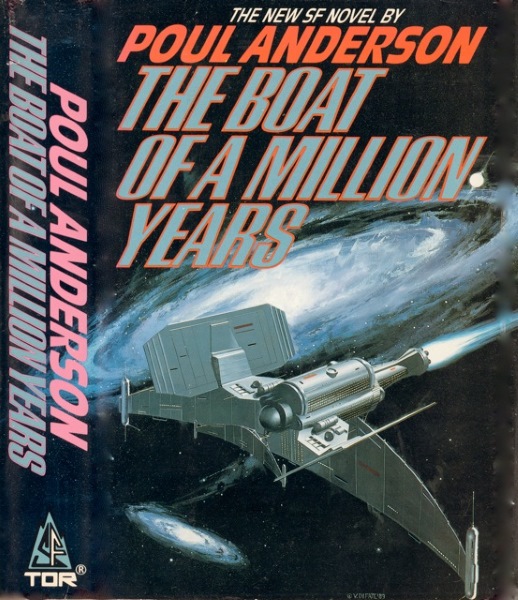
                • Cover of The Boat of a Million Years
                  The Boat of a Million Years

                  Poul Anderson · standalone novel · 1989

                  similar bylonelinessscience fiction

                  The Boat of a Million Years is a science fiction novel by American writer Poul Anderson, first published in 1989 and nominated for the Nebula Award for Best Novel that same year. It was also nominated for the Hugo Award for Best Novel and the Prometheus Award in 1990.

                • Cover of Z for Zachariah
                  Z for Zachariah

                  Robert C. O'Brien · standalone novel · 1975

                  similar bylonelinessscience fiction

                  Sixteen-year-old Ann Burden, on an Amish family farm in an isolated valley, believes she is the only survivor of nuclear war and nerve gas. One day a man arrives in a "safe-suit" that he and others have recently developed.

                • Cover of The Man in the Maze
                  The Man in the Maze

                  Robert Silverberg · standalone novel · 1969

                  similar bylonelinessscience fiction

                  The Man in the Maze is a science fiction novel by American writer Robert Silverberg, originally serialized in the magazine Worlds of If in April and May 1968, and published in bookstores the following year. It tells the tale of a man rendered incapable of interacting normally with other human beings by his uncontrollable psychic abilities. The novel is inspired by Sophocles' play Philoctetes, with the roles of Odysseus, Neoptolemus and Philoctetes played by Boardman, Rawlins, and Muller, respectively.

                • Cover of Thorns
                  Thorns

                  Robert Silverberg · standalone novel · 1967

                  similar bylonelinessscience fiction

                  From the back cover of the Ballantine first edition: "Lona Kelvin - naive orphan. And at seventeen, mother of one hundred children. Minner Burris - starman. Whose butchered body had been put together by aliens, with artificial and alien replacements. Horror stalked just beneath the surface of these two lonely creatures. Duncan Chalk - a vulture, carrion eater of other people's emotions, feeding on pain, fear, anger, hatred, jealousy, terror; typifying in the appetites of his vast body the sick delight that millions took in the tragedies he skillfully arranged. Lona Kelvin - Minner Burris - Duncan Chalk - Surely the strangest triangle the worlds had ever seen."

                • Cover of The Shrinking Man
                  The Shrinking Man

                  Richard Matheson · standalone novel · 1956

                  similar bylonelinessscience fiction

                  The Shrinking Man is a science fiction novel by American writer Richard Matheson, published in 1956. The novel was retitled The Incredible Shrinking Man in some later editions.

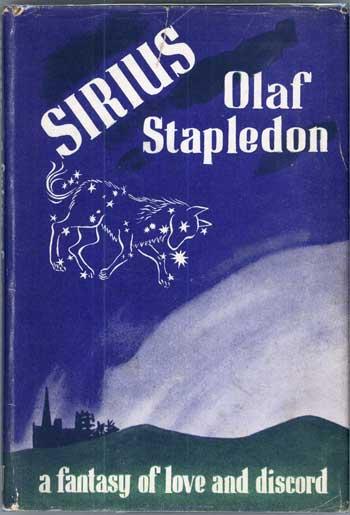
                • Cover of Sirius: A Fantasy of Love and Discord
                  Sirius: A Fantasy of Love and Discord

                  Olaf Stapledon · standalone novel · 1944

                  similar bylonelinessscience fiction

                  Sirius is a 1944 science fiction novel by the British philosopher and author Olaf Stapledon, whose title character is a dog named Sirius with humanlike intelligence. A sense of existential questioning suffuses the book, as the author delves into aspects of Sirius's psyche. The novel deals with many human issues through Sirius and his experiences, his unusual nature, his ideas and his relationships with humans. The characters go to great lengths to prevent Sirius from becoming a circus-type wonderdog, and instead, they seek to develop Sirius's character much like a family would create and foster that of a human child.

                • Cover of Mockingbird
                  Mockingbird

                  Walter Tevis · standalone novel · 1980

                  similar bylonelinessscience fiction

                  WorldCat: In a future world where mankind is dying, humans wander through life in a drugged electronic bliss. Quick sex is the norm, and some people would rather commit suicide than live in hopelessness. Humanity's salvation rests with an android who has no desire to live, and a man and a woman who must discover love, hope, and dreams of a world reborn.

                • Cover of The Drought
                  The Drought

                  J. G. Ballard · standalone novel · 1964

                  similar bylonelinessscience fiction

                  Dr. Charles Ransom watches his world dry up along with his marriage: an industrial film has coated the oceans, evaporation has stalled, and rivers, lakes and reservoirs are shrinking into cracked mud across the globe. As neighbors flee the drying city for the coast, Ransom refuses to leave, staying behind on his houseboat with others unwilling to go -- a woman running an improvised zoo, a boatman, an architect turning his estate into something like a fortress. As the water keeps disappearing and order breaks down, each of them must decide what survival looks like now. J. G. Ballard's second novel, published in the US as The Burning World.

                • Cover of Klara and the Sun
                  Klara and the Sun

                  Kazuo Ishiguro · standalone novel · 2021

                  similar bylonelinessscience fiction

                  Klara and the Sun is the eighth novel by the Japanese-British writer Kazuo Ishiguro, published on 2 March 2021. It is a dystopian science fiction story.

                • Cover of The Man Who Folded Himself
                  The Man Who Folded Himself

                  David Gerrold · standalone novel · 1973

                  similar bylonelinessscience fiction

                  The Man Who Folded Himself is a 1973 science fiction novel by American writer David Gerrold. It was nominated for the Nebula Award for Best Novel in 1974 and the Hugo Award for Best Novel in 1974. The book explores the psychological, physical, and personal challenges that manifest when time travel is possible for a single individual at the touch of a button.

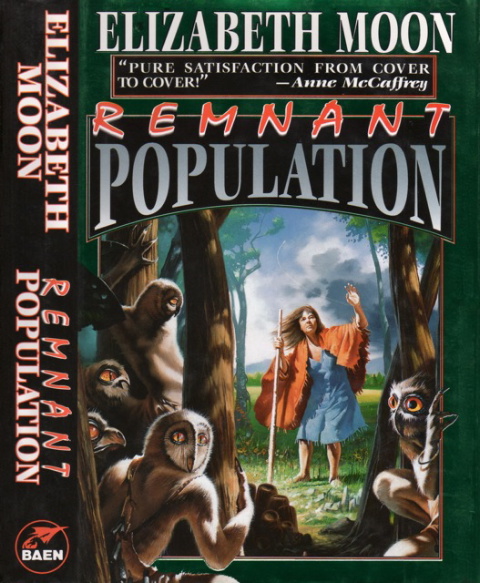
                • Cover of Remnant Population
                  Remnant Population

                  Elizabeth Moon · standalone novel · 1996

                  similar bylonelinessscience fiction

                  From the dust jacket front flap of the Baen first edition: Alone at last... People had always told Ofelia what to do; for once she was going to do what she wanted. She refused to get on the cryo ships, refused to leave the only world she could call home. And when they finally came for her, she hid, not that the authorities looked all that hard for one crazy old woman. Now Ofelia is alone, content to live with no more demands on her self or her time, the only remaining settler on an abandoned planet. The new settlers arrive. At first she fears that they have come to reoccupy the settlement she has come to think of as hers - but they land far away. And as Ofelia secretly listens, they are slaughtered to the last child by stone-age aliens no one knew were there. Now it will be up to Ofelia to save the aliens from Earth's wrath...

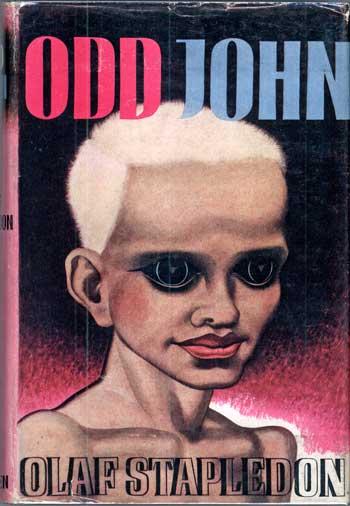
                • Cover of Odd John
                  Odd John

                  Olaf Stapledon · standalone novel · 1935

                  similar byscience fiction+1 more

                  Odd John: A Story Between Jest and Earnest is a 1935 science fiction novel by the British author Olaf Stapledon. The novel explores the theme of the Übermensch (superman) in the character of John Wainwright, whose supernormal human mentality inevitably leads to conflict with normal human society and to the destruction of the utopian colony founded by John and other superhumans.

                • Cover of A Different Light
                  A Different Light

                  Elizabeth A. Lynn · standalone novel · 1978

                  similar bylonelinessscience fiction

                  Jimson had twenty years to live. Or one. Twenty if he stayed in space-normal, where his disease could be treated. One year if he followed the Starcaptain into the Hype - the "not-space" that trip was the only way to the stars, where jeweled voyagers sailed the light-centuries in color-shifting ships; humankind's outriders, star-burned lovers to a Universe heavy with stars... This is the story of that year. (from the back cover of the first edition)

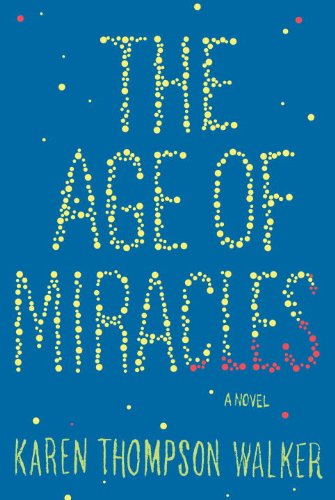
                • Cover of The Age of Miracles
                  The Age of Miracles

                  Karen Thompson Walker · standalone novel · 2012

                  similar byscience fiction+1 more

                  The Age of Miracles is the debut novel by the American writer Karen Thompson Walker. It was published in June 2012 by Random House in the United States and Simon & Schuster in the United Kingdom. The book chronicles the fictional phenomenon of "slowing", in which one Earth day begins to stretch out and take longer and longer to complete. The novel received positive reviews and publishing deals totaling £1.12 million, and has been translated into a number of languages. The book was nominated as part of the Waterstones 11 literary award in 2012.

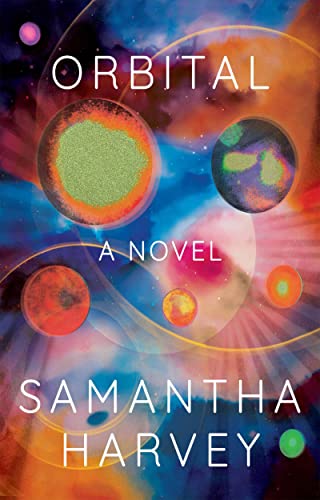
                • Cover of Orbital
                  Orbital

                  Samantha Harvey · standalone novel · 2023

                  similar bylonelinessscience fiction

                  Orbital is a 2023 novel by English novelist Samantha Harvey that incorporates elements of science fiction, literary fiction, and philosophical fiction, published by Jonathan Cape in the UK and by Grove Atlantic in the US. It follows six fictional astronauts over 24 hours on an orbiting space station.

                • Cover of A Very Private Life
                  A Very Private Life

                  Michael Frayn · standalone novel · 1968

                  similar bylonelinessscience fiction

                  A Very Private Life by Michael Frayn (1968) is a futuristic fairy tale that describes a young woman's futile quest to make meaningful contact with another human being.