More like Hammerfall
anchored on:science fictiongenetic engineeringother star systemsfar futuresurvivaldesert+2 more
but
- Dune
series20 books1963
part of Dune Universe
similar byscience fictionfar futureother star systemsdesert+1 more
Frank Herbert's Dune Chronicles opens with 1965's Dune, set on the desert planet Arrakis where House Atreides takes control of the only source of the vital spice melange and young Paul Atreides is pulled into a struggle over its politics and religion. Herbert carried the story forward across five further novels — Dune Messiah, Children of Dune, God Emperor of Dune, Heretics of Dune, and Chapterhouse: Dune — following Paul's line over the following millennia, before Brian Herbert and Kevin J. Anderson later extended the saga. Many other editions of these six novels are omnibus and box-set repackagings rather than separate stories.
- The Gods Themselves
Isaac Asimovstandalone novel1972
similar byscience fictionchallengingfar futureother star systems+1 more
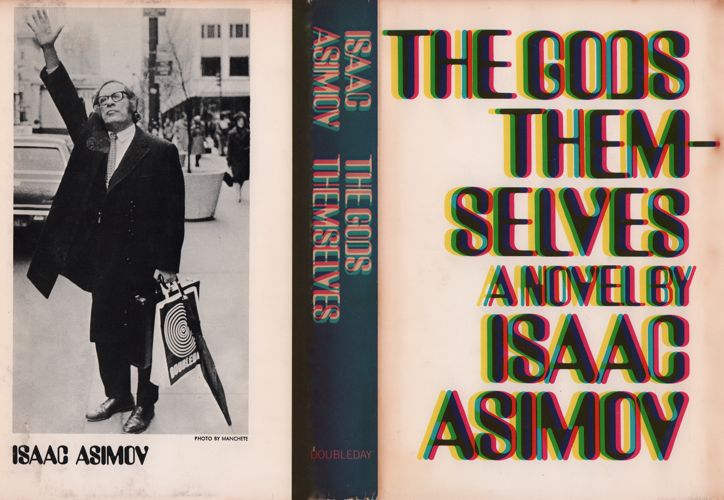
The Gods Themselves is a 1972 science fiction novel written by Isaac Asimov, and his first original novel in fifteen years. It won the Nebula Award for Best Novel in 1972, and the Hugo Award for Best Novel in 1973.
- Glory Season
David Brinstandalone novel1993
similar byscience fictionchallengingfar futuregenetic engineeringother star systems
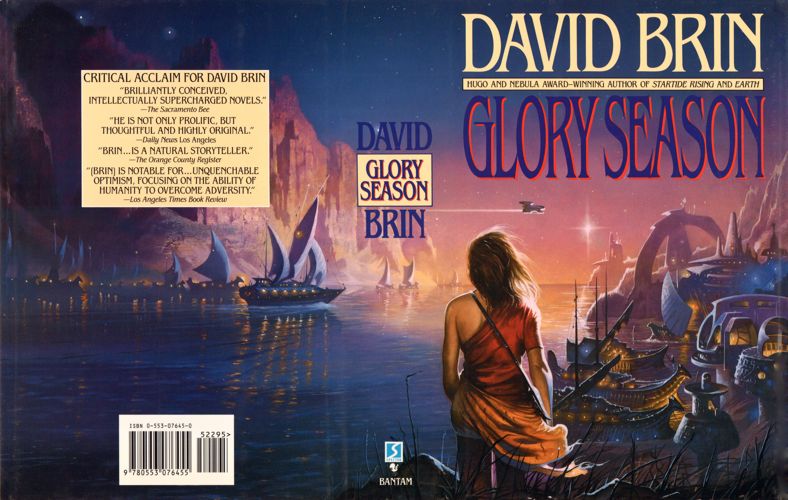
Glory Season is a 1993 science fiction novel by David Brin. It was nominated for both the Hugo and Locus Awards in 1994. An announcement in the back of one edition of Earth is for a novel titled Stratos, to be released in the spring of 1992. It seems likely that this was delayed, and renamed Glory Season.
- Aurora
Kim Stanley Robinsonstandalone novel2015
similar byscience fictionchallengingfar futuresurvivalother star systems
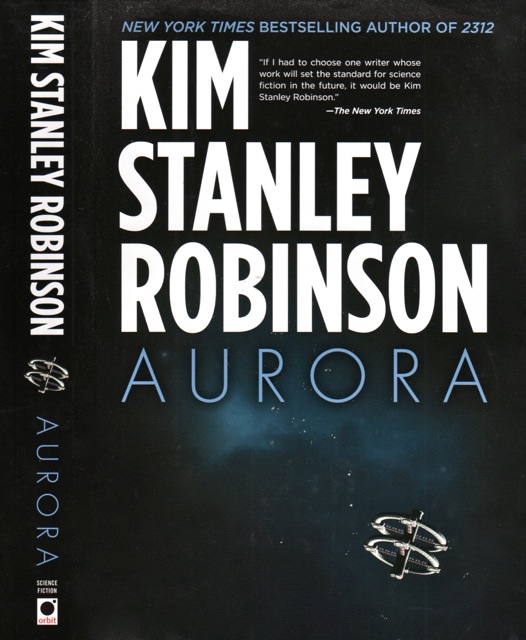
Aurora is a 2015 novel by American science fiction author Kim Stanley Robinson. The novel concerns a generation ship built in the style of a Stanford torus, traveling to Tau Ceti to start a human colony. The novel's primary narrative voice is that of the starship's artificial intelligence. Aurora was well received by critics.
- We Who Are About to ...
Joanna Russstandalone novel1977
similar byscience fictionchallengingfar futuresurvivalother star systems
We Who Are About To... is a feminist science fiction novella by Joanna Russ. It first appeared in magazine form in the January 1976 and February 1976 issues of Galaxy Science Fiction and was first published in book form by Dell Publishing in July 1977.
- The Gene Wars
series2 books2001
similar byscience fictionfar futuregenetic engineeringother star systems+4 more
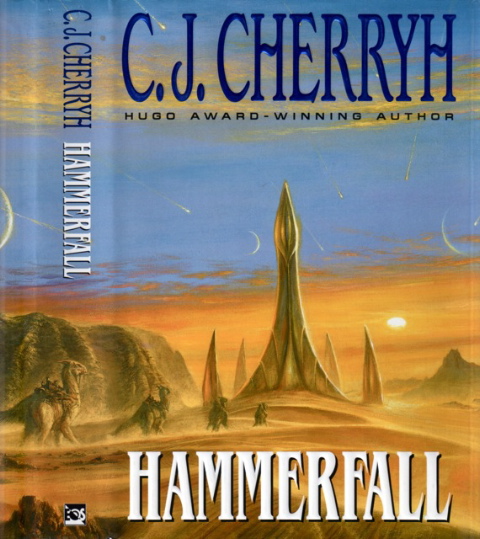
American writer C. J. Cherryh's career began with publication of her first books in 1976, Gate of Ivrel and Brothers of Earth. She has been a prolific science fiction and fantasy author since then, publishing over 80 novels, short-story compilations, with continuing production as her blog attests. Cherryh has received the Hugo and Locus Awards for some of her novels.
- Singularity Sky
series2 books2003
similar byscience fictionchallengingfar futureother star systems+1 more
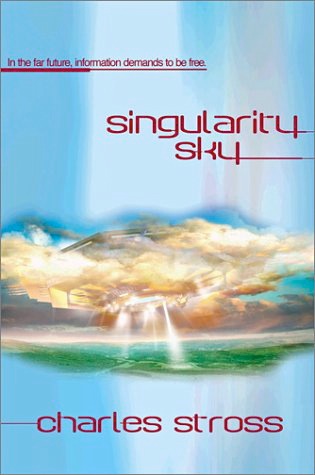
Singularity Sky and its sequel Iron Sunrise are collectively known as the Eschaton novels, after the godlike posthuman intelligence that seeded human colonies across space on the condition they never attempt time travel or threaten causality - rules tested when a low-tech colony world is destabilized by a group calling itself the Festival. Charles Stross uses the setup for a mix of space opera, economics, and diplomatic intrigue.
- Pantropy
series6 books1942
completed
similar byscience fictionfar futuregenetic engineeringother star systems+2 more
Pantropy collects James Blish's linked stories about adapting humans genetically to survive unaltered on alien worlds, rather than terraforming those worlds to suit humans — a concept the stories helped popularize under the name 'pantropy.' The stories were assembled into the 1957 collection The Seedling Stars.
- Riddley Walker
Russell Hobanstandalone novel1980
similar byscience fictionchallengingfar futuresurvival
WorldCat: Composed in an English which has never been spoken and laced with a storytelling tradition that predates the written word, RIDDLEY WALKER is the world waiting for us at the bitter end of the nuclear road. It is desolate, dangerous and harrowing, and a modern masterpiece.
- Pandora
series4 books1966
similar byscience fictionfar futuresurvivalother star systems+2 more
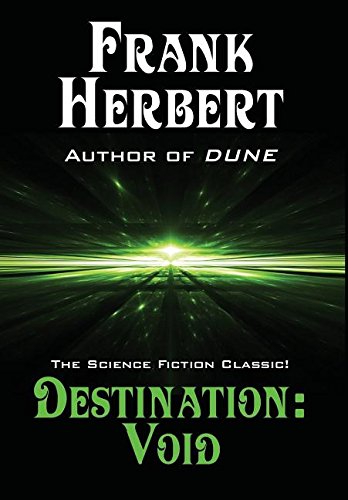
The Pandora Sequence opens with Frank Herbert's solo novel Destination: Void, in which a starship crew must jury-rig a working artificial consciousness after their vessel's control systems fail. Bill Ransom co-writes the three novels that follow, carrying the survivors to the world Pandora, where they must contend with both a manipulative machine intelligence and the planet's own hostile ecology. Across its four books the series moves from a claustrophobic ship-bound crisis to a generations-long struggle over faith, control, and survival on a dangerous new world.
- Dichronauts
Greg Eganstandalone novel2017
similar byscience fictionchallengingfar futuresurvivalother star systems
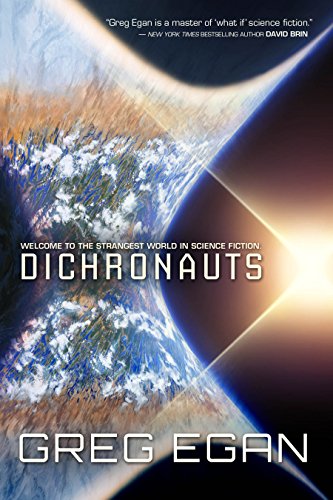
Dichronauts is a hard science-fiction novel by Australian author Greg Egan. The novel was published by Night Shade Books on 11 July 2017. It describes a universe with two time dimensions, one of which corresponds to the time perception of the characters while the other influences their spatial perception, which precludes rotations in the latter chronological direction. Hence a symbiosis of two life forms is necessary, so that they can even see in all directions. Furthermore, many fundamental laws of physics are altered crucially: Objects can roll uphill or not fall over any more when oriented suitably. There is negative kinetic energy and a fourth state of matter. Planets are no longer spherical, but hyperbolic and therefore have three separate surfaces. Egan describes these details on his website.
- Triton
Samuel R. Delanystandalone novel1976
similar byscience fictionchallengingfar futureother star systems
Trouble on Triton: An Ambiguous Heterotopia (1976) is a science fiction novel by American writer Samuel R. Delany. It was nominated for the 1976 Nebula Award for Best Novel, and was shortlisted for a retrospective James Tiptree, Jr. Award in 1995. It was originally published under the shorter title Triton.
- Dune Universe
universe78 books1963
Start hereDune · Start here
similar byscience fictionfar futureother star systems+1 more
Arrakis. Dune. The desert planet, where empire runs on a single substance: the spice melange, which folds space, prolongs life, and unlocks prescience, and which exists nowhere else in the known universe. Frank Herbert's saga is a meditation dressed as an adventure — feudal houses and a secret sisterhood, engineered messiahs and the patient ecology of a world without water, all turning on the terrible gravity of who commands the spice. It reads like scripture and schemes like a war room, ten thousand years hence, among people who have outlawed the thinking machine and made instruments of themselves instead. At its heart stand Herbert's original six — Dune, Dune Messiah, Children of Dune, God Emperor of Dune, Heretics of Dune, Chapterhouse: Dune — a single deepening arc across millennia, arguing the whole way between prophecy and free will. Around that spine his son Brian Herbert and Kevin J. Anderson have raised a vast prequel architecture: Prelude to Dune, tracing the great houses a generation before Paul; Legends of Dune, reaching back to the crusade that broke the machines; the Schools of Dune cycle on the founding of Bene Gesserit, Mentat, and Navigator; the Caladan Trilogy and Heroes of Dune filling years the originals left in shadow. Many hands, dozens of volumes, one desert. What sets Dune apart is its refusal of the simple: religion is manufactured, heroes are hazards, and the sand itself — worm, water, ecology — acts as a political power. Begin where the universe did, with Frank Herbert's Dune (1965), and read the original six in order; you need nothing else to feel the full weight. The prequels are a country to explore afterward, taken by era. Beginnings are delicate times.
- Kefahuchi Tract Trilogy
series3 books2002
similar byscience fictionchallengingfar futureother star systems
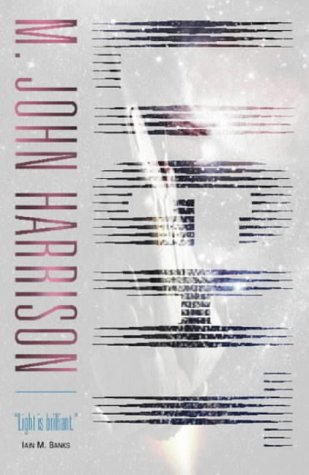
M. John Harrison's Kefahuchi Tract trilogy circles a strange, physics-breaking anomaly in deep space that draws scientists, smugglers, and drifters into its pull across different eras. Light moves between a near-future timeline and a far-future one drawn to the Tract itself; its sequel Nova Swing stays within one future period, where a fragment of the anomaly's altered space bleeds into the run-down port city of Saudade, giving the book a noir, Roadside-Picnic-like atmosphere; Empty Space concludes the sequence. The three novels share a setting and mood more than a continuous plot or cast.
- The Chrysalids
John Wyndhamstandalone novel1955
similar byscience fictionfar futuregenetic engineeringsurvival
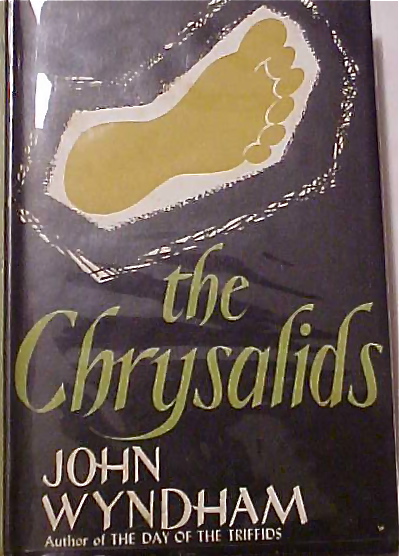
The Chrysalids is a science fiction novel by British writer John Wyndham, first published in 1955 by Michael Joseph. It is the least typical of Wyndham's major novels, but regarded by some as his best. An early manuscript version was entitled Time for a Change.
- Helliconia
series4 books1982
completed
similar byscience fictionchallengingfar futureother star systems
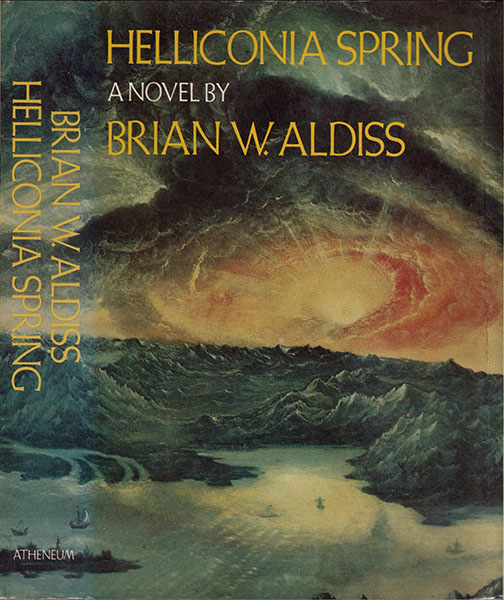
The Helliconia trilogy is a series of science fiction books by British writer Brian W. Aldiss, set on the Earth-like planet Helliconia. It is an epic chronicling the rise and fall of a civilisation over thousands of years as the planet progresses through its incredibly long seasons, which last for centuries.
- Building Harlequin's Moon
Larry Niven & Brenda Cooperstandalone novel2005
similar byscience fictionchallengingfar futureother star systems+1 more
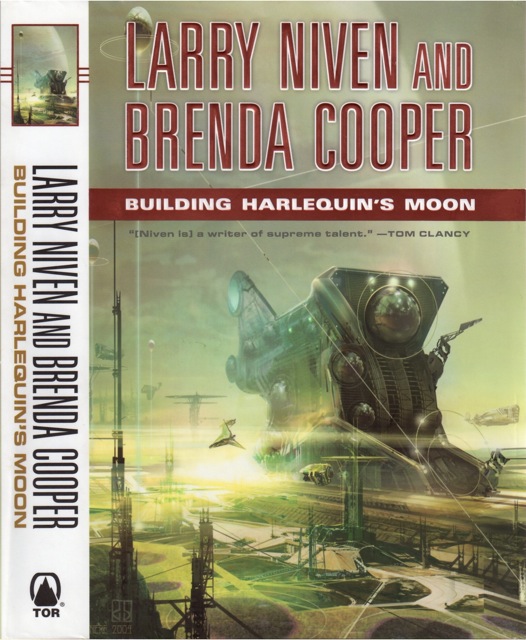
The first interstellar starship, John Glenn, fled a Solar System populated by rogue AIs and machine/human hybrids, threatened by too much nanotechnology and rife with political dangers. The John Glenn’s crew intended to terraform the nearly pristine planet Ymir, in hopes of creating a utopian society that will limit intelligent technology. But by some miscalculation they have landed in another solar system, and extremely low on the antimatter needed to continue to Ymir, they must shape the nearby planet Harlequin’s moon, Selene, into a new, temporary home. Their only hope of ever reaching Ymir is to rebuild their store of antimatter through decades of terraforming the moon. Gabriel, the head terraformer, must lead this nearly impossible task, with all the wrong materials. His primary tools are the uneducated and nearly illiterate children of the original colonists, born and bred to build Harlequin’s moon into a virtual antimatter factory. With no concept of the future and with life defined as duty, one girl, Rachel Vanowen, begins to ask herself the question: what will become of the children of Selene once the terraforming is complete.
- Diaspora
Greg Eganstandalone novel1997
similar byscience fictionchallengingfar futureother star systems+1 more
Diaspora is a hard science fiction novel by the Australian writer Greg Egan which first appeared in print in 1997. It originated as the short story "Wang's Carpets" which originally appeared in the Greg Bear-edited anthology New Legends. The story appears as a chapter of the novel.
- Bios
Robert Charles Wilsonstandalone novel1999
similar byscience fictionchallengingfar futuresurvivalother star systems
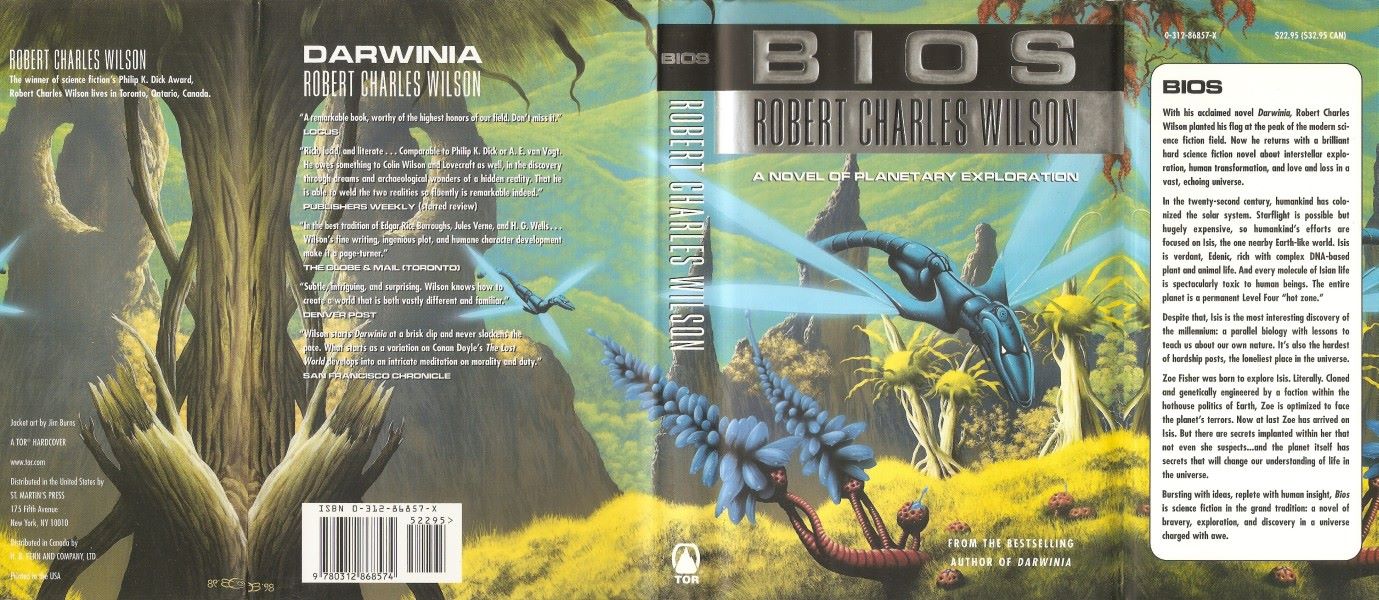
Bios is a 1999 science fiction novel by Robert Charles Wilson, published by Tor Books. It was a nominee for the 2000 Best Novel Aurora Award.
- Shaper/Mechanist
series6 books1982
similar byscience fictionchallengingfar futuregenetic engineeringother star systems
Shaper/Mechanist is Bruce Sterling's future-history of a fractured solar system, split between the genetically engineered Shapers and the cybernetically augmented Mechanists as humanity spreads beyond Earth. Schismatrix, the only full-length novel in the setting, follows a diplomat-schemer across decades of shifting factions and post-human politics. Schismatrix Plus collects that novel together with five earlier short stories set in the same future.
- Jean le Flambeur
series3 books2010
similar byscience fictionchallengingfar futureother star systems
Jean le Flambeur is a master thief broken out of a virtual prison to pull off one more impossible heist, in a solar system reshaped by uploaded minds, post-human factions, and economies built on memory and privacy themselves. Hannu Rajaniemi's trilogy - The Quantum Thief, The Fractal Prince, The Causal Angel - is dense, idea-heavy hard SF that trusts readers to piece its future together from context rather than exposition.
- Evolution
Stephen Baxterstandalone novel2002
similar byscience fictionfar futuregenetic engineeringsurvival+1 more
Evolution is a collection of short stories that work together to form an episodic science fiction novel by author Stephen Baxter. It follows 565 million years of human evolution, from shrewlike mammals 65 million years in the past to the ultimate fate of humanity and its descendants, both biological and non-biological, 500 million years in the future.
- Brave New World
series8 books1932
similar byscience fictionfar future+2 more
Aldous Huxley's 1932 novel imagines a future World State where reproduction, social caste, and desire are all engineered before birth, and the population is kept content through conditioning, sleep-hypnosis, and a mood-altering drug called soma. The story follows the disruption this seemingly stable order suffers when an outsider raised beyond its reach is brought into it, exposing what the society traded away for comfort and order. Some editions pair the novel with Huxley's own 1958 nonfiction essay collection, Brave New World Revisited, which reassesses the book's ideas rather than continuing its story.
- Beyond Infinity
Gregory Benfordstandalone novel2004
similar byscience fictionfar futuregenetic engineeringsurvivalother star systems+1 more
From the flaps of the Warner Aspect first edition: "Billions of years from now, the last true human must find her place - and her destiny - within the inconceivable vastness of multiple universes. ... Cley is an Original, a genetically pure member of the most ancient Ur-Human beings. Like others of her forest-dwelling tribe, she expects to spend her few centuries working in the great subterranean Library of Life. Then catastrophe strikes when strange transdimensional life-forms obliterate the Library and kill all of Earth's Originals - except for Cley. These uncanny beings also attack the planet's most advanced human species, the highly evolved Supras, who cannot reconstruct the knowledge and DNA lost in the Library's ruins. Nor can they protect Cley... Forced to flee, Cley must begin a desperate quest for survival, answers, and hope. Joined by a raccoonlike companion called Seeker, she will journey across the myriad environments of her wildly transformed world... and then far, far beyond. For somewhere - past planets that have been reengineered, past sentient ship-worlds evolving deep between stars, past creatures the size of solar systems - waits the Malign. A being so powerful that it can escape a black hole, the Malign is destroying the galaxy as it hunts down the one thing it fears... Cley."