Loreful
HomeDiscover
Search series, authors…⌘K
Loreful

Reading orders for SF/F series and shared universes — with your place kept in every one.

Explore

UniversesSeriesWorksAuthorsAtlas

Help

FAQAboutSite map

Account & legal

Sign inCreate accountPrivacyTerms

Data

Built on ISFDB, Wikipedia, Wikidata and Open Library. Curated reading orders carry their reasoning on the page; the rest follow publication order. Data sources & licenses

© Loreful · data: ISFDB · CC BY

More like Ha'penny

anchored on:alternate historybritish islesearly 20th centurythriller & suspensepolitical intriguetotalitarianism+3 more

but

Mood

The mood the book leaves you in.

  • The reading experience is propelled by journeys, exploration, and physical risk; excitement and forward momentum dominate over dread or introspection.
  • Joy and loss are deliberately mixed; the resolution grants characters something real while taking something else away, leaving warmth and sorrow together.
  • The book demands work from the reader — dense prose, difficult structure, unfamiliar ideas, or morally uncomfortable material — as part of its intended effect.
  • Grim events, cruelty, or despair dominate the atmosphere, and the book does not soften them with comfort or comic relief.
  • The atmosphere is quietly unsettling — wrongness, unease, and the uncanny pervade the book without necessarily escalating into overt horror.
  • The book is built to move the reader; character feeling is foregrounded and major scenes aim at a strong emotional response.
  • Humor is a primary aim and the prose plays for laughs — comic situations, wit, or dialogue produce sustained comedy, not occasional levity.
  • The book insists that things can improve; effort and decency are shown to matter, and the arc bends toward better outcomes even through hardship.
  • The book teaches as it goes — real facts, history, science, or craft are conveyed in enough depth that learning is part of the reading experience.
  • The book is designed to uplift and motivate, presenting perseverance or achievement in a way that invites the reader to aspire or act.
  • The overall register is cheerful and easygoing; stakes are kept gentle and the book avoids dwelling on pain or dread.
  • Withheld information drives the experience; the book sustains enigmas and secrets the reader wants resolved, whatever its genre.
  • The book is contemplative and inward-looking, giving more weight to thought, memory, and meaning than to external events.
  • The book works as comfort reading — low tension, a soothing pace, and an atmosphere the reader can unwind in.
  • Grief, loss, or melancholy set the dominant register, and the book lets sorrow stand rather than resolving it into comfort.
  • Sustained suspense is the point; the book keeps the reader braced for what happens next through danger, pressure, or impending revelation.
  • Playful invention and charm define the register — fanciful conceits, light absurdity, and a narration that delights in its own oddity.

About

What the story runs on.

  • Stories in which extraterrestrial beings are central — as characters, cultures, or the object of the plot.
  • Stories about venturing into space to explore — survey missions, astronauts, and the frontier of the unknown beyond Earth.
  • Stories structured as a quest — a journey undertaken to find, deliver, or destroy something of great import.
  • Stories in which staying alive against nature, catastrophe, or scarcity is the central problem.
  • Stories of lovers kept apart by law, family, faith, or station, where the obstacle to love is the plot.
  • Stories of growing up — a young protagonist crossing from childhood into adult knowledge and responsibility.
  • Stories about who a character truly is — self-discovery, doubled lives, and the search for a self.
  • Stories about mental unraveling — descent into madness, delusion, and minds at war with themselves.
  • Stories in which a buried family truth — hidden parentage, crimes, or shames — surfaces and reorders the present.
  • Stories driven by maneuvering for power — factions, conspiracies, and statecraft conducted in shadow.
  • Stories in which war itself is the subject — combat, occupation, and what warfare does to soldiers and civilians.
  • Stories organized around investigating a killing — the case, the clues, and the pursuit of the killer, in any genre's clothing.

Shelf

Where it sits in the library.

    • Fiction built on magic or other supernatural elements that have no scientific explanation.
    • Secondary-world fantasy at large scale, where the fate of nations or the world turns on the protagonists' struggle.
    • Fantasy set in a recognizably modern city or contemporary world where the supernatural intrudes on everyday life.
    • Fantasy that blends in horror's atmosphere and imagery, keeping a fantastical frame around grim or frightening material.
    • Action-driven fantasy following warriors or rogues with personal stakes against sorcerous threats, rather than world-spanning conflicts.
    • Fantasy set in a real historical period or a close analogue of one, with magic woven into the era.
    • Fantasy in which protagonists cross from the ordinary world into another world through a portal or similar passage.
    • Fiction that retells or reworks a traditional fairy tale in a new form or setting.
    • Fantasy drawing directly on myths, legends, and folklore, retelling them or building on their figures and logic.
    • Fantasy of ghosts, vampires, shapeshifters, psychics, and similar phenomena, usually set in an otherwise ordinary world.
    • Fiction mixing science-fictional trappings with overtly magical or impossible elements in one setting.
    • Low-stakes fantasy emphasizing comfort, community, and everyday pleasures over conflict and peril.
    • Speculative fiction of pervasive moral ambiguity, violence, and cynicism that rejects heroic conventions — fantasy and SF alike.
      • Fiction that extrapolates from science and technology — future societies, space travel, or speculative inventions — within at least nominally natural laws.
      • Science fiction of interstellar scope — starships, galactic polities, and adventure across star systems.
      • Science fiction committed to scientific rigor, where technical plausibility constrains the story.
      • Science fiction centered on armed forces and warfare, told largely from a military point of view.
      • Science fiction of networked, corporate-dominated near futures, pairing high technology with social decay.
      • Science fiction styled on nineteenth-century steam-powered technology, often in a Victorian or pseudo-Victorian setting.
      • Fiction depicting an oppressive or catastrophic society, presented as a warning.
      • Fiction set after civilization's collapse, following survivors in the ruins of the old world.
      • Fiction in which characters move between past and future, and the mechanics or consequences of that travel drive the plot.
      • Fiction exploring a world where a historical event went differently and history diverged from ours.
      • Science fiction about humanity's first encounter and communication with an alien intelligence.
      • Science fiction in which extraterrestrial forces attack or occupy Earth and humanity resists.
      • Fiction whose primary aim is to frighten or unsettle the reader through dread, menace, or the monstrous.
      • Horror of vast, indifferent, incomprehensible entities before which humanity is insignificant, in the Lovecraft tradition.
      • Horror of decaying houses, buried family secrets, and oppressive atmosphere in the Gothic literary tradition.
      • Horror centered on hauntings and the returning dead.
      • Horror located in the mind — paranoia, obsession, and unreliable perception rather than external monsters.
      • Horror built around the reanimated dead and survival amid their outbreaks.
      • Horror defined by explicit, transgressive gore that refuses to cut away from violence.
      • Speculative fiction of the strange and uncanny that resists both natural explanation and standard genre categories.
      • Fiction organized around solving a crime or puzzle, typically following an investigator toward the identification of a culprit.
      • A puzzle-first mystery that lays out clues so the culprit's identity can be deduced before the reveal.
      • Crime fiction of moral ambiguity, fatalism, and hard-edged style, set among the corrupt and the doomed.
      • A mystery following the realistic routines of police work — forensics, interviews, and case-building.
      • A gentle mystery with an amateur sleuth, a small community, and violence kept off the page.
      • A mystery set in a past era, where the investigation works within that period's methods and society.
      • Fast-paced fiction driven by imminent danger, pursuit, or high-stakes conspiracy, built to sustain tension.
      • A thriller of espionage — agents, tradecraft, and intelligence services in conflict.
      • A thriller centered on lawyers and the courtroom, where litigation carries the suspense.
      • A thriller driven by detailed contemporary or near-future technology, often military or scientific.
      • A thriller whose tension comes from mental states and manipulation between characters rather than external action.
      • Fiction whose central plot is a romantic relationship and its development toward an emotionally satisfying resolution.
      • Romance in which one or both partners are supernatural beings, blending fantasy elements into the love story.
      • A fantasy-romance hybrid in which the romantic arc and the fantasy plot carry equal weight.
      • Romance set in a past era, with courtship shaped by the period's society and manners.
      • Romance set in the present day, without supernatural or historical elements.
      • Fiction set in a real past period, where the historical setting materially shapes characters and events.
        • General and literary fiction emphasizing prose style, character interiority, or formal ambition over genre plot conventions.
        • Fiction in a realistic world where magical events occur and are treated as ordinary, in the tradition of Latin American literature.
        • Fiction that ridicules people, institutions, or society in order to criticize them.
        • Fiction of dreamlike, irrational imagery and logic that breaks from realistic representation.
        • Fiction that plays with narrative convention through metafiction, fragmentation, and self-reference.
        • Fiction propelled by journeys, exploration, and physical peril, where action and survival carry the plot.
        • Adventure fiction of ships and seafaring — naval engagements, voyages, and life at sea.
        • Fiction of the American frontier West — gunmen, ranchers, and lawmen, typically in the late nineteenth century.
        • Fiction centered on soldiers, campaigns, and the experience of warfare, historical or imagined.
          • Fiction written primarily to amuse, using comedic situations, wit, or parody as its organizing principle.
            • Multi-generational fiction following a family or dynasty across decades, with inheritance and kinship as the through-line.
              • Fiction whose world runs on explicit game mechanics — levels, stats, and skills that characters can see and exploit.
                • Fiction about costumed or superpowered heroes and their conflicts with comparable villains.

                Practical

                How long a commitment, whether it stands alone, and whether it has finished.

                Tap a chip to ask for it · tap again to rule it out · once more to clear. Numbers show what would be left.

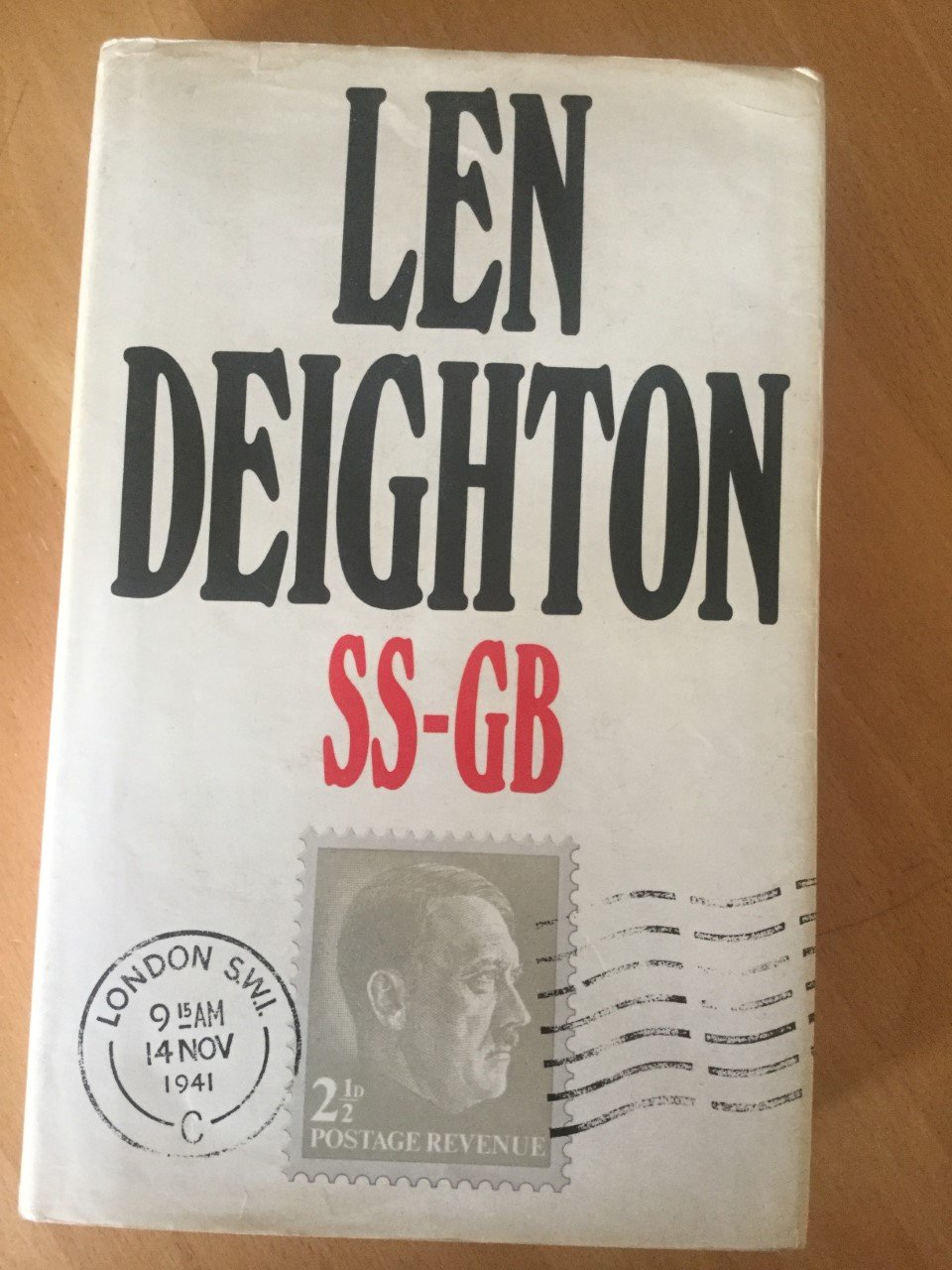
                • Cover of SS-GB
                  SS-GB

                  Len Deighton · standalone novel · 1978

                  similar bytenseearly 20th centurypolitical intriguealternate historybritish islesdarkscience fictionmurder investigation+1 more

                  It's November 1941 in a Britain that lost the war: Operation Sea Lion succeeded, Churchill was executed, and the King is a prisoner in his own Tower of London. Detective Superintendent Douglas Archer, still working homicide for the Metropolitan Police under German occupation, catches what looks like a routine case, a well-dressed man murdered above an antiques shop, until the body's oddities point toward something far more dangerous than burglary gone wrong. Archer's investigation collides with occupation politics, the British resistance, and rival factions of the SS and the German Army, each wanting the case to go a different way. Len Deighton's alternate-history spy thriller.

                • Cover of Small Change
                  Small Change

                  series · 4 books · 2006

                  similar bytensepolitical intriguetotalitarianismalternate historydarkbritish islesscience fictionthriller & suspense+3 more

                  The Small Change trilogy is a series of alternate history thriller novels by the author Jo Walton that were published from 2006 to 2008. The series are set in a Europe in which the United Kingdom exits World War II in 1941. As the series begins, Britain itself slides toward fascism. The series has three books:Farthing Tor Books August 8, 2006, ISBN 0-7653-1421-5, ISBN 978-0-7653-1421-5 Ha'penny, Tor Books; Reprint edition July 1, 2008, ISBN 0-7653-5808-5, ISBN 978-0-7653-5808-0 Half a Crown, Tor Books; September 30, 2008, ISBN 0-7653-1621-8, ISBN 978-0-7653-1621-9

                • Cover of Fatherland
                  Fatherland

                  Robert Harris · standalone novel · 1992

                  similar bytensepolitical intriguetotalitarianismalternate historydarkthriller & suspensemurder investigationeurope

                  Twenty years after Nazi Germany won the Second World War, Berlin is preparing to celebrate Adolf Hitler's seventy-fifth birthday when detective Xavier March is called to investigate a body pulled from a lake, ostensibly an accident, but one that leads him to a string of suspiciously staged deaths among senior Nazi officials. Ordered off the case by the Gestapo but quietly told to keep going by his own superior, March teams up with an American journalist, Charlie Maguire, and starts following a trail toward Swiss bank accounts and a secret the regime has spent two decades burying. Robert Harris's alternate-history debut novel.

                • Cover of The Plot Against America
                  The Plot Against America

                  Philip Roth · standalone novel · 2004

                  similar bytenseearly 20th centurypolitical intriguetotalitarianismalternate historydarkscience fiction

                  Roosevelt is defeated in 1940 by Charles Lindbergh, who guides the US towards fascism and anti-Semitism.

                • Cover of It Can't Happen Here
                  It Can't Happen Here

                  Sinclair Lewis · standalone novel · 1935

                  similar bytenseearly 20th centurypolitical intriguetotalitarianismdarkscience fiction+1 more

                  It Can't Happen Here is a 1935 dystopian political novel by the American author Sinclair Lewis. Set in a fictionalized version of the 1930s United States, it follows an American politician, Berzelius "Buzz" Windrip, who quickly rises to power to become the country's first outright dictator, and Doremus Jessup, a newspaper editor who sees Windrip's fascist policies for what they are ahead of time and who becomes Windrip's most ardent critic.

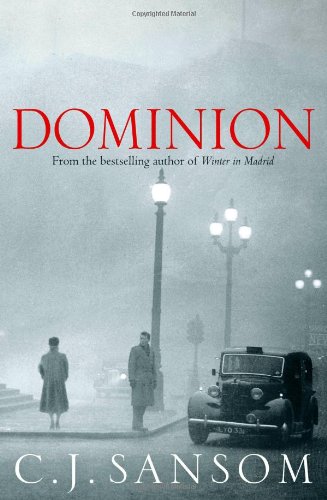
                • Cover of Dominion
                  Dominion

                  C. J. Sansom · standalone novel · 2012

                  similar bytensepolitical intriguetotalitarianismalternate historybritish islesdarkthriller & suspense

                  Dominion is a 2012 alternative history novel by British author C. J. Sansom. It is a political thriller set in the early 1950s against the backdrop of a Britain that has become a satellite state of Nazi Germany. The point of divergence from actual history is that Lord Halifax, rather than Winston Churchill, succeeded Neville Chamberlain as Prime Minister in May 1940 leading to an armistice with Germany.

                • Cover of The War in the Air
                  The War in the Air

                  H. G. Wells · standalone novel · 1908

                  similar bytenseearly 20th centurypolitical intriguescience fictioneurope+2 more

                  The War in the Air: And Particularly How Mr. Bert Smallways Fared While It Lasted is a military science fiction novel written by H. G. Wells and published in 1908.

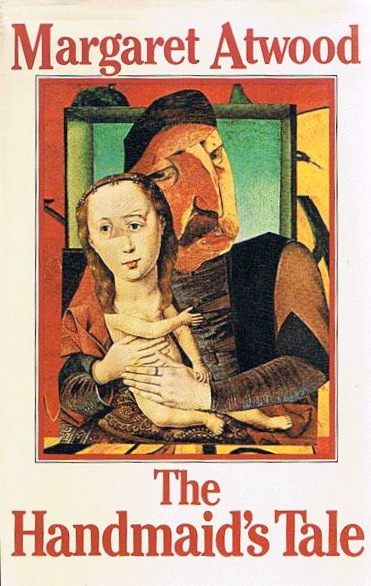
                • Cover of The Handmaid's Tale
                  The Handmaid's Tale

                  series · 3 books · 1985

                  similar bytensetotalitarianismdarkscience fiction+2 more

                  The Handmaid's Tale is Margaret Atwood's 1985 novel set in Gilead, a totalitarian theocracy that has overthrown the United States and forces fertile women into reproductive servitude as Handmaids; it is narrated by one such woman, Offred. Atwood returned to the world in her 2019 sequel The Testaments, set fifteen years later and narrated by three women, including the regime's Aunt Lydia. Together the two novels move from Gilead's grip on power toward the first cracks in it.

                • Cover of The War That Came Early
                  The War That Came Early

                  series · 6 books · 2009

                  similar byearly 20th centurytensepolitical intriguealternate historymultiple poveurope+1 more

                  The War That Came Early is a six-novel series by Harry Turtledove depicting an alternate history of World War II. As is typical of Turtledove's alternate histories, the narrative follows a large cast of both fictional and historical characters.

                • Cover of When the Sleeper Wakes
                  When the Sleeper Wakes

                  H. G. Wells · standalone novel · 1899

                  similar bytensepolitical intriguetotalitarianismdarkscience fictionbritish isles

                  Graham, an insomniac Englishman in 1890s London, takes a course of sleep-inducing drugs and falls into a coma that lasts two centuries. He wakes in the year 2100 to find his investments have compounded, through a ruling body called the White Council, into effective ownership of most of the world's wealth and power, making him, on paper, humanity's master, and in practice, its prisoner, held under guard while the Council governs in his name. A rebel faction led by a man named Ostrog frees him, hoping to use his symbolic authority to spark an uprising against the Council. An early H. G. Wells dystopia about inherited power and manufactured consent.

                • Cover of The Children of Men
                  The Children of Men

                  P. D. James · standalone novel · 1992

                  similar bytensepolitical intriguetotalitarianismbritish islesdarkscience fiction

                  "The human race has become infertile, and under the despotic rule of Xan Lyppiatt, the Warden of England the old are despairing and the young cruel. Theo Faren, a cousin of the Warden, lives a solitary life in this ominous atmosphere. That is, until a chance encounter with a young woman leads him into contact with a group of dissenters. Suddenly his life is changed irrevocably, as he faces agonising choices which could affect the future of mankind." (pdjames.co.uk)

                • Cover of Gravity's Rainbow
                  Gravity's Rainbow

                  Thomas Pynchon · standalone novel · 1973

                  similar byearly 20th centurypolitical intriguedarkmultiple poveuropebritish isles+1 more

                  Gravity's Rainbow is a 1973 postmodern novel by Thomas Pynchon. The narrative is set primarily in Europe at the end of World War II and centers on the design, production and dispatch of V-2 rockets by the German military. In particular, it features the quest undertaken by several characters to uncover the secret of a mysterious device, the Schwarzgerät, which is slated to be installed in a rocket with the serial number "00000".

                • Cover of How Few Remain Universe
                  How Few Remain Universe

                  series · 11 books · 1997

                  similar bytenseearly 20th centurypolitical intriguealternate history+1 more

                  How Few Remain opens Harry Turtledove's Southern Victory timeline, imagining a North America where the Confederacy won the Civil War. Set mostly in 1881-1882, it follows political and military figures on both sides of a divided continent as old grievances resurface into a new war. It's a single novel here, but the starting point for a much longer alternate-history sequence Turtledove extended across both twentieth-century world wars.

                • Cover of Oxford Time Travel
                  Oxford Time Travel

                  series · 6 books · 1982

                  similar bytensebritish islesscience fictioneurope+2 more

                  Connie Willis's Oxford Time Travel novels are set at a near-future Oxford University where historians travel into the past as observers, constrained by a version of history that resists any change large enough to alter real events. Doomsday Book sends a medieval historian to what should be 1320 but turns out to be the Black Death year of 1348, intercut with a present-day epidemic at Oxford; To Say Nothing of the Dog returns to the same time-travel program for a lighter, Victorian-set story with different characters. The two novels share their setting and rules rather than a directly continuing plot.

                • Cover of Germanica
                  Germanica

                  Robert Conroy · standalone novel · 2015

                  similar bytenseearly 20th centurypolitical intriguealternate historyscience fictioneurope+1 more

                  Germanica is an alternate history novel written by Robert Conroy. It was published by Baen Books online as an ebook on August 16, 2015 before being published as a physical book on September 1, 2015. As Conroy had died eight months before the book was published, it was released posthumously.

                • Cover of The Air Trust
                  The Air Trust

                  George Allan England · standalone novel · 1915

                  similar bytenseearly 20th centurytotalitarianismdarkscience fiction+1 more

                  From the foreword to the 1915 edition: "This book is the result of an attempt to carry the monopolistic principle to its logical conclusion." Publisher's description (2006): "Isaac Flint, a greedy billionaire businessmen plots to extract oxygen from the air and then sell it back to people if they want to live. Through bribes, blackmail and threats, he forces a group of scientists to develop a means of extracting the oxygen and forces politicians to cooperate with his plan. Soon, surrounded by a private army of guards to prevent the outraged populace from stopping him, Flint has "cornered" the oxygen market, and people everywhere have no choice but to pay for the air they breathe--or see themselves and their families die for lack of oxygen."

                • Cover of The Murderer Invisible
                  The Murderer Invisible

                  Philip Wylie · standalone novel · 1931

                  similar bytenseearly 20th centurytotalitarianismdarkthriller & suspensescience fiction

                  Inspired by H. G. Wells's 1897 science-fiction novella Invisible Man, Wylie's 1931 book features a recluse named William Carpenter, who possesses the greatest scientific mind in the world. After developing a chemical compound that makes him invisible, Carpenter sets out to destroy his enemies and turn the nation into an "autocracy of science" and a beacon utopia.

                • Cover of When William Came
                  When William Came

                  Saki · standalone novel · 1913

                  similar bytenseearly 20th centurypolitical intriguealternate historybritish islesdarkscience fiction

                  When William Came: A Story of London Under the Hohenzollerns is a novel written by the British author Saki and published in November 1913. It is set several years in what was then the future, after a war between Germany and Great Britain in which the former won.

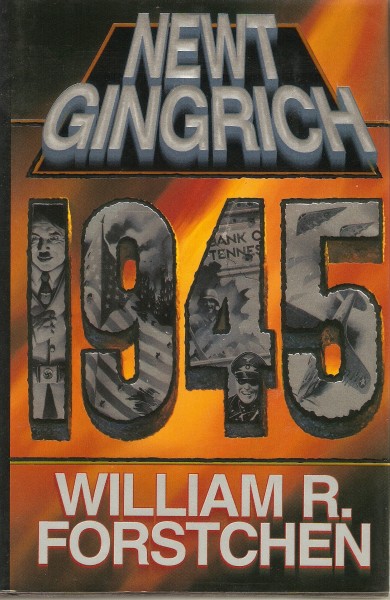
                • Cover of 1945
                  1945

                  William R. Forstchen & Newt Gingrich · standalone novel · 1995

                  similar bytenseearly 20th centurypolitical intriguealternate historyscience fictioneurope+1 more

                  1945 is an alternate history novel written by Newt Gingrich and William R. Forstchen in 1995 that described the period immediately after World War II in which the United States had fought only against Japan, which allowed Nazi Germany to force a truce with the Soviet Union, and the two victors confront each other in a Cold War, which swiftly turns hot.

                • Cover of The Leviathan Trilogy
                  The Leviathan Trilogy

                  series · 3 books · 2009

                  similar byearly 20th centuryalternate historyscience fictioneurope+3 more

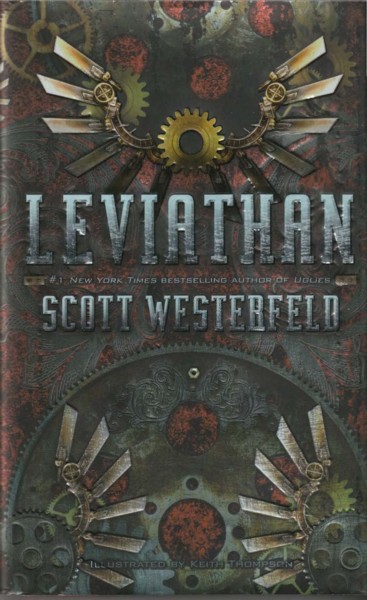
                  Set in an alternate First World War, Leviathan splits the belligerents into Clankers, who fight with mechanical walkers, and Darwinists, who fight with fabricated living creatures built from spliced DNA. Scott Westerfeld follows a British girl disguised as a boy to serve on a living airship and the exiled heir to the Austro-Hungarian throne as their paths collide, continuing across Behemoth and Goliath. Keith Thompson's illustrations are integral to all three books, alternating text chapters with illustrated sequences.

                • Cover of Land Under England
                  Land Under England

                  Joseph O'Neill · standalone novel · 1935

                  similar bytenseearly 20th centurytotalitarianismscience fictionbritish isles+1 more

                  From the front flap of the Overlook Press HB: "Over the centuries, certain members of the Julian family have descended into an underground world; only three of them have ever returned to tell the tale. When his father disappears one day, young Anthony Julian takes off in pursuit, discovering a semi-dark subterranean land with grotesque monsters, luminous forests, torrential rivers, bottomless valleys, and... a psychologically advanced civilization that has survived for over 2,000 years and has mastered the practice of mind control. Anthony will engage in a desperate struggle to prevent them from invading his very mind and destroying his independence. First published in 1935, this classic science-fiction epic with its extraordinary overtones - far ahead of its time in dealing with brainwashing and the larger issue of fascism - will frighten and illuminate a new generation of readers. Like the great works of Orwell and Huxley - works of suspenseful fantasy and political allegory - LAND UNDER ENGLAND transcends the genre with its political and psychological themes. At the same time, like the stories of Jules Verne, LAND UNDER ENGLAND is a gripping adventure yarn that is exciting and prophetic."

                • Cover of Barney Custer
                  Barney Custer

                  series · 3 books · 1914

                  completed

                  similar bytenseearly 20th centurypolitical intriguethriller & suspenseeurope

                  Barney Custer is an American farmer from Nebraska who travels to the small European kingdom of Lutha only to discover he's the spitting image of its unstable ruler, King Leopold. Edgar Rice Burroughs's The Mad King drops him into court intrigue on the eve of World War I, as a scheming uncle's plot for the throne and a budding romance with a princess force Barney to impersonate the king he resembles. It's a standalone Ruritanian adventure rather than an ongoing series.

                • Cover of Plan D
                  Plan D

                  Simon Urban · standalone novel · 2011

                  similar bytensepolitical intriguetotalitarianismalternate historymurder investigationeurope+1 more

                  It is 2011 and the Berlin Wall did not fall in 1989. The GDR's ailing government's only hope lies in economic talks with the West, but then an ally of the chairman is found murdered - and all the clues suggest that his killer came from within the Stasi. (adapted from the English cover and the OCLC entry for the first English edition)

                • Cover of Black Phoenix
                  Black Phoenix

                  George Bernau · standalone novel · 1994

                  similar bytenseearly 20th centurypolitical intriguealternate historythriller & suspenseeurope+1 more

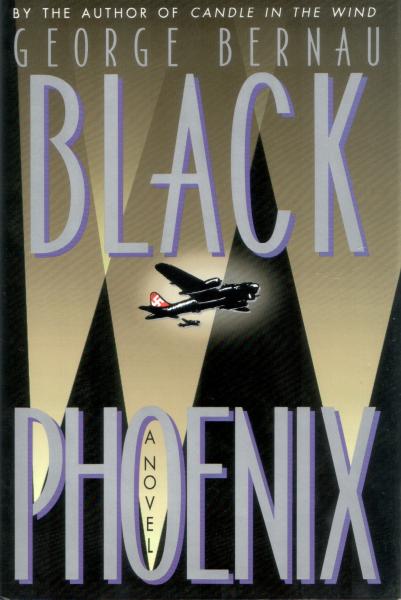
                  World War II has ended but Germany has a super-weapon (Phoenix) with an unlimited potential for destruction.