More like Hard Moon
anchored on:science fictionnear future
but
- The Light of Other Days
Arthur C. Clarke & Stephen Baxterstandalone novel2000
similar bytechnological singularitytensescience fictionnear future+1 more
An industrialist devises a technique to use tiny wormholes as light pipes to enable viewing of any event anywhere; and subsequently it becomes possible to use them to view any event in the past as well. The effects on society are enormous.
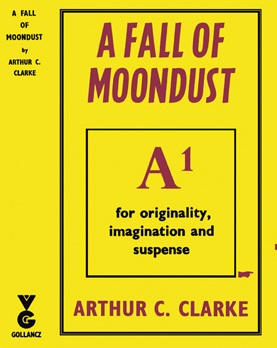
- A Fall of Moondust
Arthur C. Clarkestandalone novel1961
similar bytensescience fictionnear futurethe moonhard science fiction
From the back cover of the Harbrace paperback: "The action of A Fall of Moondust takes place almost a century from now when tours on the moon are a common occurrence. One of the high points of each tour is a cruise around the Sea of Thirst, a body of volcanic dust, in a specially designed vessel called the Selene On a perfectly routine voyage one day the Selene suddenly disappears. How do you locate a small tourist "cruiser" buried beneath fifty feet of dust? If you find it, how do you rescue the passengers and crew? If you are on board, how do you feel and what do you do while brave men and expert technicians join forces in a race against time? Sustained excitement, lively humor, and an engaging cast of characters make this one of Arthur C. Clarke's most intriguing novels."
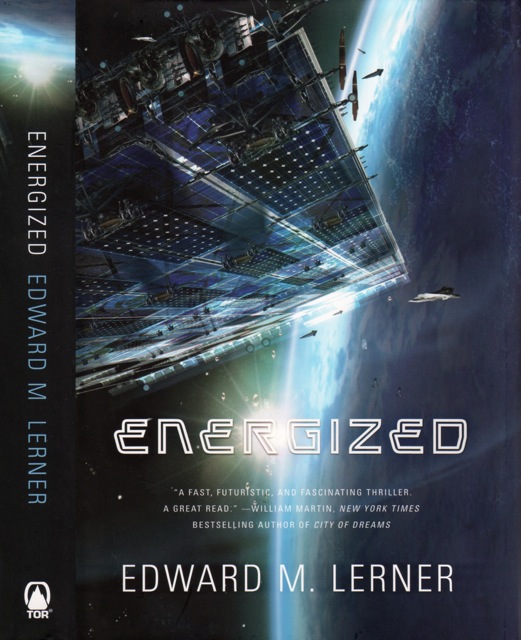
- Energized
Edward M. Lernerstandalone novel2012
similar byscience fictionnear futurehard science fiction
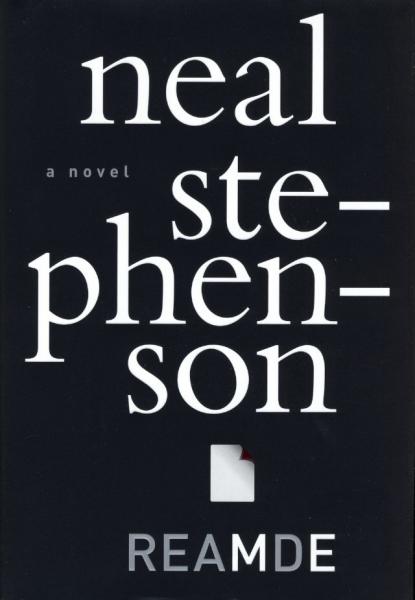
- Richard Forthrast
series2 books2011
similar byscience fiction+4 more
Neal Stephenson's Richard 'Dodge' Forthrast novels open with Reamde, a globe-spanning thriller that starts when ransomware inside an MMORPG economy pulls Richard's extended family into a real-world hostage crisis involving hackers, jihadists and Russian mobsters. The sequel Fall; or, Dodge in Hell shifts registers entirely, following Richard's digitally preserved mind after death into an afterlife simulation built from his scanned brain. The two books share a protagonist and family but differ sharply in genre and scale.
- Nexus 5
series3 books2012
similar bytensescience fictionnear future+1 more
Nexus opens Ramez Naam's postcyberpunk trilogy in 2040 with scientist Kaden Lane, who works on Nexus, an experimental nano-drug that lets human minds be networked and reprogrammed, and finds himself caught between government and corporate interests once the technology's implications become clear. The trilogy continues through Crux and Apex, following the same central conflict over who controls the technology. Nexus tied for Best Novel at the 2014 Prometheus Awards and Apex won the 2015 Philip K. Dick Award.
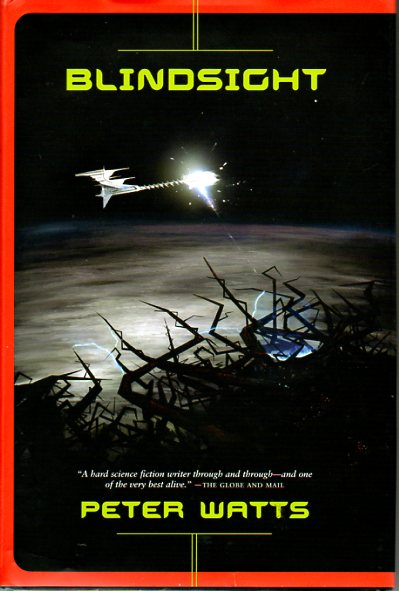
- Blindsight / Firefall
series3 books2006
similar bytensescience fictionhard science fiction+1 more
Blindsight sends a crew of radically modified posthumans (including a resurrected, genetically restored vampire) out to the Oort cloud after humanity detects an alien signal, only to make contact with something intelligent, wildly capable, and possibly not conscious at all — a first-contact story built around the question of whether self-awareness is actually useful. Peter Watts's Echopraxia is a same-timeframe "sidequel" rather than a direct sequel, following different characters through the fallout of the same first-contact event.
- Rogue Moon
Algis Budrysstandalone novel1960
similar bytensescience fictionnear futurethe moonhard science fiction
A project to transport humans by matter transmission becomes the means to send explorers to the Moon when the US discovers an alien artifact on the dark side, but anyone who enters dies, so a hardened adventurer is given the job.
- Have Space Suit - Will Travel
Robert A. Heinleinstandalone novel1958
similar bytensescience fictionnear futurethe moon
From the back cover of the Del Rey 9th printing: "Skyjacked - Everything happened at once. One minute Kip Russell was walking about in his own backyard, testing out an old space suit and dreaming about going to the moon - and the next he was out cold and the captive of an insidious space pirate. The whole thing seemed like a very bad dream until he discovered he wasn't the only prisoner on board. Then the reality of the situation became inescapable. He - along with the daughter of a world-renowned scientist and a beautiful creature from an alien planet - had been skyjacked by a monstrous extraterrestrial and they were on their way to the Moon... a journey toward a fate worse than death!"
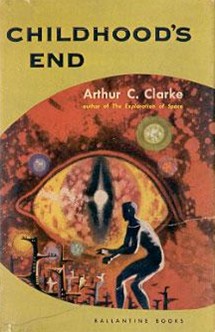
- Childhood's End
Arthur C. Clarkestandalone novel1953
similar bytechnological singularityscience fictionnear future
Childhood's End is a 1953 science fiction novel by the British author Arthur C. Clarke. The story follows a peaceful alien invasion of Earth by mysterious Overlords, whose arrival begins decades of apparent utopia under indirect alien rule, at the cost of human identity and culture.
- Artemis
Andy Weirstandalone novel2017
similar bytensescience fictionnear futurethe moonhard science fiction
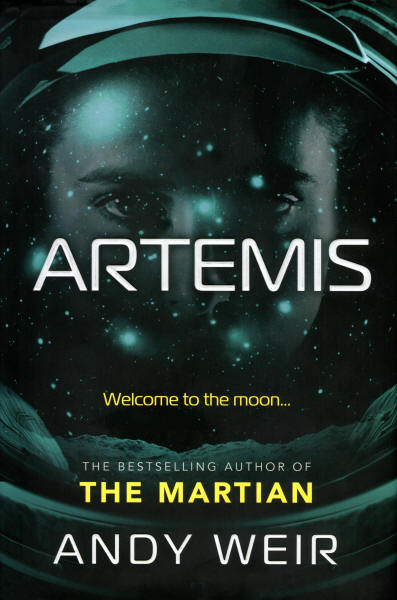
Artemis is a 2017 science fiction novel by American writer Andy Weir. It takes place in the late 2080s in Artemis, the first and only city on the Moon. It follows the life of porter and smuggler Jasmine "Jazz" Bashara as she gets caught up in a conspiracy for control of the city. The book received mixed reviews from critics.
- Realtime
series3 books1984
completed
similar bytensescience fictionnear future+1 more
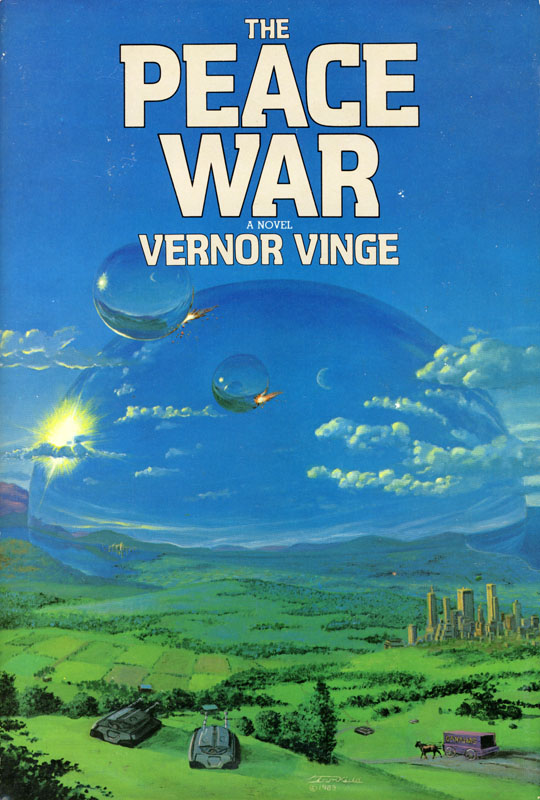
Vernor Vinge's The Peace War introduces Paul Hoehler, inventor of the 'bobble' — an impenetrable force-field technology seized by the authoritarian Peace Authority to enforce global dominance. Decades after being driven into hiding, Hoehler works in secret with fellow scientists, including a talented newcomer, to challenge the Authority's grip on the world. Marooned in Realtime continues the story decades further on; the two novels, along with the novella 'The Ungoverned', are collected together as Across Realtime.
- Singularity Sky
series2 books2003
similar bytechnological singularitytensescience fiction+1 more
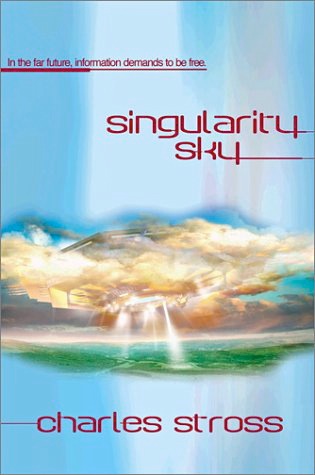
Singularity Sky and its sequel Iron Sunrise are collectively known as the Eschaton novels, after the godlike posthuman intelligence that seeded human colonies across space on the condition they never attempt time travel or threaten causality - rules tested when a low-tech colony world is destabilized by a group calling itself the Festival. Charles Stross uses the setup for a mix of space opera, economics, and diplomatic intrigue.
- Seveneves
Neal Stephensonstandalone novel2015
similar bytensescience fictionnear futurethe moonhard science fiction
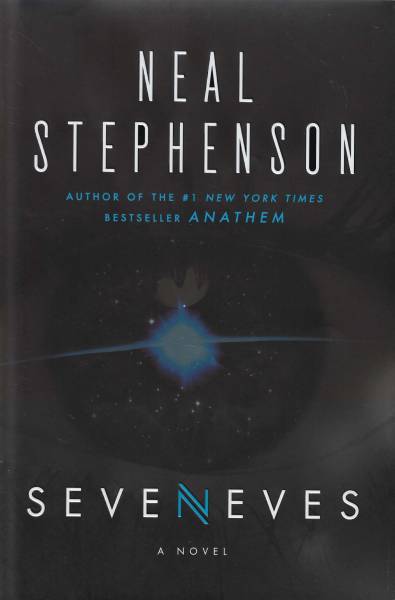
Seveneves is a science fiction novel by Neal Stephenson published in 2015. The story tells of the desperate efforts to preserve Homo sapiens in the wake of apocalyptic events on Earth after the unexplained disintegration of the Moon and the remaking of human society as a space-based civilization after a severe genetic bottleneck.
- The Hammer of God
Arthur C. Clarkestandalone novel1993
similar bytensescience fictionnear futurehard science fiction+1 more
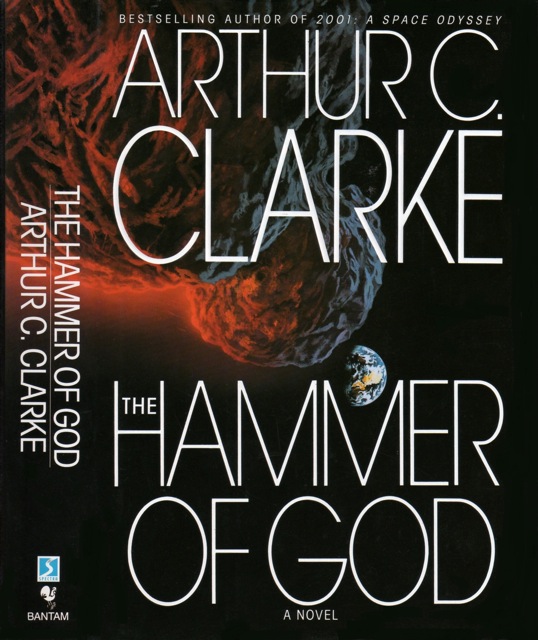
The Hammer of God is a science fiction novel by Arthur C. Clarke originally published in 1993. Set in the year 2109, it deals with the discovery of an asteroid to be on course to collide with Earth and depicts the mission for deflecting the asteroid by using fusion thermal rockets.
- Future History
series42 books1939
completed
similar byscience fiction+2 more
The Future History is a series of science fiction stories written by American author Robert A. Heinlein (1907–1988). It describes a projected future of the human race from the middle of the 20th century through the early 23rd century. The term Future History was coined by John W. Campbell Jr. in the February 1941 issue of Astounding Science Fiction. Campbell published an early draft of Heinlein's chart of the series in the May 1941 issue.
- Glasshouse
Charles Strossstandalone novel2006
similar bytensescience fiction+1 more
Robin wakes in a rehabilitation clinic with his memory deliberately erased, convinced that whoever tried to kill him before is still out there. To disappear completely, he volunteers for an experimental study recreating a vanished slice of 20th/21st-century society inside a closed habitat called the glasshouse -- a former high-security detention facility for war criminals -- and is assigned a female body and a new name, Reeve. As the simulation's rules of gender and conformity close in, Reeve starts to suspect the experiment's organizers are running something considerably darker than sociology. A standalone posthuman-future novel by Charles Stross.
- The God Machine
Martin Caidinstandalone novel1968
similar bytechnological singularitytensescience fictionnear future
The God Machine is a science-fiction novel by American writer Martin Caidin first published in 1968. Set in the near future, the novel tells the story of a top-secret cybernetic technician, Steve Rand, one of the brains behind Project 79, a top-secret US government project dedicated to creating artificial intelligence. Rand survives an attempt on his life before he realizes that Project 79 has gained sentience and is trying to control the minds of humans and take over the world. Assisted by a security agent and a mathematician, Rand sets out to destroy Project 79 before it is too late.
- Sprawl Trilogy
series10 books1981
similar bytensescience fictionnear future
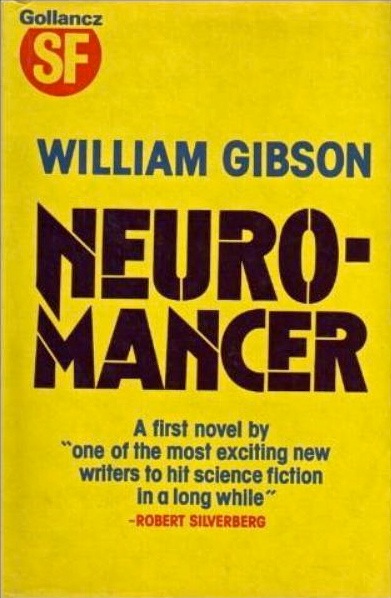
The Sprawl Trilogy is William Gibson's foundational cyberpunk sequence: Neuromancer (1984), in which hacker Case is drawn into a high-stakes heist alongside an artificial intelligence and a damaged ex-soldier, followed by Count Zero (1986) and Mona Lisa Overdrive (1988), which widen the same near-future world of corporate power and networked cyberspace to new characters. Johnny Mnemonic, an early short story set in the same fictional milieu, predates the novels and introduces the courier Molly Millions before her role in the trilogy. Together these works established much of cyberpunk's visual and thematic vocabulary.
- Blood Music
Greg Bearstandalone novel1985
similar bytechnological singularityscience fictionnear futurehard science fiction
Blood Music is a 1985 science fiction novel by American writer Greg Bear. It is an expanded version of a short story of the same title, originally published in the June 1983 issue of Analog and the winner of both the 1983 Nebula and 1984 Hugo awards for Best Novelette. The novel won the 1986 Prix Apollo Award, given to the best science fiction novel published in France during the preceding year, under the title La Musique du sang.