More like Hard Way
but
- His Dark Materials Universe
universe13 books1995
Start hereHis Dark Materials · Start here
similar byadventurous+1 more
In a world like ours and unlike it, every human soul walks outside the body in the shape of an animal — a daemon, who speaks, who cannot be lied to, and who settles into one fixed form only when childhood ends. This is the country of His Dark Materials: a company of parallel worlds across which an invisible dust of consciousness drifts down upon the waking mind; where a Church that calls itself the Magisterium would sooner sever a child's soul than let that Dust be understood; and where a golden instrument, the alethiometer, answers true questions for anyone with the patience to read it. Philip Pullman's design stands in two trilogies and a scatter of shorter tales. His Dark Materials — Northern Lights (published in America as The Golden Compass), The Subtle Knife, and The Amber Spyglass — carries Lyra Belacqua from the rooftops of a shadow Oxford across the borders between worlds. The Book of Dust returns to that same territory: La Belle Sauvage looks back to Lyra as an infant carried through a great flood, while The Secret Commonwealth follows her grown and less certain into adulthood, with a concluding volume closing the arc. Around them sit slim companion books — Lyra's Oxford, Once Upon a Time in the North, Serpentine — and Nicholas Wright's stage adaptation, made with Pullman's blessing. The register is grave and luminous at once, its title lifted from Milton and its quarrel drawn from Blake: a story that takes the side of curiosity, love, and the physical world against any authority that would forbid them. It reads as adventure — armoured bears, aeronauts, knife-cut windows between skies — yet reasons like philosophy. Begin with Northern Lights / The Golden Compass and read the first trilogy through before turning to The Book of Dust, which deepens everything the first has already made you feel.
- Stephen King multiverse
universe46 books1967
Start hereThe Gunslinger · Start here
similar by+1 more
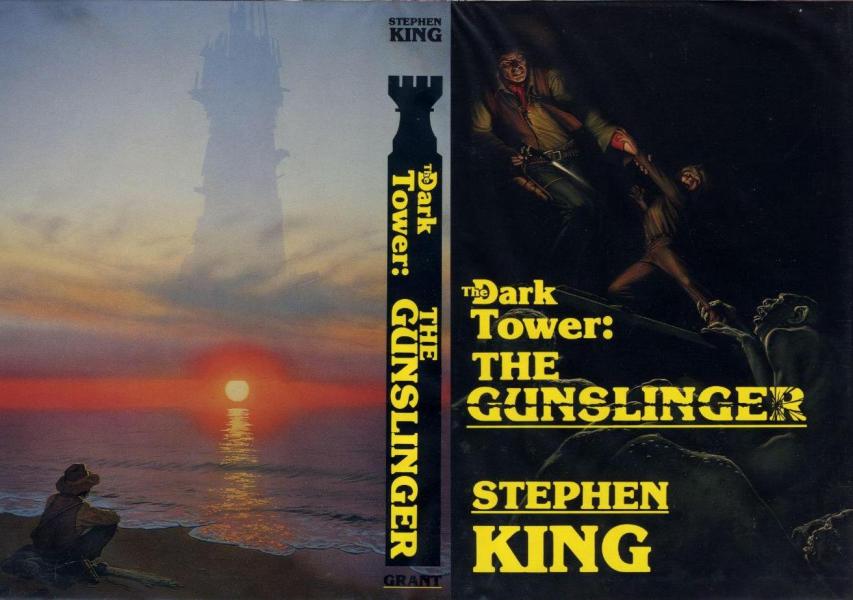
The man in black fled across the desert, and the gunslinger followed. So begins the long walk of Roland Deschain, last of an order of knight-errant pistoleers, across a land that has "moved on" — where the compass points drift, dead machines rot toward sentience, and the weave of what's real wears thin. His quest is the Dark Tower itself: a spire standing at the hub of every world that exists, the linchpin that holds all of them back from ruin. Roland's road runs eight volumes, from The Gunslinger through the closing Dark Tower, with the later, interleaved tale The Wind Through the Keyhole folding a story-within-a-story back into his youth. Along the way he draws a ka-tet — a fellowship bound by fate, not choosing — through doorways between worlds: a heroin-shackled New Yorker, a woman of two minds, a boy who dies twice. The Tower is also the secret axle around which the wider shelf of King's work turns; threads from The Stand, 'Salem's Lot and beyond wind quietly toward it. Expect a mongrel of Western, high fantasy, horror and decayed science fiction, told in a dusty, incantatory dialect all its own — ka, thankee-sai, the world that has moved on. This is King at his most mythic and most personal, a decades-spanning circle that rewards a patient reader. Begin at the beginning: The Gunslinger, then walk forward in publication order. There are other worlds than these — but this door opens first.
- His Dark Materials
series8 books1995
part of His Dark Materials Universe
similar byadventurous+2 more
His Dark Materials is a trilogy of fantasy novels by Philip Pullman consisting of Northern Lights, The Subtle Knife (1997), and The Amber Spyglass (2000). It follows the coming of age of two children, Lyra Belacqua and Will Parry, as they wander through a series of parallel universes. The novels have won a number of awards, including the Carnegie Medal in 1995 for Northern Lights and the 2001 Whitbread Book of the Year for The Amber Spyglass. In 2003, the trilogy was ranked third on the BBC's The Big Read poll.
- Almuric
series1 book1964
similar byadventuroussecondary world+1 more
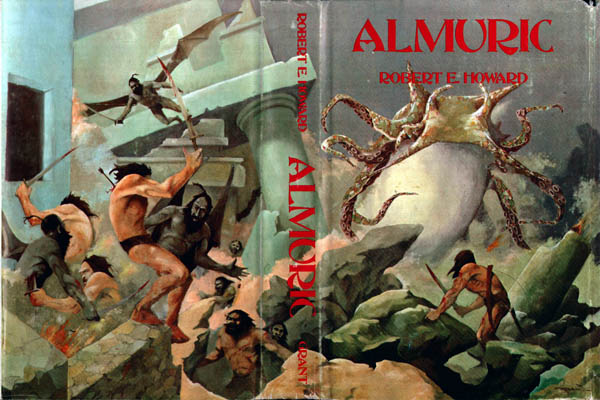
Published posthumously in 1964, Robert E. Howard's Almuric is a single planetary-romance novel rather than an ongoing series: Earthman Esau Cairn is transported to the savage world of Almuric, where he fights beast-men and wins the love of Altha, in a story indebted to Edgar Rice Burroughs' Barsoom books.
- Birthgrave
series3 books1975
completed
similar bysecondary world+1 more
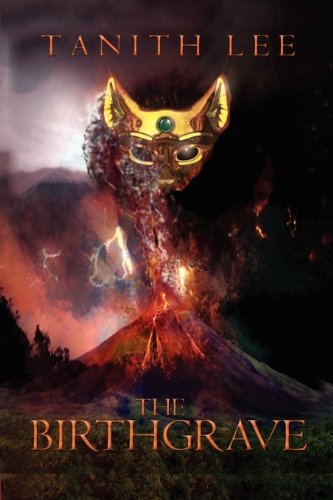
Tanith Lee's Birthgrave trilogy (The Birthgrave, Vazkor Son of Vazkor, Quest for the White Witch, 1975-1978) opens with an amnesiac woman waking inside a volcano with no memory of who she is, and follows her journey through a brutal, quasi-medieval world in search of her identity, wielding strange powers she doesn't understand along the way. She eventually learns she is one of the last of the Old Ones, an ancient, nearly extinct people, and must reckon with the harm her own vanished civilization once did.
- Kairos
series11 books1962
completed
similar byscience fiction+1 more
The Time Quintet is a science fantasy series of five young adult novels written by American author Madeleine L'Engle and made up of A Wrinkle in Time (1962), A Wind in the Door (1973), A Swiftly Tilting Planet (1978), Many Waters (1986), and An Acceptable Time (1989).
- Tailchaser's Song
Tad Williamsstandalone novel1985
similar byadventuroussecondary world+1 more
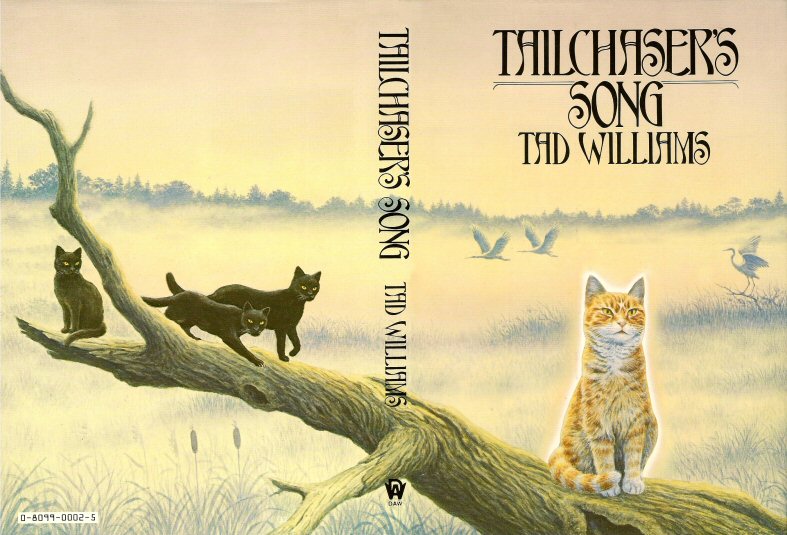
Tailchaser's Song is a fantasy novel by American writer Tad Williams. First released on November 21, 1985, it is Williams' first published work.
- Enchanted Pilgrimage
Clifford D. Simakstandalone novel1975
similar byadventuroussecondary world+1 more
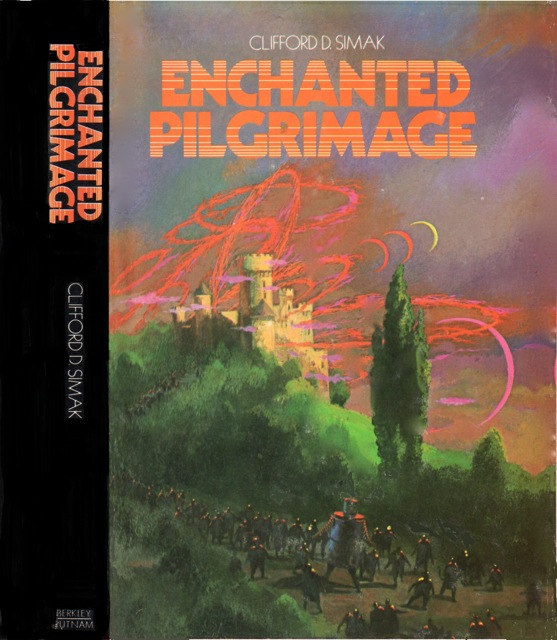
A scholar at a remote university stumbles onto a manuscript that hints at forgotten secrets buried in the Wasteland, a blighted region where magic and monsters still linger at the edge of an otherwise rational world. Setting out to track the manuscript's truth to its source, he gathers a company of odd fellow travelers along the way -- the kind of companions a quest like this tends to attract -- each with their own stake in what they might find. Clifford D. Simak folds his familiar pastoral, faintly melancholy tone into a full-blown fantasy quest, blending scholarly curiosity with old magic. A standalone fantasy novel by Clifford D. Simak.
- Dying Earth
series27 books1950
similar bysecondary world+1 more
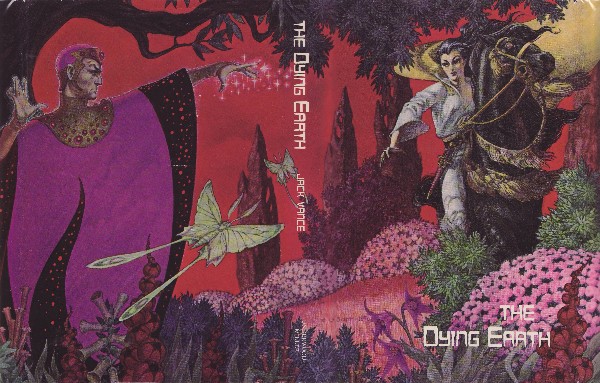
Dying Earth is a speculative fiction series by the American author Jack Vance, comprising four books originally published from 1950 to 1984. Some have been called picaresque. The series includes short story collections, fix-ups, and novels.
- Railsea
China Miévillestandalone novel2012
similar byadventuroussecondary world+1 more
Railsea is a young adult novel written and illustrated by English writer China Miéville, and published in May 2012. Miéville described the novel as "weird fiction", io9 labelled its mix of fantasy and steampunk elements as "salvagepunk" and the story has been seen as an "affectionate parody" of Herman Melville's classic 1851 novel Moby-Dick, also drawing on Robert Louis Stevenson's adventure novels Treasure Island and Kidnapped.
- The Dark World
Henry Kuttnerstandalone novel1965
similar byadventuroussecondary world+1 more
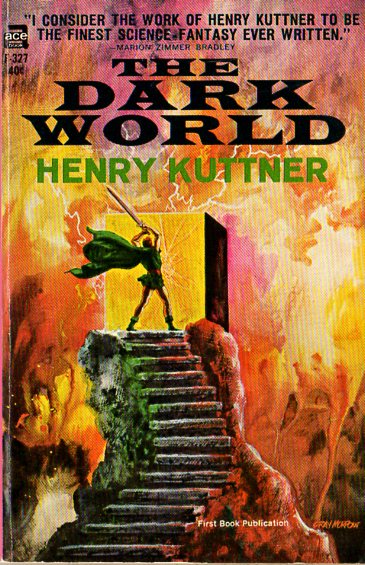
The Dark World is a science fantasy novel credited to Henry Kuttner, although his wife C. L. Moore may have been an uncredited collaborator, or possibly even the author. The novel was first published in the July 1946 issue of Startling Stories, then reprinted in the Winter 1954 issue of Fantastic Story Magazine. Its first book edition was issued by Ace in 1965, followed by a British edition by Mayflower Books in 1966. A French translation appeared in 1972. The novel was reprinted in full in Issue #5 of Amberzine in 1992, and also collected in a 1997 paperback omnibus, The Startling Worlds of Henry Kuttner. Roger Zelazny, author of The Chronicles of Amber, credits this book as being one of his primary influences during his youth.
- The Cinder Spires
series3 books2015
similar bysecondary world+2 more
Jim Butcher's Cinder Spires series opens with The Aeronaut's Windlass (2015), a steampunk fantasy set among tower-dwelling city-states where airships duel with etheric weapons and intelligent cats share the world with humans. Continuing with Warriorborn and The Olympian Affair, it marks a departure in setting from Butcher's contemporary-fantasy Dresden Files while keeping his fast-paced adventure style.
- Star Gate
Andre Nortonstandalone novel1958
similar byadventuroussecondary world+1 more
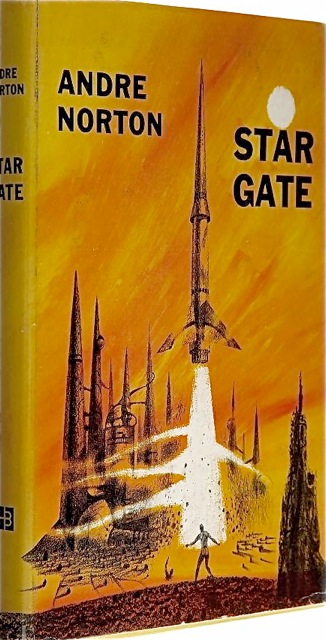
Star Gate is a science fantasy novel by American writer Andre Norton, published by Harcourt, Brace & Company in 1958. The story is science fiction with a blend of sword and sorcery, mingling technologically advanced humans from Earth with the human natives of the far-off world of Gorth and a native culture that has achieved the development level of medieval Europe.
- Transit
Edmund Cooperstandalone novel1964
similar byscience fictionadventuroussecondary world
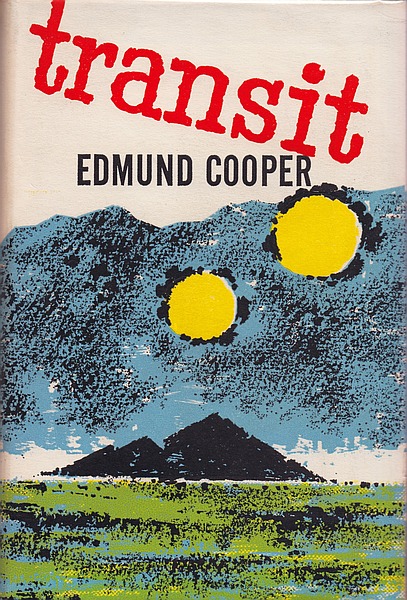
Transit... to another world. As a human being - an Earthman - Richard Avery was not particularly successful. He was mediocre as a teacher, and a failure as an artist. The rewards of Earth had passed him by. Still... Earth was home. It was where he belonged, where he could at least go his way unnoticed. Until that afternoon in Kensington Gardens, and that gleaming, hypnotic crystal that transported him - instantaneously - to a new and alien world. He was not alone, at least. There were three other Earth people marooned with him, all without a hint of the location or reason. And four more oddly assorted individuals would have been hard to imagine... Together, they faced sudden, savage onslaughts from an unknown foe. Together, they faced a fantastic implacable environment. And alone, they faced themselves - for to win, or even to survive, they had to re-discover what it meant to be human... (from the back cover of the Lancer first American edition)
- Majipoor
series29 books1980
similar by+2 more
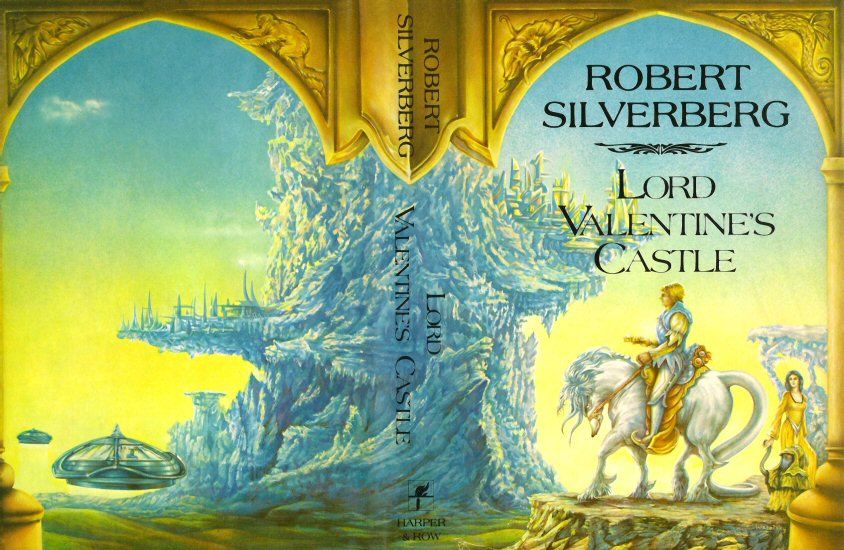
The Majipoor series is a series of novels and shorter works by American writer Robert Silverberg, set on the planet Majipoor. The setting is a mixture of science fiction and fantasy elements.
- Alliance-Union Universe
universe173 books1976
Start hereCompany Wars · The central sequence
similar byscience fiction+1 more
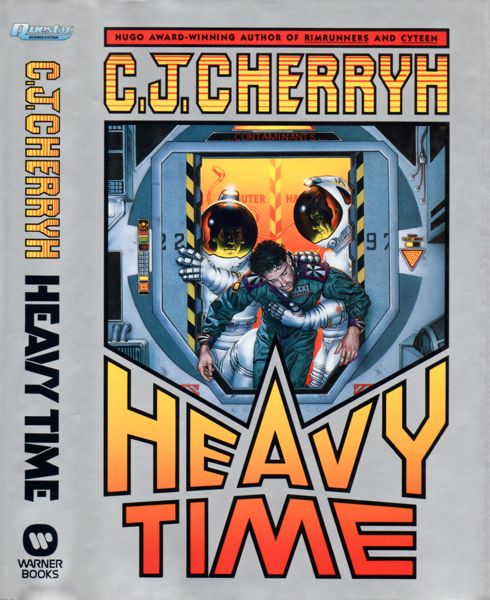
The dark between the stars belongs to no one, and everyone who lives out here knows it: the merchanter Families hauling cargo between stations that cannot feed themselves, the Earth Company clutching at colonies it can no longer supply, the Union breeding its cloned azi to settle worlds faster than birth allows. C. J. Cherryh's Alliance-Union is a future history of humankind's spread across the third and fourth millennia, told from inside the pressure — no clean empires, only stations, ships, treaties, and the people caught in the machinery of who holds the jump-points. The sequence runs from the first laborious pre-FTL stations through the Company Wars, the independence struggle that breaks over Pell in Downbelow Station (Hugo, 1981), to the genetics and cold politics of Union's homeworld in Cyteen (Hugo, 1988) and its sequel Regenesis. Around that spine cluster the merchanter novels of trader Families, the Faded Sun trilogy of human envoys among the martial alien Mri, and the Chanur books, narrated from the hierarchical, whiskered viewpoint of the hani. On the isolated world of Merovin, the Merovingen Nights anthologies open the setting to other hands — Mercedes Lackey, Janet and Chris Morris, Nancy Asire — a shared world braided into the whole. What sets it apart is intimacy at scale. Cherryh drops you without a map into a single skull and lets you assemble the politics from what that person fears and bargains for; the aliens are genuinely alien, loyalty is always provisional, and the real antagonist is usually logistics. Most books stand alone, in her words, "like real history." The surest way in is Downbelow Station — the war seen from one besieged station — then Cyteen, for the mind that shaped the other side.
- Eternal Champion
series6 books1962
part of Moorcock's Multiverse
similar byadventuroussecondary world
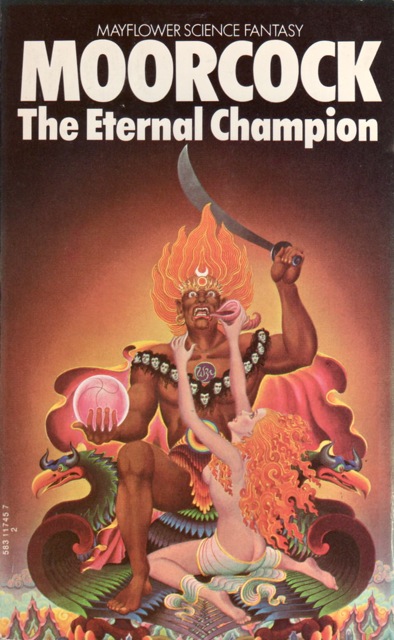
The Eternal Champion introduces Erekosë, a modern man drawn out of his own life to become a warrior fated to fight across many worlds and identities — the seed of Michael Moorcock's whole multiverse concept, in which the same doomed hero recurs under different names. First published as a 1962 novella and expanded to a novel in 1970, it heads a trilogy completed by Phoenix in Obsidian and The Dragon in the Sword; within the wider moorcocks-multiverse this is the sequence that names and anchors the Eternal Champion idea itself.
- The Lost Regiment
series9 books1990
similar byscience fictionadventuroussecondary world
William R. Forstchen's Lost Regiment series begins with Rally Cry, in which a Civil War Union regiment is swept onto a distant world where humans transplanted from many eras and cultures are farmed as food by an alien race. Arriving with nineteenth-century gunpowder weapons and organized tactics, the regiment's survivors fight to build a defensible nation and turn the war back on their captors, a conflict that escalates across nine novels of technology, politics, and generations.
- Lord of Light
series5 books1967
similar byadventurous+1 more
Lord of Light is Roger Zelazny's 1967 science fantasy novel about the surviving crew of a colonizing starship who use salvaged technology and mind-transfer to make themselves effectively immortal, then rule their colony for a thousand years under the guises of Hindu gods. One of their own, called Sam, breaks with the pantheon to return forbidden knowledge to the ordinary people they rule, touching off a war among the self-styled gods. A standalone novel, it won the 1968 Hugo Award for Best Novel.
- The Courier's Daughter Trilogy
series3 books2012
similar byscience fictionsecondary world+1 more
The Courier's Daughter Trilogy is C. J. Redwine's YA fantasy series: Defiance (2012), Deception and Deliverance. Set in a walled, post-collapse city ruled by rigid survival laws, it follows a young woman searching for her missing father against the city's authorities and the monstrous forces beyond its walls. The trilogy follows one continuous search and its fallout across all three books.
- Apprentice Adept
series7 books1980
similar byadventurous+2 more
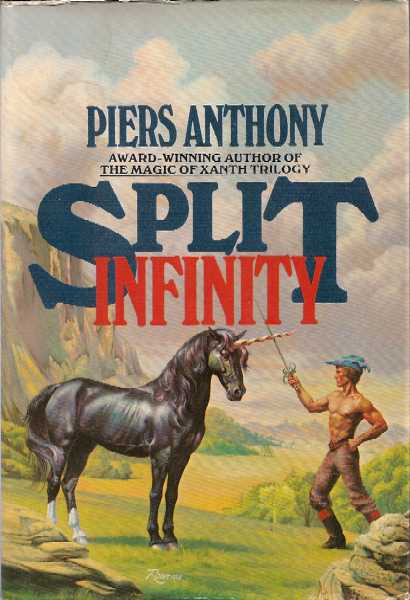
Apprentice Adept is a heptalogy of fantasy and science fiction novels written by English American author Piers Anthony. The series takes place on Phaze and Proton, two worlds occupying the same space in two different dimensional planes. Phaze is a lush planet of magic, where Proton is a barren mining planet of science. As the series opens, each person born on Phaze and Proton has an alternate self living on the other world. But if a person on either world lacks a duplicate, he can cross to the other through an energy "curtain" that circumscribes each frame.