More like Harmony
anchored on:science fictionart and artistsother star systemsnear futuredystopiasurvival+3 more
but
- Make Room! Make Room!
Harry Harrisonstandalone novel1966
similar bydarknear futurescience fictiondystopiasurvivalecological collapsebig cityclass conflict
Make Room! Make Room! is a 1966 science fiction novel written by Harry Harrison exploring the consequences of both unchecked population growth on society and the hoarding of resources by a wealthy minority. It was originally serialized in Impulse magazine.
- Earthseed
series7 books1993
similar bydarknear futurescience fictiondystopiasurvival+2 more
Octavia E. Butler's Earthseed novels, Parable of the Sower and Parable of the Talents, follow Lauren Olamina as she survives the collapse of a climate-ravaged, near-future United States and founds a belief system built on the idea that "God is Change." The two-book series was left unfinished at Butler's death; a planned third novel, Parable of the Trickster, was never completed. Later graphic-novel adaptations retell the same two stories rather than continuing the narrative.
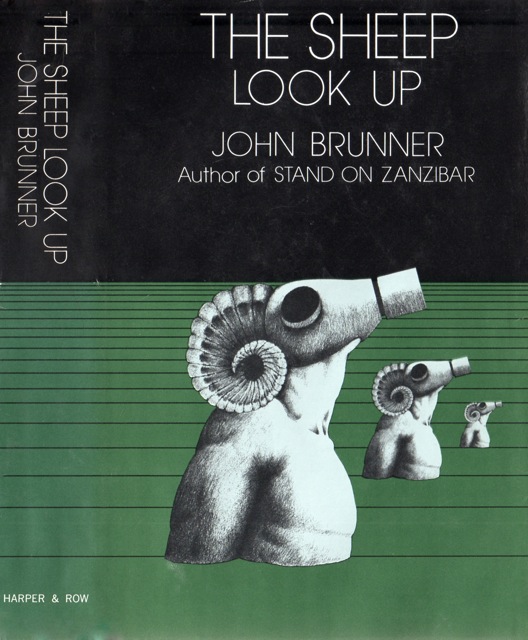
- The Sheep Look Up
John Brunnerstandalone novel1972
similar bydarknear futurescience fictiondystopiaecological collapsebig city+1 more
The Sheep Look Up is a 1972 dystopian science fiction novel by British author John Brunner, dealing with the deterioration of the environment in the United States. It was nominated for the 1972 Nebula Award for Best Novel.
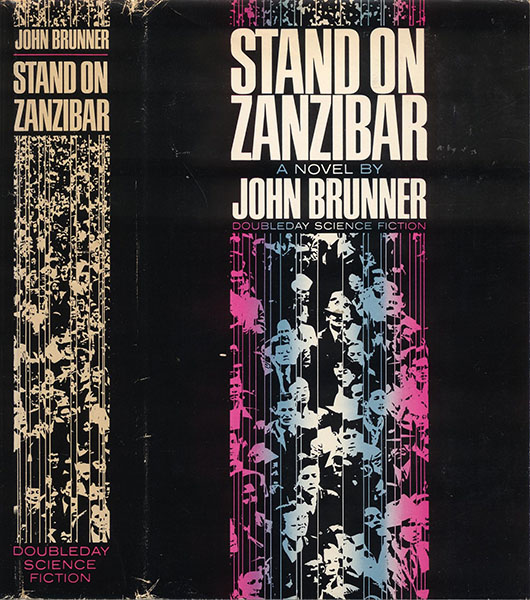
- Stand on Zanzibar
John Brunnerstandalone novel1968
similar bydarknear futurescience fictiondystopiabig city+2 more
Stand on Zanzibar is a dystopian New Wave science fiction novel written by John Brunner and first in part published in New Worlds magazine in 1967 and in book form in 1968. The book won a Hugo Award for Best Novel at the 27th World Science Fiction Convention in 1969, as well as the 1969 BSFA Award and the 1973 Prix Tour-Apollo Award.
- A Clockwork Orange
series4 books1962
completed
similar bydarkscience fictionnear futuredystopiabig citytotalitarianism
Anthony Burgess's 1962 novel is narrated by Alex, a teenage gang leader in a near-future Britain gripped by a youth subculture of extreme violence, recounting his crimes in Nadsat, an invented slang blending English with Russian-derived words. After his crimes catch up with him, Alex is made the subject of a controversial state program meant to forcibly reform his behavior, and the novel uses his ordeal to question whether imposed goodness is worth the loss of free will. It is a standalone novel.
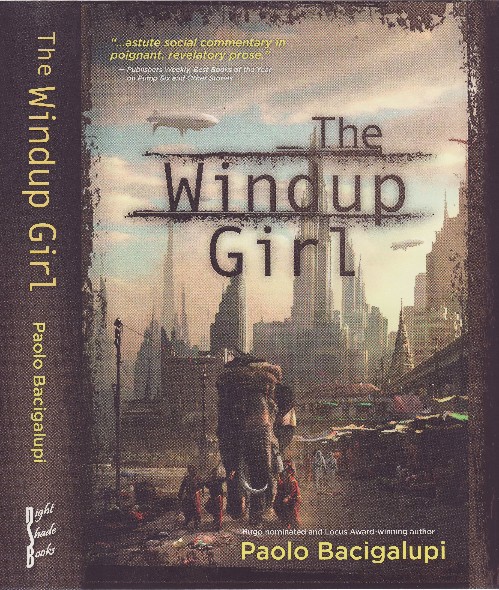
- The Windup Universe
series3 books2005
similar bydarknear futurescience fictiondystopiaecological collapse+2 more
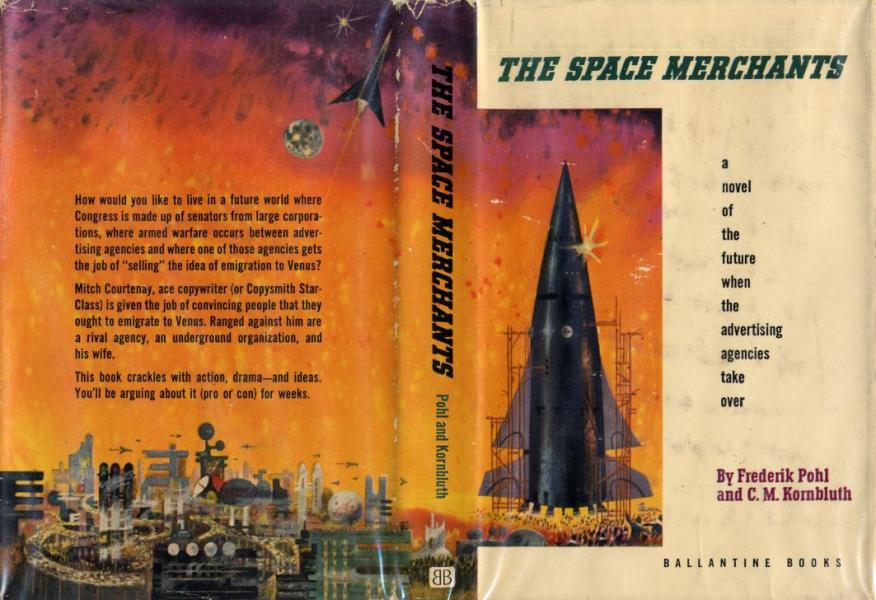
- Space Merchants
series2 books1953
completed
similar bydarknear futurescience fictiondystopiaclass conflict+1 more
The Space Merchants (1953) is a satirical science fiction novel by Frederik Pohl and C. M. Kornbluth that follows an advertising executive navigating a future where aggressive consumer capitalism has swallowed politics and daily life. The authors reunited three decades later for a direct sequel, The Merchants' War (1984), returning to the same satirical world. Together the two books form a compact bookend pair rather than an ongoing series.
- The Water Knife
Paolo Bacigalupistandalone novel2015
similar bydarknear futurescience fictiondystopiasurvivalecological collapseclass conflict
The Water Knife is a 2015 science fiction novel by Paolo Bacigalupi. It is Bacigalupi's sixth novel, and is based on his short story, The Tamarisk Hunter, first published in the news magazine High Country News. It takes place in the near future, where drought brought on by climate change has devastated the Southwestern United States.
- MaddAddam
series3 books2003
similar bydarknear futurescience fictiondystopiasurvivalecological collapse
Margaret Atwood's MaddAddam trilogy (Oryx and Crake, The Year of the Flood, MaddAddam, 2003-2013) is set around a genetically engineered pandemic unleashed deliberately by the brilliant, disillusioned scientist Crake, who intends the deadly 'BlyssPluss' pill to wipe out humanity and clear the way for the gentler, engineered Crakers he has designed to replace it. Told from the perspectives of survivors including Crake's old friend Jimmy (now calling himself Snowman), the trilogy pieces together the pandemic's causes and its aftermath from multiple, overlapping vantage points.
- The Running Man
Stephen Kingstandalone novel1982
similar bydarknear futurescience fictiondystopiasurvivaltotalitarianism+1 more
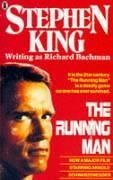
The Running Man is a dystopian thriller novel by American writer Stephen King, first published under the pseudonym Richard Bachman in 1982 as a paperback original. It was collected in 1985 in the omnibus The Bachman Books. The novel is set in a dystopian United States during the year 2025, in which the nation's economy is in ruins and world violence is rising. The story follows protagonist Ben Richards as he participates in the reality show The Running Man, in which contestants win money by evading a team of hitmen sent to kill them.
- The Shockwave Rider
John Brunnerstandalone novel1975
similar bydarknear futurescience fictiondystopiabig citytotalitarianism
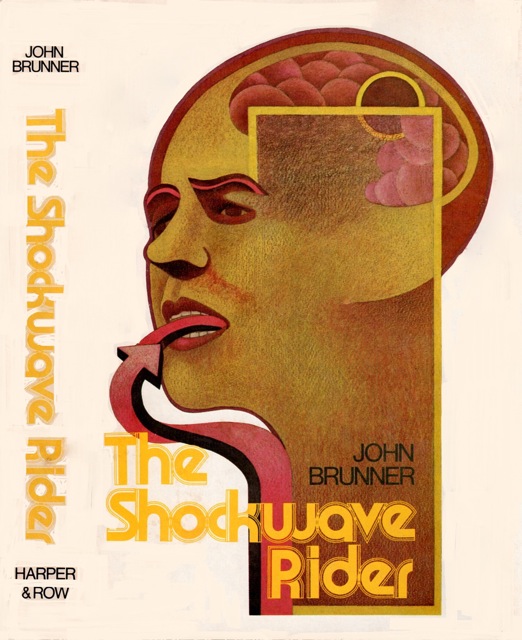
The Shockwave Rider is a science fiction novel by John Brunner, originally published in 1975. It is notable for its hero's use of computer hacking skills to escape pursuit in a dystopian future, and for the coining of the word "worm" to describe a program that propagates itself through a computer network. It also introduces the concept of a Delphi pool, perhaps derived from the RAND Corporation's Delphi method – a prediction market on world events which bears close resemblance to DARPA's controversial and cancelled Policy Analysis Market.
- The Supernaturalist
Eoin Colferstandalone novel2004
similar bydarknear futurescience fictiondystopiasurvivalbig city+1 more
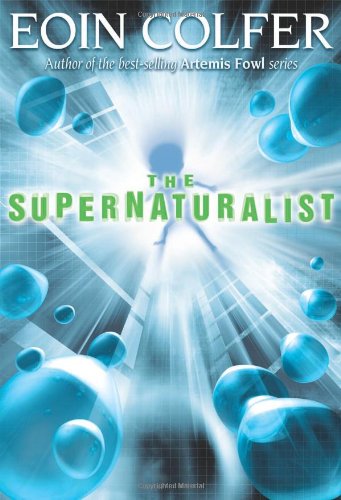
The Supernaturalist is a science fiction cyberpunk novel by Irish author Eoin Colfer. The book was influenced by film noir and other predecessors of the cyberpunk science fiction movement. Colfer has outlined plans for a sequel, Avernus.
- The Handmaid's Tale
series3 books1985
similar bydarknear futurescience fictiondystopiatotalitarianism
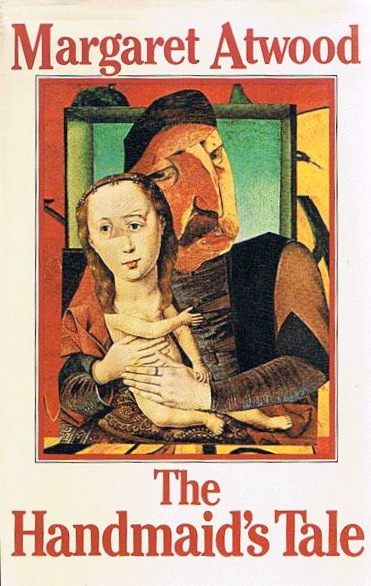
The Handmaid's Tale is Margaret Atwood's 1985 novel set in Gilead, a totalitarian theocracy that has overthrown the United States and forces fertile women into reproductive servitude as Handmaids; it is narrated by one such woman, Offred. Atwood returned to the world in her 2019 sequel The Testaments, set fifteen years later and narrated by three women, including the regime's Aunt Lydia. Together the two novels move from Gilead's grip on power toward the first cracks in it.
- Player Piano
Kurt Vonnegut & Jr.standalone novel1952
similar bydarknear futurescience fictiondystopiaclass conflict
In the near future, when cybernetic automation has effectively separated people into two castes, the "engineers and managers", and the remainder of the population who can find work only in "recycling and reclamation" or the largely useless military, an underground movement arises with the intention of rolling back those changes and giving the masses the dignity of owning their own, productive, work once more.
- Feed
M. T. Andersonstandalone novel2002
similar bydarknear futurescience fictiondystopiaecological collapse+1 more
Feed (2002) is a cyberpunk, satirical, dystopian, young-adult novel by M. T. Anderson, focusing on issues such as American hegemony, corporate power, consumerism, information technology, data mining, and environmental decline, with a sometimes sardonic, sometimes somber tone. From the first-person perspective of a teenaged boy, the book takes place in a near-futuristic American culture completely dominated by advertising and corporate exploitation, corresponding to the enormous popularity of internetworking brain implants called feeds.
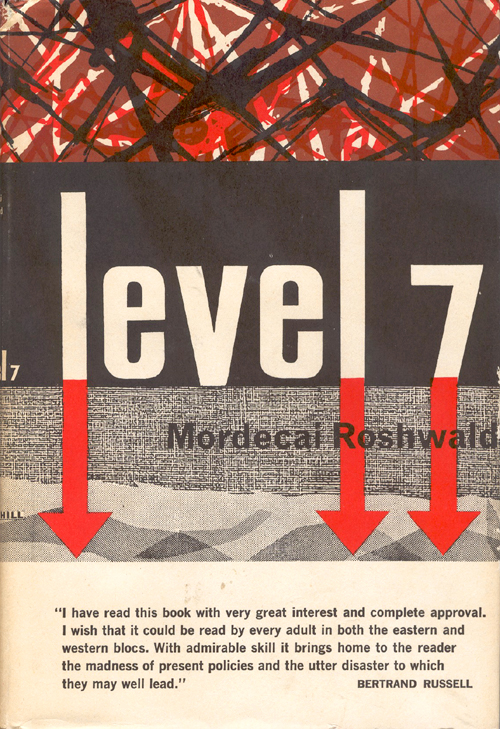
- Level 7
Mordecai Roshwaldstandalone novel1959
similar bydarknear futurescience fictiondystopiasurvivaltotalitarianism
Level 7 is a 1959 science fiction novel by American writer Mordecai Roshwald. It is told from the first-person perspective of a modern soldier, X-127, living in the underground military complex Level 7, where he and several hundred others are expected to reside permanently. X-127 fulfills the role of 'push-button' offensive initiator of his nation's nuclear weapons capacity against an unspecified enemy. X-127 narrates life within a deep shelter before, during and after a nuclear war that wipes out the human species.
- The Jagged Orbit
John Brunnerstandalone novel1969
similar bydarknear futurescience fictiondystopiabig citytotalitarianism+1 more
The Jagged Orbit is a science fiction novel by British writer John Brunner. It is similar to his earlier novel Stand on Zanzibar in its narrative style and dystopic outlook. It has exactly 100 titled chapters, which vary from several pages to part of one word. It was first published in 1969 with cover art by Leo and Diane Dillon, in the Ace Science Fiction Specials line issued by Ace Books.
- American War
Omar El Akkadstandalone novel2017
similar bydarknear futurescience fictiondystopiasurvivalecological collapse
American War is the first novel by the Egyptian-Canadian journalist Omar El Akkad. It is set in the United States in the near future, ravaged by climate change and disease, in which the Second Civil War has broken out over the use of fossil fuels.
- The Hopkins Manuscript
R. C. Sherriffstandalone novel1939
similar bydarknear futurescience fictiondystopiasurvivalecological collapse
The Hopkins Manuscript is a dystopian science fiction novel by R. C. Sherriff, first published in 1939 by Victor Gollancz. In 1958 it was reissued in a revised edition as a Pan paperback under the title The Cataclysm. The novel was later republished under its original title by The Macmillan Company in 1963 and by Persephone Books in 2002.
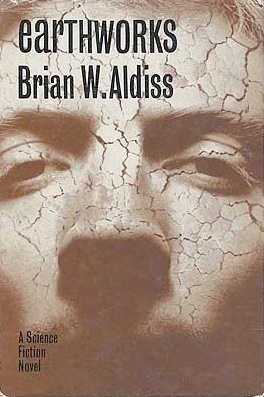
- Earthworks
Brian W. Aldissstandalone novel1965
similar bydarknear futurescience fictiondystopiaecological collapseclass conflict
Earthworks is a 1965 dystopian science fiction novel by British science fiction author Brian Aldiss. The novel draws its premise from prevalent fears about population growth and overcrowding of the Earth.
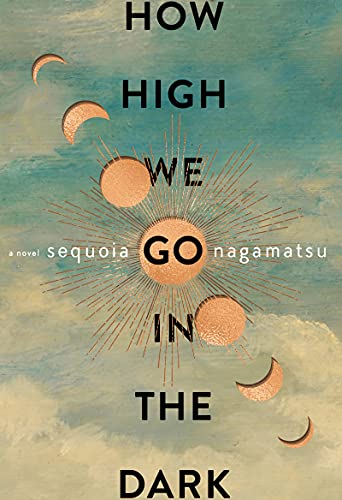
- How High We Go in the Dark
Sequoia Nagamatsustandalone novel2022
similar bydarknear futurescience fictiondystopiaecological collapse+1 more
(Robin MacArthur, in Scientific American): "[A] dystopian narrative set in the near future about an ancient virus that is uncovered by a scientist ... while she is researching melting permafrost in the Arctic."
- The Future
Naomi Aldermanstandalone novel2023
similar bydarknear futurescience fictiondystopiaecological collapsetotalitarianism
The Future is a 2023 science fiction novel by English writer Naomi Alderman, published by Simon & Schuster. The novel is set in a future dystopia where the world has been altered by environmental crisis and a powerful technocracy.
- Tomorrow!
Philip Wyliestandalone novel1954
similar bydarknear futurescience fictiondystopiasurvivalbig city
Conjecture of a tomorrow which brings an attack by the enemy and the destruction of all major cities across an unprepared country.
- Telempath
Spider Robinsonstandalone novel1976
similar bydarknear futurescience fictiondystopiasurvival+1 more
Telempath is a science fiction novel by Canadian writer Spider Robinson, set in a dystopian near-future in which human cities have fallen into ruin and the population has been sharply reduced. The novel, Robinson's first, is an expansion of his 1977 Hugo Award-winning novella By Any Other Name. It was first published under the Berkley imprint of G. P. Putnam's Sons in 1976.