Loreful
HomeDiscover
Search series, authors…⌘K
Loreful

Reading orders for SF/F series and shared universes — with your place kept in every one.

Explore

UniversesSeriesWorksAuthorsAtlas

Help

FAQAboutSite map

Account & legal

Sign inCreate accountPrivacyTerms

Data

Built on ISFDB, Wikipedia, Wikidata and Open Library. Curated reading orders carry their reasoning on the page; the rest follow publication order. Data sources & licenses

© Loreful · data: ISFDB · CC BY

More like Harrigan's File

anchored on:science fictionmid 20th centuryaliensnorth americamysteriousshort story cycle

but

Mood

The mood the book leaves you in.

  • The reading experience is propelled by journeys, exploration, and physical risk; excitement and forward momentum dominate over dread or introspection.
  • Joy and loss are deliberately mixed; the resolution grants characters something real while taking something else away, leaving warmth and sorrow together.
  • The book demands work from the reader — dense prose, difficult structure, unfamiliar ideas, or morally uncomfortable material — as part of its intended effect.
  • Grim events, cruelty, or despair dominate the atmosphere, and the book does not soften them with comfort or comic relief.
  • The atmosphere is quietly unsettling — wrongness, unease, and the uncanny pervade the book without necessarily escalating into overt horror.
  • The book is built to move the reader; character feeling is foregrounded and major scenes aim at a strong emotional response.
  • Humor is a primary aim and the prose plays for laughs — comic situations, wit, or dialogue produce sustained comedy, not occasional levity.
  • The book insists that things can improve; effort and decency are shown to matter, and the arc bends toward better outcomes even through hardship.
  • The book teaches as it goes — real facts, history, science, or craft are conveyed in enough depth that learning is part of the reading experience.
  • The book is designed to uplift and motivate, presenting perseverance or achievement in a way that invites the reader to aspire or act.
  • The overall register is cheerful and easygoing; stakes are kept gentle and the book avoids dwelling on pain or dread.
  • Withheld information drives the experience; the book sustains enigmas and secrets the reader wants resolved, whatever its genre.
  • The book is contemplative and inward-looking, giving more weight to thought, memory, and meaning than to external events.
  • The book works as comfort reading — low tension, a soothing pace, and an atmosphere the reader can unwind in.
  • Grief, loss, or melancholy set the dominant register, and the book lets sorrow stand rather than resolving it into comfort.
  • Sustained suspense is the point; the book keeps the reader braced for what happens next through danger, pressure, or impending revelation.
  • Playful invention and charm define the register — fanciful conceits, light absurdity, and a narration that delights in its own oddity.

About

What the story runs on.

  • Stories in which extraterrestrial beings are central — as characters, cultures, or the object of the plot.
  • Stories structured as a quest — a journey undertaken to find, deliver, or destroy something of great import.
  • Stories in which staying alive against nature, catastrophe, or scarcity is the central problem.
  • Stories of lovers kept apart by law, family, faith, or station, where the obstacle to love is the plot.
  • Stories in which a friendship — its making, testing, or loss — is the emotional center.
  • Stories of growing up — a young protagonist crossing from childhood into adult knowledge and responsibility.
  • Stories about who a character truly is — self-discovery, doubled lives, and the search for a self.
  • Stories about mourning — living through the death of a loved one and what loss does to the survivors.
  • Stories in which a buried family truth — hidden parentage, crimes, or shames — surfaces and reorders the present.
  • Stories driven by maneuvering for power — factions, conspiracies, and statecraft conducted in shadow.
  • Stories in which war itself is the subject — combat, occupation, and what warfare does to soldiers and civilians.
  • Stories organized around investigating a killing — the case, the clues, and the pursuit of the killer, in any genre's clothing.

Shelf

Where it sits in the library.

    • Fiction built on magic or other supernatural elements that have no scientific explanation.
    • Secondary-world fantasy at large scale, where the fate of nations or the world turns on the protagonists' struggle.
    • Fantasy set in a recognizably modern city or contemporary world where the supernatural intrudes on everyday life.
    • Fantasy that blends in horror's atmosphere and imagery, keeping a fantastical frame around grim or frightening material.
    • Action-driven fantasy following warriors or rogues with personal stakes against sorcerous threats, rather than world-spanning conflicts.
    • Fantasy set in a real historical period or a close analogue of one, with magic woven into the era.
    • Fantasy in which protagonists cross from the ordinary world into another world through a portal or similar passage.
    • Fiction that retells or reworks a traditional fairy tale in a new form or setting.
    • Fantasy drawing directly on myths, legends, and folklore, retelling them or building on their figures and logic.
    • Fantasy of ghosts, vampires, shapeshifters, psychics, and similar phenomena, usually set in an otherwise ordinary world.
    • Fiction mixing science-fictional trappings with overtly magical or impossible elements in one setting.
    • Low-stakes fantasy emphasizing comfort, community, and everyday pleasures over conflict and peril.
    • Speculative fiction of pervasive moral ambiguity, violence, and cynicism that rejects heroic conventions — fantasy and SF alike.
      • Fiction that extrapolates from science and technology — future societies, space travel, or speculative inventions — within at least nominally natural laws.
      • Science fiction of interstellar scope — starships, galactic polities, and adventure across star systems.
      • Science fiction committed to scientific rigor, where technical plausibility constrains the story.
      • Science fiction centered on armed forces and warfare, told largely from a military point of view.
      • Science fiction of networked, corporate-dominated near futures, pairing high technology with social decay.
      • Science fiction styled on nineteenth-century steam-powered technology, often in a Victorian or pseudo-Victorian setting.
      • Fiction depicting an oppressive or catastrophic society, presented as a warning.
      • Fiction set after civilization's collapse, following survivors in the ruins of the old world.
      • Fiction in which characters move between past and future, and the mechanics or consequences of that travel drive the plot.
      • Fiction exploring a world where a historical event went differently and history diverged from ours.
      • Science fiction about humanity's first encounter and communication with an alien intelligence.
      • Science fiction in which extraterrestrial forces attack or occupy Earth and humanity resists.
      • Fiction whose primary aim is to frighten or unsettle the reader through dread, menace, or the monstrous.
      • Horror of vast, indifferent, incomprehensible entities before which humanity is insignificant, in the Lovecraft tradition.
      • Horror of decaying houses, buried family secrets, and oppressive atmosphere in the Gothic literary tradition.
      • Horror centered on hauntings and the returning dead.
      • Horror located in the mind — paranoia, obsession, and unreliable perception rather than external monsters.
      • Horror built around the reanimated dead and survival amid their outbreaks.
      • Horror defined by explicit, transgressive gore that refuses to cut away from violence.
      • Speculative fiction of the strange and uncanny that resists both natural explanation and standard genre categories.
      • Fiction organized around solving a crime or puzzle, typically following an investigator toward the identification of a culprit.
      • A puzzle-first mystery that lays out clues so the culprit's identity can be deduced before the reveal.
      • Crime fiction of moral ambiguity, fatalism, and hard-edged style, set among the corrupt and the doomed.
      • A mystery following the realistic routines of police work — forensics, interviews, and case-building.
      • A gentle mystery with an amateur sleuth, a small community, and violence kept off the page.
      • A mystery set in a past era, where the investigation works within that period's methods and society.
      • Fast-paced fiction driven by imminent danger, pursuit, or high-stakes conspiracy, built to sustain tension.
      • A thriller of espionage — agents, tradecraft, and intelligence services in conflict.
      • A thriller centered on lawyers and the courtroom, where litigation carries the suspense.
      • A thriller driven by detailed contemporary or near-future technology, often military or scientific.
      • A thriller whose tension comes from mental states and manipulation between characters rather than external action.
      • Fiction whose central plot is a romantic relationship and its development toward an emotionally satisfying resolution.
      • Romance in which one or both partners are supernatural beings, blending fantasy elements into the love story.
      • A fantasy-romance hybrid in which the romantic arc and the fantasy plot carry equal weight.
      • Romance set in a past era, with courtship shaped by the period's society and manners.
      • Romance set in the present day, without supernatural or historical elements.
      • Fiction set in a real past period, where the historical setting materially shapes characters and events.
        • General and literary fiction emphasizing prose style, character interiority, or formal ambition over genre plot conventions.
        • Fiction in a realistic world where magical events occur and are treated as ordinary, in the tradition of Latin American literature.
        • Fiction that ridicules people, institutions, or society in order to criticize them.
        • Fiction of dreamlike, irrational imagery and logic that breaks from realistic representation.
        • Fiction that plays with narrative convention through metafiction, fragmentation, and self-reference.
        • Fiction propelled by journeys, exploration, and physical peril, where action and survival carry the plot.
        • Adventure fiction of ships and seafaring — naval engagements, voyages, and life at sea.
        • Fiction of the American frontier West — gunmen, ranchers, and lawmen, typically in the late nineteenth century.
        • Fiction centered on soldiers, campaigns, and the experience of warfare, historical or imagined.
          • Fiction written primarily to amuse, using comedic situations, wit, or parody as its organizing principle.
            • Multi-generational fiction following a family or dynasty across decades, with inheritance and kinship as the through-line.
              • Fiction whose world runs on explicit game mechanics — levels, stats, and skills that characters can see and exploit.
                • Fiction about costumed or superpowered heroes and their conflicts with comparable villains.

                Practical

                How long a commitment, whether it stands alone, and whether it has finished.

                Tap a chip to ask for it · tap again to rule it out · once more to clear. Numbers show what would be left.

                • Cover of All Flesh Is Grass
                  All Flesh Is Grass

                  Clifford D. Simak · standalone novel · 1965

                  similar byaliensmysteriousnorth americamid 20th centuryscience fiction

                  All Flesh is Grass is a science fiction novel by American author Clifford D. Simak, published in 1965. The book follows a small town in Wisconsin that is closed off from the outside world by a mysterious barrier, placed by extraterrestrial beings.

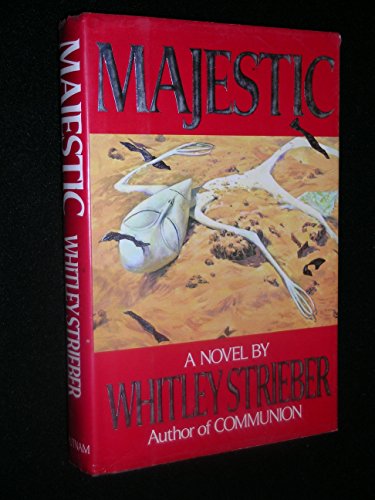
                • Cover of Majestic
                  Majestic

                  Whitley Strieber · standalone novel · 1989

                  similar byaliensmysteriousnorth americamid 20th centuryscience fiction

                  Putatively based on meticulously researched background detail, the novel incorporates – in the first edition without acknowledgement or permission – a summary derived from David Langford's spoof novel, An Account of a Meeting with Denizens of Another World, 1871 (1979) as by William Robert Loosley, edited by Langford - Clute/Nicholls, Encyclopedia of Science Fiction.

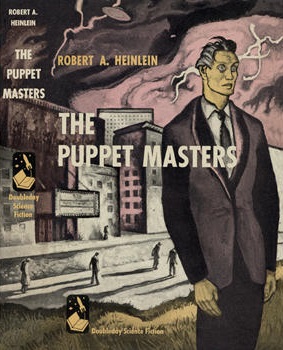
                • Cover of The Puppet Masters
                  The Puppet Masters

                  Robert A. Heinlein · standalone novel · 1951

                  similar byaliensnorth americamid 20th centuryscience fiction

                  Parasitical aliens attach themselves to human hosts and take over their bodies. Two spies are sent to find out what's happening, but the extent is much farther than they knew. With access to the humans' memories, the aliens quietly invade the government and start taking over.

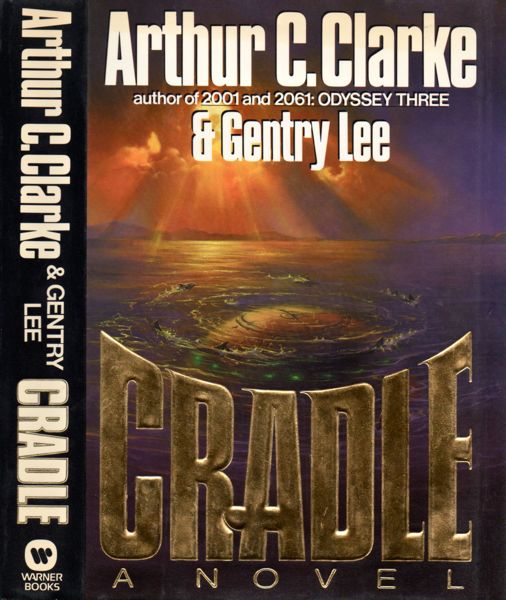
                • Cover of Cradle
                  Cradle

                  Arthur C. Clarke & Gentry Lee · standalone novel · 1988

                  similar byaliensmysteriousnorth americascience fiction

                  Cradle is a 1988 science fiction novel by Arthur C. Clarke and Gentry Lee. The premise of the novel is the contact between a few humans from the Miami area in 1994 and the super robots of a damaged space ship submerged off the Florida coast. Telecommunication advances such as videotelephones and highly efficient underwater scanning equipment used in the story bridge from the everyday, real-life aspects of the setting toward the near future, bespeaking technological progress.

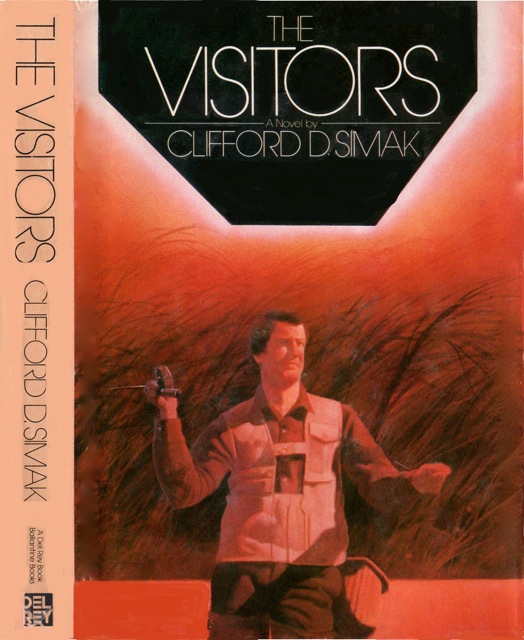
                • Cover of The Visitors
                  The Visitors

                  Clifford D. Simak · standalone novel · 1980

                  similar byaliensmysteriousnorth americascience fiction

                  WorldCat: Intelligent, alien creatures arrive on Earth from outer space, threatening world stability and presaging the destruction of civilization.

                • Cover of Trinity
                  Trinity

                  A. J. Hartley & Tom DeLonge · standalone novel · 2024

                  similar byaliensmysteriousnorth americamid 20th centuryscience fiction

                  A thrilling new novel by the creators of Sekret Machines who, with the help of a team of government insiders, exposed the secret pentagon UFO program that captured America’s attention and led to the first public congressional hearings about unidentified flying objects. It’s 1962, in Trinity, Nevada, a small town on the edge of the desert, home to a military base serving the nuclear testing grounds. Van Lopez and his brother Andy have enough to do keeping their truck running and the local criminal gang happy to be concerned about nuclear tests. Van has dreams, or—he’s not sure what to call them—that he cannot explain or forget, but when he sees mysterious lights in the sky, he struggles to make sense of what now feel like his earliest memories. On the day of the atomic test, the nuclear blast brings down something over Trinity that wasn’t supposed to be there—something not of this world. Now Van is running for his life, pursued by a murderous Soviet agent and government forces bent on keeping all he has seen—and all he has remembered—from getting out. Romances and rivalries come to a head as he fights for the things he cares about most, and in that final battle he may have to make allies of his oldest enemies. A thrilling new novel by the creators of Sekret Machines who, with the help of a team of government insiders, exposed the secret pentagon UFO program that captured America’s attention and led to the first public congressional hearings about unidentified flying objects.

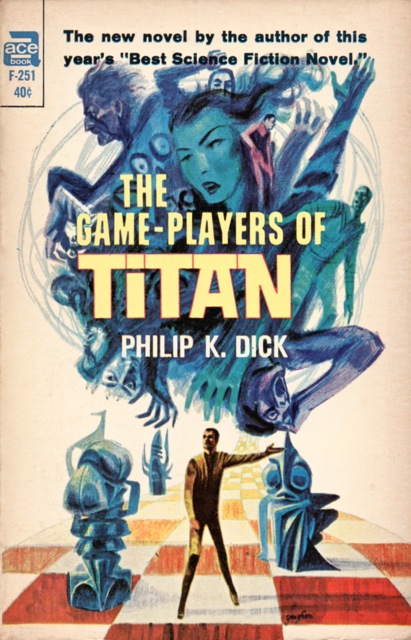
                • Cover of The Game-Players of Titan
                  The Game-Players of Titan

                  Philip K. Dick · standalone novel · 1963

                  similar byaliensmysteriousnorth americascience fiction

                  In a depopulated, mostly sterile America, land, marriages and social standing are all wagered on Bluff, a high-stakes game administered by the vugs, gelatinous, gambling-obsessed aliens from Titan who rule Earth without ever quite occupying it. Pete Garden's bipolar disorder threatens his standing among the game's players even as his new wife becomes pregnant, a near-miraculous event in this exhausted world, and his attraction to a telepath complicates things further. When a fellow player turns up dead, Pete finds himself a suspect in a mystery tangled up with induced amnesia and vug politics he barely understands. Philip K. Dick's 1963 novel.

                • Cover of The Man Who Fell to Earth
                  The Man Who Fell to Earth

                  Walter Tevis · standalone novel · 1963

                  similar byaliensnorth americamid 20th centuryscience fiction

                  The Man Who Fell to Earth is a 1963 science-fiction novel by American writer Walter Tevis. Published by Gold Medal Books as a paperback original, it was Tevis's second novel, following The Hustler. The novel follows Thomas Jerome Newton, an extraterrestrial from the drought-stricken planet Anthea, who comes to Earth hoping to build a spacecraft that can save the surviving members of his species.

                • Cover of Way Station
                  Way Station

                  Clifford D. Simak · standalone novel · 1963

                  similar byaliensnorth americamid 20th centuryscience fiction

                  The human operator of a transfer station for aliens traveling between planets, kept secret from the human race, deals with discovery by the US government and interplanetary political crisis, as well as his own emotional issues.

                • Cover of Jonathan Maberry's X-Files Anthologies
                  Jonathan Maberry's X-Files Anthologies

                  series · 3 books · 2015

                  part of The X-Files

                  similar byaliensmysteriousnorth americascience fictionshort story cyclehorror

                • Cover of Ossian's Ride
                  Ossian's Ride

                  Fred Hoyle · standalone novel · 1959

                  similar byaliensmysteriousmid 20th centuryscience fiction

                  Ossian's Ride is a science fiction novel by British astrophysicist Fred Hoyle, published in 1959.

                • Cover of The Body Snatchers
                  The Body Snatchers

                  Jack Finney · standalone novel · 1955

                  similar byaliensnorth americamid 20th centuryscience fictionhorror

                  The Body Snatchers is a science fiction horror novel by American writer Jack Finney, originally serialized in Collier's magazine in November–December 1954 and published in book form the following year.

                • Cover of Ancient Shores
                  Ancient Shores

                  series · 3 books · 1996

                  similar byaliensmysteriousnorth americascience fiction

                • Cover of The Hercules Text
                  The Hercules Text

                  Jack McDevitt · standalone novel · 1986

                  similar byaliensmysteriousnorth americascience fiction

                  The Hercules Text is a 1986 science fiction novel by American writer Jack McDevitt. It tells the story of a message of intelligent extraterrestrial origin received by SETI scientists. The Hercules Text was nominated for the Philip K. Dick Award in 1986.

                • Cover of Stranger in a Strange Land
                  Stranger in a Strange Land

                  Robert A. Heinlein · standalone novel · 1961

                  similar byaliensnorth americascience fiction

                  Stranger in a Strange Land is a 1961 science fiction novel by the American author Robert A. Heinlein. It tells the story of Valentine Michael Smith, a human who comes to Earth in early adulthood after being born on the planet Mars and raised by Martians, and explores his interaction with and eventual transformation of Terran culture.

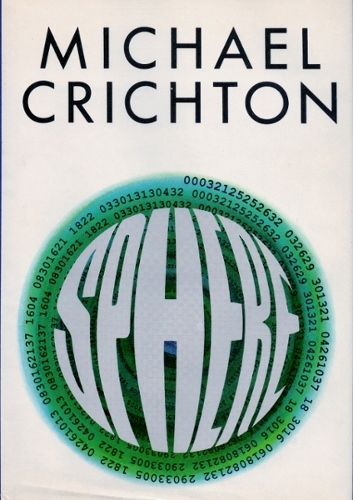
                • Cover of Sphere
                  Sphere

                  Michael Crichton · standalone novel · 1987

                  similar byaliensmysteriousscience fiction

                  Keeping Top Secret, the US Navy is guarding a gigantic spaceship that has been lying on the Pacific ocean floor for centuries, overgrown with corals. A group of highly qualified scientists is assembled to investigate this mysterious discovery. When the team boards the ship via an underwater station, they come into confrontation with the evil.

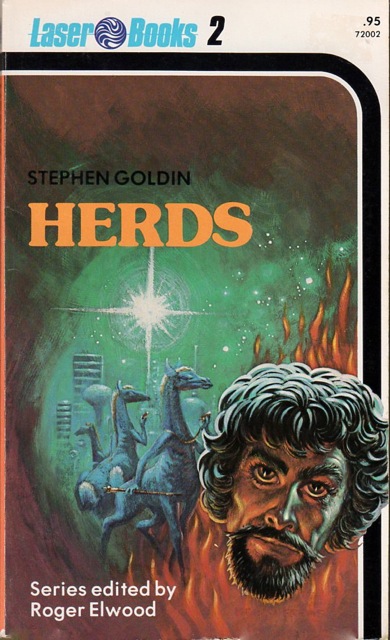
                • Cover of Herds
                  Herds

                  Stephen Goldin · standalone novel · 1975

                  similar byaliensmysteriousnorth americascience fiction

                  The wife of a powerful figure in California is found brutally murdered in the couple's lonely mountain retreat. Wesley Stoneham made certain that all the evidence concerning the murderer of his wife pointed to a nearby hippie community. He had three goals in mind: to get rid of his wife, to drive out the hippie commune and to enhance his own power in the state. He was at the point of achieving them all when Garnna, from the peaceful planet of Zartic finally made contact with Debby, a hippie from the commune, who had problems of her own. Then Stoneham's troubles began. (from the back cover of the Laser Books first edition)

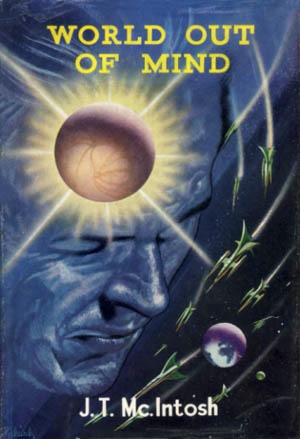
                • Cover of World Out of Mind
                  World Out of Mind

                  J. T. McIntosh · standalone novel · 1953

                  similar byaliensnorth americamid 20th centuryscience fiction+1 more

                  "An alien hostile take-over of Earth is planned by placing 50,000 espionage agents in strategically important positions, including the President of the United States." (cited from {{A|Peter Young}}'s review in Big Sky #2)

                • Cover of Shakespeare's Planet
                  Shakespeare's Planet

                  Clifford D. Simak · standalone novel · 1976

                  similar byaliensmysteriousscience fiction+1 more

                  Woken after a thousand-year voyage meant to find humanity a new home, Carter Horton finds his ship stranded for good, tended by the disembodied minds of three volunteers who gave up their bodies to fly it. Outside waits a world already crowded with strangers: a robot named Nicodemus, and an alien called the Carnivore who claims to have known a human, once, called Shakespeare, and to have arrived here through a tunnel across time. As more travelers arrive through that same tunnel, Horton has to work out what kind of planet he has actually landed on. A standalone novel from Clifford D. Simak.

                • Cover of Those Who Watch
                  Those Who Watch

                  Robert Silverberg · standalone novel · 1967

                  similar byaliensnorth americamid 20th centuryscience fiction

                  Those Who Watch is a science fiction novel by American writer Robert Silverberg, first published by Signet in 1967. The novel concerns a trio of alien explorers, each one surgically altered so as to appear outwardly human, who find themselves separated, and permanently stranded on Earth, after their ship explodes while hovering in low orbit. Each of the aliens is injured during the accident, and all are taken in and nursed back to health by kindly human beings.

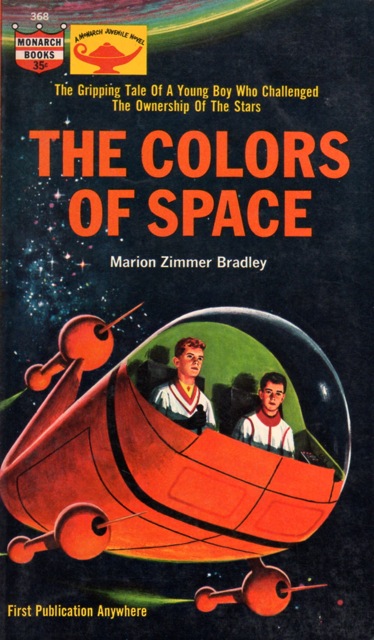
                • Cover of The Colors of Space
                  The Colors of Space

                  Marion Zimmer Bradley · standalone novel · 1963

                  similar byaliensmysteriousscience fiction

                  The Lhari seem peaceful and friendly, but they go to some lengths to protect their monopoly on faster-than-light travel. One young man is sent to discover their secrets.

                • Cover of Doorways in the Sand
                  Doorways in the Sand

                  Roger Zelazny · standalone novel · 1976

                  similar byaliensmysteriousscience fiction

                  Doorways in the Sand is a science fiction novel by American writer Roger Zelazny. Featuring both detective fiction and comic elements, it was originally published in serial form in the magazine Analog Science Fiction and Science Fact; the hardcover edition was first published in 1976 and the paperback in 1977. Zelazny wrote the whole story in one draft, with no rewrites, and it subsequently became one of his five favorites among his own work. Doorways in the Sand was nominated for the Nebula and Hugo awards.

                • Cover of Four from Planet 5
                  Four from Planet 5

                  Murray Leinster · standalone novel · 1959

                  similar byaliensmysteriousmid 20th centuryscience fiction

                  Four from Planet 5 is a science fiction novel by Murray Leinster. It was released in 1959 by Fawcett Publications under their Gold Medal Books imprint reference number S937. The novel details the arrival of a spaceship carrying four seemingly human children from an advanced civilisation close to a US scientific research base in Antarctica and the events that subsequently unfold. This story appeared in the September 1959 edition of Amazing Science Fiction under the title Long Ago Far Away.

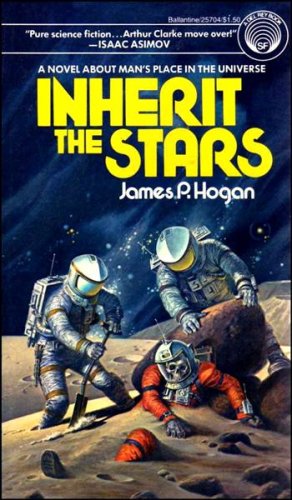
                • Cover of Minervan Experiment / Giants
                  Minervan Experiment / Giants

                  series · 5 books · 1977

                  completed

                  similar byaliensmysteriousscience fiction

                  The Giants series is a quintet of science fiction novels by James P. Hogan, published between 1977 and 2005. The series began with Inherit the Stars, published by Del Rey Books in May 1977.