More like Hatch
anchored on:science fictionnear futureyoung adult
but
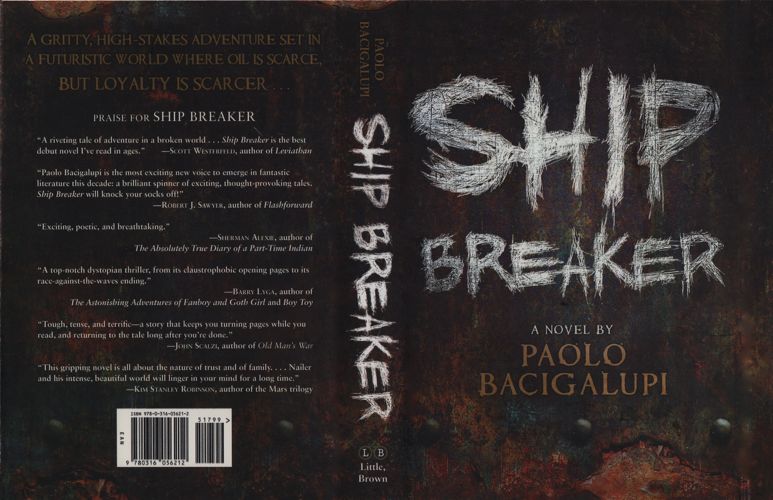
- Ship Breaker
series3 books2010
similar bydarkscience fictionsurvivalnear futurenorth americayoung adulttensepost-apocalyptic+3 more
Nailer works a light-crew scavenging copper wire and scrap from beached oil tankers on a Gulf Coast reshaped by rising seas and vanished order, until a wrecked clipper ship washes ashore carrying a half-drowned girl from the wealthy world he'll never belong to. Paolo Bacigalupi's Ship Breaker follows Nailer as helping her pulls him out of his abusive father's orbit and into a much larger, more dangerous game involving her family's fortune. The sequels The Drowned Cities and Tool of War widen the same flooded, resource-scavenging future to new characters and coastlines.
- Library of America P. K. Dick Collection
series9 books1962
completed
similar byscience fictionnear future+3 more
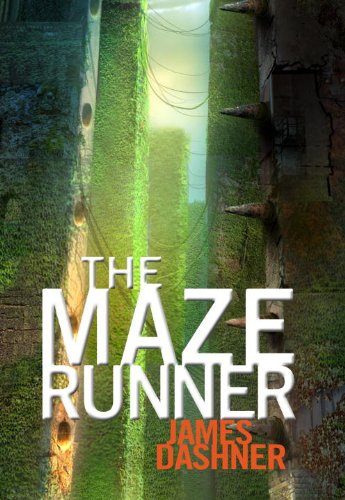
- Maze Runner
series11 books2009
similar byscience fictionnear futuresurvivalyoung adulttensepost-apocalyptic+3 more
The Maze Runner is a series of young adult dystopian science fiction novels written by American author James Dashner. The series consists of the trilogy The Maze Runner (2009), The Scorch Trials (2010) and The Death Cure (2011), as well as two prequel novels, The Kill Order (2012) and The Fever Code (2016). A novella titled Crank Palace (2020) and a companion book titled The Maze Runner Files (2013) have also been released. A sequel trilogy in the series titled The Maze Cutter takes place 73 years following the events of The Death Cure and consists of the novels The Maze Cutter (2022), The Godhead Complex (2023), and The Infinite Glade (2025).
- Make Room! Make Room!
Harry Harrisonstandalone novel1966
similar bydarkscience fictionnear futuresurvivalecological collapseour worldnorth americatense
Make Room! Make Room! is a 1966 science fiction novel written by Harry Harrison exploring the consequences of both unchecked population growth on society and the hoarding of resources by a wealthy minority. It was originally serialized in Impulse magazine.
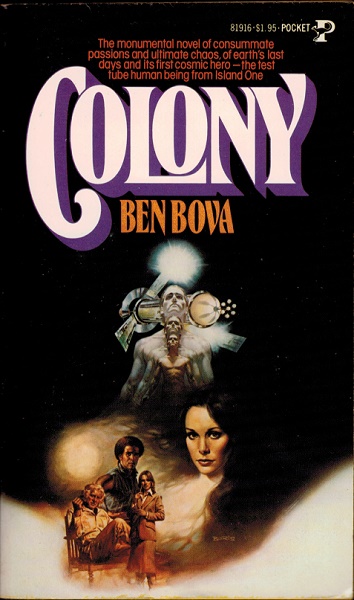
- Colony
Ben Bovastandalone novel1978
similar byscience fictionnear futuresurvivaltense+4 more
Colony continues the story Ben Bova began in Millennium, following astronaut-turned-administrator Chet Kinsman years later as the head of an orbiting space habitat that has become Earth's only real refuge from a planet buckling under overpopulation, food shortages and unrest. Getting a place in the habitat is a matter of life and death for millions who will never be chosen, and as Earth's governments grow more desperate to control or dismantle the colony outright, Kinsman has to decide how far he'll go to protect the world he's built off-world. Bova later folded both novels together into the omnibus The Kinsman Saga. Part of Ben Bova's Chet Kinsman series.
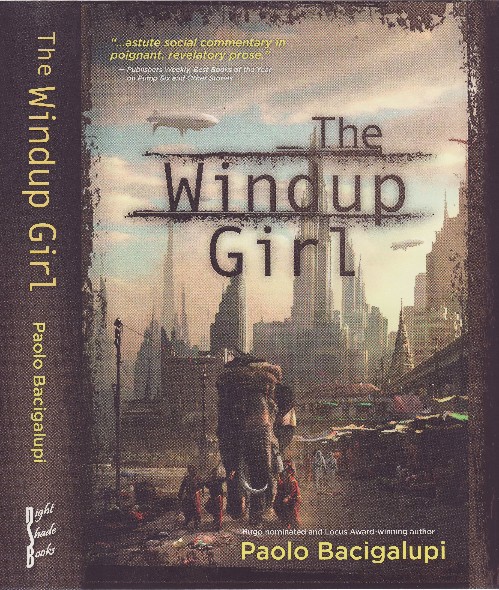
- The Windup Universe
series3 books2005
similar bydarkscience fictionnear futuregenetic engineeringecological collapseour world+1 more
- Feed
M. T. Andersonstandalone novel2002
similar bydarkscience fictionnear futureecological collapsenorth americayoung adult+2 more
Feed (2002) is a cyberpunk, satirical, dystopian, young-adult novel by M. T. Anderson, focusing on issues such as American hegemony, corporate power, consumerism, information technology, data mining, and environmental decline, with a sometimes sardonic, sometimes somber tone. From the first-person perspective of a teenaged boy, the book takes place in a near-futuristic American culture completely dominated by advertising and corporate exploitation, corresponding to the enormous popularity of internetworking brain implants called feeds.
- Unwind Dystology
series5 books2007
similar bydarkscience fictionnear futuregenetic engineeringnorth americayoung adulttense+2 more
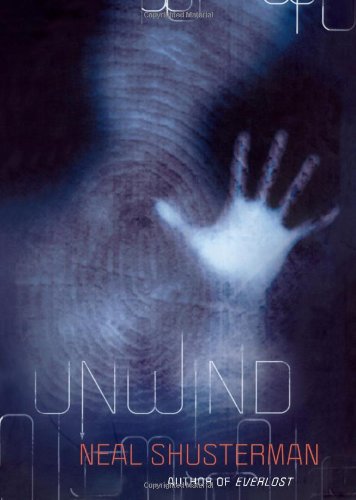
Neal Shusterman's Unwind Dystology opens in a United States reshaped by the resolution to a war over reproductive rights: parents can retroactively have a teenager "unwound," their body disassembled for transplant on the premise that nothing technically dies since every part lives on in someone else. The first novel follows three teens fleeing that fate, and the sequels widen the same dystopia's cast and consequences across a four-book arc plus companion material. It is grim speculative fiction built to ask hard bioethical questions rather than offer comfort.
- MaddAddam
series3 books2003
similar bydarkscience fictionnear futuregenetic engineeringsurvivalecological collapsenorth americapost-apocalyptic
Margaret Atwood's MaddAddam trilogy (Oryx and Crake, The Year of the Flood, MaddAddam, 2003-2013) is set around a genetically engineered pandemic unleashed deliberately by the brilliant, disillusioned scientist Crake, who intends the deadly 'BlyssPluss' pill to wipe out humanity and clear the way for the gentler, engineered Crakers he has designed to replace it. Told from the perspectives of survivors including Crake's old friend Jimmy (now calling himself Snowman), the trilogy pieces together the pandemic's causes and its aftermath from multiple, overlapping vantage points.
- The Chemical Garden Trilogy
series3 books2011
similar bydarkscience fictionnear futuregenetic engineeringsurvivalnorth americayoung adulttense
- Mother of Storms
John Barnesstandalone novel1994
similar byscience fictionnear futuresurvivalecological collapseour worldtensepost-apocalyptic+2 more
From the flaps of the Tor first edition: "It is 2028. A strike to destroy an illegal Arctic weapons cache has a catastrophic side effect. Massive amounts of energy are liberated from the polar ice, suddenly warming the Earth's climate. In the middle of the Pacific, a gigantic hurricane thousands of miles across is forming, larger than any in human history. A storm with winds of supersonic speed. A storm that changes direction at whim. A storm that refuses to die. A storm so vast it spawns dozens more in its wake... Blinded by intrigue, expedience, and greed, the world's politicians and power brokers have ignored the killer storms threat until it is too late. Already the death toll is in the tens of millions, as it savages the Pacific coast, while its devil's brood of smaller storms are wreaking havoc across the face of the planet. While the survivors scramble for advantage, a handful of courageous men and women undertake a daring, desperate plan to save humanity from total destruction - a plan so visionary it may alter forever the future of the human race."
- Forge of God
series2 books1987
completed
similar bydarkscience fictionsurvivaltense+3 more
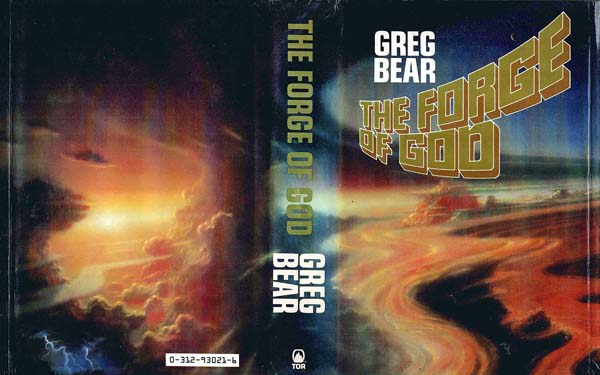
The Forge of God (1987) is Greg Bear's science fiction novel about Earth's discovery that it is the target of an incomprehensible, overwhelming alien attack, following scientists and ordinary people as they try to understand what is destroying the planet. Its 1992 sequel, Anvil of Stars, follows a group of young survivors sent on a mission of interstellar retaliation, continuing directly from the first book's ending.
- Blade Runner Universe
series6 books1968
similar bydarkscience fictionnear future+2 more
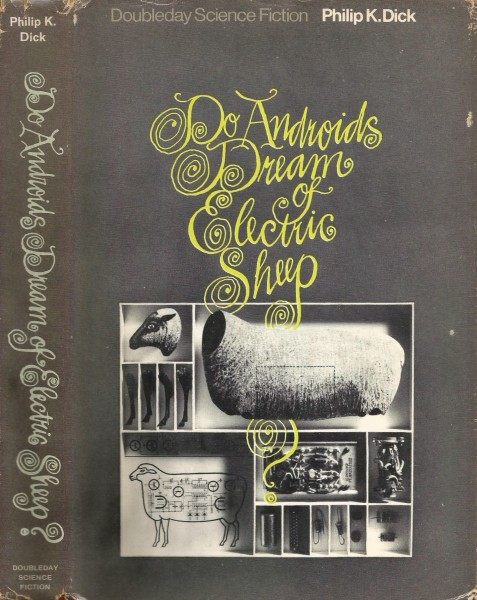
Philip K. Dick's 1968 novel Do Androids Dream of Electric Sheep? follows bounty hunter Rick Deckard as he tracks escaped androids through an irradiated, near-abandoned San Francisco, using the hunt to probe questions of empathy and what separates human from machine. The novel became the basis for Ridley Scott's 1982 film Blade Runner, and Marvel Comics later published an illustrated adaptation of that film. Together the two trace the story's path from prose original to screen and comic-page adaptation.
- Where Late the Sweet Birds Sang
Kate Wilhelmstandalone novel1976
similar bydarkscience fictionnear futuresurvivalecological collapseour worldnorth americapost-apocalyptic
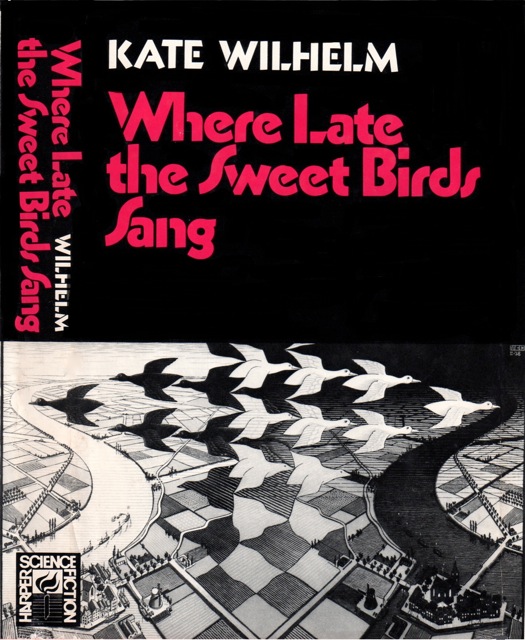
Where Late the Sweet Birds Sang is a science fiction novel by American writer Kate Wilhelm, published in 1976. The novel is composed of three parts, "Where Late the Sweet Birds Sang," "Shenandoah," and "At the Still Point," and is set in a post-apocalyptic era, a concept popular among authors who took part in the New Wave Science Fiction movement in the 1960s.
- Partials Sequence
series4 books2012
similar byscience fictionnear futuregenetic engineeringyoung adulttensepost-apocalyptic+4 more
- Earthseed
series7 books1993
similar bydarkscience fictionnear futuresurvivalnorth americapost-apocalyptic+1 more
Octavia E. Butler's Earthseed novels, Parable of the Sower and Parable of the Talents, follow Lauren Olamina as she survives the collapse of a climate-ravaged, near-future United States and founds a belief system built on the idea that "God is Change." The two-book series was left unfinished at Butler's death; a planned third novel, Parable of the Trickster, was never completed. Later graphic-novel adaptations retell the same two stories rather than continuing the narrative.
- War Against the Chtorr
series7 books1983
similar bydarkscience fictionnear futuresurvivalecological collapsenorth americatensepost-apocalyptic+1 more
The War Against the Chtorr is a series of science fiction novels by American writer David Gerrold. The Chtorr series was originally planned as a trilogy, but as the story became more intricate, Gerrold realized that three books would not be enough for him to tell the entire story. For a time, he was uncertain how many books there would be in the end but plans on seven. As of 2022, four books have been completed. As of 2017, a fifth and sixth were in the works, 24 years after the publication of the fourth book.
- Patternist
series6 books1976
completed
similar bydarkscience fictiongenetic engineering+4 more
The Patternist series is a group of science fiction novels by Octavia E. Butler that detail a secret history continuing from the Ancient Egyptian period to the far future that involves telepathic mind control and an extraterrestrial plague. A profile of Butler in Black Women in America notes that the themes of the series include "racial and gender-based animosity, the ethical implications of biological engineering, the question of what it means to be human, ethical and unethical uses of power, and how the assumption of power changes people."
- The Hunger Games
series3 books2008
part of The Hunger Games Universe
similar bydarkscience fictionsurvivalnorth americayoung adulttensepost-apocalyptic
The Hunger Games is a series of young adult dystopian novels written by American author Suzanne Collins. The series consists of a trilogy that follows teenage protagonist Katniss Everdeen, as well as two prequels. The Hunger Games universe is a dystopia set in Panem, a post-apocalyptic North American country consisting of the wealthy Capitol and 12 districts in varying states of poverty. As punishment for rebellion, the Capitol hosts an annual battle royale competition called The Hunger Games. Each of the 12 districts must send two children between the ages of 12 and 18 to participate, and the last surviving child is dubbed the victor.
- The Hunger Games Universe
universe5 books2008
Start hereThe Hunger Games · Start here
similar bydarkscience fictionsurvivalnorth americayoung adulttense+1 more
Panem, they call it now — a nation raised on the drowned bones of North America, a glittering Capitol ringed by twelve districts it once starved into obedience. Every year the Capitol collects its debt in children: two tributes from each district, drawn by lottery, dropped into an engineered arena, and made to kill one another on live television while the whole country is required to watch. This is the Hunger Games — entertainment, punishment, and government at once. Suzanne Collins tells it in a compact, unified body of work. The founding trilogy — The Hunger Games, Catching Fire, and Mockingjay — follows Katniss Everdeen, a girl from the coal-mining District 12 who volunteers in her sister's place and becomes something the Capitol never scripted. Two prequels reach back into the same machinery: The Ballad of Songbirds and Snakes traces a young Coriolanus Snow long before he is President, and Sunrise on the Reaping returns to District 12 a generation ahead of Katniss. Begin with the trilogy, in order — it is Katniss's voice, close and present-tense, that makes Panem breathe, and the prequels land hardest once you know how her story ends. Beneath the spectacle sits one steady, uncomfortable question: who profits when we agree to look away.
- The Idlewild Trilogy
series3 books2003
similar bydarkscience fictionnear futuregenetic engineeringsurvivalour world+2 more
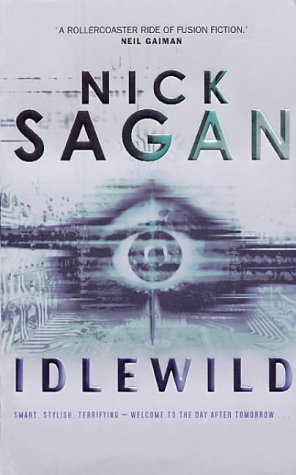
Nick Sagan's Idlewild trilogy opens with Idlewild (2003), a science-fiction novel that alternates between mid-21st-century interludes and events a generation later, following humanity's ten last survivors, cast in a modern mythological framework as god-like figures. It continues across Edenborn and Everfree.
- Last Survivors
series4 books2006
completed
similar bydarkscience fictionnear futuresurvivalnorth americayoung adultpost-apocalyptic+3 more
- The Triffids
series3 books1951
similar bydarkscience fictionsurvivalour worldpost-apocalyptic+2 more
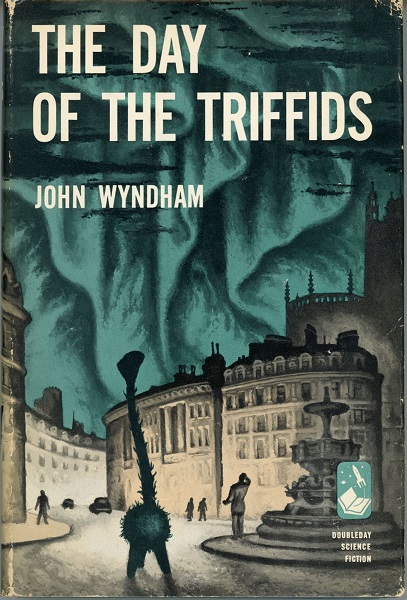
John Wyndham's The Day of the Triffids (1951) opens with a meteor-shower-like event that leaves most of Britain's population blind, throwing civilization into collapse just as triffids, an aggressive and mobile species of poisonous plant, become free to hunt the helpless survivors. Simon Clark's authorized sequel The Night of the Triffids (2001) picks up a generation later, narrated by the original protagonist's son as he confronts a new triffid-dominated world, and John Whitbourn's The Age of the Triffids extends the shared setting further still. Together the three novels form a loose post-apocalyptic trilogy built on Wyndham's original premise rather than a tightly plotted single story.
- Ill Wind
Kevin J. Anderson & Doug Beasonstandalone novel1995
similar bydarkscience fictionnear futuregenetic engineeringsurvivalecological collapsenorth americatense
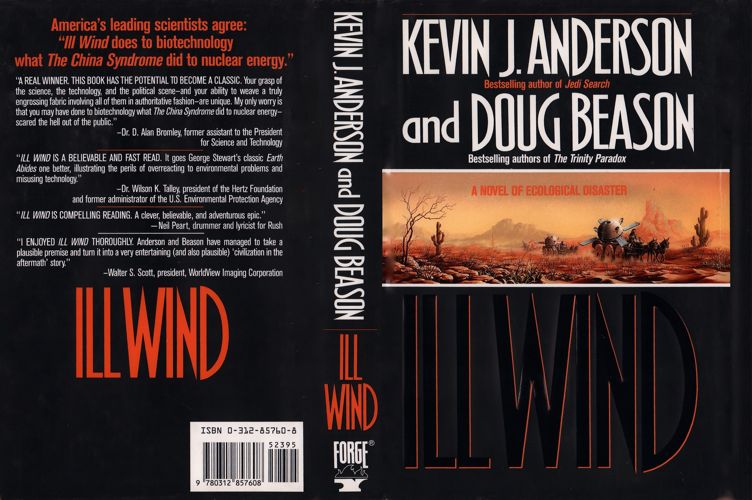
From the flaps of the Forge first printing: "A supertanker has crashed off the shores of San Francisco, producing the largest oil spill in history. Desperate to avert an ecological - and public relations - disaster, a multinational oil company releases an untested virus designed to break up the spill. A virus that spreads like wildfire on the wind, destroying anything made of petroleum - destroying gasoline in automobile tanks, plastics, nylon, the very fabric of modern civilization itself. Dr. Spencer Lockwood, one of the few scientists to recognize the danger, tries to alert government and industry to the impending danger. But his warnings go unheeded and the devastation mounts. As America descends into savagery, Lockwood forges a courageous band of scientists to carry out a daring plan to restore order. But humanity's last hope my be snuffed out by a ruthless general driven by an insatiable desire for power. A riveting and inspiring saga of ecological catastrophe and human survival, Ill Wind is all the more frightening because it could actually happen. Kevin Anderson, a technical consultant for the Air Force, and Doug Beason, a former science advisor o the Reagan administration, have drawn upon the latest breakthroughs in biotechnology to create a disaster scenario that is terrifying in its plausibility."