Loreful
HomeDiscover
Search series, authors…⌘K
Loreful

Reading orders for SF/F series and shared universes — with your place kept in every one.

Explore

UniversesSeriesWorksAuthorsAtlas

Help

FAQAboutSite map

Account & legal

Sign inCreate accountPrivacyTerms

Data

Built on ISFDB, Wikipedia, Wikidata and Open Library. Curated reading orders carry their reasoning on the page; the rest follow publication order. Data sources & licenses

© Loreful · data: ISFDB · CC BY

More like Heartfire

anchored on:fantasyhistorical fantasyalternate historynorth america19th centurywizards+3 more

but

Mood

The mood the book leaves you in.

  • The reading experience is propelled by journeys, exploration, and physical risk; excitement and forward momentum dominate over dread or introspection.
  • Joy and loss are deliberately mixed; the resolution grants characters something real while taking something else away, leaving warmth and sorrow together.
  • The book demands work from the reader — dense prose, difficult structure, unfamiliar ideas, or morally uncomfortable material — as part of its intended effect.
  • Grim events, cruelty, or despair dominate the atmosphere, and the book does not soften them with comfort or comic relief.
  • The atmosphere is quietly unsettling — wrongness, unease, and the uncanny pervade the book without necessarily escalating into overt horror.
  • The book is built to move the reader; character feeling is foregrounded and major scenes aim at a strong emotional response.
  • Humor is a primary aim and the prose plays for laughs — comic situations, wit, or dialogue produce sustained comedy, not occasional levity.
  • The book insists that things can improve; effort and decency are shown to matter, and the arc bends toward better outcomes even through hardship.
  • The book teaches as it goes — real facts, history, science, or craft are conveyed in enough depth that learning is part of the reading experience.
  • The book is designed to uplift and motivate, presenting perseverance or achievement in a way that invites the reader to aspire or act.
  • The overall register is cheerful and easygoing; stakes are kept gentle and the book avoids dwelling on pain or dread.
  • Withheld information drives the experience; the book sustains enigmas and secrets the reader wants resolved, whatever its genre.
  • The book is contemplative and inward-looking, giving more weight to thought, memory, and meaning than to external events.
  • The book works as comfort reading — low tension, a soothing pace, and an atmosphere the reader can unwind in.
  • Grief, loss, or melancholy set the dominant register, and the book lets sorrow stand rather than resolving it into comfort.
  • Sustained suspense is the point; the book keeps the reader braced for what happens next through danger, pressure, or impending revelation.
  • Playful invention and charm define the register — fanciful conceits, light absurdity, and a narration that delights in its own oddity.

About

What the story runs on.

  • Stories in which extraterrestrial beings are central — as characters, cultures, or the object of the plot.
  • Stories structured as a quest — a journey undertaken to find, deliver, or destroy something of great import.
  • Stories in which staying alive against nature, catastrophe, or scarcity is the central problem.
  • Stories of lovers kept apart by law, family, faith, or station, where the obstacle to love is the plot.
  • Stories in which a friendship — its making, testing, or loss — is the emotional center.
  • Stories of growing up — a young protagonist crossing from childhood into adult knowledge and responsibility.
  • Stories about who a character truly is — self-discovery, doubled lives, and the search for a self.
  • Stories about mourning — living through the death of a loved one and what loss does to the survivors.
  • Stories in which a buried family truth — hidden parentage, crimes, or shames — surfaces and reorders the present.
  • Stories driven by maneuvering for power — factions, conspiracies, and statecraft conducted in shadow.
  • Stories in which war itself is the subject — combat, occupation, and what warfare does to soldiers and civilians.
  • Stories organized around investigating a killing — the case, the clues, and the pursuit of the killer, in any genre's clothing.

Shelf

Where it sits in the library.

    • Fiction built on magic or other supernatural elements that have no scientific explanation.
    • Secondary-world fantasy at large scale, where the fate of nations or the world turns on the protagonists' struggle.
    • Fantasy set in a recognizably modern city or contemporary world where the supernatural intrudes on everyday life.
    • Fantasy that blends in horror's atmosphere and imagery, keeping a fantastical frame around grim or frightening material.
    • Action-driven fantasy following warriors or rogues with personal stakes against sorcerous threats, rather than world-spanning conflicts.
    • Fantasy set in a real historical period or a close analogue of one, with magic woven into the era.
    • Fantasy in which protagonists cross from the ordinary world into another world through a portal or similar passage.
    • Fiction that retells or reworks a traditional fairy tale in a new form or setting.
    • Fantasy drawing directly on myths, legends, and folklore, retelling them or building on their figures and logic.
    • Fantasy of ghosts, vampires, shapeshifters, psychics, and similar phenomena, usually set in an otherwise ordinary world.
    • Fiction mixing science-fictional trappings with overtly magical or impossible elements in one setting.
    • Low-stakes fantasy emphasizing comfort, community, and everyday pleasures over conflict and peril.
    • Speculative fiction of pervasive moral ambiguity, violence, and cynicism that rejects heroic conventions — fantasy and SF alike.
      • Fiction that extrapolates from science and technology — future societies, space travel, or speculative inventions — within at least nominally natural laws.
      • Science fiction of interstellar scope — starships, galactic polities, and adventure across star systems.
      • Science fiction committed to scientific rigor, where technical plausibility constrains the story.
      • Science fiction centered on armed forces and warfare, told largely from a military point of view.
      • Science fiction of networked, corporate-dominated near futures, pairing high technology with social decay.
      • Science fiction styled on nineteenth-century steam-powered technology, often in a Victorian or pseudo-Victorian setting.
      • Fiction depicting an oppressive or catastrophic society, presented as a warning.
      • Fiction set after civilization's collapse, following survivors in the ruins of the old world.
      • Fiction in which characters move between past and future, and the mechanics or consequences of that travel drive the plot.
      • Fiction exploring a world where a historical event went differently and history diverged from ours.
      • Science fiction about humanity's first encounter and communication with an alien intelligence.
      • Science fiction in which extraterrestrial forces attack or occupy Earth and humanity resists.
      • Fiction whose primary aim is to frighten or unsettle the reader through dread, menace, or the monstrous.
      • Horror of vast, indifferent, incomprehensible entities before which humanity is insignificant, in the Lovecraft tradition.
      • Horror of decaying houses, buried family secrets, and oppressive atmosphere in the Gothic literary tradition.
      • Horror centered on hauntings and the returning dead.
      • Horror located in the mind — paranoia, obsession, and unreliable perception rather than external monsters.
      • Horror built around the reanimated dead and survival amid their outbreaks.
      • Horror defined by explicit, transgressive gore that refuses to cut away from violence.
      • Speculative fiction of the strange and uncanny that resists both natural explanation and standard genre categories.
      • Fiction organized around solving a crime or puzzle, typically following an investigator toward the identification of a culprit.
      • A puzzle-first mystery that lays out clues so the culprit's identity can be deduced before the reveal.
      • Crime fiction of moral ambiguity, fatalism, and hard-edged style, set among the corrupt and the doomed.
      • A mystery following the realistic routines of police work — forensics, interviews, and case-building.
      • A gentle mystery with an amateur sleuth, a small community, and violence kept off the page.
      • A mystery set in a past era, where the investigation works within that period's methods and society.
      • Fast-paced fiction driven by imminent danger, pursuit, or high-stakes conspiracy, built to sustain tension.
      • A thriller of espionage — agents, tradecraft, and intelligence services in conflict.
      • A thriller centered on lawyers and the courtroom, where litigation carries the suspense.
      • A thriller driven by detailed contemporary or near-future technology, often military or scientific.
      • A thriller whose tension comes from mental states and manipulation between characters rather than external action.
      • Fiction whose central plot is a romantic relationship and its development toward an emotionally satisfying resolution.
      • Romance in which one or both partners are supernatural beings, blending fantasy elements into the love story.
      • A fantasy-romance hybrid in which the romantic arc and the fantasy plot carry equal weight.
      • Romance set in a past era, with courtship shaped by the period's society and manners.
      • Romance set in the present day, without supernatural or historical elements.
      • Fiction set in a real past period, where the historical setting materially shapes characters and events.
        • General and literary fiction emphasizing prose style, character interiority, or formal ambition over genre plot conventions.
        • Fiction in a realistic world where magical events occur and are treated as ordinary, in the tradition of Latin American literature.
        • Fiction that ridicules people, institutions, or society in order to criticize them.
        • Fiction of dreamlike, irrational imagery and logic that breaks from realistic representation.
        • Fiction that plays with narrative convention through metafiction, fragmentation, and self-reference.
        • Fiction propelled by journeys, exploration, and physical peril, where action and survival carry the plot.
        • Adventure fiction of ships and seafaring — naval engagements, voyages, and life at sea.
        • Fiction of the American frontier West — gunmen, ranchers, and lawmen, typically in the late nineteenth century.
        • Fiction centered on soldiers, campaigns, and the experience of warfare, historical or imagined.
          • Fiction written primarily to amuse, using comedic situations, wit, or parody as its organizing principle.
            • Multi-generational fiction following a family or dynasty across decades, with inheritance and kinship as the through-line.
              • Fiction whose world runs on explicit game mechanics — levels, stats, and skills that characters can see and exploit.
                • Fiction about costumed or superpowered heroes and their conflicts with comparable villains.

                Practical

                How long a commitment, whether it stands alone, and whether it has finished.

                Tap a chip to ask for it · tap again to rule it out · once more to clear. Numbers show what would be left.

                • Cover of The Alvin Maker Saga
                  The Alvin Maker Saga

                  series · 15 books · 1986

                  similar by19th centurynorth americacoming of agehistorical fantasyalternate historyfantasy+5 more

                  The Tales of Alvin Maker is a series of seven alternate history fantasy novels written by American novelist Orson Scott Card, published from 1987 to 2026. They explore the experiences of a young man, Alvin Miller, who realizes he has incredible powers for creating and shaping things around him.

                • Cover of Bring the Jubilee
                  Bring the Jubilee

                  Ward Moore · standalone novel · 1953

                  similar bynorth america19th centuryreflectivealternate history+1 more

                  From the flaps of the Farrar, Straus and Young first edition: ""Although I am writing this in the year 1877, I was not born until 1921." So Hodge Backmaker begins his story of the harsh and curious world he lived in, a world in which the South won the Civil War and the all-powerful Confederacy dominated the poor and backward North; a North that had neither a transcontinental railroad, and where television was undreamed of. Like most Northerners, Hodge was poor - but he had ambition. A printer's handyman in 1938, he had since become an eminent historian. Hodge's special interest was the American past, when the States had been united and had seemed to be on the brink of prosperity and technical progress. And then he was offered an opportunity no historian could resist - he could go back in time. Hodge chsoe to return to a certain field near Gettysburg on a day in July, 1863... Bring the Jubilee is a novel of curious events, of adventures and reflection, of passions and comment. It at time Hodge's world, its horse-carriages and gas-lights, minibles and tinugraphs and the Great Emperors' War of 1914 faintly resembles our own, it is perhaps, because that world might well become a reality: on the battlefield of Gettysburg there is a small hill called Little Round Top. One July morning in 1863 the Confederate Army made the tactical error of not occupying this hill. It was a mistake that cost them victory in a battle which - in the view of many historians - was the turning point of the Civil War."

                • Cover of Nation
                  Nation

                  Terry Pratchett · standalone novel · 2008

                  similar byreflective19th centurycoming of agefaith and religionfantasyhopeful+1 more

                  From copyright page: "After a devastating tsunami destroys all that they have ever known, Mau, an island boy, and Daphne, an aristocratic English girl, together with a small band of refugees, set about rebuilding their community and all the things that are important in their lives."

                • Cover of The Root Cellar
                  The Root Cellar

                  Janet Lunn · standalone novel · 1981

                  similar bynorth america19th centurycoming of ageadventurousfantasyhistorical fantasy+1 more

                  The Root Cellar is a children's historical novel by Janet Lunn that is set in the 1980s, although much of the action takes place in the 1860s. It follows Rose Larkin, an orphan, who travels temporally back and forth between Ontario, Canada, of the 1980s and various settings of U.S. Civil War in the 1860s. This time travel is done through the root cellar of the title.

                • Cover of Stranger in a Strange Land
                  Stranger in a Strange Land

                  Robert A. Heinlein · standalone novel · 1961

                  similar bynorth americareflectivefaith and religioncoming of age

                  Stranger in a Strange Land is a 1961 science fiction novel by the American author Robert A. Heinlein. It tells the story of Valentine Michael Smith, a human who comes to Earth in early adulthood after being born on the planet Mars and raised by Martians, and explores his interaction with and eventual transformation of Terran culture.

                • Cover of Earthsea Cycle
                  Earthsea Cycle

                  series · 18 books · 1964

                  completed

                  part of Earthsea

                  similar byreflectivewizardsfantasy+2 more

                  The Earthsea Cycle, also known as Earthsea, is a series of high fantasy books written by American author Ursula K. Le Guin. Beginning with A Wizard of Earthsea (1968), The Tombs of Atuan (1970), and The Farthest Shore (1972), the series was continued in Tehanu (1990), and Tales from Earthsea and The Other Wind. In 2018, all the novels and short stories were published in a single volume, The Books of Earthsea: The Complete Illustrated Edition, with artwork by Charles Vess.

                • Cover of Frontier Magic
                  Frontier Magic

                  series · 3 books · 2009

                  similar by19th centurynorth americafantasyhistorical fantasy+2 more

                • Cover of Henry Sturges
                  Henry Sturges

                  series · 2 books · 2010

                  similar by19th centurynorth americahistorical fantasyadventurousfantasy

                • Cover of Temeraire
                  Temeraire

                  series · 48 books · 2006

                  similar by19th centuryhistorical fantasyalternate historyfantasyadventurous

                  Temeraire is a series of nine alternate history fantasy novels written by American author Naomi Novik. The novels follow the adventures of Captain William Laurence and his dragon, the eponymous Temeraire, and reimagine events of the Napoleonic Wars with "an air force of dragons, manned by crews of aviators". His Majesty's Dragon, the first entry in the series, won the Compton Crook Award in 2007 and was nominated for the Hugo Award for Best Novel the same year. Temeraire: In the Service of the King, an omnibus volume collecting the first three novels, won the Locus Award for Best First Novel in 2007. Temeraire was nominated for the Hugo Award for Best Series in 2017.

                • Cover of Narnia
                  Narnia

                  series · 26 books · 1950

                  part of Narnia Universe

                  similar byfantasycoming of ageadventurous+3 more

                  The Chronicles of Narnia is a series of seven portal fantasy novels by British author C. S. Lewis. Illustrated by Pauline Baynes and originally published between 1950 and 1956, the series is set in the fictional realm of Narnia, a fantasy world of magic, mythical beasts, and talking animals. It narrates the adventures of various children who play central roles in the unfolding history of the Narnian world. Except in The Horse and His Boy, the protagonists are all children from the real world who are magically transported to Narnia, where they are sometimes called upon by the lion Aslan to protect Narnia from evil. The books span the entire history of Narnia, from its creation in The Magician's Nephew to its eventual destruction in The Last Battle.

                • Cover of 47
                  47

                  Walter Mosley · standalone novel · 2005

                  similar bynorth america19th centurycoming of agehistorical fantasyhopeful+1 more

                  Number 47, a fourteen-year-old slave boy growing up under the watchful eye of a brutal master in 1832, meets the mysterious Tall John, who introduces him to a magical science and also teaches him the meaning of freedom.

                • Cover of Tuck Everlasting
                  Tuck Everlasting

                  Natalie Babbitt · standalone novel · 1975

                  similar bynorth americareflectivecoming of agefantasy

                  Publisher's description: "The Tuck family is confronted with an agonizing situation when they discover that a ten-year-old girl and a malicious stranger now share their secret about a spring whose water prevents one from ever growing any older."

                • Cover of Mairelon
                  Mairelon

                  series · 2 books · 1991

                  similar by19th centurywizardscoming of agefantasyhistorical fantasy+1 more

                • Cover of Veins of Gold
                  Veins of Gold

                  Charlie N. Holmberg · standalone novel · 2018

                  similar bynorth america19th centuryfantasyhistorical fantasyadventurous

                  "Abandoned by their father for the gold rush, Gentry and her siblings labor to survive alone in the inhospitable west. When bizarre natural disasters begin wreaking havoc on the land, Gentry discovers a world of magic. Desperate for help, she accepts aid from a mysterious stranger. Winn not only sees the magic, but controls its hunger by feeding it gold--the very thing Gentry's father left to acquire. But the earth's unrest only grows worse, and Gentry's fear leads her to a terrible choice: marry a wealthy man she does not love, or trust in Winn's unpredictable power to save her family."--Amazon.com.

                • Cover of If the South Had Won the Civil War
                  If the South Had Won the Civil War

                  MacKinlay Kantor · standalone novel · 1961

                  similar bynorth america19th centuryreflectivealternate history

                  If the South Had Won the Civil War is a 1961 alternate history book by MacKinlay Kantor, a writer who also wrote several novels about the American Civil War. It was originally published in the November 22, 1960, issue of Look magazine. It generated such a response that it was published in 1961 as a book.

                • Cover of Gold Seer Trilogy
                  Gold Seer Trilogy

                  series · 3 books · 2015

                  similar bynorth america19th centuryhistorical fantasyadventurous+2 more

                • Cover of A Romance of Two Worlds
                  A Romance of Two Worlds

                  Marie Corelli · standalone novel · 1886

                  similar by19th centuryreflectivefaith and religionfantasy

                  A Romance of Two Worlds was Marie Corelli's first novel, published in 1886. It referenced the contemporary debate between creationism and evolution, as well as supernatural themes, overlaid with elements of science fiction. The book was an immediate commercial success, establishing Corelli as one of the most popular writers of the time, though like much of her subsequent work, it was negatively received by critics.

                • Cover of Lincoln in the Bardo
                  Lincoln in the Bardo

                  George Saunders · standalone novel · 2017

                  similar bynorth america19th centuryreflective+2 more

                  Lincoln in the Bardo is a 2017 experimental novel by American writer George Saunders. It is Saunders's first full-length novel and was The New York Times hardcover fiction bestseller for the week of March 5, 2017.

                • Cover of Root Magic
                  Root Magic

                  Eden Royce · standalone novel · 2021

                  similar bynorth americacoming of agefantasyhistorical fantasywitches+1 more

                  Root Magic is a children's novel by Eden Royce. It is her novel-length debut set in South Carolina. The first edition was published by Walden Pond Press, an imprint of HarperCollins, in 2021.

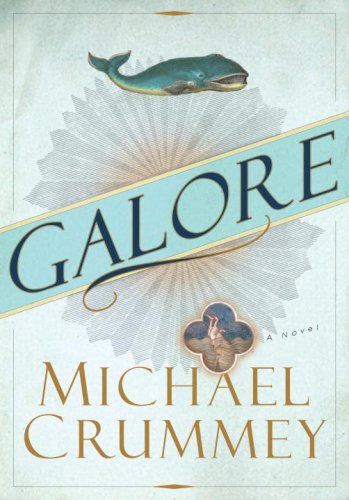
                • Cover of Galore
                  Galore

                  Michael Crummey · standalone novel · 2009

                  similar bynorth america19th centuryreflective+1 more

                  Galore is a 2009 novel by Michael Crummey first published by Doubleday Canada. It is about the discovery of an 18th-century Jonah in a remote coastal town of Paradise Deep, Newfoundland.

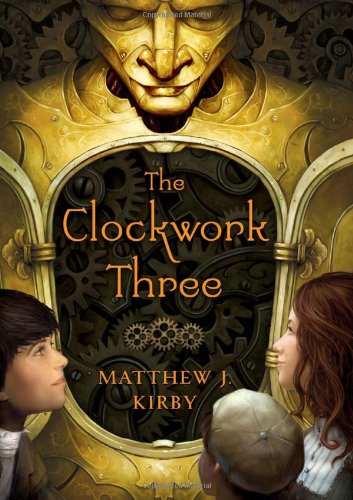
                • Cover of The Clockwork Three
                  The Clockwork Three

                  Matthew J. Kirby · standalone novel · 2010

                  similar bynorth america19th centurycoming of ageadventurous+1 more

                  The Clockwork Three is a 2010 novel by American author Matthew J. Kirby. Set in a fictional coastal city in the late nineteenth century, it follows three children: Giuseppe, Hannah, and Frederick who work to solve each other's problems.

                • Cover of Fevre Dream
                  Fevre Dream

                  George R. R. Martin · standalone novel · 1982

                  similar bynorth america19th centuryadventurous+1 more

                  Fevre Dream is a 1982 vampire novel written by American author George R. R. Martin. It is set on the antebellum Mississippi River, beginning in 1857, and has been described by critics and Martin himself as "Bram Stoker meets Mark Twain". About writing the novel, Martin said that "It was strongly influenced by the time I spent in Dubuque, Iowa, where river steamboats were once built".

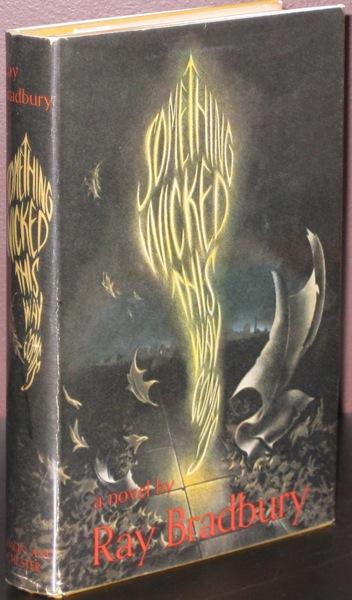
                • Cover of Green Town
                  Green Town

                  series · 31 books · 1946

                  completed

                  similar bynorth americareflectivecoming of age

                  Green Town gathers two of Ray Bradbury's loosely linked novels set in his fictionalized version of his childhood home of Waukegan, Illinois: the dark fantasy Something Wicked This Way Comes (1962), in which a sinister traveling carnival led by the mysterious Mr. Dark descends on a small town and preys on its residents' desires, and the later Farewell Summer (2006), which follows Douglas Spaulding through an autumn stand-off between the town's boys and its elders. Written more than four decades apart, the two novels share Bradbury's recurring setting and nostalgic, myth-making tone rather than a single continuous plot.

                • Cover of Alias Grace
                  Alias Grace

                  Margaret Atwood · standalone novel · 1996

                  similar bynorth america19th centuryreflective

                  Alias Grace is a historical fiction novel by Canadian writer Margaret Atwood. First published in 1996 by McClelland & Stewart, it won the Giller Prize and was shortlisted for the Booker Prize.