Loreful
HomeDiscover
Search series, authors…⌘K
Loreful

Reading orders for SF/F series and shared universes — with your place kept in every one.

Explore

UniversesSeriesWorksAuthorsAtlas

Help

FAQAboutSite map

Account & legal

Sign inCreate accountPrivacyTerms

Data

Built on ISFDB, Wikipedia, Wikidata and Open Library. Curated reading orders carry their reasoning on the page; the rest follow publication order. Data sources & licenses

© Loreful · data: ISFDB · CC BY

More like Hell Sucks

anchored on:contemporaryurban fantasyour world

but

Mood

The mood the book leaves you in.

  • The reading experience is propelled by journeys, exploration, and physical risk; excitement and forward momentum dominate over dread or introspection.
  • Joy and loss are deliberately mixed; the resolution grants characters something real while taking something else away, leaving warmth and sorrow together.
  • The book demands work from the reader — dense prose, difficult structure, unfamiliar ideas, or morally uncomfortable material — as part of its intended effect.
  • Grim events, cruelty, or despair dominate the atmosphere, and the book does not soften them with comfort or comic relief.
  • The atmosphere is quietly unsettling — wrongness, unease, and the uncanny pervade the book without necessarily escalating into overt horror.
  • The book is built to move the reader; character feeling is foregrounded and major scenes aim at a strong emotional response.
  • Humor is a primary aim and the prose plays for laughs — comic situations, wit, or dialogue produce sustained comedy, not occasional levity.
  • The book insists that things can improve; effort and decency are shown to matter, and the arc bends toward better outcomes even through hardship.
  • The book teaches as it goes — real facts, history, science, or craft are conveyed in enough depth that learning is part of the reading experience.
  • The book is designed to uplift and motivate, presenting perseverance or achievement in a way that invites the reader to aspire or act.
  • The overall register is cheerful and easygoing; stakes are kept gentle and the book avoids dwelling on pain or dread.
  • Withheld information drives the experience; the book sustains enigmas and secrets the reader wants resolved, whatever its genre.
  • The book is contemplative and inward-looking, giving more weight to thought, memory, and meaning than to external events.
  • The book works as comfort reading — low tension, a soothing pace, and an atmosphere the reader can unwind in.
  • Grief, loss, or melancholy set the dominant register, and the book lets sorrow stand rather than resolving it into comfort.
  • Sustained suspense is the point; the book keeps the reader braced for what happens next through danger, pressure, or impending revelation.
  • Playful invention and charm define the register — fanciful conceits, light absurdity, and a narration that delights in its own oddity.

About

What the story runs on.

  • Stories in which extraterrestrial beings are central — as characters, cultures, or the object of the plot.
  • Stories structured as a quest — a journey undertaken to find, deliver, or destroy something of great import.
  • Stories in which staying alive against nature, catastrophe, or scarcity is the central problem.
  • Stories of lovers kept apart by law, family, faith, or station, where the obstacle to love is the plot.
  • Stories in which a friendship — its making, testing, or loss — is the emotional center.
  • Stories of growing up — a young protagonist crossing from childhood into adult knowledge and responsibility.
  • Stories about who a character truly is — self-discovery, doubled lives, and the search for a self.
  • Stories about mourning — living through the death of a loved one and what loss does to the survivors.
  • Stories in which a buried family truth — hidden parentage, crimes, or shames — surfaces and reorders the present.
  • Stories driven by maneuvering for power — factions, conspiracies, and statecraft conducted in shadow.
  • Stories in which war itself is the subject — combat, occupation, and what warfare does to soldiers and civilians.
  • Stories organized around investigating a killing — the case, the clues, and the pursuit of the killer, in any genre's clothing.

Shelf

Where it sits in the library.

    • Fiction built on magic or other supernatural elements that have no scientific explanation.
    • Secondary-world fantasy at large scale, where the fate of nations or the world turns on the protagonists' struggle.
    • Fantasy set in a recognizably modern city or contemporary world where the supernatural intrudes on everyday life.
    • Fantasy that blends in horror's atmosphere and imagery, keeping a fantastical frame around grim or frightening material.
    • Action-driven fantasy following warriors or rogues with personal stakes against sorcerous threats, rather than world-spanning conflicts.
    • Fantasy set in a real historical period or a close analogue of one, with magic woven into the era.
    • Fantasy in which protagonists cross from the ordinary world into another world through a portal or similar passage.
    • Fiction that retells or reworks a traditional fairy tale in a new form or setting.
    • Fantasy drawing directly on myths, legends, and folklore, retelling them or building on their figures and logic.
    • Fantasy of ghosts, vampires, shapeshifters, psychics, and similar phenomena, usually set in an otherwise ordinary world.
    • Fiction mixing science-fictional trappings with overtly magical or impossible elements in one setting.
    • Low-stakes fantasy emphasizing comfort, community, and everyday pleasures over conflict and peril.
    • Speculative fiction of pervasive moral ambiguity, violence, and cynicism that rejects heroic conventions — fantasy and SF alike.
      • Fiction that extrapolates from science and technology — future societies, space travel, or speculative inventions — within at least nominally natural laws.
      • Science fiction of interstellar scope — starships, galactic polities, and adventure across star systems.
      • Science fiction committed to scientific rigor, where technical plausibility constrains the story.
      • Science fiction centered on armed forces and warfare, told largely from a military point of view.
      • Science fiction of networked, corporate-dominated near futures, pairing high technology with social decay.
      • Science fiction styled on nineteenth-century steam-powered technology, often in a Victorian or pseudo-Victorian setting.
      • Fiction depicting an oppressive or catastrophic society, presented as a warning.
      • Fiction set after civilization's collapse, following survivors in the ruins of the old world.
      • Fiction in which characters move between past and future, and the mechanics or consequences of that travel drive the plot.
      • Fiction exploring a world where a historical event went differently and history diverged from ours.
      • Science fiction about humanity's first encounter and communication with an alien intelligence.
      • Science fiction in which extraterrestrial forces attack or occupy Earth and humanity resists.
      • Fiction whose primary aim is to frighten or unsettle the reader through dread, menace, or the monstrous.
      • Horror of vast, indifferent, incomprehensible entities before which humanity is insignificant, in the Lovecraft tradition.
      • Horror of decaying houses, buried family secrets, and oppressive atmosphere in the Gothic literary tradition.
      • Horror centered on hauntings and the returning dead.
      • Horror located in the mind — paranoia, obsession, and unreliable perception rather than external monsters.
      • Horror built around the reanimated dead and survival amid their outbreaks.
      • Horror defined by explicit, transgressive gore that refuses to cut away from violence.
      • Speculative fiction of the strange and uncanny that resists both natural explanation and standard genre categories.
      • Fiction organized around solving a crime or puzzle, typically following an investigator toward the identification of a culprit.
      • A puzzle-first mystery that lays out clues so the culprit's identity can be deduced before the reveal.
      • Crime fiction of moral ambiguity, fatalism, and hard-edged style, set among the corrupt and the doomed.
      • A mystery following the realistic routines of police work — forensics, interviews, and case-building.
      • A gentle mystery with an amateur sleuth, a small community, and violence kept off the page.
      • A mystery set in a past era, where the investigation works within that period's methods and society.
      • Fast-paced fiction driven by imminent danger, pursuit, or high-stakes conspiracy, built to sustain tension.
      • A thriller of espionage — agents, tradecraft, and intelligence services in conflict.
      • A thriller centered on lawyers and the courtroom, where litigation carries the suspense.
      • A thriller driven by detailed contemporary or near-future technology, often military or scientific.
      • A thriller whose tension comes from mental states and manipulation between characters rather than external action.
      • Fiction whose central plot is a romantic relationship and its development toward an emotionally satisfying resolution.
      • Romance in which one or both partners are supernatural beings, blending fantasy elements into the love story.
      • A fantasy-romance hybrid in which the romantic arc and the fantasy plot carry equal weight.
      • Romance set in a past era, with courtship shaped by the period's society and manners.
      • Romance set in the present day, without supernatural or historical elements.
      • Fiction set in a real past period, where the historical setting materially shapes characters and events.
        • General and literary fiction emphasizing prose style, character interiority, or formal ambition over genre plot conventions.
        • Fiction in a realistic world where magical events occur and are treated as ordinary, in the tradition of Latin American literature.
        • Fiction that ridicules people, institutions, or society in order to criticize them.
        • Fiction of dreamlike, irrational imagery and logic that breaks from realistic representation.
        • Fiction that plays with narrative convention through metafiction, fragmentation, and self-reference.
        • Fiction propelled by journeys, exploration, and physical peril, where action and survival carry the plot.
        • Adventure fiction of ships and seafaring — naval engagements, voyages, and life at sea.
        • Fiction of the American frontier West — gunmen, ranchers, and lawmen, typically in the late nineteenth century.
        • Fiction centered on soldiers, campaigns, and the experience of warfare, historical or imagined.
          • Fiction written primarily to amuse, using comedic situations, wit, or parody as its organizing principle.
            • Multi-generational fiction following a family or dynasty across decades, with inheritance and kinship as the through-line.
              • Fiction whose world runs on explicit game mechanics — levels, stats, and skills that characters can see and exploit.
                • Fiction about costumed or superpowered heroes and their conflicts with comparable villains.

                Practical

                How long a commitment, whether it stands alone, and whether it has finished.

                Tap a chip to ask for it · tap again to rule it out · once more to clear. Numbers show what would be left.

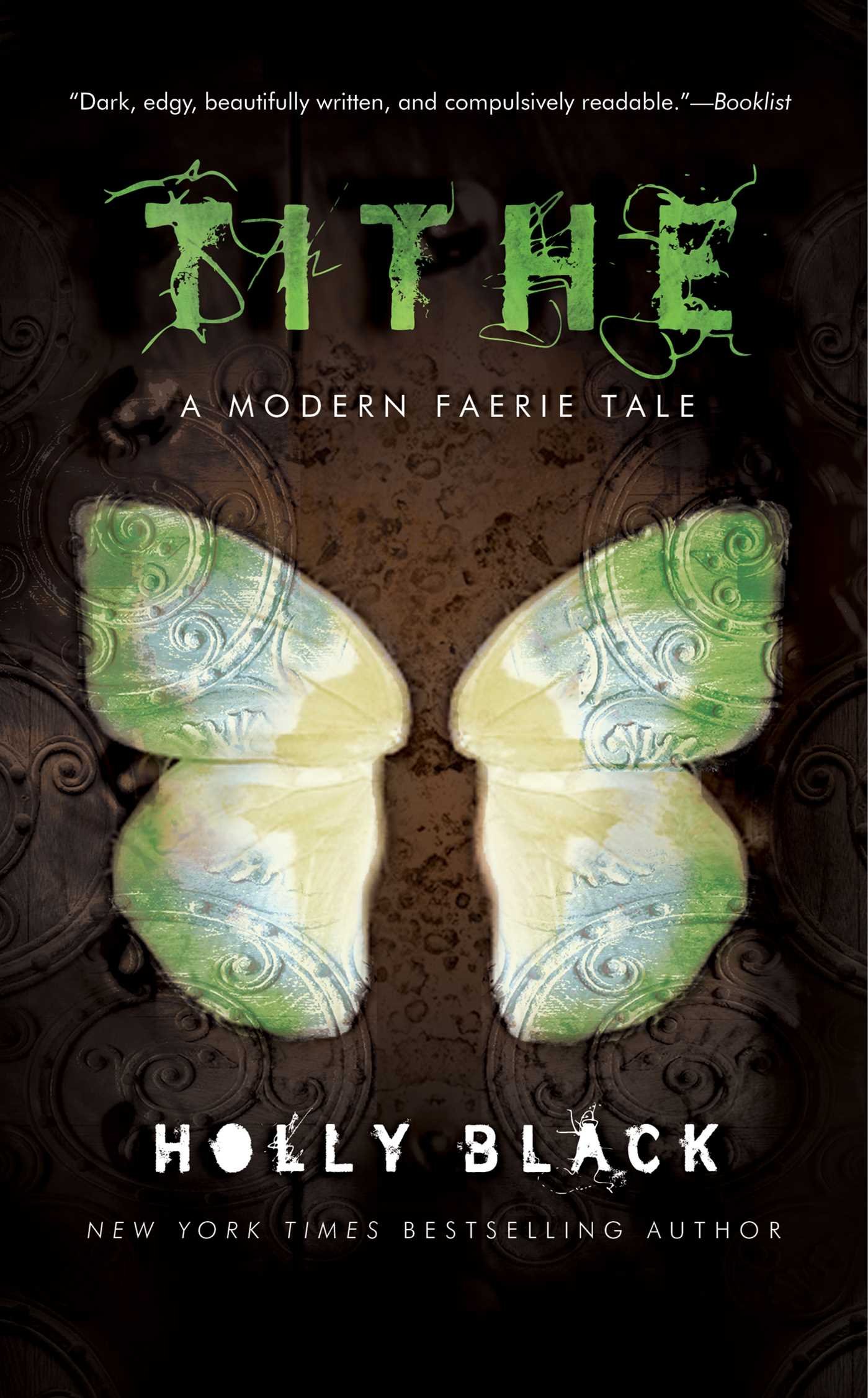
                • Cover of Modern Tale of Faerie
                  Modern Tale of Faerie

                  series · 4 books · 2002

                  similar byurban fantasycontemporaryour worldfae+2 more

                  Tithe opens Holly Black's Modern Faerie Tales with Kaye Fierch, a teenage drifter who discovers she's a changeling with real faerie blood after returning to her childhood home on the Jersey Shore, and gets pulled into the political violence of the local faerie courts. The trilogy, continuing through Valiant and Ironside, keeps its "suburban fantasy" grounded in ordinary New Jersey settings rather than a storybook otherworld.

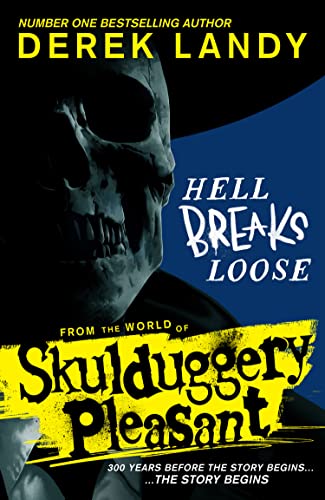
                • Cover of The World of Skulduggery Pleasant
                  The World of Skulduggery Pleasant

                  series · 38 books · 2007

                  similar byurban fantasyour worldcontemporary+2 more

                  These are standalone companion stories set in Derek Landy's Skulduggery Pleasant world, rather than a numbered sequence of their own. Hell Breaks Loose is a one-off prequel following the skeleton detective Skulduggery on a solo hunt years before the main series begins; The Haunted House on Hollow Hill and A Small Matter of Impending Catastrophe are novellas slotted between the main series' sixteenth and seventeenth books, the former adapted from an audio drama. None require following a separate ongoing plot of their own.

                • Cover of The Replacement
                  The Replacement

                  Brenna Yovanoff · standalone novel · 2010

                  similar bydarkurban fantasyidentitycontemporaryour worldfae

                  Mackie Doyle is not one of us. Though he lives in the small town of Gentry, he comes from a world of tunnels and black murky water, a world of living dead girls ruled by a little tattooed princess. He is a Replacement—left in the crib of a human baby sixteen years ago. Now, he's slowly dying in the human world. Mackie would give anything to live a normal life, play his bass, and find out more about an oddly intriguing girl named Tate. But when Tate's baby sister goes missing, Mackie is drawn into the underworld of Gentry, known as Mayhem. He must face the dark creatures of the Slag Heaps and find his rightful place, in our world—or theirs.

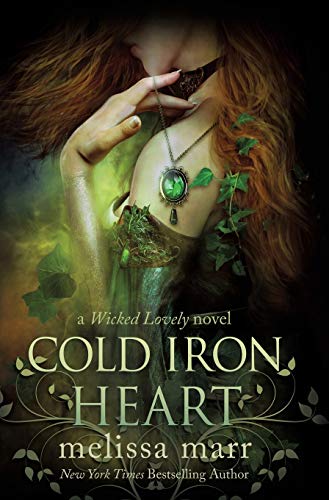
                • Cover of Wicked Lovely
                  Wicked Lovely

                  series · 17 books · 2007

                  similar byurban fantasyour worldcontemporaryfae+1 more

                  Melissa Marr's Wicked Lovely opens a YA urban-fantasy series about Aislinn, a teenage girl who has always been able to see faeries and has spent her life following her grandmother's rules to avoid their notice - until Keenan, the Summer King, decides she is meant to be his queen. Later books widen out to other faerie courts and other narrators drawn into the same modern-day faerie politics layered invisibly over ordinary life. It helped kick off the mid-2000s wave of YA faerie romance.

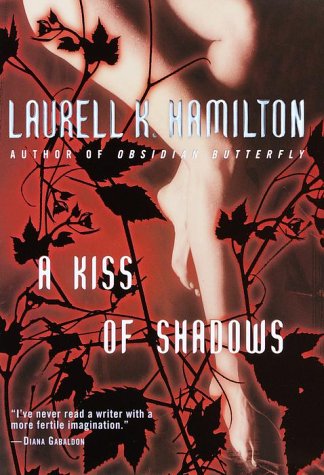
                • Cover of Meredith Gentry
                  Meredith Gentry

                  series · 10 books · 2000

                  similar byurban fantasycontemporaryour worldfaeparanormal romance+1 more

                  The Merry Gentry series is a series of urban fantasy novels by New York Times bestselling author Laurell K. Hamilton. The series is told through the lens of the titular character Meredith "Merry" Gentry, a faerie princess turned private investigator in a world where faeries exist and are known to the general public. The first book in the series, A Kiss of Shadows, was released by Del Rey on October 3, 2000. There are currently nine books in the series.

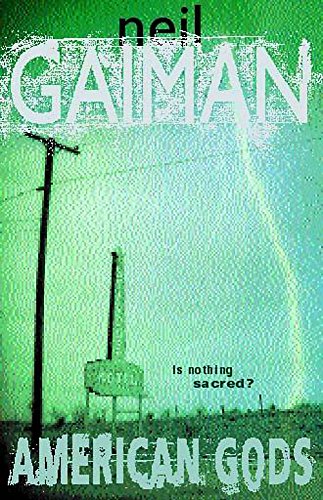
                • Cover of American Gods
                  American Gods

                  series · 10 books · 1999

                  similar bycontemporaryour world+2 more

                  Neil Gaiman's American Gods (2001) follows Shadow Moon, an ex-convict who takes a job as bodyguard to a mysterious drifter who is secretly the Norse god Odin, and is drawn into a brewing conflict between the old immigrant gods of myth and the new gods of media, technology, and modern American life. Gaiman's 2005 novel Anansi Boys is set in the same mythological world and shares the trickster god Mr. Nancy, but follows a different protagonist and story, making it a loose companion rather than a direct sequel.

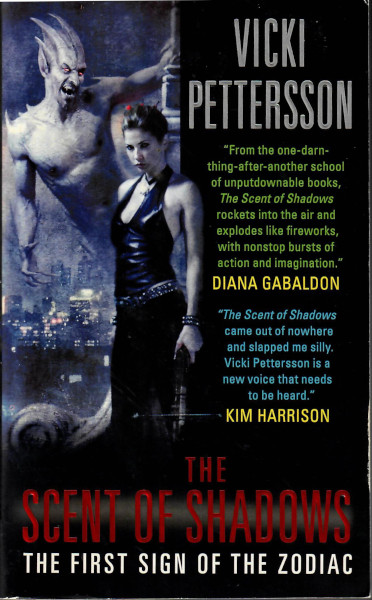
                • Cover of Sign of the Zodiac
                  Sign of the Zodiac

                  series · 9 books · 2007

                  similar byurban fantasycontemporary+3 more

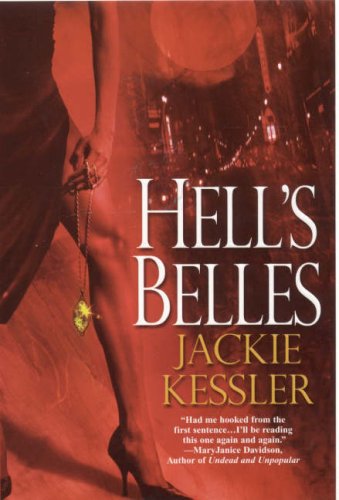
                • Cover of Hell on Earth (Jackie Kessler)
                  Hell on Earth (Jackie Kessler)

                  series · 7 books · 2007

                  similar byurban fantasycontemporaryour worlddemonsparanormal romance+2 more

                  Jackie Kessler, also known as Jackie Morse Kessler, is an American author of young adult, superhero, paranormal romance, and urban fantasy fiction, including novels, novellas, short stories, and comic books.

                • Cover of Crash
                  Crash

                  J. G. Ballard · standalone novel · 1973

                  similar bydarkcontemporaryour world+1 more

                  Crash is a novel by J. G. Ballard, first published in 1973 with a cover designed by Bill Botten. It follows a group of car-crash fetishists who, inspired by the famous crashes of celebrities, become sexually aroused by staging and participating in car accidents.

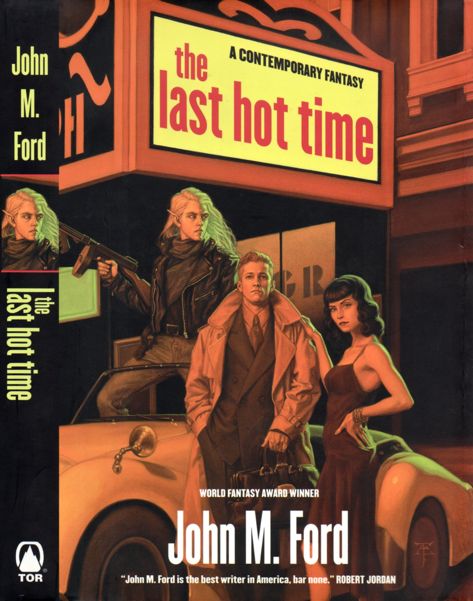
                • Cover of The Last Hot Time
                  The Last Hot Time

                  John M. Ford · standalone novel · 2000

                  similar bydarkurban fantasycontemporaryour worldfae+1 more

                  From the front flap: When Danny Holman leaves the cornfields of Iowa for the bright lights of the City, he expects his life to change. He just can't guess who much and how fast. A violent incident on the road brings Danny the favor of a man known only as Mr. Patrise, who gives Danny a job, a home, and a new identity. The City is a different world from the one Danny (now called Doc) knew, and literally so. The long-vanished lands of the Elves have again opened doors into our reality. Humans cannot cross these thresholds, but the Elves can. Mr. Patrise is a power in the Levee, the shadowy, lawless region between the two worlds, where elf and human gangsters skirmish with sorcery and submachine guns and where anything can be sold, smuggled, or stolen. But the nature of that power--over his people, the City, and the unpredictable new forces of magic--is a mystery. The more Doc learns about the City and his responsibilities in it, the more he wonders if he's in over his head...

                • Cover of Anita Blake
                  Anita Blake

                  series · 42 books · 1993

                  similar bydarkurban fantasycontemporary+1 more

                  Anita Blake: Vampire Hunter is a series of urban fantasy novels, short stories, and comic books by Laurell K. Hamilton. The books have sold more than six million copies; many have made The New York Times Best Seller list.

                • Cover of Kraken: An Anatomy
                  Kraken: An Anatomy

                  China Miéville · standalone novel · 2010

                  similar byurban fantasycontemporary+2 more

                  Kraken is a fantasy novel by British author China Miéville. It is published in the UK by Macmillan, and in the US by Del Rey Books. The book bears the subtitle "An Anatomy" on the title page. It was the winner for the 2011 Locus Award for Best Fantasy Novel. Miéville has described the book as "a dark comedy about a squid-worshipping cult and the end of the world. It takes the idea of the squid cult very seriously. Part of the appeal of the fantastic is taking ridiculous ideas very seriously and pretending they’re not absurd."

                • Cover of Chosen Ones
                  Chosen Ones

                  Veronica Roth · standalone novel · 2020

                  similar byurban fantasycontemporaryour world+1 more

                • Cover of Cal Leandros
                  Cal Leandros

                  series · 13 books · 2006

                  similar bydarkurban fantasycontemporary+2 more

                  The Cal Leandros series is a series of urban fantasy novels by American author Rob Thurman about the fictional character of Caliban "Cal" Leandros. The first novel, Nightlife, was published on March 7, 2006, through Roc Fantasy.

                • Cover of Other
                  Other

                  series · 3 books · 2010

                  similar byurban fantasyidentitycontemporaryour world+1 more

                • Cover of Sandman Slim
                  Sandman Slim

                  series · 15 books · 2009

                  similar bydarkurban fantasycontemporaryour world+1 more

                  Richard Kadrey's Sandman Slim follows James Stark, a magician who spent eleven years trapped fighting in Hell before escaping back to a Los Angeles that isn't much friendlier, looking for revenge against the circle that sent him there. Getting it turns out to mean picking up unwanted allies, including a severed talking head, and getting dragged into schemes run by both Heaven and Hell that have nothing to do with his own plans. The series keeps Stark as a foul-mouthed, magic-augmented antihero across thirteen increasingly baroque supernatural-noir books.

                • Cover of The Vampire Chronicles
                  The Vampire Chronicles

                  series · 15 books · 1976

                  completed

                  similar bydarkour worldcontemporary+1 more

                  The Vampire Chronicles is a series of Gothic vampire novels and a media franchise, created by American author Anne Rice, that revolves around the fictional character Lestat de Lioncourt, a French nobleman turned into a vampire in the 18th century.

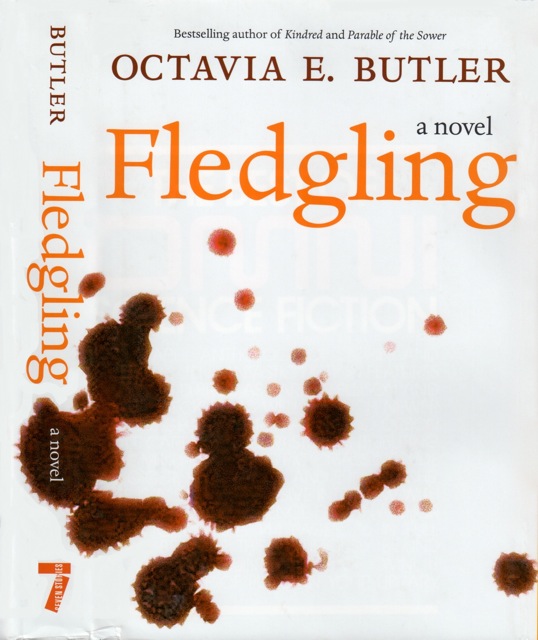
                • Cover of Fledgling
                  Fledgling

                  Octavia E. Butler · standalone novel · 2005

                  similar bydarkidentitycontemporaryour world

                  Fledgling is a science fiction vampire novel by American writer Octavia E. Butler, published in 2005. It was the author's final book published before her death in 2006.

                • Cover of Horns
                  Horns

                  Joe Hill · standalone novel · 2010

                  similar bydarkcontemporaryour worlddemons+1 more

                  WorldCat: After his childhood sweetheart is brutally killed and suspicion falls on him, Ig Parrish goes on a drinking binge and wakes up with horns on his head, hate in his heart, and an incredible new power which he uses in the name of vengeance.

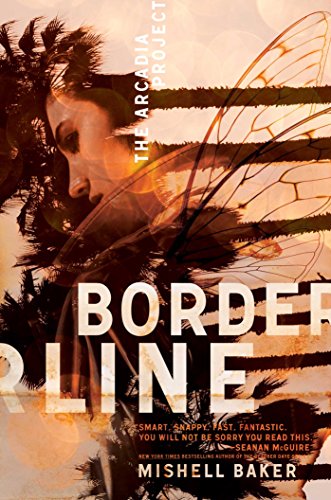
                • Cover of The Arcadia Project
                  The Arcadia Project

                  series · 3 books · 2016

                  similar byurban fantasycontemporaryfae+3 more

                • Cover of Dark Swan
                  Dark Swan

                  series · 4 books · 2008

                  similar byurban fantasycontemporaryour worldfae+2 more

                  Dark Swan is a novel sequence by Richelle Mead. The novels center on Eugenie Markham, a shaman; the shapeshifting Kiyo, her boyfriend; and Dorian, the king of the fairies.

                • Cover of War for the Oaks
                  War for the Oaks

                  series · 2 books · 1987

                  similar byurban fantasycontemporaryfae+2 more

                  Emma Bull's 1987 urban fantasy debut follows Minneapolis rock singer Eddi McCandry after a faerie noble conscripts her into the ancient war between the Seelie and Unseelie Courts, forcing her to keep her band and her life together while fighting a battle she never asked for in her own city. Widely credited with helping found the urban fantasy genre, it won the Locus Award for Best First Novel.

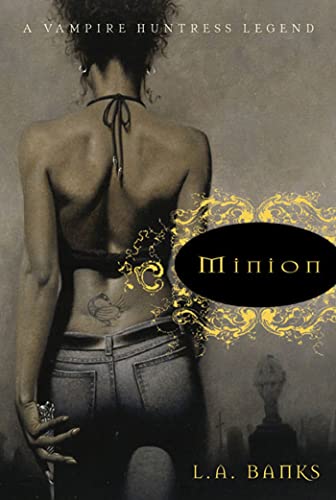
                • Cover of Vampire Huntress Legend
                  Vampire Huntress Legend

                  series · 15 books · 2003

                  completed

                  similar byurban fantasycontemporary+2 more

                  L. A. Banks's Vampire Huntress Legend opens with Minion, introducing Damali Richards, a spoken-word artist and martial artist who moonlights as a vampire hunter. The urban fantasy series follows Damali across thirteen novels as she confronts escalating supernatural threats.

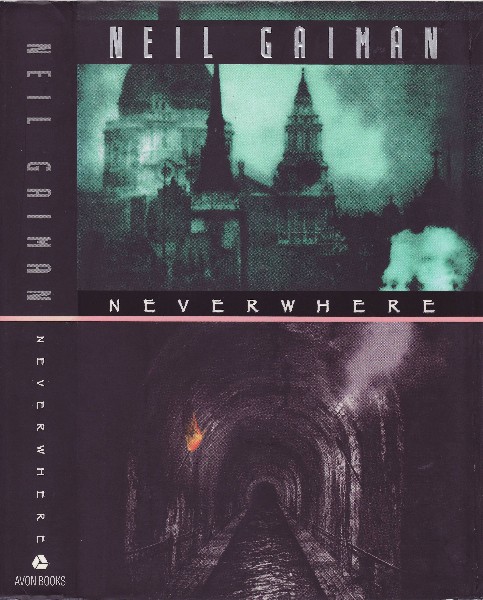
                • Cover of London Below
                  London Below

                  series · 5 books · 1996

                  similar byurban fantasycontemporary+2 more

                  Neil Gaiman's Neverwhere (1996) follows Richard Mayhew, an ordinary Londoner who stops to help an injured girl and is pulled out of everyday London into London Below, a hidden, magical underworld of forgotten places and strange factions existing alongside the city he knew. The novel began life as a BBC television series before Gaiman reworked it into this stand-alone book.