More like Helliconia
anchored on:science fictionother star systemsfar futureecological collapsechallenging
but
- Helliconia
series4 books1982
completed
similar byecological collapsescience fictionchallengingother star systemsfar futurereflective
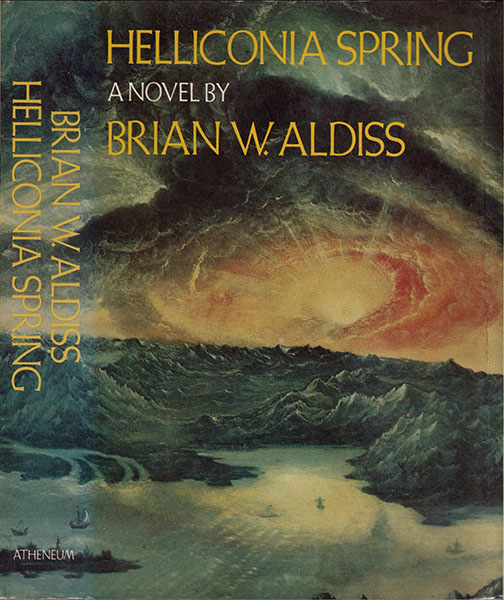
The Helliconia trilogy is a series of science fiction books by British writer Brian W. Aldiss, set on the Earth-like planet Helliconia. It is an epic chronicling the rise and fall of a civilisation over thousands of years as the planet progresses through its incredibly long seasons, which last for centuries.
- Dune
series20 books1963
part of Dune Universe
similar byscience fictionfar futureother star systems+2 more
Frank Herbert's Dune Chronicles opens with 1965's Dune, set on the desert planet Arrakis where House Atreides takes control of the only source of the vital spice melange and young Paul Atreides is pulled into a struggle over its politics and religion. Herbert carried the story forward across five further novels — Dune Messiah, Children of Dune, God Emperor of Dune, Heretics of Dune, and Chapterhouse: Dune — following Paul's line over the following millennia, before Brian Herbert and Kevin J. Anderson later extended the saga. Many other editions of these six novels are omnibus and box-set repackagings rather than separate stories.
- 2312
Kim Stanley Robinsonstandalone novel2012
similar byecological collapsescience fictionfar futureother star systemsreflective
In the eponymous year, when Earth's ecology is degraded and humanity has settled throughout the solar system by terraforming and genetic engineering, mysterious disasters strike some human communities and an assortment of human types from throughout the system seek to find and eliminate the cause.
- Schild's Ladder
Greg Eganstandalone novel2002
similar byecological collapsescience fictionchallengingfar future+1 more
Schild's Ladder is a 2002 science fiction novel by Australian author Greg Egan. The book derives its name from Schild's ladder, a construction in differential geometry, devised by the mathematician and physicist Alfred Schild.
- Nemesis
Isaac Asimovstandalone novel1989
similar byecological collapsescience fictionfar futureother star systems+1 more
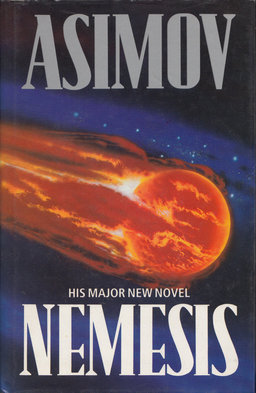
The expanding population and ensuing ecological degradation of Earth leads to the establishment of orbital habitats which continue to compete with each other as well as with Earth, leading one of them to abandon the Solar System entirely, to establish itself around a neighboring star.
- Aurora
Kim Stanley Robinsonstandalone novel2015
similar byscience fictionchallengingfar futureother star systemsreflective+1 more
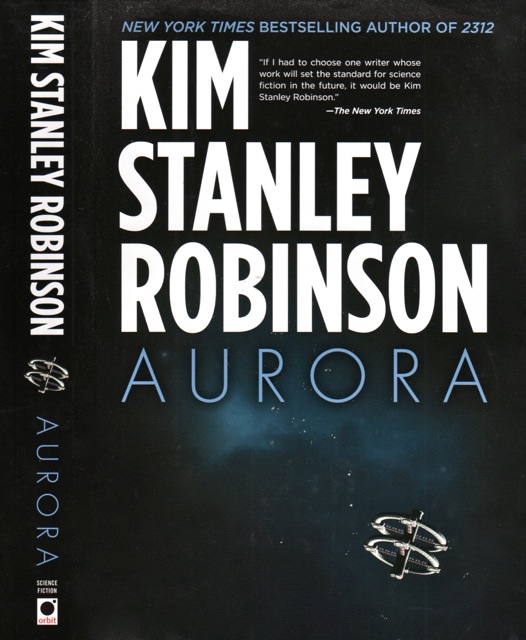
Aurora is a 2015 novel by American science fiction author Kim Stanley Robinson. The novel concerns a generation ship built in the style of a Stanford torus, traveling to Tau Ceti to start a human colony. The novel's primary narrative voice is that of the starship's artificial intelligence. Aurora was well received by critics.
- Wess'har Wars
series7 books2004
similar byecological collapsescience fictionother star systemsfar future+1 more
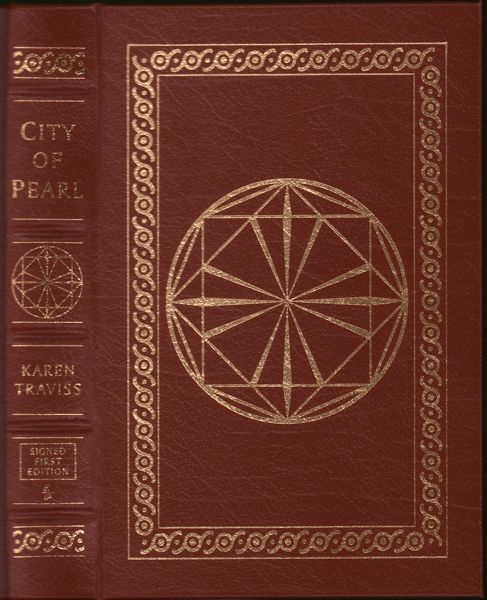
The Wess'har Wars series is a six-book science fiction novel series written by author Karen Traviss and is set several hundred years in the future. It involves humanity's contact with a number of alien species with conflicting interests and beliefs, while her central character, Shan Frankland, is caught in the middle of a coming conflict. The series has a focus on environmental impact. All six novels were published by Eos, an imprint of HarperCollins: City of Pearl, Crossing the Line, The World Before, Matriarch and Ally. The last book of the series, Judge was released on March 25, 2008.
- City at the End of Time
Greg Bearstandalone novel2008
similar byecological collapsescience fictionchallengingfar future
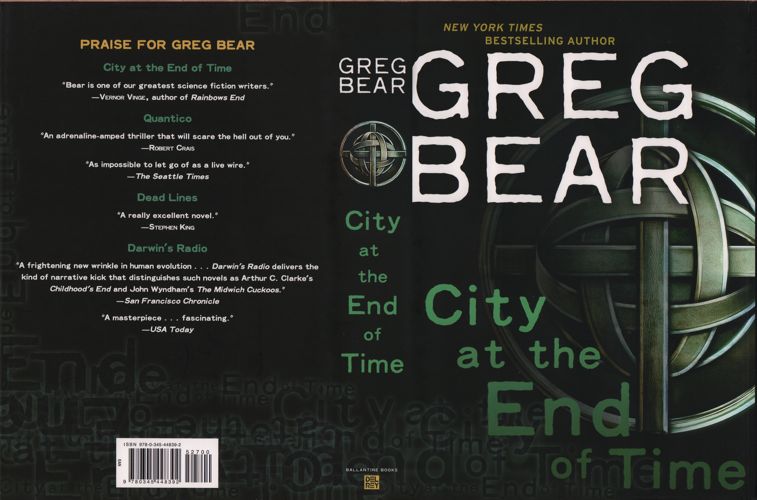
City at the End of Time is a 2008 science fiction novel by American writer Greg Bear. It was published in August 2008 by Del Rey in the United States, and Gollancz in the United Kingdom. The story follows three drifters in present-day Seattle who are tormented by strange dreams of the Kalpa, a city one hundred trillion years in the future. The Kalpa is attempting to ward off the Typhon, an inexplicable entity that has consumed the rest of the ancient universe and broken down the laws of physics.
- Playing God
Sarah Zettelstandalone novel1998
similar byecological collapsescience fictionother star systemsfar future+1 more
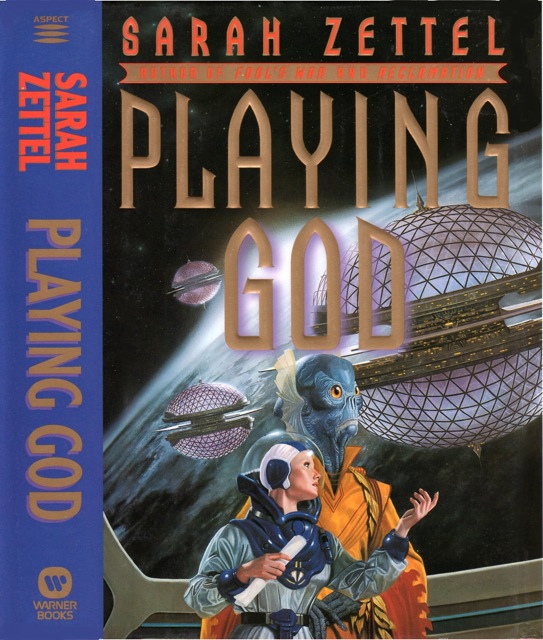
Representatives of an Earth corporation which is contracted to clean up the badly degraded planet of an alien matriarchal species find their task complicated by the powerful tendency towards interracial hostility which evolved as a result of the aliens' honeybeelike genetics.
- The Actual Star
Monica Byrnestandalone novel2021
similar byecological collapsescience fictionchallengingfar futurereflective
[Publisher:] The Actual Star takes readers on a journey over two millennia and six continents–telling three powerful tales a thousand years apart, all of them converging in the same cave in the Belizean jungle. Braided together are the stories of a pair of teenage twins who ascend the throne of a Maya kingdom; a young American woman on a trip of self-discovery in Belize; and two dangerous charismatics vying for the leadership of a new religion and racing toward a confrontation that will determine the fate of the few humans left on Earth after massive climate change. In each era, a reincarnated trinity of souls navigates the entanglements of tradition and progress, sister and stranger, and love and hate–until all of their age-old questions about the nature of existence converge deep underground, where only in complete darkness can they truly see. The Actual Star is a feast of ideas about where humanity came from, where we are now, and where we're going–and how, in every age, the same forces that drive us apart also bind us together.
- The Margarets
Sheri S. Tepperstandalone novel2007
similar byecological collapsescience fictionfar futureother star systems+1 more
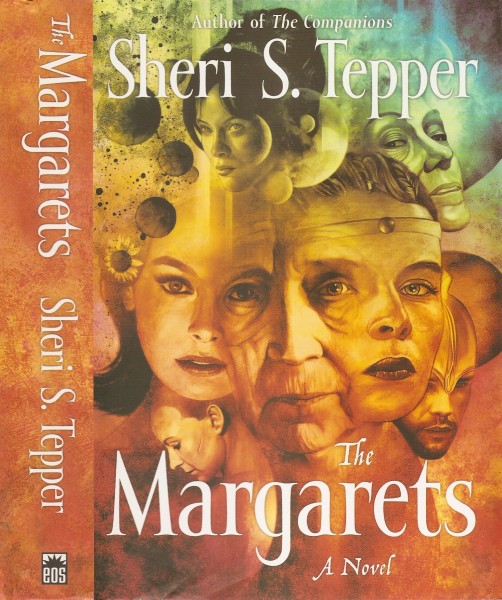
The Margarets marks the long-awaited return of one of the most respected authors in the sf community; a writer who has earned accolades and the admiration of every true aficionado of bold, brilliant, risk-taking speculative fiction. Sheri S. Tepper dazzles yet again with a powerful tale of ingenious survival and strange destiny.The only human child living in a human work colony on the Martian satellite Phobos, little Margaret Bain has devised a system for keeping the suffocating demons of boredom and loneliness at bay: She invents six imaginary companions, each an extension of her own personality, to play with. When the unproductive Phobos project is shut down, and after Margaret is forced to return to Earth with her parents, the child's other selves are lost to her. But they are not gone. Left behind, each one flourishes—refining its own persona, acquiring its own history—before ultimately dispersing to far-flung destinations throughout the universe.On a near-barren homeworld denuded by thoughtless-ness and chemistry, Margaret grows to adulthood and marries, despite the seemingly utter hopelessness of humanity's future. The Earth is so impoverished that its inhabitants must import water and other basic necessities of life—trading the only viable product the planet has left to offer . . . slaves. The time will come when Margaret must leave this world as well, expelled as part of a desperate survival plan millennia in the making—an astonishing scheme that will require her to gather together the many Margarets who are now scattered throughout the galaxy. The creator of the Margarets must now bring all her selves home . . . or watch her race perish.
- The City in the Middle of the Night
Charlie Jane Andersstandalone novel2019
similar byecological collapsescience fictionother star systemsfar future
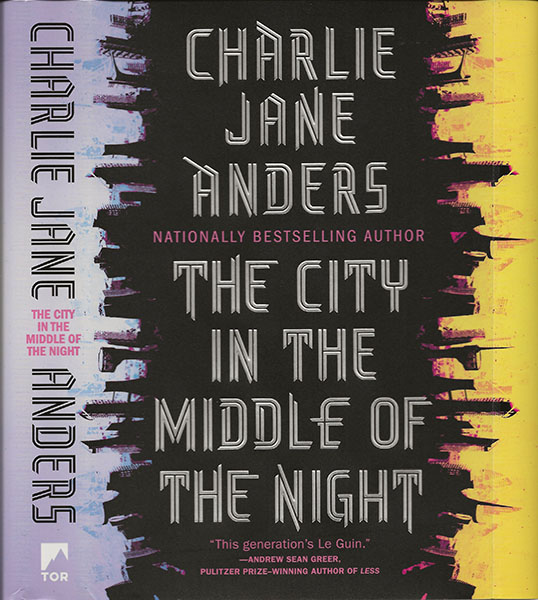
The City In the Middle of the Night is a 2019 climate-fiction novel by Charlie Jane Anders. It is set on a tidally locked planet, where human life, surrounded by hostile alien life, is mostly divided between two archetypically different urban sites. The main story focuses on two characters whose actions take them outside of the cities.
- Triton
Samuel R. Delanystandalone novel1976
similar byscience fictionchallengingother star systemsfar futurereflective
Trouble on Triton: An Ambiguous Heterotopia (1976) is a science fiction novel by American writer Samuel R. Delany. It was nominated for the 1976 Nebula Award for Best Novel, and was shortlisted for a retrospective James Tiptree, Jr. Award in 1995. It was originally published under the shorter title Triton.
- Six Moon Dance
Sheri S. Tepperstandalone novel1998
similar byecological collapsescience fictionother star systemsfar future
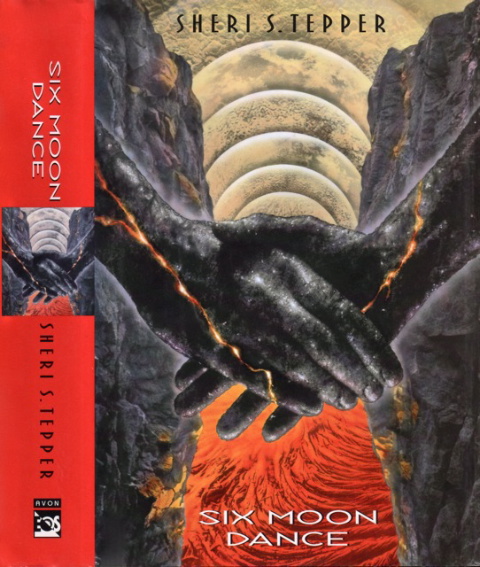
It was many years ago that humans came and settled the world of Newholme-cruelly bending the planet to their will; setting down roots and raising up cities and farms and a grand temple to their goddess.But now the ground itself is shaking with ever-increasing violence. And the Great Questioner, official arbiter of the Council of Worlds, has come to this isolated orb to investigate rumors of a terrible secret that lies buried deep within Newholme's past--a past that is not dead, not completely. And it will fall to Mouche, a beautiful youth of uncommon cleverness and spirit, to save his imperiled home by dicovering and embracing that which makes him unique among humans. For every living thing on newholme is doomed, unless Mouche can appease something dark and terrible that is coiled within...and surrender to the mysterious ecstatic revelry taht results when the six moons join.
- Hainish
series33 books1964
completed
similar byscience fictionfar futureother star systemsreflective
The Hainish Cycle consists of a number of science fiction novels and stories by Ursula K. Le Guin. The cycle is set in a future history that features civilizations of human beings on planets orbiting a number of nearby stars, including Terra ("Earth"); these humans are contacting each other for the first time and establishing diplomatic relations, as well as setting up a confederacy under the guidance of the oldest of the human worlds, the peaceful planet Hain. In this history, human beings did not evolve on Earth, but they were instead the result of interstellar colonies planted by Hain in the distant past, after which interstellar travel ceased for an extended period. Some of the human races have new genetic traits, a result of ancient Hainish experiments in genetic engineering; this includes people who can dream while awake, and a world of hermaphroditic people who only enter active sexuality once per month, not knowing which sex will manifest in them. In keeping with Le Guin's narrative approach, she uses varied social and environmental settings to explore the anthropological and sociological outcomes of human evolution in those environments. The author often discounted the characterization of a so-called "Hainish Cycle".
- Dune Universe
universe78 books1963
Start hereDune · Start here
similar byscience fictionfar futureother star systems
Arrakis. Dune. The desert planet, where empire runs on a single substance: the spice melange, which folds space, prolongs life, and unlocks prescience, and which exists nowhere else in the known universe. Frank Herbert's saga is a meditation dressed as an adventure — feudal houses and a secret sisterhood, engineered messiahs and the patient ecology of a world without water, all turning on the terrible gravity of who commands the spice. It reads like scripture and schemes like a war room, ten thousand years hence, among people who have outlawed the thinking machine and made instruments of themselves instead. At its heart stand Herbert's original six — Dune, Dune Messiah, Children of Dune, God Emperor of Dune, Heretics of Dune, Chapterhouse: Dune — a single deepening arc across millennia, arguing the whole way between prophecy and free will. Around that spine his son Brian Herbert and Kevin J. Anderson have raised a vast prequel architecture: Prelude to Dune, tracing the great houses a generation before Paul; Legends of Dune, reaching back to the crusade that broke the machines; the Schools of Dune cycle on the founding of Bene Gesserit, Mentat, and Navigator; the Caladan Trilogy and Heroes of Dune filling years the originals left in shadow. Many hands, dozens of volumes, one desert. What sets Dune apart is its refusal of the simple: religion is manufactured, heroes are hazards, and the sand itself — worm, water, ecology — acts as a political power. Begin where the universe did, with Frank Herbert's Dune (1965), and read the original six in order; you need nothing else to feel the full weight. The prequels are a country to explore afterward, taken by era. Beginnings are delicate times.
- Evolution
Stephen Baxterstandalone novel2002
similar byecological collapsescience fictionfar future+1 more
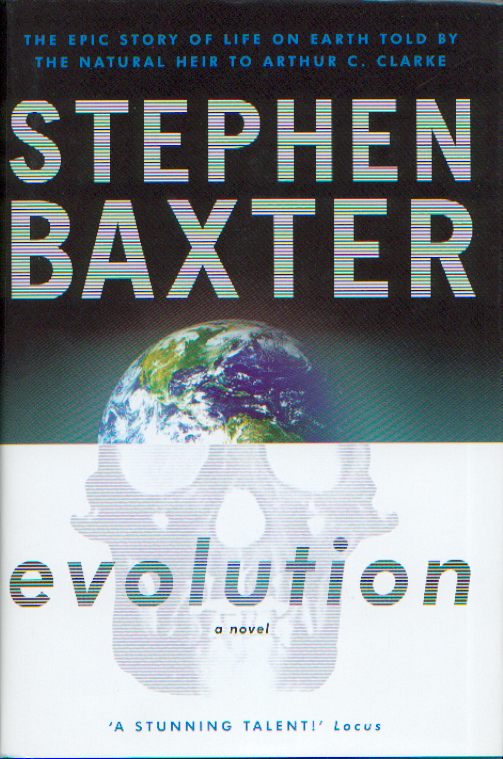
Evolution is a collection of short stories that work together to form an episodic science fiction novel by author Stephen Baxter. It follows 565 million years of human evolution, from shrewlike mammals 65 million years in the past to the ultimate fate of humanity and its descendants, both biological and non-biological, 500 million years in the future.
- Bloom
Wil McCarthystandalone novel1998
similar byecological collapsescience fictionfar futureother star systems
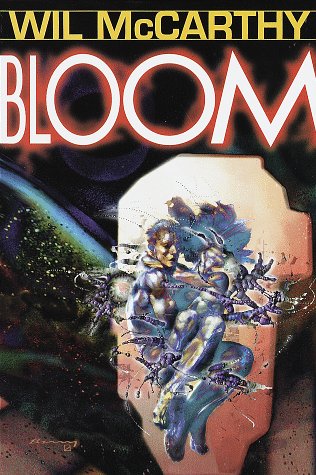
Bloom, written in 1998, is the fifth science fiction novel written by Wil McCarthy. It was first released as a hardcover in September 1998. Almost a year later, in August 1999, its first mass market edition was published. An ebook reprint was published in 2011.
- The Terraformers
Annalee Newitzstandalone novel2023
similar byecological collapsescience fictionother star systemsfar future
The Terraformers is a science fiction novel by Annalee Newitz, published on January 31, 2023. Environmentalism is a major theme.
- A Crystal Age
W. H. Hudsonstandalone novel1887
similar byecological collapsescience fictionfar futurereflective
"Throughout both his fiction and his nonfiction there can be detected hints of some lost (or never possible) Arcadia. A Crystal Age (1887 anon; 1906 as WHH) a quasi-Utopia set in the Far Future, is of fantasy interest for its portrait of a society of harmonious communities divided into Houses, each governed by a Mother, and of a visitor from 19th-century England who fails fatally to comprehend the pattern and Balance of this life." (underscore represents linked cross-reference) --SFE: Encyclopedia of Fantasy (1997), biographical entry by John Clute
- Bios
Robert Charles Wilsonstandalone novel1999
similar byscience fictionchallengingother star systemsfar future+1 more
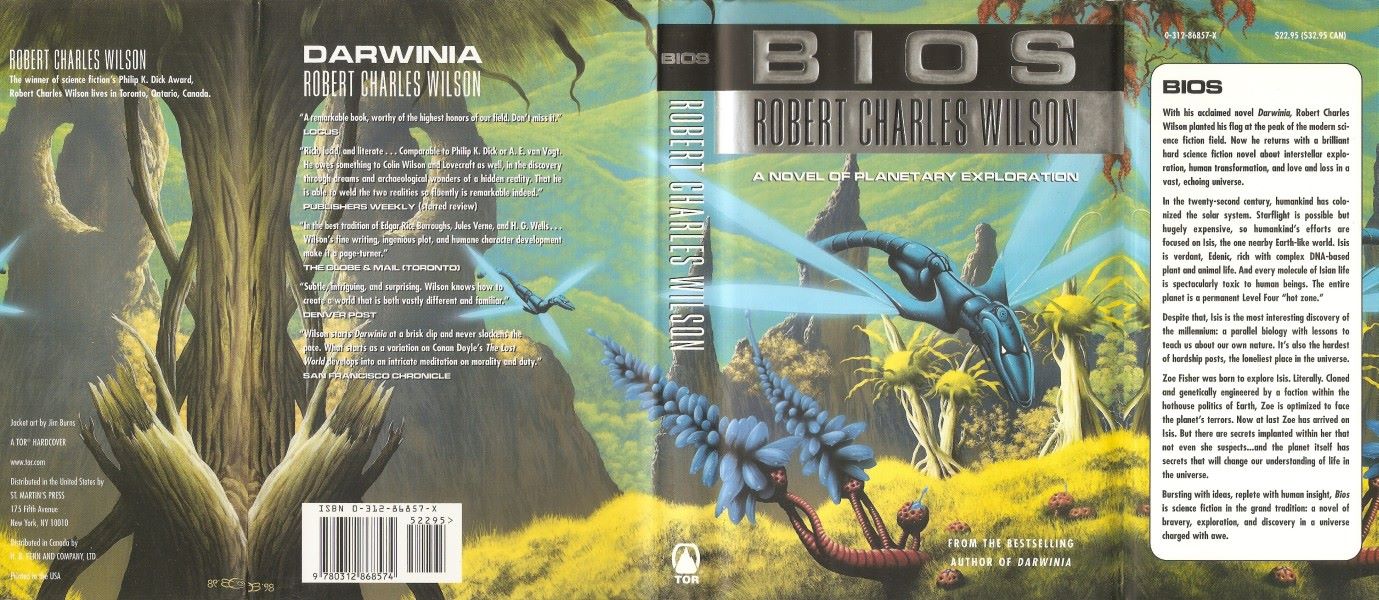
Bios is a 1999 science fiction novel by Robert Charles Wilson, published by Tor Books. It was a nominee for the 2000 Best Novel Aurora Award.
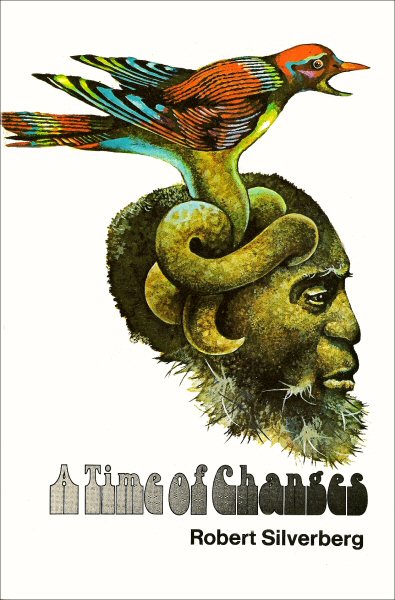
- A Time of Changes
Robert Silverbergstandalone novel1971
similar byscience fictionother star systemsfar futurereflective+1 more
A Time of Changes is a 1971 science fiction novel by American writer Robert Silverberg. It won the Nebula Award for that year, and was also nominated for the 1972 Hugo and Locus Awards.
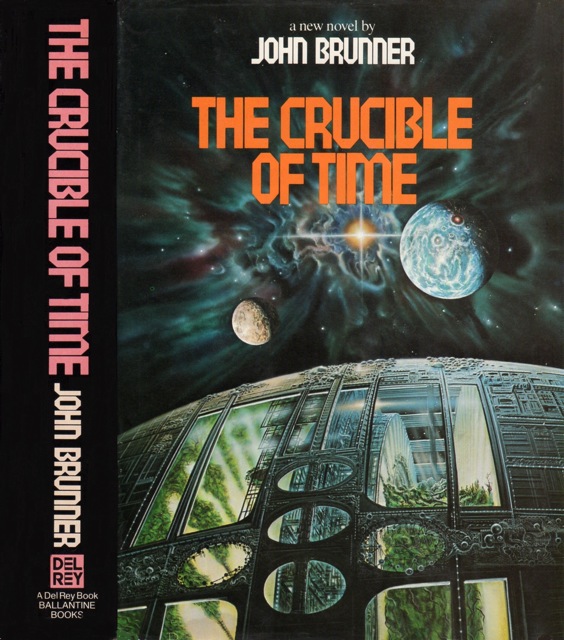
- The Crucible of Time
John Brunnerstandalone novel1983
similar byscience fictionchallengingother star systemsfar future+1 more
The Crucible of Time is a fix-up science fiction novel by John Brunner. It was first published in 1983.
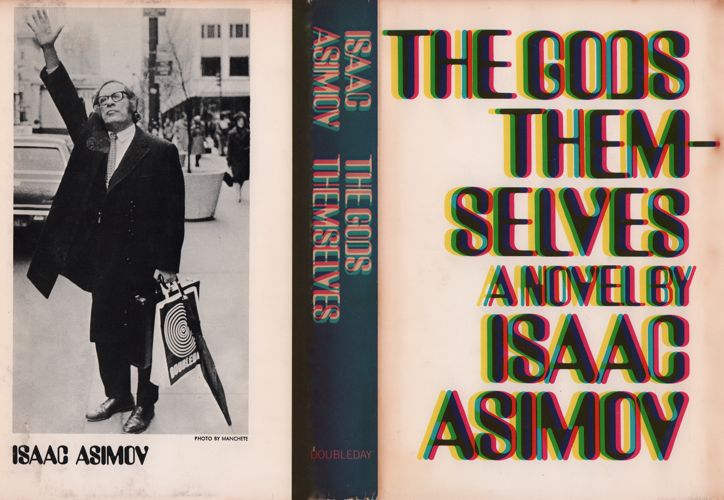
- The Gods Themselves
Isaac Asimovstandalone novel1972
similar byscience fictionchallengingfar futureother star systems
The Gods Themselves is a 1972 science fiction novel written by Isaac Asimov, and his first original novel in fifteen years. It won the Nebula Award for Best Novel in 1972, and the Hugo Award for Best Novel in 1973.