More like Helliconia Spring
anchored on:science fictionother star systemsfar futurespace colonizationecological collapsechallenging+2 more
but
- Helliconia
series4 books1982
completed
similar byscience fictionfar futurechallengingreflectiveother star systemsspace colonizationecological collapsemultiple pov+2 more
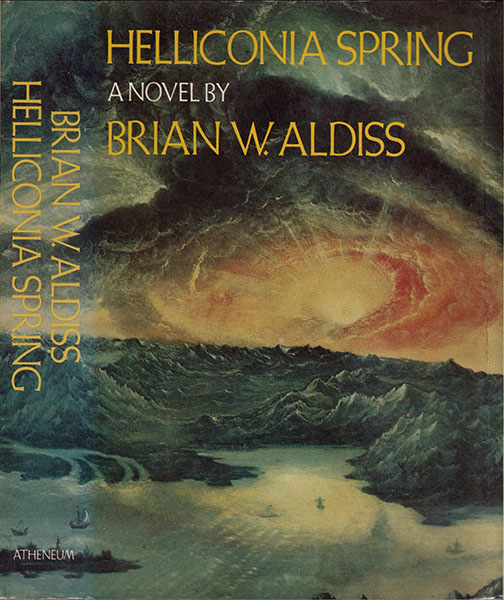
The Helliconia trilogy is a series of science fiction books by British writer Brian W. Aldiss, set on the Earth-like planet Helliconia. It is an epic chronicling the rise and fall of a civilisation over thousands of years as the planet progresses through its incredibly long seasons, which last for centuries.
- Aurora
Kim Stanley Robinsonstandalone novel2015
similar byscience fictionfar futurechallengingreflectivespace colonizationother star systemshard science fiction+2 more
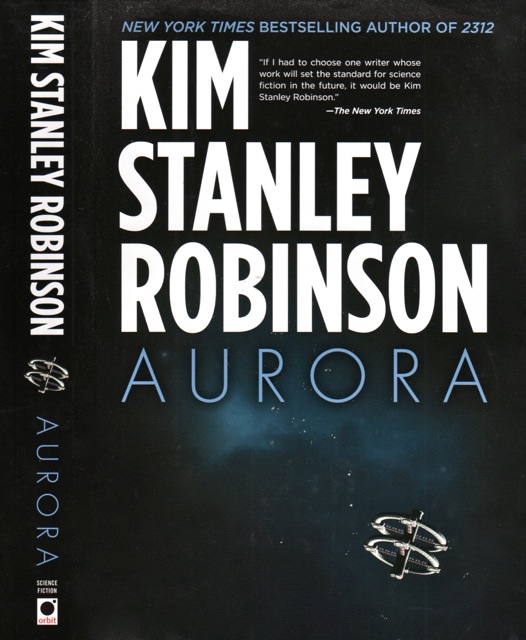
Aurora is a 2015 novel by American science fiction author Kim Stanley Robinson. The novel concerns a generation ship built in the style of a Stanford torus, traveling to Tau Ceti to start a human colony. The novel's primary narrative voice is that of the starship's artificial intelligence. Aurora was well received by critics.
- 2312
Kim Stanley Robinsonstandalone novel2012
similar byscience fictionfar futurereflectivespace colonizationecological collapseother star systemshard science fiction
In the eponymous year, when Earth's ecology is degraded and humanity has settled throughout the solar system by terraforming and genetic engineering, mysterious disasters strike some human communities and an assortment of human types from throughout the system seek to find and eliminate the cause.
- Dune
series20 books1963
part of Dune Universe
similar byscience fictionfar futureother star systems+2 more
Frank Herbert's Dune Chronicles opens with 1965's Dune, set on the desert planet Arrakis where House Atreides takes control of the only source of the vital spice melange and young Paul Atreides is pulled into a struggle over its politics and religion. Herbert carried the story forward across five further novels — Dune Messiah, Children of Dune, God Emperor of Dune, Heretics of Dune, and Chapterhouse: Dune — following Paul's line over the following millennia, before Brian Herbert and Kevin J. Anderson later extended the saga. Many other editions of these six novels are omnibus and box-set repackagings rather than separate stories.
- Hainish
series33 books1964
completed
similar byscience fictionfar futureother star systemsreflective+2 more
The Hainish Cycle consists of a number of science fiction novels and stories by Ursula K. Le Guin. The cycle is set in a future history that features civilizations of human beings on planets orbiting a number of nearby stars, including Terra ("Earth"); these humans are contacting each other for the first time and establishing diplomatic relations, as well as setting up a confederacy under the guidance of the oldest of the human worlds, the peaceful planet Hain. In this history, human beings did not evolve on Earth, but they were instead the result of interstellar colonies planted by Hain in the distant past, after which interstellar travel ceased for an extended period. Some of the human races have new genetic traits, a result of ancient Hainish experiments in genetic engineering; this includes people who can dream while awake, and a world of hermaphroditic people who only enter active sexuality once per month, not knowing which sex will manifest in them. In keeping with Le Guin's narrative approach, she uses varied social and environmental settings to explore the anthropological and sociological outcomes of human evolution in those environments. The author often discounted the characterization of a so-called "Hainish Cycle".
- Learning the World
Ken MacLeodstandalone novel2005
similar byscience fictionfar futurereflectiveother star systemsspace colonizationmultiple povhard science fictionaliens+1 more
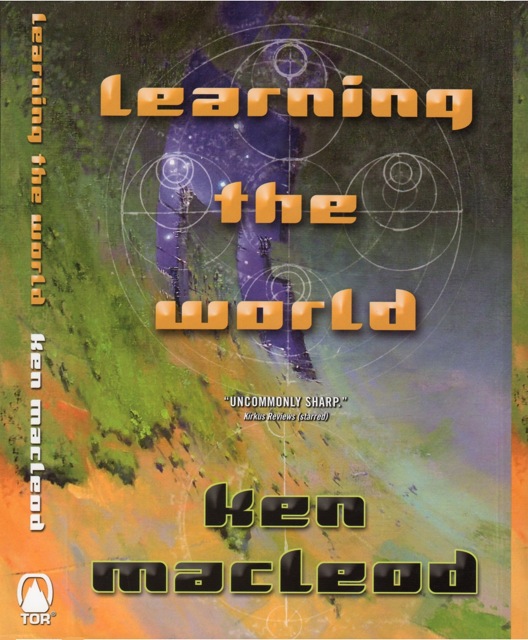
From the front flap of the Tor first printing: "Humanity has spread to every star within 500 light-years of its half-forgotten origin, coloring the sky with a haze of habitats. Societies rise and fall. Incautious experiments burn fast and fade. On the fringes, less modified humans get on with the job of settling a universe that has, so far, been empty of intelligent life. The ancient starship But the Sky, My Lady! The Sky! is entering orbit around a promising new system after a four hundred year journey. For its long-lived inhabitants, the centuries have been busy. Now a younger generation is eager to settle the system. The ship is a seed-pod ready to burst. Then they detect curious electromagnetic emissions from the system's Earth-like world. As the nature of the signals becomes clear, the choices facing the humans become stark. On Ground, second world from the sun, a young astronomer searches for his system's outermost planet. A moving point of light thrills, then disappoints him. It's only a comet. His physicist colleague Orro takes time off from trying to invent a flying-machine to calculate the comet's trajectory. Something is very odd about that comet's path. They are not the only ones for whom the world has changed. "We are not living in the universe we thought we lived in yesterday. We have to start learning the world all over again.""
- Building Harlequin's Moon
Larry Niven & Brenda Cooperstandalone novel2005
similar byscience fictionfar futurechallengingreflectiveother star systemsspace colonizationhard science fiction
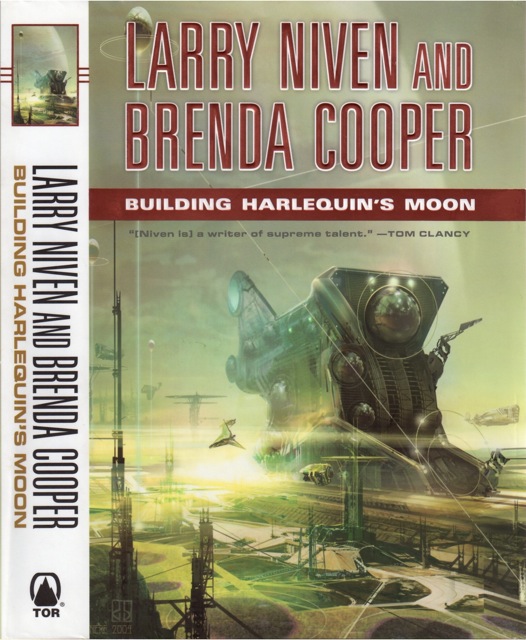
The first interstellar starship, John Glenn, fled a Solar System populated by rogue AIs and machine/human hybrids, threatened by too much nanotechnology and rife with political dangers. The John Glenn’s crew intended to terraform the nearly pristine planet Ymir, in hopes of creating a utopian society that will limit intelligent technology. But by some miscalculation they have landed in another solar system, and extremely low on the antimatter needed to continue to Ymir, they must shape the nearby planet Harlequin’s moon, Selene, into a new, temporary home. Their only hope of ever reaching Ymir is to rebuild their store of antimatter through decades of terraforming the moon. Gabriel, the head terraformer, must lead this nearly impossible task, with all the wrong materials. His primary tools are the uneducated and nearly illiterate children of the original colonists, born and bred to build Harlequin’s moon into a virtual antimatter factory. With no concept of the future and with life defined as duty, one girl, Rachel Vanowen, begins to ask herself the question: what will become of the children of Selene once the terraforming is complete.
- The Songs of Distant Earth
Arthur C. Clarkestandalone novel1986
similar byscience fictionfar futurereflectiveother star systemsspace colonizationhard science fiction+1 more
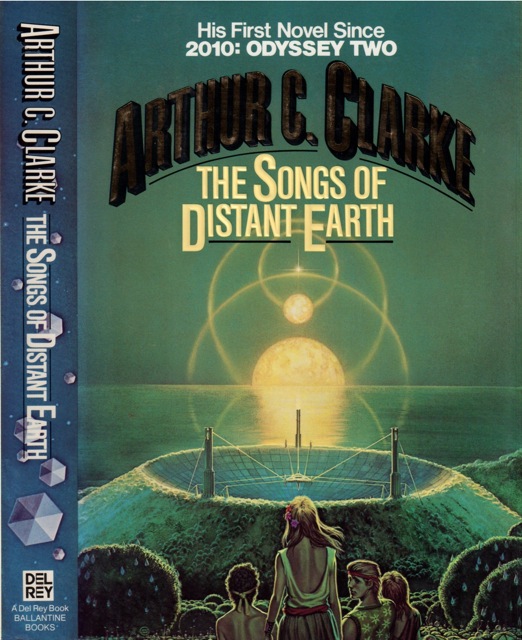
The Songs of Distant Earth is a 1986 science fiction novel by British writer Arthur C. Clarke, based upon his 1958 short story of the same title. Of all of his novels, Clarke stated that this was his favourite. Prior to the publishing of the novel, Clarke also wrote a short step outline with the same title, published in Omni magazine and anthologised in The Sentinel in 1983.
- Remnant Population
Elizabeth Moonstandalone novel1996
similar byscience fictionfar futurereflectiveother star systemsspace colonizationaliens+1 more
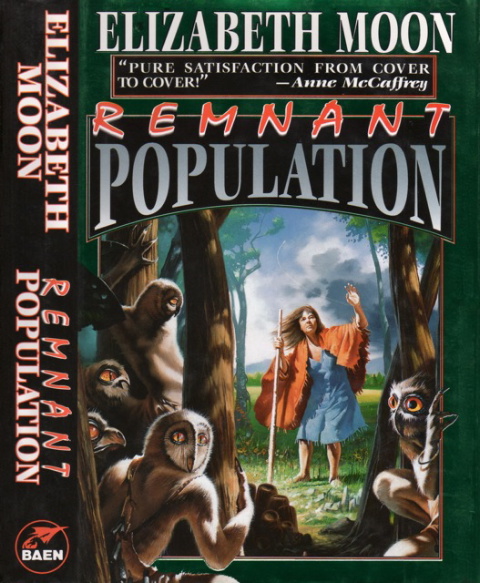
From the dust jacket front flap of the Baen first edition: Alone at last... People had always told Ofelia what to do; for once she was going to do what she wanted. She refused to get on the cryo ships, refused to leave the only world she could call home. And when they finally came for her, she hid, not that the authorities looked all that hard for one crazy old woman. Now Ofelia is alone, content to live with no more demands on her self or her time, the only remaining settler on an abandoned planet. The new settlers arrive. At first she fears that they have come to reoccupy the settlement she has come to think of as hers - but they land far away. And as Ofelia secretly listens, they are slaughtered to the last child by stone-age aliens no one knew were there. Now it will be up to Ofelia to save the aliens from Earth's wrath...
- The Gods Themselves
Isaac Asimovstandalone novel1972
similar byscience fictionfar futurechallengingother star systemshard science fictionaliens
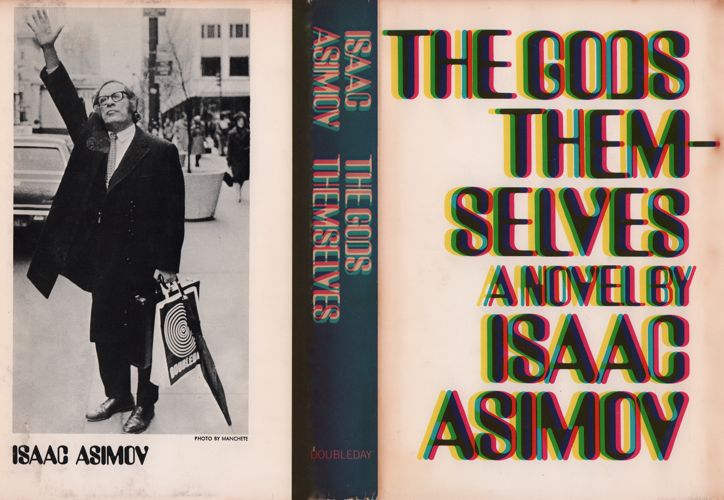
The Gods Themselves is a 1972 science fiction novel written by Isaac Asimov, and his first original novel in fifteen years. It won the Nebula Award for Best Novel in 1972, and the Hugo Award for Best Novel in 1973.
- The City and the Stars
Arthur C. Clarkestandalone novel1956
similar byscience fictionfar futurereflectiveother star systemsspace exploration
The City and the Stars is a science fiction novel by British writer Arthur C. Clarke, published in 1956. This novel is a complete rewrite of Clarke's earlier Against the Fall of Night, his first novel, which had been published in Startling Stories magazine in 1948 after being rejected by the editor of Astounding Science-Fiction, according to the author.
- Imperial Earth
Arthur C. Clarkestandalone novel1975
similar byscience fictionfar futurereflectivespace colonizationhard science fictionspace exploration
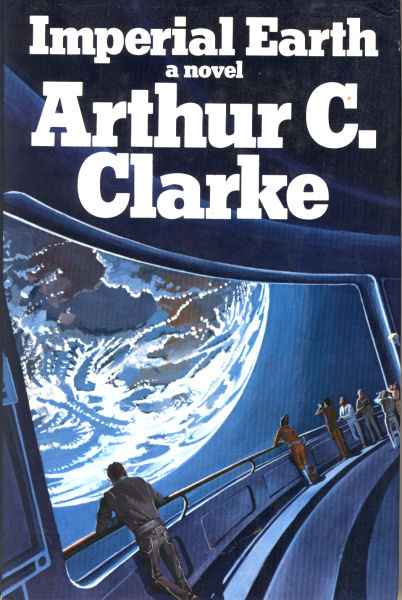
Imperial Earth is a science fiction novel by British writer Sir Arthur C. Clarke, published in 1975 by Gollancz Books. The plot follows the protagonist, Duncan Makenzie, on a trip to Earth from his home on Titan, in large part as a diplomatic visit to the U.S. for its quincentennial in 2276, but also to have a clone of himself produced. The book was published in time for the U.S. bicentennial in 1976.
- Ender Wiggin
series14 books1977
part of Ender's Game Universe
similar byscience fictionfar futureother star systemsaliens+1 more
Orson Scott Card's Ender's Game (1985, expanded from his 1977 novella) follows child prodigy Andrew "Ender" Wiggin as he is recruited into a military training program built to prepare Earth's defenses for an anticipated third war against an insectoid alien species known as the Formics. The saga continues years later through Speaker for the Dead and Xenocide, following an older Ender as he confronts the moral weight of his role in that earlier conflict, and concludes the core arc in Children of the Mind, with Ender in Exile filling in the years between the first two books. Set within the wider Ender's Game universe, the series shifts from military coming-of-age story to slower, more philosophical science fiction as it progresses.
- Mars (Kim Stanley Robinson)
series36 books1982
similar byscience fictionfar futurespace colonizationhard science fiction+3 more
The Mars trilogy is a series of science fiction novels by Kim Stanley Robinson that chronicles the settlement and terraforming of the planet Mars through the personal and detailed viewpoints of a wide variety of characters spanning 187 years, from 2026 to 2212. Ultimately more utopian than dystopian, the story focuses on egalitarian, sociological, and scientific advances made on Mars, while Earth suffers from overpopulation and ecological disaster.
- Triton
Samuel R. Delanystandalone novel1976
similar byscience fictionfar futurechallengingreflectiveother star systems
Trouble on Triton: An Ambiguous Heterotopia (1976) is a science fiction novel by American writer Samuel R. Delany. It was nominated for the 1976 Nebula Award for Best Novel, and was shortlisted for a retrospective James Tiptree, Jr. Award in 1995. It was originally published under the shorter title Triton.
- Downward to the Earth
Robert Silverbergstandalone novel1969
similar byscience fictionfar futurereflectiveother star systemsaliens+1 more
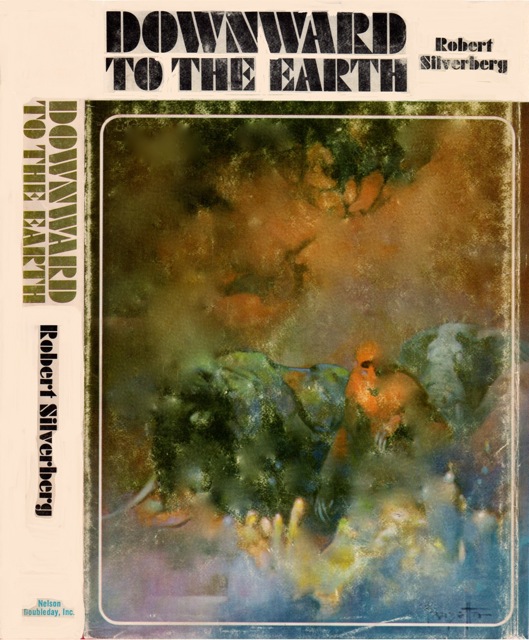
Edmund Gunderson was the Terran administrator of the colony world of Belzagor, and he returns to it after it has gained independence, feeling a sense of guilt for the way he has treated its dominant species, the elephant-like nildoror, whose animalistic appearance had kept Gunderson from taking them seriously as sentient beings. On his return, he feels a new sense of kinship with the natives, perhaps more than for the Terran tourists. The nildoror undergo a process of rebirth, and Gunderson's greatest guilt comes from having denied rebirth to seven nildoror to make them help him repair flood damage.(From Wikipedia)
- Manseed
Jack Williamsonstandalone novel1982
similar byscience fictionfar futurereflectiveother star systemsspace colonization+2 more
In the decades since i've read this novel somehow i forgot almost everything about it, except the powerful force it had on me. However, the the following description from http://www.fictiondb.com/author/jack-williamson~manseed~117359~b.htm seems to match my long ago reading experience: Egan Drake was a wealthy but unhappy visionary who died early and left behind only a powerful dream. He proposed to spread Mankind among the stars. Then there was Megan Drake. She took her brother's vision and made it real. At the Raven Foundation's New Mexico headquarters, she gathered around her experts in astronautics, biology, computer science, defense, and fusion propulsion. The project was simple in design yet grandiose in its aim: a thousand tiny ships would crawl to the stars; each that landed on an Earth-type planet would produce several dozen colonists; each colonist would be a product of the genes derived from Megan and her experts. Every ship would manufacture cyborgs for repairs and self-protection. But much of the technology was new and untried; no one could predict what might really occur at a millennia-long journey's end if, say, a cyborg fell in love or aliens were met or...
- Kefahuchi Tract Trilogy
series3 books2002
similar byscience fictionfar futurechallengingother star systems+3 more
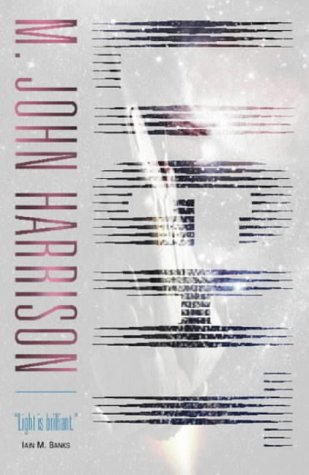
M. John Harrison's Kefahuchi Tract trilogy circles a strange, physics-breaking anomaly in deep space that draws scientists, smugglers, and drifters into its pull across different eras. Light moves between a near-future timeline and a far-future one drawn to the Tract itself; its sequel Nova Swing stays within one future period, where a fragment of the anomaly's altered space bleeds into the run-down port city of Saudade, giving the book a noir, Roadside-Picnic-like atmosphere; Empty Space concludes the sequence. The three novels share a setting and mood more than a continuous plot or cast.
- City at the End of Time
Greg Bearstandalone novel2008
similar byscience fictionfar futurechallengingecological collapsemultiple povhard science fiction+1 more
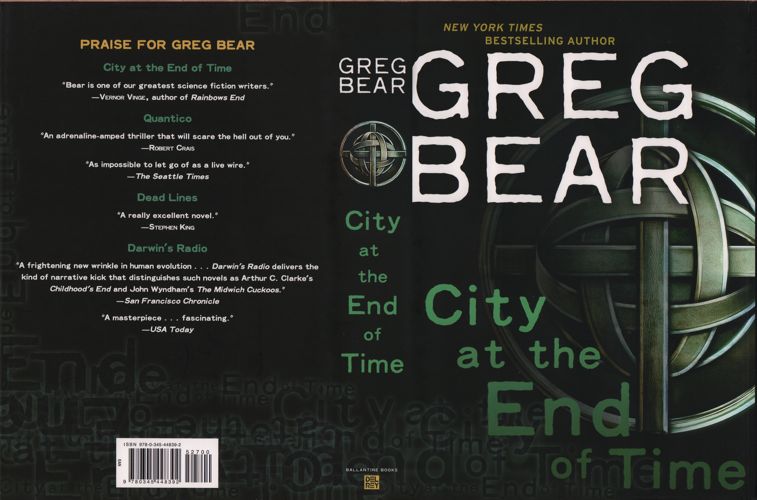
City at the End of Time is a 2008 science fiction novel by American writer Greg Bear. It was published in August 2008 by Del Rey in the United States, and Gollancz in the United Kingdom. The story follows three drifters in present-day Seattle who are tormented by strange dreams of the Kalpa, a city one hundred trillion years in the future. The Kalpa is attempting to ward off the Typhon, an inexplicable entity that has consumed the rest of the ancient universe and broken down the laws of physics.
- A Time of Changes
Robert Silverbergstandalone novel1971
similar byscience fictionfar futurereflectiveother star systems+1 more
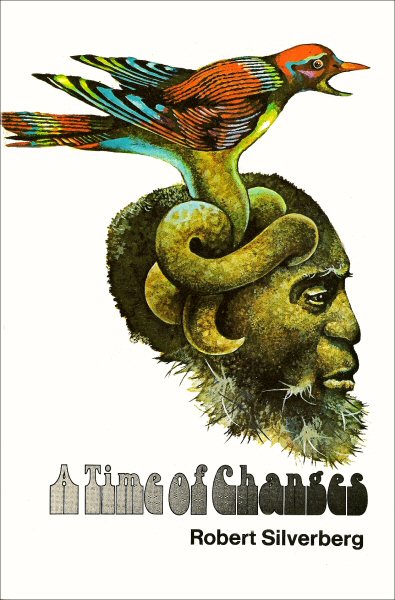
A Time of Changes is a 1971 science fiction novel by American writer Robert Silverberg. It won the Nebula Award for that year, and was also nominated for the 1972 Hugo and Locus Awards.
- Schild's Ladder
Greg Eganstandalone novel2002
similar byscience fictionfar futurechallengingecological collapsehard science fictionspace exploration+1 more
Schild's Ladder is a 2002 science fiction novel by Australian author Greg Egan. The book derives its name from Schild's ladder, a construction in differential geometry, devised by the mathematician and physicist Alfred Schild.
- Semiosis
series3 books2018
similar byscience fictionfar futureother star systemsspace colonization+3 more
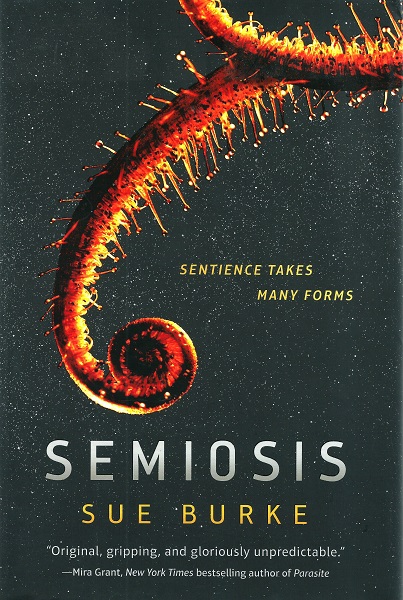
Semiosis is Sue Burke's science fiction trilogy: Semiosis (2018), Interference and Usurpation. It follows generations of human colonists on an alien world forming an uneasy, evolving relationship with Stevland, a highly intelligent sentient plant, as the colony's survival comes to depend on cooperating with a fundamentally non-animal intelligence. The trilogy follows one continuous colony's history across decades of story time.
- Nemesis
Isaac Asimovstandalone novel1989
similar byscience fictionfar futurespace colonizationecological collapseother star systems+1 more
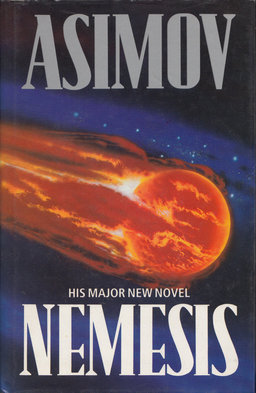
The expanding population and ensuing ecological degradation of Earth leads to the establishment of orbital habitats which continue to compete with each other as well as with Earth, leading one of them to abandon the Solar System entirely, to establish itself around a neighboring star.
- Children of Time
series6 books2015
similar byscience fictionfar futureother star systems+4 more
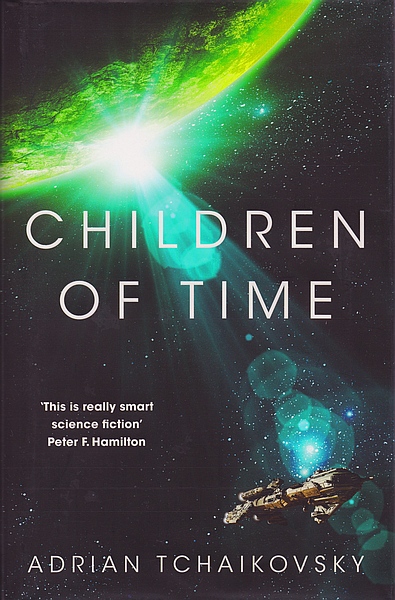
Adrian Tchaikovsky's Children of Time follows two threads: a terraformed planet where an experimental nanovirus meant to accelerate primate evolution instead uplifts a species of spiders into a technological civilization guided by the recorded personality of a human scientist, and the last survivors of Earth aboard a generation ark ship searching for a new home. The two threads collide across mismatched timescales as the ark ship's crew, cycling in and out of cryosleep, finally reach the spiders' world. It's the first of a loosely connected series that applies the same premise to different alien biologies in each subsequent book.