More like Hidden from View
but
- The Invisible Man
series6 books1897
similar byscience fiction+2 more
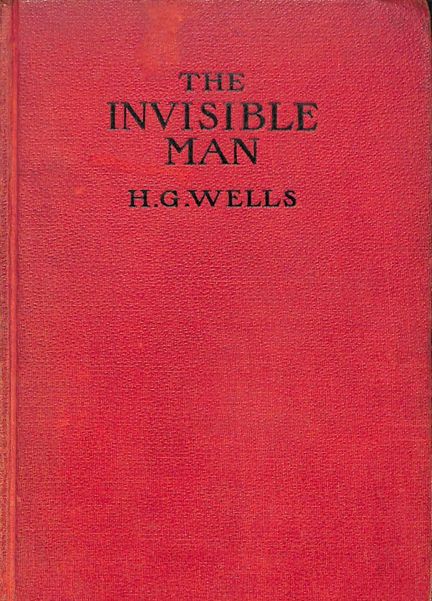
The Invisible Man is H. G. Wells's 1897 science fiction novel about Griffin, a scientist who works out how to make living tissue invisible and tests the process on himself, only to discover he has no way to reverse it. Unseen and increasingly cut off from other people, he turns to theft and violence while trying to survive and find a cure, making the book as much about his moral collapse as about the invisibility premise itself. It's a single self-contained novel; the two listed titles here are duplicate editions rather than separate books.
- The Triffids
series3 books1951
similar byscience fictionour worlddark+1 more
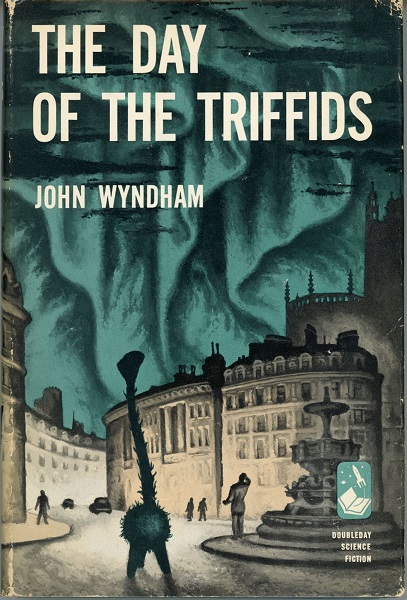
John Wyndham's The Day of the Triffids (1951) opens with a meteor-shower-like event that leaves most of Britain's population blind, throwing civilization into collapse just as triffids, an aggressive and mobile species of poisonous plant, become free to hunt the helpless survivors. Simon Clark's authorized sequel The Night of the Triffids (2001) picks up a generation later, narrated by the original protagonist's son as he confronts a new triffid-dominated world, and John Whitbourn's The Age of the Triffids extends the shared setting further still. Together the three novels form a loose post-apocalyptic trilogy built on Wyndham's original premise rather than a tightly plotted single story.
- H. G. Wells' War of the Worlds
universe65 books1898
Start hereThe War of the Worlds · Start here
similar byscience fiction+2 more
No one would have believed, in the closing years of the nineteenth century, that human affairs were being watched keenly and closely from the timeless worlds of space. And then the cylinders fell. H. G. Wells' War of the Worlds opens in the quiet of the Surrey commons, where a falling star proves to be the first Martian craft — and from the pit rise the towering tripods, the Heat-Ray, the choking Black Smoke and the creeping red weed, wielded by minds that regard mankind much as we regard the creatures we boil for supper. This is invasion rendered as natural disaster: cold, methodical, and vast beyond argument. Wells' 1898 novel is the seed; everything else grows from that Martian soil. The catalogue gathers direct sequels and continuations alongside a wide field of other hands. In War of the Worlds: Global Dispatches the invasion is retold across the whole planet through the eyes of Twain, Verne, Tolstoy, Lowell and Kipling; in the Manly Wade and Wade Wellman crossover, Sherlock Holmes, Watson and Professor Challenger take the field against the machines; and Scott Washburn's Great Martian War stretches the fighting into a decades-long alternate history of steam, artillery and grinding attrition. It is a loose shared world — no single decreed sequence, many voices answering one calamity. What sets this world apart is its refusal of heroics: the invaders fall not to generals but to the smallest things of Earth, humbling and indifferent. Begin, always, with Wells' original novel — it is short, and it is the ground every later book stands upon. From there follow your appetite: Global Dispatches for the panorama, the Holmes campaign for adventure, Washburn for the long war.
- Stephen King multiverse
universe46 books1967
Start hereThe Gunslinger · Start here
similar bydark+2 more
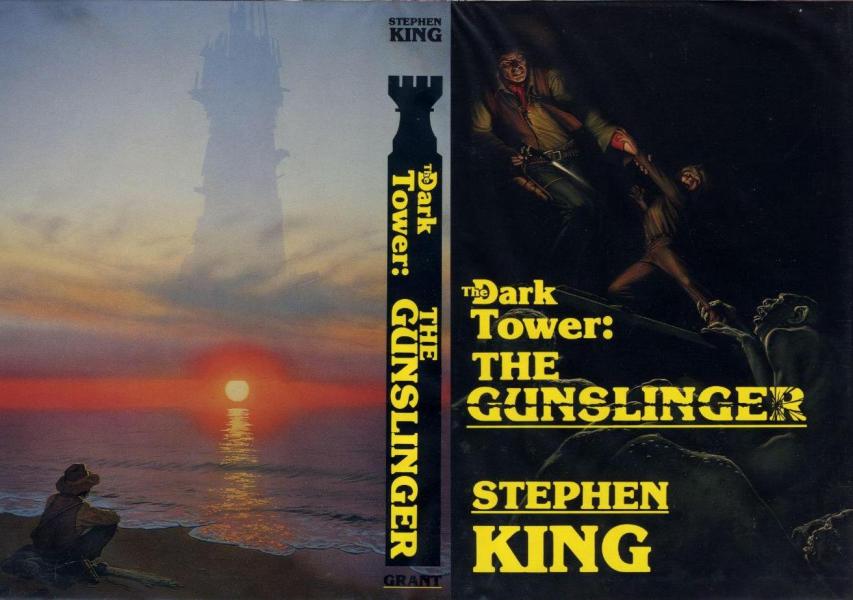
The man in black fled across the desert, and the gunslinger followed. So begins the long walk of Roland Deschain, last of an order of knight-errant pistoleers, across a land that has "moved on" — where the compass points drift, dead machines rot toward sentience, and the weave of what's real wears thin. His quest is the Dark Tower itself: a spire standing at the hub of every world that exists, the linchpin that holds all of them back from ruin. Roland's road runs eight volumes, from The Gunslinger through the closing Dark Tower, with the later, interleaved tale The Wind Through the Keyhole folding a story-within-a-story back into his youth. Along the way he draws a ka-tet — a fellowship bound by fate, not choosing — through doorways between worlds: a heroin-shackled New Yorker, a woman of two minds, a boy who dies twice. The Tower is also the secret axle around which the wider shelf of King's work turns; threads from The Stand, 'Salem's Lot and beyond wind quietly toward it. Expect a mongrel of Western, high fantasy, horror and decayed science fiction, told in a dusty, incantatory dialect all its own — ka, thankee-sai, the world that has moved on. This is King at his most mythic and most personal, a decades-spanning circle that rewards a patient reader. Begin at the beginning: The Gunslinger, then walk forward in publication order. There are other worlds than these — but this door opens first.
- Darker Than You Think
Jack Williamsonstandalone novel1948
similar bydarkfantasy+2 more
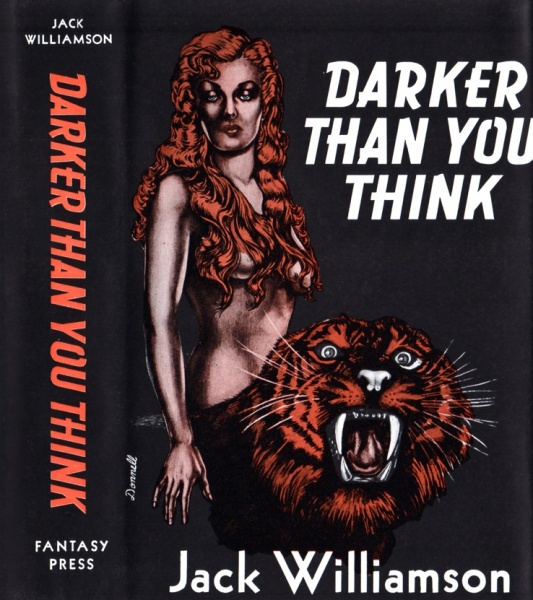
Darker Than You Think is a science fantasy and horror novel by American writer Jack Williamson. Originally a novelette, it was expanded into novel length and published by Fantasy Press in 1948. The short version was published in Unknown in 1940.
- Blade Runner Universe
series6 books1968
similar byscience fictiondark+2 more
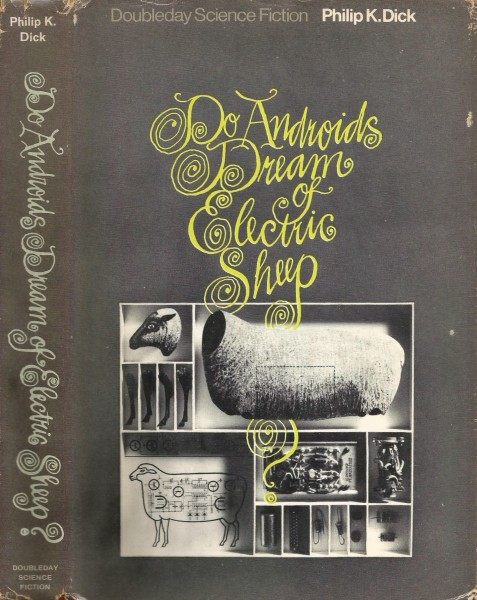
Philip K. Dick's 1968 novel Do Androids Dream of Electric Sheep? follows bounty hunter Rick Deckard as he tracks escaped androids through an irradiated, near-abandoned San Francisco, using the hunt to probe questions of empathy and what separates human from machine. The novel became the basis for Ridley Scott's 1982 film Blade Runner, and Marvel Comics later published an illustrated adaptation of that film. Together the two trace the story's path from prose original to screen and comic-page adaptation.
- Patternist
series6 books1976
completed
similar byscience fictiondark+2 more
The Patternist series is a group of science fiction novels by Octavia E. Butler that detail a secret history continuing from the Ancient Egyptian period to the far future that involves telepathic mind control and an extraterrestrial plague. A profile of Butler in Black Women in America notes that the themes of the series include "racial and gender-based animosity, the ethical implications of biological engineering, the question of what it means to be human, ethical and unethical uses of power, and how the assumption of power changes people."
- Rosemary Reilly
series2 books1967
completed
similar bytense+4 more
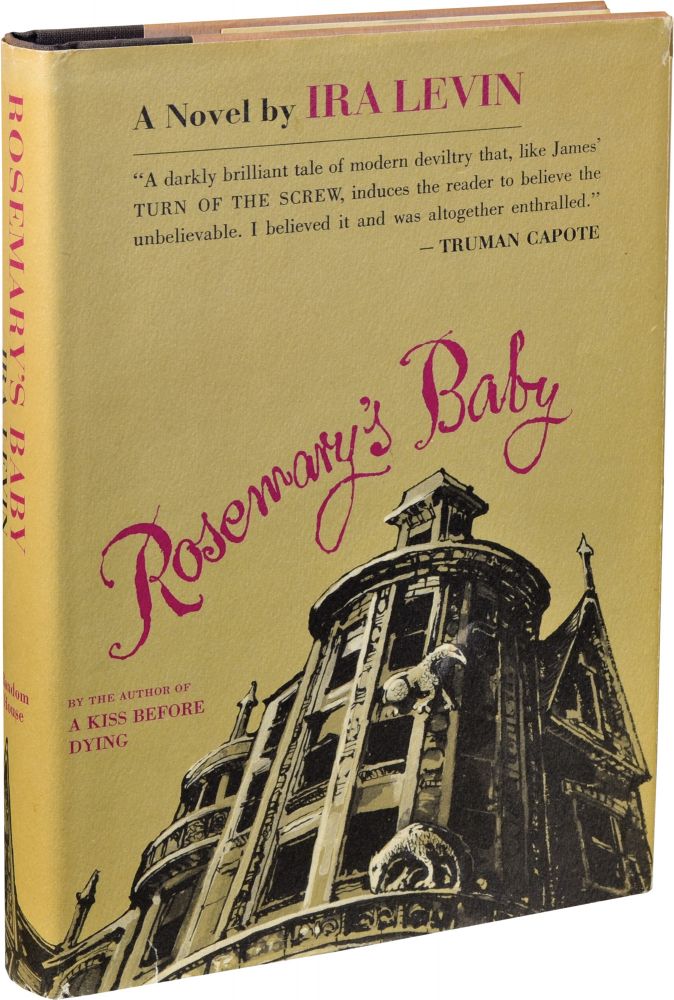
Rosemary's Baby follows a young wife in a Gothic Manhattan apartment building who grows increasingly convinced that her elderly neighbors, and even her own husband, are part of a conspiracy surrounding her pregnancy. Ira Levin returned to the character thirty years later in the 1997 sequel Son of Rosemary. Together the two novels form a short, self-contained horror series about faith, control, and motherhood.
- The Andromeda Strain
series2 books1969
similar byscience fictiontense+2 more
Michael Crichton's 1969 novel The Andromeda Strain follows a team of scientists racing to contain a lethal extraterrestrial microorganism that crash-lands in Arizona, told in the clinical, document-driven style that helped establish the techno-thriller genre. Daniel H. Wilson's authorized 2019 sequel The Andromeda Evolution revisits the same threat five decades later. Together the two books form a two-part outbreak story separated by a fifty-year gap in publication.
- The Demolished Man
Alfred Besterstandalone novel1953
similar byscience fictionour worldtense+1 more
In the year 2301, guns are only museum pieces and benign telepaths sweep the minds of the populace to detect crimes before they happen. In 2301 murder is virtually impossible, but one man is about to change that..
- I Am Legend
Richard Mathesonstandalone novel1954
similar byscience fictionour worlddarktense
The last human survivor of the vampire epidemic has to maintain his defences against their onslaught, while attempting to research the cause and possibly solution to the plague. Robert Neville is the last living man on Earth... but he is not alone. Every other man, woman and child on the planet has become a vampire, and they are hungry for Neville's blood. By day he is the hunter, stalking the undead through the ruins of civilization. By night, he barricades himself in his home and prays for the dawn. How long can a man survive like this?
- Shade's Children milieu
series2 books1997
similar byscience fictiondarktense+2 more
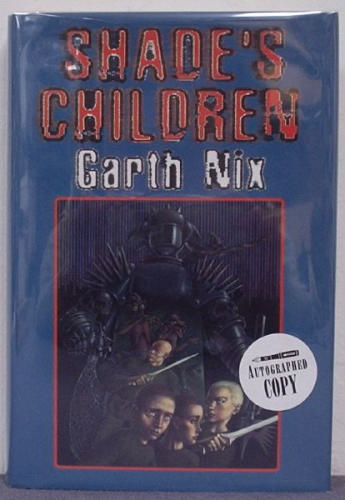
Shade's Children is set on an Earth where all adults vanished overnight fourteen years earlier, leaving children to be harvested at puberty by the machines that now run the world, unless they escape into hiding with Shade, a mysterious AI-like protector. Garth Nix's 1997 novel is a single, self-contained book rather than a series, though its bleak post-apocalyptic premise has drawn comparisons to his other work.
- Lord of the Flies
William Goldingstandalone novel1954
similar byour worlddarktense+1 more
Lord of the Flies is the 1954 debut novel of British author William Golding. The plot concerns a group of prepubescent British boys who are stranded on an uninhabited island and their disastrous attempts to govern themselves that lead to a descent into savagery. The novel's themes include morality, leadership, and the tension between civility and chaos.
- The Kraken Wakes
John Wyndhamstandalone novel1953
similar byscience fictionour worlddarktense
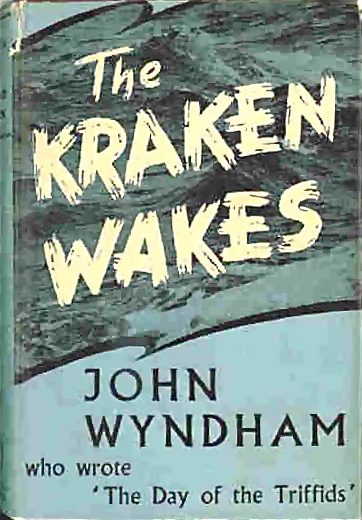
" Behind a spectacular meteor shower actually hides the beginning of an invasion by a mysterious and powerful alien race. Earth's life is disrupted by the attacks of extraterrestrials whose war machines, emerging from the depths of the oceans, seem indestructible. The coalitioned forces of the whole world are worthless, powerless in the face of the indecipherable and deadly plans of a superior intelligence, capable of bringing the entire planet to the brink of catastrophe" Goodreads May 20, 2022
- Space Merchants
series2 books1953
completed
similar byscience fictiondark+1 more
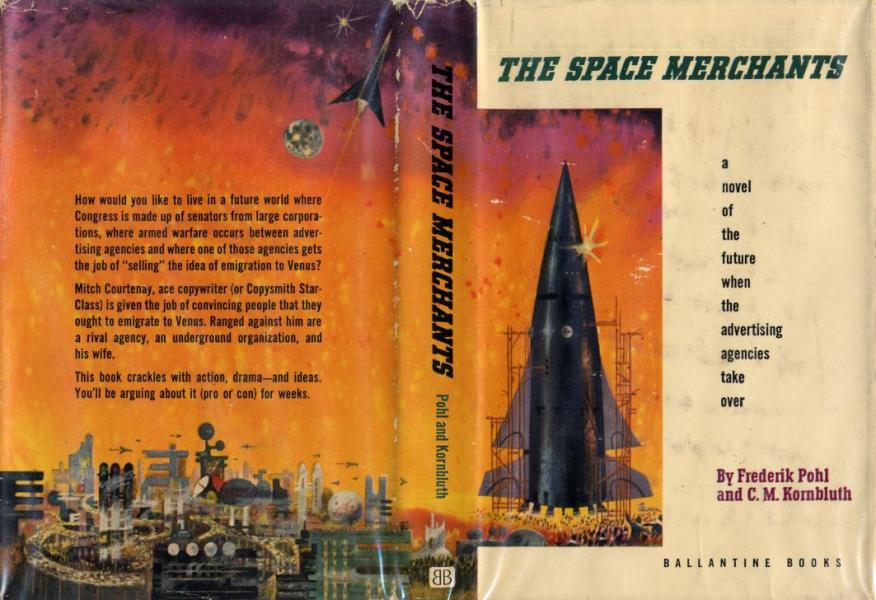
The Space Merchants (1953) is a satirical science fiction novel by Frederik Pohl and C. M. Kornbluth that follows an advertising executive navigating a future where aggressive consumer capitalism has swallowed politics and daily life. The authors reunited three decades later for a direct sequel, The Merchants' War (1984), returning to the same satirical world. Together the two books form a compact bookend pair rather than an ongoing series.
- The Obernewtyn Chronicles
series9 books1987
similar byscience fictionfantasy+3 more
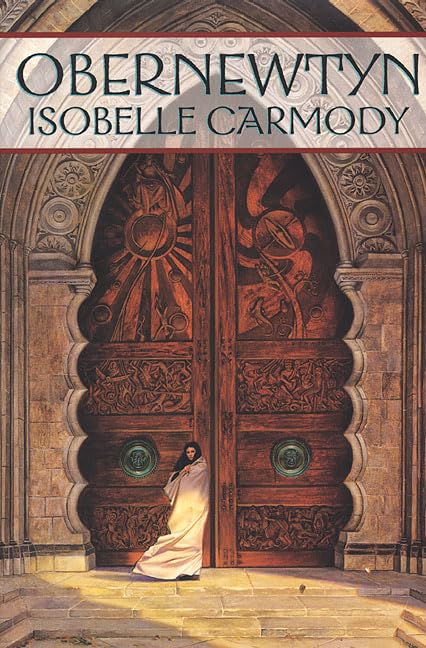
The Obernewtyn Chronicles is a series of science fiction and fantasy novels by Australian author Isobelle Carmody. The series has a post apocalyptic setting and depicts a world long after its destruction by a global nuclear holocaust.
- The Fury
series4 books1976
similar bytense+4 more
John Farris's The Fury centers on a teenage girl and boy with escalating psychic and telekinetic powers who become targets of a covert government program trying to weaponize them. The 1976 novel, adapted into Brian De Palma's 1978 film, gave rise to a string of later sequels following the same family's psychic bloodline across decades. Farris writes it as paranoid conspiracy thriller as much as horror, with the powers themselves treated as a violent, destabilizing force.
- The Eyes of Heisenberg
Frank Herbertstandalone novel1966
similar byscience fictionour worlddarktense
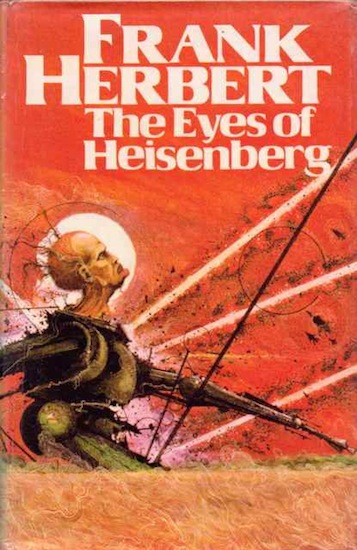
Tens of thousands of years in the future, Earth is ruled by the Optimen, a genetically engineered aristocracy that has made itself functionally immortal, while ordinary people, the Folk, live under strict reproductive control. When Harvey and Lizbeth Durant arrive to have their embryo genetically screened, the examining doctor finds something in the child no one has seen in a very long time: real potential for both fertility and life span, traits the Optimen have arrogated to themselves. Rather than destroy the embryo as policy demands, the doctor hesitates, setting off a chain of surveillance, suspicion and resistance. A tightly wound Frank Herbert thriller about genetic caste and rebellion.
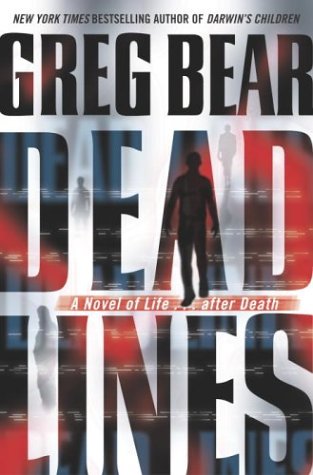
- Dead Lines
Greg Bearstandalone novel2004
similar byscience fictionour worlddark+2 more
From the flaps of the Ballantine first edition: "For the last two years, Peter Russell has mourned the death of one of his twin daughters - who was just ten when she was murdered. Recent news of his best friend's fatal heart attack has now come as another devastating blow. Divorced, despondent, and going nowhere in his career, Peter fears his life is circling the drain. Then Trans comes along. The brainchild of an upstart telecom company, Trans is (as its name suggests) a transcendent marvel, a sleek, handheld interpersonal communication device capable of flawless operation anywhere in the world, at any time. "A cell phone, but not" - transmitting with crystal clarity across a newly discovered, never-utilized bandwidth... and poised to spark a new-technology revolution. When its creators offer Peter a position on their team, it should be a golden opportunity for him. If only he wasn't seemingly going mad. Everywhere Peter turns, inexplicable apparitions are walking before him or reaching out in torment. After a chilling encounter with his own lost child he begins to grasp the terrifying truth: Trans is a Pandora's box that has tapped into a frequency not of this world... but of the next. And now, via this open channel to oblivion, the dead have gained access to the living. For Peter, and for humankind, a long shadowy night of the soul has descended, bringing with it the stuff of a horrifying nightmare from which they may never awaken."
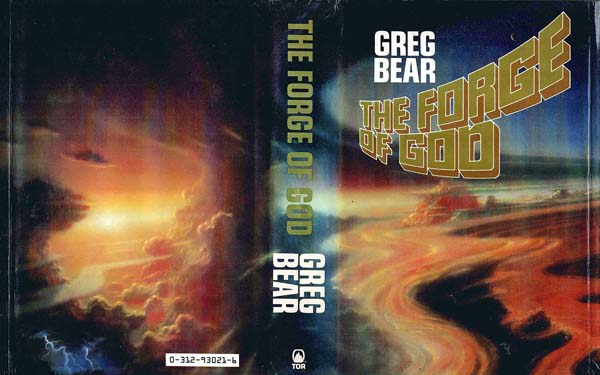
- Forge of God
series2 books1987
completed
similar byscience fictiondarktense+1 more
The Forge of God (1987) is Greg Bear's science fiction novel about Earth's discovery that it is the target of an incomprehensible, overwhelming alien attack, following scientists and ordinary people as they try to understand what is destroying the planet. Its 1992 sequel, Anvil of Stars, follows a group of young survivors sent on a mission of interstellar retaliation, continuing directly from the first book's ending.
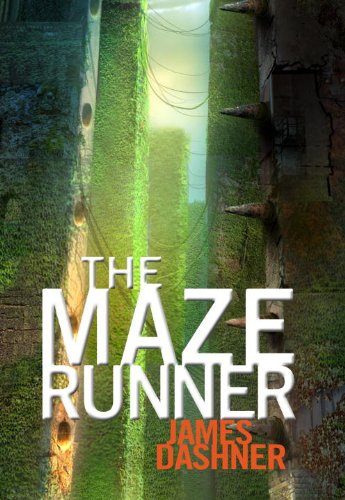
- Maze Runner
series11 books2009
similar byscience fictiontense+2 more
The Maze Runner is a series of young adult dystopian science fiction novels written by American author James Dashner. The series consists of the trilogy The Maze Runner (2009), The Scorch Trials (2010) and The Death Cure (2011), as well as two prequel novels, The Kill Order (2012) and The Fever Code (2016). A novella titled Crank Palace (2020) and a companion book titled The Maze Runner Files (2013) have also been released. A sequel trilogy in the series titled The Maze Cutter takes place 73 years following the events of The Death Cure and consists of the novels The Maze Cutter (2022), The Godhead Complex (2023), and The Infinite Glade (2025).
- Rats
series4 books1974
completed
similar bydarktense+2 more
The Rats, James Herbert's 1974 debut novel, imagines a plague of giant mutant rats overrunning London, told through a rotating cast of victims and survivors in the tradition of British disaster horror. It was followed by two sequels, Lair and Domain, which widen the outbreak first to the countryside and then to a besieged, apocalyptic city, completing a three-book trilogy.
- When the Sleeper Wakes
H. G. Wellsstandalone novel1899
similar byscience fictionour worlddarktense
Graham, an insomniac Englishman in 1890s London, takes a course of sleep-inducing drugs and falls into a coma that lasts two centuries. He wakes in the year 2100 to find his investments have compounded, through a ruling body called the White Council, into effective ownership of most of the world's wealth and power, making him, on paper, humanity's master, and in practice, its prisoner, held under guard while the Council governs in his name. A rebel faction led by a man named Ostrog frees him, hoping to use his symbolic authority to spark an uprising against the Council. An early H. G. Wells dystopia about inherited power and manufactured consent.