More like Hiddensee
anchored on:historical fantasyeurope19th centuryfairy tale retellingart and artistsreflective
but
- The Martian
George du Maurierstandalone novel1897
similar byreflectiveeurope19th century+2 more
The Martian, by George du Maurier, is a largely autobiographical novel published in 1898 and the author's third. It describes the life of Barty Josselin as told by his close friend Robert Maurice, starting from their school days in Paris in the 1850s. Written in long descriptive passages with very little dialogue and many digressions, the book had considerably less success in its time than its predecessor, the popular Trilby.
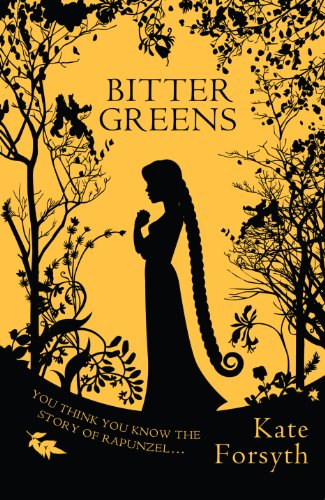
- Bitter Greens
Kate Forsythstandalone novel2012
similar byeuropehistorical fantasyart and artistsfairy tale retelling
"After Margherita's father steals parsley from the walled garden of the courtesan Selena Leonelli, he is threatened with having both hands cut off, unless he and his wife relinquish their precious little girl. Selena is the famous red-haired muse of the artist Tiziano, first painted by him in 1512 and still inspiring him at the time of his death. She is at the center of Renaissance life in Venice, a world of beauty and danger, seduction and betrayal, love and superstition. Locked away in a tower, Margherita sings in the hope that someone will hear her. One day, a young man does"--Amazon.com.
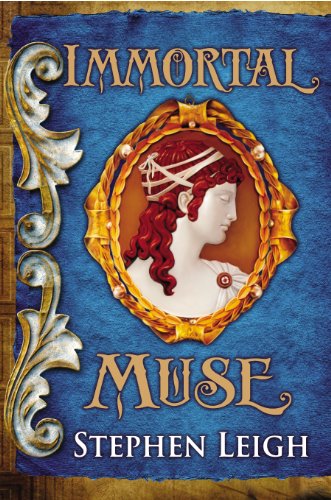
- Immortal Muse
Stephen Leighstandalone novel2014
similar byreflectiveeuropehistorical fantasyart and artists+1 more
Immortal Muse is a tale that takes the reader on a fascinating journey from Paris of the late 1300s with the alchemists Perenelle and Nicolas Flamel, to contemporary New York City. Along the way, there are interludes with Bernini in Rome in 1635; with Vivaldi in Venice of 1737; with Antoine-Laurent de Lavoisier and Robespierre in the Paris of the French Revolution; with William Blake and John Polidori in 1814; with Gustav Klimt in fin de siècle Vienna; with Charlotte Salomon in WWII France. And in modern-day New York, a complicated dance of love and violence finally brings a resolution to the centuries-old deadly feud.
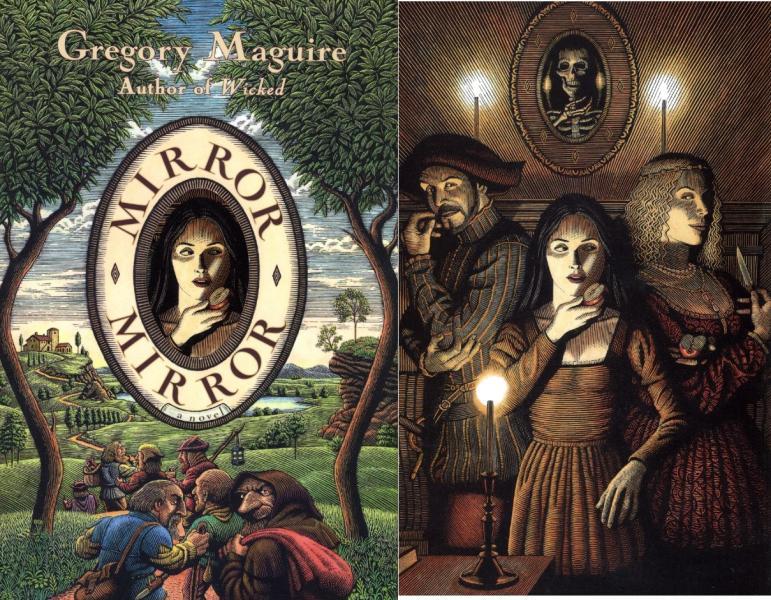
- Mirror Mirror
Gregory Maguirestandalone novel2003
similar byeuropehistorical fantasyfairy tale retelling+1 more
Mirror, Mirror is a fantasy novel by American writer Gregory Maguire, published in 2003. The novel is a revisionist version of the tale of Snow White set in rural Italy and featuring the historical Borgia family, with Lucrezia Borgia in the role of the Evil Queen.
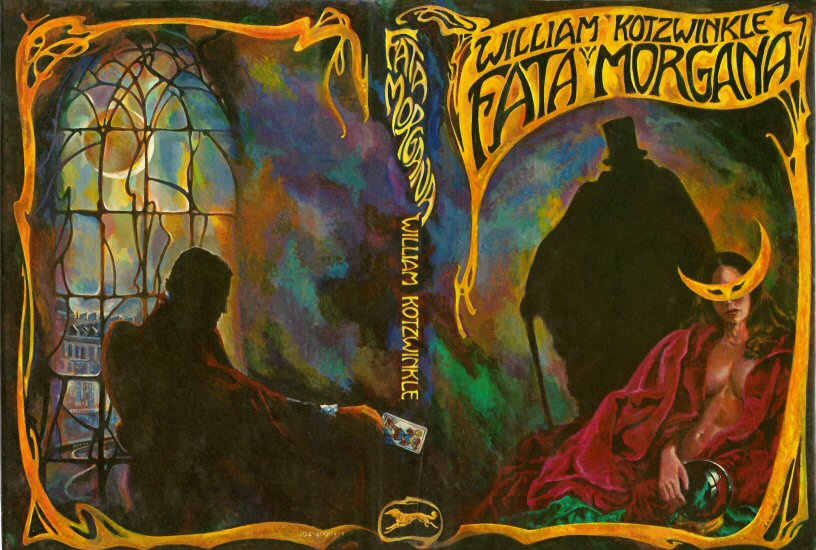
- Fata Morgana
William Kotzwinklestandalone novel1977
similar byeurope19th centuryhistorical fantasyeerie
From the flaps of the Knopf first edition: "In Fata Morgana a celebrated novelist turns conjurer to bring us a supremely theatrical magic show - a rich exotic entertainment of crime, treble-trickery, and legerdermain, with Europe as its stage and the golden leaders of the Uppercrust and the Underworld as its players. The time and place are Paris, 1861 - the extravagant capital of Louis Napoleon and his Empress Eugenie, the gaudy, blatant public arena of Great Whores and fabulous charlatans; the treacherous private labyrinth of Police Inspector Paul Picard and the human prey he stalks. Picard is a hunter of the purest instincts, with an appetite for the ladies, a taste for lemon tarts, and a policeman's nose for hard realities. As the book opens he is on his way to the Opera, for music and murder: among the guests is as elegant a killer as ever sliced his way through Parisian high society, and on his arm is the young woman he means to decapitate tonight. A strange encounter with them precipitates Picard into a new and (apparently) trivial assignment - a case that is fated to disrupt and then transform, irrevocably, his life. At first it seems routine: a man - Ric Lazare - has recently arrived in Paris and in a short time has captured the jaded attention and the favors of the entire city. His aura of opulence, his bewitching wife, Rene, and, above all, his unearthly fortune-telling machine have won him entree to the salons (and the bank vaults) of the most dazzling leaders of society, including, it is whispered, the Emperor himself. But, who - and what - is Lazare? Is he a crook? A master of illusions? A real magician? Or - more terrible - a reincarnation from an Older World? To find the answer, Picard must follow the thread of the man's past. His quest takes him from Paris to Vienna, Nuremberg, Budapest, and on to the dark, menacing valleys and steppes of eastern Hungary, uncovering a trail of deceit and violent death: a fabled toy maker driven to destroy himself and a lifetime's priceless creations... a man ruthlessly killed over a dice game... a beautiful woman purchased at auction, then stolen away... the sudden death of a priest. Beset by intimations of his own mortality, by a sense of inexplicable entrapment in a malign world of mechanical and deadly playthings, by a slowly suffocating conviction that he is undertaking a journey he has made before, Picard, caught up in the quickening pace, returns to Paris - and to a terrifying confrontation with his quarry and his own destiny."
- Villette
Charlotte Brontëstandalone novel1853
similar byreflective19th centuryeuropecoming of ageidentity
Villette is an 1853 novel written by English author Charlotte Brontë. After an unspecified family disaster, the protagonist Lucy Snowe travels from her native England to the fictional Continental city of Villette to teach at a girls' school, where she is drawn into adventure and romance.
- Here Lies Arthur
Philip Reevestandalone novel2007
similar byreflectivehistorical fantasycoming of ageidentity+1 more
Here Lies Arthur is a young-adult novel by Philip Reeve, published by Scholastic in 2007. Set in fifth or sixth century Britain and the Anglo-Saxon invasion, it features a girl who participates in the deliberate construction of legendary King Arthur during the man's lifetime, orchestrated by a bard. Reeve calls it a back-creation: not a genuine historical novel as it is not based on actual specific events; rather it is "back-created" from the legends, giving them a "realistic" origin.
- The Alvin Maker Saga
series15 books1986
similar by19th centuryhistorical fantasycoming of age+1 more
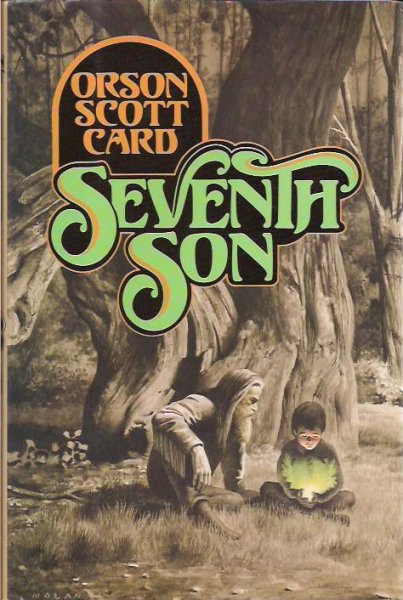
The Tales of Alvin Maker is a series of seven alternate history fantasy novels written by American novelist Orson Scott Card, published from 1987 to 2026. They explore the experiences of a young man, Alvin Miller, who realizes he has incredible powers for creating and shaping things around him.
- Lent
Jo Waltonstandalone novel2019
similar byreflectiveeuropehistorical fantasyidentity
"Young Girolamo's life is a series of miracles. It's a miracle that he can see demons, plain as day, and that he can cast them out with the force of his will. It's a miracle that he's friends with Pico della Mirandola, the Count of Concordia. It's a miracle that when Girolamo visits the deathbed of Lorenzo "the Magnificent," the dying Medici is wreathed in celestial light, a surprise to everyone, Lorenzo included. It's a miracle that when Charles VIII of France invades northern Italy, Girolamo meets him in the field, and convinces him to not only spare Florence but also protect it. It's a miracle than whenever Girolamo preaches, crowds swoon. It's a miracle that, despite the Pope's determination to bring young Girolamo to heel, he's still on the loose...and, now, running Florence in all but name. That's only the beginning. Because Girolamo Savanarola is not who--or what--he thinks he is. He will discover the truth about himself at the most startling possible time. And this will be only the beginning of his many lives." - publisher
- The Salt Roads
Nalo Hopkinsonstandalone novel2003
similar byreflective19th centuryeuropehistorical fantasy+1 more
Jeanne Duval, the ginger-haired entertainer, is descended from African slaves and white sailors. It is twilight, and she argues with her lover Charles Baudelaire in his Paris apartment. Mer, plantation slave and doctor, has healing hands though her spirit is sickened. She both hungers for and dreads liberation, and longs for the gods to take her home. Thais, a beauty from Alexandria, was sold into slavery and prostitution as a girl. Impelled to seek a glorious revelation, she will travel the long hot roads to Jerusalem. (adapted from information stated with the first edition)
- Martin Dressler: The Tale of an American Dreamer
Steven Millhauserstandalone novel1996
similar byreflective19th centuryart and artistsidentity
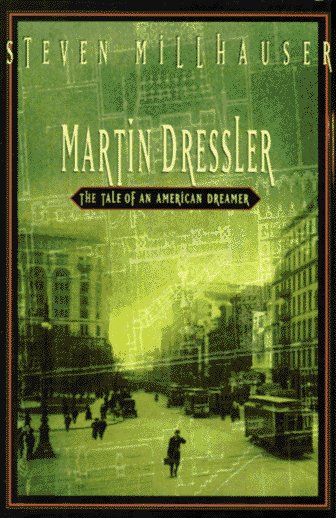
Martin Dressler: The Tale of an American Dreamer is a 1996 novel by Steven Millhauser. It won the 1997 Pulitzer Prize for Fiction and was a finalist for the 1996 National Book Award. It follows the exploits of Martin Dressler, a young, optimistic entrepreneur, in late nineteenth-century New York City. It vividly evokes its time and place through elaborate description.
- Perfume
Patrick Süskindstandalone novel1985
similar byeuropehistorical fantasyart and artistseerie+1 more
Perfume: The Story of a Murderer is a 1985 literary historical fantasy novel by German writer Patrick Süskind. The novel explores the sense of smell and its relationship with the emotional meanings that scents may have.
- The Stress of Her Regard Universe
series3 books1989
similar byhistorical fantasy19th century+2 more
Tim Powers's The Stress of Her Regard reimagines the lives of Byron, Shelley, and Keats through a secret history in which they are stalked and inspired by a nephilim, a shape-shifting vampiric being that acts as a deadly muse. Physician Michael Crawford is drawn into their orbit after inadvertently marrying himself to one of the creatures, setting off a pursuit across the Alps to break her hold on him. The 2012 sequel, Hide Me Among the Graves, moves the same secret history forward into Victorian London.
- Confessions of an Ugly Stepsister
Gregory Maguirestandalone novel1999
similar byreflectiveeuropefairy tale retellingidentity
Confessions of an Ugly Stepsister is a 1999 fantasy novel by American writer Gregory Maguire, retelling the tale of Cinderella through the eyes of one of her "ugly stepsisters." In 2002, the book was adapted into a TV movie of the same name directed by Gavin Millar. The book is dedicated to Andy Newman, Maguire's husband.
- The Professor
Charlotte Brontëstandalone novel1857
similar byreflectiveeurope19th centuryidentity
The Professor, A Tale. was the first novel by English author Charlotte Brontë. It was written in 1846 before Jane Eyre, but was rejected by many publishing houses. It was eventually published, posthumously, in 1857, with the approval of Charlotte Brontë's widower, Arthur Bell Nicholls, who took on the task of reviewing and editing the text.
- The Raven King
series13 books1996
similar by19th centuryhistorical fantasy+1 more
Susanna Clarke's Jonathan Strange & Mr Norrell reintroduces magic to an alternate nineteenth-century England, centering on the prickly rivalry between the two title magicians as they revive a lost English tradition. The linked collection The Ladies of Grace Adieu, which includes the earlier story "Mr Simonelli, or the Fairy Widower," explores the same magical history from other corners of England and refers back to the legendary Raven King, said to have created English magic centuries before. The two books share a setting and mythology rather than a single sequential plot.
- A Far Better Thing
H. G. Parrystandalone novel2025
similar byeurope19th centuryhistorical fantasyfairy tale retelling
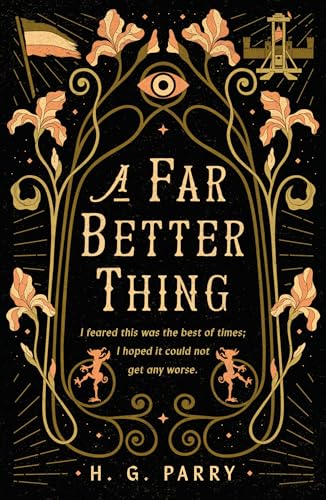
A Far Better Thing is a 2025 historical fantasy novel by New Zealand author H. G. Parry. It was first published in June 2025 in the United States by Tor Books. The book is a retelling of Charles Dickens's 1859 historical novel A Tale of Two Cities with fairy changelings.
- Immortal
Traci L. Slattonstandalone novel2008
similar byreflectiveeuropeart and artistshistorical fantasyidentity
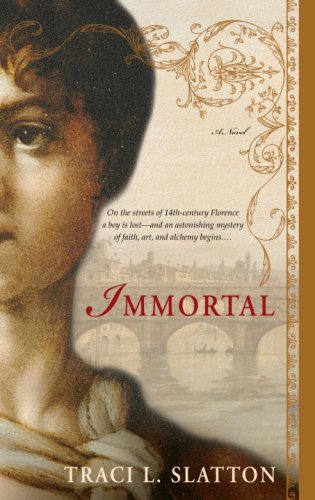
In an age of wonderous beauty and terrible secrets,one man searches for his destiny...In the majestic heart of Florence, a beautiful golden-haired boy is abandoned and subjected to cruelty beyond words. But Luca Bastardo is anything but an ordinary boy. Across two centuries of passion and intrigue, Luca will discover an astonishing gift--one that will lead him to embrace the ancient mysteries of alchemy and healing and to become a trusted confidant to the powerful Medicis...even as he faces persecution from a sadistic cabal determined to wrest his secrets for themselves.But as the Black Death and the Inquisition wreak havoc on his beloved city, Luca's survival lies in the quest to solve two riddles. One is the enigma of his parents and his ageless beauty. The other is a choice between immortality and the only chance to find his one true love. As Luca journeys through the heights of the Renaissance, befriends Giotto and Leonardo Da Vinci--140 years apart--and pursues the most closely guarded secrets of religious faith and science for the answers to his own burning questions, his remarkable search will not only change him...but will change the course of history.From the Trade Paperback edition.
- The Little Animals
Sarah Tolmiestandalone novel2019
similar byreflectiveeuropehistorical fantasyart and artists
The Little Animals is a 2019 historical fantasy novel by Sarah Tolmie, about Antonie van Leeuwenhoek.
- The Black Throne
Roger Zelazny & Fred Saberhagenstandalone novel1990
similar byeurope19th centuryart and artistseerie
WorldCat: While following a childhood friend, a beautiful woman named Annie, who has fled for Europe on a mysterious black ship, Edgar Perry finds himself living out the stories written by his alter ego, Edgar Allan Poe, plunging him into a world where apes commit murder, ravens talk, and lead can be turned into gold.
- Zanoni
Edward Bulwer-Lyttonstandalone novel1842
similar byreflectiveeurope19th century
Zanoni is an 1842 novel by Edward Bulwer-Lytton, a story of love and occult aspiration. By way of framing device, the author says: "... It so chanced that some years ago, in my younger days, whether of authorship or life, I felt the desire to make myself acquainted with the true origins and tenets of the singular sect known by the name of Rosicrucians." A manuscript came into his hands written in what Bulwer-Lytton described as an "unintelligible cipher", a manuscript which through the author's own interpretation became Zanoni.
- The Witch of Prague
F. Marion Crawfordstandalone novel1891
similar byeurope19th century+1 more
"The Witch of Prague (1891), with Byronic overtones, uses the motif of the Femme Fatale to explore powers of the mind." (underscore represents linked cross-reference) --Encyclopedia of Fantasy, Crawford biographical entry by Mike Ashley
- The Haunted Hotel
Wilkie Collinsstandalone novel1878
similar byeurope19th centuryeerie
Lord Montbarry breaks off his engagement to Agnes Lockwood and marries the Countess Narona, with whom he lives in a Venetian palace. When he dies, Agnes Lockwood becomes suspicious of the circumstances, and goes to Venice with other family members to investigate. Staying in Montbarry's former residence, they experience a haunting.