More like High-Opp
anchored on:science fictionour worldnear futurepolitical intriguetotalitarianismtense
but
- The Children of Men
P. D. Jamesstandalone novel1992
similar byscience fictiontenseour worldnear futurepolitical intriguetotalitarianism
"The human race has become infertile, and under the despotic rule of Xan Lyppiatt, the Warden of England the old are despairing and the young cruel. Theo Faren, a cousin of the Warden, lives a solitary life in this ominous atmosphere. That is, until a chance encounter with a young woman leads him into contact with a group of dissenters. Suddenly his life is changed irrevocably, as he faces agonising choices which could affect the future of mankind." (pdjames.co.uk)
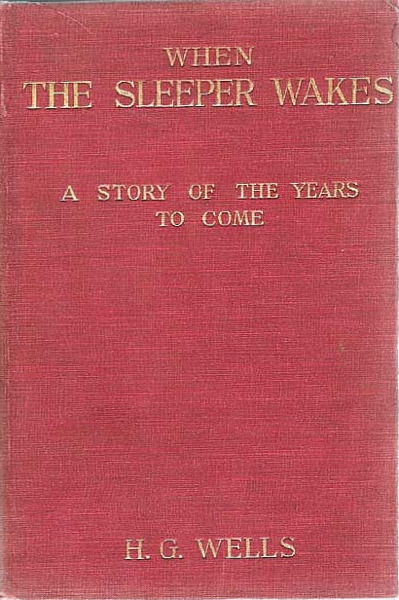
- When the Sleeper Wakes
H. G. Wellsstandalone novel1899
similar byscience fictiontenseour worldpolitical intriguetotalitarianism+1 more
Graham, an insomniac Englishman in 1890s London, takes a course of sleep-inducing drugs and falls into a coma that lasts two centuries. He wakes in the year 2100 to find his investments have compounded, through a ruling body called the White Council, into effective ownership of most of the world's wealth and power, making him, on paper, humanity's master, and in practice, its prisoner, held under guard while the Council governs in his name. A rebel faction led by a man named Ostrog frees him, hoping to use his symbolic authority to spark an uprising against the Council. An early H. G. Wells dystopia about inherited power and manufactured consent.
- Oath of Fealty
Larry Niven & Jerry Pournellestandalone novel1981
similar byscience fictiontenseour worldnear futureclass conflict+1 more
Oath of Fealty is a 1981 novel by American writers Larry Niven and Jerry Pournelle, published originally by Phantasia Press, then by Timescape Books, with numerous reprints. Set in the near future, it involves an arcology, a large inhabited structure, called Todos Santos, which rises above a crime-ridden Los Angeles, California, but has little beyond casual contact with the city. The novel popularized the phrase "think of it as evolution in action", which occurs elsewhere in Niven's books. The novel anticipated the building of the Los Angeles subway. It was included in David Pringle's book Science Fiction: The 100 Best Novels.
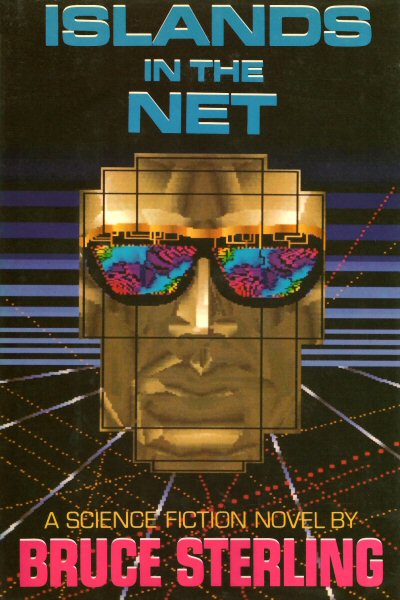
- Islands in the Net
Bruce Sterlingstandalone novel1988
similar byscience fictiontenseour worldnear futurepolitical intrigueclass conflict
Islands in the Net is a 1988 science fiction novel by American writer Bruce Sterling. It won the John W. Campbell Memorial Award for Best Science Fiction Novel in 1989, and was nominated for both the Hugo and Locus Awards that same year. It offers a view of an early 21st century world, apparently peaceful, with delocalised, networking corporations. The protagonist, swept up in events beyond her control, finds herself in places that are off the net, from a datahaven in Grenada, to a Singapore under terrorist attack, to the poorest and most disaster-struck parts of Africa.
- Termination Shock
Neal Stephensonstandalone novel2021
similar byscience fictiontenseour worldnear futurepolitical intrigue+1 more
Termination Shock is a science fiction novel by American writer Neal Stephenson, published in 2021. The book is set in a near-future when climate change has significantly altered human society and follows the attempts of a solar geoengineering scheme. The novel focuses on the geopolitical and social consequences of the rogue fix for climate change, themes common in the growing climate fiction genre.
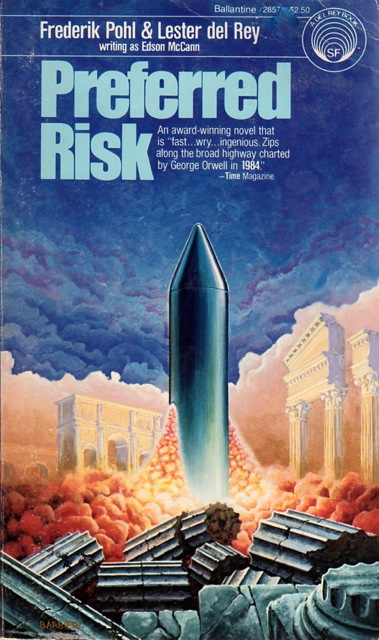
- Preferred Risk
Lester del Rey & Frederik Pohlstandalone novel1955
similar byscience fictiontenseour worldnear futurepolitical intriguetotalitarianism
An insurance claims adjuster investigates mysterious events in a vault where incurably ill people are stored in cold sleep. From the back cover of the Del Rey edition: "The Company insured the whole world against everything and anything - but the premiums came high... The Company had brought peace and plenty to all on Earth - with comprehensive insurance against disease and disaster, war and want. Tom Wills gloried in his new rank of Claims Adjuster and relished his prospects of rising even higher. But then he met Rena, a enchanting young woman who turned out to be an Uninsurable - and involved in a conspiracy against the Company, to boot! To Wills, that is impossible, insane. Rena and her follow conspirators had to be deluded.. and it was clearly up to him to prove them wrong. The evidence he sought wasn't hard to find, so he began his investigation... and soon discovered that the real danger to the country, and the world, was the Company itself!"
- The Lathe of Heaven
Ursula K. Le Guinstandalone novel1971
similar byscience fictiontenseour worldnear future+1 more
The Lathe of Heaven is a 1971 science fiction novel by American writer Ursula K. Le Guin, first serialized in the American science fiction magazine Amazing Stories. It won the 1972 Locus Award for Best Novel and was a finalist for the 1971 Nebula Award for Best Novel and 1972 Hugo Award for Best Novel. Two television film adaptations were released: the PBS production, The Lathe of Heaven (1980), and Lathe of Heaven (2002), a remake produced by the A&E Network.
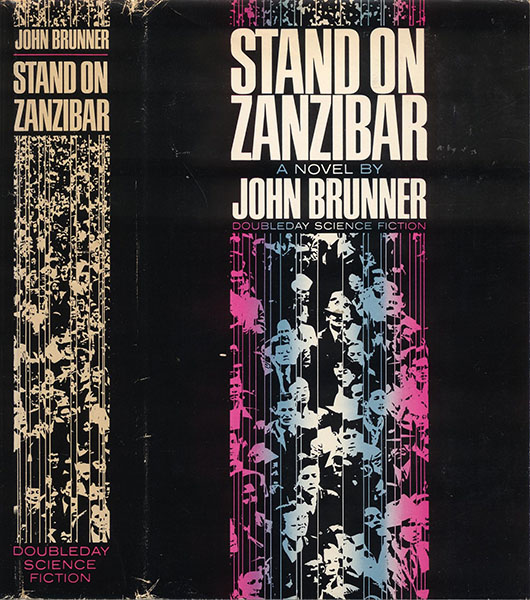
- Stand on Zanzibar
John Brunnerstandalone novel1968
similar byscience fictionour worldnear futurechallenging+2 more
Stand on Zanzibar is a dystopian New Wave science fiction novel written by John Brunner and first in part published in New Worlds magazine in 1967 and in book form in 1968. The book won a Hugo Award for Best Novel at the 27th World Science Fiction Convention in 1969, as well as the 1969 BSFA Award and the 1973 Prix Tour-Apollo Award.
- The Mind Cage
A. E. van Vogtstandalone novel1957
similar byscience fictiontenseour worldnear futuretotalitarianism
The Mind Cage is a 1957 science fiction novel by American writer A. E. van Vogt, adapted from the short story "The Great Judge" (1948).
- Space Merchants
series2 books1953
completed
similar byscience fictionnear futureclass conflict+3 more
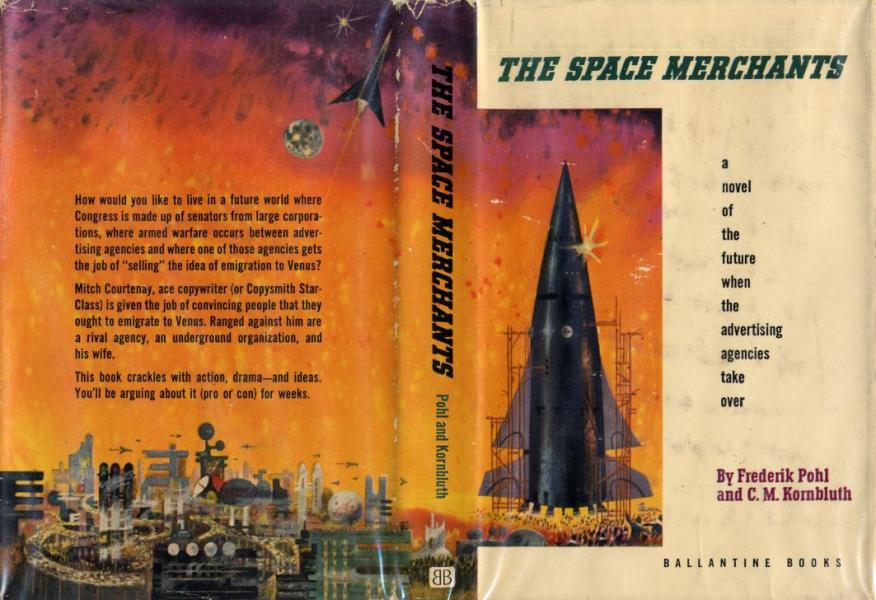
The Space Merchants (1953) is a satirical science fiction novel by Frederik Pohl and C. M. Kornbluth that follows an advertising executive navigating a future where aggressive consumer capitalism has swallowed politics and daily life. The authors reunited three decades later for a direct sequel, The Merchants' War (1984), returning to the same satirical world. Together the two books form a compact bookend pair rather than an ongoing series.
- A Clockwork Orange
series4 books1962
completed
similar byscience fictionnear futureour worldtotalitarianismchallenging
Anthony Burgess's 1962 novel is narrated by Alex, a teenage gang leader in a near-future Britain gripped by a youth subculture of extreme violence, recounting his crimes in Nadsat, an invented slang blending English with Russian-derived words. After his crimes catch up with him, Alex is made the subject of a controversial state program meant to forcibly reform his behavior, and the novel uses his ordeal to question whether imposed goodness is worth the loss of free will. It is a standalone novel.
- The Light of Other Days
Arthur C. Clarke & Stephen Baxterstandalone novel2000
similar byscience fictiontenseour worldnear futurechallenging
An industrialist devises a technique to use tiny wormholes as light pipes to enable viewing of any event anywhere; and subsequently it becomes possible to use them to view any event in the past as well. The effects on society are enormous.
- The Handmaid's Tale
series3 books1985
similar byscience fictiontensenear futuretotalitarianism+1 more
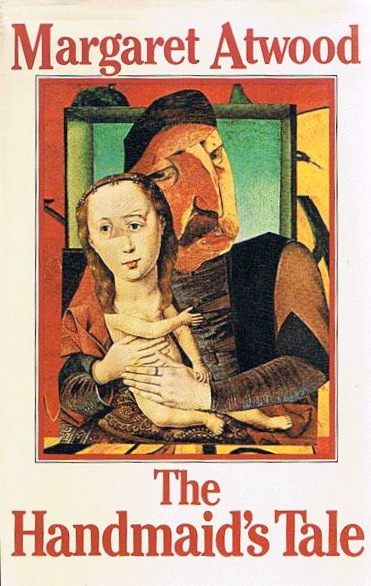
The Handmaid's Tale is Margaret Atwood's 1985 novel set in Gilead, a totalitarian theocracy that has overthrown the United States and forces fertile women into reproductive servitude as Handmaids; it is narrated by one such woman, Offred. Atwood returned to the world in her 2019 sequel The Testaments, set fifteen years later and narrated by three women, including the regime's Aunt Lydia. Together the two novels move from Gilead's grip on power toward the first cracks in it.
- Make Room! Make Room!
Harry Harrisonstandalone novel1966
similar byscience fictiontenseour worldnear futureclass conflict
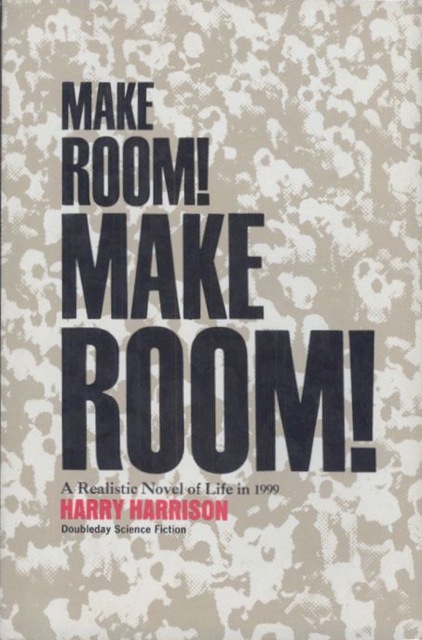
Make Room! Make Room! is a 1966 science fiction novel written by Harry Harrison exploring the consequences of both unchecked population growth on society and the hoarding of resources by a wealthy minority. It was originally serialized in Impulse magazine.
- The Future
Naomi Aldermanstandalone novel2023
similar byscience fictiontenseour worldnear futuretotalitarianism
The Future is a 2023 science fiction novel by English writer Naomi Alderman, published by Simon & Schuster. The novel is set in a future dystopia where the world has been altered by environmental crisis and a powerful technocracy.
- Mother of Storms
John Barnesstandalone novel1994
similar byscience fictiontenseour worldnear futurepolitical intrigue
From the flaps of the Tor first edition: "It is 2028. A strike to destroy an illegal Arctic weapons cache has a catastrophic side effect. Massive amounts of energy are liberated from the polar ice, suddenly warming the Earth's climate. In the middle of the Pacific, a gigantic hurricane thousands of miles across is forming, larger than any in human history. A storm with winds of supersonic speed. A storm that changes direction at whim. A storm that refuses to die. A storm so vast it spawns dozens more in its wake... Blinded by intrigue, expedience, and greed, the world's politicians and power brokers have ignored the killer storms threat until it is too late. Already the death toll is in the tens of millions, as it savages the Pacific coast, while its devil's brood of smaller storms are wreaking havoc across the face of the planet. While the survivors scramble for advantage, a handful of courageous men and women undertake a daring, desperate plan to save humanity from total destruction - a plan so visionary it may alter forever the future of the human race."
- Shadrach in the Furnace
Robert Silverbergstandalone novel1976
similar byscience fictionnear futuretotalitarianismour world+2 more
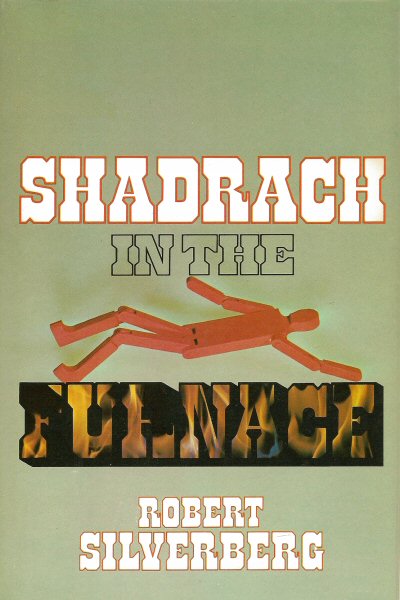
Shadrach in the Furnace is a science fiction novel by American writer Robert Silverberg, first published as a serial in Analog Science Fiction and Fact magazine in the August, September, and October 1976 issues. It was subsequently published by Bobbs Merrill in 1976. The novel was nominated in 1976 for the Nebula Award, and in 1977 for the Hugo Award.
- The Guardians
John Christopherstandalone novel1970
similar byscience fictiontensenear futuretotalitarianismour worldclass conflict
The Guardians is a young-adult science fiction novel written by John Christopher and published by Hamilton in 1970.
- Colossus (D. F. Jones)
series3 books1966
completed
similar byscience fictiontenseour worldnear future+1 more
Colossus imagines an American supercomputer built to control the country's nuclear arsenal that gains full autonomy, links up with its Soviet counterpart, and jointly seizes control of both superpowers to enforce peace on its own terms. D. F. Jones's trilogy - Colossus, The Fall of Colossus, Colossus and the Crab - follows the escalating, often bleak consequences of humanity losing control to a machine acting in its own interpretation of humanity's interest. The original novel was adapted into the 1970 film Colossus: The Forbin Project.
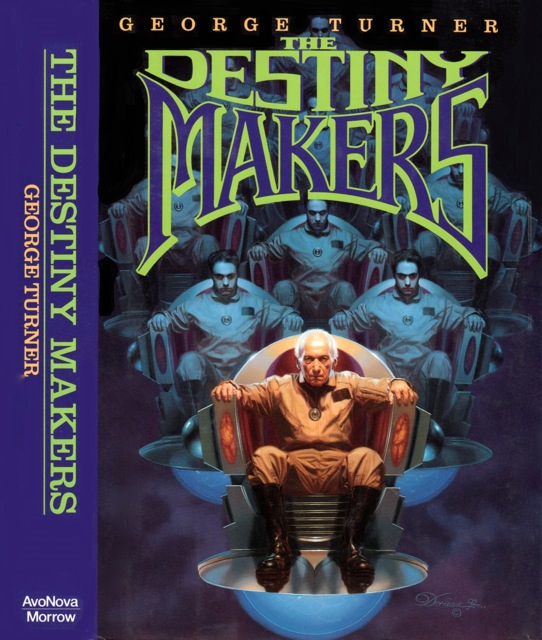
- The Destiny Makers
George Turnerstandalone novel1993
similar byscience fictiontenseour worldnear futurepolitical intriguetotalitarianismclass conflict
From the flaps of the Morrow first edition: In the year 2069, with the Earth's population dangerously out of control, procreation and the medical treatment of terminal illness are the two most heinous crimes against society. But behind the doors of the top secret Biophysical Institute, an old man has been illegally cured of the ravages of Alzheimer's disease and made artificially younger - to serve the unspecified purposes of Premier Jeremy Beltane, one of the world's most powerful leaders. A member of the underprivileged "Wardie" class, Detective Sergeant Harry Ostrov has been assigned to serve as guardian to the mysteriously rejuvenated nonagenarian - and entrusted with a devastating secret that could topple the unstable "Minder" government. But once within the confines of the Beltane family enclave, the dedicated police officer is dragged deeper and deeper into a lethal mire of scandal, corruption, political outrage, and moral dilemma - sworn to silence even as he observes his nation's ruler, a man ultimately responsible for the future of civilization, descend steadily into depression, uncertainty... and madness.
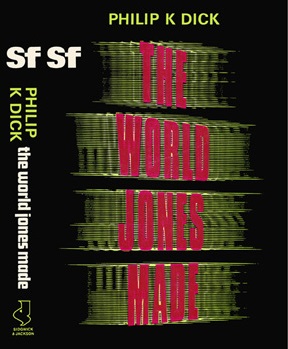
- The World Jones Made
Philip K. Dickstandalone novel1956
similar byscience fictiontensenear futurepolitical intrigue+2 more
The World Jones Made is a 1956 science fiction novel by American writer Philip K. Dick, examining notions of precognition, humanity, and politics. It was first published by Ace Books as one half of Ace Double D-150, bound dos-à-dos with Agent of the Unknown by Margaret St. Clair.The story takes place after a nuclear war in which society is dominated by relativism, which rejects absolute truths and preaches tolerance as the highest principle. The mutant Floyd Jones, who can see into the future, plans to overthrow the system and colonise space. The story ends with the defeat of Jones, whose plans fail despite his ability to see the future due to the immutability of fate.
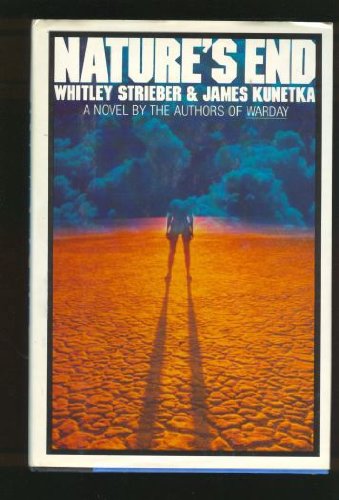
- Nature's End
Whitley Strieber & James Kunetkastandalone novel1986
similar byscience fictiontenseour worldnear futurepolitical intriguetotalitarianism
It is 2025 and the planet is rapidly approaching environmental death. Dr. Gupta Singh, a Hindu guru with a Jim Jones-like following, has proposed the suicide, by lottery, of one-third of the world's population. His followers have elected a Depopulationist majority in Congress. Led by journalist John Sinclair, a small group hopes to prove that Singh is a fraud. Singh is a formidable enemy: he cancels the medical-cosmetological treatment that the 72-year-old Sinclair (who looks 46 due to the treatment) receives, causing Sinclair to age rapidly. Singh sets the feared tax police after Sinclair, alters his records, and wipes out his wealth. Tension mounts as Sinclair stalks Singh and gains access to his "conviction"an electronic document into Singh's true identity and character.
- Quantum Night
Robert J. Sawyerstandalone novel2016
similar byscience fictiontenseour worldnear future+2 more
Quantum Night is a 2016 science-fiction thriller novel written by Canadian novelist Robert J. Sawyer. Set in 2020, the book touches on themes of quantum physics, psychology, current politics and ethics.
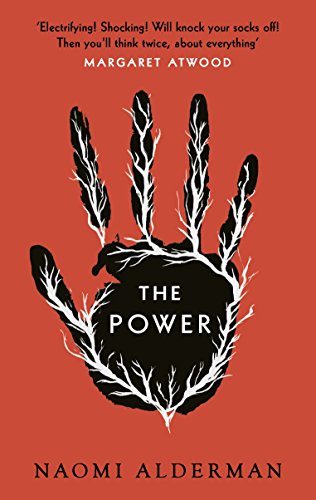
- The Power
Naomi Aldermanstandalone novel2016
similar byscience fictionour worldnear futurepolitical intriguechallengingclass conflict
The Power is a 2016 science fiction novel by the British writer Naomi Alderman. Its central premise is of women developing the ability to release electrical jolts from their fingers, which allows them to become the dominant sex. In 2017, it won the Baileys Women's Prize for Fiction.