More like Holy Fire
anchored on:science fictionimmortalitynear futuregenetic engineeringidentityeurope+1 more
but
- Stranger in a Strange Land
Robert A. Heinleinstandalone novel1961
similar byscience fictionreflectivenear futureidentitychallenging
Stranger in a Strange Land is a 1961 science fiction novel by the American author Robert A. Heinlein. It tells the story of Valentine Michael Smith, a human who comes to Earth in early adulthood after being born on the planet Mars and raised by Martians, and explores his interaction with and eventual transformation of Terran culture.
- I Will Fear No Evil
Robert A. Heinleinstandalone novel1970
similar byscience fictionreflectivenear futureimmortalityidentity
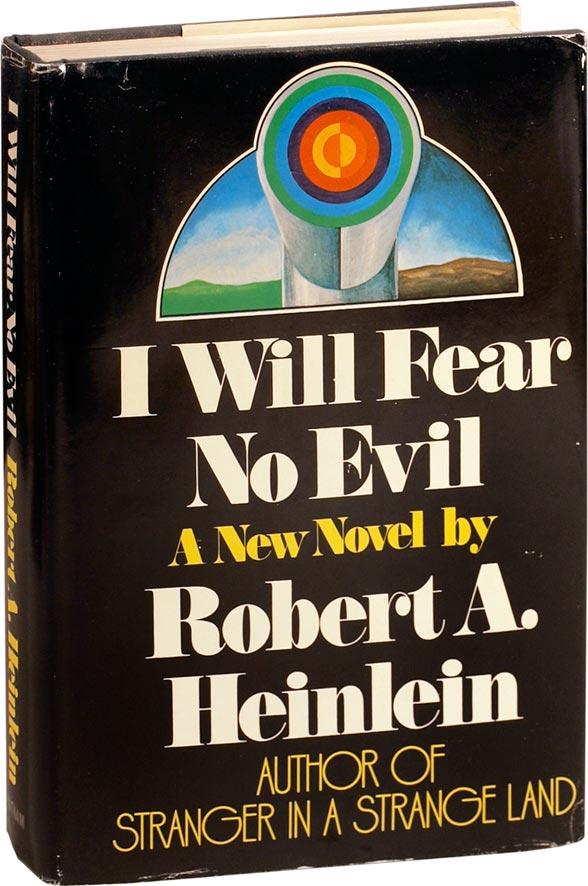
I Will Fear No Evil is a science fiction novel by American writer Robert A. Heinlein, originally serialised in Galaxy and published in hardcover in 1970. The title is taken from Psalm 23:4.
- Childhood's End
Arthur C. Clarkestandalone novel1953
similar byscience fictionreflectivenear futureidentity
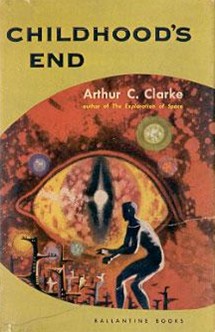
Childhood's End is a 1953 science fiction novel by the British author Arthur C. Clarke. The story follows a peaceful alien invasion of Earth by mysterious Overlords, whose arrival begins decades of apparent utopia under indirect alien rule, at the cost of human identity and culture.
- Slow River
Nicola Griffithstandalone novel1995
similar byscience fictionnear futureeuropegenetic engineeringidentity+1 more
Slow River is a science fiction novel by British writer Nicola Griffith, first published in 1995. It won the Nebula Award for Best Novel and the Lambda Literary Award. The novel received critical praise for its writing and setting, while its use of multiple narrative modes was criticised.
- The Speed of Dark
Elizabeth Moonstandalone novel2002
similar byscience fictionreflectivenear futuregenetic engineeringidentity
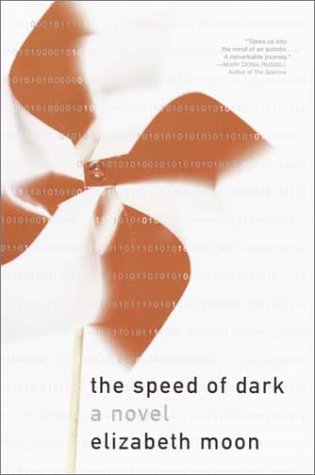
From the Penguin Random House website In the near future, disease will be a condition of the past. Most genetic defects will be removed at birth; the remaining during infancy. Lou Arrendale, a high-functioning autistic adult, is a member of the lost generation, born at the wrong time to reap the rewards of medical science. He lives a low-key, independent life. But then he is offered a chance to try a brand-new experimental "cure" for his condition. With this treatment Lou would think and act and be just like everyone else. But if he was suddenly free of autism, would he still be himself? Would he still love the same classical music — with its complications and resolutions? Would he still see the same colors and patterns in the world—shades and hues that others cannot see? Most important, would he still love Marjory, a woman who may never be able to reciprocate his feelings? Now Lou must decide if he should submit to a surgery that might completely change the way he views the world ... and the very essence of who he is.
- Genesis
Bernard Beckettstandalone novel2006
similar byscience fictionreflectivenear futureidentitychallenging
Genesis (2006) is a philosophical science fiction novel by New Zealand author Bernard Beckett. It won the 2007 Esther Glen Award for children's literature, and the 2007 New Zealand Post Book Awards for Children and Young Adults. As of 2008 it has been published in 22 countries.
- Why Call Them Back from Heaven?
Clifford D. Simakstandalone novel1967
similar byscience fictionreflectivenear futureimmortality
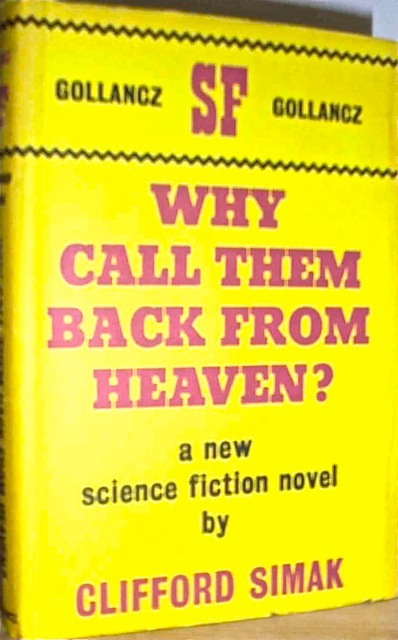
Why Call them Back From Heaven? is a 1967 science fiction novel by American writer Clifford D. Simak. It was the initial volume in the Ace Science Fiction Specials line.
- Void Star
Zachary Masonstandalone novel2017
similar byscience fictionreflectivenear futureimmortalityidentitychallenging
Void Star is a 2017 near-future science fiction novel by American writer Zachary Mason. It is his second novel, published after The Lost Books of the Odyssey. Set in a near-future San Francisco, the book explores themes of artificial intelligence, philosophy, linguistics and immortality.
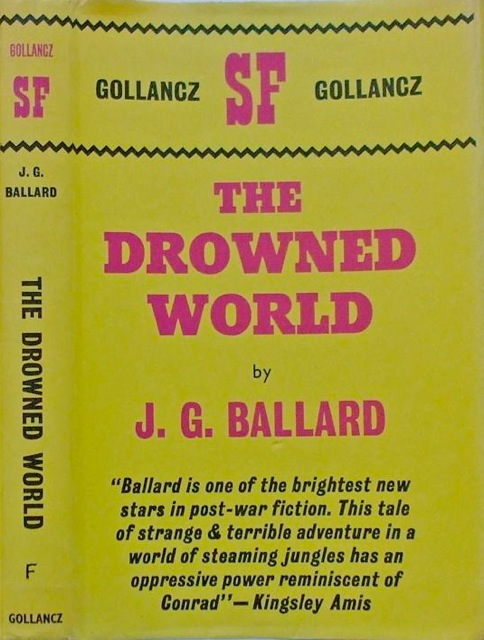
- The Drowned World
J. G. Ballardstandalone novel1962
similar byscience fictionreflectivenear future+1 more
The Drowned World is a 1962 science fiction novel by J. G. Ballard. It first appeared in shortened form in the January 1962 issue of the UK edition of Science Fiction Adventures and was published in book form later that year by Victor Gollancz Ltd in London; an American edition followed from Berkley Medallion. Critics have grouped The Drowned World with Ballard's early science-fiction novels as part of an "ambiguous apocalypse" sequence that also includes The Drought and The Crystal World, from the period in which he was developing the ideas he described as "inner space". Set in a future in which solar radiation has melted the polar ice caps and transformed London into a flooded tropical lagoon, the novel follows biologist Robert Kerans as he becomes increasingly drawn toward the altered environment rather than toward restoring the old social order.
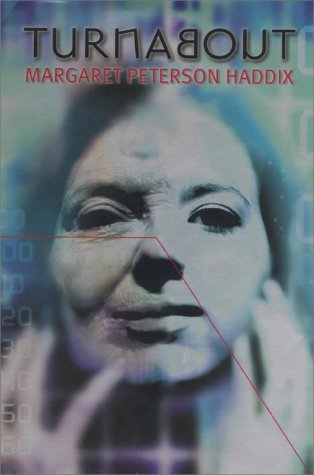
- Turnabout
Margaret Peterson Haddixstandalone novel2000
similar byscience fictionreflectivenear futureimmortalityidentity
Turnabout is a novel by Margaret Peterson Haddix, set in the future. It was first published in 2000 by the Aladdin division of Simon & Schuster, Inc. The novel switches between 2002 and 2085 by chapter.
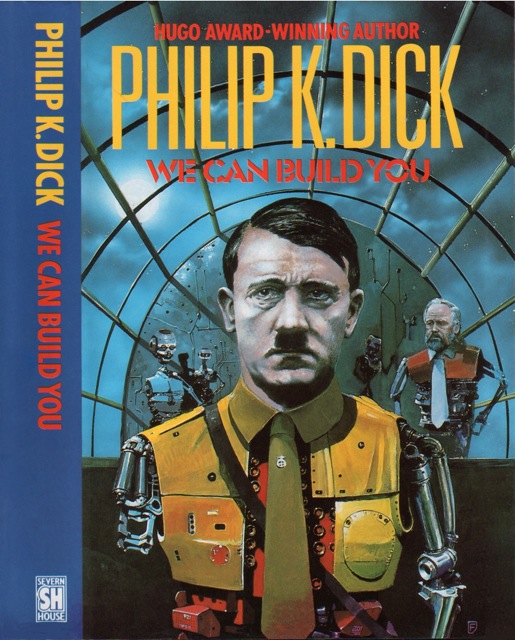
- We Can Build You
Philip K. Dickstandalone novel1972
similar byscience fictionreflectivenear futureidentity
We Can Build You is a 1972 science fiction novel by American writer Philip K. Dick. Written in 1962 as The First in Our Family, it remained unpublished until appearing in serial form as A. Lincoln, Simulacrum in the November 1969 and January 1970 issues of Amazing Stories magazine, re-titled by editor Ted White. The novel was issued as a mass market paperback original by DAW Books in 1972, its final title provided by publisher Donald A. Wollheim. Its first hardcover edition was published in Italy in 1976, and Vintage issued a trade paperback in 1994.
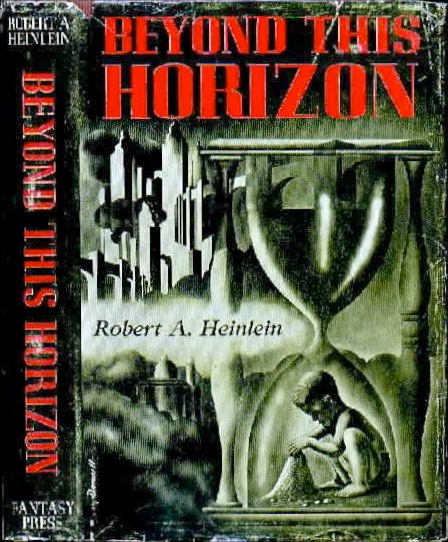
- Beyond This Horizon
Robert A. Heinleinstandalone novel1948
similar byscience fictionreflectivegenetic engineering+2 more
From the front flap of a 2001 Baen reprint: "Utopia has been achieved. For centuries, disease, hunger, poverty, and war have been things found only in the history tapes. And applied genetics has given men and women the bodies of athletes and a lifespan of over a century. They should all have been very happy... But Hamilton Felix is bored. And he is the culmination of a star line, each of his last thirty ancestors chosen for superior genes. Hamilton is, as far as genetics can produce one, the ultimate man. And this ultimate man can see no reason why the human race should survive, and has no intention of continuing the pointless comedy. However, Hamilton's life is about to become less boring. A secret cabal of revolutionaries who find utopia not just boring, but desperately in need of leaders who know just What Needs to be Done, are planning to revolt and put themselves in charge. Knowing of Hamilton's disenchantment with the modern world, they have recruited him to join their Glorious Revolution. Big mistake! The revolutionaries are about to find out that recruiting a superman was definitely not a good idea..."
- Never Let Me Go
Kazuo Ishigurostandalone novel2005
similar byscience fictionreflectivenear futureidentity
Never Let Me Go is a 2005 science fiction novel by the British author Kazuo Ishiguro. It was shortlisted for the 2005 Man Booker Prize, for the 2006 Arthur C. Clarke Award and the 2005 National Book Critics Circle Award. Time magazine named it the best novel of 2005. It included the novel in its '100 Best English-language novels published since 1923—the beginning of TIME'. It also received an ALA Alex Award in 2006. A film adaptation directed by Mark Romanek was released in 2010.
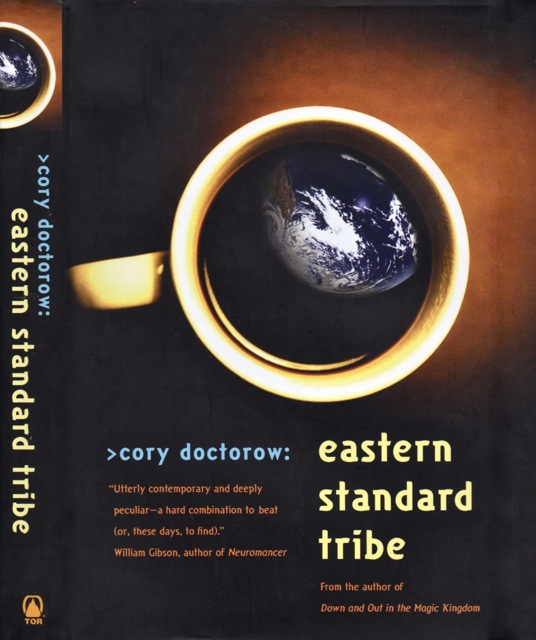
- Eastern Standard Tribe
Cory Doctorowstandalone novel2004
similar byscience fictionnear futureeuropeidentity+1 more
Eastern Standard Tribe is a 2004 science fiction novel by Canadian writer Cory Doctorow. Like Doctorow's first two books, the entire text was released under a Creative Commons license on Doctorow's website, allowing the whole text of the book to be read for free and distributed without the publisher's permission.
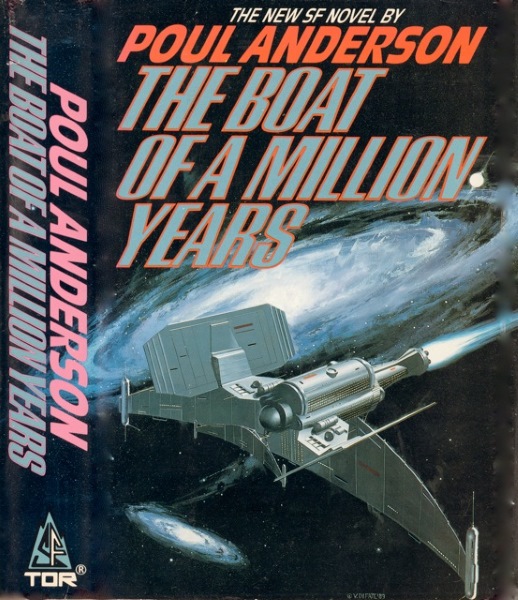
- The Boat of a Million Years
Poul Andersonstandalone novel1989
similar byscience fictionreflectiveimmortalityidentity
The Boat of a Million Years is a science fiction novel by American writer Poul Anderson, first published in 1989 and nominated for the Nebula Award for Best Novel that same year. It was also nominated for the Hugo Award for Best Novel and the Prometheus Award in 1990.
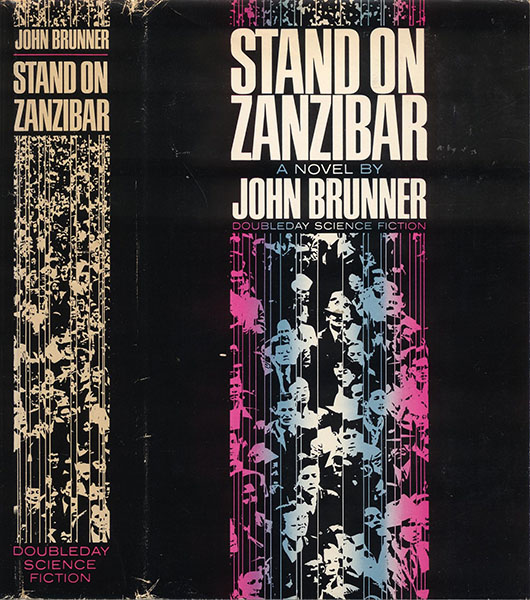
- Stand on Zanzibar
John Brunnerstandalone novel1968
similar byscience fictionnear futuregenetic engineeringchallenging
Stand on Zanzibar is a dystopian New Wave science fiction novel written by John Brunner and first in part published in New Worlds magazine in 1967 and in book form in 1968. The book won a Hugo Award for Best Novel at the 27th World Science Fiction Convention in 1969, as well as the 1969 BSFA Award and the 1973 Prix Tour-Apollo Award.
- The Hampdenshire Wonder
J. D. Beresfordstandalone novel1911
similar byscience fictionreflectivegenetic engineeringidentity+1 more
The Hampdenshire Wonder is a science fiction novel by J. D. Beresford, first published 1911. It is one of the first novels to involve a wunderkind. The child, Victor Stott, is the son of a famous cricket player. This origin is perhaps a reference to H. G. Wells's father Joseph Wells, a cricketer. The novel concerns his progress from infant to almost preternaturally clever child. Victor Stott is deformed subtly to allow for his powerful brain. A prominent, and unpleasant, character is the local minister. As Beresford's father was a minister, and Beresford was himself partially disabled, some see autobiographical aspects to the story. However this is unproven.
- Flashforward
Robert J. Sawyerstandalone novel1999
similar byscience fictionnear futureeuropeidentity
Flashforward is a science fiction novel by Canadian author Robert J. Sawyer first published in 1999. The novel is set in 2009. At CERN, the Large Hadron Collider accelerator is performing a run to search for the Higgs boson. The experiment has a unique side effect; the entire human race loses their consciousness for about two minutes. During that time, nearly everyone sees themselves roughly twenty-one years and six months in the future. Each individual experiences the future through the senses of their future self. This "flashforward" results in countless deaths and accidents involving vehicles, aircraft, and any other device needing human control at the time of the experiment. The novel was adapted into the 2009 television series FlashForward.
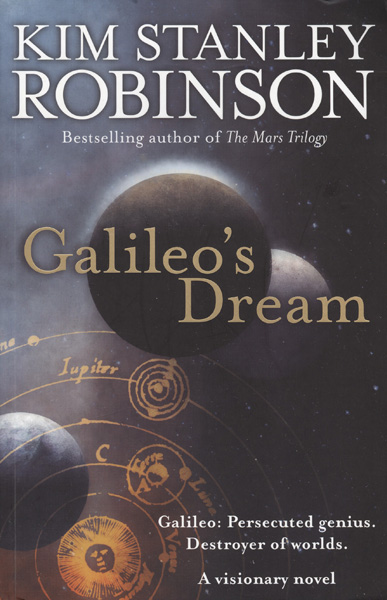
- Galileo's Dream
Kim Stanley Robinsonstandalone novel2009
similar byscience fictionreflectiveeuropechallenging
Galileo's Dream (2009) is a science fiction novel with elements of historical fiction, written by Kim Stanley Robinson. In the book, 17th-century scientist Galileo Galilei is visited by far-future time travelers living on the Galilean moons of Jupiter. Italicized portions of text within the novel are "mostly from Galileo's writing or that of his contemporaries."
- New York 2140
Kim Stanley Robinsonstandalone novel2017
similar byscience fictionreflectivenear future+1 more
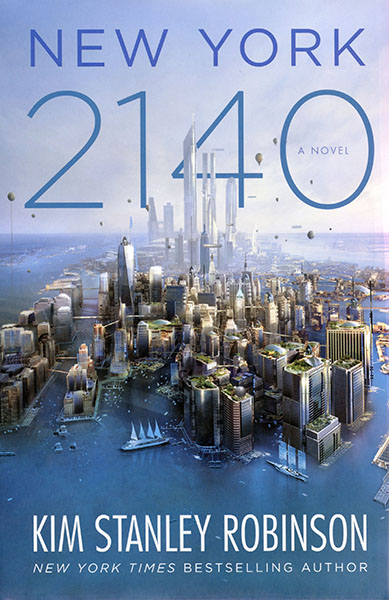
New York 2140 is a 2017 climate fiction novel by American science fiction author Kim Stanley Robinson. The novel is set in a New York City that has been flooded and altered by rising water.
- Friday
Robert A. Heinleinstandalone novel1982
similar byscience fictionnear futuregenetic engineeringidentity
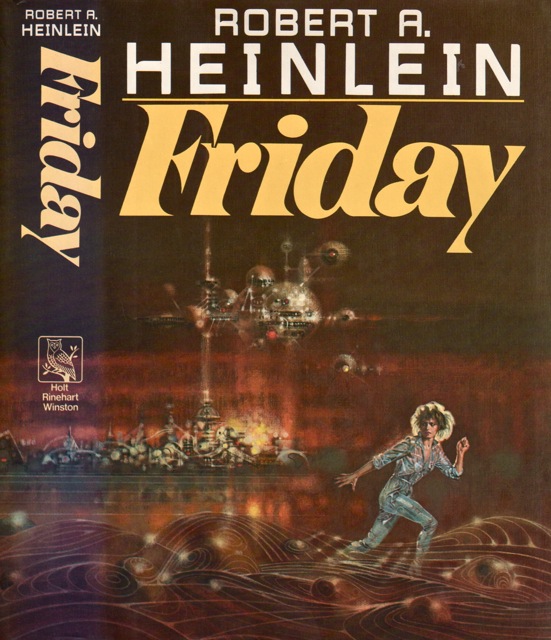
Friday is a 1982 science fiction novel by American writer Robert A. Heinlein. It is the story of a female "artificial person", the eponymous Friday, genetically engineered to be stronger, faster, smarter, and generally better than normal humans. Artificial humans are widely resented, and much of the story deals with Friday's struggle both against prejudice and to conceal her enhanced attributes from other humans. The story is set in a Balkanized 21st century, in which the nations of the North American continent have been split up into a number of smaller states.
- Sculpt Yourself
Savy Leiserstandalone novel2018
similar byscience fictionreflectivenear futuregenetic engineeringidentity+1 more
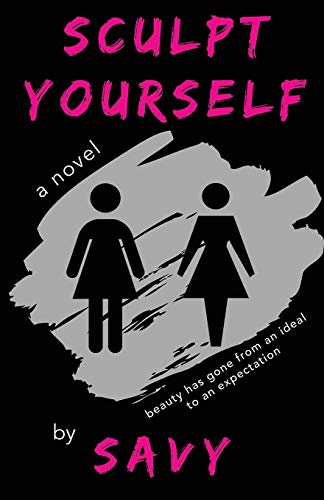
● "Lipamorph is a drug that lets you sculpt yourself. It loosens up the fat in your body, allowing you to choose your proportions. And it's just been legalized for sale in Chicago. Amber is a 24-year-old tech support worker by day, gay feminist blogger by night. She's been vocal about her disapproval of Lipamorph from the beginning, seeing it as another tool to reinforce patriarchal beauty standards; but as Lipamorph becomes more common, Amber's dissenting voice starts to matter less and less." ― quoted from this book's Amazon product page as of 2022-02-14.
- Blood Music
Greg Bearstandalone novel1985
similar byscience fictionnear futuregenetic engineering+1 more
Blood Music is a 1985 science fiction novel by American writer Greg Bear. It is an expanded version of a short story of the same title, originally published in the June 1983 issue of Analog and the winner of both the 1983 Nebula and 1984 Hugo awards for Best Novelette. The novel won the 1986 Prix Apollo Award, given to the best science fiction novel published in France during the preceding year, under the title La Musique du sang.
- Venus Plus X
Theodore Sturgeonstandalone novel1960
similar byscience fictionreflectiveidentitychallenging
Charlie Johns wakes in a featureless silver room with no memory of how he got there and a watch that's inexplicably running backward. He's been brought, how and by whom is never explained to him, to Ledom, an isolated, technologically advanced society whose members are all both male and female and have done away with fixed sex roles entirely. Guides walk him through Ledom's customs and machinery while making clear he's there to judge them before he can go home. Interwoven with Charlie's tour are chapters following an ordinary mid-century American family, setting the utopia against the world it's implicitly critiquing. Theodore Sturgeon's provocative novel about gender and social design.