More like Hotwire
anchored on:science fictionnear futurecyberpunkbig city
but
- Sprawl Trilogy
series10 books1981
similar bydarknear futurescience fictionbig cityartificial intelligencevirtual realitycyberpunk
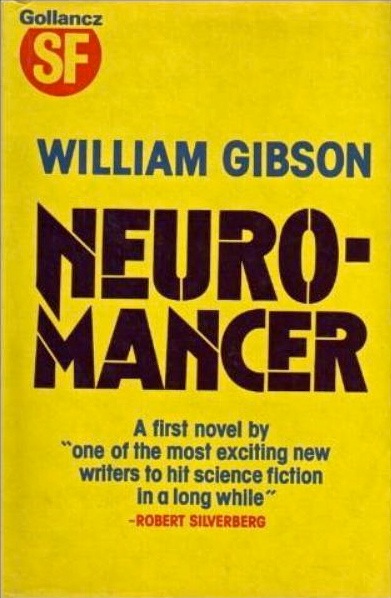
The Sprawl Trilogy is William Gibson's foundational cyberpunk sequence: Neuromancer (1984), in which hacker Case is drawn into a high-stakes heist alongside an artificial intelligence and a damaged ex-soldier, followed by Count Zero (1986) and Mona Lisa Overdrive (1988), which widen the same near-future world of corporate power and networked cyberspace to new characters. Johnny Mnemonic, an early short story set in the same fictional milieu, predates the novels and introduces the courier Molly Millions before her role in the trilogy. Together these works established much of cyberpunk's visual and thematic vocabulary.
- Bridge Trilogy
series4 books1990
similar bynear futurescience fictionbig citycyberpunk+4 more
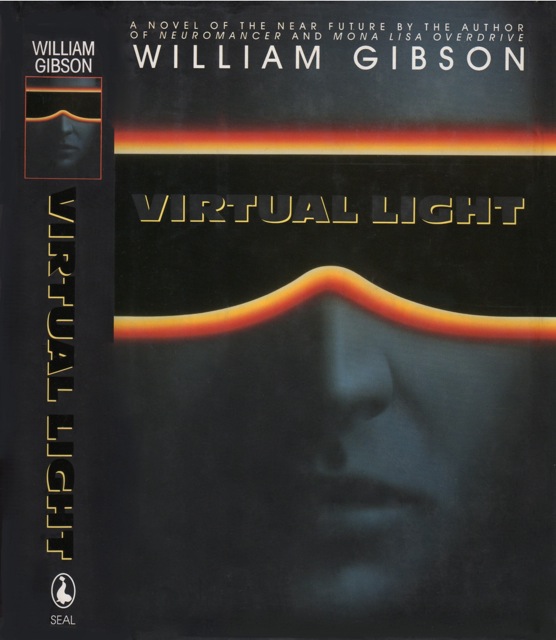
The Bridge trilogy is a series of novels by William Gibson, his second after the successful Sprawl trilogy. The trilogy comprises the novels Virtual Light (1993), Idoru (1996) and All Tomorrow's Parties (1999). A short story, "Skinner's Room", was originally composed for Visionary San Francisco, a 1990 museum exhibition exploring the future of San Francisco.
- Blade Runner Universe
series6 books1968
similar bydarknear futurescience fictionbig citycyberpunk+2 more
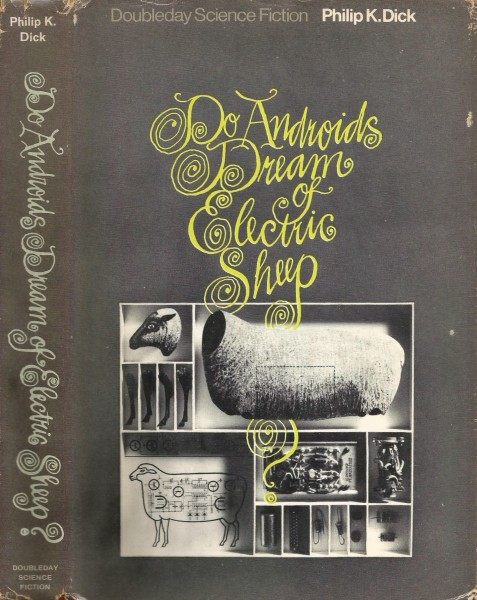
Philip K. Dick's 1968 novel Do Androids Dream of Electric Sheep? follows bounty hunter Rick Deckard as he tracks escaped androids through an irradiated, near-abandoned San Francisco, using the hunt to probe questions of empathy and what separates human from machine. The novel became the basis for Ridley Scott's 1982 film Blade Runner, and Marvel Comics later published an illustrated adaptation of that film. Together the two trace the story's path from prose original to screen and comic-page adaptation.
- Synners
Pat Cadiganstandalone novel1991
similar bydarknear futurescience fictionbig cityartificial intelligencevirtual realitycyberpunkour world
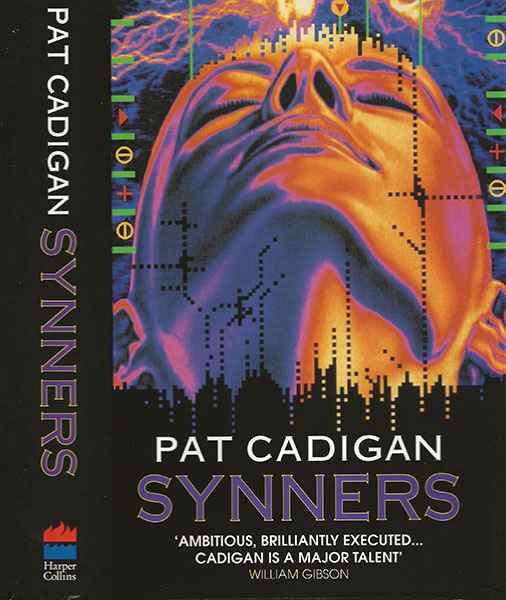
In Synners, the line between technology and humanity is hopelessly slim. A constant stream of new technology spawns crime before it hits the streets; the human mind and the external landscape have fused to the point where any encounter with "reality" is incidental.
- Halting State
series2 books2007
similar bynear futurescience fictionartificial intelligencecyberpunk+3 more
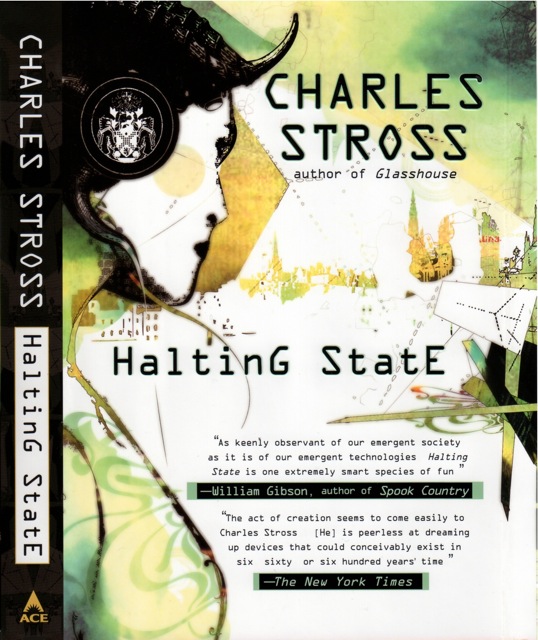
Charles Stross's Halting State opens as a near-future police procedural: a bank robbery inside a massively multiplayer online game turns out to mask a much larger cybercrime, investigated through shifting narrators using augmented-reality glasses and always-on networks. Its loose sequel, Rule 34, follows an Edinburgh police officer investigating a string of deaths linked by nothing but an obscure internet meme, in the same near-future Scotland. Both are standalone technothrillers connected by setting and tone rather than a continuing plot.
- Blood Music
Greg Bearstandalone novel1985
similar bydarknear futurescience fictioncyberpunknanotechnologyour world+1 more
Blood Music is a 1985 science fiction novel by American writer Greg Bear. It is an expanded version of a short story of the same title, originally published in the June 1983 issue of Analog and the winner of both the 1983 Nebula and 1984 Hugo awards for Best Novelette. The novel won the 1986 Prix Apollo Award, given to the best science fiction novel published in France during the preceding year, under the title La Musique du sang.
- Otherland
series6 books1996
similar bynear futurescience fictionartificial intelligencevirtual realitycyberpunkour world
Otherland is a science fiction tetralogy by American writer Tad Williams, published between 1996 and 2001. The story is set on Earth near the end of the 21st century, probably between 2082 and 2089, in a world where technology has advanced somewhat beyond the present. The most notable advancement is the widespread availability of full-immersion virtual reality installations, which allow people from all walks of life to access an online world, called simply the Net. Tad Williams weaves an intricate plot spanning four thick volumes, and creates a picture of a future society where virtual worlds are fully integrated into everyday life.
- Only Forward
Michael Marshall Smithstandalone novel1994
similar bydarknear futurescience fictionbig cityvirtual realitycyberpunk
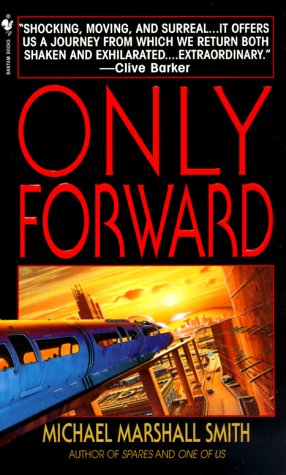
Only Forward is a science fiction novel by English writer Michael Marshall Smith; his debut novel, it was first published in 1994 by HarperCollins. It was the winner of the August Derleth Award (1995) and Philip K. Dick Award (2000).
- India 2047
series9 books2004
similar bynear futurescience fiction+3 more
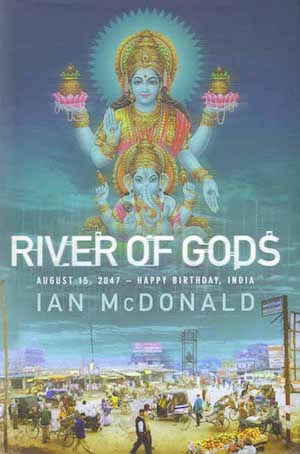
Set in an India a century after independence, this sequence follows the political and personal fallout of banned, illegally evolved artificial intelligences amid an India-Pakistan water war. River of Gods (2004) is the core novel; The Little Goddess and the linked stories collected in Cyberabad Days (2009) revisit the same Cyberabad setting from smaller, more intimate angles. Ian McDonald built it around near-future biotech, nanotech, and AI rather than a continuing cast of characters.
- The Shockwave Rider
John Brunnerstandalone novel1975
similar bydarknear futurescience fictionbig citycyberpunk
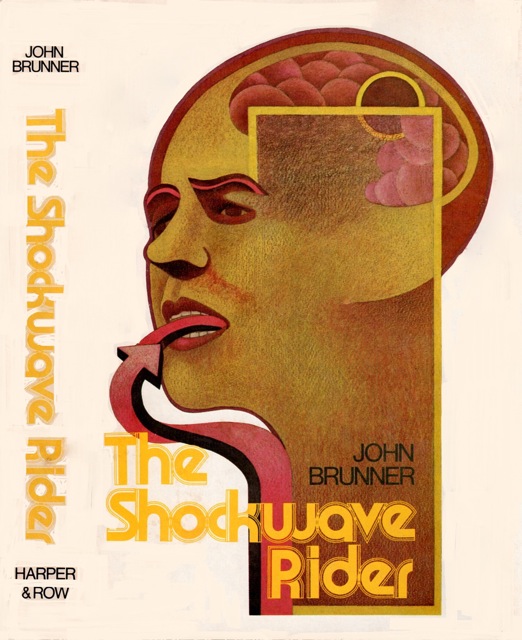
The Shockwave Rider is a science fiction novel by John Brunner, originally published in 1975. It is notable for its hero's use of computer hacking skills to escape pursuit in a dystopian future, and for the coining of the word "worm" to describe a program that propagates itself through a computer network. It also introduces the concept of a Delphi pool, perhaps derived from the RAND Corporation's Delphi method – a prediction market on world events which bears close resemblance to DARPA's controversial and cancelled Policy Analysis Market.
- The Night Mayor
Kim Newmanstandalone novel1989
similar bydarknear futurescience fictionbig cityvirtual realitycyberpunk
Welcome to the City made from a dream. But this isn't any dream; it is the dark and haunting nightmare of a killer. It is the near future and old-fashioned movies, or "flatties", have been replaced by Dreams, virtual reality scenarios written by professional Dreamers. When infamous criminal Truro Daine escapes imprisonment, he flees into the City, an artificial world of his own creation, where he rules as the all-powerful Night Mayor.
- Snow Crash
Neal Stephensonstandalone novel1992
similar bynear futurescience fictionbig cityvirtual realitycyberpunk+1 more
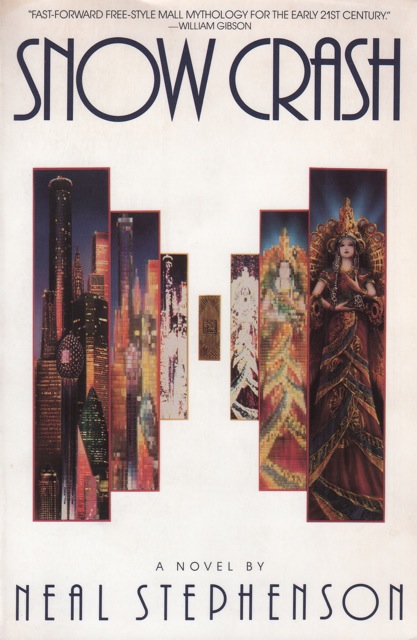
Snow Crash is a 1992 science fiction novel by Neal Stephenson. Like many of Stephenson's novels, its themes include history, linguistics, anthropology, archaeology, religion, computer science, politics, cryptography, memetics, and philosophy.
- Hardwired
series3 books1986
similar bynear futurescience fictioncyberpunkour world+3 more
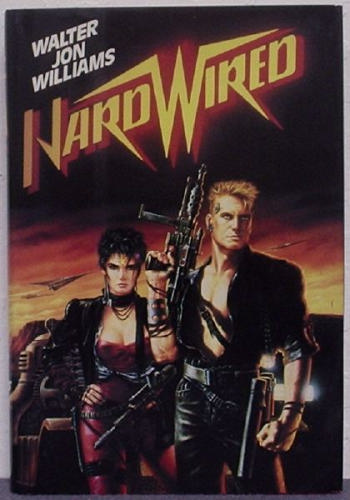
Walter Jon Williams' Hardwired (1986) is an early and influential cyberpunk novel. Voice of the Whirlwind, published three years later, is a loosely connected follow-up set in the same future, sharing its technological and political backdrop with a different cast of characters.
- BZRK
series3 books2012
similar bynear futurescience fictioncyberpunknanotechnologyour world+2 more
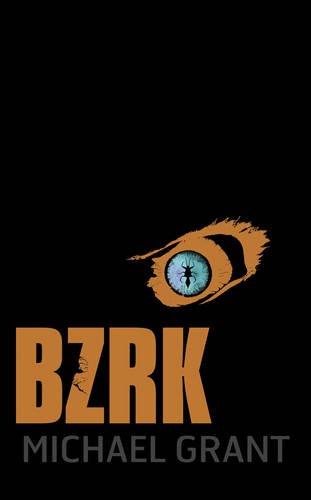
BZRK is a book series written by Michael Grant. The series consists of four books: BZRK, BZRK II: Reloaded, BZRK III: Apocalypse and BZRK: Origins. The series follows the interaction between two warring factions. On one side Charles and Benjamin Armstrong, owners of the Armstrong Fancy Gifts Corporation have a goal to turn the world into their version of utopia. The only people who can stop them are a group of teenagers with the codename BZRK. In 2011, Grant's BZRK had a multimedia online debut with gaming, apps and social media tie-ins beginning six months before the book's publication.
- Budayeen
series13 books1973
completed
similar bydarknear futurescience fictionbig citycyberpunk
George Alec Effinger's Budayeen sequence reimagines the French Quarter of New Orleans as a 22nd-century red-light district in a future Middle Eastern city, where body modification has gone electronic: cybernetic 'moddies' and 'daddies' let people plug in new personalities and skills at will. Its hero, hustler-turned-investigator Marid Audran, works the Budayeen's back alleys across the novels When Gravity Fails, A Fire in the Sun, and The Exile Kiss. Budayeen Nights, published after Effinger's death, gathers his shorter fiction set in the same neon-lit quarter.
- The Diamond Age
Neal Stephensonstandalone novel1995
similar bynear futurescience fictionbig cityartificial intelligencecyberpunknanotechnology
The Diamond Age: Or, A Young Lady's Illustrated Primer is a science fiction novel by Neal Stephenson. It is to some extent a Bildungsroman or coming-of-age story, focused on a young girl named Nell, set in a future world in which nanotechnology affects all aspects of life. The novel deals with themes of education, social class, ethnicity, and the nature of artificial intelligence. The Diamond Age was first published in 1995 by Bantam Books, as a Bantam Spectra hardcover edition. In 1996, it won both the Hugo and Locus Awards, and was shortlisted for the Nebula and other awards.
- Stand on Zanzibar
John Brunnerstandalone novel1968
similar bydarknear futurescience fictionbig cityour world
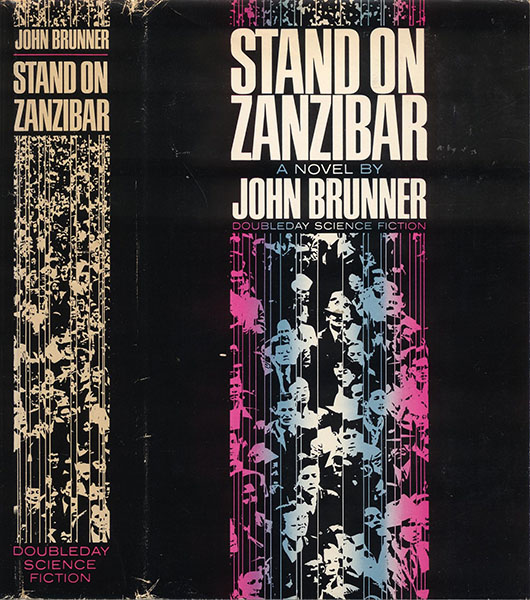
Stand on Zanzibar is a dystopian New Wave science fiction novel written by John Brunner and first in part published in New Worlds magazine in 1967 and in book form in 1968. The book won a Hugo Award for Best Novel at the 27th World Science Fiction Convention in 1969, as well as the 1969 BSFA Award and the 1973 Prix Tour-Apollo Award.
- A Clockwork Orange
series4 books1962
completed
similar bydarkscience fictionnear futurebig cityour world
Anthony Burgess's 1962 novel is narrated by Alex, a teenage gang leader in a near-future Britain gripped by a youth subculture of extreme violence, recounting his crimes in Nadsat, an invented slang blending English with Russian-derived words. After his crimes catch up with him, Alex is made the subject of a controversial state program meant to forcibly reform his behavior, and the novel uses his ordeal to question whether imposed goodness is worth the loss of free will. It is a standalone novel.
- Freenet
Steve Stantonstandalone novel2016
similar bynear futurescience fictionbig citycyberpunkour world+2 more
- Fairyland
Paul J. McAuleystandalone novel1995
similar bydarknear futurescience fictionartificial intelligencecyberpunk+1 more
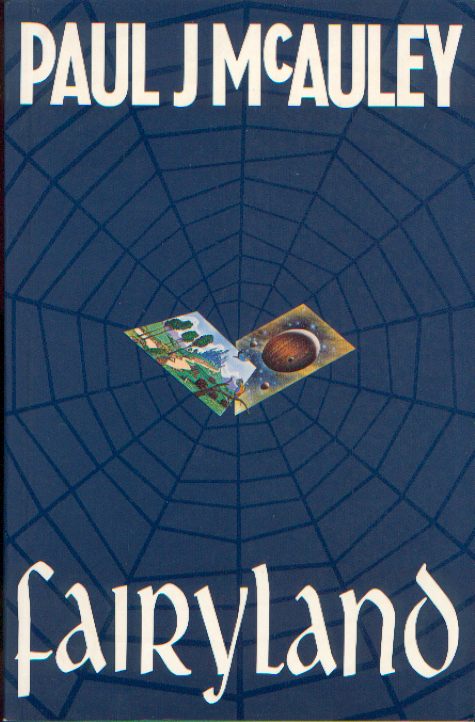
In a near-future Europe, gene-hacker Alex Sharkey has created a new life form: fairies - genetically-altered dolls with human intelligence. As the fairies develop their own societies, it become apparent that one group has sinister intentions, and Sharkey must try and put an end to their plans.
- Nexus 5
series3 books2012
similar bydarknear futurescience fictionartificial intelligenceour world+2 more
Nexus opens Ramez Naam's postcyberpunk trilogy in 2040 with scientist Kaden Lane, who works on Nexus, an experimental nano-drug that lets human minds be networked and reprogrammed, and finds himself caught between government and corporate interests once the technology's implications become clear. The trilogy continues through Crux and Apex, following the same central conflict over who controls the technology. Nexus tied for Best Novel at the 2014 Prometheus Awards and Apex won the 2015 Philip K. Dick Award.
- Grydscaen short fiction
series26 books2014
part of Grydscaen
similar bynear futurescience fictionbig citycyberpunk+3 more