Loreful
HomeDiscover
Search series, authors…⌘K
Loreful

Reading orders for SF/F series and shared universes — with your place kept in every one.

Explore

UniversesSeriesWorksAuthorsAtlas

Help

FAQAboutSite map

Account & legal

Sign inCreate accountPrivacyTerms

Data

Built on ISFDB, Wikipedia, Wikidata and Open Library. Curated reading orders carry their reasoning on the page; the rest follow publication order. Data sources & licenses

© Loreful · data: ISFDB · CC BY

More like Hull Zero Three

anchored on:science fictionspaceshipgeneration shipfar futurehard science fictionamnesia+3 more

but

Mood

The mood the book leaves you in.

  • The reading experience is propelled by journeys, exploration, and physical risk; excitement and forward momentum dominate over dread or introspection.
  • Joy and loss are deliberately mixed; the resolution grants characters something real while taking something else away, leaving warmth and sorrow together.
  • The book demands work from the reader — dense prose, difficult structure, unfamiliar ideas, or morally uncomfortable material — as part of its intended effect.
  • Grim events, cruelty, or despair dominate the atmosphere, and the book does not soften them with comfort or comic relief.
  • The atmosphere is quietly unsettling — wrongness, unease, and the uncanny pervade the book without necessarily escalating into overt horror.
  • The book is built to move the reader; character feeling is foregrounded and major scenes aim at a strong emotional response.
  • Humor is a primary aim and the prose plays for laughs — comic situations, wit, or dialogue produce sustained comedy, not occasional levity.
  • The book insists that things can improve; effort and decency are shown to matter, and the arc bends toward better outcomes even through hardship.
  • The book teaches as it goes — real facts, history, science, or craft are conveyed in enough depth that learning is part of the reading experience.
  • The book is designed to uplift and motivate, presenting perseverance or achievement in a way that invites the reader to aspire or act.
  • The overall register is cheerful and easygoing; stakes are kept gentle and the book avoids dwelling on pain or dread.
  • Withheld information drives the experience; the book sustains enigmas and secrets the reader wants resolved, whatever its genre.
  • The book is contemplative and inward-looking, giving more weight to thought, memory, and meaning than to external events.
  • The book works as comfort reading — low tension, a soothing pace, and an atmosphere the reader can unwind in.
  • Grief, loss, or melancholy set the dominant register, and the book lets sorrow stand rather than resolving it into comfort.
  • Sustained suspense is the point; the book keeps the reader braced for what happens next through danger, pressure, or impending revelation.
  • Playful invention and charm define the register — fanciful conceits, light absurdity, and a narration that delights in its own oddity.

About

What the story runs on.

  • Stories in which extraterrestrial beings are central — as characters, cultures, or the object of the plot.
  • Stories about venturing into space to explore — survey missions, astronauts, and the frontier of the unknown beyond Earth.
  • Stories about minds with paranormal abilities — telepathy, telekinesis, precognition, empathy — and how societies handle those who have them.
  • Stories structured as a quest — a journey undertaken to find, deliver, or destroy something of great import.
  • Stories in which staying alive against nature, catastrophe, or scarcity is the central problem.
  • Stories of lovers kept apart by law, family, faith, or station, where the obstacle to love is the plot.
  • Stories of growing up — a young protagonist crossing from childhood into adult knowledge and responsibility.
  • Stories about who a character truly is — self-discovery, doubled lives, and the search for a self.
  • Stories in which a buried family truth — hidden parentage, crimes, or shames — surfaces and reorders the present.
  • Stories driven by maneuvering for power — factions, conspiracies, and statecraft conducted in shadow.
  • Stories in which war itself is the subject — combat, occupation, and what warfare does to soldiers and civilians.
  • Stories organized around investigating a killing — the case, the clues, and the pursuit of the killer, in any genre's clothing.

Shelf

Where it sits in the library.

    • Fiction built on magic or other supernatural elements that have no scientific explanation.
    • Secondary-world fantasy at large scale, where the fate of nations or the world turns on the protagonists' struggle.
    • Fantasy set in a recognizably modern city or contemporary world where the supernatural intrudes on everyday life.
    • Fantasy that blends in horror's atmosphere and imagery, keeping a fantastical frame around grim or frightening material.
    • Action-driven fantasy following warriors or rogues with personal stakes against sorcerous threats, rather than world-spanning conflicts.
    • Fantasy set in a real historical period or a close analogue of one, with magic woven into the era.
    • Fantasy in which protagonists cross from the ordinary world into another world through a portal or similar passage.
    • Fiction that retells or reworks a traditional fairy tale in a new form or setting.
    • Fantasy drawing directly on myths, legends, and folklore, retelling them or building on their figures and logic.
    • Fantasy of ghosts, vampires, shapeshifters, psychics, and similar phenomena, usually set in an otherwise ordinary world.
    • Fiction mixing science-fictional trappings with overtly magical or impossible elements in one setting.
    • Low-stakes fantasy emphasizing comfort, community, and everyday pleasures over conflict and peril.
    • Speculative fiction of pervasive moral ambiguity, violence, and cynicism that rejects heroic conventions — fantasy and SF alike.
      • Fiction that extrapolates from science and technology — future societies, space travel, or speculative inventions — within at least nominally natural laws.
      • Science fiction of interstellar scope — starships, galactic polities, and adventure across star systems.
      • Science fiction committed to scientific rigor, where technical plausibility constrains the story.
      • Science fiction centered on armed forces and warfare, told largely from a military point of view.
      • Science fiction of networked, corporate-dominated near futures, pairing high technology with social decay.
      • Science fiction styled on nineteenth-century steam-powered technology, often in a Victorian or pseudo-Victorian setting.
      • Fiction depicting an oppressive or catastrophic society, presented as a warning.
      • Fiction set after civilization's collapse, following survivors in the ruins of the old world.
      • Fiction in which characters move between past and future, and the mechanics or consequences of that travel drive the plot.
      • Fiction exploring a world where a historical event went differently and history diverged from ours.
      • Science fiction about humanity's first encounter and communication with an alien intelligence.
      • Science fiction in which extraterrestrial forces attack or occupy Earth and humanity resists.
      • Fiction whose primary aim is to frighten or unsettle the reader through dread, menace, or the monstrous.
      • Horror of vast, indifferent, incomprehensible entities before which humanity is insignificant, in the Lovecraft tradition.
      • Horror of decaying houses, buried family secrets, and oppressive atmosphere in the Gothic literary tradition.
      • Horror centered on hauntings and the returning dead.
      • Horror located in the mind — paranoia, obsession, and unreliable perception rather than external monsters.
      • Horror built around the reanimated dead and survival amid their outbreaks.
      • Horror defined by explicit, transgressive gore that refuses to cut away from violence.
      • Speculative fiction of the strange and uncanny that resists both natural explanation and standard genre categories.
      • Fiction organized around solving a crime or puzzle, typically following an investigator toward the identification of a culprit.
      • A puzzle-first mystery that lays out clues so the culprit's identity can be deduced before the reveal.
      • Crime fiction of moral ambiguity, fatalism, and hard-edged style, set among the corrupt and the doomed.
      • A mystery following the realistic routines of police work — forensics, interviews, and case-building.
      • A gentle mystery with an amateur sleuth, a small community, and violence kept off the page.
      • A mystery set in a past era, where the investigation works within that period's methods and society.
      • Fast-paced fiction driven by imminent danger, pursuit, or high-stakes conspiracy, built to sustain tension.
      • A thriller of espionage — agents, tradecraft, and intelligence services in conflict.
      • A thriller centered on lawyers and the courtroom, where litigation carries the suspense.
      • A thriller driven by detailed contemporary or near-future technology, often military or scientific.
      • A thriller whose tension comes from mental states and manipulation between characters rather than external action.
      • Fiction whose central plot is a romantic relationship and its development toward an emotionally satisfying resolution.
      • Romance in which one or both partners are supernatural beings, blending fantasy elements into the love story.
      • A fantasy-romance hybrid in which the romantic arc and the fantasy plot carry equal weight.
      • Romance set in a past era, with courtship shaped by the period's society and manners.
      • Romance set in the present day, without supernatural or historical elements.
      • Fiction set in a real past period, where the historical setting materially shapes characters and events.
        • General and literary fiction emphasizing prose style, character interiority, or formal ambition over genre plot conventions.
        • Fiction in a realistic world where magical events occur and are treated as ordinary, in the tradition of Latin American literature.
        • Fiction that ridicules people, institutions, or society in order to criticize them.
        • Fiction of dreamlike, irrational imagery and logic that breaks from realistic representation.
        • Fiction that plays with narrative convention through metafiction, fragmentation, and self-reference.
        • Fiction propelled by journeys, exploration, and physical peril, where action and survival carry the plot.
        • Adventure fiction of ships and seafaring — naval engagements, voyages, and life at sea.
        • Fiction of the American frontier West — gunmen, ranchers, and lawmen, typically in the late nineteenth century.
        • Fiction centered on soldiers, campaigns, and the experience of warfare, historical or imagined.
          • Fiction written primarily to amuse, using comedic situations, wit, or parody as its organizing principle.
            • Multi-generational fiction following a family or dynasty across decades, with inheritance and kinship as the through-line.
              • Fiction whose world runs on explicit game mechanics — levels, stats, and skills that characters can see and exploit.
                • Fiction about costumed or superpowered heroes and their conflicts with comparable villains.

                Practical

                How long a commitment, whether it stands alone, and whether it has finished.

                Tap a chip to ask for it · tap again to rule it out · once more to clear. Numbers show what would be left.

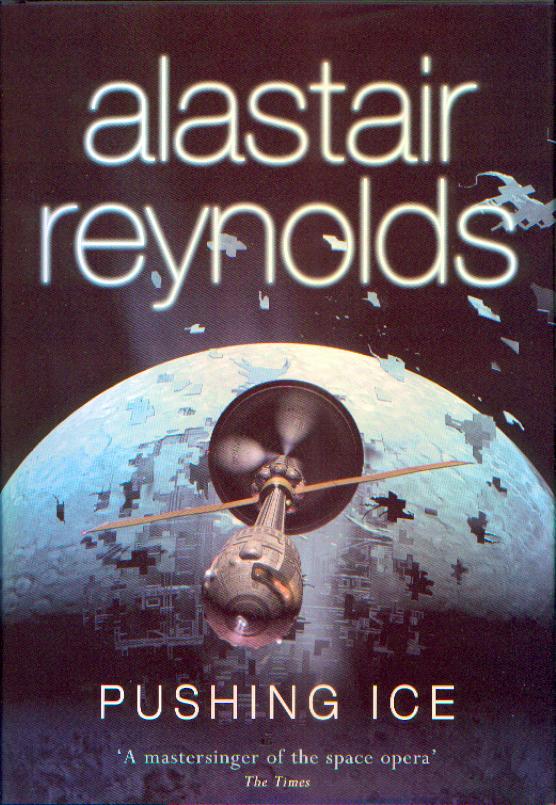
                • Cover of Pushing Ice
                  Pushing Ice

                  Alastair Reynolds · standalone novel · 2005

                  similar byfar futuresurvivalscience fictiontensehard science fictionspaceship+1 more

                  When Saturn's moon Janus suddenly takes off into interstellar space, an ice mining spaceship sent to investigate finds itself swept along into distant space until it ends up trapped in a gigantic alien structure, wherein the crew must prepare to reside for the foreseeable future.

                • Cover of The Status Civilization
                  The Status Civilization

                  Robert Sheckley · standalone novel · 1960

                  similar byfar futureamnesiasurvivalscience fictiontense

                  "Will Barrent had no memory of his crime ... but he found himself shipped across space to a brutal prison-planet. On Omega, his only chance to advance himself -- and stay alive -- is to commit an endless series of violent crimes. The average inmate's life expectancy from time of arrival is three years. Can Barrett survive, escape, and return to Earth to clear his name?" - From the cover of the 2007 Wildside paperback edition.

                • Cover of Tau Zero
                  Tau Zero

                  Poul Anderson · standalone novel · 1970

                  similar byfar futuresurvivalscience fictionhard science fictionspaceshipspace opera+1 more

                  During an epic voyage to a planet 30 light years away, the engines of the starship the 'Leonora Christine' are damaged. Unable to slow down, it attains light speed (the tau zero of the title). The disparity between time for those on board and external time becomes impossibly great. Eons and galaxies hurtle by, as the crew speed helplessly into the great unknown.

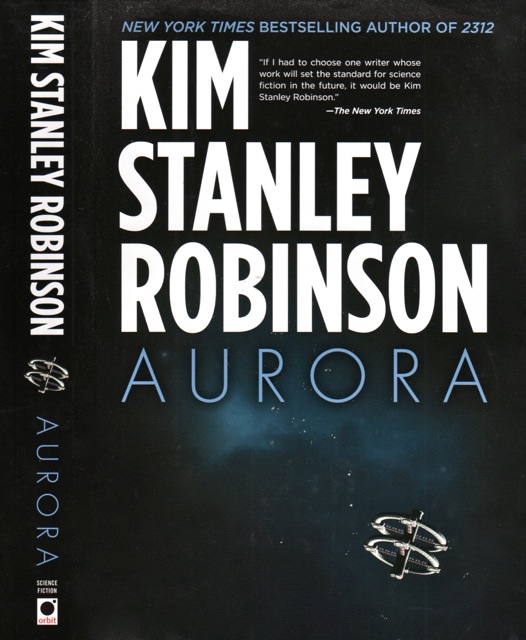
                • Cover of Aurora
                  Aurora

                  Kim Stanley Robinson · standalone novel · 2015

                  similar byfar futuresurvivalscience fictionhard science fictionspaceshipgeneration ship+1 more

                  Aurora is a 2015 novel by American science fiction author Kim Stanley Robinson. The novel concerns a generation ship built in the style of a Stanford torus, traveling to Tau Ceti to start a human colony. The novel's primary narrative voice is that of the starship's artificial intelligence. Aurora was well received by critics.

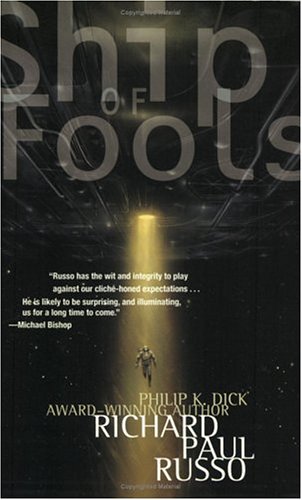
                • Cover of Ship of Fools
                  Ship of Fools

                  Richard Paul Russo · standalone novel · 2001

                  similar byfar futurescience fictionmysterioustensespaceshipgeneration shipspace opera+1 more

                  A generation ship searching for inhabited planets is drawn by a beacon to a planet where all human residents have died violently; upon leaving, it encounters a mysterious giant ship of alien origin.

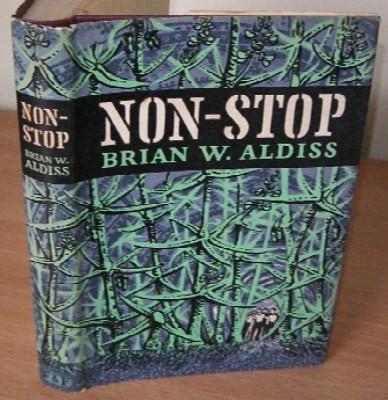
                • Cover of Non-Stop
                  Non-Stop

                  Brian W. Aldiss · standalone novel · 1958

                  similar byfar futuresurvivalscience fictionmysteriousspaceshipgeneration ship

                  Non-Stop is a 1958 science fiction novel by British writer Brian Aldiss. The book features members of a primitive tribe, who set out on a mission of exploration, and gradually uncover a series of revelations about their world.

                • Cover of Deadman Switch
                  Deadman Switch

                  Timothy Zahn · standalone novel · 1988

                  similar byfar futuresurvivalscience fictionmysterioustensespace opera

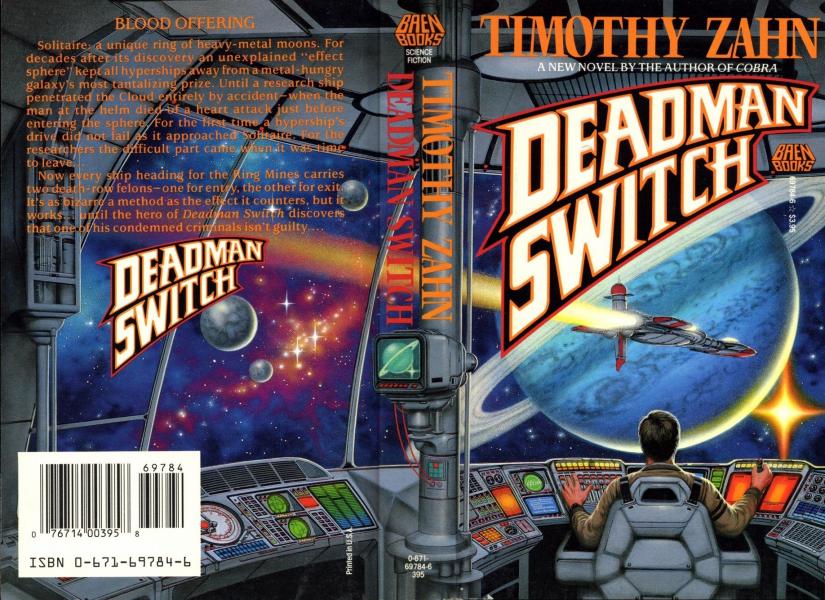
                  From the back cover of the Baen second printing: "Blood offering - Solitaire: a unique ring of heavy-metal moons. For decades after its discovery and unexplained "effect sphere" kept all hyperships away from a metal-hungry galaxy's most tantalizing prize. Until a research ship penetrated the Cloud entirely by accident - when the man at the helm died of a heart attack just before entering the sphere. For the first time, a hypership's drive did not fail as it approached Solitaire. For the researchers the difficult part came when it was time to leave... Now, every ship heading for the Ring Mines carries two death-row felons - one for entry, the other for exit. It's as bizarre a method as the effect it counters, but it works... until the hero of Deadman Switch discovers that one of his condemned criminals isn't guilty..."

                • Cover of Space Beagle
                  Space Beagle

                  series · 5 books · 1939

                  completed

                  similar byfar futurescience fictiontensespaceshipspace opera+1 more

                  The Voyage of the Space Beagle is a 1950 fix-up novel by A. E. van Vogt, stitched together from four previously published pulp stories into a single continuous account of the exploration ship Space Beagle's encounters with a series of dangerous alien life forms. Its episodic, crew-versus-monster structure reads as a loose sequence of adventures rather than one continuous plot.

                • Cover of Naked to the Stars
                  Naked to the Stars

                  Gordon R. Dickson · standalone novel · 1961

                  similar byfar futureamnesiascience fictionmysterioustense

                  The subject of the cosmic soldier has become a matter of concern for the science fiction reader. With the award-winning success of The Forever War, and with the great classic novels of Gordon R. Dickson's genetically bred mercenaries, the Dorsai, it is clear that the role of a fighter in a universe of expanding technology and competing alien intelligences is on science fiction's orders of the day. Gordon R. Dickson has been the master of that field, and his novel, Naked to the Stars, is one of his masterpieces. Long out of print, it is the story of a star soldier who, during a battle against a non-human foe on a far planet, somehow lost sixteen hours from his memory. Discharged for the potential danger those lost hours might have programmed, Cal Truant made it his fixation to uncover the mystery buried in his mind - to find out what had happened in those missing hours - and block the peril it might present to his fellow troopers, to his war command, and to the planet for which they fought - Earth.

                • Cover of Lost Missions / Paradisi Chronicles
                  Lost Missions / Paradisi Chronicles

                  series · 3 books · 2019

                  similar byfar futuresurvivalscience fictionspaceshipspace opera+3 more

                • Cover of The Chrysalids
                  The Chrysalids

                  John Wyndham · standalone novel · 1955

                  similar byfar futuresurvivalscience fictiontense

                  The Chrysalids is a science fiction novel by British writer John Wyndham, first published in 1955 by Michael Joseph. It is the least typical of Wyndham's major novels, but regarded by some as his best. An early manuscript version was entitled Time for a Change.

                • Cover of Six Wakes
                  Six Wakes

                  Mur Lafferty · standalone novel · 2017

                  similar byfar futureamnesiascience fictionmysterioustensespaceship

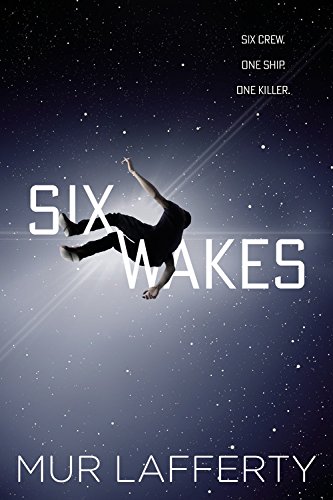
                  Six Wakes is a science fiction mystery novel by Mur Lafferty. It was first published in trade paperback and ebook by Orbit Books in January 2017.

                • Cover of Captive Universe
                  Captive Universe

                  Harry Harrison · standalone novel · 1969

                  similar byfar futuresurvivalscience fictionmysterious+2 more

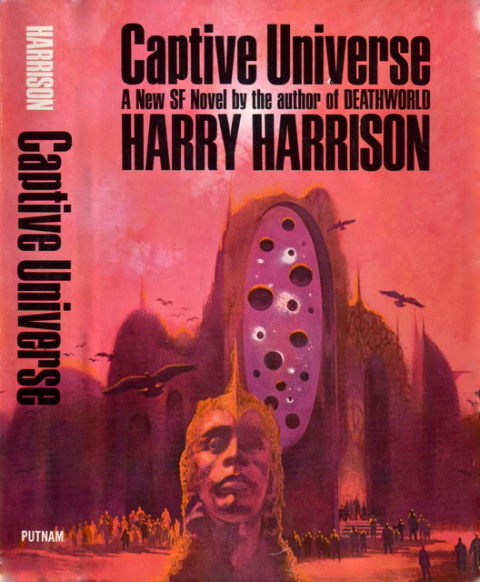
                  Chimal is an Aztec farmer's son in an isolated valley cut off from the world by a landslide generations back, split between two villages that live under strict, ancient law enforced by priests. Unlike everyone around him, he keeps asking questions no one will answer about what lies beyond the valley's walls, curiosity that costs him an arranged marriage and, after a priest's death is laid at his door, very nearly his life. His escape, through tunnels no one admits exist, is only the beginning of what he finds out about his world. A standalone novel from Harry Harrison.

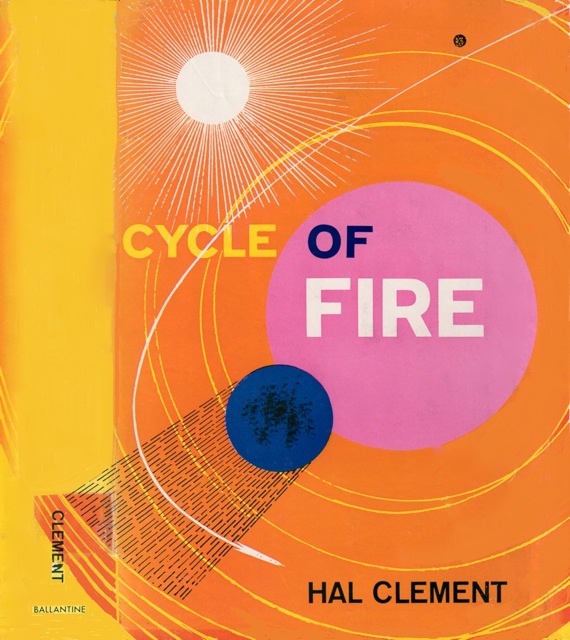
                • Cover of Cycle of Fire
                  Cycle of Fire

                  Hal Clement · standalone novel · 1957

                  similar byfar futuresurvivalscience fictiontensehard science fiction

                  After his ship crashed on the inhospitable planet Abyorman, Nils Kruger had spent weeks wandering across the face of the planet.suffering from blistering heat, the searing cold of an alien climate. Now he had found a fellow wanderer, Dar, an alien castaway. They may both die. The human opts to do something about it. Dar, who knows the time of his death in advance, opts to do nothing. Which of them is right? Perhaps both

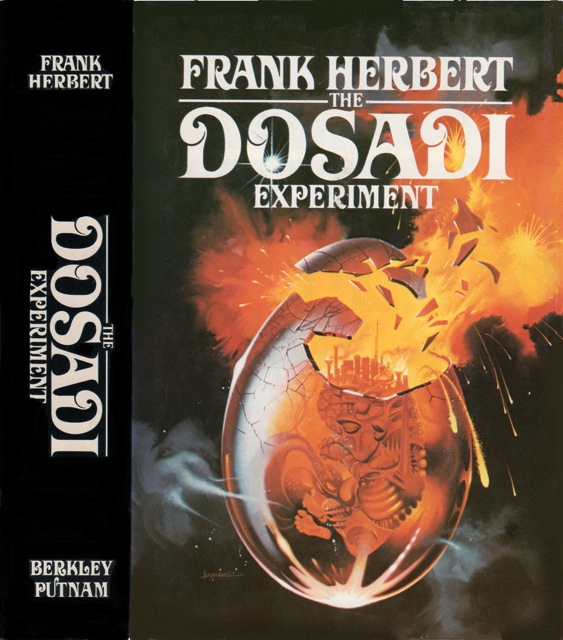
                • Cover of The Dosadi Experiment
                  The Dosadi Experiment

                  Frank Herbert · standalone novel · 1977

                  similar byfar futuresurvivalscience fictiontensespace opera

                  From the flaps of the Berkley Putnam first edition: "In his first new work of science fiction since the best-selling Children of Dune, Frank Herbert returns to his world of Whipping Star, and involves Jorj X. McKie, Saboteur Extraordinary, in a new intrigue. In Whipping Star, McKie discovered that some of the stars in the universe are actually intelligent, super-powerful beings, and was able to befriend one of them, the star Alcyone - affectionately known as Fannie Mae. As The Dosadi Experiment opens, McKie is assigned to investigate the planet Dosadi, which is isolated from the rest of the galaxy by a "god-wall," a barrier set up by one of the intelligent stars. Dosadi is rumored to be an experimental planet, and the experimenters are the froglike Gowachin, whose culture is founded upon a strange legal system in which McKie is the only human ever trained. He learns that humans and Gowachin have been placed on Dosadi, without their consent, for an experiment that could last centuries: an experiment in extreme overcrowding. But this monstrous plot is apparently out of control, and it seems the Gowachin may be prepared to destroy Dosadi rather than expose its secret, thus breaking the peace among the races, and starting the first interstellar war. But this is just the beginning. When McKie finally reaches Dosadi he discovers that the Dosadis have taken control of their own evolution and produced a competitive, highly evolved elite, of both humans and Gowachin, who have been able to extrapolate the existence of a universe beyond the god-wall and hate whoever has imprisoned them like this. They plan to break out and avenge themselves on the galaxy."

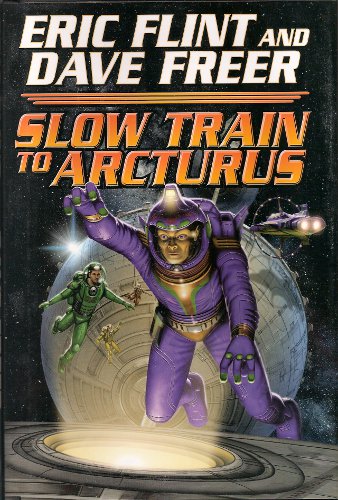
                • Cover of Slow Train to Arcturus
                  Slow Train to Arcturus

                  Eric Flint & Dave Freer · standalone novel · 2008

                  similar byfar futuresurvivalscience fictiontensespaceshipspace opera+1 more

                  Sending a spaceship to rendezvous with an enormous vessel made up of a series of globular habitats approaching its star system, the aliens find a savage race calling themselves "humans" who promptly slaughter the exploration team, except for a single survivor who escapes to another habitat, where he finds more friendly humans whose help he requires to get back to his own ship.

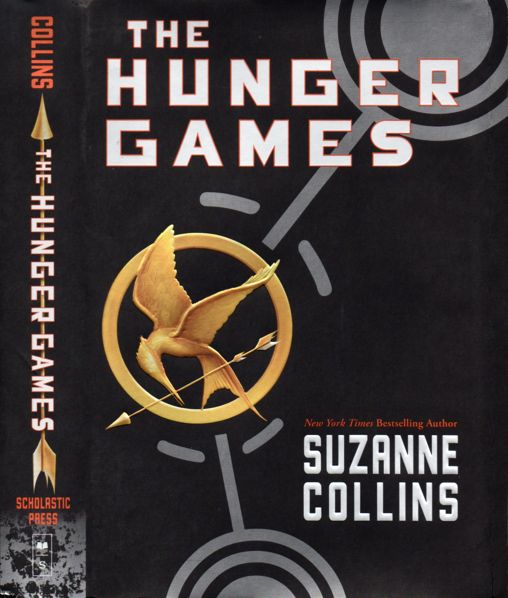
                • Cover of The Hunger Games
                  The Hunger Games

                  series · 3 books · 2008

                  part of The Hunger Games Universe

                  similar byfar futuresurvivalscience fictiontense

                  The Hunger Games is a series of young adult dystopian novels written by American author Suzanne Collins. The series consists of a trilogy that follows teenage protagonist Katniss Everdeen, as well as two prequels. The Hunger Games universe is a dystopia set in Panem, a post-apocalyptic North American country consisting of the wealthy Capitol and 12 districts in varying states of poverty. As punishment for rebellion, the Capitol hosts an annual battle royale competition called The Hunger Games. Each of the 12 districts must send two children between the ages of 12 and 18 to participate, and the last surviving child is dubbed the victor.

                • Cover of Fractalverse
                  Fractalverse

                  series · 2 books · 2020

                  similar byfar futuresurvivalscience fictiontensespace opera+1 more

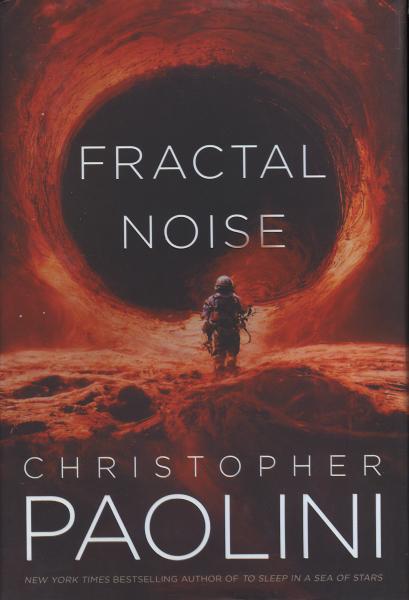
                  To Sleep in a Sea of Stars opens Christopher Paolini's Fractalverse with Kira Navárez, a xenobiologist whose survey of an unexplored planet triggers first contact with an ancient alien intelligence, dragging her and the wider human Alliance into a wider interstellar conflict for survival. Fractal Noise, a parallel entry, follows a separate crew investigating a mysterious signal-emitting structure on another world within the same universe. Both books were published between 2020 and 2023.

                • Cover of The Hunger Games Universe
                  The Hunger Games Universe

                  universe · 5 books · 2008

                  Start hereThe Hunger Games · Start here

                  similar byfar futuresurvivaltensescience fiction

                  Panem, they call it now — a nation raised on the drowned bones of North America, a glittering Capitol ringed by twelve districts it once starved into obedience. Every year the Capitol collects its debt in children: two tributes from each district, drawn by lottery, dropped into an engineered arena, and made to kill one another on live television while the whole country is required to watch. This is the Hunger Games — entertainment, punishment, and government at once. Suzanne Collins tells it in a compact, unified body of work. The founding trilogy — The Hunger Games, Catching Fire, and Mockingjay — follows Katniss Everdeen, a girl from the coal-mining District 12 who volunteers in her sister's place and becomes something the Capitol never scripted. Two prequels reach back into the same machinery: The Ballad of Songbirds and Snakes traces a young Coriolanus Snow long before he is President, and Sunrise on the Reaping returns to District 12 a generation ahead of Katniss. Begin with the trilogy, in order — it is Katniss's voice, close and present-tense, that makes Panem breathe, and the prequels land hardest once you know how her story ends. Beneath the spectacle sits one steady, uncomfortable question: who profits when we agree to look away.

                • Cover of David Ryerson
                  David Ryerson

                  series · 2 books · 1958

                  completed

                  similar byfar futurescience fictionsurvivaltensespaceshipspace opera+1 more

                  The Enemy Stars follows the crew of a faster-than-light survey ship stranded far from home after their matter-transmission drive is damaged, forced to keep the vessel and each other going across a voyage that will outlast some of them. Poul Anderson's 1959 novel was originally serialized as We Have Fed Our Sea-, a title drawn from Kipling. It stands alone rather than part of a series; David Ryerson is one of the ship's crew.

                • Cover of The Stars Are Legion
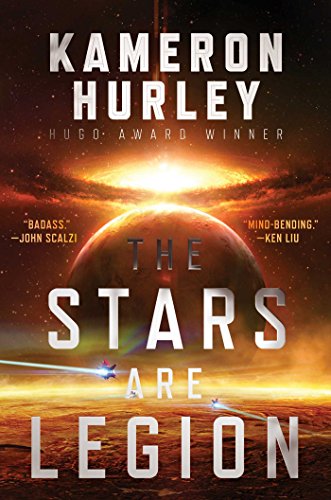
                  The Stars Are Legion

                  Kameron Hurley · standalone novel · 2017

                  similar byfar futuresurvivalscience fictiontensespaceshipspace opera

                  396 pages ; 20 cm

                • Cover of Tunnel in the Sky
                  Tunnel in the Sky

                  Robert A. Heinlein · standalone novel · 1955

                  similar byfar futuresurvivalscience fictiontense

                  As the final test of a survivalist/explorer class, teenagers are dumped on an alien planet to use their skills while awaiting pickup. But something has gone wrong, and they find they are on their own.

                • Cover of Project Hail Mary
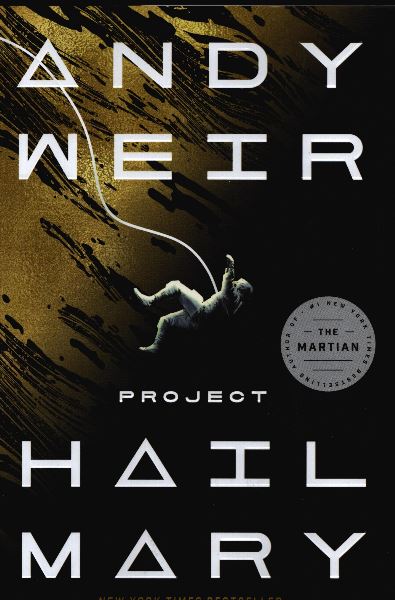
                  Project Hail Mary

                  Andy Weir · standalone novel · 2021

                  similar byamnesiasurvivalscience fictionhard science fictionspaceship

                  Project Hail Mary is a 2021 hard science fiction novel by American writer Andy Weir. It centers on science teacher and former biologist Ryland Grace, who wakes up aboard a spacecraft, afflicted with amnesia.

                • Cover of Forge of God
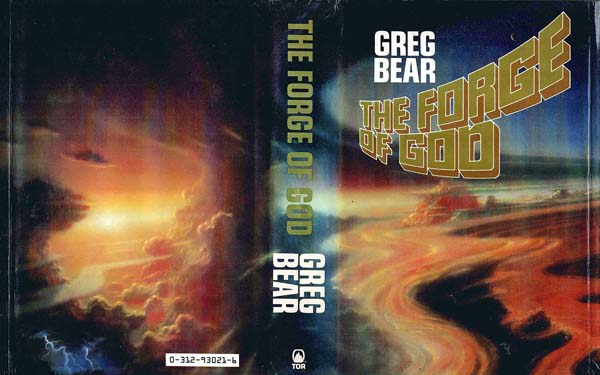
                  Forge of God

                  series · 2 books · 1987

                  completed

                  similar bysurvivalscience fictiontense+3 more

                  The Forge of God (1987) is Greg Bear's science fiction novel about Earth's discovery that it is the target of an incomprehensible, overwhelming alien attack, following scientists and ordinary people as they try to understand what is destroying the planet. Its 1992 sequel, Anvil of Stars, follows a group of young survivors sent on a mission of interstellar retaliation, continuing directly from the first book's ending.