More like Humans
anchored on:science fictionparallel universecontemporaryalternate historyour worldreflective
but
- Stranger in a Strange Land
Robert A. Heinleinstandalone novel1961
similar byreflectivescience fictionour world+1 more
Stranger in a Strange Land is a 1961 science fiction novel by the American author Robert A. Heinlein. It tells the story of Valentine Michael Smith, a human who comes to Earth in early adulthood after being born on the planet Mars and raised by Martians, and explores his interaction with and eventual transformation of Terran culture.
- Whileaway
series4 books1972
completed
similar bygender and societyreflectivescience fictioncontemporary+2 more
Joanna Russ's The Female Man (1975) is a single feminist science fiction novel, not a multi-book series, built around four women from parallel timelines with very different gender arrangements. One of them, Janet, comes from Whileaway, an all-female utopian Earth ten centuries in the future where men died out in a plague; the other three come from realities closer to Russ's own, and their collisions are used to interrogate what womanhood and equality could mean under different social rules.
- The Disappearance
Philip Wyliestandalone novel1951
similar bygender and societyreflectivescience fictionparallel universeour world
One ordinary moment, the world splits in two: every man on Earth finds every woman gone without a trace, and at the same instant every woman finds herself in a world emptied of men -- two parallel realities on the same planet, each population convinced the other has vanished. Philip Wylie follows both worlds afterward, one sliding into authoritarian collapse without women to share or restrain power, the other building something more equal and freer, using the split to interrogate mid-century assumptions about sex, marriage and the double standards separating what men and women were each allowed to be. A speculative novel years ahead of the feminist movement it anticipates.
- Venus Plus X
Theodore Sturgeonstandalone novel1960
similar bygender and societyreflectivescience fiction+1 more
Charlie Johns wakes in a featureless silver room with no memory of how he got there and a watch that's inexplicably running backward. He's been brought, how and by whom is never explained to him, to Ledom, an isolated, technologically advanced society whose members are all both male and female and have done away with fixed sex roles entirely. Guides walk him through Ledom's customs and machinery while making clear he's there to judge them before he can go home. Interwoven with Charlie's tour are chapters following an ordinary mid-century American family, setting the utopia against the world it's implicitly critiquing. Theodore Sturgeon's provocative novel about gender and social design.
- Trouble with Lichen
John Wyndhamstandalone novel1960
similar bygender and societyreflectivescience fiction
Biochemists Diana Brackley and Francis Saxover, working independently, both isolate a compound from a rare lichen that appears to dramatically slow the aging process. Francis quietly doses himself and his family and says nothing; Diana takes the opposite approach, opening exclusive beauty spas as cover to give the drug to well-connected women across Britain, reasoning that if longevity becomes known before women have a foothold, men will simply monopolize it as they have everything else. The secret can only hold so long, and the novel's tension builds toward the moment it gets out. A quietly subversive social science-fiction novel from John Wyndham.
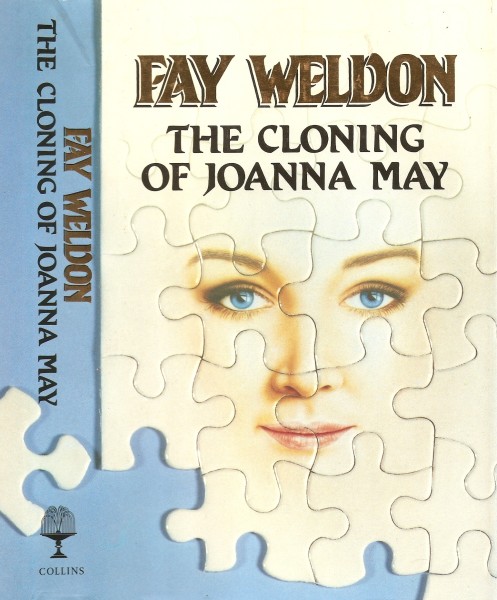
- The Cloning of Joanna May
Fay Weldonstandalone novel1989
similar bygender and societyreflectivecontemporaryscience fiction
The Cloning of Joanna May is a 1989 science fiction novel by British writer Fay Weldon.
- The Fresco
Sheri S. Tepperstandalone novel2000
similar bycontemporaryscience fictionour world+2 more
The Fresco is a science fiction novel by American writer Sheri S. Tepper, published in 2000. It describes Earth's contact with a confederation of intelligent alien races. The Fresco was on the shortlist for 2001 James Tiptree, Jr. Award
- Triton
Samuel R. Delanystandalone novel1976
similar bygender and societyreflectivescience fiction+1 more
Trouble on Triton: An Ambiguous Heterotopia (1976) is a science fiction novel by American writer Samuel R. Delany. It was nominated for the 1976 Nebula Award for Best Novel, and was shortlisted for a retrospective James Tiptree, Jr. Award in 1995. It was originally published under the shorter title Triton.
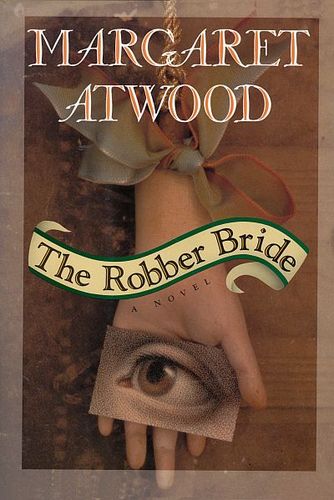
- The Robber Bride
Margaret Atwoodstandalone novel1993
similar bygender and societyreflectivecontemporary
The Robber Bride is a novel by Canadian writer Margaret Atwood, first published by McClelland and Stewart in 1993.
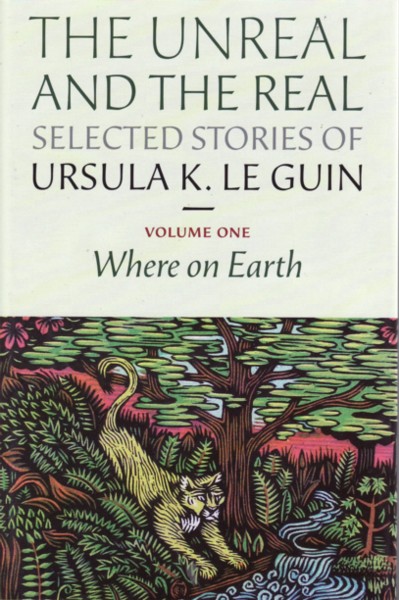
- The Unreal and the Real: Selected Stories of Ursula K. Le Guin
series2 books2012
completed
similar bygender and societyreflective+3 more
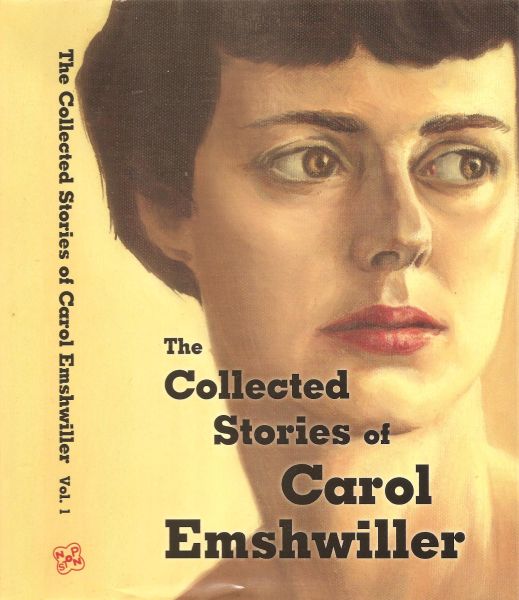
- The Collected Stories of Carol Emshwiller
series2 books2011
completed
similar bygender and societyreflectivecontemporaryscience fictionour world
- Neanderthal Parallax
series3 books2002
similar byscience fictionalternate historycontemporaryparallel universe+2 more
The Neanderthal Parallax is a trilogy of novels written by Robert J. Sawyer and published by Tor. It depicts the effects of the opening of a connection between two versions of Earth in different parallel universes: the world familiar to the reader, and another where Neanderthals became the dominant intelligent hominid. The societal, spiritual, and technological differences between the two worlds form the focus of the story.
- Mode
series4 books1991
similar bycontemporaryscience fictionparallel universe+1 more
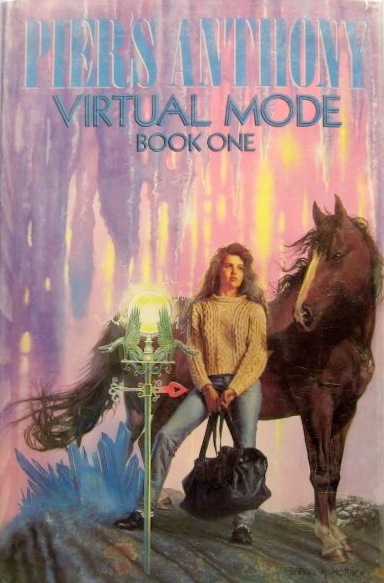
The Mode series is a quartet of novels by Piers Anthony. Like many of Anthony's other fictional works, it explores many themes and ideas. This series has themes of violence, the abuse of power, sexism and male dominance, gender roles, the environment, integrity and personal honor, sapient animal life, parallel and alternative evolution, space travel, alternate dimensions, paradox, obscure concepts in physics and mathematics, sexual assault and abuse, child and adolescent sexuality, and suicide.
- The Eye of the Heron
Ursula K. Le Guinstandalone novel1978
similar byreflectivescience fiction+1 more
The Eye of the Heron is a 1978 science fiction novel by American author Ursula K. Le Guin which was first published in the science fiction anthology Millennial Women.
- Frankissstein
Jeanette Wintersonstandalone novel2019
similar bygender and societyreflectivecontemporaryscience fiction
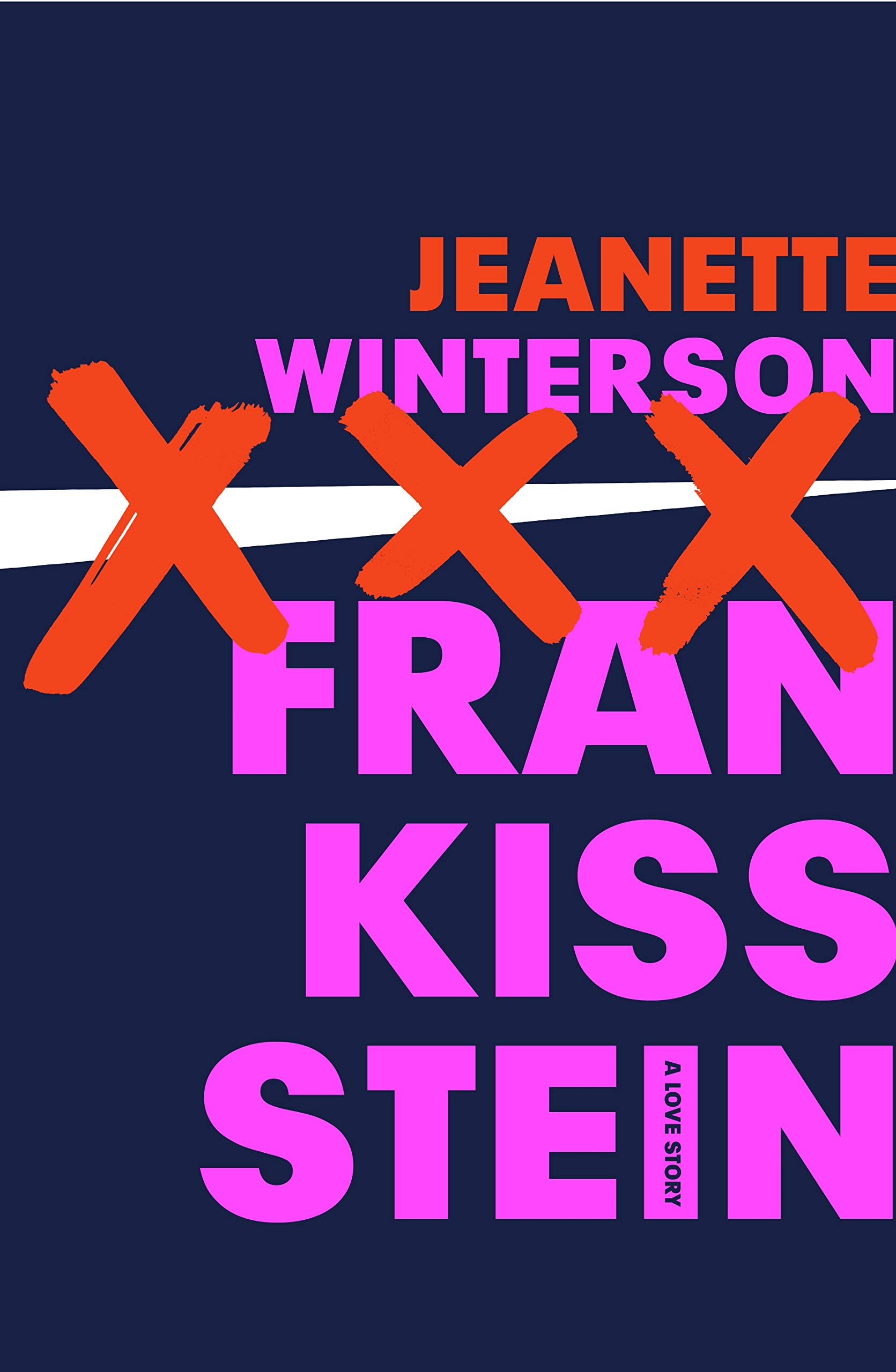
Frankissstein: A Love Story is a 2019 novel by Jeanette Winterson. It was published on 28 May 2019 by Jonathan Cape. The novel employs speculative fiction and historical fiction to reimagine Mary Shelley's classic novel Frankenstein (1818). The story switches between Mary Shelley writing Frankenstein in Geneva, Switzerland in 1816 and the story of Ry Shelley, a transgender doctor and Victor Stein, a transhumanist, who become involved in the world of artificial intelligence and cryonics in present-day Brexit-era Britain.
- Unveiling a Parallel: A Romance
Alice Ilgenfritz Jones & Ella Merchantstandalone novel1893
similar bygender and societyreflectivescience fictionparallel universe
Unveiling a Parallel: A Romance is a feminist science fiction and utopian novel published in 1893. The first edition of the book attributed authorship to "Two Women of the West". They were Alice Ilgenfritz Jones and Ella Robinson Merchant, writers who lived in Cedar Rapids, Iowa.
- Hainish
series33 books1964
completed
similar byreflectivescience fiction+1 more
The Hainish Cycle consists of a number of science fiction novels and stories by Ursula K. Le Guin. The cycle is set in a future history that features civilizations of human beings on planets orbiting a number of nearby stars, including Terra ("Earth"); these humans are contacting each other for the first time and establishing diplomatic relations, as well as setting up a confederacy under the guidance of the oldest of the human worlds, the peaceful planet Hain. In this history, human beings did not evolve on Earth, but they were instead the result of interstellar colonies planted by Hain in the distant past, after which interstellar travel ceased for an extended period. Some of the human races have new genetic traits, a result of ancient Hainish experiments in genetic engineering; this includes people who can dream while awake, and a world of hermaphroditic people who only enter active sexuality once per month, not knowing which sex will manifest in them. In keeping with Le Guin's narrative approach, she uses varied social and environmental settings to explore the anthropological and sociological outcomes of human evolution in those environments. The author often discounted the characterization of a so-called "Hainish Cycle".
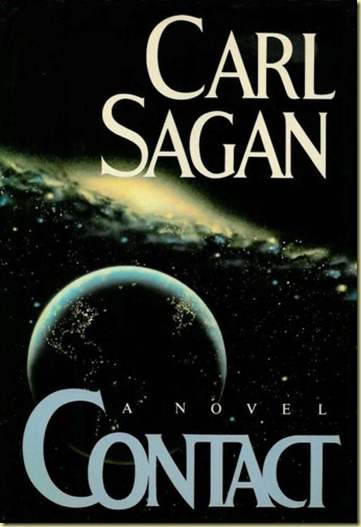
- Contact
Carl Saganstandalone novel1985
similar byreflectivecontemporaryscience fictionour world
From the front flap of the Simon and Schuster first edition: For centuries humanity has dreamed of life and intelligence beyond the Earth; for decades scientists have searched for it in every corner of the sky; for years Project Argus, a vast, sophisticated complex of radio telescopes, has listened for a signal indicating the existence, somewhere in the universe, of extraterrestrial intelligence. Then, one afternoon, the course of human history is changed, abruptly and forever. The Message, awaited for so long, its very possibility doubted by so many, arrives. Contact has been made. Life, intelligence, someone, something beyond Earth, 26 light-years away, in the vicinity of the star Vega, is calling, beaming across space a wholly unexpected message to say that we are not - have never been - alone. In Contact, Carl Sagan, whose Cosmos enthralled millions of readers and television viewers, has brilliantly employed the freedom of fiction to imagine the greatest adventure of all - humanity's first encounter with other intelligent beings. But the novel is not only about contact between humans and extraterrestrials; it is also about contact, down here on Earth, with each other and ourselves. At its center is a brilliant scientist, Eleanor Arroway, director of Project Argos, who is the first to realize that chapter one of human history is over. It is she who is instrumental in decoding the Message - and in persuading world leaders not to treat it as a threat - she who finds her own life changed by the immense challenge of responding to the Message; she who finally journeys out to experience, in circumstances at once profoundly religious and scientific, the most fateful encounter in human history.
- Transcendent
series4 books2016
similar bygender and societyreflectivescience fictioncontemporary+1 more
- The Refrigerator Monologues
Catherynne M. Valentestandalone novel2017
similar bygender and societyreflectivecontemporaryour world
The Refrigerator Monologues is a 2017 superhero fiction novel by Catherynne Valente, with art by Annie Wu, exploring the lives - and deaths - of superheroines, and of the girlfriends of superheroes; the title refers to "women in refrigerators", and to The Vagina Monologues. It was published by Saga Press.
- Singer from the Sea
Sheri S. Tepperstandalone novel1999
similar bygender and societyreflectivescience fiction
An accomplished student and heiress to a great title, Genevieve has been carefully instructed in the Covenants, the inflexible laws governing women of her class. But as her fate approaches, she begins to question the ties that bind her.
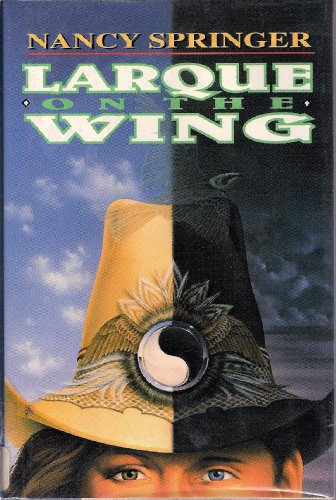
- Larque on the Wing
Nancy Springerstandalone novel1994
similar bygender and societyreflectivecontemporaryour world
Going through a messy mid-life crisis, forty-year-old wife and mother Larque Harootunian gets carried away with her latest doppelganger--herself at age ten--who helps transform her into a young, strong, courageous, and gay man.
- The Edible Woman
Margaret Atwoodstandalone novel1969
similar bygender and societyreflectiveour world
The Edible Woman is the first published novel by Canadian writer Margaret Atwood, published in 1969. It is the story of a young woman, Marian, whose sane, structured, consumer-oriented world starts to slip out of focus. Following her engagement, Marian feels her body and her self are becoming separated. Marian begins endowing food with human qualities that cause her to identify with it, and finds herself unable to eat, repelled by metaphorical cannibalism. In a foreword written in 1979 for the Virago edition of the novel, Atwood described it as a protofeminist rather than feminist work.