More like Identifying the Object
anchored on:science fictionnear futureidentitygender and societychallengingreflective+1 more
but
- Stranger in a Strange Land
Robert A. Heinleinstandalone novel1961
similar byscience fictionidentitynear futurereflectivechallenging+1 more
Stranger in a Strange Land is a 1961 science fiction novel by the American author Robert A. Heinlein. It tells the story of Valentine Michael Smith, a human who comes to Earth in early adulthood after being born on the planet Mars and raised by Martians, and explores his interaction with and eventual transformation of Terran culture.
- Venus Plus X
Theodore Sturgeonstandalone novel1960
similar byscience fictionidentitygender and societychallengingreflective
Charlie Johns wakes in a featureless silver room with no memory of how he got there and a watch that's inexplicably running backward. He's been brought, how and by whom is never explained to him, to Ledom, an isolated, technologically advanced society whose members are all both male and female and have done away with fixed sex roles entirely. Guides walk him through Ledom's customs and machinery while making clear he's there to judge them before he can go home. Interwoven with Charlie's tour are chapters following an ordinary mid-century American family, setting the utopia against the world it's implicitly critiquing. Theodore Sturgeon's provocative novel about gender and social design.
- Childhood's End
Arthur C. Clarkestandalone novel1953
similar byscience fictionidentitynear futurereflective
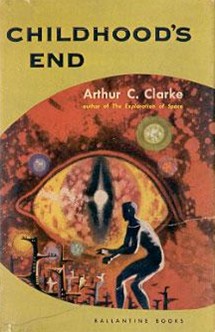
Childhood's End is a 1953 science fiction novel by the British author Arthur C. Clarke. The story follows a peaceful alien invasion of Earth by mysterious Overlords, whose arrival begins decades of apparent utopia under indirect alien rule, at the cost of human identity and culture.
- Triton
Samuel R. Delanystandalone novel1976
similar byscience fictionidentitygender and societychallengingreflective
Trouble on Triton: An Ambiguous Heterotopia (1976) is a science fiction novel by American writer Samuel R. Delany. It was nominated for the 1976 Nebula Award for Best Novel, and was shortlisted for a retrospective James Tiptree, Jr. Award in 1995. It was originally published under the shorter title Triton.
- Genesis
Bernard Beckettstandalone novel2006
similar byscience fictionidentitynear futurechallengingreflective
Genesis (2006) is a philosophical science fiction novel by New Zealand author Bernard Beckett. It won the 2007 Esther Glen Award for children's literature, and the 2007 New Zealand Post Book Awards for Children and Young Adults. As of 2008 it has been published in 22 countries.
- I Will Fear No Evil
Robert A. Heinleinstandalone novel1970
similar byscience fictionidentitynear futurereflective
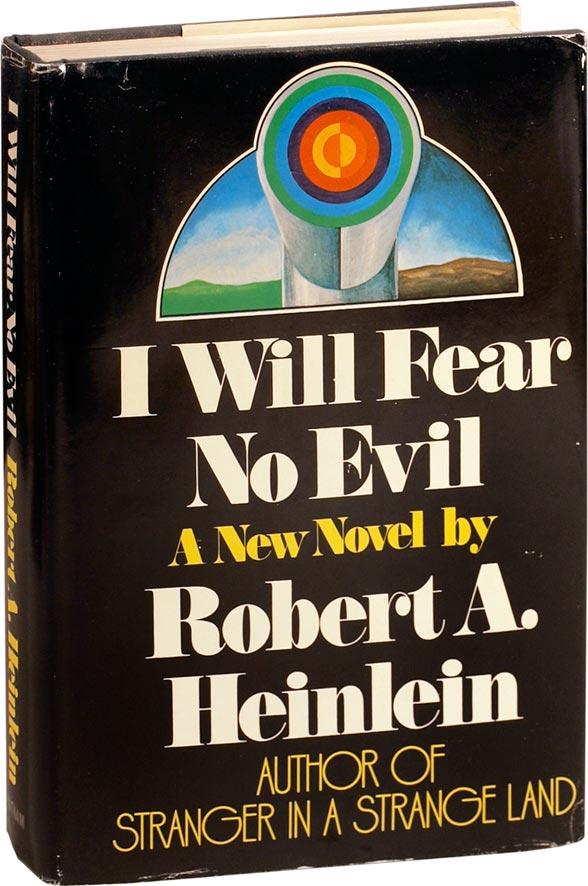
I Will Fear No Evil is a science fiction novel by American writer Robert A. Heinlein, originally serialised in Galaxy and published in hardcover in 1970. The title is taken from Psalm 23:4.
- Whileaway
series4 books1972
completed
similar byscience fictiongender and societychallengingreflective+1 more
Joanna Russ's The Female Man (1975) is a single feminist science fiction novel, not a multi-book series, built around four women from parallel timelines with very different gender arrangements. One of them, Janet, comes from Whileaway, an all-female utopian Earth ten centuries in the future where men died out in a plague; the other three come from realities closer to Russ's own, and their collisions are used to interrogate what womanhood and equality could mean under different social rules.
- The Disappearance
Philip Wyliestandalone novel1951
similar byscience fictiongender and societychallengingreflective+1 more
One ordinary moment, the world splits in two: every man on Earth finds every woman gone without a trace, and at the same instant every woman finds herself in a world emptied of men -- two parallel realities on the same planet, each population convinced the other has vanished. Philip Wylie follows both worlds afterward, one sliding into authoritarian collapse without women to share or restrain power, the other building something more equal and freer, using the split to interrogate mid-century assumptions about sex, marriage and the double standards separating what men and women were each allowed to be. A speculative novel years ahead of the feminist movement it anticipates.
- More Than Human
Theodore Sturgeonstandalone novel1953
similar byscience fictionidentityreflectiveshort story cycle
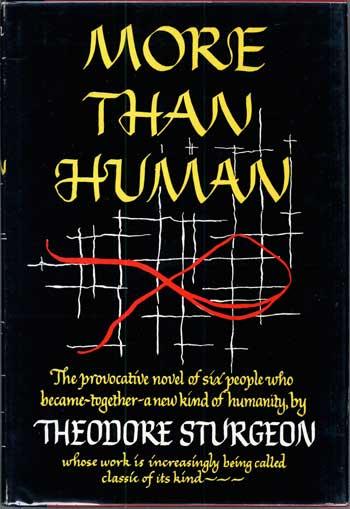
More Than Human is a 1953 science fiction fix-up novel by American writer Theodore Sturgeon. It is a revision and expansion of his 1952 novella Baby Is Three, which is bracketed by two additional parts written for the novel, "The Fabulous Idiot" and "Morality". It won the 1954 International Fantasy Award, which was also given to works in science fiction. It was additionally nominated in 2004 for a "Retro Hugo" award for the year 1954. Science fiction critic and editor David Pringle included it in his book Science Fiction: The 100 Best Novels.
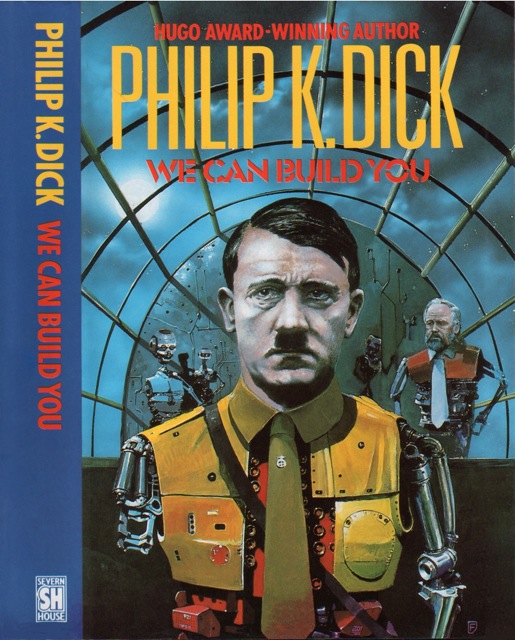
- We Can Build You
Philip K. Dickstandalone novel1972
similar byscience fictionidentitynear futurereflective
We Can Build You is a 1972 science fiction novel by American writer Philip K. Dick. Written in 1962 as The First in Our Family, it remained unpublished until appearing in serial form as A. Lincoln, Simulacrum in the November 1969 and January 1970 issues of Amazing Stories magazine, re-titled by editor Ted White. The novel was issued as a mass market paperback original by DAW Books in 1972, its final title provided by publisher Donald A. Wollheim. Its first hardcover edition was published in Italy in 1976, and Vintage issued a trade paperback in 1994.
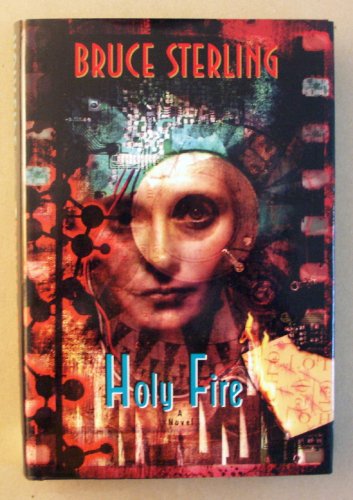
- Holy Fire
Bruce Sterlingstandalone novel1996
similar byscience fictionidentitynear futurereflective+1 more
Holy Fire is a 1996 science fiction novel by American writer Bruce Sterling. It was nominated for the British Science Fiction Award in 1996, and for both the Hugo and Locus Awards in 1997.
- Never Let Me Go
Kazuo Ishigurostandalone novel2005
similar byscience fictionidentitynear futurereflective
Never Let Me Go is a 2005 science fiction novel by the British author Kazuo Ishiguro. It was shortlisted for the 2005 Man Booker Prize, for the 2006 Arthur C. Clarke Award and the 2005 National Book Critics Circle Award. Time magazine named it the best novel of 2005. It included the novel in its '100 Best English-language novels published since 1923—the beginning of TIME'. It also received an ALA Alex Award in 2006. A film adaptation directed by Mark Romanek was released in 2010.
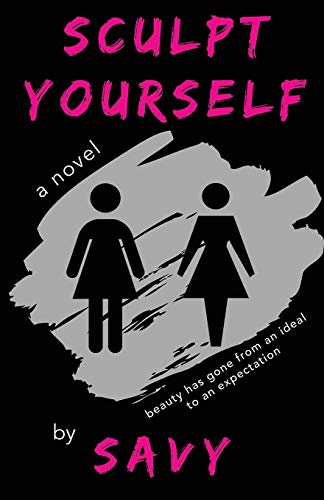
- Sculpt Yourself
Savy Leiserstandalone novel2018
similar byscience fictionidentitygender and societynear futurereflective+1 more
● "Lipamorph is a drug that lets you sculpt yourself. It loosens up the fat in your body, allowing you to choose your proportions. And it's just been legalized for sale in Chicago. Amber is a 24-year-old tech support worker by day, gay feminist blogger by night. She's been vocal about her disapproval of Lipamorph from the beginning, seeing it as another tool to reinforce patriarchal beauty standards; but as Lipamorph becomes more common, Amber's dissenting voice starts to matter less and less." ― quoted from this book's Amazon product page as of 2022-02-14.
- Blade Runner Universe
series6 books1968
similar byscience fictionnear futureidentity
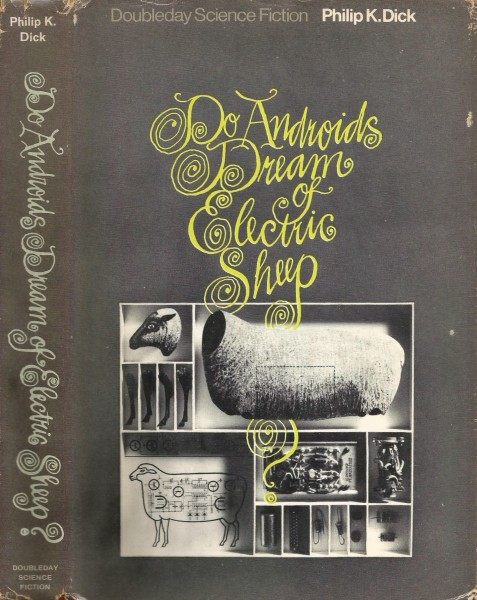
Philip K. Dick's 1968 novel Do Androids Dream of Electric Sheep? follows bounty hunter Rick Deckard as he tracks escaped androids through an irradiated, near-abandoned San Francisco, using the hunt to probe questions of empathy and what separates human from machine. The novel became the basis for Ridley Scott's 1982 film Blade Runner, and Marvel Comics later published an illustrated adaptation of that film. Together the two trace the story's path from prose original to screen and comic-page adaptation.
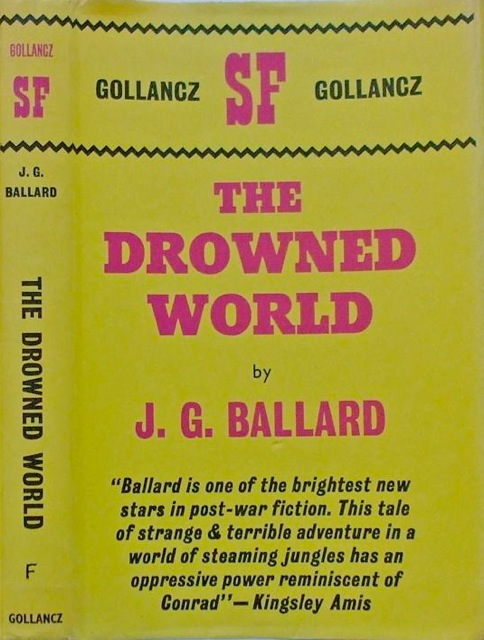
- The Drowned World
J. G. Ballardstandalone novel1962
similar byscience fictionnear futurereflective+1 more
The Drowned World is a 1962 science fiction novel by J. G. Ballard. It first appeared in shortened form in the January 1962 issue of the UK edition of Science Fiction Adventures and was published in book form later that year by Victor Gollancz Ltd in London; an American edition followed from Berkley Medallion. Critics have grouped The Drowned World with Ballard's early science-fiction novels as part of an "ambiguous apocalypse" sequence that also includes The Drought and The Crystal World, from the period in which he was developing the ideas he described as "inner space". Set in a future in which solar radiation has melted the polar ice caps and transformed London into a flooded tropical lagoon, the novel follows biologist Robert Kerans as he becomes increasingly drawn toward the altered environment rather than toward restoring the old social order.
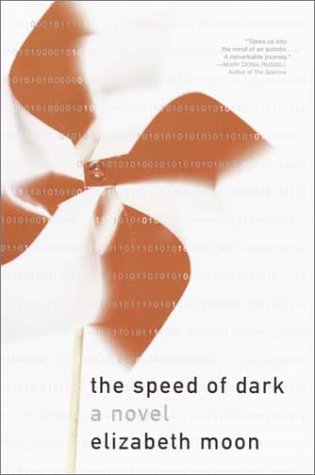
- The Speed of Dark
Elizabeth Moonstandalone novel2002
similar byscience fictionidentitynear futurereflective
From the Penguin Random House website In the near future, disease will be a condition of the past. Most genetic defects will be removed at birth; the remaining during infancy. Lou Arrendale, a high-functioning autistic adult, is a member of the lost generation, born at the wrong time to reap the rewards of medical science. He lives a low-key, independent life. But then he is offered a chance to try a brand-new experimental "cure" for his condition. With this treatment Lou would think and act and be just like everyone else. But if he was suddenly free of autism, would he still be himself? Would he still love the same classical music — with its complications and resolutions? Would he still see the same colors and patterns in the world—shades and hues that others cannot see? Most important, would he still love Marjory, a woman who may never be able to reciprocate his feelings? Now Lou must decide if he should submit to a surgery that might completely change the way he views the world ... and the very essence of who he is.
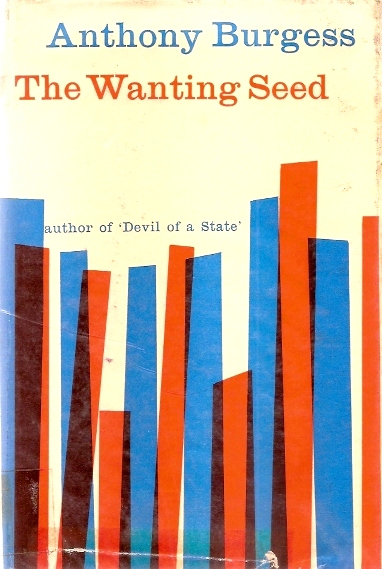
- The Wanting Seed
Anthony Burgessstandalone novel1962
similar byscience fictiongender and societynear futurechallenging
The Wanting Seed is a dystopian novel by the English author Anthony Burgess, written in 1962.
- Void Star
Zachary Masonstandalone novel2017
similar byscience fictionidentitynear futurechallengingreflective
Void Star is a 2017 near-future science fiction novel by American writer Zachary Mason. It is his second novel, published after The Lost Books of the Odyssey. Set in a near-future San Francisco, the book explores themes of artificial intelligence, philosophy, linguistics and immortality.
- The Dream Master
Roger Zelaznystandalone novel1966
similar byscience fictionidentitynear future+1 more
The Dream Master (1966) is a science fiction novel by American writer Roger Zelazny, based on the novella He Who Shapes. Zelazny's original title was The Ides of Octember. He Who Shapes won the 1965 Nebula Award for Best Novella.
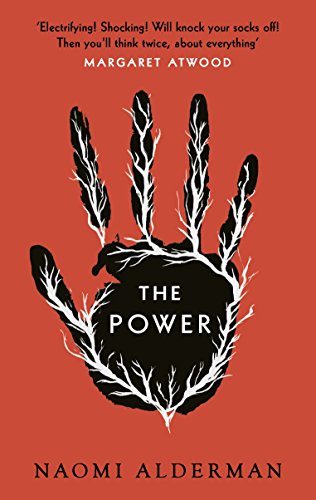
- The Power
Naomi Aldermanstandalone novel2016
similar byscience fictiongender and societynear futurechallenging
The Power is a 2016 science fiction novel by the British writer Naomi Alderman. Its central premise is of women developing the ability to release electrical jolts from their fingers, which allows them to become the dominant sex. In 2017, it won the Baileys Women's Prize for Fiction.
- Trouble and Her Friends
Melissa Scottstandalone novel1994
similar byscience fictionidentitygender and societynear future
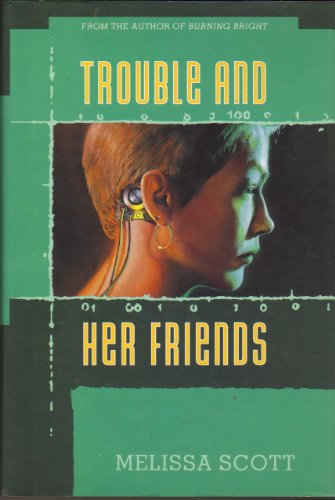
Trouble and Her Friends is a science fiction novel by American writer Melissa Scott, first published in 1994. Set in the near future in the United States, the story follows India Carless, known as "Trouble" in her life as a criminal hacker, and her ex-lover Cerise. After leaving the underground scene three years earlier, they discover someone impersonating Trouble online, and decide to reunite to confront this impersonator, embarking on a cross-country journey. The novel features extensive use of virtual reality and neural implants, making it a solid example of cyberpunk; however, it is notable within the genre for its distinct feminist perspective and its focus on main characters who are gay or lesbian, reflecting themes common in much of Scott's work.
- A Clockwork Orange
series4 books1962
completed
similar byscience fictionnear futurechallenging+1 more
Anthony Burgess's 1962 novel is narrated by Alex, a teenage gang leader in a near-future Britain gripped by a youth subculture of extreme violence, recounting his crimes in Nadsat, an invented slang blending English with Russian-derived words. After his crimes catch up with him, Alex is made the subject of a controversial state program meant to forcibly reform his behavior, and the novel uses his ordeal to question whether imposed goodness is worth the loss of free will. It is a standalone novel.
- VALIS
series4 books1981
completed
similar byscience fictionidentitychallengingreflective
The VALIS trilogy is a set of science fiction/philosophical novels by author Philip K. Dick which include VALIS (1981), The Divine Invasion (1981), and The Transmigration of Timothy Archer (1982). Dick's first novel about the VALIS concept originally titled "VALISystem A", was published as Radio Free Albemuth after Dick's death in 1985.