More like Ignition
but
- The Handmaid's Tale
series3 books1985
similar byrebellion and revolutionscience fictiondystopia
The Handmaid's Tale is Margaret Atwood's 1985 novel set in Gilead, a totalitarian theocracy that has overthrown the United States and forces fertile women into reproductive servitude as Handmaids; it is narrated by one such woman, Offred. Atwood returned to the world in her 2019 sequel The Testaments, set fifteen years later and narrated by three women, including the regime's Aunt Lydia. Together the two novels move from Gilead's grip on power toward the first cracks in it.
- Alas, Babylon
Pat Frankstandalone novel1959
similar byscience fiction+2 more
Classic novel of nuclear war and aftermath in rural Florida. From the back cover of a Bantam Pathfinder edition: "The day that the bomb dropped the thousands of years of "progress" that had covered the treacheries and weaknesses of ordinary man with a thin veneer of civilization were dissolved and melted like snow on the desert's dusty face. Then - the law of the jungle reigned but in the wreckage a few courageous survivors, men and women with the guts to have hope, were determined to build a new and better world on the ruins of the old. This is their story."
- Beyond This Horizon
Robert A. Heinleinstandalone novel1948
similar byrebellion and revolutionscience fictiondystopia
From the front flap of a 2001 Baen reprint: "Utopia has been achieved. For centuries, disease, hunger, poverty, and war have been things found only in the history tapes. And applied genetics has given men and women the bodies of athletes and a lifespan of over a century. They should all have been very happy... But Hamilton Felix is bored. And he is the culmination of a star line, each of his last thirty ancestors chosen for superior genes. Hamilton is, as far as genetics can produce one, the ultimate man. And this ultimate man can see no reason why the human race should survive, and has no intention of continuing the pointless comedy. However, Hamilton's life is about to become less boring. A secret cabal of revolutionaries who find utopia not just boring, but desperately in need of leaders who know just What Needs to be Done, are planning to revolt and put themselves in charge. Knowing of Hamilton's disenchantment with the modern world, they have recruited him to join their Glorious Revolution. Big mistake! The revolutionaries are about to find out that recruiting a superman was definitely not a good idea..."
- The Hunger Games Universe
universe5 books2008
Start hereThe Hunger Games · Start here
similar byrebellion and revolutionscience fictiondystopia
Panem, they call it now — a nation raised on the drowned bones of North America, a glittering Capitol ringed by twelve districts it once starved into obedience. Every year the Capitol collects its debt in children: two tributes from each district, drawn by lottery, dropped into an engineered arena, and made to kill one another on live television while the whole country is required to watch. This is the Hunger Games — entertainment, punishment, and government at once. Suzanne Collins tells it in a compact, unified body of work. The founding trilogy — The Hunger Games, Catching Fire, and Mockingjay — follows Katniss Everdeen, a girl from the coal-mining District 12 who volunteers in her sister's place and becomes something the Capitol never scripted. Two prequels reach back into the same machinery: The Ballad of Songbirds and Snakes traces a young Coriolanus Snow long before he is President, and Sunrise on the Reaping returns to District 12 a generation ahead of Katniss. Begin with the trilogy, in order — it is Katniss's voice, close and present-tense, that makes Panem breathe, and the prequels land hardest once you know how her story ends. Beneath the spectacle sits one steady, uncomfortable question: who profits when we agree to look away.
- Player Piano
Kurt Vonnegut & Jr.standalone novel1952
similar byrebellion and revolutionscience fictiondystopia
In the near future, when cybernetic automation has effectively separated people into two castes, the "engineers and managers", and the remainder of the population who can find work only in "recycling and reclamation" or the largely useless military, an underground movement arises with the intention of rolling back those changes and giving the masses the dignity of owning their own, productive, work once more.
- Stand on Zanzibar
John Brunnerstandalone novel1968
similar byscience fictiondystopia+1 more
Stand on Zanzibar is a dystopian New Wave science fiction novel written by John Brunner and first in part published in New Worlds magazine in 1967 and in book form in 1968. The book won a Hugo Award for Best Novel at the 27th World Science Fiction Convention in 1969, as well as the 1969 BSFA Award and the 1973 Prix Tour-Apollo Award.
- The Hunger Games
series3 books2008
part of The Hunger Games Universe
similar byrebellion and revolutionscience fictiondystopia
The Hunger Games is a series of young adult dystopian novels written by American author Suzanne Collins. The series consists of a trilogy that follows teenage protagonist Katniss Everdeen, as well as two prequels. The Hunger Games universe is a dystopia set in Panem, a post-apocalyptic North American country consisting of the wealthy Capitol and 12 districts in varying states of poverty. As punishment for rebellion, the Capitol hosts an annual battle royale competition called The Hunger Games. Each of the 12 districts must send two children between the ages of 12 and 18 to participate, and the last surviving child is dubbed the victor.
- The Postman
series3 books1982
similar byscience fiction+2 more
The Postman (1985) is David Brin's post-apocalyptic novel about a wandering survivor who, after taking a dead mail carrier's uniform for warmth, is mistaken for a representative of a restored United States government and is drawn into rebuilding trust and order among scattered, wary settlements. It stands as a self-contained story, later adapted into a 1997 film.
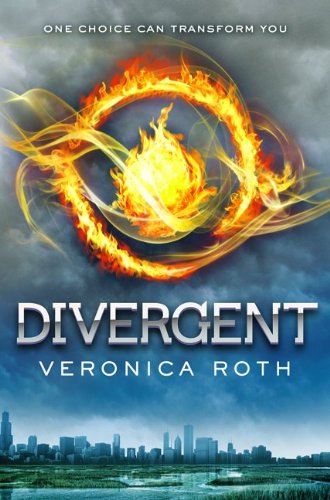
- Divergent
series10 books2011
similar byscience fictiondystopia+1 more
Divergent, also known as The Divergent Series, is a series of young adult dystopian novels by American novelist Veronica Roth set in a post-apocalyptic dystopian Chicago. The trilogy consists of Divergent (2011), Insurgent (2012), and Allegiant (2013). A related book, Four (2014), presents a series of short stories told from the perspective of one of the trilogy's characters, the male love interest Tobias. A later short story, We Can Be Mended (2018), serves as an epilogue five years after the events of the trilogy, again from Tobias/Four's perspective.
- When the Sleeper Wakes
H. G. Wellsstandalone novel1899
similar byrebellion and revolutionscience fictiondystopia
Graham, an insomniac Englishman in 1890s London, takes a course of sleep-inducing drugs and falls into a coma that lasts two centuries. He wakes in the year 2100 to find his investments have compounded, through a ruling body called the White Council, into effective ownership of most of the world's wealth and power, making him, on paper, humanity's master, and in practice, its prisoner, held under guard while the Council governs in his name. A rebel faction led by a man named Ostrog frees him, hoping to use his symbolic authority to spark an uprising against the Council. An early H. G. Wells dystopia about inherited power and manufactured consent.
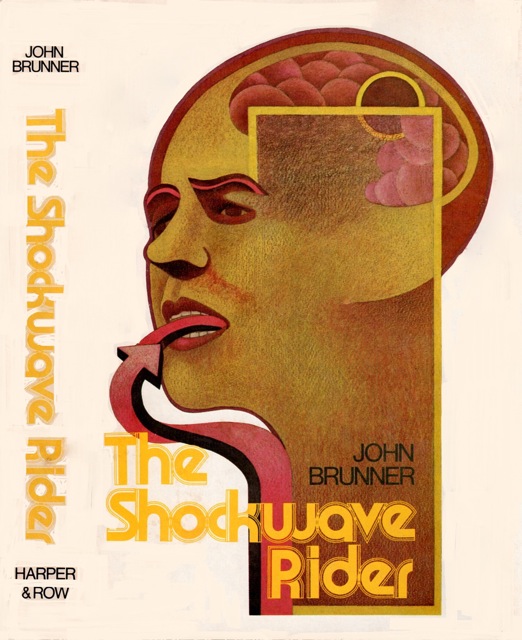
- The Shockwave Rider
John Brunnerstandalone novel1975
similar byscience fictiondystopia+1 more
The Shockwave Rider is a science fiction novel by John Brunner, originally published in 1975. It is notable for its hero's use of computer hacking skills to escape pursuit in a dystopian future, and for the coining of the word "worm" to describe a program that propagates itself through a computer network. It also introduces the concept of a Delphi pool, perhaps derived from the RAND Corporation's Delphi method – a prediction market on world events which bears close resemblance to DARPA's controversial and cancelled Policy Analysis Market.
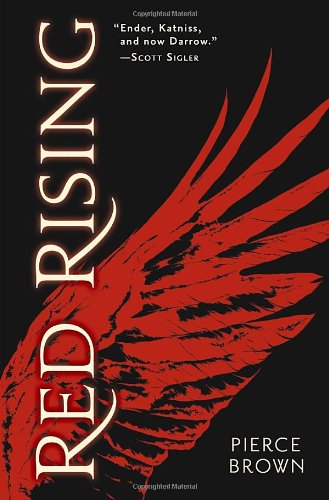
- Red Rising
series13 books2014
similar byrebellion and revolutionscience fictiondystopia
Pierce Brown's Red Rising follows Darrow, a lowborn 'Red' miner on a colonized Mars who discovers his caste's suffering is a lie sustained by the ruling Gold elite, and infiltrates their ranks to destroy the system from within. The series expands from a single-protagonist revenge story into a sprawling multi-book war across the solar system, eventually following an ensemble cast beyond Darrow alone, and combines Roman-inspired factional politics with brutal, competition-driven action set pieces.
- Shadrach in the Furnace
Robert Silverbergstandalone novel1976
similar byscience fictiondystopia+1 more
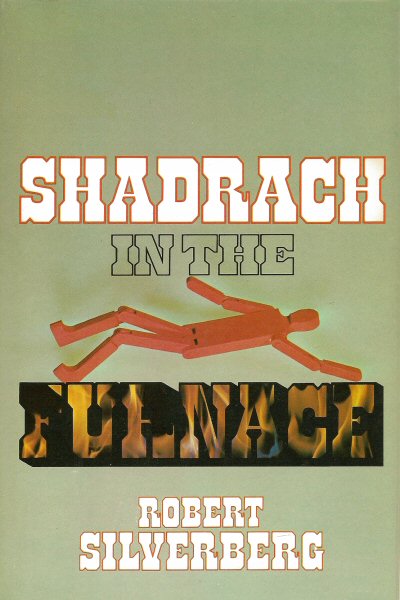
Shadrach in the Furnace is a science fiction novel by American writer Robert Silverberg, first published as a serial in Analog Science Fiction and Fact magazine in the August, September, and October 1976 issues. It was subsequently published by Bobbs Merrill in 1976. The novel was nominated in 1976 for the Nebula Award, and in 1977 for the Hugo Award.
- This Perfect Day
Ira Levinstandalone novel1970
similar byrebellion and revolutionscience fictiondystopia
This Perfect Day is a science fiction novel by American writer Ira Levin, about a technocratic dystopia. Levin won a Prometheus Award in 1992 for this novel. This Perfect Day is one of two Levin novels yet to be adapted to film.
- Gather, Darkness!
Fritz Leiberstandalone novel1950
similar byscience fictiondystopia+1 more
GATHER, DARKNESS! is a science-fiction classic. It tells the story of Armon Jarles, a man on the edge, living amidst the disputes of two rival powers at large in the world. 360 years after a nuclear holocaust ravaged mankind, throwing society back into the dark ages, the world is fraught with chaos and superstition. The new rulers over the masses of humanity are the techno-priests of the Great God, endowed with scientific knowledge lost to the rest of humanity. Jarles, originally of peasant descent, rises to become a priest of the Great God. He knows the gospel propagated by the priests to be a fraud, based on illusion and trickery. Even more offensive to him is the paucity of true believers among the priesthood. One day he rebels against his priestly training and attempts to incite the peasants to rise up and demand freedom, but they are not ready. Jarles is not the only dissenter trying to sabotage and expose the false theocracy of the priesthood—witchcraft is slowly gaining strength and support among the populace. Although Jarles is unaware, his rebellion against the power of the priests is about to throw him headlong into the middle of the greatest holy war the world has ever seen.
- The Gate to Women's Country
Sheri S. Tepperstandalone novel1988
similar byscience fictiondystopia+1 more
The Gate to Women's Country is a post-apocalyptic novel by American writer Sheri S. Tepper, published in 1988. It describes a world set three hundred years into the future after a catastrophic war which has fractured the United States into several nations.
- Our Friends from Frolix 8
Philip K. Dickstandalone novel1970
similar byrebellion and revolutionscience fictiondystopia
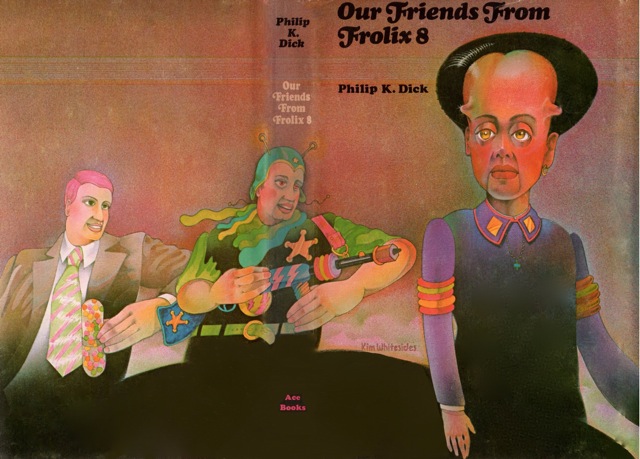
Our Friends from Frolix 8 is a science fiction novel by American writer Philip K. Dick. It was written from 1968 to 1969 and was published in 1970 by Ace Books. The novel is set in the 22nd century, when humanity is ruled by mutated humans, "New Men" and "Unusuals", while normal "Old Men" are discriminated against. The story follows Nick Appleton, a low-class Old Man worker who becomes a subversive to the system, and Willis Gram, the Unusual ruler of the Earth. Separately, resistance leader Thors Provoni has left the planet to find an ally to the Old Men, finally returning with an alien from far away in space. The novel is best known for a single scene where the characters discuss the dead body of God having been found in space.
- Native Tongue
series3 books1984
completed
similar byrebellion and revolutionscience fiction+1 more
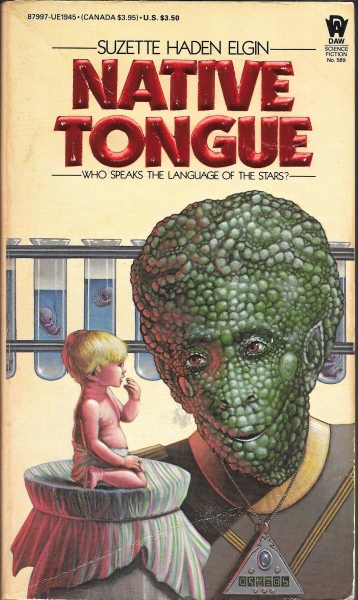
Suzette Haden Elgin's Native Tongue trilogy (1984-1994) is set in a dystopian future America where women have been stripped of legal rights, and follows a family of professional interpreter-linguists whose women secretly develop Láadan, a constructed language built to express female experience that the existing languages of men can't capture. The trilogy follows the spread of Láadan among the oppressed women of the linguist households as an act of quiet resistance against the patriarchal order around them.
- Hainish
series33 books1964
completed
similar byscience fiction+1 more
The Hainish Cycle consists of a number of science fiction novels and stories by Ursula K. Le Guin. The cycle is set in a future history that features civilizations of human beings on planets orbiting a number of nearby stars, including Terra ("Earth"); these humans are contacting each other for the first time and establishing diplomatic relations, as well as setting up a confederacy under the guidance of the oldest of the human worlds, the peaceful planet Hain. In this history, human beings did not evolve on Earth, but they were instead the result of interstellar colonies planted by Hain in the distant past, after which interstellar travel ceased for an extended period. Some of the human races have new genetic traits, a result of ancient Hainish experiments in genetic engineering; this includes people who can dream while awake, and a world of hermaphroditic people who only enter active sexuality once per month, not knowing which sex will manifest in them. In keeping with Le Guin's narrative approach, she uses varied social and environmental settings to explore the anthropological and sociological outcomes of human evolution in those environments. The author often discounted the characterization of a so-called "Hainish Cycle".
- Colony
Ben Bovastandalone novel1978
similar byscience fictiondystopia+1 more
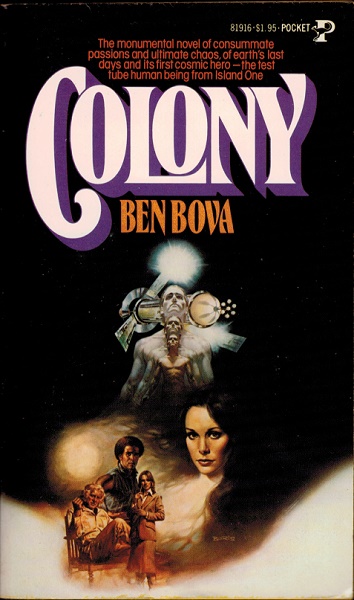
Colony continues the story Ben Bova began in Millennium, following astronaut-turned-administrator Chet Kinsman years later as the head of an orbiting space habitat that has become Earth's only real refuge from a planet buckling under overpopulation, food shortages and unrest. Getting a place in the habitat is a matter of life and death for millions who will never be chosen, and as Earth's governments grow more desperate to control or dismantle the colony outright, Kinsman has to decide how far he'll go to protect the world he's built off-world. Bova later folded both novels together into the omnibus The Kinsman Saga. Part of Ben Bova's Chet Kinsman series.
- Shade's Children milieu
series2 books1997
similar byrebellion and revolutionscience fictiondystopia
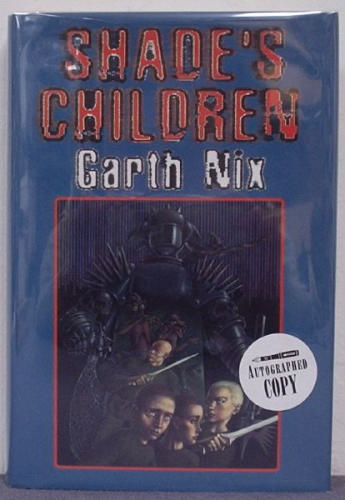
Shade's Children is set on an Earth where all adults vanished overnight fourteen years earlier, leaving children to be harvested at puberty by the machines that now run the world, unless they escape into hiding with Shade, a mysterious AI-like protector. Garth Nix's 1997 novel is a single, self-contained book rather than a series, though its bleak post-apocalyptic premise has drawn comparisons to his other work.
- The Children of Men
P. D. Jamesstandalone novel1992
similar byrebellion and revolutionscience fictiondystopia
"The human race has become infertile, and under the despotic rule of Xan Lyppiatt, the Warden of England the old are despairing and the young cruel. Theo Faren, a cousin of the Warden, lives a solitary life in this ominous atmosphere. That is, until a chance encounter with a young woman leads him into contact with a group of dissenters. Suddenly his life is changed irrevocably, as he faces agonising choices which could affect the future of mankind." (pdjames.co.uk)
- The Collected Science Fiction and Fantasy of Jack London
series6 books1906
completed
similar byscience fiction+2 more
- Chaos Walking
series5 books2008
similar byscience fictiondystopia+1 more
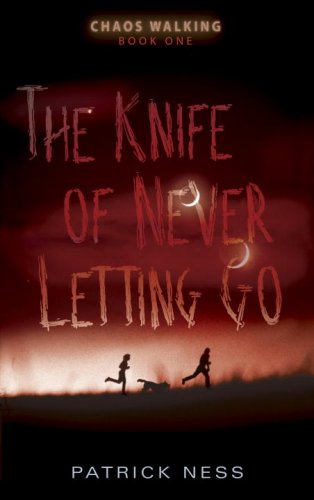
Chaos Walking is a young adult science fiction series written by American-British novelist Patrick Ness. It is set in a dystopian world where all living creatures can hear each other's thoughts in a stream of images, words, and sounds called Noise. The series is named after a line in the first book: "The Noise is a man unfiltered, and without a filter, a man is just chaos walking." The series consists of a trilogy of novels and three short stories.