Loreful
HomeDiscover
Search series, authors…⌘K
Loreful

Reading orders for SF/F series and shared universes — with your place kept in every one.

Explore

UniversesSeriesWorksAuthorsAtlas

Help

FAQAboutSite map

Account & legal

Sign inCreate accountPrivacyTerms

Data

Built on ISFDB, Wikipedia, Wikidata and Open Library. Curated reading orders carry their reasoning on the page; the rest follow publication order. Data sources & licenses

© Loreful · data: ISFDB · CC BY

More like Ile Forest

anchored on:literary & generalsecondary worldhistorical fictioncountryside & villagereflective

but

Mood

The mood the book leaves you in.

  • The reading experience is propelled by journeys, exploration, and physical risk; excitement and forward momentum dominate over dread or introspection.
  • Joy and loss are deliberately mixed; the resolution grants characters something real while taking something else away, leaving warmth and sorrow together.
  • The book demands work from the reader — dense prose, difficult structure, unfamiliar ideas, or morally uncomfortable material — as part of its intended effect.
  • Grim events, cruelty, or despair dominate the atmosphere, and the book does not soften them with comfort or comic relief.
  • The atmosphere is quietly unsettling — wrongness, unease, and the uncanny pervade the book without necessarily escalating into overt horror.
  • The book is built to move the reader; character feeling is foregrounded and major scenes aim at a strong emotional response.
  • Humor is a primary aim and the prose plays for laughs — comic situations, wit, or dialogue produce sustained comedy, not occasional levity.
  • The book insists that things can improve; effort and decency are shown to matter, and the arc bends toward better outcomes even through hardship.
  • The book teaches as it goes — real facts, history, science, or craft are conveyed in enough depth that learning is part of the reading experience.
  • The book is designed to uplift and motivate, presenting perseverance or achievement in a way that invites the reader to aspire or act.
  • The overall register is cheerful and easygoing; stakes are kept gentle and the book avoids dwelling on pain or dread.
  • Withheld information drives the experience; the book sustains enigmas and secrets the reader wants resolved, whatever its genre.
  • The book is contemplative and inward-looking, giving more weight to thought, memory, and meaning than to external events.
  • The book works as comfort reading — low tension, a soothing pace, and an atmosphere the reader can unwind in.
  • Grief, loss, or melancholy set the dominant register, and the book lets sorrow stand rather than resolving it into comfort.
  • Sustained suspense is the point; the book keeps the reader braced for what happens next through danger, pressure, or impending revelation.
  • Playful invention and charm define the register — fanciful conceits, light absurdity, and a narration that delights in its own oddity.

About

What the story runs on.

  • Stories in which gods and deities act as characters — walking the world, meddling in mortal lives, or dying.
  • Stories structured as a quest — a journey undertaken to find, deliver, or destroy something of great import.
  • Stories in which staying alive against nature, catastrophe, or scarcity is the central problem.
  • Stories of lovers kept apart by law, family, faith, or station, where the obstacle to love is the plot.
  • Stories in which a friendship — its making, testing, or loss — is the emotional center.
  • Stories of growing up — a young protagonist crossing from childhood into adult knowledge and responsibility.
  • Stories about who a character truly is — self-discovery, doubled lives, and the search for a self.
  • Stories about mourning — living through the death of a loved one and what loss does to the survivors.
  • Stories in which belief, doubt, and religious life are the central subject, from crises of faith to life inside a religious community.
  • Stories in which a buried family truth — hidden parentage, crimes, or shames — surfaces and reorders the present.
  • Stories driven by maneuvering for power — factions, conspiracies, and statecraft conducted in shadow.
  • Stories in which war itself is the subject — combat, occupation, and what warfare does to soldiers and civilians.

Shelf

Where it sits in the library.

    • Fiction built on magic or other supernatural elements that have no scientific explanation.
    • Secondary-world fantasy at large scale, where the fate of nations or the world turns on the protagonists' struggle.
    • Fantasy set in a recognizably modern city or contemporary world where the supernatural intrudes on everyday life.
    • Fantasy that blends in horror's atmosphere and imagery, keeping a fantastical frame around grim or frightening material.
    • Action-driven fantasy following warriors or rogues with personal stakes against sorcerous threats, rather than world-spanning conflicts.
    • Fantasy set in a real historical period or a close analogue of one, with magic woven into the era.
    • Fantasy in which protagonists cross from the ordinary world into another world through a portal or similar passage.
    • Fiction that retells or reworks a traditional fairy tale in a new form or setting.
    • Fantasy drawing directly on myths, legends, and folklore, retelling them or building on their figures and logic.
    • Fantasy of ghosts, vampires, shapeshifters, psychics, and similar phenomena, usually set in an otherwise ordinary world.
    • Fiction mixing science-fictional trappings with overtly magical or impossible elements in one setting.
    • Low-stakes fantasy emphasizing comfort, community, and everyday pleasures over conflict and peril.
    • Speculative fiction of pervasive moral ambiguity, violence, and cynicism that rejects heroic conventions — fantasy and SF alike.
      • Fiction that extrapolates from science and technology — future societies, space travel, or speculative inventions — within at least nominally natural laws.
      • Science fiction of interstellar scope — starships, galactic polities, and adventure across star systems.
      • Science fiction committed to scientific rigor, where technical plausibility constrains the story.
      • Science fiction centered on armed forces and warfare, told largely from a military point of view.
      • Science fiction of networked, corporate-dominated near futures, pairing high technology with social decay.
      • Science fiction styled on nineteenth-century steam-powered technology, often in a Victorian or pseudo-Victorian setting.
      • Fiction depicting an oppressive or catastrophic society, presented as a warning.
      • Fiction set after civilization's collapse, following survivors in the ruins of the old world.
      • Fiction in which characters move between past and future, and the mechanics or consequences of that travel drive the plot.
      • Fiction exploring a world where a historical event went differently and history diverged from ours.
      • Science fiction about humanity's first encounter and communication with an alien intelligence.
      • Science fiction in which extraterrestrial forces attack or occupy Earth and humanity resists.
      • Fiction whose primary aim is to frighten or unsettle the reader through dread, menace, or the monstrous.
      • Horror of vast, indifferent, incomprehensible entities before which humanity is insignificant, in the Lovecraft tradition.
      • Horror of decaying houses, buried family secrets, and oppressive atmosphere in the Gothic literary tradition.
      • Horror centered on hauntings and the returning dead.
      • Horror located in the mind — paranoia, obsession, and unreliable perception rather than external monsters.
      • Horror built around the reanimated dead and survival amid their outbreaks.
      • Horror defined by explicit, transgressive gore that refuses to cut away from violence.
      • Speculative fiction of the strange and uncanny that resists both natural explanation and standard genre categories.
      • Fiction organized around solving a crime or puzzle, typically following an investigator toward the identification of a culprit.
      • A puzzle-first mystery that lays out clues so the culprit's identity can be deduced before the reveal.
      • Crime fiction of moral ambiguity, fatalism, and hard-edged style, set among the corrupt and the doomed.
      • A mystery following the realistic routines of police work — forensics, interviews, and case-building.
      • A gentle mystery with an amateur sleuth, a small community, and violence kept off the page.
      • A mystery set in a past era, where the investigation works within that period's methods and society.
      • Fast-paced fiction driven by imminent danger, pursuit, or high-stakes conspiracy, built to sustain tension.
      • A thriller of espionage — agents, tradecraft, and intelligence services in conflict.
      • A thriller centered on lawyers and the courtroom, where litigation carries the suspense.
      • A thriller driven by detailed contemporary or near-future technology, often military or scientific.
      • A thriller whose tension comes from mental states and manipulation between characters rather than external action.
      • Fiction whose central plot is a romantic relationship and its development toward an emotionally satisfying resolution.
      • Romance in which one or both partners are supernatural beings, blending fantasy elements into the love story.
      • A fantasy-romance hybrid in which the romantic arc and the fantasy plot carry equal weight.
      • Romance set in a past era, with courtship shaped by the period's society and manners.
      • Romance set in the present day, without supernatural or historical elements.
      • Fiction set in a real past period, where the historical setting materially shapes characters and events.
        • General and literary fiction emphasizing prose style, character interiority, or formal ambition over genre plot conventions.
        • Fiction in a realistic world where magical events occur and are treated as ordinary, in the tradition of Latin American literature.
        • Fiction that ridicules people, institutions, or society in order to criticize them.
        • Fiction of dreamlike, irrational imagery and logic that breaks from realistic representation.
        • Fiction that plays with narrative convention through metafiction, fragmentation, and self-reference.
        • Fiction propelled by journeys, exploration, and physical peril, where action and survival carry the plot.
        • Adventure fiction of ships and seafaring — naval engagements, voyages, and life at sea.
        • Fiction of the American frontier West — gunmen, ranchers, and lawmen, typically in the late nineteenth century.
        • Fiction centered on soldiers, campaigns, and the experience of warfare, historical or imagined.
          • Fiction written primarily to amuse, using comedic situations, wit, or parody as its organizing principle.
            • Multi-generational fiction following a family or dynasty across decades, with inheritance and kinship as the through-line.
              • Fiction whose world runs on explicit game mechanics — levels, stats, and skills that characters can see and exploit.
                • Fiction about costumed or superpowered heroes and their conflicts with comparable villains.

                Practical

                How long a commitment, whether it stands alone, and whether it has finished.

                Tap a chip to ask for it · tap again to rule it out · once more to clear. Numbers show what would be left.

                • Cover of The Testament of Yves Gundron
                  The Testament of Yves Gundron

                  Emily Barton · standalone novel · 2000

                  similar byreflectiveliterary & generalhistorical fictionsecondary worldcountryside & village

                  Set in an unnamed country, in the village of Mandragora, this novel opens with a description of a harsh, rural existence that sounds like something out of the dark ages. Then one day, farmer Yves Gundron invents the harness and life begins to change. Yves's manuscript, which bears witness to these changes, has been prepared for publication by an academic named Ruth Blum—her notations supplement Yves's story. But what at first seems a historical document proves to be something else entirely. Yves's brother, Mandrik le Chouchou, the town mystic, regales his fellow villagers with exotic tales of his travels to "Indo-China." And when Yves recalls the words of a song that is recognizably a blues lyric, we know that either Ruth Blum is up to something or Mandragora is not what it seems.

                • Cover of Erewhon
                  Erewhon

                  series · 4 books · 1872

                  completed

                  similar byreflectiveliterary & generalsecondary world

                • Cover of Earthsea Cycle
                  Earthsea Cycle

                  series · 18 books · 1964

                  completed

                  part of Earthsea

                  similar byreflectivesecondary world

                  The Earthsea Cycle, also known as Earthsea, is a series of high fantasy books written by American author Ursula K. Le Guin. Beginning with A Wizard of Earthsea (1968), The Tombs of Atuan (1970), and The Farthest Shore (1972), the series was continued in Tehanu (1990), and Tales from Earthsea and The Other Wind. In 2018, all the novels and short stories were published in a single volume, The Books of Earthsea: The Complete Illustrated Edition, with artwork by Charles Vess.

                • Cover of Orsinia
                  Orsinia

                  series · 16 books · 1961

                  completed

                  similar byreflectiveliterary & generalhistorical fiction+1 more

                  Orsinia is Ursula K. Le Guin's invented Central European country, used as the setting for character-driven historical fiction rather than her more famous science fiction and fantasy: the linked short stories of Orsinian Tales and the novel Malafrena, set among failed 1820s revolutionaries. There's no ongoing plot connecting the pieces; Orsinia functions more as a shared place and history than a series with continuing characters.

                • Cover of Unclay
                  Unclay

                  T. F. Powys · standalone novel · 1931

                  similar byreflectiveliterary & generalcountryside & village

                  Unclay is an allegorical novel written by English writer T. F. Powys, first published in 1931. This was the last novel published during Powys' life.

                • Cover of Piranesi
                  Piranesi

                  Susanna Clarke · standalone novel · 2020

                  similar byreflectiveliterary & general

                  A man lives in a huge isolated labyrinthine building partially submerged in an ocean, together with another man and 13 skeletons, which is the only world he recalls.

                • Cover of The Substance of a Dream
                  The Substance of a Dream

                  F. W. Bain · standalone novel · 1919

                  similar byreflectiveliterary & generalsecondary world

                  Presented as a translation of an unidentified Hindu myth, but is a fantasy of Bain's. Primarily non-genre. A man has a dream about a beautiful woman who he met and turned out to be the Queen of the land. In his lust for her, he sacrifices his kingdom to spend a night with her. She does so, but not out of love, and refuses to have anything to do with him afterwards. He then schemes and threatens murder to win her back, in vain.

                • Cover of The Forgotten Beasts of Eld
                  The Forgotten Beasts of Eld

                  Patricia A. McKillip · standalone novel · 1974

                  similar byreflectivesecondary world

                  The Forgotten Beasts of Eld is a fantasy novel by American writer Patricia A. McKillip, and illustrators Peter Schaumann in 1974, and Alicia Austin in 1981, first published by Atheneum Publishers in 1974, and by Magic Carpet Books in 1996. It is the winner of the 1975 World Fantasy Award for Best Novel. The book centers on Sybel, a woman previously cut off from the rest of the world of Eldwold, as she learns to live and love in the world outside of the one she once knew.

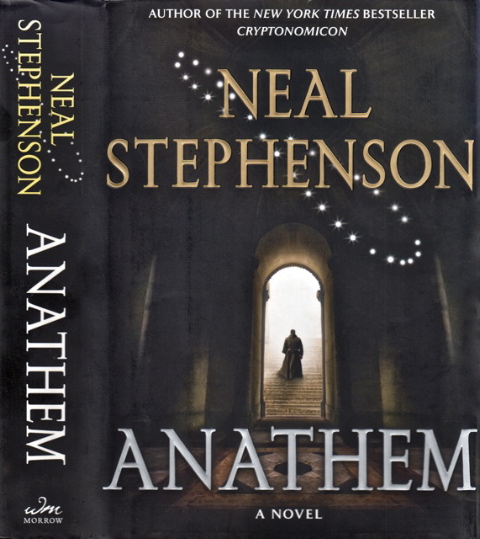
                • Cover of Anathem
                  Anathem

                  Neal Stephenson · standalone novel · 2008

                  similar byreflectivesecondary world

                  On a planet where quasi-monastic academic institutions have existed alongside the secular world for thousands of years, a young scholar from one such institution becomes part of a planetwide effort to muster an appropriate reaction to a shocking discovery.

                • Cover of Grimus
                  Grimus

                  Salman Rushdie · standalone novel · 1975

                  similar byreflectiveliterary & general

                  After drinking a mysterious fluid that grants him immortality, the young Axona man Flapping Eagle sets out on a centuries-long search for his vanished sister, drifting through identities and eras as the decades pass without aging him. The trail eventually leads him to a hidden dimension reachable through the Mediterranean, and to Calf Island, a refuge for immortals who have grown weary of endless life but cannot bring themselves to give it up, ruled by a strange and rigid order all its own. Salman Rushdie's first novel, an early, genre-inflected departure from the realism of his later, more famous work.

                • Cover of Kesh / Always Coming Home
                  Kesh / Always Coming Home

                  series · 10 books · 1984

                  similar byreflectiveliterary & generalsecondary world

                  Ursula K. Le Guin's Always Coming Home imagines the Kesh, a society living in California's Napa Valley long after an unspecified societal collapse, presented not as a conventional novel but as a found archive of Kesh stories, poems, glossaries and 'anthropological' material assembled by a fictional visiting scholar-narrator. The book was originally released with a companion cassette, Music and Poetry of the Kesh, featuring original compositions by Todd Barton for instruments and songs described in the text. It's one of Le Guin's most formally experimental works, closer to an invented ethnography than a traditional science-fiction narrative.

                • Cover of A History of the World in 10½ Chapters
                  A History of the World in 10½ Chapters

                  Julian Barnes · standalone novel · 1989

                  similar byreflectiveliterary & general

                  A History of the World in 10½ Chapters by English writer Julian Barnes published in 1989 is usually described as a novel, though it is actually a collection of subtly connected short stories, in different styles. In a review Joyce Carol Oates describes them as "a gathering of prose pieces, some fiction, others rather like essays".

                • Cover of Zimiamvian Trilogy
                  Zimiamvian Trilogy

                  series · 4 books · 1922

                  completed

                  similar bysecondary world+1 more

                  The Zimiamvian Trilogy is a series of fantasy novels by English author E. R. Eddison.Mistress of Mistresses (1935) A Fish Dinner in Memison (1941) The Mezentian Gate (1958)

                • Cover of Astonishing the Gods
                  Astonishing the Gods

                  Ben Okri · standalone novel · 1995

                  similar byreflectiveliterary & general

                  Astonishing the Gods is a novel by Nigerian writer Ben Okri.

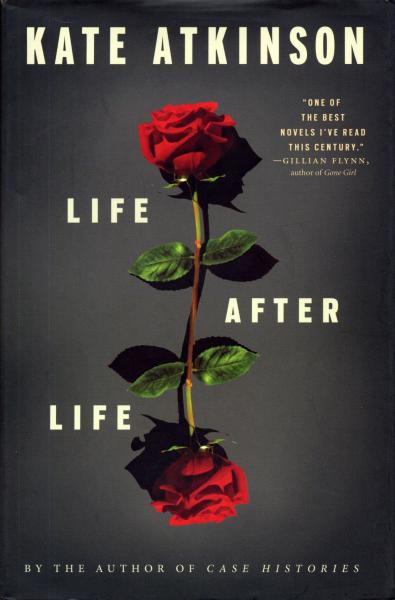
                • Cover of Todd Family
                  Todd Family

                  series · 2 books · 2013

                  similar byreflectiveliterary & generalhistorical fiction

                  Kate Atkinson's Life After Life gives Ursula Todd, born on a snowy night in 1910, a strange gift: whenever she dies, she's born again into a slightly altered version of the same life, gradually piecing together enough intuition across her many deaths to try to change the course of the twentieth century's worst events. The companion novel A God in Ruins turns to Ursula's brother Teddy, a bomber pilot, following his one, single life forward from the war through old age. The two books share a family and a set of preoccupations -- memory, war, chance -- without forming a conventional sequential series.

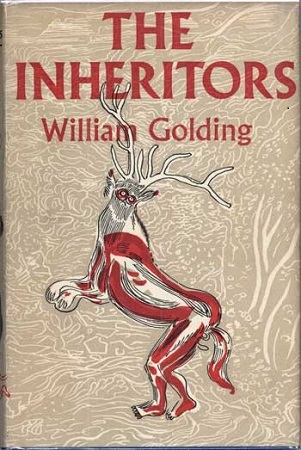
                • Cover of The Inheritors
                  The Inheritors

                  William Golding · standalone novel · 1955

                  similar byreflectiveliterary & generalhistorical fiction

                  A small tribe of Neanderthalians suddenly comes in contact with modern Homo sapiens, which leads to mutual incomprehension : the former's awe and fear in front of "the new people" has for counterpart the horror and disgust for these forest-dwelling devils they inspire to the latter. Golding opposes, in his usual, pessimistic way, the doomed, slow-witted but gentle and unselfish Homo neanderthalensis to their "inheritors", more intelligent and inventive, but already affected by inner quarrels, jealousy and violence.

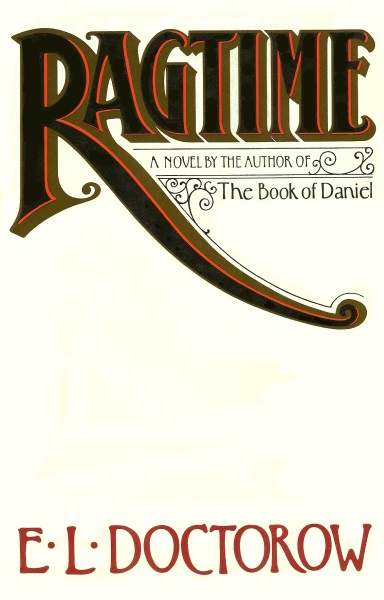
                • Cover of Ragtime
                  Ragtime

                  E. L. Doctorow · standalone novel · 1975

                  similar byreflectiveliterary & generalhistorical fiction

                  Ragtime is a 1975 historiographic metafiction novel by American author E. L. Doctorow. The novel mixes historical figures and fictional characters together in a sweeping narrative set in the New York City area from 1902 to 1915. With its layered storyline, Ragtime explores themes of racial injustice, class division, and the American Dream in American society.

                • Cover of Orlando: A Biography
                  Orlando: A Biography

                  Virginia Woolf · standalone novel · 1928

                  similar byreflectiveliterary & generalhistorical fiction

                  Orlando: A Biography is a novel by Virginia Woolf, first published on 11 October 1928, inspired by the tumultuous family history of the aristocratic poet and novelist Vita Sackville-West, Woolf's lover and close friend. It is a history of English literature in satiric form. The book describes the adventures of a poet who changes from man to woman and lives for centuries, meeting the key figures of English literary history. Considered a feminist classic, the book has been written about extensively by scholars of women's writing and gender and transgender studies.

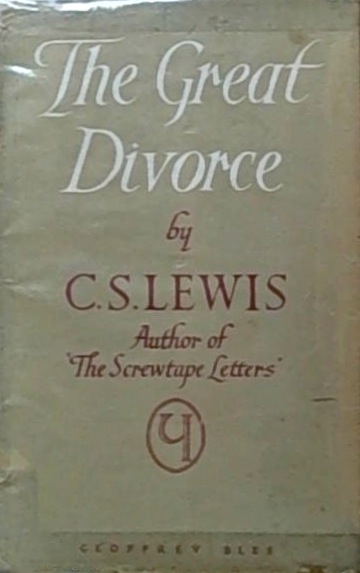
                • Cover of The Great Divorce
                  The Great Divorce

                  C. S. Lewis · standalone novel · 1945

                  similar byreflectiveliterary & general

                  The Great Divorce is a novel by the British author C. S. Lewis, published in 1945, based on a theological dream vision of his in which he reflects on the Christian conceptions of Heaven and Hell.

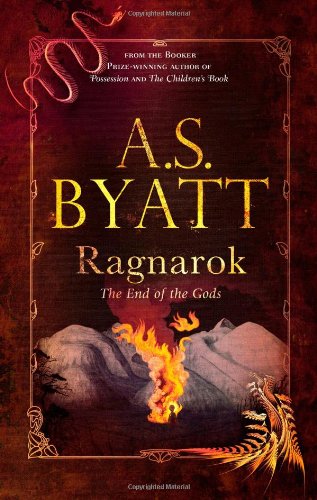
                • Cover of Ragnarok: The End of the Gods
                  Ragnarok: The End of the Gods

                  A. S. Byatt · standalone novel · 2011

                  similar byreflectiveliterary & general

                  Ragnorak: The End of the Gods is a 2011 novel written by English critic and novelist A. S. Byatt. Written for the Canongate Myth Series, Byatt chose to make the book about Norse mythology so she could grapple the "appalling finality" of Ragnarök.

                • Cover of Victory City
                  Victory City

                  Salman Rushdie · standalone novel · 2023

                  similar byreflectiveliterary & generalhistorical fiction

                  Victory City is a novel by Salman Rushdie published in February 2023. It is Rushdie's fifteenth novel.

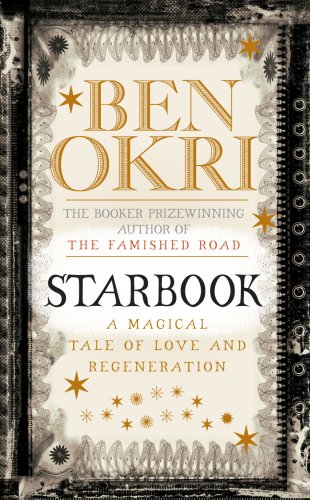
                • Cover of Starbook
                  Starbook

                  Ben Okri · standalone novel · 2007

                  similar byreflectiveliterary & generalsecondary world

                  Starbook, subtitled "A Magical Tale of Love and Regeneration", is a 2007 novel by Nigerian poet and novelist Ben Okri.

                • Cover of Waiting for the Barbarians
                  Waiting for the Barbarians

                  J. M. Coetzee · standalone novel · 1980

                  similar byreflectiveliterary & general

                  WorldCat: For decades the Magistrate has run the affairs of a tiny frontier settlement, ignoring the impending war between the barbarians and his Empire. But when the interrogation experts arrive, he is jolted into sympathy with the victims and an act of rebellion which sees him imprisoned as an enemy of the state.

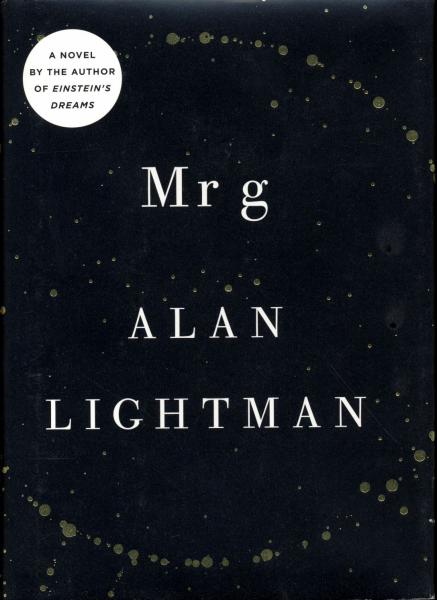
                • Cover of Mr g: A Novel About the Creation
                  Mr g: A Novel About the Creation

                  Alan Lightman · standalone novel · 2012

                  similar byreflectiveliterary & general

                  Mr g is a 2012 novel by Alan Lightman. The book was released on January 24, 2012, by Pantheon Books and the book is narrated by Mr g as he describes the process of creation.