Loreful
HomeDiscover
Search series, authors…⌘K
Loreful

Reading orders for SF/F series and shared universes — with your place kept in every one.

Explore

UniversesSeriesWorksAuthorsAtlas

Help

FAQAboutSite map

Account & legal

Sign inCreate accountPrivacyTerms

Data

Built on ISFDB, Wikipedia, Wikidata and Open Library. Curated reading orders carry their reasoning on the page; the rest follow publication order. Data sources & licenses

© Loreful · data: ISFDB · CC BY

More like Illywhacker

anchored on:literary & generaloceaniamagical realismidentitywhimsicalunreliable narrator

but

Mood

The mood the book leaves you in.

  • The reading experience is propelled by journeys, exploration, and physical risk; excitement and forward momentum dominate over dread or introspection.
  • Joy and loss are deliberately mixed; the resolution grants characters something real while taking something else away, leaving warmth and sorrow together.
  • The book demands work from the reader — dense prose, difficult structure, unfamiliar ideas, or morally uncomfortable material — as part of its intended effect.
  • Grim events, cruelty, or despair dominate the atmosphere, and the book does not soften them with comfort or comic relief.
  • The atmosphere is quietly unsettling — wrongness, unease, and the uncanny pervade the book without necessarily escalating into overt horror.
  • The book is built to move the reader; character feeling is foregrounded and major scenes aim at a strong emotional response.
  • Humor is a primary aim and the prose plays for laughs — comic situations, wit, or dialogue produce sustained comedy, not occasional levity.
  • The book insists that things can improve; effort and decency are shown to matter, and the arc bends toward better outcomes even through hardship.
  • The book teaches as it goes — real facts, history, science, or craft are conveyed in enough depth that learning is part of the reading experience.
  • The book is designed to uplift and motivate, presenting perseverance or achievement in a way that invites the reader to aspire or act.
  • The overall register is cheerful and easygoing; stakes are kept gentle and the book avoids dwelling on pain or dread.
  • Withheld information drives the experience; the book sustains enigmas and secrets the reader wants resolved, whatever its genre.
  • The book is contemplative and inward-looking, giving more weight to thought, memory, and meaning than to external events.
  • The book works as comfort reading — low tension, a soothing pace, and an atmosphere the reader can unwind in.
  • Grief, loss, or melancholy set the dominant register, and the book lets sorrow stand rather than resolving it into comfort.
  • Sustained suspense is the point; the book keeps the reader braced for what happens next through danger, pressure, or impending revelation.
  • Playful invention and charm define the register — fanciful conceits, light absurdity, and a narration that delights in its own oddity.

About

What the story runs on.

  • Stories in which extraterrestrial beings are central — as characters, cultures, or the object of the plot.
  • Stories structured as a quest — a journey undertaken to find, deliver, or destroy something of great import.
  • Stories in which staying alive against nature, catastrophe, or scarcity is the central problem.
  • Stories of lovers kept apart by law, family, faith, or station, where the obstacle to love is the plot.
  • Stories in which a friendship — its making, testing, or loss — is the emotional center.
  • Stories of growing up — a young protagonist crossing from childhood into adult knowledge and responsibility.
  • Stories about who a character truly is — self-discovery, doubled lives, and the search for a self.
  • Stories about mourning — living through the death of a loved one and what loss does to the survivors.
  • Stories in which a buried family truth — hidden parentage, crimes, or shames — surfaces and reorders the present.
  • Stories driven by maneuvering for power — factions, conspiracies, and statecraft conducted in shadow.
  • Stories in which war itself is the subject — combat, occupation, and what warfare does to soldiers and civilians.
  • Stories organized around investigating a killing — the case, the clues, and the pursuit of the killer, in any genre's clothing.

Shelf

Where it sits in the library.

    • Fiction built on magic or other supernatural elements that have no scientific explanation.
    • Secondary-world fantasy at large scale, where the fate of nations or the world turns on the protagonists' struggle.
    • Fantasy set in a recognizably modern city or contemporary world where the supernatural intrudes on everyday life.
    • Fantasy that blends in horror's atmosphere and imagery, keeping a fantastical frame around grim or frightening material.
    • Action-driven fantasy following warriors or rogues with personal stakes against sorcerous threats, rather than world-spanning conflicts.
    • Fantasy set in a real historical period or a close analogue of one, with magic woven into the era.
    • Fantasy in which protagonists cross from the ordinary world into another world through a portal or similar passage.
    • Fiction that retells or reworks a traditional fairy tale in a new form or setting.
    • Fantasy drawing directly on myths, legends, and folklore, retelling them or building on their figures and logic.
    • Fantasy of ghosts, vampires, shapeshifters, psychics, and similar phenomena, usually set in an otherwise ordinary world.
    • Fiction mixing science-fictional trappings with overtly magical or impossible elements in one setting.
    • Low-stakes fantasy emphasizing comfort, community, and everyday pleasures over conflict and peril.
    • Speculative fiction of pervasive moral ambiguity, violence, and cynicism that rejects heroic conventions — fantasy and SF alike.
      • Fiction that extrapolates from science and technology — future societies, space travel, or speculative inventions — within at least nominally natural laws.
      • Science fiction of interstellar scope — starships, galactic polities, and adventure across star systems.
      • Science fiction committed to scientific rigor, where technical plausibility constrains the story.
      • Science fiction centered on armed forces and warfare, told largely from a military point of view.
      • Science fiction of networked, corporate-dominated near futures, pairing high technology with social decay.
      • Science fiction styled on nineteenth-century steam-powered technology, often in a Victorian or pseudo-Victorian setting.
      • Fiction depicting an oppressive or catastrophic society, presented as a warning.
      • Fiction set after civilization's collapse, following survivors in the ruins of the old world.
      • Fiction in which characters move between past and future, and the mechanics or consequences of that travel drive the plot.
      • Fiction exploring a world where a historical event went differently and history diverged from ours.
      • Science fiction about humanity's first encounter and communication with an alien intelligence.
      • Science fiction in which extraterrestrial forces attack or occupy Earth and humanity resists.
      • Fiction whose primary aim is to frighten or unsettle the reader through dread, menace, or the monstrous.
      • Horror of vast, indifferent, incomprehensible entities before which humanity is insignificant, in the Lovecraft tradition.
      • Horror of decaying houses, buried family secrets, and oppressive atmosphere in the Gothic literary tradition.
      • Horror centered on hauntings and the returning dead.
      • Horror located in the mind — paranoia, obsession, and unreliable perception rather than external monsters.
      • Horror built around the reanimated dead and survival amid their outbreaks.
      • Horror defined by explicit, transgressive gore that refuses to cut away from violence.
      • Speculative fiction of the strange and uncanny that resists both natural explanation and standard genre categories.
      • Fiction organized around solving a crime or puzzle, typically following an investigator toward the identification of a culprit.
      • A puzzle-first mystery that lays out clues so the culprit's identity can be deduced before the reveal.
      • Crime fiction of moral ambiguity, fatalism, and hard-edged style, set among the corrupt and the doomed.
      • A mystery following the realistic routines of police work — forensics, interviews, and case-building.
      • A gentle mystery with an amateur sleuth, a small community, and violence kept off the page.
      • A mystery set in a past era, where the investigation works within that period's methods and society.
      • Fast-paced fiction driven by imminent danger, pursuit, or high-stakes conspiracy, built to sustain tension.
      • A thriller of espionage — agents, tradecraft, and intelligence services in conflict.
      • A thriller centered on lawyers and the courtroom, where litigation carries the suspense.
      • A thriller driven by detailed contemporary or near-future technology, often military or scientific.
      • A thriller whose tension comes from mental states and manipulation between characters rather than external action.
      • Fiction whose central plot is a romantic relationship and its development toward an emotionally satisfying resolution.
      • Romance in which one or both partners are supernatural beings, blending fantasy elements into the love story.
      • A fantasy-romance hybrid in which the romantic arc and the fantasy plot carry equal weight.
      • Romance set in a past era, with courtship shaped by the period's society and manners.
      • Romance set in the present day, without supernatural or historical elements.
      • Fiction set in a real past period, where the historical setting materially shapes characters and events.
        • General and literary fiction emphasizing prose style, character interiority, or formal ambition over genre plot conventions.
        • Fiction in a realistic world where magical events occur and are treated as ordinary, in the tradition of Latin American literature.
        • Fiction that ridicules people, institutions, or society in order to criticize them.
        • Fiction of dreamlike, irrational imagery and logic that breaks from realistic representation.
        • Fiction that plays with narrative convention through metafiction, fragmentation, and self-reference.
        • Fiction propelled by journeys, exploration, and physical peril, where action and survival carry the plot.
        • Adventure fiction of ships and seafaring — naval engagements, voyages, and life at sea.
        • Fiction of the American frontier West — gunmen, ranchers, and lawmen, typically in the late nineteenth century.
        • Fiction centered on soldiers, campaigns, and the experience of warfare, historical or imagined.
          • Fiction written primarily to amuse, using comedic situations, wit, or parody as its organizing principle.
            • Multi-generational fiction following a family or dynasty across decades, with inheritance and kinship as the through-line.
              • Fiction whose world runs on explicit game mechanics — levels, stats, and skills that characters can see and exploit.
                • Fiction about costumed or superpowered heroes and their conflicts with comparable villains.

                Practical

                How long a commitment, whether it stands alone, and whether it has finished.

                Tap a chip to ask for it · tap again to rule it out · once more to clear. Numbers show what would be left.

                • Cover of Even Cowgirls Get the Blues
                  Even Cowgirls Get the Blues

                  Tom Robbins · standalone novel · 1976

                  similar byidentitywhimsicalliterary & generalfunny

                  Sissy Hankshaw was born with unusually oversized thumbs, and instead of seeing them as a flaw turns them into a gift: the greatest hitchhiking thumbs in America, carrying her across the country on a restless road life. Her travels take her to New York, where she becomes star model for the Countess, a feminine-hygiene tycoon, before a stint at a Dakota ranch called the Rubber Rose brings her into the orbit of Bonanza Jellybean's cowgirls and a mountain mystic known only as the Chink. Around Sissy's wandering, Robbins builds a philosophical comedy about freedom and gender, with a flock of endangered whooping cranes crossing her path. Tom Robbins's best-known novel.

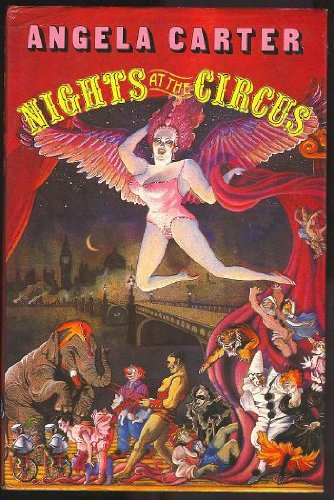
                • Cover of Nights at the Circus
                  Nights at the Circus

                  Angela Carter · standalone novel · 1984

                  similar byidentitywhimsicalliterary & generalmagical realism

                  Nights at the Circus is a novel by British writer Angela Carter, first published in 1984 and the winner of the 1984 James Tait Black Memorial Prize for fiction. The novel focuses on the life and exploits of Sophie Fevvers, a woman who is – or so she would have people believe – a Cockney virgin, hatched from an egg laid by unknown parents and ready to develop fully fledged wings. At the time of the story, she has become a celebrated aerialiste. She captivates the young journalist Jack Walser, who runs away with the circus and falls into a world that his journalistic exploits had not prepared him to encounter.

                • Cover of Island of the Sequined Love Nun
                  Island of the Sequined Love Nun

                  Christopher Moore · standalone novel · 1997

                  similar bywhimsicaloceanialiterary & generalfunny+1 more

                  Island of the Sequined Love Nun is a novel by American absurdist writer Christopher Moore, published in 1997. It is based partly on the author's personal experiences in Micronesia.

                • Cover of Gingerbread
                  Gingerbread

                  Helen Oyeyemi · standalone novel · 2019

                  similar byidentitywhimsicalliterary & generalmagical realism

                  Gingerbread is a 2019 novel by Helen Oyeyemi.

                • Cover of The Hereafter Gang
                  The Hereafter Gang

                  Neal Barrett & Jr. · standalone novel · 1991

                  similar byidentitywhimsicalliterary & generalmagical realismfunny

                  From the front flap of the Ziesing first edition: "On a hot summer Texas afternoon, Cindy Nance introduces young Doug Hoover to the two great secrets of life. Doug likes the first secret a lot. The second, that guys grow up and go to work, doesn't appeal to him at all. A series of meaningless marriages and do-nothing jobs prove Cindy was right. Turned off by the present, Doug tries to recapture the joys of his past - Captain Marvel and cinnamon squares, Dr. Pepper and window-peeking fun. Nothing goes right until Doug meets Sue Jean, the culmination of a lifetime enchantment with mean-eyed Southern girls, his all-time carhop queen. Reality takes a hard right and never slows down. Doug, Sue Jean, and readers who can hang on tight are swept through an indescribable romp that gives new meaning to life, death, and roadside romance. There are enough bizarre characters here to fill several institutions: Crime czars, proctologists, Western outlaws, dog-fighting aviators and trout-fishing Huns. The Hereafter Gang is a literary accomplishment of rare insight and pure pleasure. Barrett"s sense of humor is unexcelled. His ability to stir fantasy and reality into a delightful souffle redefines the term "magic realism.""

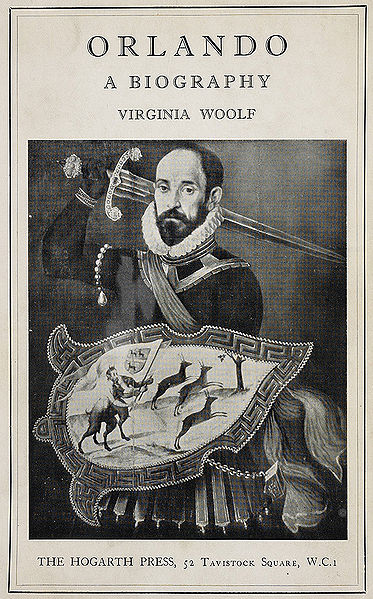
                • Cover of Orlando: A Biography
                  Orlando: A Biography

                  Virginia Woolf · standalone novel · 1928

                  similar byidentitywhimsicalliterary & general+1 more

                  Orlando: A Biography is a novel by Virginia Woolf, first published on 11 October 1928, inspired by the tumultuous family history of the aristocratic poet and novelist Vita Sackville-West, Woolf's lover and close friend. It is a history of English literature in satiric form. The book describes the adventures of a poet who changes from man to woman and lives for centuries, meeting the key figures of English literary history. Considered a feminist classic, the book has been written about extensively by scholars of women's writing and gender and transgender studies.

                • Cover of The Infernal Desire Machines of Doctor Hoffman
                  The Infernal Desire Machines of Doctor Hoffman

                  Angela Carter · standalone novel · 1972

                  similar byidentityliterary & generalmagical realism+1 more

                  The Infernal Desire Machines of Doctor Hoffman, published in the United States as The War of Dreams, is a 1972 novel by Angela Carter. This picaresque novel is heavily influenced by surrealism, Romanticism, critical theory, and other branches of Continental philosophy. Its style is an amalgam of magical realism and postmodern pastiche. The novel has been called a theoretical fiction, as it clearly engages in some of the theoretical issues of its time, notably feminism, mass media and the counterculture.

                • Cover of Still Life with Woodpecker
                  Still Life with Woodpecker

                  Tom Robbins · standalone novel · 1980

                  similar byidentitywhimsicalliterary & generalfunny

                  WorldCat: Still Life with Woodpecker is a sort of a love story that takes place inside a pack of Camel cigarettes. It reveals the purpose of the moon, explains the difference between criminals and outlaws, examines the conflict between social activism and romantic individualism, and paints a portrait of contemporary society that includes powerful Arabs, exiled royalty, and pregnant cheerleaders. It also deals with the problem of redheads.

                • Cover of Wise Children
                  Wise Children

                  Angela Carter · standalone novel · 1991

                  similar bywhimsicalliterary & generalmagical realism+2 more

                  Wise Children (1991) was the last novel written by Angela Carter. The novel follows the fortunes of twin chorus girls, Dora and Nora Chance, and their bizarre theatrical family. It explores the subversive nature of fatherhood, the denying of which leads Nora and Dora to frivolous "illegitimate" lechery. The novel plays on Carter's admiration of Shakespeare and her love of fairy tales and the surreal, incorporating a large amount of magical realism and elements of the carnivalesque that probes and twists our expectations of reality and society.

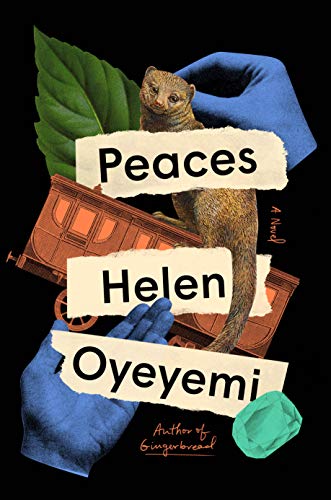
                • Cover of Peaces
                  Peaces

                  Helen Oyeyemi · standalone novel · 2021

                  similar byidentitywhimsicalliterary & general+1 more

                  Peaces is a 2021 novel by Helen Oyeyemi. The novel takes place on a train with several passengers.

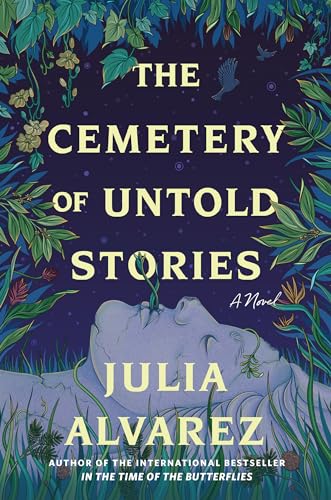
                • Cover of The Cemetery of Untold Stories
                  The Cemetery of Untold Stories

                  Julia Alvarez · standalone novel · 2024

                  similar byidentityliterary & generalmagical realism+1 more

                  The Cemetery of Untold Stories: A Novel (2024) is a work of magical realism and the seventh novel by Dominican-American writer Julia Alvarez. The book follows Alma, a prolific author who, after retiring from her teaching job and writing career, inherits a plot of land in the Dominican Republic where she decides to create a cemetery for her unfinished manuscripts and notes.

                • Cover of Quichotte
                  Quichotte

                  Salman Rushdie · standalone novel · 2019

                  similar byidentitywhimsicalliterary & general+1 more

                  Quichotte is a 2019 novel by Salman Rushdie. It is his fourteenth novel, published on 29 August 2019 by Jonathan Cape in the United Kingdom and Penguin Books India in India. It was published in the United States on 3 September 2019 by Random House. Inspired by Miguel de Cervantes's classic novel Don Quixote, Quichotte is a metafiction that tells the story of an addled Indian-American man who travels across America in pursuit of a celebrity television host with whom he has become obsessed.

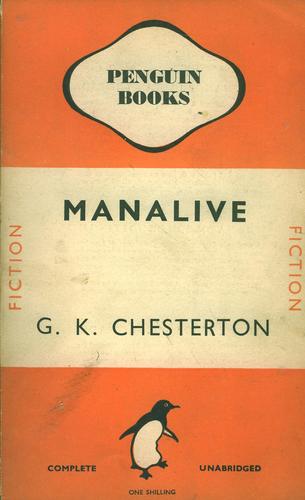
                • Cover of Manalive
                  Manalive

                  G. K. Chesterton · standalone novel · 1912

                  similar byidentitywhimsicalliterary & general

                  Manalive (1912) is a book by G. K. Chesterton detailing a popular theme both in his own philosophy, and in Christianity, of the "holy fool", such as in Dostoevsky's The Idiot and Cervantes' Don Quixote.

                • Cover of Astonishing the Gods
                  Astonishing the Gods

                  Ben Okri · standalone novel · 1995

                  similar byidentityliterary & generalmagical realism+1 more

                  Astonishing the Gods is a novel by Nigerian writer Ben Okri.

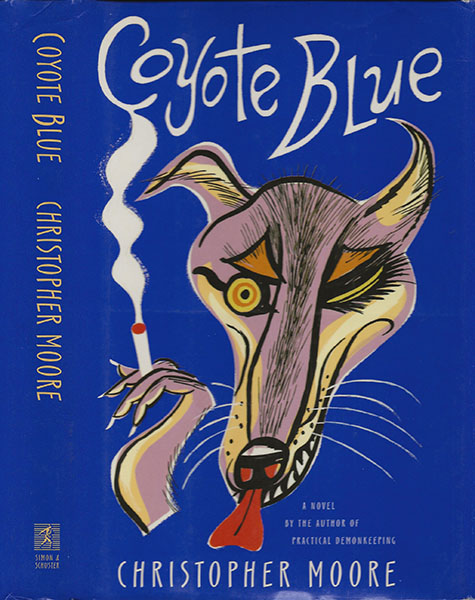
                • Cover of Coyote Blue
                  Coyote Blue

                  Christopher Moore · standalone novel · 1994

                  similar byidentitywhimsicalfunny+1 more

                  Coyote Blue is a novel by American writer Christopher Moore, published in 1994. It has been widely reviewed.

                • Cover of Kleinzeit
                  Kleinzeit

                  Russell Hoban · standalone novel · 1974

                  similar byidentitywhimsicalliterary & general

                  Kleinzeit is a metaphysical novel by Russell Hoban.

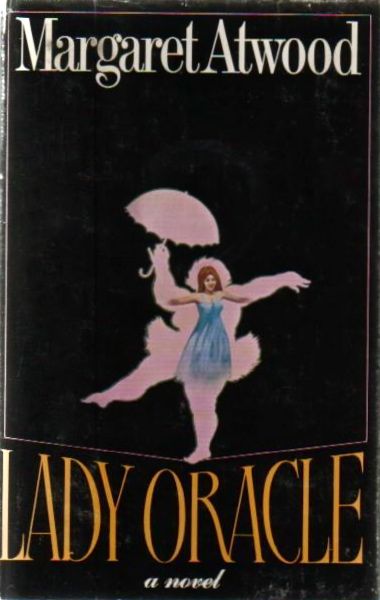
                • Cover of Lady Oracle
                  Lady Oracle

                  Margaret Atwood · standalone novel · 1976

                  similar byidentityliterary & generalfunnyunreliable narrator

                  Lady Oracle is a novel by Margaret Atwood that parodies Gothic romances and fairy tales. It was first published by McClelland and Stewart in 1976.

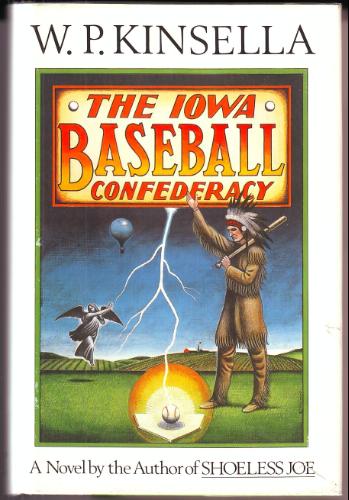
                • Cover of The Iowa Baseball Confederacy
                  The Iowa Baseball Confederacy

                  W. P. Kinsella · standalone novel · 1986

                  similar bywhimsicalliterary & generalmagical realism+1 more

                  The Iowa Baseball Confederacy is a 1986 novel written by Canadian author W.P. Kinsella. It is less well known than his novel Shoeless Joe, which came to prominence when it was made into the film Field of Dreams. Like in Shoeless Joe, baseball is at the heart of the novel, which uses magical realism to blend events and individuals past and present with the author's love of the game. However, it covers more themes than Shoeless Joe and it explores a greater number of plot lines.

                • Cover of Sexing the Cherry
                  Sexing the Cherry

                  Jeanette Winterson · standalone novel · 1989

                  similar byidentitywhimsicalliterary & general

                  Sexing the Cherry is a 1989 novel by Jeanette Winterson.

                • Cover of The Third Policeman
                  The Third Policeman

                  Flann O'Brien · standalone novel · 1967

                  similar bywhimsicalliterary & generalunreliable narrator+1 more

                  The Third Policeman is a novel by Irish writer Brian O'Nolan, writing under the pseudonym Flann O'Brien. It was written in 1939 and 1940, but after it initially failed to find a publisher, the author withdrew the manuscript from circulation and claimed he had lost it. The book remained unpublished at the time of his death in 1966. It was published by MacGibbon & Kee in 1967.

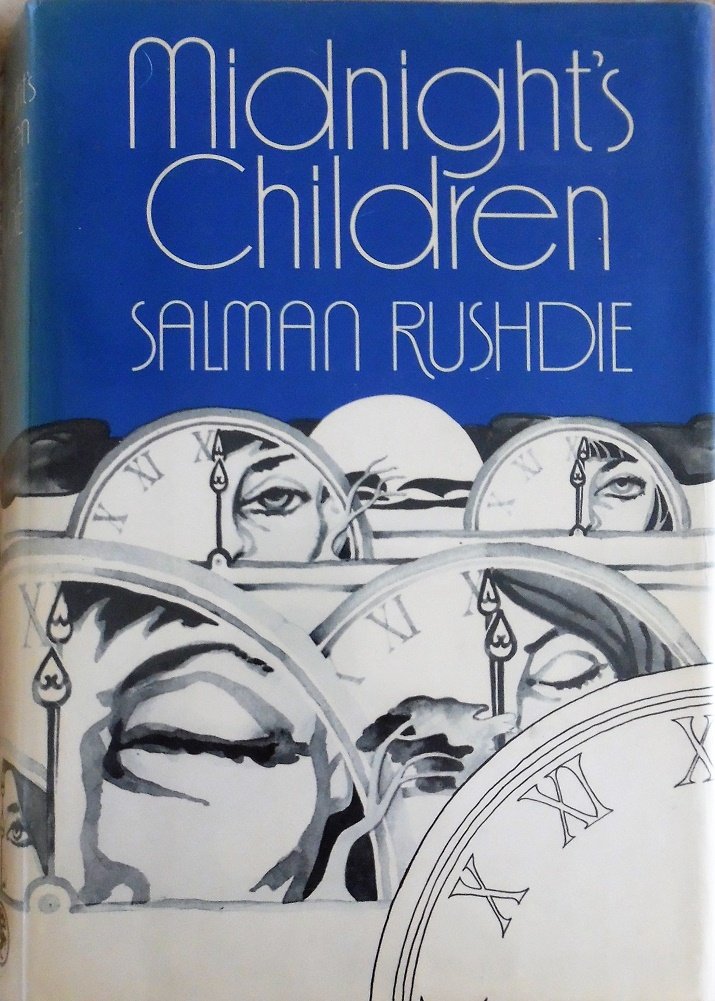
                • Cover of Midnight's Children
                  Midnight's Children

                  Salman Rushdie · standalone novel · 1980

                  similar byidentityliterary & generalmagical realism

                  WorldCat: The life of a man born at the moment of India's independence becomes inextricably linked to that of his nation and is a whirlwind of disasters and triumphs that mirror modern India's course.

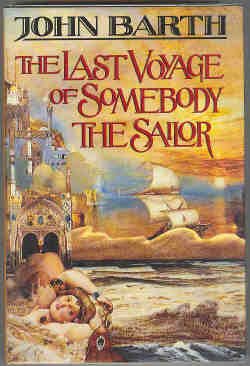
                • Cover of The Last Voyage of Somebody the Sailor
                  The Last Voyage of Somebody the Sailor

                  John Barth · standalone novel · 1991

                  similar byidentitywhimsicalliterary & general

                  The Last Voyage of Somebody the Sailor is a novel by American writer John Barth, published in 1991. It is a postmodern metafictional story of a man who jumps overboard from a modern replica of a medieval Arab ship and is rescued by sailors from the world of Sinbad the Sailor. Eventually he makes his way to "Baghdad, the City of Peace", and finds himself in the stories of Sindbad and Scheherazade. The novel makes use of a challenging double-stranded narrative and a rich prose style.

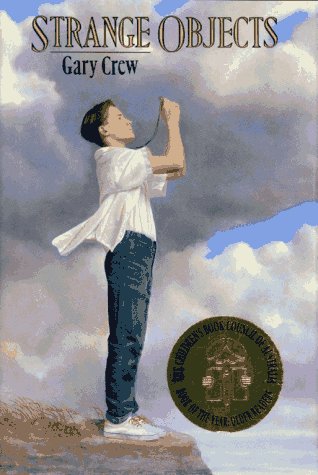
                • Cover of Strange Objects
                  Strange Objects

                  Gary Crew · standalone novel · 1990

                  similar byidentityoceanialiterary & general

                  Strange Objects is a 1990 novel by Australian author Gary Crew.

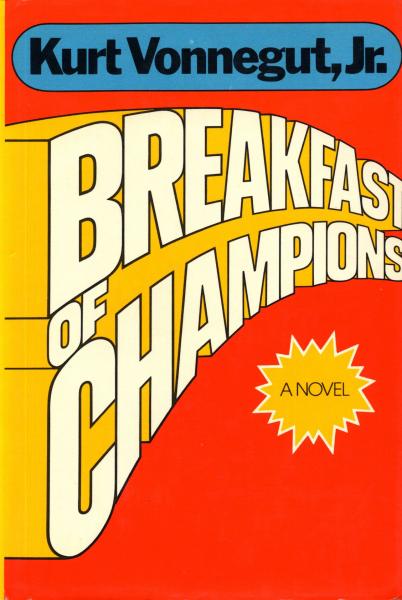
                • Cover of Breakfast of Champions
                  Breakfast of Champions

                  Kurt Vonnegut & Jr. · standalone novel · 1973

                  similar byidentityliterary & generalfunny

                  The author decides to liberate the characters he created, including an author who decides to try to help a mentally ill reader who was driven over the edge by the book's assertion that he was the only creature with free will in a universe of preprogrammed automatons.