More like Immigrant
anchored on:science fiction
but
- Stranger in a Strange Land
Robert A. Heinleinstandalone novel1961
similar byscience fictionreflectivealiens
Stranger in a Strange Land is a 1961 science fiction novel by the American author Robert A. Heinlein. It tells the story of Valentine Michael Smith, a human who comes to Earth in early adulthood after being born on the planet Mars and raised by Martians, and explores his interaction with and eventual transformation of Terran culture.
- The Martian Chronicles
series30 books1946
completed
similar byscience fictionreflective+1 more
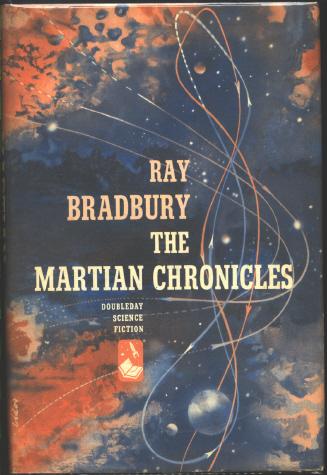
The Martian Chronicles (1950) is Ray Bradbury's fix-up novel, a chain of linked short stories following waves of settlers leaving a troubled Earth to colonize Mars and encountering its native Martians, before Earth itself is ultimately consumed by nuclear war.
- Childhood's End
Arthur C. Clarkestandalone novel1953
similar byscience fictionreflectivealiens
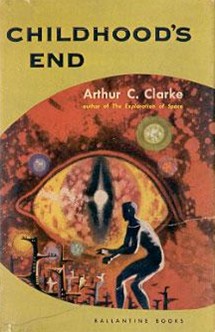
Childhood's End is a 1953 science fiction novel by the British author Arthur C. Clarke. The story follows a peaceful alien invasion of Earth by mysterious Overlords, whose arrival begins decades of apparent utopia under indirect alien rule, at the cost of human identity and culture.
- Hainish
series33 books1964
completed
similar byscience fictionreflective+1 more
The Hainish Cycle consists of a number of science fiction novels and stories by Ursula K. Le Guin. The cycle is set in a future history that features civilizations of human beings on planets orbiting a number of nearby stars, including Terra ("Earth"); these humans are contacting each other for the first time and establishing diplomatic relations, as well as setting up a confederacy under the guidance of the oldest of the human worlds, the peaceful planet Hain. In this history, human beings did not evolve on Earth, but they were instead the result of interstellar colonies planted by Hain in the distant past, after which interstellar travel ceased for an extended period. Some of the human races have new genetic traits, a result of ancient Hainish experiments in genetic engineering; this includes people who can dream while awake, and a world of hermaphroditic people who only enter active sexuality once per month, not knowing which sex will manifest in them. In keeping with Le Guin's narrative approach, she uses varied social and environmental settings to explore the anthropological and sociological outcomes of human evolution in those environments. The author often discounted the characterization of a so-called "Hainish Cycle".
- Cosmic Trilogy (C. S. Lewis)
series4 books1938
completed
similar byscience fictionaliens+1 more
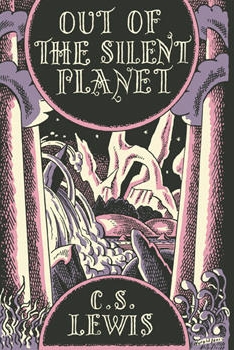
The Space Trilogy is a series of science fiction novels by British writer C. S. Lewis. The trilogy consists of Out of the Silent Planet (1938), Perelandra (1943), and That Hideous Strength (1945). A philologist named Elwin Ransom is the protagonist of the first two novels and an important character in the third.
- Star Maker
series9 books1937
completed
part of Last Men Universe
similar byscience fiction+2 more
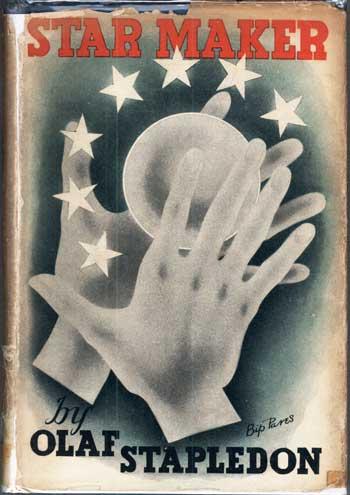
Star Maker (1937) is Olaf Stapledon's cosmic philosophical novel, tracing the rise and fall of civilizations across the universe as it builds toward questions about creation, unity, and the nature of the Star Maker behind it all, expanding the scope of his earlier Last and First Men. It is paired here with Nebula Maker, a related manuscript Stapledon wrote in the 1930s between those two novels but which went unpublished until its rediscovery in 1976, alongside a handful of shorter pieces. Together they sit within Stapledon's last-men-universe of linked visionary future histories.
- The Man Who Fell to Earth
Walter Tevisstandalone novel1963
similar byscience fictionreflectivealiens
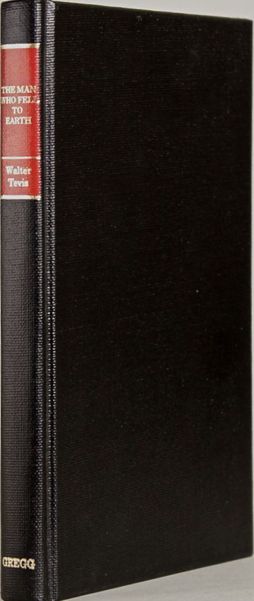
The Man Who Fell to Earth is a 1963 science-fiction novel by American writer Walter Tevis. Published by Gold Medal Books as a paperback original, it was Tevis's second novel, following The Hustler. The novel follows Thomas Jerome Newton, an extraterrestrial from the drought-stricken planet Anthea, who comes to Earth hoping to build a spacecraft that can save the surviving members of his species.
- Way Station
Clifford D. Simakstandalone novel1963
similar byscience fictionreflectivealiens
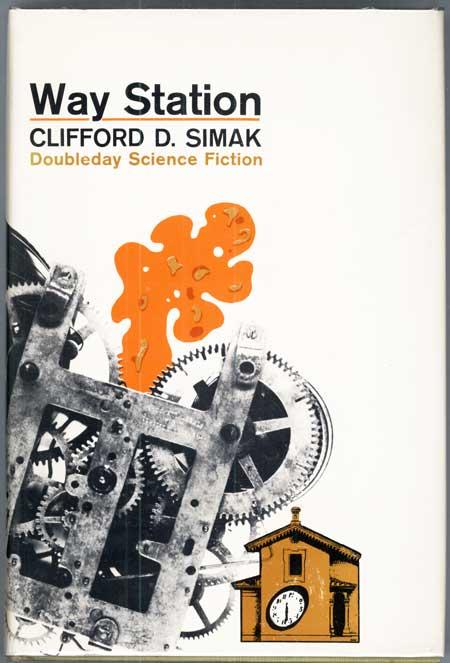
The human operator of a transfer station for aliens traveling between planets, kept secret from the human race, deals with discovery by the US government and interplanetary political crisis, as well as his own emotional issues.
- This Immortal
series2 books1966
similar byscience fictionreflectivealiens
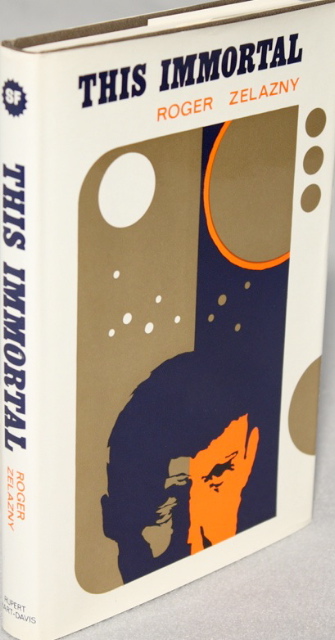
This Immortal is a single science fiction novel by Roger Zelazny, expanded from his 1965 serial ...And Call Me Conrad. In a depopulated future Earth largely toured by an alien race, its long-lived, secretive protagonist Conrad Nomikos is assigned to guide and protect a visiting alien across the ruins of Greece and Egypt, uncovering old grudges and assassination plots along the way. The novel shared the 1966 Hugo Award for Best Novel with Frank Herbert's Dune.
- Chocky
series2 books1968
similar byscience fictionaliens+1 more
Chocky (1968) is John Wyndham's science fiction novel about an eleven-year-old boy, Matthew, whose parents grow alarmed by his conversations with an unseen presence that feeds him unsettling insights into mathematics and human progress, building toward the reveal of what, or who, Chocky really is. Mark Daniel's Chocky's Challenge (1986), published after Wyndham's death, is an authorized continuation that carries the story forward.
- Downward to the Earth
Robert Silverbergstandalone novel1969
similar byscience fictionreflectivealiens
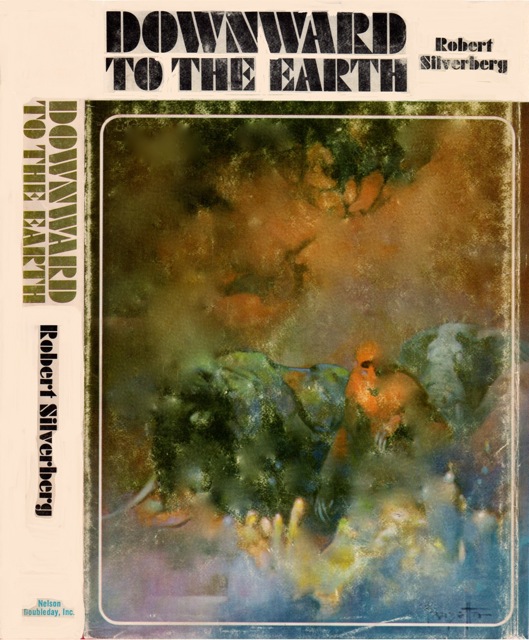
Edmund Gunderson was the Terran administrator of the colony world of Belzagor, and he returns to it after it has gained independence, feeling a sense of guilt for the way he has treated its dominant species, the elephant-like nildoror, whose animalistic appearance had kept Gunderson from taking them seriously as sentient beings. On his return, he feels a new sense of kinship with the natives, perhaps more than for the Terran tourists. The nildoror undergo a process of rebirth, and Gunderson's greatest guilt comes from having denied rebirth to seven nildoror to make them help him repair flood damage.(From Wikipedia)
- Against the Fall of Night
series2 books1953
similar byscience fictionreflective
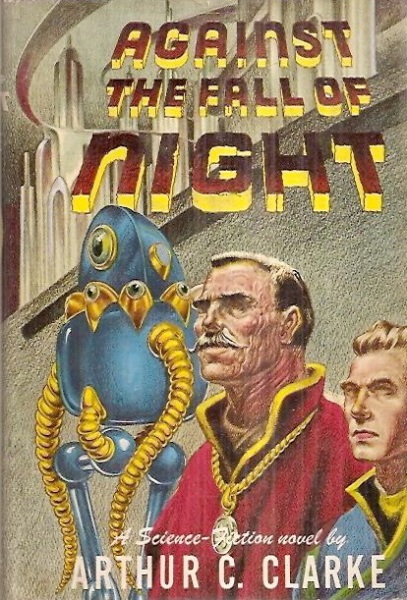
Against the Fall of Night is Arthur C. Clarke's 1953 novel of a stagnant, climate-controlled city called Diaspar a billion years in Earth's future, where a young man named Alvin becomes the first in living memory to want to leave it. Clarke later rewrote the book more expansively as The City and the Stars, and in 1990 Gregory Benford wrote Beyond the Fall of Night, an authorized sequel continuing on from this original, shorter version's ending.
- The Dreaming Jewels
Theodore Sturgeonstandalone novel1950
similar byscience fiction+2 more
The Dreaming Jewels (1950), also known as The Synthetic Man, is a science fiction novel by American writer Theodore Sturgeon. It was his first published novel.
- Contact
Carl Saganstandalone novel1985
similar byscience fictionreflectivealiens
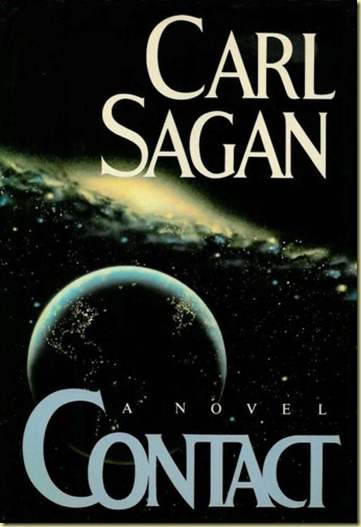
From the front flap of the Simon and Schuster first edition: For centuries humanity has dreamed of life and intelligence beyond the Earth; for decades scientists have searched for it in every corner of the sky; for years Project Argus, a vast, sophisticated complex of radio telescopes, has listened for a signal indicating the existence, somewhere in the universe, of extraterrestrial intelligence. Then, one afternoon, the course of human history is changed, abruptly and forever. The Message, awaited for so long, its very possibility doubted by so many, arrives. Contact has been made. Life, intelligence, someone, something beyond Earth, 26 light-years away, in the vicinity of the star Vega, is calling, beaming across space a wholly unexpected message to say that we are not - have never been - alone. In Contact, Carl Sagan, whose Cosmos enthralled millions of readers and television viewers, has brilliantly employed the freedom of fiction to imagine the greatest adventure of all - humanity's first encounter with other intelligent beings. But the novel is not only about contact between humans and extraterrestrials; it is also about contact, down here on Earth, with each other and ourselves. At its center is a brilliant scientist, Eleanor Arroway, director of Project Argos, who is the first to realize that chapter one of human history is over. It is she who is instrumental in decoding the Message - and in persuading world leaders not to treat it as a threat - she who finds her own life changed by the immense challenge of responding to the Message; she who finally journeys out to experience, in circumstances at once profoundly religious and scientific, the most fateful encounter in human history.
- The Man in the Maze
Robert Silverbergstandalone novel1969
similar byscience fictionreflective+1 more
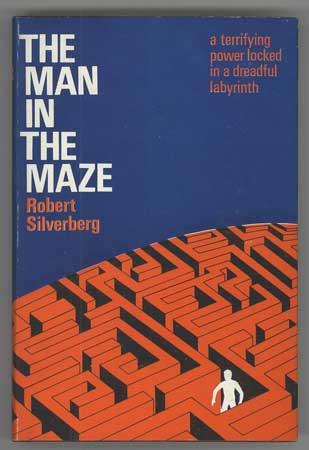
The Man in the Maze is a science fiction novel by American writer Robert Silverberg, originally serialized in the magazine Worlds of If in April and May 1968, and published in bookstores the following year. It tells the tale of a man rendered incapable of interacting normally with other human beings by his uncontrollable psychic abilities. The novel is inspired by Sophocles' play Philoctetes, with the roles of Odysseus, Neoptolemus and Philoctetes played by Boardman, Rawlins, and Muller, respectively.
- Culture
series15 books1987
completed
part of The Culture
similar byscience fiction+1 more
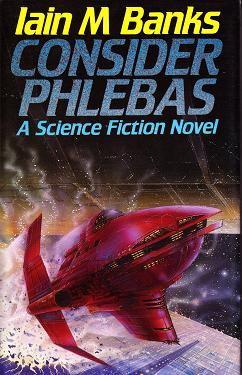
The Culture series is a science fiction series written by Scottish author Iain M. Banks and released from 1987 until 2012. The stories centre on The Culture, a utopian, post-scarcity space society of humanoid aliens and advanced superintelligent artificial intelligences living in artificial habitats spread across the Milky Way galaxy. The main themes of the series are the dilemmas that an idealistic, more-advanced civilization faces in dealing with smaller, less-advanced civilizations that do not share its ideals, and whose behaviour it sometimes finds barbaric. In some of the stories, action takes place mainly in non-Culture environments, and the leading characters are often on the fringes of the Culture, sometimes acting as agents of the Culture in its plans to civilize the galaxy. Each novel is a self-contained story with new characters, although reference is occasionally made to the events of previous novels.
- The Songs of Distant Earth
Arthur C. Clarkestandalone novel1986
similar byscience fictionreflectiveimmigration and exile
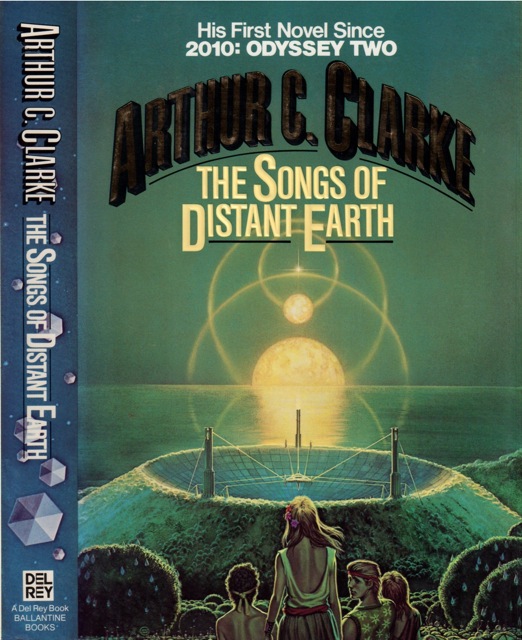
The Songs of Distant Earth is a 1986 science fiction novel by British writer Arthur C. Clarke, based upon his 1958 short story of the same title. Of all of his novels, Clarke stated that this was his favourite. Prior to the publishing of the novel, Clarke also wrote a short step outline with the same title, published in Omni magazine and anthologised in The Sentinel in 1983.
- Ender Wiggin
series14 books1977
part of Ender's Game Universe
similar byscience fictionaliens+1 more
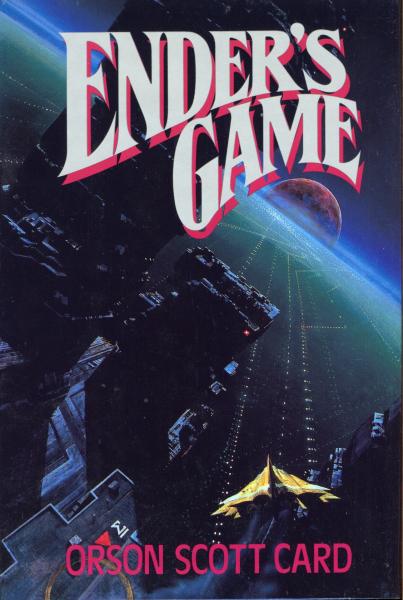
Orson Scott Card's Ender's Game (1985, expanded from his 1977 novella) follows child prodigy Andrew "Ender" Wiggin as he is recruited into a military training program built to prepare Earth's defenses for an anticipated third war against an insectoid alien species known as the Formics. The saga continues years later through Speaker for the Dead and Xenocide, following an older Ender as he confronts the moral weight of his role in that earlier conflict, and concludes the core arc in Children of the Mind, with Ender in Exile filling in the years between the first two books. Set within the wider Ender's Game universe, the series shifts from military coming-of-age story to slower, more philosophical science fiction as it progresses.
- All Flesh Is Grass
Clifford D. Simakstandalone novel1965
similar byscience fictionaliens+1 more
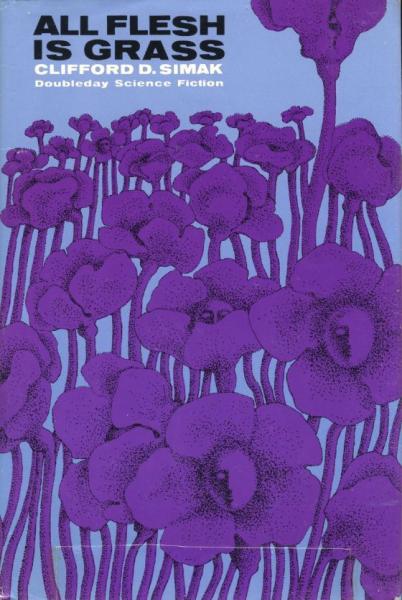
All Flesh is Grass is a science fiction novel by American author Clifford D. Simak, published in 1965. The book follows a small town in Wisconsin that is closed off from the outside world by a mysterious barrier, placed by extraterrestrial beings.
- City
series19 books1944
completed
similar byscience fictionreflective
City is Clifford D. Simak's fix-up novel, assembling eight linked stories originally published in Astounding Science Fiction during the 1940s and framed as legends dogs tell about a half-mythical creature called Man. It follows humanity's gradual abandonment of its cities and eventual departure from Earth, while the dogs left behind are surgically uplifted into a peaceable, speaking civilization of their own. The book won the International Fantasy Award in 1952.
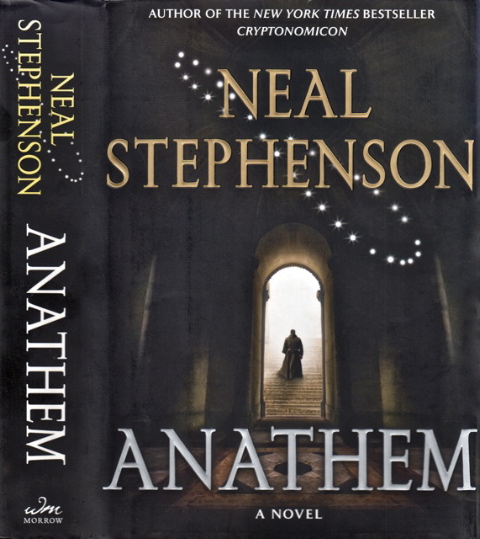
- Anathem
Neal Stephensonstandalone novel2008
similar byscience fictionreflectivealiens
On a planet where quasi-monastic academic institutions have existed alongside the secular world for thousands of years, a young scholar from one such institution becomes part of a planetwide effort to muster an appropriate reaction to a shocking discovery.
- Tower of Glass
Robert Silverbergstandalone novel1970
similar byscience fiction+2 more
Tower of Glass is a science fiction novel by American writer Robert Silverberg, published in 1970. It was nominated for the Nebula Award in 1970, and for both the Hugo and Locus Awards in 1971.