Loreful
HomeDiscover
Search series, authors…⌘K
Loreful

Reading orders for SF/F series and shared universes — with your place kept in every one.

Explore

UniversesSeriesWorksAuthorsAtlas

Help

FAQAboutSite map

Account & legal

Sign inCreate accountPrivacyTerms

Data

Built on ISFDB, Wikipedia, Wikidata and Open Library. Curated reading orders carry their reasoning on the page; the rest follow publication order. Data sources & licenses

© Loreful · data: ISFDB · CC BY

More like Imperator

but

Mood

The mood the book leaves you in.

  • The reading experience is propelled by journeys, exploration, and physical risk; excitement and forward momentum dominate over dread or introspection.
  • Joy and loss are deliberately mixed; the resolution grants characters something real while taking something else away, leaving warmth and sorrow together.
  • The book demands work from the reader — dense prose, difficult structure, unfamiliar ideas, or morally uncomfortable material — as part of its intended effect.
  • Grim events, cruelty, or despair dominate the atmosphere, and the book does not soften them with comfort or comic relief.
  • The atmosphere is quietly unsettling — wrongness, unease, and the uncanny pervade the book without necessarily escalating into overt horror.
  • The book is built to move the reader; character feeling is foregrounded and major scenes aim at a strong emotional response.
  • Humor is a primary aim and the prose plays for laughs — comic situations, wit, or dialogue produce sustained comedy, not occasional levity.
  • The book insists that things can improve; effort and decency are shown to matter, and the arc bends toward better outcomes even through hardship.
  • The book teaches as it goes — real facts, history, science, or craft are conveyed in enough depth that learning is part of the reading experience.
  • The book is designed to uplift and motivate, presenting perseverance or achievement in a way that invites the reader to aspire or act.
  • The overall register is cheerful and easygoing; stakes are kept gentle and the book avoids dwelling on pain or dread.
  • Withheld information drives the experience; the book sustains enigmas and secrets the reader wants resolved, whatever its genre.
  • The book is contemplative and inward-looking, giving more weight to thought, memory, and meaning than to external events.
  • The book works as comfort reading — low tension, a soothing pace, and an atmosphere the reader can unwind in.
  • Grief, loss, or melancholy set the dominant register, and the book lets sorrow stand rather than resolving it into comfort.
  • Sustained suspense is the point; the book keeps the reader braced for what happens next through danger, pressure, or impending revelation.
  • Playful invention and charm define the register — fanciful conceits, light absurdity, and a narration that delights in its own oddity.

About

What the story runs on.

  • Stories in which extraterrestrial beings are central — as characters, cultures, or the object of the plot.
  • Stories about minds with paranormal abilities — telepathy, telekinesis, precognition, empathy — and how societies handle those who have them.
  • Stories structured as a quest — a journey undertaken to find, deliver, or destroy something of great import.
  • Stories in which staying alive against nature, catastrophe, or scarcity is the central problem.
  • Stories of lovers kept apart by law, family, faith, or station, where the obstacle to love is the plot.
  • Stories of growing up — a young protagonist crossing from childhood into adult knowledge and responsibility.
  • Stories about who a character truly is — self-discovery, doubled lives, and the search for a self.
  • Stories in which a buried family truth — hidden parentage, crimes, or shames — surfaces and reorders the present.
  • Stories driven by maneuvering for power — factions, conspiracies, and statecraft conducted in shadow.
  • Stories about rising against rulers — uprisings, resistance movements, and revolutions and their aftermaths.
  • Stories in which war itself is the subject — combat, occupation, and what warfare does to soldiers and civilians.
  • Stories organized around investigating a killing — the case, the clues, and the pursuit of the killer, in any genre's clothing.

Shelf

Where it sits in the library.

    • Fiction built on magic or other supernatural elements that have no scientific explanation.
    • Secondary-world fantasy at large scale, where the fate of nations or the world turns on the protagonists' struggle.
    • Fantasy set in a recognizably modern city or contemporary world where the supernatural intrudes on everyday life.
    • Fantasy that blends in horror's atmosphere and imagery, keeping a fantastical frame around grim or frightening material.
    • Action-driven fantasy following warriors or rogues with personal stakes against sorcerous threats, rather than world-spanning conflicts.
    • Fantasy set in a real historical period or a close analogue of one, with magic woven into the era.
    • Fantasy in which protagonists cross from the ordinary world into another world through a portal or similar passage.
    • Fiction that retells or reworks a traditional fairy tale in a new form or setting.
    • Fantasy drawing directly on myths, legends, and folklore, retelling them or building on their figures and logic.
    • Fantasy of ghosts, vampires, shapeshifters, psychics, and similar phenomena, usually set in an otherwise ordinary world.
    • Fiction mixing science-fictional trappings with overtly magical or impossible elements in one setting.
    • Low-stakes fantasy emphasizing comfort, community, and everyday pleasures over conflict and peril.
    • Speculative fiction of pervasive moral ambiguity, violence, and cynicism that rejects heroic conventions — fantasy and SF alike.
      • Fiction that extrapolates from science and technology — future societies, space travel, or speculative inventions — within at least nominally natural laws.
      • Science fiction of interstellar scope — starships, galactic polities, and adventure across star systems.
      • Science fiction committed to scientific rigor, where technical plausibility constrains the story.
      • Science fiction centered on armed forces and warfare, told largely from a military point of view.
      • Science fiction of networked, corporate-dominated near futures, pairing high technology with social decay.
      • Science fiction styled on nineteenth-century steam-powered technology, often in a Victorian or pseudo-Victorian setting.
      • Fiction depicting an oppressive or catastrophic society, presented as a warning.
      • Fiction set after civilization's collapse, following survivors in the ruins of the old world.
      • Fiction in which characters move between past and future, and the mechanics or consequences of that travel drive the plot.
      • Fiction exploring a world where a historical event went differently and history diverged from ours.
      • Science fiction about humanity's first encounter and communication with an alien intelligence.
      • Science fiction in which extraterrestrial forces attack or occupy Earth and humanity resists.
      • Fiction whose primary aim is to frighten or unsettle the reader through dread, menace, or the monstrous.
      • Horror of vast, indifferent, incomprehensible entities before which humanity is insignificant, in the Lovecraft tradition.
      • Horror of decaying houses, buried family secrets, and oppressive atmosphere in the Gothic literary tradition.
      • Horror centered on hauntings and the returning dead.
      • Horror located in the mind — paranoia, obsession, and unreliable perception rather than external monsters.
      • Horror built around the reanimated dead and survival amid their outbreaks.
      • Horror defined by explicit, transgressive gore that refuses to cut away from violence.
      • Speculative fiction of the strange and uncanny that resists both natural explanation and standard genre categories.
      • Fiction organized around solving a crime or puzzle, typically following an investigator toward the identification of a culprit.
      • A puzzle-first mystery that lays out clues so the culprit's identity can be deduced before the reveal.
      • Crime fiction of moral ambiguity, fatalism, and hard-edged style, set among the corrupt and the doomed.
      • A mystery following the realistic routines of police work — forensics, interviews, and case-building.
      • A gentle mystery with an amateur sleuth, a small community, and violence kept off the page.
      • A mystery set in a past era, where the investigation works within that period's methods and society.
      • Fast-paced fiction driven by imminent danger, pursuit, or high-stakes conspiracy, built to sustain tension.
      • A thriller of espionage — agents, tradecraft, and intelligence services in conflict.
      • A thriller centered on lawyers and the courtroom, where litigation carries the suspense.
      • A thriller driven by detailed contemporary or near-future technology, often military or scientific.
      • A thriller whose tension comes from mental states and manipulation between characters rather than external action.
      • Fiction whose central plot is a romantic relationship and its development toward an emotionally satisfying resolution.
      • Romance in which one or both partners are supernatural beings, blending fantasy elements into the love story.
      • A fantasy-romance hybrid in which the romantic arc and the fantasy plot carry equal weight.
      • Romance set in a past era, with courtship shaped by the period's society and manners.
      • Romance set in the present day, without supernatural or historical elements.
      • Fiction set in a real past period, where the historical setting materially shapes characters and events.
        • General and literary fiction emphasizing prose style, character interiority, or formal ambition over genre plot conventions.
        • Fiction in a realistic world where magical events occur and are treated as ordinary, in the tradition of Latin American literature.
        • Fiction that ridicules people, institutions, or society in order to criticize them.
        • Fiction of dreamlike, irrational imagery and logic that breaks from realistic representation.
        • Fiction that plays with narrative convention through metafiction, fragmentation, and self-reference.
        • Fiction propelled by journeys, exploration, and physical peril, where action and survival carry the plot.
        • Adventure fiction of ships and seafaring — naval engagements, voyages, and life at sea.
        • Fiction of the American frontier West — gunmen, ranchers, and lawmen, typically in the late nineteenth century.
        • Fiction centered on soldiers, campaigns, and the experience of warfare, historical or imagined.
          • Fiction written primarily to amuse, using comedic situations, wit, or parody as its organizing principle.
            • Multi-generational fiction following a family or dynasty across decades, with inheritance and kinship as the through-line.
              • Fiction whose world runs on explicit game mechanics — levels, stats, and skills that characters can see and exploit.
                • Fiction about costumed or superpowered heroes and their conflicts with comparable villains.

                Practical

                How long a commitment, whether it stands alone, and whether it has finished.

                Tap a chip to ask for it · tap again to rule it out · once more to clear. Numbers show what would be left.

                • Cover of H. G. Wells' War of the Worlds
                  H. G. Wells' War of the Worlds

                  universe · 65 books · 1898

                  Start hereThe War of the Worlds · Start here

                  similar by+2 more

                  No one would have believed, in the closing years of the nineteenth century, that human affairs were being watched keenly and closely from the timeless worlds of space. And then the cylinders fell. H. G. Wells' War of the Worlds opens in the quiet of the Surrey commons, where a falling star proves to be the first Martian craft — and from the pit rise the towering tripods, the Heat-Ray, the choking Black Smoke and the creeping red weed, wielded by minds that regard mankind much as we regard the creatures we boil for supper. This is invasion rendered as natural disaster: cold, methodical, and vast beyond argument. Wells' 1898 novel is the seed; everything else grows from that Martian soil. The catalogue gathers direct sequels and continuations alongside a wide field of other hands. In War of the Worlds: Global Dispatches the invasion is retold across the whole planet through the eyes of Twain, Verne, Tolstoy, Lowell and Kipling; in the Manly Wade and Wade Wellman crossover, Sherlock Holmes, Watson and Professor Challenger take the field against the machines; and Scott Washburn's Great Martian War stretches the fighting into a decades-long alternate history of steam, artillery and grinding attrition. It is a loose shared world — no single decreed sequence, many voices answering one calamity. What sets this world apart is its refusal of heroics: the invaders fall not to generals but to the smallest things of Earth, humbling and indifferent. Begin, always, with Wells' original novel — it is short, and it is the ground every later book stands upon. From there follow your appetite: Global Dispatches for the panorama, the Holmes campaign for adventure, Washburn for the long war.

                • Cover of SS-GB
                  SS-GB

                  Len Deighton · standalone novel · 1978

                  similar byalternate historytensepolitical intrigue+1 more

                  It's November 1941 in a Britain that lost the war: Operation Sea Lion succeeded, Churchill was executed, and the King is a prisoner in his own Tower of London. Detective Superintendent Douglas Archer, still working homicide for the Metropolitan Police under German occupation, catches what looks like a routine case, a well-dressed man murdered above an antiques shop, until the body's oddities point toward something far more dangerous than burglary gone wrong. Archer's investigation collides with occupation politics, the British resistance, and rival factions of the SS and the German Army, each wanting the case to go a different way. Len Deighton's alternate-history spy thriller.

                • Cover of How Few Remain Universe
                  How Few Remain Universe

                  series · 11 books · 1997

                  similar byalternate historytensepolitical intriguewar

                  How Few Remain opens Harry Turtledove's Southern Victory timeline, imagining a North America where the Confederacy won the Civil War. Set mostly in 1881-1882, it follows political and military figures on both sides of a divided continent as old grievances resurface into a new war. It's a single novel here, but the starting point for a much longer alternate-history sequence Turtledove extended across both twentieth-century world wars.

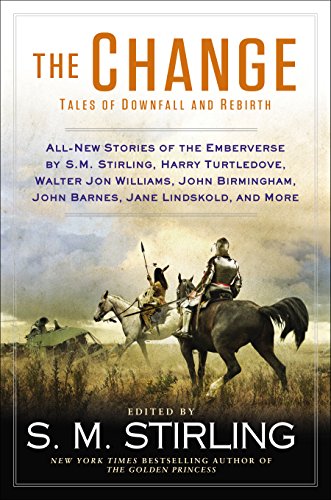
                • Cover of The Change / The Event
                  The Change / The Event

                  series · 41 books · 1998

                  similar by+4 more

                  The Change: Tales of Downfall and Rebirth is a shared-world anthology of stories set in the years right after a mysterious global event instantly disables gunpowder, electricity, and combustion engines, the founding premise of S. M. Stirling's Emberverse. Sixteen different authors, coordinated by Stirling, each contribute stories set in various corners of the suddenly de-industrialized world as survivors scramble to rebuild. It's a companion volume to the Change/Emberverse novels rather than a novel itself.

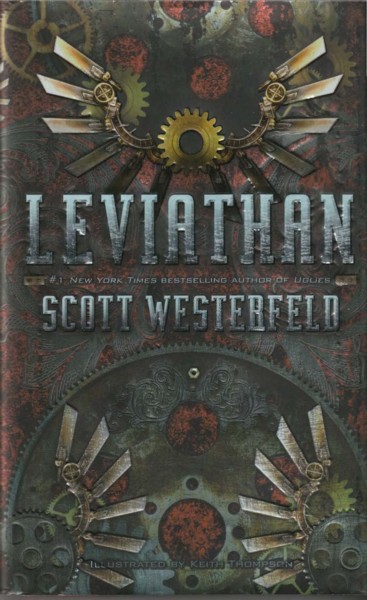
                • Cover of The Leviathan Trilogy
                  The Leviathan Trilogy

                  series · 3 books · 2009

                  similar byalternate historywar+2 more

                  Set in an alternate First World War, Leviathan splits the belligerents into Clankers, who fight with mechanical walkers, and Darwinists, who fight with fabricated living creatures built from spliced DNA. Scott Westerfeld follows a British girl disguised as a boy to serve on a living airship and the exiled heir to the Austro-Hungarian throne as their paths collide, continuing across Behemoth and Goliath. Keith Thompson's illustrations are integral to all three books, alternating text chapters with illustrated sequences.

                • WU
                  Worldwar Universe

                  series · 8 books · 1994

                  similar byalternate historytensewar+1 more

                • Cover of Axis of Time
                  Axis of Time

                  series · 7 books · 2004

                  similar byalternate historytensewar+1 more

                  The Axis of Time trilogy is an alternative history series of novels written by Australian journalist and author John Birmingham, from Macmillan Publishing.

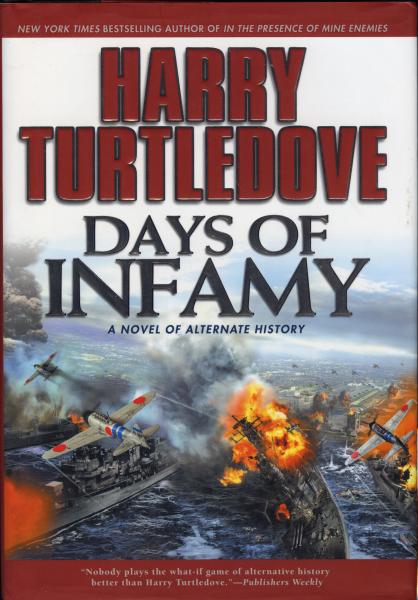
                • Cover of Days of Infamy
                  Days of Infamy

                  series · 2 books · 2004

                  similar byalternate historytensewar

                  Harry Turtledove's Days of Infamy duology reimagines the Pacific theater of World War II with an alternate outcome at Pearl Harbor: a Japanese invasion and occupation of Hawaii rather than a single carrier strike. Days of Infamy covers the invasion itself, while End of the Beginning follows the ensuing occupation and eventual counter-invasion. As in his other alternate-history work, Turtledove follows the changed war through a wide, rotating cast of civilian and military viewpoints.

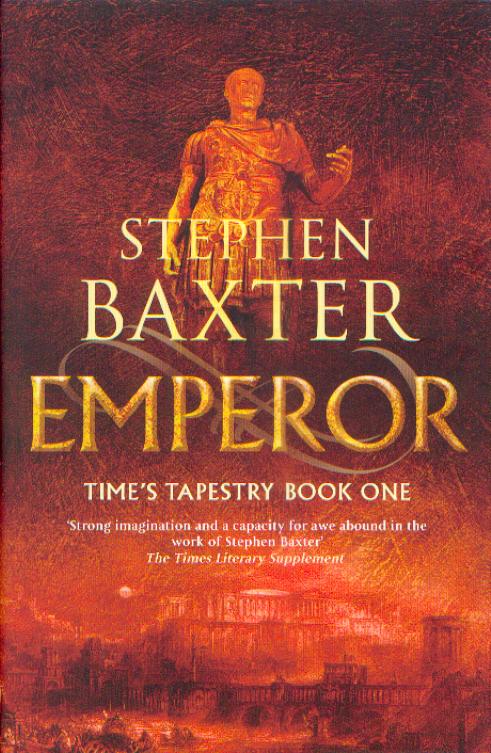
                • Cover of Time's Tapestry
                  Time's Tapestry

                  series · 4 books · 2006

                  similar byalternate history+2 more

                  Stephen Baxter's Time's Tapestry sequence imagines a version of history repeatedly altered by messages sent back through time by a sect trying to change Rome's fate, with each novel following the ripple effects across a different era of British and world history. Emperor opens the sequence in Roman-era Britain, and the alternate timeline compounds across the following three novels before a concluding volume gathers the whole arc. It was published across the mid-to-late 2000s as one continuous four-book story.

                • Cover of Gettysburg / Civil War Trilogy
                  Gettysburg / Civil War Trilogy

                  series · 3 books · 2003

                  similar byalternate historytensewar+1 more

                  Gettysburg opens Newt Gingrich and William R. Forstchen's alternate-history trilogy imagining a Confederate victory at the battle of Gettysburg, then follows the shifted course of the Civil War across two further novels tracking the changed war's political and military fallout. The series leans on close military detail and real historical figures reimagined under altered circumstances. It was published between 2003 and 2005.

                • Cover of The Guns of the South
                  The Guns of the South

                  Harry Turtledove · standalone novel · 1992

                  similar byalternate historytensewar+1 more

                  The Guns of the South is an alternate history science fiction novel set during the American Civil War by Harry Turtledove. It was released in the United States on September 22, 1992.

                • Cover of Crosstime Traffic
                  Crosstime Traffic

                  series · 6 books · 2003

                  similar byalternate history+3 more

                  Harry Turtledove's Crosstime Traffic novels are set on an Earth that has discovered travel to alternate timelines where history unfolded differently, exploited commercially by the monopoly company that gives the series its name. Aimed at young-adult readers, the loosely connected books -- including Gunpowder Empire, Curious Notions, and The Disunited States of America -- each send a young protagonist into a different divergent world.

                • Cover of Burton Cole
                  Burton Cole

                  series · 2 books · 2011

                  similar byalternate historytensewar

                • DU
                  Destroyermen Universe

                  series · 20 books · 2008

                  similar byalternate historytensewar

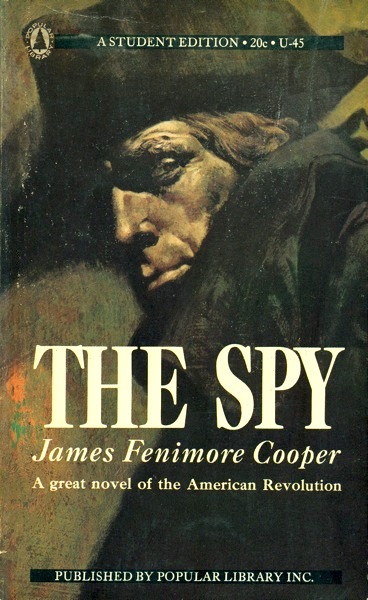
                • Cover of The Spy
                  The Spy

                  James Fenimore Cooper · standalone novel · 1821

                  similar byalternate historytensepolitical intriguewar

                  Alternate history, U.S. Revolutionary War.

                • Cover of The War That Came Early
                  The War That Came Early

                  series · 6 books · 2009

                  similar byalternate historytensepolitical intriguewar

                  The War That Came Early is a six-novel series by Harry Turtledove depicting an alternate history of World War II. As is typical of Turtledove's alternate histories, the narrative follows a large cast of both fictional and historical characters.

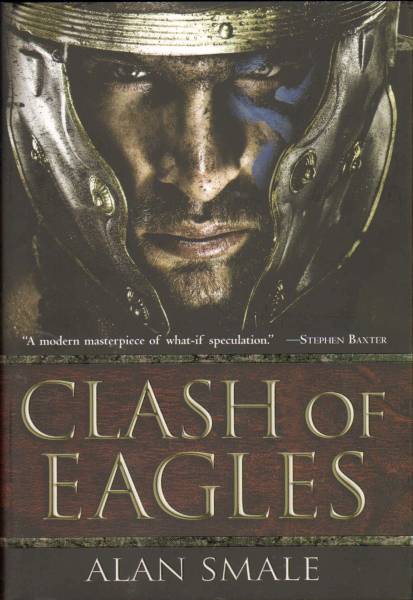
                • Cover of Clash of Eagles / The Hesperian Trilogy
                  Clash of Eagles / The Hesperian Trilogy

                  series · 4 books · 2010

                  similar byalternate historytensewar

                • Cover of Dune Universe
                  Dune Universe

                  universe · 78 books · 1963

                  Start hereDune · Start here

                  similar bypolitical intrigue+1 more

                  Arrakis. Dune. The desert planet, where empire runs on a single substance: the spice melange, which folds space, prolongs life, and unlocks prescience, and which exists nowhere else in the known universe. Frank Herbert's saga is a meditation dressed as an adventure — feudal houses and a secret sisterhood, engineered messiahs and the patient ecology of a world without water, all turning on the terrible gravity of who commands the spice. It reads like scripture and schemes like a war room, ten thousand years hence, among people who have outlawed the thinking machine and made instruments of themselves instead. At its heart stand Herbert's original six — Dune, Dune Messiah, Children of Dune, God Emperor of Dune, Heretics of Dune, Chapterhouse: Dune — a single deepening arc across millennia, arguing the whole way between prophecy and free will. Around that spine his son Brian Herbert and Kevin J. Anderson have raised a vast prequel architecture: Prelude to Dune, tracing the great houses a generation before Paul; Legends of Dune, reaching back to the crusade that broke the machines; the Schools of Dune cycle on the founding of Bene Gesserit, Mentat, and Navigator; the Caladan Trilogy and Heroes of Dune filling years the originals left in shadow. Many hands, dozens of volumes, one desert. What sets Dune apart is its refusal of the simple: religion is manufactured, heroes are hazards, and the sand itself — worm, water, ecology — acts as a political power. Begin where the universe did, with Frank Herbert's Dune (1965), and read the original six in order; you need nothing else to feel the full weight. The prequels are a country to explore afterward, taken by era. Beginnings are delicate times.

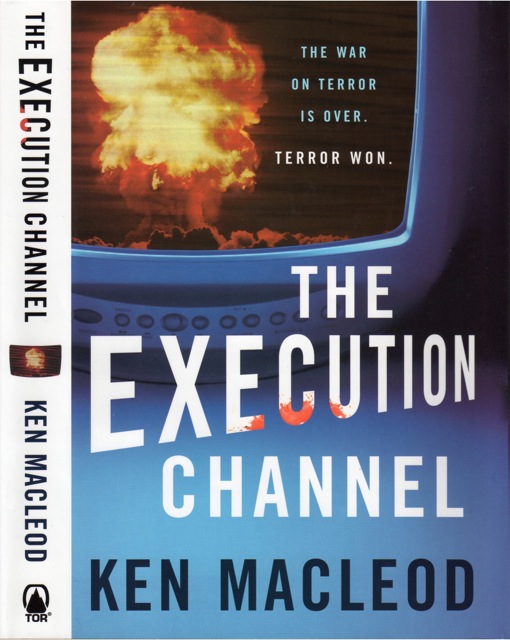
                • Cover of The Execution Channel
                  The Execution Channel

                  Ken MacLeod · standalone novel · 2007

                  similar bytensepolitical intriguewar+1 more

                  Al Gore is elected American president and the War on Terror takes on new dimensions.

                • Cover of Dune
                  Dune

                  series · 20 books · 1963

                  part of Dune Universe

                  similar bypolitical intrigue+1 more

                  Frank Herbert's Dune Chronicles opens with 1965's Dune, set on the desert planet Arrakis where House Atreides takes control of the only source of the vital spice melange and young Paul Atreides is pulled into a struggle over its politics and religion. Herbert carried the story forward across five further novels — Dune Messiah, Children of Dune, God Emperor of Dune, Heretics of Dune, and Chapterhouse: Dune — following Paul's line over the following millennia, before Brian Herbert and Kevin J. Anderson later extended the saga. Many other editions of these six novels are omnibus and box-set repackagings rather than separate stories.

                • Cover of Third World War
                  Third World War

                  series · 3 books · 1978

                  similar bytensewar+2 more

                • Cover of Without Warning
                  Without Warning

                  series · 3 books · 2008

                  similar byalternate historytensepolitical intriguewar

                • Cover of Red Inferno: 1945
                  Red Inferno: 1945

                  Robert Conroy · standalone novel · 2010

                  similar byalternate historytensepolitical intriguewar

                  Red Inferno: 1945 is a 2010 novel written by Robert Conroy, the author of other alternate history novels.

                • Cover of Johan Eschbach
                  Johan Eschbach

                  series · 3 books · 1994

                  similar byalternate historytensepolitical intrigue