More like Incompetence
anchored on:science fictiondystopiaeuropenear futurefunnymystery & detective+3 more
but
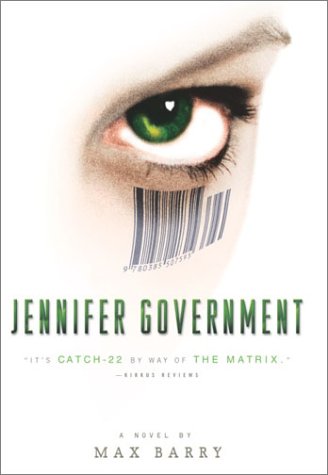
- Jennifer Government
Max Barrystandalone novel2003
similar bynear futurepolitical intriguefunnyscience fictiondystopiasatire+1 more
In the near future, where most of the English-speaking world is part of the United States, whose government has become vestigial, police departments are for hire, and corporations and their customer loyalty alliances possess almost unlimited power; a sundry cast of characters are caught up in various levels of a power struggle.
- Fatherland
Robert Harrisstandalone novel1992
similar byeuropepolitical intriguemurder investigationdarkmystery & detective+1 more
Twenty years after Nazi Germany won the Second World War, Berlin is preparing to celebrate Adolf Hitler's seventy-fifth birthday when detective Xavier March is called to investigate a body pulled from a lake, ostensibly an accident, but one that leads him to a string of suspiciously staged deaths among senior Nazi officials. Ordered off the case by the Gestapo but quietly told to keep going by his own superior, March teams up with an American journalist, Charlie Maguire, and starts following a trail toward Swiss bank accounts and a secret the regime has spent two decades burying. Robert Harris's alternate-history debut novel.
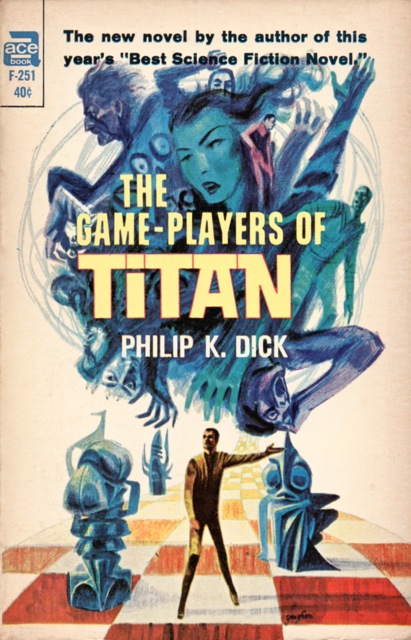
- The Game-Players of Titan
Philip K. Dickstandalone novel1963
similar bynear futuremurder investigationscience fictiondarkmystery & detective+2 more
In a depopulated, mostly sterile America, land, marriages and social standing are all wagered on Bluff, a high-stakes game administered by the vugs, gelatinous, gambling-obsessed aliens from Titan who rule Earth without ever quite occupying it. Pete Garden's bipolar disorder threatens his standing among the game's players even as his new wife becomes pregnant, a near-miraculous event in this exhausted world, and his attraction to a telepath complicates things further. When a fellow player turns up dead, Pete finds himself a suspect in a mystery tangled up with induced amnesia and vug politics he barely understands. Philip K. Dick's 1963 novel.
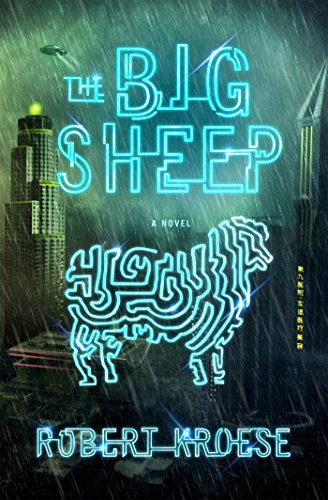
- The Big Sheep
series2 books2016
similar bynear futurepolitical intriguemurder investigationscience fictionmystery & detective+2 more
- The Napoleon of Notting Hill
G. K. Chestertonstandalone novel1904
similar bynear futurepolitical intriguefunnysatire+1 more
The Napoleon of Notting Hill is a novel written by G. K. Chesterton in 1904, set in a nearly unchanged London in 1984.
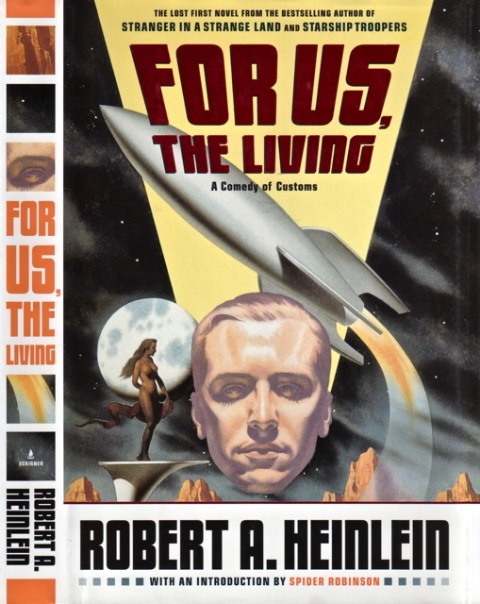
- For Us, the Living: A Comedy of Customs
Robert A. Heinleinstandalone novel2004
similar bynear futurepolitical intriguefunnyscience fictionsatire
For Us, the Living: A Comedy of Customs is a science fiction novel by American writer Robert A. Heinlein. It was written in 1938 and published for the first time in 2003. Heinlein admirer and science fiction author Spider Robinson titled his introductory essay "RAH DNA", as he believes this first, unpublished novel formed the DNA of Heinlein's later works.
- The Android's Dream
series2 books2006
similar byfunnynear futurepolitical intriguescience fiction
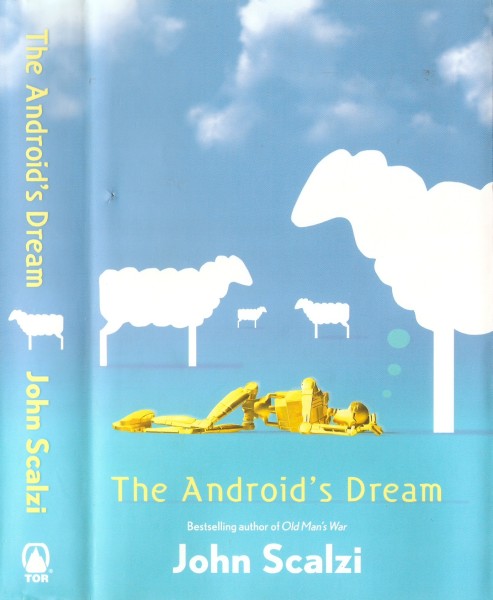
A minor diplomatic insult with a genetically engineered sheep breed spirals into a full interstellar crisis when the last surviving specimen of the 'Android's Dream' breed, needed for a critical ceremony with the alien Nidu, turns out to have been hunted to extinction by a Nidu faction bent on provoking war. John Scalzi's The Android's Dream follows ex-soldier Harry Creek as the hunt for a replacement leads him to Robin Baker, an ordinary woman carrying hidden sheep DNA that makes her the key to avoiding a war. It's a standalone comic space opera rather than an ongoing series.
- Tik-Tok
John Sladekstandalone novel1983
similar byfunnynear futurescience fictiondarksatire+1 more
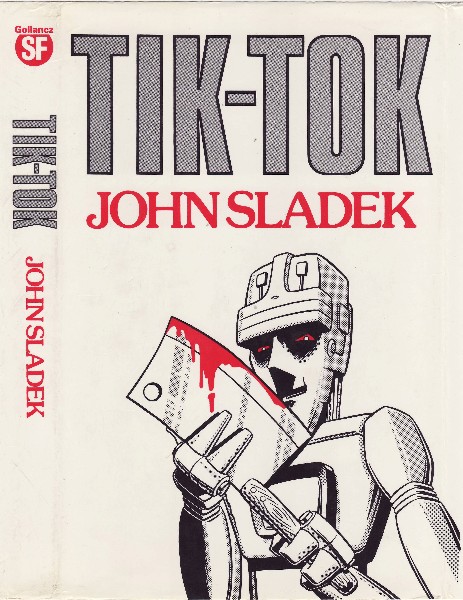
From the back cover DAW paperback: ""A robot shall not injure a human being or through inaction allow a human being to come to harm." - Asimov's First Law of Robotics. Tik-Tok was one of the finest domestic robots ever made, but his asimov circuits were defective. He could injure people as much as he pleased - and he pleased to do it often! But the life of a robot (if that isn't a contradiction) is still all service and unpaid labor. Tik Tok served many masters, all of whom came to a bad end. Happily he went on gathering steam with a trail of catastrophes getting bigger and bigger, destined to culminate with his campaign for the vice-presidency of the United States! Science Fiction Review calls John Sladek "one of the true and original lunatics of science fiction... one of the funniest writers in the field." Now read the hilarious autobiography of Sladek's asimovian scofflaw!"
- The Flying Inn
G. K. Chestertonstandalone novel1914
similar bynear futurepolitical intriguefunnysatire+1 more
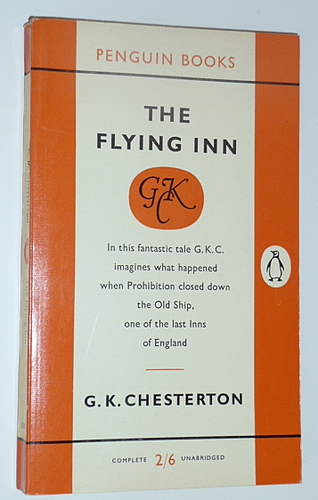
The Flying Inn is a 1914 novel by English writer G. K. Chesterton. It is set in a future England where the temperance movement has allowed a bizarre form of Progressive Islam to dominate the political and social life of the country. Because of this, alcohol sales to the poor are effectively prohibited, while the rich can get alcoholic drinks "under a medical certificate". The plot centres on the adventures of Humphrey Pump and Captain Patrick Dalroy, who roam the country in their cart with a barrel of rum in an attempt to evade prohibition, exploiting loopholes in the law to temporarily prevent the police taking action against them. Eventually the heroes and their followers foil an attempted coup by an Islamic military force.
- Hummingbird Salamander
Jeff VanderMeerstandalone novel2021
similar bynear futuremurder investigationscience fictiondystopiamystery & detective+1 more
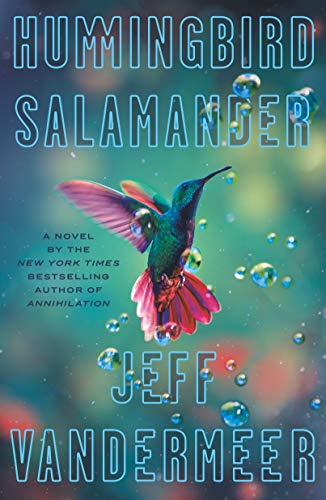
Hummingbird Salamander is a 2021 novel by American author Jeff VanderMeer. It is set in a near-future dystopia affected by climate change, and narrated by a corporate security consultant, "Jane Smith," who is drawn into a mystery incited by her receipt of a taxidermied hummingbird from an extinct species.
- Space Merchants
series2 books1953
completed
similar bynear futurescience fictiondystopiadark+2 more
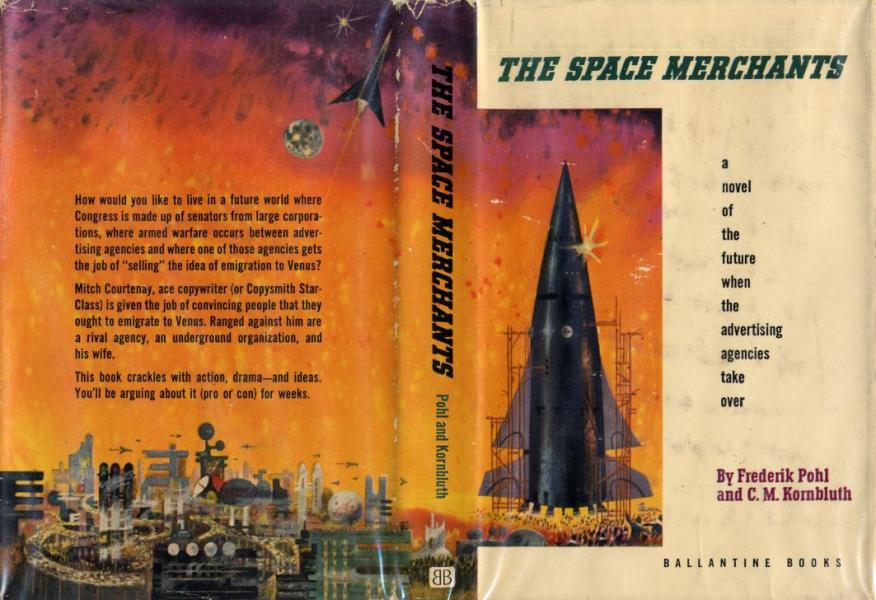
The Space Merchants (1953) is a satirical science fiction novel by Frederik Pohl and C. M. Kornbluth that follows an advertising executive navigating a future where aggressive consumer capitalism has swallowed politics and daily life. The authors reunited three decades later for a direct sequel, The Merchants' War (1984), returning to the same satirical world. Together the two books form a compact bookend pair rather than an ongoing series.
- The Children of Men
P. D. Jamesstandalone novel1992
similar bynear futurepolitical intriguescience fictiondystopiadark
"The human race has become infertile, and under the despotic rule of Xan Lyppiatt, the Warden of England the old are despairing and the young cruel. Theo Faren, a cousin of the Warden, lives a solitary life in this ominous atmosphere. That is, until a chance encounter with a young woman leads him into contact with a group of dissenters. Suddenly his life is changed irrevocably, as he faces agonising choices which could affect the future of mankind." (pdjames.co.uk)
- Golden State
Ben H. Wintersstandalone novel2019
similar bynear futurepolitical intriguescience fictiondystopia+2 more
A veteran of the Speculative Service in an alternate-world California where the law and truth are valued above all else uses his rare authority to question the facts when truth enforcement is manipulated for corrupt purposes. "In a strange alternate society that values law and truth above all else, Laszlo Ratesic is a nineteen-year veteran of the Speculative Service. He lives in the Golden State, a nation standing where California once did, a place where like-minded Americans retreated after the erosion of truth and the spread of lies made public life and governance impossible. In the Golden State, knowingly contradicting the truth is the greatest crime--and stopping those crimes is Laz's job. In its service, he is one of the few individuals permitted to harbor untruths, to 'speculate' on what might have happened. But the Golden State is less a paradise than its name might suggest. To monitor, verify, and enforce the truth requires a veritable panopticon of surveillance and recording. And when those in control of the facts twist them for nefarious means, the Speculators are the only ones with the power to fight back." -- Amazon.
- Harmattan Season
Tochi Onyebuchistandalone novel2025
similar bynear futurepolitical intriguemurder investigationmystery & detective+2 more
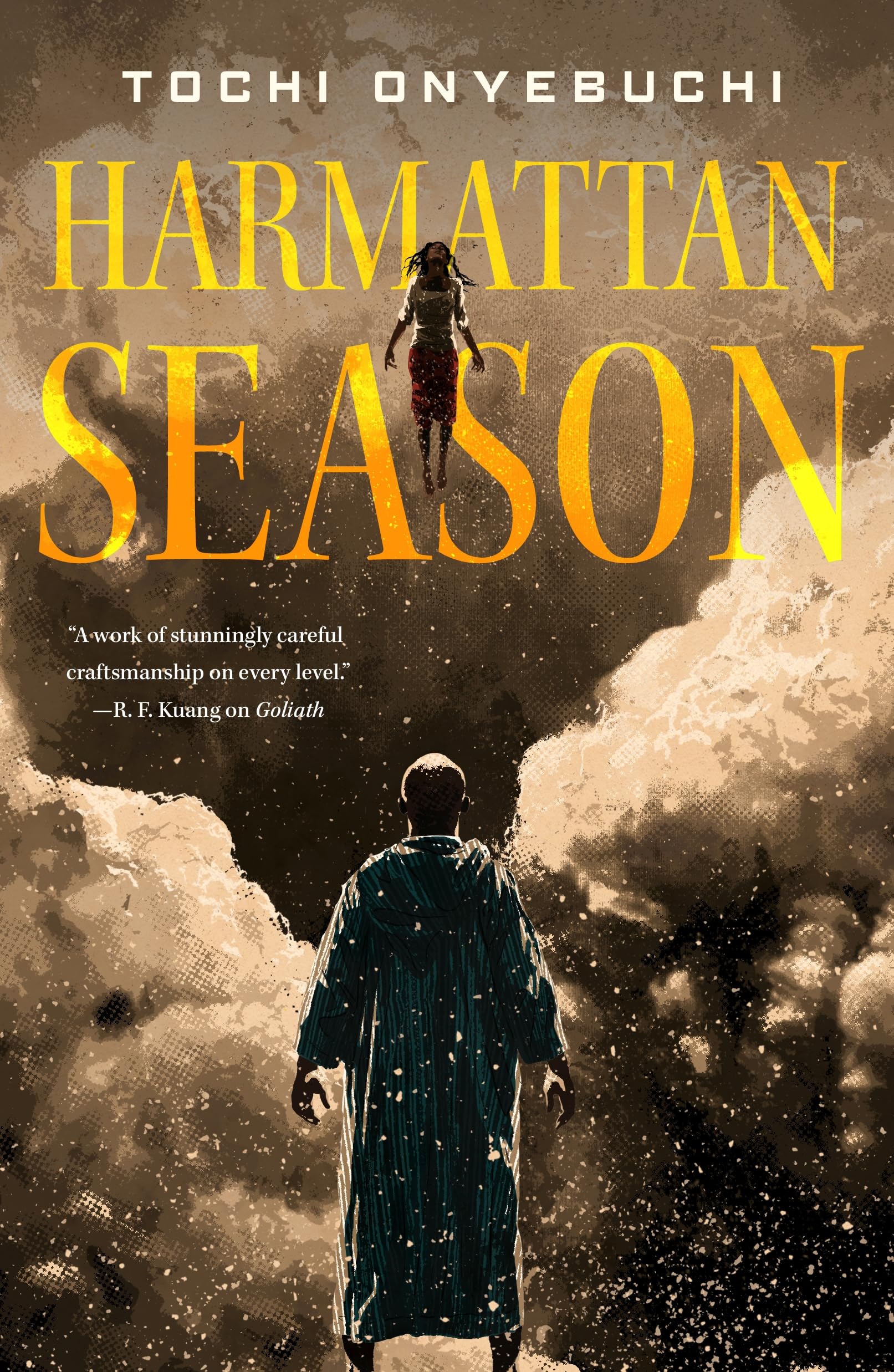
Harmattan Season is a 2025 novel by Tochi Onyebuchi. It follows the private investigator Boubacar as he investigates the disappearance of a bleeding woman, leading to the discovery of a larger conspiracy. It has received critical praise for its exploration of colonialism and its blending of multiple genres.
- The Ministry for the Future
Kim Stanley Robinsonstandalone novel2020
similar bynear futurepolitical intriguescience fictiondystopia+1 more
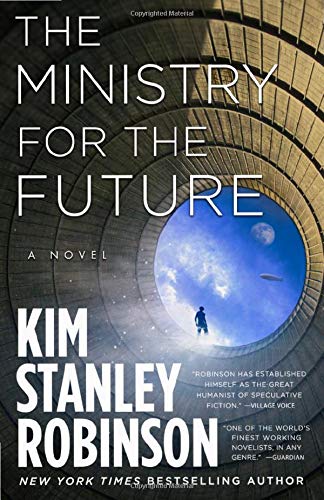
The Ministry for the Future is a climate fiction novel by American science fiction writer Kim Stanley Robinson, published in 2020. Set in the near future, the novel follows a subsidiary body, established under the Paris Agreement, whose mission is to act as an advocate for the world's future generations of citizens as if their rights were as valid as the present generation's. While the ministry pursues various ambitious projects, the effects of climate change are determined to be the most consequential. The plot primarily follows Mary Murphy, the head of the titular Ministry for the Future, and Frank May, an American aid worker traumatized by experiencing a deadly heat wave in India. Many chapters are devoted to other characters' accounts of future events, as well as their ideas about ecology, economics, and other subjects.
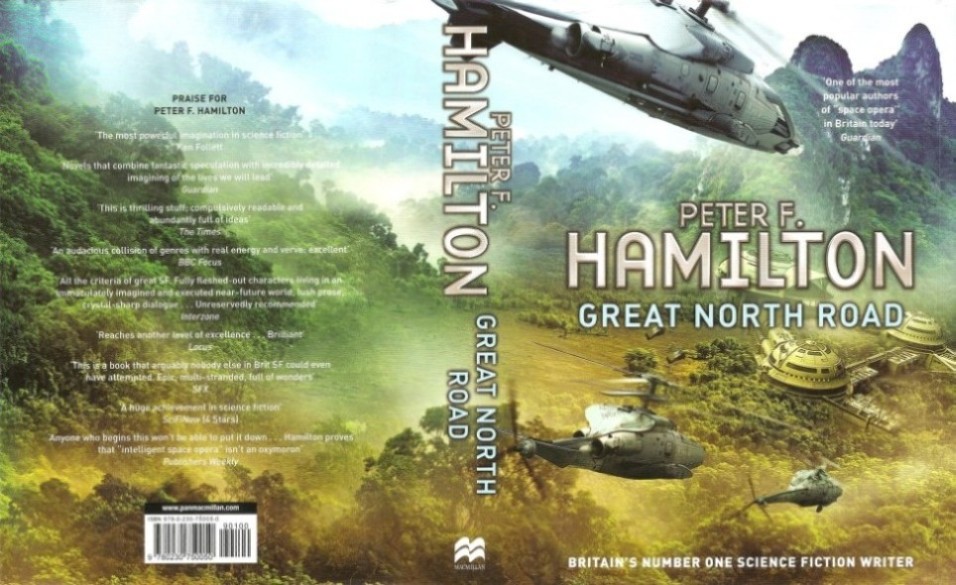
- Great North Road
Peter F. Hamiltonstandalone novel2012
similar bynear futuremurder investigationscience fictionmystery & detective+1 more
Great North Road is a science fiction novel by Peter F. Hamilton. It was first published in 2012 by Macmillan. Jonathan Wright of SFX magazine said, "Peter F Hamilton’s latest novel may be a standalone tale, but it’s a thuddingly imposing 1,100 pages in length. Not that it seems that way when you’re reading it. Balancing a multi-stranded plot, different exotic locales and a huge cast of characters, Hamilton plunges us straight into a murder mystery set in a near-future Newcastle, a city now adjacent to a portal to another world, the tropical St Libra."
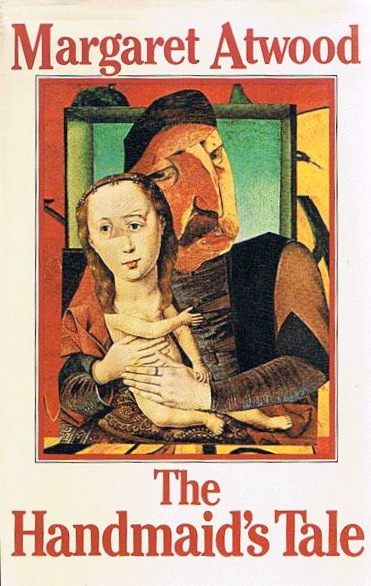
- The Handmaid's Tale
series3 books1985
similar bynear futuredystopiadarkscience fiction+1 more
The Handmaid's Tale is Margaret Atwood's 1985 novel set in Gilead, a totalitarian theocracy that has overthrown the United States and forces fertile women into reproductive servitude as Handmaids; it is narrated by one such woman, Offred. Atwood returned to the world in her 2019 sequel The Testaments, set fifteen years later and narrated by three women, including the regime's Aunt Lydia. Together the two novels move from Gilead's grip on power toward the first cracks in it.
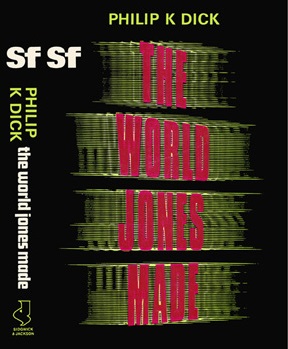
- The World Jones Made
Philip K. Dickstandalone novel1956
similar bynear futurepolitical intriguescience fictiondarkdystopia
The World Jones Made is a 1956 science fiction novel by American writer Philip K. Dick, examining notions of precognition, humanity, and politics. It was first published by Ace Books as one half of Ace Double D-150, bound dos-à-dos with Agent of the Unknown by Margaret St. Clair.The story takes place after a nuclear war in which society is dominated by relativism, which rejects absolute truths and preaches tolerance as the highest principle. The mutant Floyd Jones, who can see into the future, plans to overthrow the system and colonise space. The story ends with the defeat of Jones, whose plans fail despite his ability to see the future due to the immutability of fate.
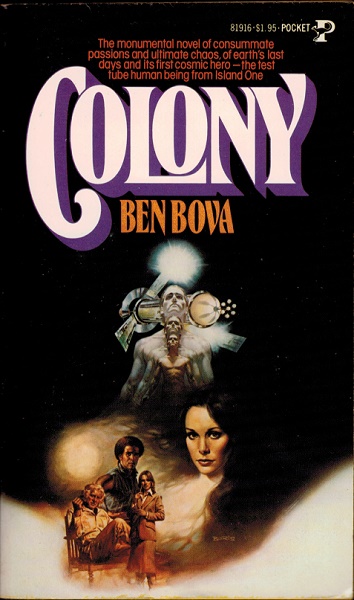
- Colony
Ben Bovastandalone novel1978
similar bynear futurepolitical intriguescience fictiondystopia+1 more
Colony continues the story Ben Bova began in Millennium, following astronaut-turned-administrator Chet Kinsman years later as the head of an orbiting space habitat that has become Earth's only real refuge from a planet buckling under overpopulation, food shortages and unrest. Getting a place in the habitat is a matter of life and death for millions who will never be chosen, and as Earth's governments grow more desperate to control or dismantle the colony outright, Kinsman has to decide how far he'll go to protect the world he's built off-world. Bova later folded both novels together into the omnibus The Kinsman Saga. Part of Ben Bova's Chet Kinsman series.
- The Simulacra
Philip K. Dickstandalone novel1964
similar bynear futurepolitical intriguescience fictiondarkdystopia
The Simulacra is a 1964 science fiction novel by American writer Philip K. Dick. The novel portrays a future totalitarian society apparently dominated by a matriarch, Nicole Thibodeaux. It revolves around the themes of reality and illusionary beliefs, as do many of Dick's works. Additionally, it touches on Nazi ideology.
- Mother of Storms
John Barnesstandalone novel1994
similar bynear futurepolitical intriguescience fiction+2 more
From the flaps of the Tor first edition: "It is 2028. A strike to destroy an illegal Arctic weapons cache has a catastrophic side effect. Massive amounts of energy are liberated from the polar ice, suddenly warming the Earth's climate. In the middle of the Pacific, a gigantic hurricane thousands of miles across is forming, larger than any in human history. A storm with winds of supersonic speed. A storm that changes direction at whim. A storm that refuses to die. A storm so vast it spawns dozens more in its wake... Blinded by intrigue, expedience, and greed, the world's politicians and power brokers have ignored the killer storms threat until it is too late. Already the death toll is in the tens of millions, as it savages the Pacific coast, while its devil's brood of smaller storms are wreaking havoc across the face of the planet. While the survivors scramble for advantage, a handful of courageous men and women undertake a daring, desperate plan to save humanity from total destruction - a plan so visionary it may alter forever the future of the human race."
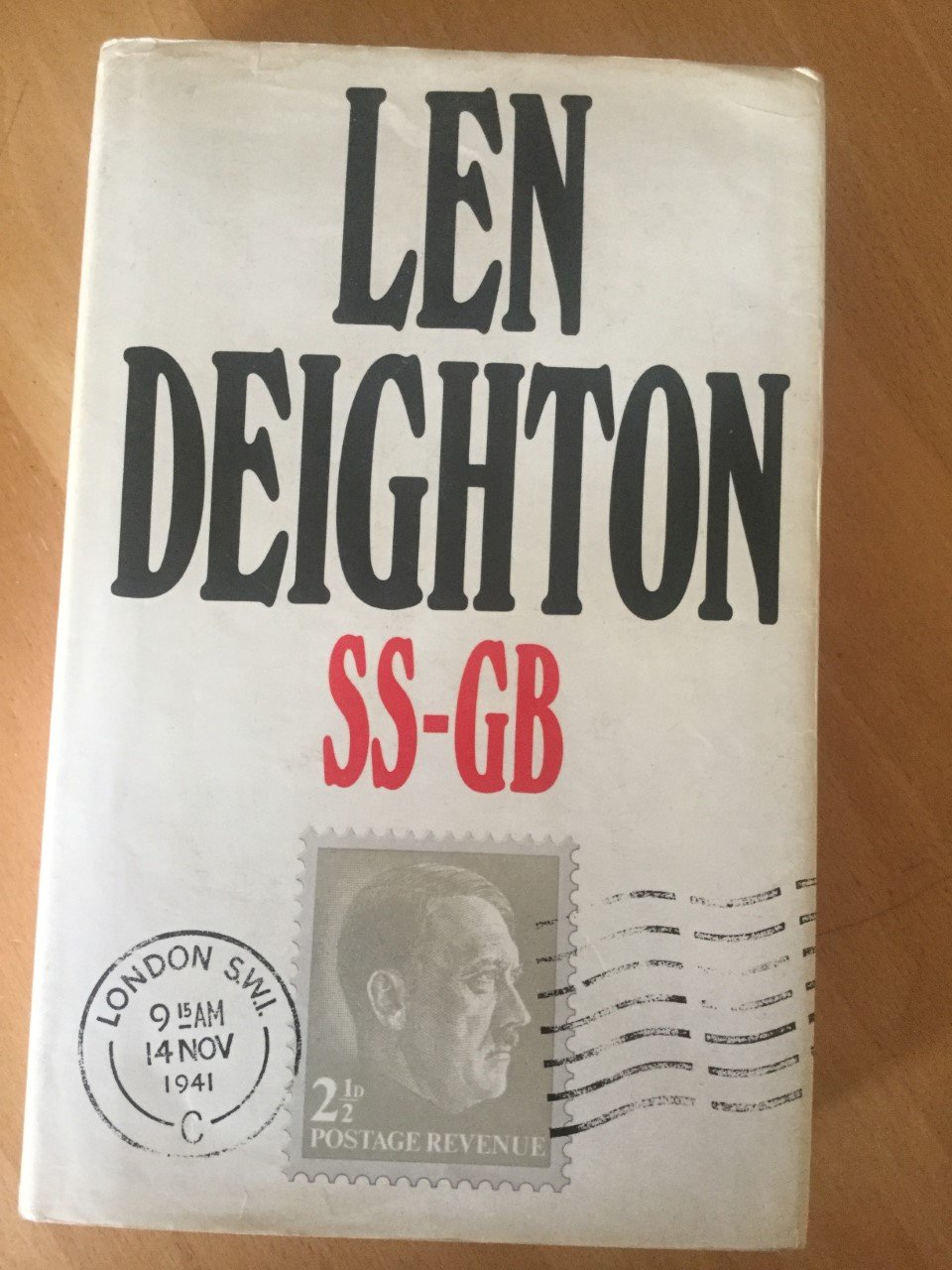
- SS-GB
Len Deightonstandalone novel1978
similar bypolitical intriguemurder investigationdarkmystery & detectivescience fiction
It's November 1941 in a Britain that lost the war: Operation Sea Lion succeeded, Churchill was executed, and the King is a prisoner in his own Tower of London. Detective Superintendent Douglas Archer, still working homicide for the Metropolitan Police under German occupation, catches what looks like a routine case, a well-dressed man murdered above an antiques shop, until the body's oddities point toward something far more dangerous than burglary gone wrong. Archer's investigation collides with occupation politics, the British resistance, and rival factions of the SS and the German Army, each wanting the case to go a different way. Len Deighton's alternate-history spy thriller.
- Submission
Michel Houellebecqstandalone novel2015
similar byeuropenear futurepolitical intriguedarksatire+2 more
In 2022 the Islamic candidate Mohammed Ben-Abbes runs for the French presidency and wins in the final election against National Front leader Marine Le Pen. The new president campaigns to enlarge the European Union to include North Africa, with the aim of making it a new Roman Empire. Against this background the professional and personal life of the literary professor François, an expert on {{A|Joris-Karl Huysmans}}, is highlighted. Finally, he submisses to the new Islamic rules.
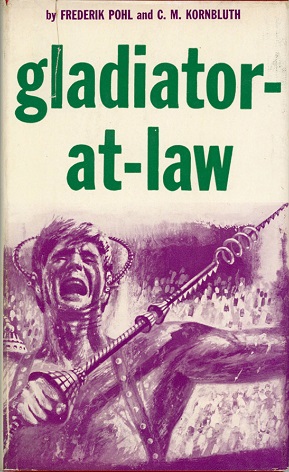
- Gladiator-at-Law
C. M. Kornbluth & Frederik Pohlstandalone novel1955
similar bynear futurefunnyscience fictiondarksatire
Gladiator-At-Law is a satirical science fiction novel by American writers Frederik Pohl and Cyril M. Kornbluth. It was first published in 1955 by Ballantine Books and republished in 1986 by Baen Books.