More like Industrial Divinity
anchored on:our world
but
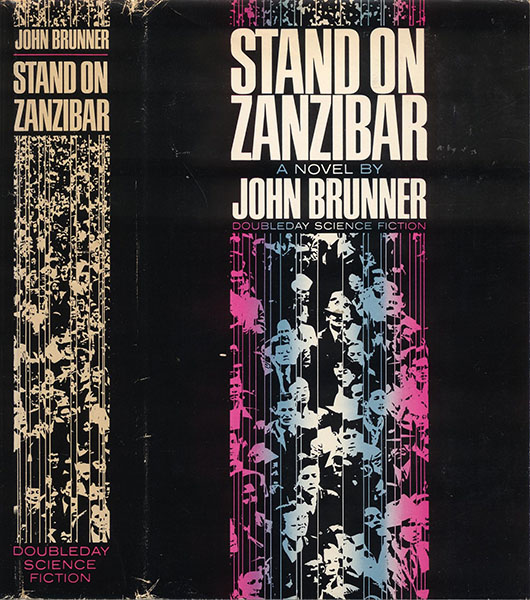
- Stand on Zanzibar
John Brunnerstandalone novel1968
similar bychallengingour worldnear futurescience fiction+1 more
Stand on Zanzibar is a dystopian New Wave science fiction novel written by John Brunner and first in part published in New Worlds magazine in 1967 and in book form in 1968. The book won a Hugo Award for Best Novel at the 27th World Science Fiction Convention in 1969, as well as the 1969 BSFA Award and the 1973 Prix Tour-Apollo Award.
- Oath of Fealty
Larry Niven & Jerry Pournellestandalone novel1981
similar byclass conflictour worldnear futurescience fiction+1 more
Oath of Fealty is a 1981 novel by American writers Larry Niven and Jerry Pournelle, published originally by Phantasia Press, then by Timescape Books, with numerous reprints. Set in the near future, it involves an arcology, a large inhabited structure, called Todos Santos, which rises above a crime-ridden Los Angeles, California, but has little beyond casual contact with the city. The novel popularized the phrase "think of it as evolution in action", which occurs elsewhere in Niven's books. The novel anticipated the building of the Los Angeles subway. It was included in David Pringle's book Science Fiction: The 100 Best Novels.
- Makers
Cory Doctorowstandalone novel2009
similar byclass conflictour worldnear futurescience fictionartificial intelligence+1 more
Makers is a novel by Canadian-British science fiction author Cory Doctorow released in October 2009. It was nominated for the Prometheus Award.
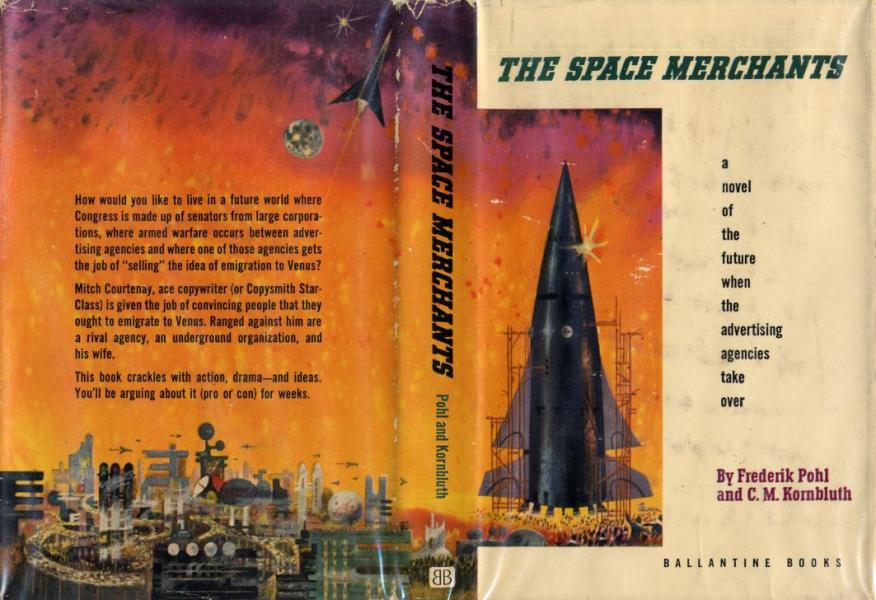
- Space Merchants
series2 books1953
completed
similar byclass conflictnear futurescience fiction
The Space Merchants (1953) is a satirical science fiction novel by Frederik Pohl and C. M. Kornbluth that follows an advertising executive navigating a future where aggressive consumer capitalism has swallowed politics and daily life. The authors reunited three decades later for a direct sequel, The Merchants' War (1984), returning to the same satirical world. Together the two books form a compact bookend pair rather than an ongoing series.
- The Diamond Age
Neal Stephensonstandalone novel1995
similar byclass conflictnear futurescience fictionartificial intelligence+1 more
The Diamond Age: Or, A Young Lady's Illustrated Primer is a science fiction novel by Neal Stephenson. It is to some extent a Bildungsroman or coming-of-age story, focused on a young girl named Nell, set in a future world in which nanotechnology affects all aspects of life. The novel deals with themes of education, social class, ethnicity, and the nature of artificial intelligence. The Diamond Age was first published in 1995 by Bantam Books, as a Bantam Spectra hardcover edition. In 1996, it won both the Hugo and Locus Awards, and was shortlisted for the Nebula and other awards.
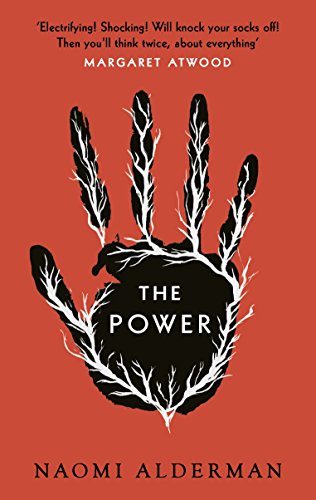
- The Power
Naomi Aldermanstandalone novel2016
similar bychallengingclass conflictour worldnear futurescience fiction
The Power is a 2016 science fiction novel by the British writer Naomi Alderman. Its central premise is of women developing the ability to release electrical jolts from their fingers, which allows them to become the dominant sex. In 2017, it won the Baileys Women's Prize for Fiction.
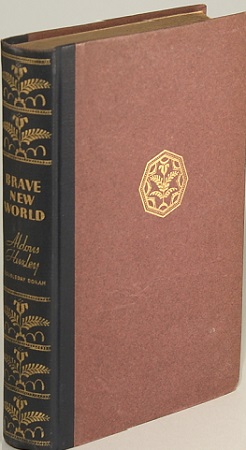
- Brave New World
series8 books1932
similar byclass conflictscience fiction+2 more
Aldous Huxley's 1932 novel imagines a future World State where reproduction, social caste, and desire are all engineered before birth, and the population is kept content through conditioning, sleep-hypnosis, and a mood-altering drug called soma. The story follows the disruption this seemingly stable order suffers when an outsider raised beyond its reach is brought into it, exposing what the society traded away for comfort and order. Some editions pair the novel with Huxley's own 1958 nonfiction essay collection, Brave New World Revisited, which reassesses the book's ideas rather than continuing its story.
- A Clockwork Orange
series4 books1962
completed
similar bychallengingour worldnear futurescience fiction
Anthony Burgess's 1962 novel is narrated by Alex, a teenage gang leader in a near-future Britain gripped by a youth subculture of extreme violence, recounting his crimes in Nadsat, an invented slang blending English with Russian-derived words. After his crimes catch up with him, Alex is made the subject of a controversial state program meant to forcibly reform his behavior, and the novel uses his ordeal to question whether imposed goodness is worth the loss of free will. It is a standalone novel.
- Blood Music
Greg Bearstandalone novel1985
similar byour worldnear futurescience fiction+2 more
Blood Music is a 1985 science fiction novel by American writer Greg Bear. It is an expanded version of a short story of the same title, originally published in the June 1983 issue of Analog and the winner of both the 1983 Nebula and 1984 Hugo awards for Best Novelette. The novel won the 1986 Prix Apollo Award, given to the best science fiction novel published in France during the preceding year, under the title La Musique du sang.
- Stranger in a Strange Land
Robert A. Heinleinstandalone novel1961
similar bychallengingnear futureour worldscience fiction
Stranger in a Strange Land is a 1961 science fiction novel by the American author Robert A. Heinlein. It tells the story of Valentine Michael Smith, a human who comes to Earth in early adulthood after being born on the planet Mars and raised by Martians, and explores his interaction with and eventual transformation of Terran culture.
- Mania
Lionel Shriverstandalone novel2024
similar bychallengingclass conflictour worldnear future
Mania is a satirical dystopian novel by Lionel Shriver, published in 2024 by HarperCollins. The story imagines a social campaign seeking to eliminate the prejudice against low intelligence. It follows the lives of the main character and her best friend as they take opposing views on the issues surrounding the disruptive movement—which allows the author to depict different viewpoints across the political spectrum.
- Richard Forthrast
series2 books2011
similar byour worldscience fiction+3 more
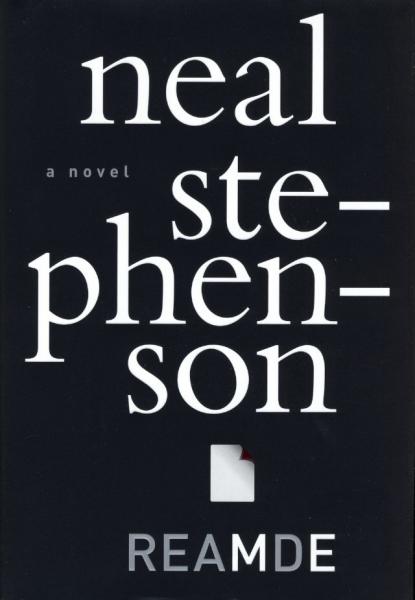
Neal Stephenson's Richard 'Dodge' Forthrast novels open with Reamde, a globe-spanning thriller that starts when ransomware inside an MMORPG economy pulls Richard's extended family into a real-world hostage crisis involving hackers, jihadists and Russian mobsters. The sequel Fall; or, Dodge in Hell shifts registers entirely, following Richard's digitally preserved mind after death into an afterlife simulation built from his scanned brain. The two books share a protagonist and family but differ sharply in genre and scale.
- The Light of Other Days
Arthur C. Clarke & Stephen Baxterstandalone novel2000
similar bychallengingour worldnear futurescience fiction+1 more
An industrialist devises a technique to use tiny wormholes as light pipes to enable viewing of any event anywhere; and subsequently it becomes possible to use them to view any event in the past as well. The effects on society are enormous.
- Julian West
series7 books1888
similar byscience fiction+2 more
Julian West is the time-displaced narrator of Edward Bellamy's Looking Backward, 2000-1887 (1888), a utopian novel in which a nineteenth-century Bostonian wakes from a mesmeric sleep to find his city transformed into a cooperative society more than a century later. Bellamy followed it with Equality (1897), a direct sequel that returns to Julian West's perspective to further elaborate the ideas only sketched in the first book, functioning more as an extended argument than a plotted story. Together the two novels were highly influential on turn-of-the-century utopian and socialist thought.
- The Divers' Game
Jesse Ballstandalone novel2019
similar bychallengingclass conflictour worldnear futurescience fiction
The Divers' Game is a 2019 dystopian novel by American author Jesse Ball.
- The Collected Science Fiction and Fantasy of Jack London
series6 books1906
completed
similar byour worldscience fiction+1 more
- New York 2140
Kim Stanley Robinsonstandalone novel2017
similar byclass conflictnear futurescience fiction+1 more
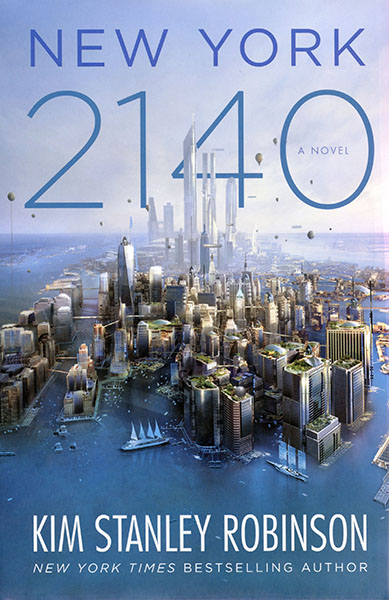
New York 2140 is a 2017 climate fiction novel by American science fiction author Kim Stanley Robinson. The novel is set in a New York City that has been flooded and altered by rising water.
- Sleepless
series5 books1991
similar byclass conflictnear futurescience fiction+1 more
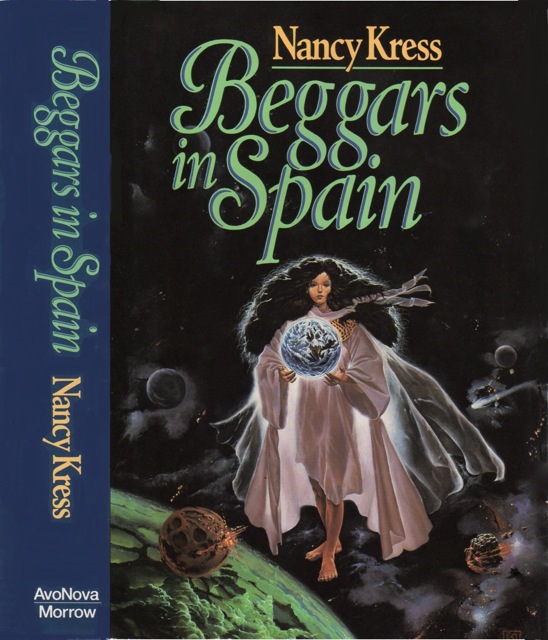
Genetic engineering produces a small class of 'Sleepless' children who never need to sleep and grow up smarter, healthier, and more capable than everyone else, and Nancy Kress's Beggars in Spain follows one of them, Leisha Camden, as ordinary 'Sleepers' come to resent and fear what the Sleepless represent. The novel uses the divide to ask hard questions about what a society owes people it considers unproductive, and what the gifted owe everyone else. Beggars and Choosers and Beggars Ride carry the same conflict forward across the following decades as the Sleepless gain real power.
- New Crobuzon
series4 books2000
similar bychallenging+2 more
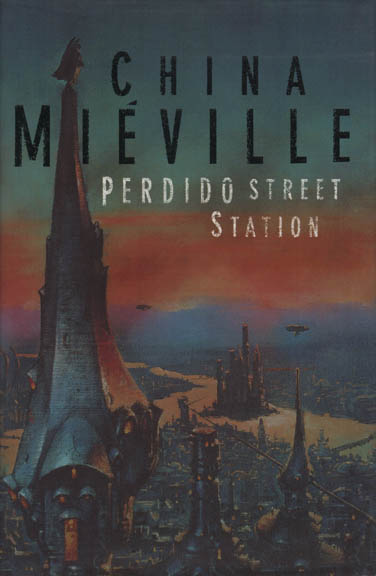
The New Crobuzon books are three standalone novels by China Miéville set in and around New Crobuzon, a vast, corrupt industrial city in his invented world of Bas-Lag where magic, biopunk technology, and several sentient species coexist. Perdido Street Station follows a renegade scientist and his lover after an experiment unleashes something monstrous on the city, while The Scar and Iron Council return to the same setting with different casts and only loose continuity between books.
- High-Opp
Frank Herbertstandalone novel2012
similar byour worldnear futurescience fiction+2 more
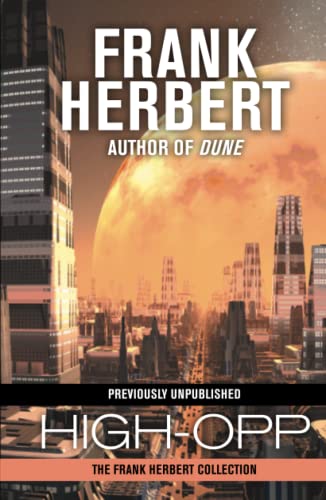
High-Opp is a science fiction novel by American writer Frank Herbert, written between The Dragon in the Sea (1956) and Dune (1965), and published posthumously in 2012. It contains a foreword by Kevin J. Anderson, who co-authored many books in the Dune series with Frank Herbert's son, Brian Herbert.
- The Natural Way of Things
Charlotte Woodstandalone novel2016
similar bychallengingour worldnear future+1 more
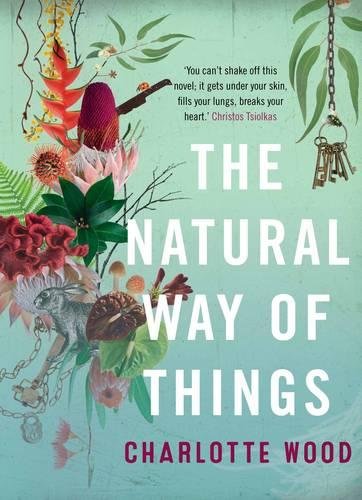
The Natural Way of Things (2015) is a novel by Australian writer Charlotte Wood. It won the Stella Prize, for writing by Australian women, in 2016.
- The Jagged Orbit
John Brunnerstandalone novel1969
similar bychallengingnear futurescience fiction+1 more
The Jagged Orbit is a science fiction novel by British writer John Brunner. It is similar to his earlier novel Stand on Zanzibar in its narrative style and dystopic outlook. It has exactly 100 titled chapters, which vary from several pages to part of one word. It was first published in 1969 with cover art by Leo and Diane Dillon, in the Ace Science Fiction Specials line issued by Ace Books.