More like Infinities
anchored on:science fictionfar futureshort story cyclespacedark
but
- The Stars My Destination
Alfred Besterstandalone novel1956
similar byscience fictiondarksurvivalspacefar future+1 more
When a passing spaceship refuses to rescue the lone survivor from the drifting wreck of another ship, he dedicates his life to discovering who made that decision and exacting his revenge, in the process altering human history and his own character.
- Forge of God
series2 books1987
completed
similar byscience fictiondarksurvival+3 more
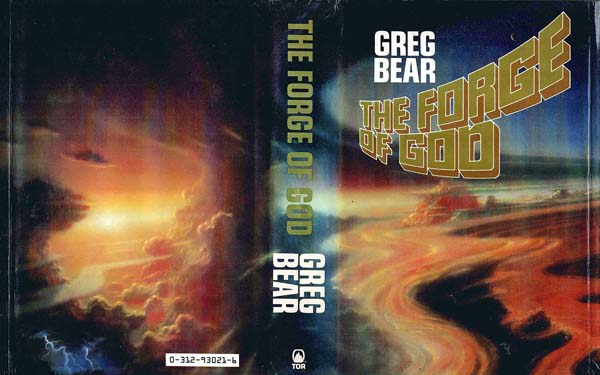
The Forge of God (1987) is Greg Bear's science fiction novel about Earth's discovery that it is the target of an incomprehensible, overwhelming alien attack, following scientists and ordinary people as they try to understand what is destroying the planet. Its 1992 sequel, Anvil of Stars, follows a group of young survivors sent on a mission of interstellar retaliation, continuing directly from the first book's ending.
- Thorns
Robert Silverbergstandalone novel1967
similar byscience fictiondarkspacefar future+1 more
From the back cover of the Ballantine first edition: "Lona Kelvin - naive orphan. And at seventeen, mother of one hundred children. Minner Burris - starman. Whose butchered body had been put together by aliens, with artificial and alien replacements. Horror stalked just beneath the surface of these two lonely creatures. Duncan Chalk - a vulture, carrion eater of other people's emotions, feeding on pain, fear, anger, hatred, jealousy, terror; typifying in the appetites of his vast body the sick delight that millions took in the tragedies he skillfully arranged. Lona Kelvin - Minner Burris - Duncan Chalk - Surely the strangest triangle the worlds had ever seen."
- Blindsight / Firefall
series3 books2006
similar byscience fictiondarkspacefar future+1 more
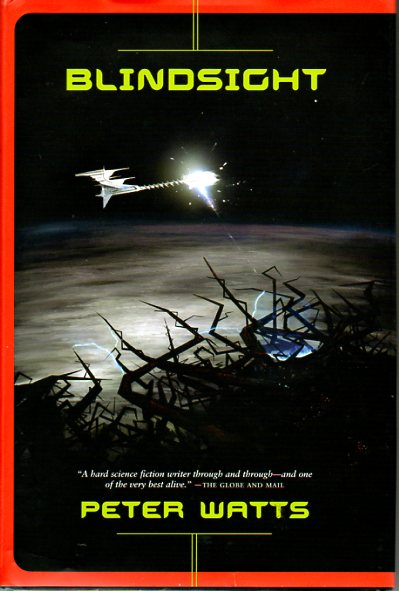
Blindsight sends a crew of radically modified posthumans (including a resurrected, genetically restored vampire) out to the Oort cloud after humanity detects an alien signal, only to make contact with something intelligent, wildly capable, and possibly not conscious at all — a first-contact story built around the question of whether self-awareness is actually useful. Peter Watts's Echopraxia is a same-timeframe "sidequel" rather than a direct sequel, following different characters through the fallout of the same first-contact event.
- Space Beagle
series5 books1939
completed
similar byscience fictionspace explorationspacefar future+1 more
The Voyage of the Space Beagle is a 1950 fix-up novel by A. E. van Vogt, stitched together from four previously published pulp stories into a single continuous account of the exploration ship Space Beagle's encounters with a series of dangerous alien life forms. Its episodic, crew-versus-monster structure reads as a loose sequence of adventures rather than one continuous plot.
- Adrift
Rob Boffardstandalone novel2018
similar byscience fictiondarksurvivalspacefar future+1 more
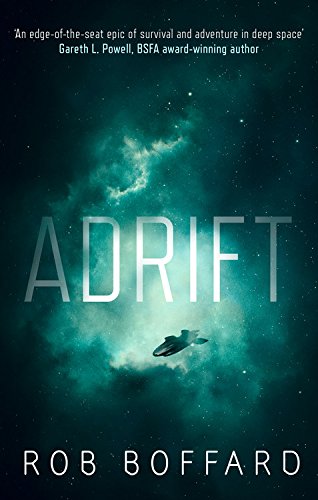
"Sigma Station. The ultimate luxury hotel, in the far reaches of space. For one small group, a tour of the Horsehead Nebula is meant to be a short but stunning highlight in the trip of a lifetime. But when a mysterious ship destroys Sigma Station and everyone on it, suddenly their tourist shuttle is stranded. They have no weapons. No food. No water. No one back home knows they're alive. And the mysterious ship is hunting them" -- Back cover.
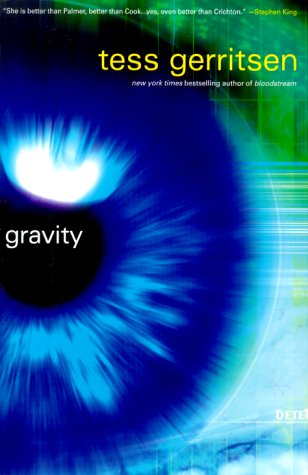
- Gravity
Tess Gerritsenstandalone novel1999
similar byscience fictiondarkspace explorationsurvivalspace
Medical thriller set aboard the International Space Station where astronauts are dying one by one from a mysterious disease. Dr Emma Watson is a research physician on a mission to study living organisms in space. But the mission aboard the space station turns into a nightmare.
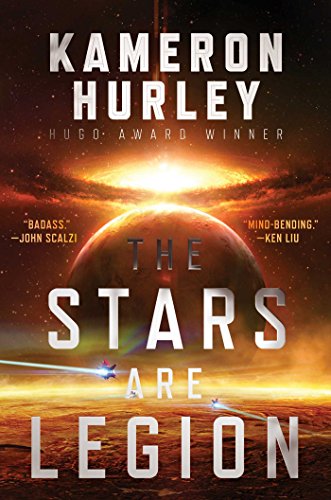
- The Stars Are Legion
Kameron Hurleystandalone novel2017
similar byscience fictiondarksurvivalspacefar future
396 pages ; 20 cm
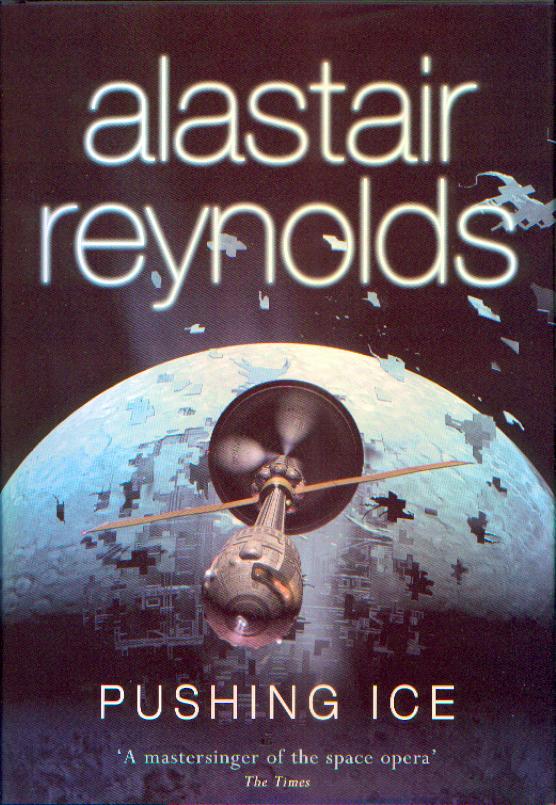
- Pushing Ice
Alastair Reynoldsstandalone novel2005
similar byscience fictionspace explorationsurvivalspacefar future
When Saturn's moon Janus suddenly takes off into interstellar space, an ice mining spaceship sent to investigate finds itself swept along into distant space until it ends up trapped in a gigantic alien structure, wherein the crew must prepare to reside for the foreseeable future.
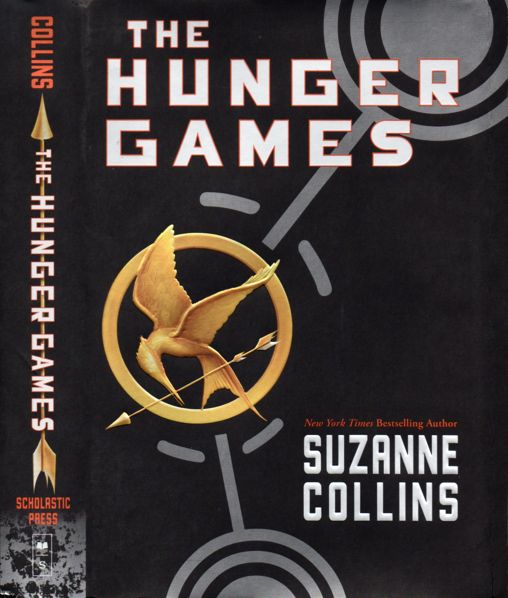
- The Hunger Games
series3 books2008
part of The Hunger Games Universe
similar byscience fictiondarksurvivalfar future
The Hunger Games is a series of young adult dystopian novels written by American author Suzanne Collins. The series consists of a trilogy that follows teenage protagonist Katniss Everdeen, as well as two prequels. The Hunger Games universe is a dystopia set in Panem, a post-apocalyptic North American country consisting of the wealthy Capitol and 12 districts in varying states of poverty. As punishment for rebellion, the Capitol hosts an annual battle royale competition called The Hunger Games. Each of the 12 districts must send two children between the ages of 12 and 18 to participate, and the last surviving child is dubbed the victor.
- Cities in Flight
series10 books1950
completed
similar byscience fictionspacefar future+2 more
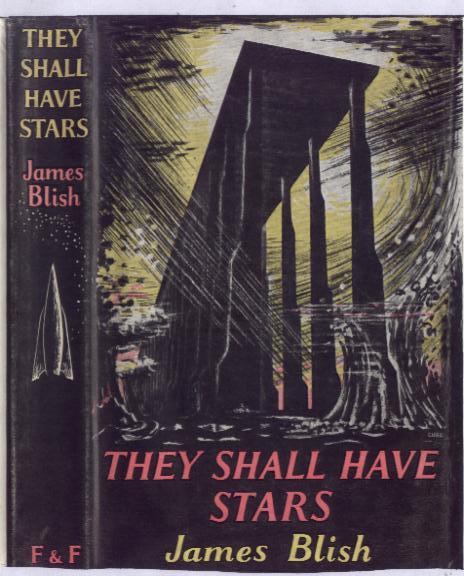
Cities in Flight is a four-volume series of science fiction novels and short stories by American writer James Blish, originally published between 1950 and 1962, which were first known collectively as the "Okie" novels. The series features entire cities that are able to fly through space using an anti-gravity device, the spindizzy. The stories cover roughly two thousand years, from the very near future to the end of the universe. One story, "Earthman, Come Home", won a Retro Hugo Award in 2004 for Best Novelette. Since 1970, the primary edition has been the omnibus volume first published in paperback by Avon Books. Over the years James Blish made many changes to these stories in response to points raised in letters from readers.
- The Hunger Games Universe
universe5 books2008
Start hereThe Hunger Games · Start here
similar bydarkscience fictionsurvivalfar future
Panem, they call it now — a nation raised on the drowned bones of North America, a glittering Capitol ringed by twelve districts it once starved into obedience. Every year the Capitol collects its debt in children: two tributes from each district, drawn by lottery, dropped into an engineered arena, and made to kill one another on live television while the whole country is required to watch. This is the Hunger Games — entertainment, punishment, and government at once. Suzanne Collins tells it in a compact, unified body of work. The founding trilogy — The Hunger Games, Catching Fire, and Mockingjay — follows Katniss Everdeen, a girl from the coal-mining District 12 who volunteers in her sister's place and becomes something the Capitol never scripted. Two prequels reach back into the same machinery: The Ballad of Songbirds and Snakes traces a young Coriolanus Snow long before he is President, and Sunrise on the Reaping returns to District 12 a generation ahead of Katniss. Begin with the trilogy, in order — it is Katniss's voice, close and present-tense, that makes Panem breathe, and the prequels land hardest once you know how her story ends. Beneath the spectacle sits one steady, uncomfortable question: who profits when we agree to look away.
- Berserker (Fred Saberhagen)
series59 books1963
similar byscience fictionspacefar future+2 more
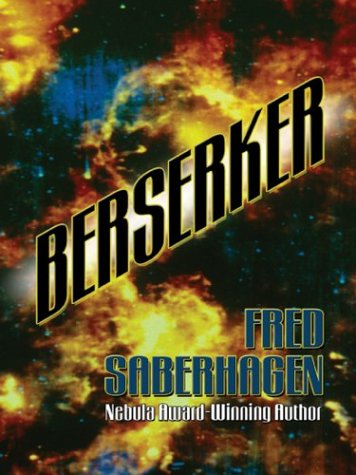
The Berserker series is a series of space opera science fiction short stories and novels by Fred Saberhagen, in which robotic self-replicating machines strive to destroy all life.
- David Ryerson
series2 books1958
completed
similar byscience fictionspace explorationsurvivalspacefar future
The Enemy Stars follows the crew of a faster-than-light survey ship stranded far from home after their matter-transmission drive is damaged, forced to keep the vessel and each other going across a voyage that will outlast some of them. Poul Anderson's 1959 novel was originally serialized as We Have Fed Our Sea-, a title drawn from Kipling. It stands alone rather than part of a series; David Ryerson is one of the ship's crew.
- Heechee
series19 books1972
completed
similar byscience fictionspace explorationspacefar future
The Heechee Saga, also known as the Gateway series, is a series of science fiction novels and short stories by Frederik Pohl. The Heechee are an advanced alien race that visited the Solar System hundreds of millennia ago and then mysteriously disappeared. They left behind bases containing artifacts, including working starships, which are discovered and exploited by humanity.
- The Dosadi Experiment
Frank Herbertstandalone novel1977
similar byscience fictionsurvivalfar future+2 more
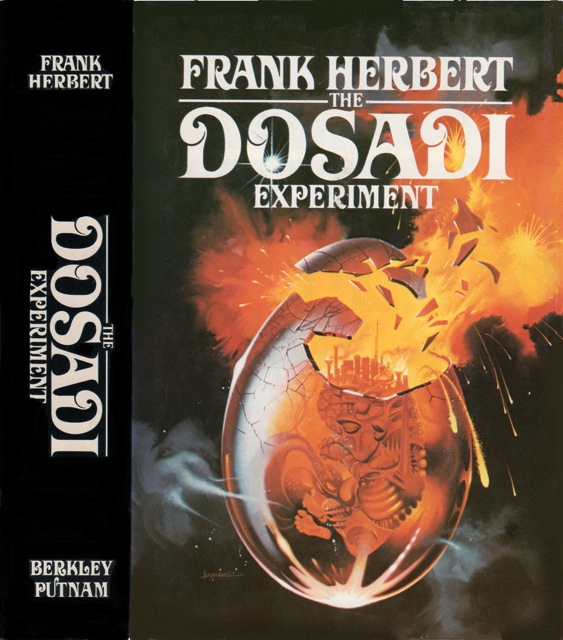
From the flaps of the Berkley Putnam first edition: "In his first new work of science fiction since the best-selling Children of Dune, Frank Herbert returns to his world of Whipping Star, and involves Jorj X. McKie, Saboteur Extraordinary, in a new intrigue. In Whipping Star, McKie discovered that some of the stars in the universe are actually intelligent, super-powerful beings, and was able to befriend one of them, the star Alcyone - affectionately known as Fannie Mae. As The Dosadi Experiment opens, McKie is assigned to investigate the planet Dosadi, which is isolated from the rest of the galaxy by a "god-wall," a barrier set up by one of the intelligent stars. Dosadi is rumored to be an experimental planet, and the experimenters are the froglike Gowachin, whose culture is founded upon a strange legal system in which McKie is the only human ever trained. He learns that humans and Gowachin have been placed on Dosadi, without their consent, for an experiment that could last centuries: an experiment in extreme overcrowding. But this monstrous plot is apparently out of control, and it seems the Gowachin may be prepared to destroy Dosadi rather than expose its secret, thus breaking the peace among the races, and starting the first interstellar war. But this is just the beginning. When McKie finally reaches Dosadi he discovers that the Dosadis have taken control of their own evolution and produced a competitive, highly evolved elite, of both humans and Gowachin, who have been able to extrapolate the existence of a universe beyond the god-wall and hate whoever has imprisoned them like this. They plan to break out and avenge themselves on the galaxy."
- Bio of a Space Tyrant
series6 books1983
similar byscience fictiondarkspacefar future
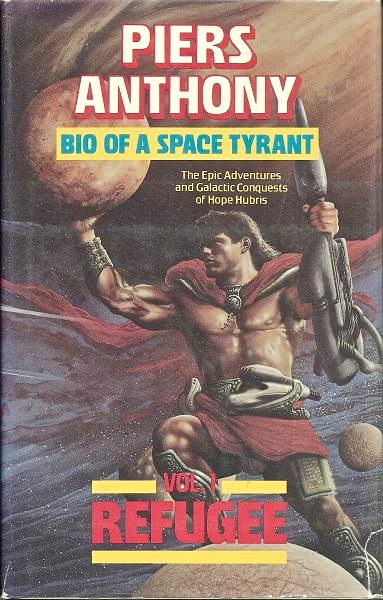
Bio of a Space Tyrant series is a six-book science-fiction series by Piers Anthony based within the Solar System. The series revolves around the character Hope Hubris and his family, and charts Hope's ascent from poor Hispanic refugee to Tyrant of Jupiter, a single person heading the Executive, Judicial and Legislative branches of the government. It is considerably more adult-themed than many of Anthony's earlier works.
- Company Wars
series7 books1981
part of Alliance-Union Universe
similar byscience fictionspacefar future+1 more
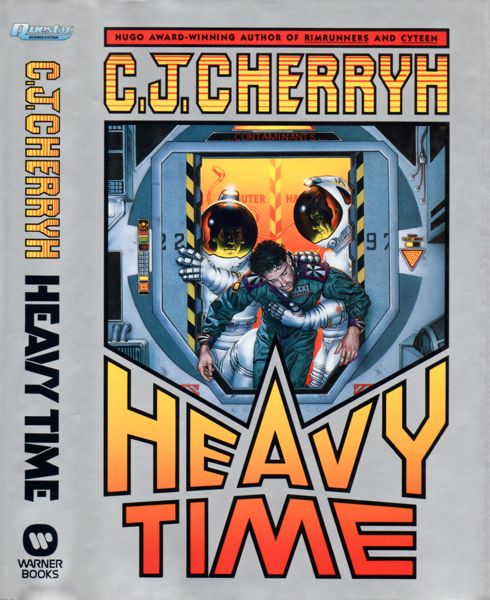
Company Wars gathers the novels C. J. Cherryh set during the breakaway conflict between Earth's colonial Company and the newly independent Union, within her wider Alliance-Union future history. Anchored by the Hugo Award-winning Downbelow Station, the books follow different ships, stations, and crews caught on either side, from merchanter traders to military spacers, rather than a single continuing cast. Read in any order, they build up a picture of the political and economic pressure that reshapes Cherryh's larger Alliance-Union universe.
- Ocean / Galactic Center
series12 books1972
similar byscience fictionfar future+4 more
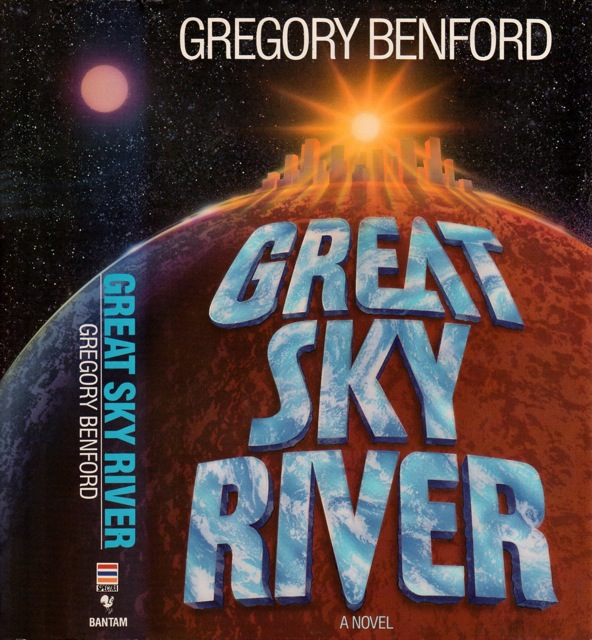
The Galactic Center Saga is a series of books by author Gregory Benford detailing a galactic war between mechanical and biological life.In the Ocean of Night (1977) — 1977 Nebula Award nominee, 1978 Locus Award nominee Across the Sea of Suns (1984) Great Sky River (1987) — 1988 Nebula Nominee Tides of Light (1989) — 1990 Locus Award nominee Furious Gulf (1994) Sailing Bright Eternity (1996) "A Hunger for the Infinite" a novella published in the anthology Far Horizons
- Ringworld
series5 books1970
part of Known Space
similar byscience fictionspace explorationspacefar future
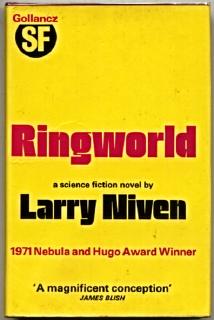
The Ringworld series is a series of science fiction novels written by American author Larry Niven. It is part of his Known Space series of stories. Its backdrop is the Ringworld, a giant artifact 3 million times the surface area of Earth circling a star. The series is composed of four standalone science fiction novels, the original award-winning book and its three sequels:1970: Ringworld 1979: The Ringworld Engineers 1996: The Ringworld Throne 2004: Ringworld's Children
- Cowl
Neal Asherstandalone novel2004
similar byscience fictiondarksurvivalfar future+1 more
In the far future, the Heliothane Dominion is triumphant in the solar system, after a bitter war with their Umbrathane progenitors. But some of the Umbrathane have escaped into the distant past, where they can position themselves to wreak havoc across time and undo their defeat. The most fanatical of them is the superhuman Cowl, more monstrous than any of the creatures outside his prehistoric redoubt. Cowl sends his terrifying hyperdimensional pet, the torbeast, hunting through all the timelines for human specimens. It sheds its scales - each one an organic time machine - where its master orders. Anyone who picks one up is dragged back to the dawn of time, where Cowl awaits. Then the beast can feed, growing ever larger... In our own near-future, Tack is one of U-gov’s programmable killers. When a scale latches onto him, his doom seems inevitable, but the Heliothane have other ideas: they can use Tack against Cowl. Tack is no stranger to violence, but the Heliothane, hardened in their struggle for humanity’s very existence, have much to teach him. He will need it all for his encounter with Cowl.Once one of Tack’s targets, Polly escaped with her life when a torbeast scale snatched her. Now, like Tack, she must learn fast as she is dragged back to Day Zero. To cheat death again, she will have to help him save the human race.
- Creatures of Light and Darkness
Roger Zelaznystandalone novel1969
similar byscience fictiondarkspacefar future
Creatures of Light and Darkness is a 1969 science fiction novel by American writer Roger Zelazny. Long out of print, it was reissued in April 2010. The novel is set in the far future, with humans on many worlds. Some humans have god-like powers or perhaps are actually gods—the names and aspects of various Egyptian gods are used. Elements of horror and technology are mixed, and the novel shares elements with cyberpunk.
- Tunnel in the Sky
Robert A. Heinleinstandalone novel1955
similar byscience fictionspace explorationsurvivalfar future+1 more
As the final test of a survivalist/explorer class, teenagers are dumped on an alien planet to use their skills while awaiting pickup. But something has gone wrong, and they find they are on their own.