Loreful
HomeDiscover
Search series, authors…⌘K
Loreful

Reading orders for SF/F series and shared universes — with your place kept in every one.

Explore

UniversesSeriesWorksAuthorsAtlas

Help

FAQAboutSite map

Account & legal

Sign inCreate accountPrivacyTerms

Data

Built on ISFDB, Wikipedia, Wikidata and Open Library. Curated reading orders carry their reasoning on the page; the rest follow publication order. Data sources & licenses

© Loreful · data: ISFDB · CC BY

More like Intercession

anchored on:europe

but

Mood

The mood the book leaves you in.

  • The reading experience is propelled by journeys, exploration, and physical risk; excitement and forward momentum dominate over dread or introspection.
  • Joy and loss are deliberately mixed; the resolution grants characters something real while taking something else away, leaving warmth and sorrow together.
  • The book demands work from the reader — dense prose, difficult structure, unfamiliar ideas, or morally uncomfortable material — as part of its intended effect.
  • Grim events, cruelty, or despair dominate the atmosphere, and the book does not soften them with comfort or comic relief.
  • The atmosphere is quietly unsettling — wrongness, unease, and the uncanny pervade the book without necessarily escalating into overt horror.
  • The book is built to move the reader; character feeling is foregrounded and major scenes aim at a strong emotional response.
  • Humor is a primary aim and the prose plays for laughs — comic situations, wit, or dialogue produce sustained comedy, not occasional levity.
  • The book insists that things can improve; effort and decency are shown to matter, and the arc bends toward better outcomes even through hardship.
  • The book teaches as it goes — real facts, history, science, or craft are conveyed in enough depth that learning is part of the reading experience.
  • The book is designed to uplift and motivate, presenting perseverance or achievement in a way that invites the reader to aspire or act.
  • The overall register is cheerful and easygoing; stakes are kept gentle and the book avoids dwelling on pain or dread.
  • Withheld information drives the experience; the book sustains enigmas and secrets the reader wants resolved, whatever its genre.
  • The book is contemplative and inward-looking, giving more weight to thought, memory, and meaning than to external events.
  • The book works as comfort reading — low tension, a soothing pace, and an atmosphere the reader can unwind in.
  • Grief, loss, or melancholy set the dominant register, and the book lets sorrow stand rather than resolving it into comfort.
  • Sustained suspense is the point; the book keeps the reader braced for what happens next through danger, pressure, or impending revelation.
  • Playful invention and charm define the register — fanciful conceits, light absurdity, and a narration that delights in its own oddity.

About

What the story runs on.

  • Stories centered on vampires — blood-drinking undead — whether as predators, love interests, or protagonists.
  • Stories structured as a quest — a journey undertaken to find, deliver, or destroy something of great import.
  • Stories in which staying alive against nature, catastrophe, or scarcity is the central problem.
  • Stories of lovers kept apart by law, family, faith, or station, where the obstacle to love is the plot.
  • Stories of growing up — a young protagonist crossing from childhood into adult knowledge and responsibility.
  • Stories about who a character truly is — self-discovery, doubled lives, and the search for a self.
  • Stories about mourning — living through the death of a loved one and what loss does to the survivors.
  • Stories in which belief, doubt, and religious life are the central subject, from crises of faith to life inside a religious community.
  • Stories in which a buried family truth — hidden parentage, crimes, or shames — surfaces and reorders the present.
  • Stories driven by maneuvering for power — factions, conspiracies, and statecraft conducted in shadow.
  • Stories in which war itself is the subject — combat, occupation, and what warfare does to soldiers and civilians.
  • Stories organized around investigating a killing — the case, the clues, and the pursuit of the killer, in any genre's clothing.

Shelf

Where it sits in the library.

    • Fiction built on magic or other supernatural elements that have no scientific explanation.
    • Secondary-world fantasy at large scale, where the fate of nations or the world turns on the protagonists' struggle.
    • Fantasy set in a recognizably modern city or contemporary world where the supernatural intrudes on everyday life.
    • Fantasy that blends in horror's atmosphere and imagery, keeping a fantastical frame around grim or frightening material.
    • Action-driven fantasy following warriors or rogues with personal stakes against sorcerous threats, rather than world-spanning conflicts.
    • Fantasy set in a real historical period or a close analogue of one, with magic woven into the era.
    • Fantasy in which protagonists cross from the ordinary world into another world through a portal or similar passage.
    • Fiction that retells or reworks a traditional fairy tale in a new form or setting.
    • Fantasy drawing directly on myths, legends, and folklore, retelling them or building on their figures and logic.
    • Fantasy of ghosts, vampires, shapeshifters, psychics, and similar phenomena, usually set in an otherwise ordinary world.
    • Fiction mixing science-fictional trappings with overtly magical or impossible elements in one setting.
    • Low-stakes fantasy emphasizing comfort, community, and everyday pleasures over conflict and peril.
    • Speculative fiction of pervasive moral ambiguity, violence, and cynicism that rejects heroic conventions — fantasy and SF alike.
      • Fiction that extrapolates from science and technology — future societies, space travel, or speculative inventions — within at least nominally natural laws.
      • Science fiction of interstellar scope — starships, galactic polities, and adventure across star systems.
      • Science fiction committed to scientific rigor, where technical plausibility constrains the story.
      • Science fiction centered on armed forces and warfare, told largely from a military point of view.
      • Science fiction of networked, corporate-dominated near futures, pairing high technology with social decay.
      • Science fiction styled on nineteenth-century steam-powered technology, often in a Victorian or pseudo-Victorian setting.
      • Fiction depicting an oppressive or catastrophic society, presented as a warning.
      • Fiction set after civilization's collapse, following survivors in the ruins of the old world.
      • Fiction in which characters move between past and future, and the mechanics or consequences of that travel drive the plot.
      • Fiction exploring a world where a historical event went differently and history diverged from ours.
      • Science fiction about humanity's first encounter and communication with an alien intelligence.
      • Science fiction in which extraterrestrial forces attack or occupy Earth and humanity resists.
      • Fiction whose primary aim is to frighten or unsettle the reader through dread, menace, or the monstrous.
      • Horror of vast, indifferent, incomprehensible entities before which humanity is insignificant, in the Lovecraft tradition.
      • Horror of decaying houses, buried family secrets, and oppressive atmosphere in the Gothic literary tradition.
      • Horror centered on hauntings and the returning dead.
      • Horror located in the mind — paranoia, obsession, and unreliable perception rather than external monsters.
      • Horror built around the reanimated dead and survival amid their outbreaks.
      • Horror defined by explicit, transgressive gore that refuses to cut away from violence.
      • Speculative fiction of the strange and uncanny that resists both natural explanation and standard genre categories.
      • Fiction organized around solving a crime or puzzle, typically following an investigator toward the identification of a culprit.
      • A puzzle-first mystery that lays out clues so the culprit's identity can be deduced before the reveal.
      • Crime fiction of moral ambiguity, fatalism, and hard-edged style, set among the corrupt and the doomed.
      • A mystery following the realistic routines of police work — forensics, interviews, and case-building.
      • A gentle mystery with an amateur sleuth, a small community, and violence kept off the page.
      • A mystery set in a past era, where the investigation works within that period's methods and society.
      • Fast-paced fiction driven by imminent danger, pursuit, or high-stakes conspiracy, built to sustain tension.
      • A thriller of espionage — agents, tradecraft, and intelligence services in conflict.
      • A thriller centered on lawyers and the courtroom, where litigation carries the suspense.
      • A thriller driven by detailed contemporary or near-future technology, often military or scientific.
      • A thriller whose tension comes from mental states and manipulation between characters rather than external action.
      • Fiction whose central plot is a romantic relationship and its development toward an emotionally satisfying resolution.
      • Romance in which one or both partners are supernatural beings, blending fantasy elements into the love story.
      • A fantasy-romance hybrid in which the romantic arc and the fantasy plot carry equal weight.
      • Romance set in a past era, with courtship shaped by the period's society and manners.
      • Romance set in the present day, without supernatural or historical elements.
      • Fiction set in a real past period, where the historical setting materially shapes characters and events.
        • General and literary fiction emphasizing prose style, character interiority, or formal ambition over genre plot conventions.
        • Fiction in a realistic world where magical events occur and are treated as ordinary, in the tradition of Latin American literature.
        • Fiction that ridicules people, institutions, or society in order to criticize them.
        • Fiction of dreamlike, irrational imagery and logic that breaks from realistic representation.
        • Fiction that plays with narrative convention through metafiction, fragmentation, and self-reference.
        • Fiction propelled by journeys, exploration, and physical peril, where action and survival carry the plot.
        • Adventure fiction of ships and seafaring — naval engagements, voyages, and life at sea.
        • Fiction of the American frontier West — gunmen, ranchers, and lawmen, typically in the late nineteenth century.
        • Fiction centered on soldiers, campaigns, and the experience of warfare, historical or imagined.
          • Fiction written primarily to amuse, using comedic situations, wit, or parody as its organizing principle.
            • Multi-generational fiction following a family or dynasty across decades, with inheritance and kinship as the through-line.
              • Fiction whose world runs on explicit game mechanics — levels, stats, and skills that characters can see and exploit.
                • Fiction about costumed or superpowered heroes and their conflicts with comparable villains.

                Practical

                How long a commitment, whether it stands alone, and whether it has finished.

                Tap a chip to ask for it · tap again to rule it out · once more to clear. Numbers show what would be left.

                • Cover of Lent
                  Lent

                  Jo Walton · standalone novel · 2019

                  similar byreflectivefaith and religioneuropehistorical fantasy

                  "Young Girolamo's life is a series of miracles. It's a miracle that he can see demons, plain as day, and that he can cast them out with the force of his will. It's a miracle that he's friends with Pico della Mirandola, the Count of Concordia. It's a miracle that when Girolamo visits the deathbed of Lorenzo "the Magnificent," the dying Medici is wreathed in celestial light, a surprise to everyone, Lorenzo included. It's a miracle that when Charles VIII of France invades northern Italy, Girolamo meets him in the field, and convinces him to not only spare Florence but also protect it. It's a miracle than whenever Girolamo preaches, crowds swoon. It's a miracle that, despite the Pope's determination to bring young Girolamo to heel, he's still on the loose...and, now, running Florence in all but name. That's only the beginning. Because Girolamo Savanarola is not who--or what--he thinks he is. He will discover the truth about himself at the most startling possible time. And this will be only the beginning of his many lives." - publisher

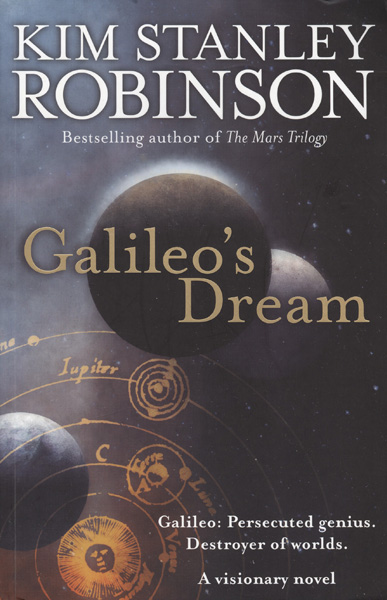
                • Cover of Galileo's Dream
                  Galileo's Dream

                  Kim Stanley Robinson · standalone novel · 2009

                  similar byreflectiveeurope+1 more

                  Galileo's Dream (2009) is a science fiction novel with elements of historical fiction, written by Kim Stanley Robinson. In the book, 17th-century scientist Galileo Galilei is visited by far-future time travelers living on the Galilean moons of Jupiter. Italicized portions of text within the novel are "mostly from Galileo's writing or that of his contemporaries."

                • Cover of Pavane
                  Pavane

                  series · 9 books · 1966

                  completed

                  similar byreflectivefaith and religion

                  Keith Roberts' Pavane (1968) is a single fix-up novel built from linked stories rather than a multi-book series: in an alternate 20th century where Elizabeth I was assassinated and Spain conquered England, the Catholic Church suppresses Protestantism and keeps technology frozen at a steam-powered, feudal level. The interconnected stories follow different Dorset families across generations as long-suppressed dissent against Church rule begins to stir.

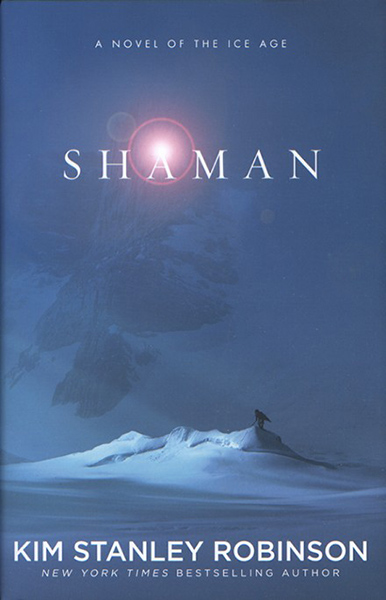
                • Cover of Shaman
                  Shaman

                  Kim Stanley Robinson · standalone novel · 2013

                  similar byreflectiveeurope+1 more

                  Shaman: A Novel of the Ice Age is a 2013 novel by Kim Stanley Robinson. Set during the Ice Age, it tells the story of a trainee shaman, from a tribe of European early modern humans, who must learn the skills needed to survive and to aid his people.

                • Cover of Stranger in a Strange Land
                  Stranger in a Strange Land

                  Robert A. Heinlein · standalone novel · 1961

                  similar byreflectivefaith and religion

                  Stranger in a Strange Land is a 1961 science fiction novel by the American author Robert A. Heinlein. It tells the story of Valentine Michael Smith, a human who comes to Earth in early adulthood after being born on the planet Mars and raised by Martians, and explores his interaction with and eventual transformation of Terran culture.

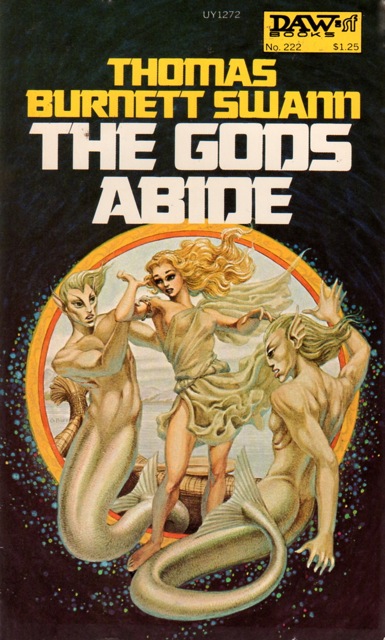
                • Cover of The Gods Abide
                  The Gods Abide

                  Thomas Burnett Swann · standalone novel · 1976

                  similar byreflectivefaith and religioneuropehistorical fantasy

                  From the back cover of the DAW first edition: "... in this tale of the time of Rome and the fallen Celtic kingdoms there is embodied the story of the retreat of the pagan gods and all their array of sprites and nymphs and little folk. Facing the ruthless practicality of the new religion which denied their very right to exist, the varied pre-humans faced utter destruction unless they could find a sanctuary beyond detection. THE GODS ABIDE tells their tale and that of two of their defenders who followed the trail of the legendary immortals to the very waters of the Styx."

                • Cover of The Salt Roads
                  The Salt Roads

                  Nalo Hopkinson · standalone novel · 2003

                  similar byreflectivefaith and religioneuropehistorical fantasy

                  Jeanne Duval, the ginger-haired entertainer, is descended from African slaves and white sailors. It is twilight, and she argues with her lover Charles Baudelaire in his Paris apartment. Mer, plantation slave and doctor, has healing hands though her spirit is sickened. She both hungers for and dreads liberation, and longs for the gods to take her home. Thais, a beauty from Alexandria, was sold into slavery and prostitution as a girl. Impelled to seek a glorious revelation, she will travel the long hot roads to Jerusalem. (adapted from information stated with the first edition)

                • Cover of Sarantine Universe
                  Sarantine Universe

                  series · 8 books · 1995

                  similar byreflectivehistorical fantasy+1 more

                  Guy Gavriel Kay's Sarantine-world novels are loosely connected historical fantasies sharing one invented history rather than a fixed cast: The Lions of Al-Rassan (1995, an analogue of medieval Spain), The Last Light of the Sun (2004, drawing on the Viking-age raids of Alfred the Great's Britain), Children of Earth and Sky (2016, a world modeled on Venice, Istanbul, and the Balkans in the 15th century), its prequel A Brightness Long Ago (2019), and its sequel All the Seas of the World (2022, set amid wars between Christendom and the Ottoman Empire). Each novel stands alone, but together they trace centuries of the same fictional world, distinct from Kay's separate Sarantine Mosaic duology.

                • Cover of Lost Horizon
                  Lost Horizon

                  James Hilton · standalone novel · 1933

                  similar byreflectivefaith and religion+1 more

                  Lost Horizon is a 1933 novel by the English writer James Hilton. The book was adapted into a film, also called Lost Horizon, in 1937 by director Frank Capra; and a musical film remake in 1973 by producer Ross Hunter with music by Burt Bacharach. It is the origin of Shangri-La, a fictional utopian lamasery located high in the mountains of Tibet.

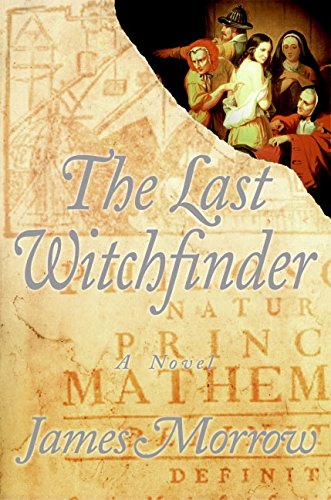
                • Cover of The Last Witchfinder
                  The Last Witchfinder

                  James Morrow · standalone novel · 2006

                  similar byfaith and religioneurope+1 more

                  The Last Witchfinder is a 2006 historical fiction novel by James Morrow. The book was first published in hardback on March 14, 2006 through William Morrow and has subsequently been re-published in paperback format. The Last Witchfinder follows a young girl whose father works as a witch-finder.

                • Cover of Immortal
                  Immortal

                  Traci L. Slatton · standalone novel · 2008

                  similar byreflectivefaith and religioneuropehistorical fantasyimmortality

                  In an age of wonderous beauty and terrible secrets,one man searches for his destiny...In the majestic heart of Florence, a beautiful golden-haired boy is abandoned and subjected to cruelty beyond words. But Luca Bastardo is anything but an ordinary boy. Across two centuries of passion and intrigue, Luca will discover an astonishing gift--one that will lead him to embrace the ancient mysteries of alchemy and healing and to become a trusted confidant to the powerful Medicis...even as he faces persecution from a sadistic cabal determined to wrest his secrets for themselves.But as the Black Death and the Inquisition wreak havoc on his beloved city, Luca's survival lies in the quest to solve two riddles. One is the enigma of his parents and his ageless beauty. The other is a choice between immortality and the only chance to find his one true love. As Luca journeys through the heights of the Renaissance, befriends Giotto and Leonardo Da Vinci--140 years apart--and pursues the most closely guarded secrets of religious faith and science for the answers to his own burning questions, his remarkable search will not only change him...but will change the course of history.From the Trade Paperback edition.

                • Cover of The Vampire Chronicles
                  The Vampire Chronicles

                  series · 15 books · 1976

                  completed

                  similar byimmortalityvampires+3 more

                  The Vampire Chronicles is a series of Gothic vampire novels and a media franchise, created by American author Anne Rice, that revolves around the fictional character Lestat de Lioncourt, a French nobleman turned into a vampire in the 18th century.

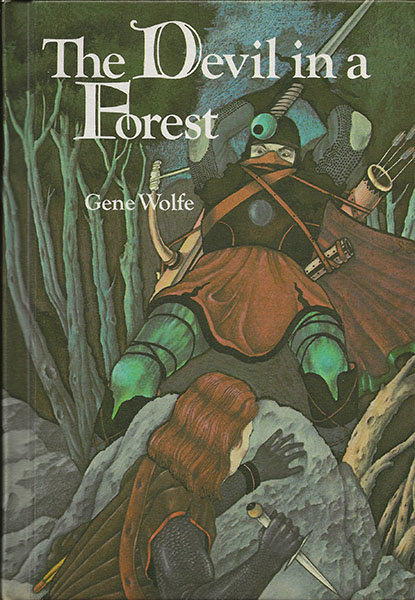
                • Cover of The Devil in a Forest
                  The Devil in a Forest

                  Gene Wolfe · standalone novel · 1976

                  similar byreflectivefaith and religioneurope

                  The Devil in a Forest is a short novel by American writer Gene Wolfe about the conflict between Christianity and an earlier pagan religion in Europe during the Middle Ages.

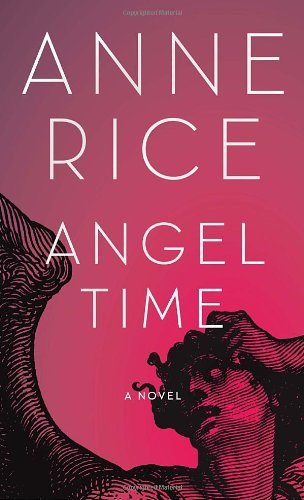
                • Cover of Songs of the Seraphim
                  Songs of the Seraphim

                  series · 2 books · 2009

                  completed

                  similar byfaith and religion+2 more

                  Angel Time introduces Toby O'Dare, a contract killer given a chance at redemption when an angel recruits him to intervene in a medieval crisis, sending him back through history rather than forward. Anne Rice's Songs of the Seraphim continues with a second book, Of Love and Evil, following the same reluctant assassin-turned-angelic-agent into another past errand; the series stayed short, with no further volumes.

                • Cover of Pilgermann
                  Pilgermann

                  Russell Hoban · standalone novel · 1983

                  similar byreflectivefaith and religioneurope

                  Pilgermann is a 1983 novel by Russell Hoban, set in the Middle Ages and depicting the journey of a Jew across Europe and North Africa on his way to the Holy Land. The novel was reissued in January 2002.

                • Cover of Saint Leibowitz
                  Saint Leibowitz

                  series · 6 books · 1955

                  completed

                  similar byfaith and religion+1 more

                  Walter M. Miller Jr.'s A Canticle for Leibowitz (1959), assembled from three novellas he had published earlier in the decade, follows the monks of a Catholic monastery in the post-nuclear American Southwest as they preserve fragments of scientific knowledge across centuries, watching civilization slowly rebuild itself and edge back toward the mistakes that destroyed it. Miller's posthumous sequel, Saint Leibowitz and the Wild Horse Woman, completed by Terry Bisson from his notes after his death and published in 1997, returns to the same abbey and its world decades later. Together the two novels form a sparse, decades-spanning series about memory, faith, and the cycles of civilization.

                • S
                  Saint-Germain

                  series · 44 books · 1978

                  completed

                  similar by+4 more

                • Cover of Lavinia
                  Lavinia

                  Ursula K. Le Guin · standalone novel · 2008

                  similar byreflectiveeurope+1 more

                  Lavinia is a Locus Award-winning novel by American author Ursula K. Le Guin. Published in 2008, it was Le Guin's last novel. It is written in a first-person, self-conscious style that recounts the life of Lavinia, a minor character in Virgil's epic poem the Aeneid.

                • Cover of Brendan
                  Brendan

                  Morgan Llywelyn · standalone novel · 2010

                  similar byreflectivefaith and religioneurope

                  A historical novel about an early Irish saint, whose SF elements are apparently limited to describing the miracles performed by Brendan.

                • Cover of Dune
                  Dune

                  series · 20 books · 1963

                  part of Dune Universe

                  similar byfaith and religion+1 more

                  Frank Herbert's Dune Chronicles opens with 1965's Dune, set on the desert planet Arrakis where House Atreides takes control of the only source of the vital spice melange and young Paul Atreides is pulled into a struggle over its politics and religion. Herbert carried the story forward across five further novels — Dune Messiah, Children of Dune, God Emperor of Dune, Heretics of Dune, and Chapterhouse: Dune — following Paul's line over the following millennia, before Brian Herbert and Kevin J. Anderson later extended the saga. Many other editions of these six novels are omnibus and box-set repackagings rather than separate stories.

                • Cover of The Chrysalids
                  The Chrysalids

                  John Wyndham · standalone novel · 1955

                  similar byreflective+1 more

                  The Chrysalids is a science fiction novel by British writer John Wyndham, first published in 1955 by Michael Joseph. It is the least typical of Wyndham's major novels, but regarded by some as his best. An early manuscript version was entitled Time for a Change.

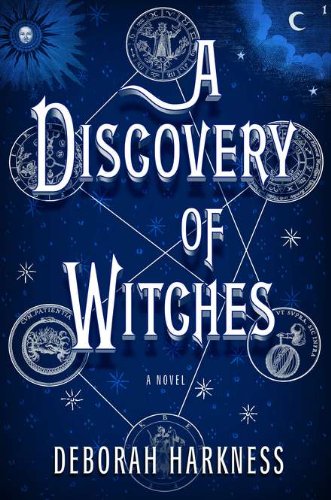
                • Cover of All Souls
                  All Souls

                  series · 5 books · 2011

                  similar byhistorical fantasyeuropevampires

                  A Discovery of Witches is a 2011 historical-fantasy novel and the debut novel by American scholar Deborah Harkness. It follows Diana Bishop, a history of science professor at Yale University, as she embraces her magical blood after finding a long-thought-lost manuscript and engages in a forbidden romance with a charming vampire, Matthew Clairmont.

                • Cover of A Fable
                  A Fable

                  William Faulkner · standalone novel · 1954

                  similar byreflectivefaith and religioneurope

                  A Fable is a 1954 novel written by the American author William Faulkner. He spent more than a decade and tremendous effort on it, and aspired for it to be "the best work of my life and maybe of my time". It won the Pulitzer Prize and the National Book Award. Historically, it can be seen as a precursor to Joseph Heller's Catch-22.

                • Cover of Why Call Them Back from Heaven?
                  Why Call Them Back from Heaven?

                  Clifford D. Simak · standalone novel · 1967

                  similar byreflectivefaith and religionimmortality

                  Why Call them Back From Heaven? is a 1967 science fiction novel by American writer Clifford D. Simak. It was the initial volume in the Ace Science Fiction Specials line.