Loreful
HomeDiscover
Search series, authors…⌘K
Loreful

Reading orders for SF/F series and shared universes — with your place kept in every one.

Explore

UniversesSeriesWorksAuthorsAtlas

Help

FAQAboutSite map

Account & legal

Sign inCreate accountPrivacyTerms

Data

Built on ISFDB, Wikipedia, Wikidata and Open Library. Curated reading orders carry their reasoning on the page; the rest follow publication order. Data sources & licenses

© Loreful · data: ISFDB · CC BY

More like Interstellar Pig

anchored on:science fictionour worldlate 20th centuryfirst contactaliensmysterious+1 more

but

Mood

The mood the book leaves you in.

  • The reading experience is propelled by journeys, exploration, and physical risk; excitement and forward momentum dominate over dread or introspection.
  • Joy and loss are deliberately mixed; the resolution grants characters something real while taking something else away, leaving warmth and sorrow together.
  • The book demands work from the reader — dense prose, difficult structure, unfamiliar ideas, or morally uncomfortable material — as part of its intended effect.
  • Grim events, cruelty, or despair dominate the atmosphere, and the book does not soften them with comfort or comic relief.
  • The atmosphere is quietly unsettling — wrongness, unease, and the uncanny pervade the book without necessarily escalating into overt horror.
  • The book is built to move the reader; character feeling is foregrounded and major scenes aim at a strong emotional response.
  • Humor is a primary aim and the prose plays for laughs — comic situations, wit, or dialogue produce sustained comedy, not occasional levity.
  • The book insists that things can improve; effort and decency are shown to matter, and the arc bends toward better outcomes even through hardship.
  • The book teaches as it goes — real facts, history, science, or craft are conveyed in enough depth that learning is part of the reading experience.
  • The book is designed to uplift and motivate, presenting perseverance or achievement in a way that invites the reader to aspire or act.
  • The overall register is cheerful and easygoing; stakes are kept gentle and the book avoids dwelling on pain or dread.
  • Withheld information drives the experience; the book sustains enigmas and secrets the reader wants resolved, whatever its genre.
  • The book is contemplative and inward-looking, giving more weight to thought, memory, and meaning than to external events.
  • The book works as comfort reading — low tension, a soothing pace, and an atmosphere the reader can unwind in.
  • Grief, loss, or melancholy set the dominant register, and the book lets sorrow stand rather than resolving it into comfort.
  • Sustained suspense is the point; the book keeps the reader braced for what happens next through danger, pressure, or impending revelation.
  • Playful invention and charm define the register — fanciful conceits, light absurdity, and a narration that delights in its own oddity.

About

What the story runs on.

  • Stories in which extraterrestrial beings are central — as characters, cultures, or the object of the plot.
  • Stories structured as a quest — a journey undertaken to find, deliver, or destroy something of great import.
  • Stories in which staying alive against nature, catastrophe, or scarcity is the central problem.
  • Stories of lovers kept apart by law, family, faith, or station, where the obstacle to love is the plot.
  • Stories in which a friendship — its making, testing, or loss — is the emotional center.
  • Stories of growing up — a young protagonist crossing from childhood into adult knowledge and responsibility.
  • Stories about who a character truly is — self-discovery, doubled lives, and the search for a self.
  • Stories about mourning — living through the death of a loved one and what loss does to the survivors.
  • Stories in which a buried family truth — hidden parentage, crimes, or shames — surfaces and reorders the present.
  • Stories driven by maneuvering for power — factions, conspiracies, and statecraft conducted in shadow.
  • Stories in which war itself is the subject — combat, occupation, and what warfare does to soldiers and civilians.
  • Stories organized around investigating a killing — the case, the clues, and the pursuit of the killer, in any genre's clothing.

Shelf

Where it sits in the library.

    • Fiction built on magic or other supernatural elements that have no scientific explanation.
    • Secondary-world fantasy at large scale, where the fate of nations or the world turns on the protagonists' struggle.
    • Fantasy set in a recognizably modern city or contemporary world where the supernatural intrudes on everyday life.
    • Fantasy that blends in horror's atmosphere and imagery, keeping a fantastical frame around grim or frightening material.
    • Action-driven fantasy following warriors or rogues with personal stakes against sorcerous threats, rather than world-spanning conflicts.
    • Fantasy set in a real historical period or a close analogue of one, with magic woven into the era.
    • Fantasy in which protagonists cross from the ordinary world into another world through a portal or similar passage.
    • Fiction that retells or reworks a traditional fairy tale in a new form or setting.
    • Fantasy drawing directly on myths, legends, and folklore, retelling them or building on their figures and logic.
    • Fantasy of ghosts, vampires, shapeshifters, psychics, and similar phenomena, usually set in an otherwise ordinary world.
    • Fiction mixing science-fictional trappings with overtly magical or impossible elements in one setting.
    • Low-stakes fantasy emphasizing comfort, community, and everyday pleasures over conflict and peril.
    • Speculative fiction of pervasive moral ambiguity, violence, and cynicism that rejects heroic conventions — fantasy and SF alike.
      • Fiction that extrapolates from science and technology — future societies, space travel, or speculative inventions — within at least nominally natural laws.
      • Science fiction of interstellar scope — starships, galactic polities, and adventure across star systems.
      • Science fiction committed to scientific rigor, where technical plausibility constrains the story.
      • Science fiction centered on armed forces and warfare, told largely from a military point of view.
      • Science fiction of networked, corporate-dominated near futures, pairing high technology with social decay.
      • Science fiction styled on nineteenth-century steam-powered technology, often in a Victorian or pseudo-Victorian setting.
      • Fiction depicting an oppressive or catastrophic society, presented as a warning.
      • Fiction set after civilization's collapse, following survivors in the ruins of the old world.
      • Fiction in which characters move between past and future, and the mechanics or consequences of that travel drive the plot.
      • Fiction exploring a world where a historical event went differently and history diverged from ours.
      • Science fiction about humanity's first encounter and communication with an alien intelligence.
      • Science fiction in which extraterrestrial forces attack or occupy Earth and humanity resists.
      • Fiction whose primary aim is to frighten or unsettle the reader through dread, menace, or the monstrous.
      • Horror of vast, indifferent, incomprehensible entities before which humanity is insignificant, in the Lovecraft tradition.
      • Horror of decaying houses, buried family secrets, and oppressive atmosphere in the Gothic literary tradition.
      • Horror centered on hauntings and the returning dead.
      • Horror located in the mind — paranoia, obsession, and unreliable perception rather than external monsters.
      • Horror built around the reanimated dead and survival amid their outbreaks.
      • Horror defined by explicit, transgressive gore that refuses to cut away from violence.
      • Speculative fiction of the strange and uncanny that resists both natural explanation and standard genre categories.
      • Fiction organized around solving a crime or puzzle, typically following an investigator toward the identification of a culprit.
      • A puzzle-first mystery that lays out clues so the culprit's identity can be deduced before the reveal.
      • Crime fiction of moral ambiguity, fatalism, and hard-edged style, set among the corrupt and the doomed.
      • A mystery following the realistic routines of police work — forensics, interviews, and case-building.
      • A gentle mystery with an amateur sleuth, a small community, and violence kept off the page.
      • A mystery set in a past era, where the investigation works within that period's methods and society.
      • Fast-paced fiction driven by imminent danger, pursuit, or high-stakes conspiracy, built to sustain tension.
      • A thriller of espionage — agents, tradecraft, and intelligence services in conflict.
      • A thriller centered on lawyers and the courtroom, where litigation carries the suspense.
      • A thriller driven by detailed contemporary or near-future technology, often military or scientific.
      • A thriller whose tension comes from mental states and manipulation between characters rather than external action.
      • Fiction whose central plot is a romantic relationship and its development toward an emotionally satisfying resolution.
      • Romance in which one or both partners are supernatural beings, blending fantasy elements into the love story.
      • A fantasy-romance hybrid in which the romantic arc and the fantasy plot carry equal weight.
      • Romance set in a past era, with courtship shaped by the period's society and manners.
      • Romance set in the present day, without supernatural or historical elements.
      • Fiction set in a real past period, where the historical setting materially shapes characters and events.
        • General and literary fiction emphasizing prose style, character interiority, or formal ambition over genre plot conventions.
        • Fiction in a realistic world where magical events occur and are treated as ordinary, in the tradition of Latin American literature.
        • Fiction that ridicules people, institutions, or society in order to criticize them.
        • Fiction of dreamlike, irrational imagery and logic that breaks from realistic representation.
        • Fiction that plays with narrative convention through metafiction, fragmentation, and self-reference.
        • Fiction propelled by journeys, exploration, and physical peril, where action and survival carry the plot.
        • Adventure fiction of ships and seafaring — naval engagements, voyages, and life at sea.
        • Fiction of the American frontier West — gunmen, ranchers, and lawmen, typically in the late nineteenth century.
        • Fiction centered on soldiers, campaigns, and the experience of warfare, historical or imagined.
          • Fiction written primarily to amuse, using comedic situations, wit, or parody as its organizing principle.
            • Multi-generational fiction following a family or dynasty across decades, with inheritance and kinship as the through-line.
              • Fiction whose world runs on explicit game mechanics — levels, stats, and skills that characters can see and exploit.
                • Fiction about costumed or superpowered heroes and their conflicts with comparable villains.

                Practical

                How long a commitment, whether it stands alone, and whether it has finished.

                Tap a chip to ask for it · tap again to rule it out · once more to clear. Numbers show what would be left.

                • Cover of The Visitors
                  The Visitors

                  Clifford D. Simak · standalone novel · 1980

                  similar byaliensscience fictionmysterioustenseour worldsurvivalfirst contact

                  WorldCat: Intelligent, alien creatures arrive on Earth from outer space, threatening world stability and presaging the destruction of civilization.

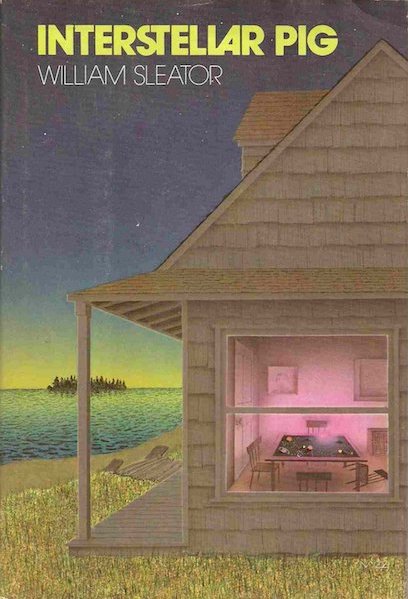
                • Cover of Interstellar Pig
                  Interstellar Pig

                  series · 2 books · 1984

                  completed

                  similar byaliensscience fictiontensesurvivalyoung adult+4 more

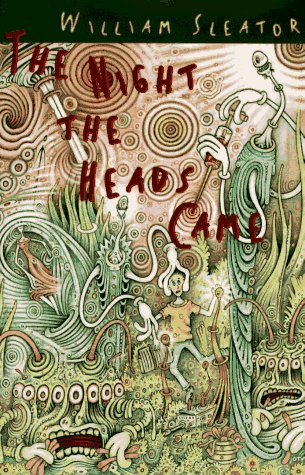
                • Cover of The Night the Heads Came
                  The Night the Heads Came

                  William Sleator · standalone novel · 1996

                  similar byalienslate 20th centuryscience fictionmysterioustenseour worldfirst contact

                  "There's no such thing as an alien—at least that's what Leo thinks, until he and his friend Tim are abducted late one night on a deserted road. When Leo comes to, Tim is gone, and no one believes his story. After he sees a psychiatrist and undergoes hypnosis, even he doesn't believe his story. But then memories begin to surface—memories he can't push away—and when Time suddenly returns, Le knows they are in otherworldly extraterrestrial danger." — quoted from the back cover of the third printing of the Penguin paperback edition.

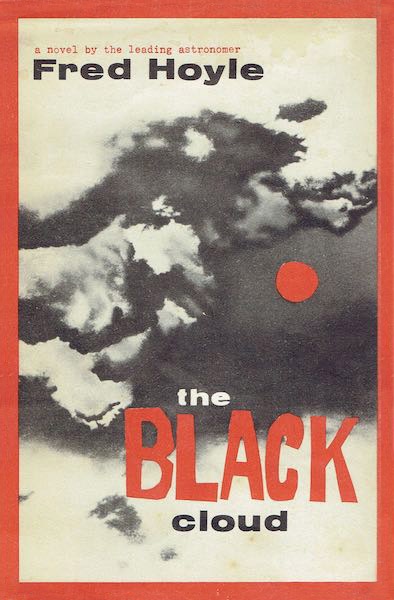
                • Cover of The Black Cloud
                  The Black Cloud

                  Fred Hoyle · standalone novel · 1957

                  similar byaliensscience fictiontenseour worldsurvival+1 more

                  The Black Cloud is a 1957 science fiction novel by British astrophysicist Fred Hoyle. It details the arrival of an enormous cloud of gas that enters the Solar System and appears about to destroy most of the life on Earth by blocking the Sun's radiation.

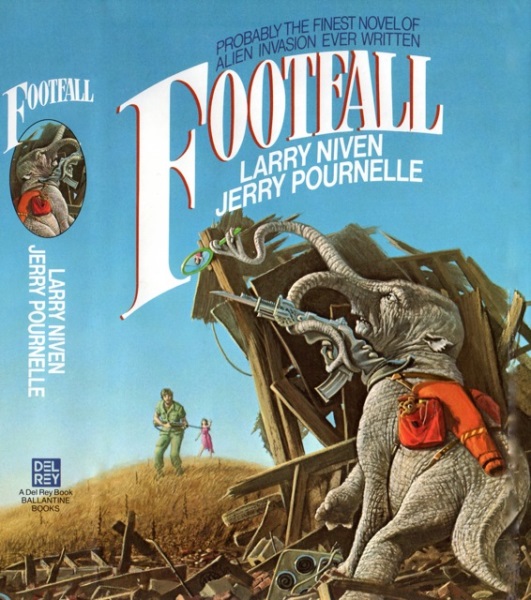
                • Cover of Footfall
                  Footfall

                  Larry Niven & Jerry Pournelle · standalone novel · 1985

                  similar byaliensscience fictiontenseour worldsurvivalfirst contact

                  When aliens travel to Earth from Alpha Centauri, differences between alien and human psychology result in an unprovoked invasion, and the resulting resistance results in the aliens' use of a devastating weapon.

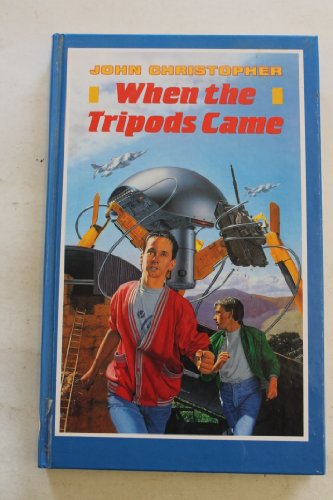
                • Cover of Tripods
                  Tripods

                  series · 4 books · 1967

                  completed

                  similar byaliensscience fictiontenseour worldyoung adult+1 more

                  The Tripods is a series of young adult science fiction novels by John Christopher. The series takes place in a post-apocalyptic world where humanity is enslaved by "Tripods"—gigantic three-legged walking machines piloted by an alien race later identified as the "Masters". The first two books were the basis of a science fiction TV series, produced in the United Kingdom in the 1980s.

                • Cover of The Kraken Wakes
                  The Kraken Wakes

                  John Wyndham · standalone novel · 1953

                  similar byaliensscience fictiontenseour worldsurvival

                  " Behind a spectacular meteor shower actually hides the beginning of an invasion by a mysterious and powerful alien race. Earth's life is disrupted by the attacks of extraterrestrials whose war machines, emerging from the depths of the oceans, seem indestructible. The coalitioned forces of the whole world are worthless, powerless in the face of the indecipherable and deadly plans of a superior intelligence, capable of bringing the entire planet to the brink of catastrophe" Goodreads May 20, 2022

                • Cover of The Host
                  The Host

                  Stephenie Meyer · standalone novel · 2008

                  similar byaliensscience fictiontenseour worldsurvival

                  The earth has been invaded by a species that take over the minds of their human hosts while leaving their bodies intact, and most of humanity has succumbed. But Melanie Stryder refuses to fade away. Wanderer, the invading "soul" who has been given Melanie's body, knew about the challenges of living inside a human: the overwhelming emotions, the too vivid memories. But there was one difficulty Wanderer didn't expect: the former tenant of her body refusing to relinquish possession of her mind. Melanie fills Wanderer's thoughts with visions of the man Melanie loves--Jared, a human who still lives in hiding. Unable to separate herself from her body's desires, Wanderer yearns for a man she's never met. As outside forces make Wanderer and Melanie unwilling allies, they set off to search for the man they both love.--From publisher description.

                • Cover of Sphere
                  Sphere

                  Michael Crichton · standalone novel · 1987

                  similar byaliensscience fictionmysterioustense+1 more

                  Keeping Top Secret, the US Navy is guarding a gigantic spaceship that has been lying on the Pacific ocean floor for centuries, overgrown with corals. A group of highly qualified scientists is assembled to investigate this mysterious discovery. When the team boards the ship via an underwater station, they come into confrontation with the evil.

                • Cover of Needle
                  Needle

                  series · 2 books · 1950

                  completed

                  similar byaliensscience fictionsurvivalour world+3 more

                  Hal Clement's Needle follows an alien detective nicknamed the Hunter, a shapeless symbiotic being that can live inside a host body, as it crash-lands on Earth pursuing a fugitive of its own kind and takes refuge inside an American teenager, Robert Kinnaird. Together the mismatched pair must learn to communicate and cooperate, first to survive and later to track down the second alien, which has hidden inside another human in the same Pacific island community. The sequel, Through the Eye of a Needle, published nearly three decades later, continues the Hunter's story.

                • Cover of Have Space Suit - Will Travel
                  Have Space Suit - Will Travel

                  Robert A. Heinlein · standalone novel · 1958

                  similar byaliensscience fictiontensesurvivalyoung adult+1 more

                  From the back cover of the Del Rey 9th printing: "Skyjacked - Everything happened at once. One minute Kip Russell was walking about in his own backyard, testing out an old space suit and dreaming about going to the moon - and the next he was out cold and the captive of an insidious space pirate. The whole thing seemed like a very bad dream until he discovered he wasn't the only prisoner on board. Then the reality of the situation became inescapable. He - along with the daughter of a world-renowned scientist and a beautiful creature from an alien planet - had been skyjacked by a monstrous extraterrestrial and they were on their way to the Moon... a journey toward a fate worse than death!"

                • Cover of The Wanderer
                  The Wanderer

                  Fritz Leiber · standalone novel · 1964

                  similar byaliensscience fictiontensesurvivalour world+1 more

                  The Wanderer is a science fiction novel by American writer Fritz Leiber, published as a paperback original by Ballantine Books in 1964. It won the 1965 Hugo Award for Best Novel.

                • Cover of The Winds of Altair
                  The Winds of Altair

                  Ben Bova · standalone novel · 1973

                  similar byaliensscience fictiontensefirst contact+2 more

                  From back cover Tor trade paperback May 1983: MORALITY VS. SURVIVAL... Even before the human scientists arrived at the sixth planet of Altair they knew they had their work cut out for them. Star probes had long before informed them that Altair VI had flourishing ecology with one very tough beast at the top of the food chain, a beast that would have to be dealt with before the human colony ships arrived. What they didn't know was that the beast was not only tough, it was as smart as a man -- and that the only human capable of real communication with the wolfcats of Altair would want to become one...

                • Cover of Herds
                  Herds

                  Stephen Goldin · standalone novel · 1975

                  similar byalienslate 20th centuryscience fictionmysterioustensefirst contact

                  The wife of a powerful figure in California is found brutally murdered in the couple's lonely mountain retreat. Wesley Stoneham made certain that all the evidence concerning the murderer of his wife pointed to a nearby hippie community. He had three goals in mind: to get rid of his wife, to drive out the hippie commune and to enhance his own power in the state. He was at the point of achieving them all when Garnna, from the peaceful planet of Zartic finally made contact with Debby, a hippie from the commune, who had problems of her own. Then Stoneham's troubles began. (from the back cover of the Laser Books first edition)

                • Cover of Forge of God
                  Forge of God

                  series · 2 books · 1987

                  completed

                  similar byaliensscience fictiontensesurvival+2 more

                  The Forge of God (1987) is Greg Bear's science fiction novel about Earth's discovery that it is the target of an incomprehensible, overwhelming alien attack, following scientists and ordinary people as they try to understand what is destroying the planet. Its 1992 sequel, Anvil of Stars, follows a group of young survivors sent on a mission of interstellar retaliation, continuing directly from the first book's ending.

                • Cover of A Brand New World
                  A Brand New World

                  Ray Cummings · standalone novel · 1964

                  similar byaliensscience fictionmysterioustenseour worldfirst contact

                  Out of the infinite depths of interstellar space, a new planet moved in towards the sun... and stayed, between Earth and Venus. Xenephrene, as it was named, made a pretty vision in the evening sky -- until flying things and strange visitants appeared. Xenephrene was inhabited... and it's inhabitants had discovered earth. But who, or what, were these aliens? Were they friends? Invaders? All the Earth would soon know. (from the back cover of an Ace Books later printing)

                • Cover of Pushing Ice
                  Pushing Ice

                  Alastair Reynolds · standalone novel · 2005

                  similar byaliensscience fictiontensesurvivalfirst contact

                  When Saturn's moon Janus suddenly takes off into interstellar space, an ice mining spaceship sent to investigate finds itself swept along into distant space until it ends up trapped in a gigantic alien structure, wherein the crew must prepare to reside for the foreseeable future.

                • Cover of Fire Pattern
                  Fire Pattern

                  Bob Shaw · standalone novel · 1984

                  similar byalienslate 20th centuryscience fictiontenseour worldsurvival

                  From the back cover of the DAW paperback: "Flames of death, fires of doom! It is the year 1996, and science reporter Rayner Jerome has been assigned to investigate a case of spontaneous human combustion. Setting out to prove the incident is some sort of giant hoax, Ray learns to his growing horror that spontaneous combustion does indeed occur, and further that its cause is extraterrestrial in origin. And this knowledge catapults Rayner on a nightmare journey of discovery - a journey stretching from a quiet backwater town on Earth to the heart of an alien stronghold. And as Rayner uncovers a frightening, centuries-in-the-making plot to invade Earth, he is plunged into the midst of a titanic struggle between two super-human factions, one bent on finding a peaceful means of coexisting with mankind, the other determined to enslave all of humanity!"

                • Cover of The Themis Files
                  The Themis Files

                  series · 3 books · 2015

                  similar byaliensscience fictiontenseour worldmysterious+1 more

                  Sylvain Neuvel's Themis Files opens when a girl falls into a hole in South Dakota and lands on the palm of a giant metal hand buried underground; the trilogy picks up years later as she leads the team trying to determine what the hand is part of and why it's there. Sleeping Giants and its sequels are told almost entirely through interview transcripts conducted by an unnamed, evasive interrogator, giving the series a documentary, oral-history feel unusual for first-contact SF. The mystery escalates from an archaeological puzzle into a question of who else is looking for the same answer.

                • Cover of Anything You Can Do ...
                  Anything You Can Do ...

                  Randall Garrett · standalone novel · 1963

                  similar byaliensscience fictiontenseour worldsurvivalfirst contact

                  The world was gripped in terror when the Nipe, a lethal, alien fighting machine, crashlanded on Earth from outer space and began a nightmarish rampage of slaughter and destruction. Unable to stop the deadly, intelligent creature, scientists quickly developed a plan to turn an ordinary Earthman into a super-human with powers enough to conquer the monster. As the man chosen for the dangerous mission, Bart Stanton was not sure he wanted to give up his humanity. The Nipe seized the Earth's most vital defense secrets and Bart felt he had no choice but to go through with the plan. Then the Nipe mysteriously disappeared - and the only man who could locate the thing was also the only man who could destroy Bart. The world tottered as the three came face to face.. (from the back cover of the Leisure Books paperback edition)

                • Cover of All Flesh Is Grass
                  All Flesh Is Grass

                  Clifford D. Simak · standalone novel · 1965

                  similar byaliensscience fictionmysteriousfirst contact+1 more

                  All Flesh is Grass is a science fiction novel by American author Clifford D. Simak, published in 1965. The book follows a small town in Wisconsin that is closed off from the outside world by a mysterious barrier, placed by extraterrestrial beings.

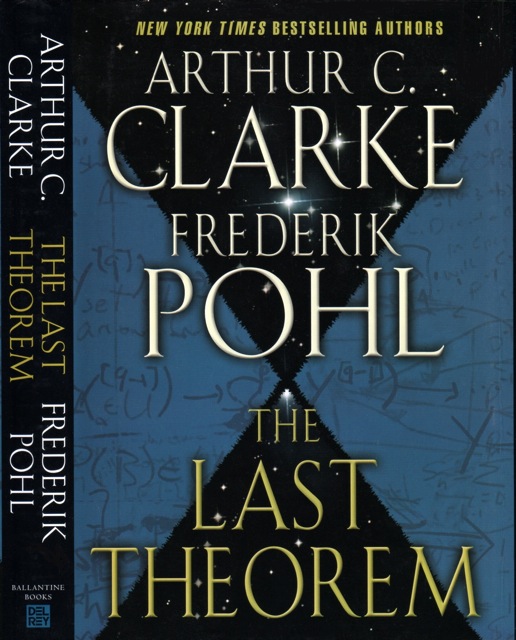
                • Cover of The Last Theorem
                  The Last Theorem

                  Arthur C. Clarke & Frederik Pohl · standalone novel · 2008

                  similar byaliensscience fictiontenseour worldfirst contact

                  The Last Theorem is a 2008 science fiction novel by Arthur C. Clarke and Frederik Pohl. It was first published in the United Kingdom by HarperVoyager in July 2008, and in the United States by Del Rey Books in August 2008. The book is about a young Sri Lankan mathematician who finds a short proof of Fermat's Last Theorem, while an alien invasion of Earth is in progress.

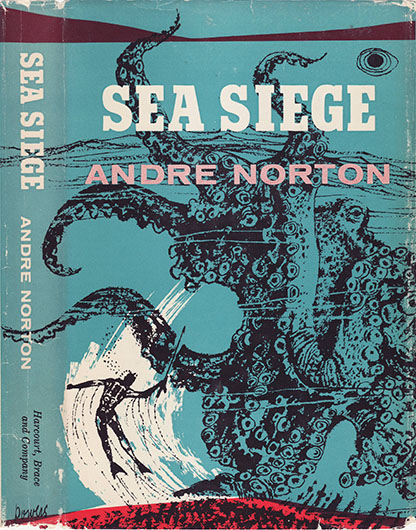
                • Cover of Sea Siege
                  Sea Siege

                  Andre Norton · standalone novel · 1957

                  similar byaliensscience fictiontenseour worldsurvivalislands

                  On a bleak little island in the West Indies, Griff Gunston faces many questions. Why were so many small island cruisers adrift and abandoned? Why was the sea disease that Griff's scientist father was investigating radioactive. Why were the colonies of octopi growing larger and becoming so strangely organized and daring? Before the answers can be found, civilization blanks out. An atom bomb war has left the little group isolated. A danger from the ocean floor, a new type of intelligence is prepared to seize the world for itself. (adapted from the blurb accompanying the first edition)

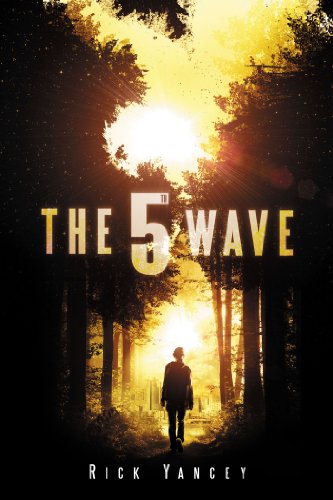
                • Cover of The 5th Wave
                  The 5th Wave

                  series · 4 books · 2013

                  similar byaliensscience fictiontensesurvivalyoung adult

                  Rick Yancey's The 5th Wave opens after a series of escalating alien attacks has already devastated Earth's population and infrastructure, following sixteen-year-old survivor Cassie Sullivan as she searches for her younger brother while trying to work out who, among the remaining humans, can still be trusted. The trilogy is young-adult science fiction that treats its alien-invasion premise as a survival and paranoia story more than a war story.