More like Intervention
anchored on:science fictionpsychic powersour worldlate 20th centuryalienspolitical intrigue+3 more
but
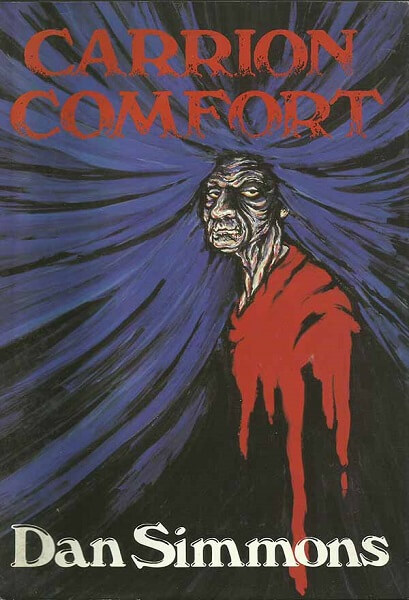
- Carrion Comfort
Dan Simmonsstandalone novel1989
similar byscience fictiontenselate 20th centurypsychic powersour worldmultiple pov+1 more
Carrion Comfort is a science fiction/horror novel by American writer Dan Simmons, published in 1989 in hardcover by Dark Harvest and in 1990 in paperback by Warner Books. It won the Bram Stoker Award, the Locus Poll Award for Best Horror Novel, and the August Derleth Award for Best Novel. It is based on a novelette of the same title, published in 1983 in the magazine Omni. The first half of the novelette makes up chapter 1 of the novel, while the second half forms chapter 3.
- Galactic Milieu
series10 books1981
completed
similar byscience fictiontensepsychic powersaliens+4 more
Galactic Milieu is a series of science fiction novels by Julian May. It is linked to her previously published series, the Saga of Pliocene Exile; and through the fantastical device of time-travel, acts as both a prequel and a sequel to this earlier series. The "Galactic Milieu" of the title is an interplanetary federation, and Earth's membership of it is a central plot concern.
- The Masks of Time
Robert Silverbergstandalone novel1968
similar byscience fictiontenselate 20th centurypolitical intrigueour worldmysterious
From the back cover of the Ballantine first edition: "The year is 1999. The century is about to turn. The civilized world is prosperous but tense with fear about the still existing possibility of a major war. While in the large area that used called "underdeveloped" there is a hysterical conviction that the world will cone to an end with the arrival of the new century Into this explosive situation floats a creature calling himself Vornam-19 - and claiming to be a visitor from 1000 years in the future... The world is ready, indeed ripe, for a sign, an omen, a new cult. But no one realizes exactly what Vornaa-19 is in his own right."
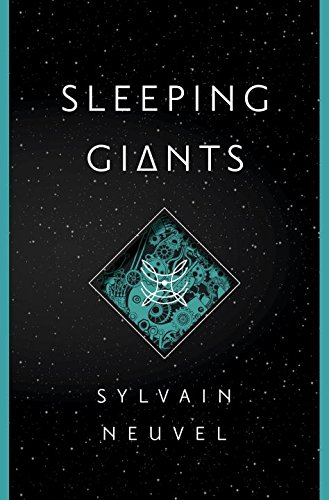
- The Themis Files
series3 books2015
similar byscience fictiontensealiensmysteriousour world+2 more
Sylvain Neuvel's Themis Files opens when a girl falls into a hole in South Dakota and lands on the palm of a giant metal hand buried underground; the trilogy picks up years later as she leads the team trying to determine what the hand is part of and why it's there. Sleeping Giants and its sequels are told almost entirely through interview transcripts conducted by an unnamed, evasive interrogator, giving the series a documentary, oral-history feel unusual for first-contact SF. The mystery escalates from an archaeological puzzle into a question of who else is looking for the same answer.
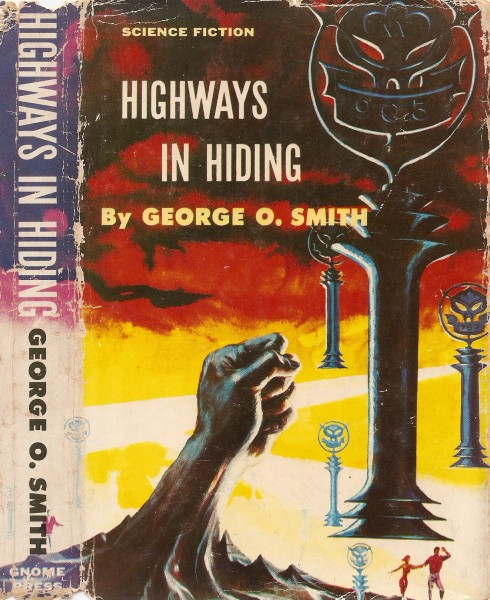
- Highways in Hiding
George O. Smithstandalone novel1956
similar byscience fictiontensepsychic powersour worldmysterious
From the back cover of the first Lancer printing: "Quest impossible - Someone had stolen an important part of Steve Cornell's life. It was bad enough when his fiancee vanished. It was infinitely worse when everyone in the world insisted it couldn't have happened the way he knew it had. In a world where ESP and telepathy were normal, it was difficult to keep secrets. But Steve's search for his missing sweetheart brought him to the threshold of one of the greatest secrets of all time. And it was obvious that somebody would stop at nothing to keep him from uncovering it. What were the oddly sinister symbols along the otherwise ordinary roads? What was behind the spreading plague called Mekstrom's Disease? Why were there "blank" spots where telepathy didn't work? Who was the elusive enemy with powers even beyond those ESP had bestowed on mankind? And, most important of all... could Steve find that enemy before they made him vanish too?"
- The Oracle Year
Charles Soulestandalone novel2018
similar byscience fictiontensepsychic powerspolitical intrigueour worldmysterious
Awakening from a dream with more than one hundred predictions about the future in his head, an unassuming Manhattan bassist becomes one of the world's most powerful men and hides his identity behind an online persona that is targeted by greedy corporations and dangerous enemies.
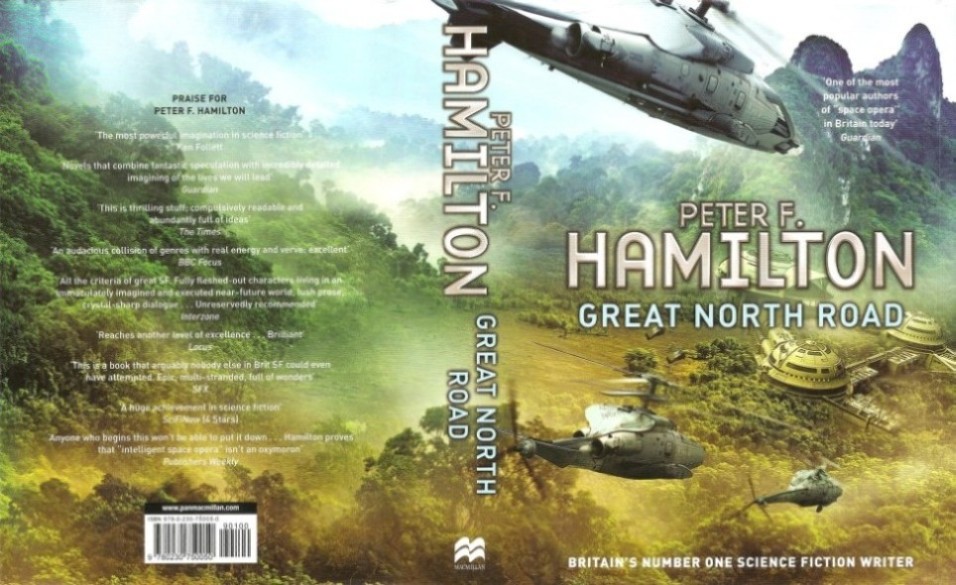
- Great North Road
Peter F. Hamiltonstandalone novel2012
similar byscience fictiontensemysteriousmultiple povour world+2 more
Great North Road is a science fiction novel by Peter F. Hamilton. It was first published in 2012 by Macmillan. Jonathan Wright of SFX magazine said, "Peter F Hamilton’s latest novel may be a standalone tale, but it’s a thuddingly imposing 1,100 pages in length. Not that it seems that way when you’re reading it. Balancing a multi-stranded plot, different exotic locales and a huge cast of characters, Hamilton plunges us straight into a murder mystery set in a near-future Newcastle, a city now adjacent to a portal to another world, the tropical St Libra."
- Lucifer's Hammer
Larry Niven & Jerry Pournellestandalone novel1977
similar byscience fictiontenselate 20th centurymultiple pov
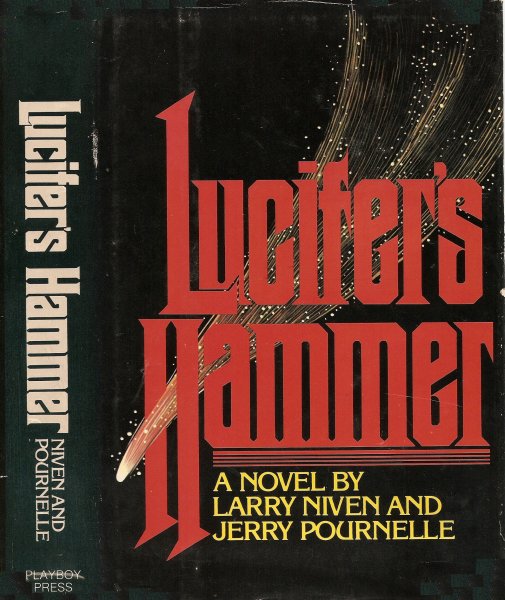
Lucifer's Hammer is a science fiction post-apocalypse-survival novel by American writers Larry Niven and Jerry Pournelle that was first published in 1977. It was nominated for the Hugo Award for Best Novel in 1978.
- The Black Cloud
Fred Hoylestandalone novel1957
similar byscience fictiontensealiensour world+1 more
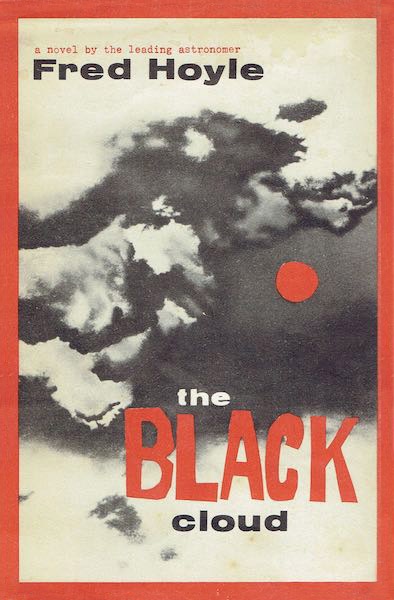
The Black Cloud is a 1957 science fiction novel by British astrophysicist Fred Hoyle. It details the arrival of an enormous cloud of gas that enters the Solar System and appears about to destroy most of the life on Earth by blocking the Sun's radiation.
- The Lathe of Heaven
Ursula K. Le Guinstandalone novel1971
similar byscience fictiontensepsychic powersour world+1 more
The Lathe of Heaven is a 1971 science fiction novel by American writer Ursula K. Le Guin, first serialized in the American science fiction magazine Amazing Stories. It won the 1972 Locus Award for Best Novel and was a finalist for the 1971 Nebula Award for Best Novel and 1972 Hugo Award for Best Novel. Two television film adaptations were released: the PBS production, The Lathe of Heaven (1980), and Lathe of Heaven (2002), a remake produced by the A&E Network.
- The Mind Cage
A. E. van Vogtstandalone novel1957
similar byscience fictiontensepsychic powersour world+1 more
The Mind Cage is a 1957 science fiction novel by American writer A. E. van Vogt, adapted from the short story "The Great Judge" (1948).
- The World Jones Made
Philip K. Dickstandalone novel1956
similar byscience fictiontensepsychic powerspolitical intrigue+2 more
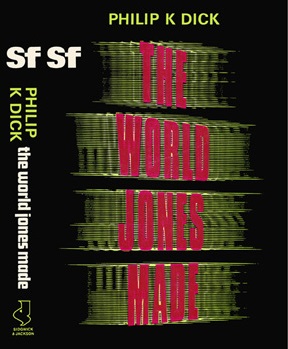
The World Jones Made is a 1956 science fiction novel by American writer Philip K. Dick, examining notions of precognition, humanity, and politics. It was first published by Ace Books as one half of Ace Double D-150, bound dos-à-dos with Agent of the Unknown by Margaret St. Clair.The story takes place after a nuclear war in which society is dominated by relativism, which rejects absolute truths and preaches tolerance as the highest principle. The mutant Floyd Jones, who can see into the future, plans to overthrow the system and colonise space. The story ends with the defeat of Jones, whose plans fail despite his ability to see the future due to the immutability of fate.
- Greg Mandel
series5 books1993
similar byscience fictiontensemysteriouspsychic powersour world+1 more
Greg Mandel is a former special-forces soldier with a psychic 'gland' implant for reading emotions, working as a private investigator in a near-future Britain recovering from an authoritarian climate-crisis government. Peter F. Hamilton's original trilogy - Mindstar Rising, A Quantum Murder, The Nano Flower - follows his cases as ordinary detective work keeps sliding into conspiracies with much bigger stakes; The Suspect Genome revisits an older Mandel decades later. It was Hamilton's first fiction, blending noir detective plotting with hard SF.
- The Demolished Man
Alfred Besterstandalone novel1953
similar byscience fictiontensepsychic powersour world
In the year 2301, guns are only museum pieces and benign telepaths sweep the minds of the populace to detect crimes before they happen. In 2301 murder is virtually impossible, but one man is about to change that..
- Herds
Stephen Goldinstandalone novel1975
similar byscience fictiontenselate 20th centuryaliensmysterious+1 more
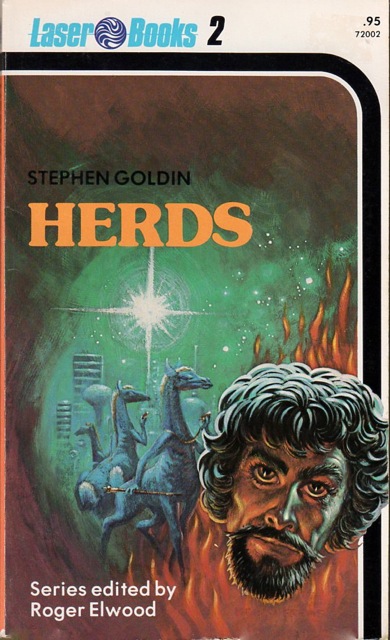
The wife of a powerful figure in California is found brutally murdered in the couple's lonely mountain retreat. Wesley Stoneham made certain that all the evidence concerning the murderer of his wife pointed to a nearby hippie community. He had three goals in mind: to get rid of his wife, to drive out the hippie commune and to enhance his own power in the state. He was at the point of achieving them all when Garnna, from the peaceful planet of Zartic finally made contact with Debby, a hippie from the commune, who had problems of her own. Then Stoneham's troubles began. (from the back cover of the Laser Books first edition)
- The Last Day
Glenn Kleierstandalone novel1997
similar byscience fictiontenselate 20th centuryour worldmysterious+1 more
From the flaps of the Warner Books first printing: "The final week of 1999 draws to a close. Billions prepare for the inevitable letdown. Billions more hold their breath. Will the wild fantasies of New Age zealots be realized and the world we know end? Will the dawn of a new era be marked by profound occurrences? Or will it be just one more New Year's day? Suddenly and terrifyingly, everyone's question is answered. On Christmas Eve, fiery destruction rains down on a secret scientific installation in the Negev desert. Then at midnight on New Year's Eve, a beautiful young woman appears, displaying a strange and awesome gift. The extraordinary powers of this ethereal creature foster both jubilation and alarm. Drawn into the most intimate bond of all is Jon Feldman, seasoned TV correspondent. An inveterate skeptic, Feldman finds himself caught in the woman's spell even as others argue that she is a Trojan Horse, come to wreck devastation on humanity. Forced to confront his deepest fears as he simultaneously probes a conspiracy at the outermost limits of bioengineering, Felman will find what he seeks - in a single heartbeat that could end his life and that will forever alter his very being."
- The Night the Heads Came
William Sleatorstandalone novel1996
similar byscience fictiontenselate 20th centuryaliensour worldmysterious
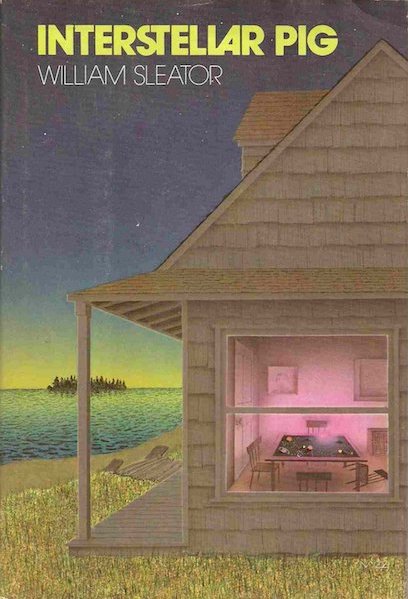
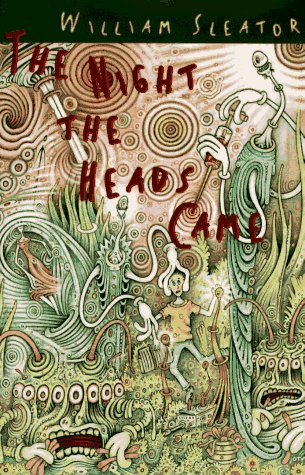
"There's no such thing as an alien—at least that's what Leo thinks, until he and his friend Tim are abducted late one night on a deserted road. When Leo comes to, Tim is gone, and no one believes his story. After he sees a psychiatrist and undergoes hypnosis, even he doesn't believe his story. But then memories begin to surface—memories he can't push away—and when Time suddenly returns, Le knows they are in otherworldly extraterrestrial danger." — quoted from the back cover of the third printing of the Penguin paperback edition.
- The Shining Girls
Lauren Beukesstandalone novel2013
similar byscience fictiontenselate 20th centuryour worldmultiple pov
The Shining Girls is a science fiction thriller novel by South African author Lauren Beukes. The book centers on a mysterious drifter who murders the titular "shining girls" and one victim's attempts to expose him.
- Dune
series20 books1963
part of Dune Universe
similar byscience fictionpolitical intrigue+2 more
Frank Herbert's Dune Chronicles opens with 1965's Dune, set on the desert planet Arrakis where House Atreides takes control of the only source of the vital spice melange and young Paul Atreides is pulled into a struggle over its politics and religion. Herbert carried the story forward across five further novels — Dune Messiah, Children of Dune, God Emperor of Dune, Heretics of Dune, and Chapterhouse: Dune — following Paul's line over the following millennia, before Brian Herbert and Kevin J. Anderson later extended the saga. Many other editions of these six novels are omnibus and box-set repackagings rather than separate stories.
- Sinister Barrier
Eric Frank Russellstandalone novel1939
similar byscience fictiontensealiensour worldmysterious+1 more
Sinister Barrier is an English-language science fiction novel by British writer Eric Frank Russell. The novel originally appeared in the magazine Unknown in 1939, the first novel to appear in its pages. It was first published in book form in 1943 by The World's Work, Ltd. Russell revised and expanded the book for its first US publication by Fantasy Press in 1948. Most subsequent editions were based on the Fantasy Press version.
- Commonwealth Saga
series2 books2004
part of Commonwealth Universe
similar byscience fictiontensealiensmultiple povpolitical intrigue+1 more
The Commonwealth Saga is a series of science fiction novels by British science fiction writer Peter F. Hamilton. This saga consists of the novels Pandora's Star (2004) and Judas Unchained (2005). Hamilton has also written several books set in the same literary universe. Misspent Youth (2002) takes place 340 years before the events of Pandora's Star. The Void Trilogy, consisting of The Dreaming Void (2008), The Temporal Void (2009), and The Evolutionary Void (2010), takes place 1,200 years after the events of Judas Unchained; several of the main characters from Judas Unchained and Pandora's Star also appear in the Void trilogy.
- The Visitors
Clifford D. Simakstandalone novel1980
similar byscience fictiontensealiensour worldmysterious
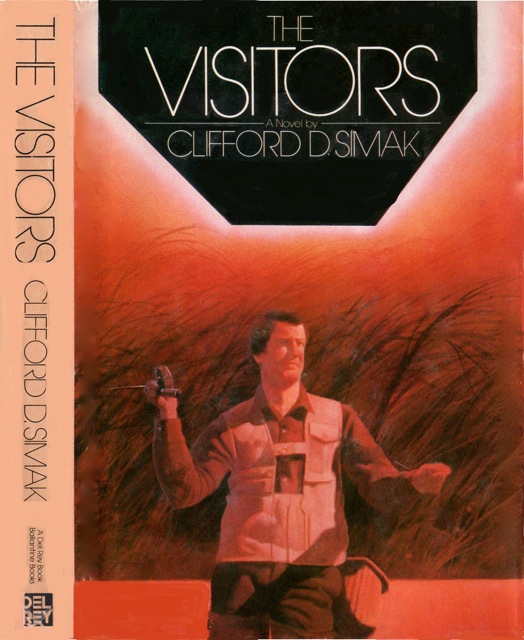
WorldCat: Intelligent, alien creatures arrive on Earth from outer space, threatening world stability and presaging the destruction of civilization.
- The Dosadi Experiment
Frank Herbertstandalone novel1977
similar byscience fictiontensealienspolitical intrigue+1 more
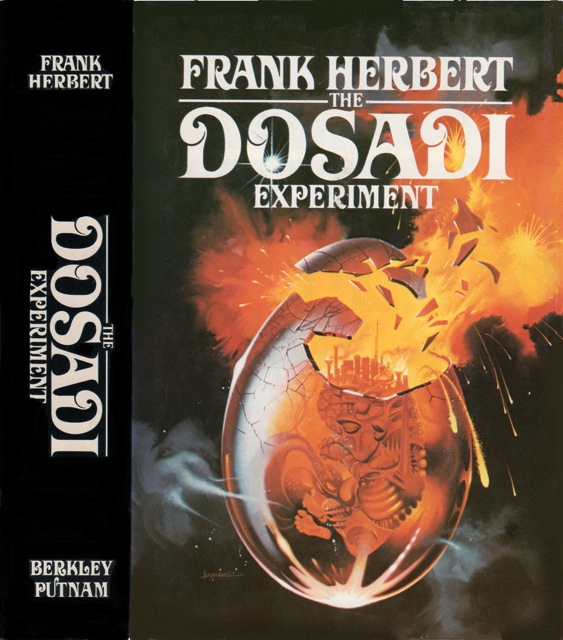
From the flaps of the Berkley Putnam first edition: "In his first new work of science fiction since the best-selling Children of Dune, Frank Herbert returns to his world of Whipping Star, and involves Jorj X. McKie, Saboteur Extraordinary, in a new intrigue. In Whipping Star, McKie discovered that some of the stars in the universe are actually intelligent, super-powerful beings, and was able to befriend one of them, the star Alcyone - affectionately known as Fannie Mae. As The Dosadi Experiment opens, McKie is assigned to investigate the planet Dosadi, which is isolated from the rest of the galaxy by a "god-wall," a barrier set up by one of the intelligent stars. Dosadi is rumored to be an experimental planet, and the experimenters are the froglike Gowachin, whose culture is founded upon a strange legal system in which McKie is the only human ever trained. He learns that humans and Gowachin have been placed on Dosadi, without their consent, for an experiment that could last centuries: an experiment in extreme overcrowding. But this monstrous plot is apparently out of control, and it seems the Gowachin may be prepared to destroy Dosadi rather than expose its secret, thus breaking the peace among the races, and starting the first interstellar war. But this is just the beginning. When McKie finally reaches Dosadi he discovers that the Dosadis have taken control of their own evolution and produced a competitive, highly evolved elite, of both humans and Gowachin, who have been able to extrapolate the existence of a universe beyond the god-wall and hate whoever has imprisoned them like this. They plan to break out and avenge themselves on the galaxy."