More like Into Thy Hands
but
- Saint Leibowitz
series6 books1955
completed
similar byfaith and religionpost-apocalypticscience fiction
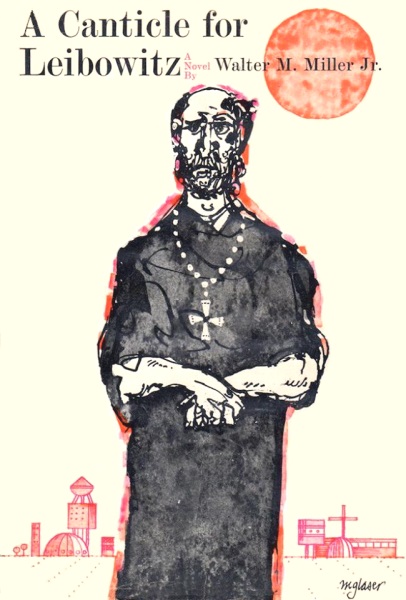
Walter M. Miller Jr.'s A Canticle for Leibowitz (1959), assembled from three novellas he had published earlier in the decade, follows the monks of a Catholic monastery in the post-nuclear American Southwest as they preserve fragments of scientific knowledge across centuries, watching civilization slowly rebuild itself and edge back toward the mistakes that destroyed it. Miller's posthumous sequel, Saint Leibowitz and the Wild Horse Woman, completed by Terry Bisson from his notes after his death and published in 1997, returns to the same abbey and its world decades later. Together the two novels form a sparse, decades-spanning series about memory, faith, and the cycles of civilization.
- A Choice of Gods
Clifford D. Simakstandalone novel1972
similar byrobotsscience fiction+2 more
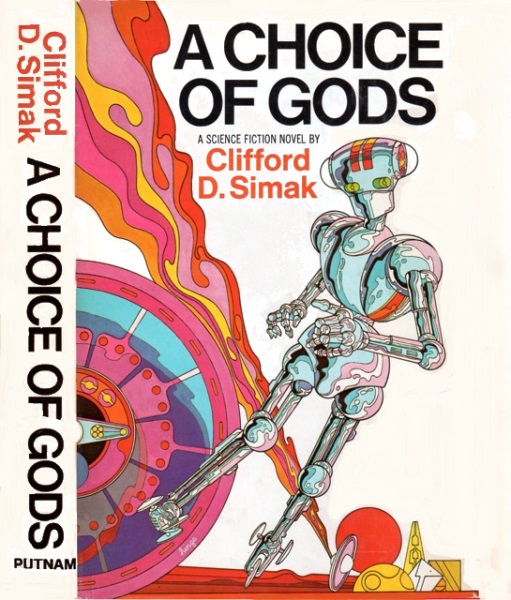
One night in July, 2135, there were some eight billion people on Earth! The next morning there were perhaps 400. There was no clue to what had happened to the world's population—but, over the centuries that followed, still stranger things occurred. The human lifespan now stretched to millennia instead of decades, and much of the remaining population developed the ability to move at will among the stars—and abandoned their homeworld for a life in deep space. Then, after 3000 years, a star-rover discovered what had happened to Earth's original inhabitants—and that they were coming to reclaim their heritage. Those who had stayed behind knew, with a growing fear, that the mystery of what had been done to Earth and why was about to be solved... in a way that would change humanity forever.
- The Chrysalids
John Wyndhamstandalone novel1955
similar bypost-apocalypticscience fiction+1 more
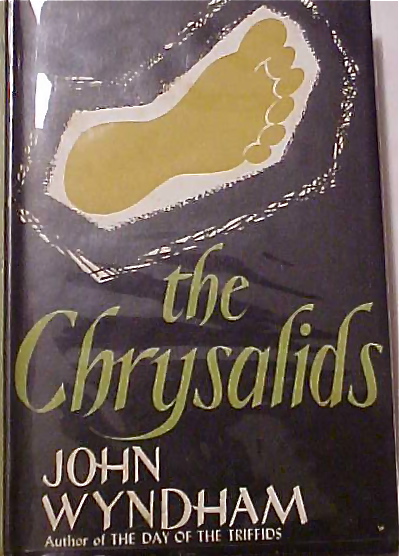
The Chrysalids is a science fiction novel by British writer John Wyndham, first published in 1955 by Michael Joseph. It is the least typical of Wyndham's major novels, but regarded by some as his best. An early manuscript version was entitled Time for a Change.
- Earthseed
series7 books1993
similar byfaith and religionpost-apocalypticscience fiction
Octavia E. Butler's Earthseed novels, Parable of the Sower and Parable of the Talents, follow Lauren Olamina as she survives the collapse of a climate-ravaged, near-future United States and founds a belief system built on the idea that "God is Change." The two-book series was left unfinished at Butler's death; a planned third novel, Parable of the Trickster, was never completed. Later graphic-novel adaptations retell the same two stories rather than continuing the narrative.
- Deus Irae
Philip K. Dick & Roger Zelaznystandalone novel1976
similar byfaith and religionpost-apocalypticscience fiction
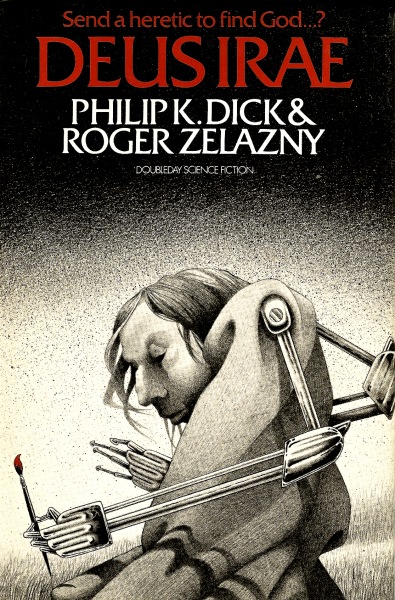
Deus Irae is a post-apocalyptic science fiction novel written by two American authors; it was started by Philip K. Dick and finished with the help of Roger Zelazny. It was published in 1976. The novel's title, Deus irae, means 'God of Wrath' in Latin; the title is a play on words on the phrase Dies Irae, meaning 'Day of Wrath' or 'Judgment Day'. The novel was based on Dick's short stories "The Great C" and "Planet for Transients".
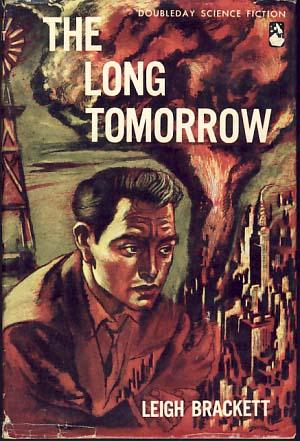
- The Long Tomorrow
Leigh Brackettstandalone novel1955
similar byfaith and religionpost-apocalypticscience fiction
The Long Tomorrow is a post-apocalyptic science fiction novel by American writer Leigh Brackett, originally published by Doubleday & Company, Inc in 1955. Set in the aftermath of a nuclear war, it portrays a world where scientific knowledge is feared and restricted. It was nominated for a Hugo Award in 1956.
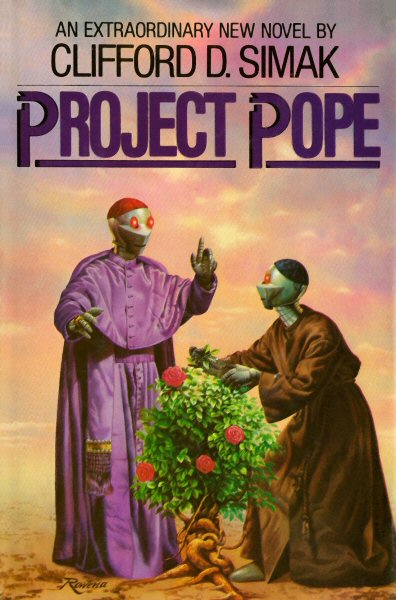
- Project Pope
Clifford D. Simakstandalone novel1981
similar byrobotsfaith and religionscience fiction
Project Pope is a science fiction novel by the American author Clifford Simak, published in 1981 by Ballantine Books. The novel is about a group of robots and humans living on a planet called the End of Nothing. Their mission is to search the universe and other dimensions to seek out true religion and knowledge. They add the information they gather to their Pope, a robotic supercomputer, in order to make an infallible authority of all knowledge and religion. The novel was nominated for both a Hugo Award for Best Novel and a Locus Award for Best SF novel in 1982.
- He, She and It
Marge Piercystandalone novel1991
similar byrobotspost-apocalypticscience fiction
He, She, and It is a 1991 cyberpunk novel by American writer Marge Piercy. It won the Arthur C. Clarke Award for Best Science Fiction Novel in 1993. The novel, set in a post-apocalyptic America, follows a romance between a human woman and a cyborg created to protect her community from corporate raiders. The novel also interweaves a secondary narrative of the creation of a golem in 17th century Prague. Like Piercy's earlier novel Woman on the Edge of Time (1976), He, She, and It also examines themes such as gender roles, political economy, and environmentalism. In the mid-twenty-first century, Norika is a toxic wasteland. Dominated by powerful corporations known as "multis", the region includes environmental domes, independent "free towns", and the chaotic "Glop", where most Norikans live in violent, polluted conditions ruled by gangs and warlords.
- The Lost Art
Simon Mordenstandalone novel2007
similar byfaith and religionpost-apocalypticscience fiction
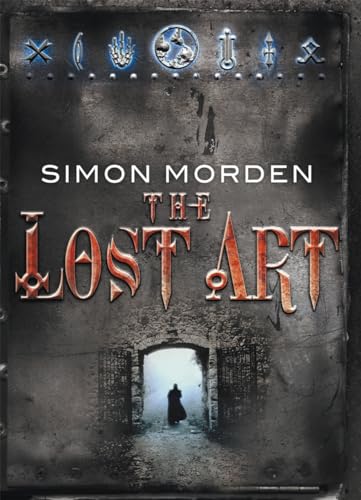
A MILLENNIUM AFTER the formidable war machines of the User cultures devoured entire civilizations and rewrote planetary geography, Earth is in the grip of a perpetual Dark Age. Scientific endeavor is strongly discouraged, while remnant technology is locked away--hidden by a Church determined to prevent a new Armageddon.This is the world to which Benzamir Michael Mahmood must return. A descendant of the tribes who fled the planet during those ages old wars, he comes in pursuit of enemies from the far reaches of space. The technology he brings is wondrous beyond the imaginings of those he will meet, but can its potency match that of the Church's most closely guarded treasure?For centuries it has lain dormant, but it is about to be unearthed, and the powers that will be unleashed may be beyond anyone's capacity to control. Even a man as extraordinary as Benzamir . . .From the Hardcover edition.
- Resurrection, Inc.
Kevin J. Andersonstandalone novel1988
similar byrobotsscience fiction+1 more
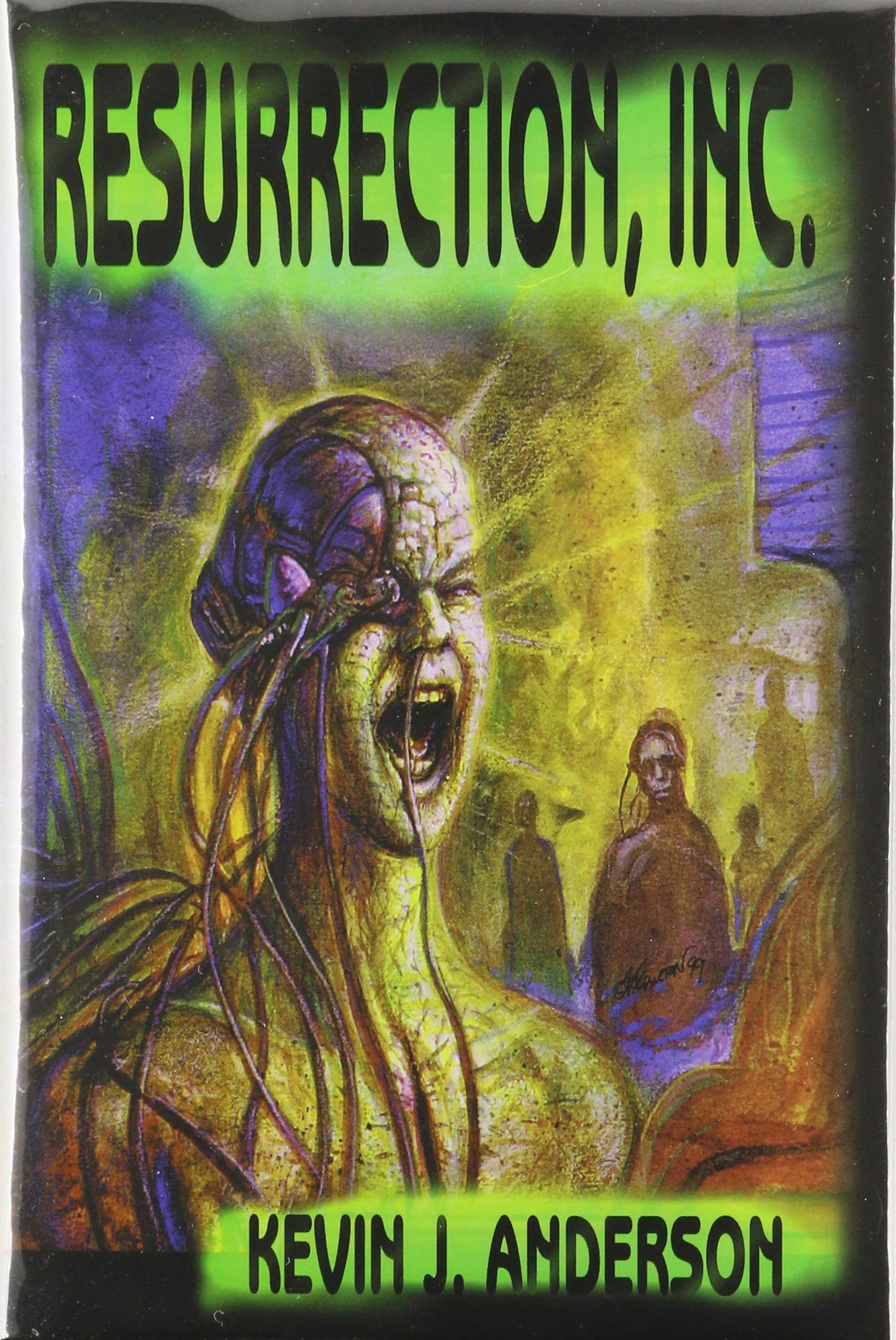
It is the future--and the dead walk the streets, resurrected by technology to become servants to the living. Resurrection, Inc. found a profitable way to do it: a microprocessor brain, a synthetic heart, artificial blood--and anyone with money could buy a Servant with no mind of its own, trained to obey any command. But for every Servant created a living worker was out of a job, and suddenly the profits of Resurrection, Inc. became everyone else's loss. Some take to rioting in the streets, their rampages ruthlessly ended by heavily armed Enforcers, eager for the kill. Others join the ever-growing cult of Neo-Satanism, seeking Heaven in the depths of Hell. Only one man tries to save the world. His name is Danal, and he is the last hope of the living. He is dead, but he remembers everything.
- Station Eleven
Emily St. John Mandelstandalone novel2014
similar bypost-apocalypticscience fiction+1 more
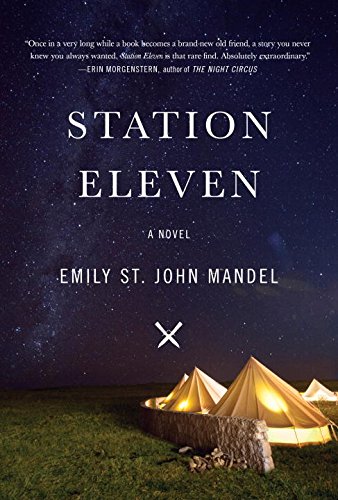
"Set in the days of civilization's collapse, Station Eleven tells the story of a Hollywood star, his would-be savior, and a nomadic group of actors roaming the scattered outposts of the Great Lakes region, risking everything for art and humanity. One snowy night a famous Hollywood actor slumps over and dies onstage during a production of King Lear. Hours later, the world as we know it begins to dissolve. Moving back and forth in time — from the actor's early days as a film star to fifteen years in the future, when a theater troupe known as the Traveling Symphony roams the wasteland of what remains — this suspenseful, elegiac, spellbinding novel charts the strange twists of fate that connect five people: the actor, the man who tried to save him, the actor's first wife, his oldest friend, and a young actress with the Traveling Symphony, caught in the crosshairs of a dangerous self-proclaimed prophet." (source: Goodreads.com)
- Tower of Glass
Robert Silverbergstandalone novel1970
similar byrobotsscience fiction+1 more
Tower of Glass is a science fiction novel by American writer Robert Silverberg, published in 1970. It was nominated for the Nebula Award in 1970, and for both the Hugo and Locus Awards in 1971.
- A Dusk of Demons
John Christopherstandalone novel1993
similar bypost-apocalypticscience fiction+1 more
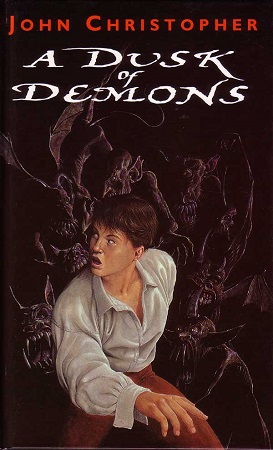
A Dusk of Demons is a young adult science fiction novel written by the British author John Christopher and published in 1993. The story is set in a post-apocalyptic future in England where it is believed that demons rule Earth.
- The Apocalypse Seven
Gene Doucettestandalone novel2021
similar bypost-apocalypticscience fiction+1 more
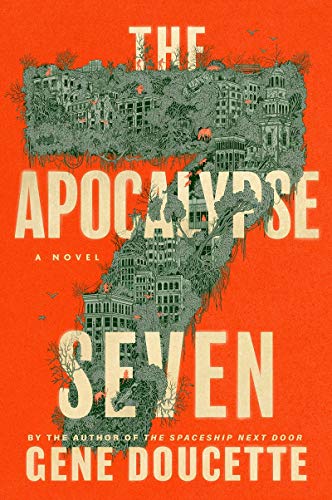
The whateverpocalypse. That's what Toure, a twenty-something Cambridge coder, calls it after waking up one morning to find himself seemingly the only person left in the city. Once he finds Robbie and Carol, two equally disoriented Harvard freshmen, he realizes he isn't alone, but the name sticks: Whateverpocalypse. But it doesn't explain where everyone went. It doesn't explain how the city became overgrown with vegetation in the space of a night. Or how wild animals with no fear of humans came to roam the streets. Add freakish weather to the mix, swings of temperature that spawn tornadoes one minute and snowstorms the next, and it seems things can't get much weirder. Yet even as a handful of new survivors appear--Paul, a preacher as quick with a gun as a Bible verse; Win, a young professional with a horse; Bethany, a thirteen-year-old juvenile delinquent; and Ananda, an MIT astrophysics adjunct--life in Cambridge, Massachusetts gets stranger and stranger. The self-styled Apocalypse Seven are tired of questions with no answers. Tired of being hunted by things seen and unseen. Now, armed with curiosity, desperation, a shotgun, and a bow, they become the hunters. And that's when things truly get weird.
- The Lake at the End of the World
Caroline Macdonaldstandalone novel1988
similar bypost-apocalypticscience fiction+1 more
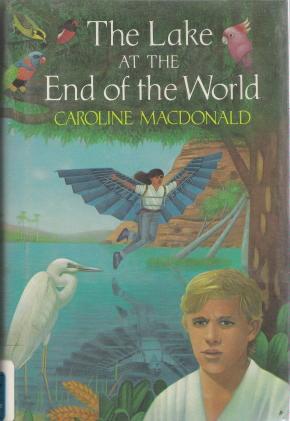
The Lake at the End of the World is a post-nuclear holocaust young adult novel published in 1988. Its author is Caroline MacDonald. Set in 2025, it tells the story of Hector, a teenage boy who has lived all his life in an underground bunker as the youngest member of a cult, who occasionally escapes the bunker to look outside, and Diana, a teenage girl who lives with her parents, apparently the only survivors of the nuclear holocaust. The story is told in part from Hector's perspective and from Diana's.
- Kuldesak
Richard Cowperstandalone novel1972
similar byrobotspost-apocalypticscience fiction
Earth, two thousand years after the final holocaust which drove man deep underground; a ghostly, deserted landscape peopled only by the diligent robots who, century after century, silently harvest grain which no man will eat. Up into this eerie world comes Mel, a questioning young Roamer who has disobeyed the Law which says he must never venture into or beyond the Lost Levels. Together with three companions, and a companion not of this Earth, Mel takes on the awesome task of freeing human beings from the tyranny imposed on them by their remote ancestors; of justifying the agonized cry on Barney as he died in a forbidden level: 'I am a man! Everything is for man!' Kuldesak is a gripping, brilliantly inventive new novel by the author of Phoenix and Breakthrough.
- MaddAddam
series3 books2003
similar bypost-apocalypticscience fiction+1 more
Margaret Atwood's MaddAddam trilogy (Oryx and Crake, The Year of the Flood, MaddAddam, 2003-2013) is set around a genetically engineered pandemic unleashed deliberately by the brilliant, disillusioned scientist Crake, who intends the deadly 'BlyssPluss' pill to wipe out humanity and clear the way for the gentler, engineered Crakers he has designed to replace it. Told from the perspectives of survivors including Crake's old friend Jimmy (now calling himself Snowman), the trilogy pieces together the pandemic's causes and its aftermath from multiple, overlapping vantage points.
- Mother of Storms
John Barnesstandalone novel1994
similar bypost-apocalypticscience fiction+1 more
From the flaps of the Tor first edition: "It is 2028. A strike to destroy an illegal Arctic weapons cache has a catastrophic side effect. Massive amounts of energy are liberated from the polar ice, suddenly warming the Earth's climate. In the middle of the Pacific, a gigantic hurricane thousands of miles across is forming, larger than any in human history. A storm with winds of supersonic speed. A storm that changes direction at whim. A storm that refuses to die. A storm so vast it spawns dozens more in its wake... Blinded by intrigue, expedience, and greed, the world's politicians and power brokers have ignored the killer storms threat until it is too late. Already the death toll is in the tens of millions, as it savages the Pacific coast, while its devil's brood of smaller storms are wreaking havoc across the face of the planet. While the survivors scramble for advantage, a handful of courageous men and women undertake a daring, desperate plan to save humanity from total destruction - a plan so visionary it may alter forever the future of the human race."
- Our Children's Children
Clifford D. Simakstandalone novel1974
similar bypost-apocalypticscience fiction+1 more
From the back cover of the first DAW printing: "They were our children's children, and they came one day from nowhere - walking through holes in the air into our world. By means of one-way time tunnels, they fled the ravening beasts with teeth, claws and tentacles, that reproduced like bacteria and were intelligent. They fled to escape the uncontrolled horror of their own far future, and we, their distant ancestors, housed and fed and comforted them, content in their assurance that the tunnel was securely guarded from the beasts, whatever or whoever they were. But then somebody up there slipped and the beasts were abroad..."