Loreful
HomeDiscover
Search series, authors…⌘K
Loreful

Reading orders for SF/F series and shared universes — with your place kept in every one.

Explore

UniversesSeriesWorksAuthorsAtlas

Help

FAQAboutSite map

Account & legal

Sign inCreate accountPrivacyTerms

Data

Built on ISFDB, Wikipedia, Wikidata and Open Library. Curated reading orders carry their reasoning on the page; the rest follow publication order. Data sources & licenses

© Loreful · data: ISFDB · CC BY

More like Iorich

anchored on:fantasypolitical intriguesecondary worldfirst person

but

Mood

The mood the book leaves you in.

  • The reading experience is propelled by journeys, exploration, and physical risk; excitement and forward momentum dominate over dread or introspection.
  • Joy and loss are deliberately mixed; the resolution grants characters something real while taking something else away, leaving warmth and sorrow together.
  • The book demands work from the reader — dense prose, difficult structure, unfamiliar ideas, or morally uncomfortable material — as part of its intended effect.
  • Grim events, cruelty, or despair dominate the atmosphere, and the book does not soften them with comfort or comic relief.
  • The atmosphere is quietly unsettling — wrongness, unease, and the uncanny pervade the book without necessarily escalating into overt horror.
  • The book is built to move the reader; character feeling is foregrounded and major scenes aim at a strong emotional response.
  • Humor is a primary aim and the prose plays for laughs — comic situations, wit, or dialogue produce sustained comedy, not occasional levity.
  • The book insists that things can improve; effort and decency are shown to matter, and the arc bends toward better outcomes even through hardship.
  • The book teaches as it goes — real facts, history, science, or craft are conveyed in enough depth that learning is part of the reading experience.
  • The book is designed to uplift and motivate, presenting perseverance or achievement in a way that invites the reader to aspire or act.
  • The overall register is cheerful and easygoing; stakes are kept gentle and the book avoids dwelling on pain or dread.
  • Withheld information drives the experience; the book sustains enigmas and secrets the reader wants resolved, whatever its genre.
  • The book is contemplative and inward-looking, giving more weight to thought, memory, and meaning than to external events.
  • The book works as comfort reading — low tension, a soothing pace, and an atmosphere the reader can unwind in.
  • Grief, loss, or melancholy set the dominant register, and the book lets sorrow stand rather than resolving it into comfort.
  • Sustained suspense is the point; the book keeps the reader braced for what happens next through danger, pressure, or impending revelation.
  • Playful invention and charm define the register — fanciful conceits, light absurdity, and a narration that delights in its own oddity.

About

What the story runs on.

  • Stories in which extraterrestrial beings are central — as characters, cultures, or the object of the plot.
  • Stories centered on witches and the practice of witchcraft — covens, hedge magic, familiars, and the witch's place in her community.
  • Stories structured as a quest — a journey undertaken to find, deliver, or destroy something of great import.
  • Stories in which staying alive against nature, catastrophe, or scarcity is the central problem.
  • Stories of lovers kept apart by law, family, faith, or station, where the obstacle to love is the plot.
  • Stories in which a friendship — its making, testing, or loss — is the emotional center.
  • Stories of growing up — a young protagonist crossing from childhood into adult knowledge and responsibility.
  • Stories about who a character truly is — self-discovery, doubled lives, and the search for a self.
  • Stories in which a buried family truth — hidden parentage, crimes, or shames — surfaces and reorders the present.
  • Stories driven by maneuvering for power — factions, conspiracies, and statecraft conducted in shadow.
  • Stories in which war itself is the subject — combat, occupation, and what warfare does to soldiers and civilians.
  • Stories organized around investigating a killing — the case, the clues, and the pursuit of the killer, in any genre's clothing.

Shelf

Where it sits in the library.

    • Fiction built on magic or other supernatural elements that have no scientific explanation.
    • Secondary-world fantasy at large scale, where the fate of nations or the world turns on the protagonists' struggle.
    • Fantasy set in a recognizably modern city or contemporary world where the supernatural intrudes on everyday life.
    • Fantasy that blends in horror's atmosphere and imagery, keeping a fantastical frame around grim or frightening material.
    • Action-driven fantasy following warriors or rogues with personal stakes against sorcerous threats, rather than world-spanning conflicts.
    • Fantasy set in a real historical period or a close analogue of one, with magic woven into the era.
    • Fantasy in which protagonists cross from the ordinary world into another world through a portal or similar passage.
    • Fiction that retells or reworks a traditional fairy tale in a new form or setting.
    • Fantasy drawing directly on myths, legends, and folklore, retelling them or building on their figures and logic.
    • Fantasy of ghosts, vampires, shapeshifters, psychics, and similar phenomena, usually set in an otherwise ordinary world.
    • Fiction mixing science-fictional trappings with overtly magical or impossible elements in one setting.
    • Low-stakes fantasy emphasizing comfort, community, and everyday pleasures over conflict and peril.
    • Speculative fiction of pervasive moral ambiguity, violence, and cynicism that rejects heroic conventions — fantasy and SF alike.
      • Fiction that extrapolates from science and technology — future societies, space travel, or speculative inventions — within at least nominally natural laws.
      • Science fiction of interstellar scope — starships, galactic polities, and adventure across star systems.
      • Science fiction committed to scientific rigor, where technical plausibility constrains the story.
      • Science fiction centered on armed forces and warfare, told largely from a military point of view.
      • Science fiction of networked, corporate-dominated near futures, pairing high technology with social decay.
      • Science fiction styled on nineteenth-century steam-powered technology, often in a Victorian or pseudo-Victorian setting.
      • Fiction depicting an oppressive or catastrophic society, presented as a warning.
      • Fiction set after civilization's collapse, following survivors in the ruins of the old world.
      • Fiction in which characters move between past and future, and the mechanics or consequences of that travel drive the plot.
      • Fiction exploring a world where a historical event went differently and history diverged from ours.
      • Science fiction about humanity's first encounter and communication with an alien intelligence.
      • Science fiction in which extraterrestrial forces attack or occupy Earth and humanity resists.
      • Fiction whose primary aim is to frighten or unsettle the reader through dread, menace, or the monstrous.
      • Horror of vast, indifferent, incomprehensible entities before which humanity is insignificant, in the Lovecraft tradition.
      • Horror of decaying houses, buried family secrets, and oppressive atmosphere in the Gothic literary tradition.
      • Horror centered on hauntings and the returning dead.
      • Horror located in the mind — paranoia, obsession, and unreliable perception rather than external monsters.
      • Horror built around the reanimated dead and survival amid their outbreaks.
      • Horror defined by explicit, transgressive gore that refuses to cut away from violence.
      • Speculative fiction of the strange and uncanny that resists both natural explanation and standard genre categories.
      • Fiction organized around solving a crime or puzzle, typically following an investigator toward the identification of a culprit.
      • A puzzle-first mystery that lays out clues so the culprit's identity can be deduced before the reveal.
      • Crime fiction of moral ambiguity, fatalism, and hard-edged style, set among the corrupt and the doomed.
      • A mystery following the realistic routines of police work — forensics, interviews, and case-building.
      • A gentle mystery with an amateur sleuth, a small community, and violence kept off the page.
      • A mystery set in a past era, where the investigation works within that period's methods and society.
      • Fast-paced fiction driven by imminent danger, pursuit, or high-stakes conspiracy, built to sustain tension.
      • A thriller of espionage — agents, tradecraft, and intelligence services in conflict.
      • A thriller centered on lawyers and the courtroom, where litigation carries the suspense.
      • A thriller driven by detailed contemporary or near-future technology, often military or scientific.
      • A thriller whose tension comes from mental states and manipulation between characters rather than external action.
      • Fiction whose central plot is a romantic relationship and its development toward an emotionally satisfying resolution.
      • Romance in which one or both partners are supernatural beings, blending fantasy elements into the love story.
      • A fantasy-romance hybrid in which the romantic arc and the fantasy plot carry equal weight.
      • Romance set in a past era, with courtship shaped by the period's society and manners.
      • Romance set in the present day, without supernatural or historical elements.
      • Fiction set in a real past period, where the historical setting materially shapes characters and events.
        • General and literary fiction emphasizing prose style, character interiority, or formal ambition over genre plot conventions.
        • Fiction in a realistic world where magical events occur and are treated as ordinary, in the tradition of Latin American literature.
        • Fiction that ridicules people, institutions, or society in order to criticize them.
        • Fiction of dreamlike, irrational imagery and logic that breaks from realistic representation.
        • Fiction that plays with narrative convention through metafiction, fragmentation, and self-reference.
        • Fiction propelled by journeys, exploration, and physical peril, where action and survival carry the plot.
        • Adventure fiction of ships and seafaring — naval engagements, voyages, and life at sea.
        • Fiction of the American frontier West — gunmen, ranchers, and lawmen, typically in the late nineteenth century.
        • Fiction centered on soldiers, campaigns, and the experience of warfare, historical or imagined.
          • Fiction written primarily to amuse, using comedic situations, wit, or parody as its organizing principle.
            • Multi-generational fiction following a family or dynasty across decades, with inheritance and kinship as the through-line.
              • Fiction whose world runs on explicit game mechanics — levels, stats, and skills that characters can see and exploit.
                • Fiction about costumed or superpowered heroes and their conflicts with comparable villains.

                Practical

                How long a commitment, whether it stands alone, and whether it has finished.

                Tap a chip to ask for it · tap again to rule it out · once more to clear. Numbers show what would be left.

                • Cover of Queen's Thief
                  Queen's Thief

                  series · 41 books · 1996

                  similar bypolitical intriguefantasysecondary world+1 more

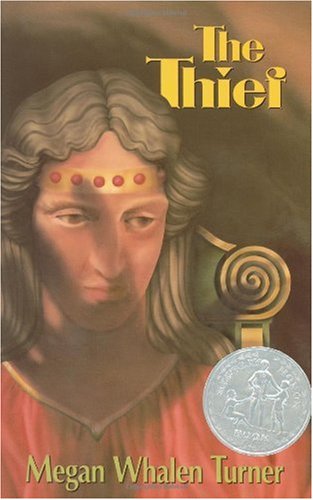
                  Queen's Thief begins with The Thief, in which a boastful, underestimated young thief is pulled from prison to steal a legendary stone for the king's scholar, only for the story to reveal by its end that its narrator has been playing a much longer game than the reader realized. Megan Whalen Turner's series expands from that single heist into court intrigue and small-scale warfare among a set of Mediterranean-flavored kingdoms, with later books often shifting whose perspective the reader trusts. It's known for close, deliberately withheld narration as much as its plotting.

                • Cover of The Blue Star
                  The Blue Star

                  Fletcher Pratt · standalone novel · 1952

                  similar byfantasypolitical intriguesecondary world+1 more

                  The Blue Star is a fantasy novel by the American writer Fletcher Pratt, the second of his two major fantasies. It was first published by Twayne Publishers in 1952 in the fantasy anthology Witches Three, a volume that also included Fritz Leiber's Conjure Wife and James Blish's "There Shall Be No Darkness". Its first publication as a stand-alone novel was in paperback by Ballantine Books in May 1969, as the inaugural volume of the Ballantine Adult Fantasy series. The Ballantine edition included an introduction by Lin Carter; it was reprinted twice, in 1975 and 1981. It has also been translated into French, German, Italian and Spanish.

                • Cover of Lud-in-the-Mist
                  Lud-in-the-Mist

                  Hope Mirrlees · standalone novel · 1926

                  similar byfantasysecondary world+2 more

                  Lud-in-the-Mist (1926) is the third and final novel by the British writer Hope Mirrlees. It continues the author's exploration of the themes of Life and Art, by a method already described in the preface of her first novel, Madeleine: One of Love's Jansenists (1919): "to turn from time to time upon the action the fantastic limelight of eternity, with a sudden effect of unreality and the hint of a world within a world".

                • Cover of Mordant's Need
                  Mordant's Need

                  series · 2 books · 1986

                  similar byfantasypolitical intriguesecondary world+1 more

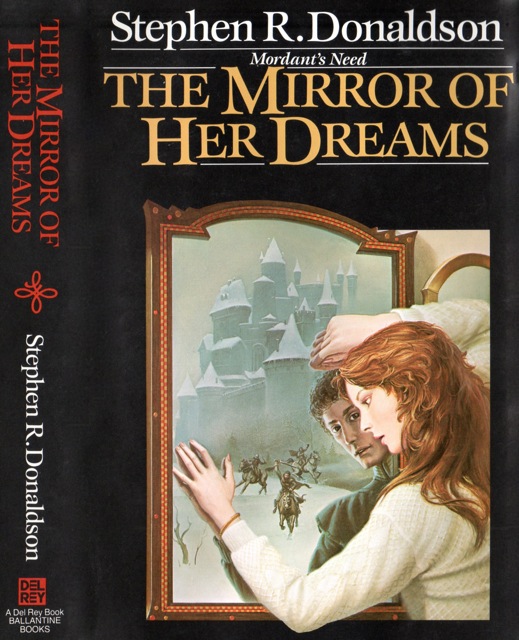
                  Mordant's Need is a fantasy two-part book series by American writer Stephen R. Donaldson, comprising the novels The Mirror of Her Dreams (1986) and A Man Rides Through (1987).

                • Cover of Poison War
                  Poison War

                  series · 2 books · 2018

                  similar bypolitical intriguefantasysecondary world+1 more

                • Cover of Shadow of the Leviathan
                  Shadow of the Leviathan

                  series · 3 books · 2024

                  similar byfantasymysterioussecondary world+1 more

                  Shadow of the Leviathan is Robert Jackson Bennett's fantasy murder-mystery trilogy: The Tainted Cup (2024), A Drop of Corruption and A Trade of Blood. Set in an empire built along the shores of colossal sea monsters, it follows an unconventional investigator and her sharp-eyed assistant solving crimes that expose the empire's engineered biology and its rot from within. The Tainted Cup won the 2025 Hugo Award and World Fantasy Award for best novel.

                • Cover of The Book of Tea
                  The Book of Tea

                  series · 2 books · 2022

                  similar byfantasypolitical intriguesecondary world+2 more

                • Cover of A Song of Ice and Fire
                  A Song of Ice and Fire

                  series · 14 books · 1996

                  part of World of Ice and Fire

                  similar bypolitical intriguefantasysecondary world

                  A Song of Ice and Fire is a series of high fantasy novels by the American author George R. R. Martin. Martin began writing the first volume, A Game of Thrones, in 1991, and published it in 1996. Martin, who originally envisioned the series as a trilogy, has released five out of seven planned volumes. The most recent entry in the series, A Dance with Dragons, was published in 2011. Since then, Martin has been working on the sixth novel, titled The Winds of Winter. A seventh novel, A Dream of Spring, is planned to follow.

                • Cover of Divine Cities
                  Divine Cities

                  series · 3 books · 2014

                  similar byfantasypolitical intriguesecondary world+1 more

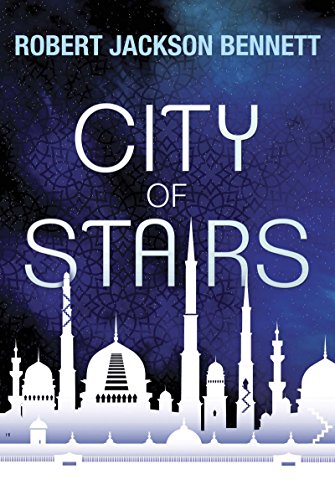
                  The Divine Cities is a trilogy of fantasy novels by the American writer Robert Jackson Bennett. It consists of the novels City of Stairs, City of Blades (2016) and City of Miracles (2017).

                • Cover of Zimiamvian Trilogy
                  Zimiamvian Trilogy

                  series · 4 books · 1922

                  completed

                  similar byfantasypolitical intriguesecondary world

                  The Zimiamvian Trilogy is a series of fantasy novels by English author E. R. Eddison.Mistress of Mistresses (1935) A Fish Dinner in Memison (1941) The Mezentian Gate (1958)

                • Cover of The Serpent's Egg
                  The Serpent's Egg

                  Caroline Stevermer · standalone novel · 1988

                  similar bypolitical intriguefantasysecondary world+1 more

                  The conspirators gathered... from all walks of life. the soldier, the gambler, the minstrel, the scholar. The Queen's own waiting woman. The Queen's own son. They gathered to prove the treachery of a duke who wanted the kingdom for his own. But the duke had the trust of the queen. And the sorcery of the Serpent's Egg.

                • Cover of The Daevabad Trilogy
                  The Daevabad Trilogy

                  series · 5 books · 2017

                  similar bypolitical intriguefantasysecondary world

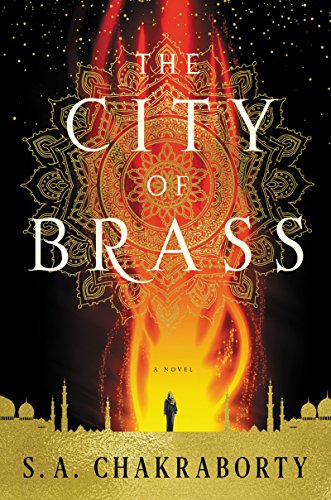
                  Nahri is a con artist and unlicensed healer working the streets of 18th-century Cairo who accidentally summons Dara, a formidable djinn warrior, during a fake exorcism gone wrong. He recognizes her as a lost heir of the Nahids, once-rulers of the djinn, and brings her to Daevabad, the hidden city her ancestors built, where old tribal and political conflicts are waiting to reignite. S. A. Chakraborty's Daevabad Trilogy follows Nahri through The City of Brass, The Kingdom of Copper, and The Empire of Gold as she's pulled into a fight over the city's throne and its buried history.

                • Cover of The Black Magician Trilogy
                  The Black Magician Trilogy

                  series · 3 books · 2001

                  part of Kyralia series

                  similar byfantasysecondary world+1 more

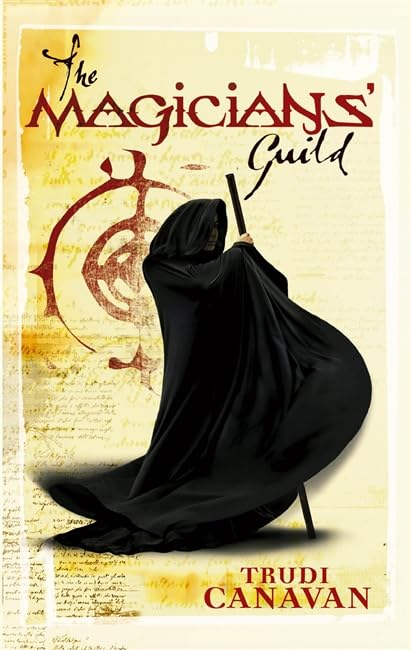
                  Trudi Canavan's Black Magician Trilogy (The Magicians' Guild, The Novice, The High Lord, 2001-2003) opens in the city of Imardin, where the ruling magicians' guild's annual purge of the slums goes wrong when a street girl named Sonea unknowingly shatters their protective shield with raw, untrained power. The guild must hunt her down and decide whether to control her or train her, and the trilogy follows Sonea's forced initiation into magical society and the guild's internal politics. It's Canavan's best-known trilogy and the founding story of her Kyralia setting.

                • Cover of The Traitor Spy Trilogy
                  The Traitor Spy Trilogy

                  series · 3 books · 2010

                  part of Kyralia series

                  similar bypolitical intriguefantasysecondary world

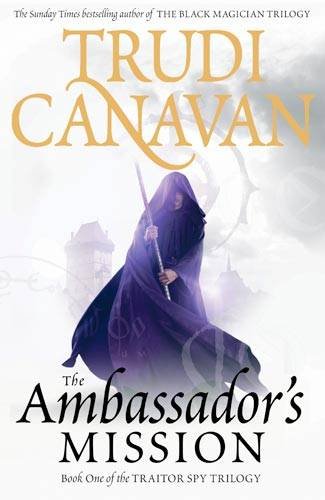
                  Trudi Canavan is an Australian writer of fantasy novels, best known for her best-selling fantasy trilogies The Black Magician and Age of the Five. While establishing her writing career she worked as a graphic designer. She completed her third trilogy, The Traitor Spy trilogy, in August 2012 with The Traitor Queen. Subsequently, Canavan has written a series called Millennium's Rule, with a completely new setting consisting of multiple worlds which characters can cross between. Though originally planned as a trilogy, a fourth and final book in the Millennium's Rule series was published.

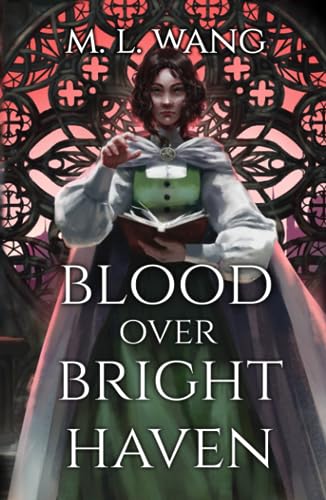
                • Cover of Blood Over Bright Haven
                  Blood Over Bright Haven

                  M. L. Wang · standalone novel · 2023

                  similar byfantasymysterioussecondary world+1 more

                  Magic has made the city of Tiran an industrial utopia, but magic has a cost—and the collectors have come calling. An orphan since the age of four, Sciona has always had more to prove than her fellow students. For twenty years, she has devoted every waking moment to the study of magic, fueled by a mad desire to achieve the impossible: to be the first woman ever admitted to the High Magistry. When she finally claws her way up the ranks to become a highmage, however, she finds that her challenges have just begun. Her new colleagues will stop at nothing to let her know she is unwelcome, beginning with giving her a janitor instead of a qualified lab assistant. What neither Sciona nor her peers realize is that her taciturn assistant was once more than a janitor; before he mopped floors for the mages, Thomil was a nomadic hunter from beyond Tiran’s magical barrier. Ten years have passed since he survived the perilous crossing that killed his family. But working for a highmage, he sees the opportunity to finally understand the forces that decimated his tribe, drove him from his homeland, and keep the Tiranish in power. Through their fractious relationship, mage and outsider uncover an ancient secret that could change the course of magic forever—if it doesn’t get them killed first. Sciona has defined her life by the pursuit of truth, but how much is one truth worth with the fate of civilization in the balance? A standalone dark academia brimming with mystery, tragedy, and the damning echoes of the past. For fans of Leigh Bardugo, V. E. Schwab, and Fullmetal Alchemist.

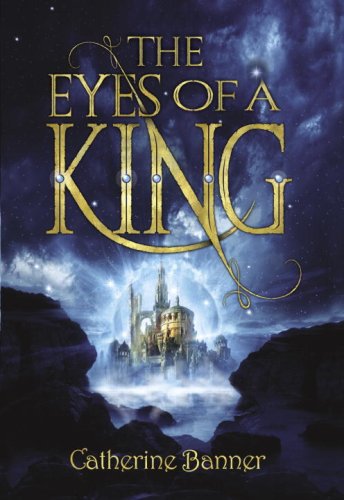
                • Cover of The Last Descendants
                  The Last Descendants

                  series · 3 books · 2008

                  similar byfantasysecondary world+2 more

                  The Last Descendants is a series of fantasy novels for young adults written by British author Catherine Banner and published by Random House. The series started with a single book Catherine started writing when she was 14 years old and still a student. The first book, The Eyes of a King, became the first part of the series The Last Descendants. The second book, Voices in the Dark, was published in 2009. The third and last book, The Heart at War, was published in May 2015.

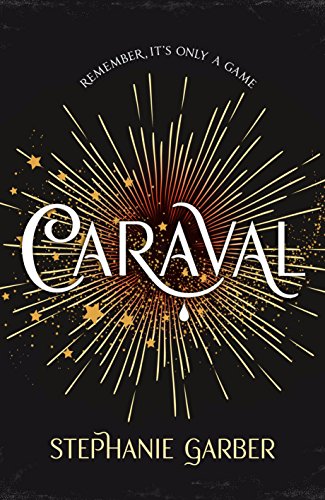
                • Cover of Caraval
                  Caraval

                  series · 4 books · 2017

                  similar byfantasysecondary world+1 more

                  Caraval is Stephanie Garber's YA fantasy trilogy, Caraval (2017), Legendary and Finale, with Spectacular later extending the story. It follows Scarlett Dragna into a legendary, once-a-year magical performance where the line between spectacle and real danger blurs, as she searches for her missing sister inside it. The books form one continuing story rather than standalone volumes.

                • Cover of Enemies of the Prince
                  Enemies of the Prince

                  series · 2 books · 2013

                  similar byfantasysecondary world+2 more

                • Cover of Sandwriter
                  Sandwriter

                  series · 2 books · 1985

                  completed

                  similar byfantasysecondary world+2 more

                • Cover of Seven Kingdoms / Graceling Realm
                  Seven Kingdoms / Graceling Realm

                  series · 6 books · 2008

                  similar byfantasypolitical intriguesecondary world

                  Graceling introduces the Seven Kingdoms, where some people are born with a Grace, an extreme and often dangerous specialized talent, and follows Katsa, whose Grace for killing has made her a weapon for a manipulative king, as she learns to use it on her own terms instead. Kristin Cashore continued the world with the prequel-adjacent Fire, set in a neighboring land, and the sequel Bitterblue, then extended it further north with Winterkeep and Seasparrow. Each later book largely follows a new protagonist rather than continuing straight through Katsa's story.

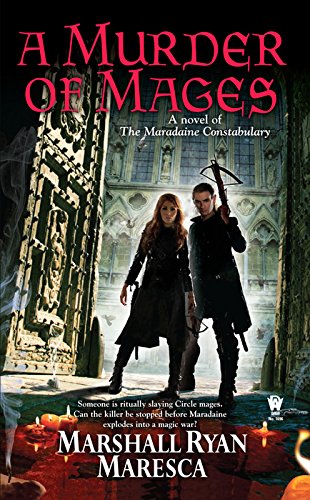
                • Cover of Maradaine Constabulary
                  Maradaine Constabulary

                  series · 3 books · 2015

                  part of Maradaine

                  similar byfantasysecondary world+2 more

                • Cover of The Land Across
                  The Land Across

                  Gene Wolfe · standalone novel · 2013

                  similar byfantasymysterioussecondary worldfirst person

                  The Land Across is a fantasy novel by Gene Wolfe published in 2013 by Tor Books.

                • Cover of The Nikolai Duology
                  The Nikolai Duology

                  series · 2 books · 2019

                  part of Grishaverse

                  similar bypolitical intriguefantasysecondary world

                  Leigh Bardugo's Nikolai Duology picks up Nikolai Lantsov and Zoya Nazyalensky from her earlier Grishaverse trilogy set in Ravka, now dealing with the kingdom's fallout as king and general, and adds Nina Zenik from the Six of Crows spin-off working a mission out of Ketterdam. King of Scars and its sequel Rule of Wolves tie together threads from across the wider Grishaverse rather than starting fresh, raising the stakes to a hidden threat inside Nikolai himself. It functions as the convergence point for Bardugo's separate Grishaverse story lines.

                • Cover of Rithmatist
                  Rithmatist

                  series · 1 book · 2013

                  similar byfantasymysterioussecondary world

                  The Rithmatist series is a young adult fantasy series written by American author Brandon Sanderson. At least two books are planned in the series: The Rithmatist (2013) and a second volume, titled The Aztlanian, is planned.