Loreful
HomeDiscover
Search series, authors…⌘K
Loreful

Reading orders for SF/F series and shared universes — with your place kept in every one.

Explore

UniversesSeriesWorksAuthorsAtlas

Help

FAQAboutSite map

Account & legal

Sign inCreate accountPrivacyTerms

Data

Built on ISFDB, Wikipedia, Wikidata and Open Library. Curated reading orders carry their reasoning on the page; the rest follow publication order. Data sources & licenses

© Loreful · data: ISFDB · CC BY

More like [...] Is Hell

anchored on:fantasyafterlife & underworlddark

but

Mood

The mood the book leaves you in.

  • The reading experience is propelled by journeys, exploration, and physical risk; excitement and forward momentum dominate over dread or introspection.
  • Joy and loss are deliberately mixed; the resolution grants characters something real while taking something else away, leaving warmth and sorrow together.
  • The book demands work from the reader — dense prose, difficult structure, unfamiliar ideas, or morally uncomfortable material — as part of its intended effect.
  • Grim events, cruelty, or despair dominate the atmosphere, and the book does not soften them with comfort or comic relief.
  • The atmosphere is quietly unsettling — wrongness, unease, and the uncanny pervade the book without necessarily escalating into overt horror.
  • The book is built to move the reader; character feeling is foregrounded and major scenes aim at a strong emotional response.
  • Humor is a primary aim and the prose plays for laughs — comic situations, wit, or dialogue produce sustained comedy, not occasional levity.
  • The book insists that things can improve; effort and decency are shown to matter, and the arc bends toward better outcomes even through hardship.
  • The book teaches as it goes — real facts, history, science, or craft are conveyed in enough depth that learning is part of the reading experience.
  • The book is designed to uplift and motivate, presenting perseverance or achievement in a way that invites the reader to aspire or act.
  • The overall register is cheerful and easygoing; stakes are kept gentle and the book avoids dwelling on pain or dread.
  • Withheld information drives the experience; the book sustains enigmas and secrets the reader wants resolved, whatever its genre.
  • The book is contemplative and inward-looking, giving more weight to thought, memory, and meaning than to external events.
  • The book works as comfort reading — low tension, a soothing pace, and an atmosphere the reader can unwind in.
  • Grief, loss, or melancholy set the dominant register, and the book lets sorrow stand rather than resolving it into comfort.
  • Sustained suspense is the point; the book keeps the reader braced for what happens next through danger, pressure, or impending revelation.
  • Playful invention and charm define the register — fanciful conceits, light absurdity, and a narration that delights in its own oddity.

About

What the story runs on.

  • Stories structured as a quest — a journey undertaken to find, deliver, or destroy something of great import.
  • Stories in which staying alive against nature, catastrophe, or scarcity is the central problem.
  • Stories of lovers kept apart by law, family, faith, or station, where the obstacle to love is the plot.
  • Stories in which a friendship — its making, testing, or loss — is the emotional center.
  • Stories of growing up — a young protagonist crossing from childhood into adult knowledge and responsibility.
  • Stories about who a character truly is — self-discovery, doubled lives, and the search for a self.
  • Stories about mental unraveling — descent into madness, delusion, and minds at war with themselves.
  • Stories about mourning — living through the death of a loved one and what loss does to the survivors.
  • Stories in which a buried family truth — hidden parentage, crimes, or shames — surfaces and reorders the present.
  • Stories driven by maneuvering for power — factions, conspiracies, and statecraft conducted in shadow.
  • Stories in which war itself is the subject — combat, occupation, and what warfare does to soldiers and civilians.
  • Stories organized around investigating a killing — the case, the clues, and the pursuit of the killer, in any genre's clothing.

Shelf

Where it sits in the library.

    • Fiction built on magic or other supernatural elements that have no scientific explanation.
    • Secondary-world fantasy at large scale, where the fate of nations or the world turns on the protagonists' struggle.
    • Fantasy set in a recognizably modern city or contemporary world where the supernatural intrudes on everyday life.
    • Fantasy that blends in horror's atmosphere and imagery, keeping a fantastical frame around grim or frightening material.
    • Action-driven fantasy following warriors or rogues with personal stakes against sorcerous threats, rather than world-spanning conflicts.
    • Fantasy set in a real historical period or a close analogue of one, with magic woven into the era.
    • Fantasy in which protagonists cross from the ordinary world into another world through a portal or similar passage.
    • Fiction that retells or reworks a traditional fairy tale in a new form or setting.
    • Fantasy drawing directly on myths, legends, and folklore, retelling them or building on their figures and logic.
    • Fantasy of ghosts, vampires, shapeshifters, psychics, and similar phenomena, usually set in an otherwise ordinary world.
    • Fiction mixing science-fictional trappings with overtly magical or impossible elements in one setting.
    • Low-stakes fantasy emphasizing comfort, community, and everyday pleasures over conflict and peril.
    • Speculative fiction of pervasive moral ambiguity, violence, and cynicism that rejects heroic conventions — fantasy and SF alike.
      • Fiction that extrapolates from science and technology — future societies, space travel, or speculative inventions — within at least nominally natural laws.
      • Science fiction of interstellar scope — starships, galactic polities, and adventure across star systems.
      • Science fiction committed to scientific rigor, where technical plausibility constrains the story.
      • Science fiction centered on armed forces and warfare, told largely from a military point of view.
      • Science fiction of networked, corporate-dominated near futures, pairing high technology with social decay.
      • Science fiction styled on nineteenth-century steam-powered technology, often in a Victorian or pseudo-Victorian setting.
      • Fiction depicting an oppressive or catastrophic society, presented as a warning.
      • Fiction set after civilization's collapse, following survivors in the ruins of the old world.
      • Fiction in which characters move between past and future, and the mechanics or consequences of that travel drive the plot.
      • Fiction exploring a world where a historical event went differently and history diverged from ours.
      • Science fiction about humanity's first encounter and communication with an alien intelligence.
      • Science fiction in which extraterrestrial forces attack or occupy Earth and humanity resists.
      • Fiction whose primary aim is to frighten or unsettle the reader through dread, menace, or the monstrous.
      • Horror of vast, indifferent, incomprehensible entities before which humanity is insignificant, in the Lovecraft tradition.
      • Horror of decaying houses, buried family secrets, and oppressive atmosphere in the Gothic literary tradition.
      • Horror centered on hauntings and the returning dead.
      • Horror located in the mind — paranoia, obsession, and unreliable perception rather than external monsters.
      • Horror built around the reanimated dead and survival amid their outbreaks.
      • Horror defined by explicit, transgressive gore that refuses to cut away from violence.
      • Speculative fiction of the strange and uncanny that resists both natural explanation and standard genre categories.
      • Fiction organized around solving a crime or puzzle, typically following an investigator toward the identification of a culprit.
      • A puzzle-first mystery that lays out clues so the culprit's identity can be deduced before the reveal.
      • Crime fiction of moral ambiguity, fatalism, and hard-edged style, set among the corrupt and the doomed.
      • A mystery following the realistic routines of police work — forensics, interviews, and case-building.
      • A gentle mystery with an amateur sleuth, a small community, and violence kept off the page.
      • A mystery set in a past era, where the investigation works within that period's methods and society.
      • Fast-paced fiction driven by imminent danger, pursuit, or high-stakes conspiracy, built to sustain tension.
      • A thriller of espionage — agents, tradecraft, and intelligence services in conflict.
      • A thriller centered on lawyers and the courtroom, where litigation carries the suspense.
      • A thriller driven by detailed contemporary or near-future technology, often military or scientific.
      • A thriller whose tension comes from mental states and manipulation between characters rather than external action.
      • Fiction whose central plot is a romantic relationship and its development toward an emotionally satisfying resolution.
      • Romance in which one or both partners are supernatural beings, blending fantasy elements into the love story.
      • A fantasy-romance hybrid in which the romantic arc and the fantasy plot carry equal weight.
      • Romance set in a past era, with courtship shaped by the period's society and manners.
      • Romance set in the present day, without supernatural or historical elements.
      • Fiction set in a real past period, where the historical setting materially shapes characters and events.
        • General and literary fiction emphasizing prose style, character interiority, or formal ambition over genre plot conventions.
        • Fiction in a realistic world where magical events occur and are treated as ordinary, in the tradition of Latin American literature.
        • Fiction that ridicules people, institutions, or society in order to criticize them.
        • Fiction of dreamlike, irrational imagery and logic that breaks from realistic representation.
        • Fiction that plays with narrative convention through metafiction, fragmentation, and self-reference.
        • Fiction propelled by journeys, exploration, and physical peril, where action and survival carry the plot.
        • Adventure fiction of ships and seafaring — naval engagements, voyages, and life at sea.
        • Fiction of the American frontier West — gunmen, ranchers, and lawmen, typically in the late nineteenth century.
        • Fiction centered on soldiers, campaigns, and the experience of warfare, historical or imagined.
          • Fiction written primarily to amuse, using comedic situations, wit, or parody as its organizing principle.
            • Multi-generational fiction following a family or dynasty across decades, with inheritance and kinship as the through-line.
              • Fiction whose world runs on explicit game mechanics — levels, stats, and skills that characters can see and exploit.
                • Fiction about costumed or superpowered heroes and their conflicts with comparable villains.

                Practical

                How long a commitment, whether it stands alone, and whether it has finished.

                Tap a chip to ask for it · tap again to rule it out · once more to clear. Numbers show what would be left.

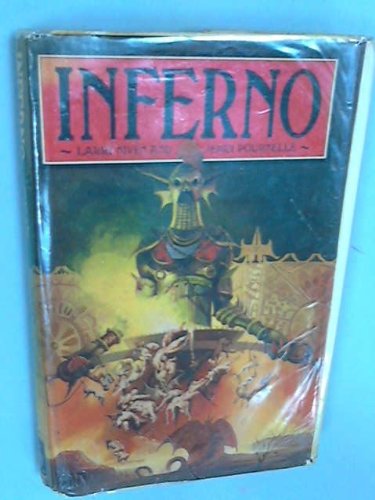
                • Cover of Inferno
                  Inferno

                  series · 2 books · 1976

                  similar byfantasydarkafterlife & underworld

                  In Inferno, Larry Niven and Jerry Pournelle send a science fiction writer to his death and drop him into a modern-dress version of Dante's nine circles of Hell, where he must reason his way toward understanding why he has been damned. The 1976 novel was nominated for both the Hugo and Nebula awards, and the authors returned to the same character decades later in a sequel, Escape from Hell. Together the two books form a self-contained pair rather than an open-ended series.

                • Cover of Katabasis
                  Katabasis

                  R. F. Kuang · standalone novel · 2025

                  similar byfantasydarkafterlife & underworld

                  Katabasis is a 2025 fantasy novel by American writer R. F. Kuang. It was released on August 26, 2025. The novel follows two magicians, doctoral candidates, who must venture into hell to save their thesis advisor in order to receive letters of recommendation.

                • Cover of To Reign in Hell
                  To Reign in Hell

                  Steven Brust · standalone novel · 1984

                  similar byfantasydarkafterlife & underworld

                  To Reign in Hell is a 1984 fantasy novel by American writer Steven Brust. It deals with the revolt of angels in Heaven from a point of view that casts Satan as a sympathetic protagonist. The novel appears to be heavily influenced by John Milton's Paradise Lost.

                • Cover of Gormenghast
                  Gormenghast

                  series · 6 books · 1946

                  completed

                  similar bydarkfantasy

                  Gormenghast is a fantasy series by British author Mervyn Peake, about the inhabitants of Castle Gormenghast, a sprawling, decaying, Gothic structure. Originally conceived as a single on-going novel, the series was ended by Peake's death and comprises three novels: Titus Groan (1946), Gormenghast (1950) and Titus Alone (1959); and a novella, Boy in Darkness (1956). Peake was writing a fourth novel, Titus Awakes, at the time of his death in 1968. The book was completed by Peake's widow Maeve Gilmore in the 1970s, but was not published until 2011 after it was discovered by their family.

                • Cover of A Song of Ice and Fire
                  A Song of Ice and Fire

                  series · 14 books · 1996

                  part of World of Ice and Fire

                  similar bydarkfantasy

                  A Song of Ice and Fire is a series of high fantasy novels by the American author George R. R. Martin. Martin began writing the first volume, A Game of Thrones, in 1991, and published it in 1996. Martin, who originally envisioned the series as a trilogy, has released five out of seven planned volumes. The most recent entry in the series, A Dance with Dragons, was published in 2011. Since then, Martin has been working on the sixth novel, titled The Winds of Winter. A seventh novel, A Dream of Spring, is planned to follow.

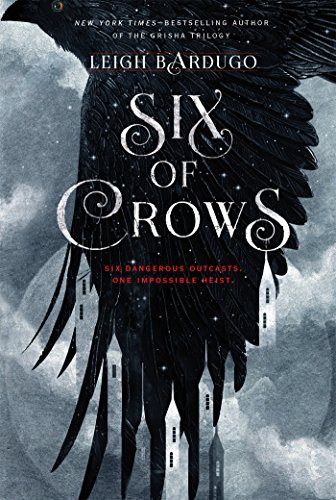
                • Cover of Six of Crows
                  Six of Crows

                  series · 3 books · 2015

                  part of Grishaverse

                  similar byfantasydark

                  Leigh Bardugo's Six of Crows duology (2015-2016) follows a crew of six criminal teenagers in Ketterdam, a city modeled on the Dutch Republic, as they pull off a near-impossible heist and then deal with its fallout. Told from multiple points of view, the books lean on the found-family bond between the crew members as much as the caper plotting, and sit within Bardugo's wider Grishaverse alongside her Shadow and Bone books.

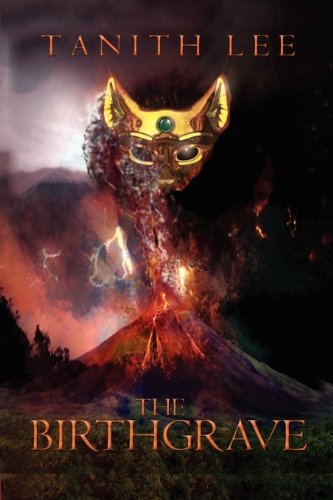
                • Cover of Birthgrave
                  Birthgrave

                  series · 3 books · 1975

                  completed

                  similar byfantasydark

                  Tanith Lee's Birthgrave trilogy (The Birthgrave, Vazkor Son of Vazkor, Quest for the White Witch, 1975-1978) opens with an amnesiac woman waking inside a volcano with no memory of who she is, and follows her journey through a brutal, quasi-medieval world in search of her identity, wielding strange powers she doesn't understand along the way. She eventually learns she is one of the last of the Old Ones, an ancient, nearly extinct people, and must reckon with the harm her own vanished civilization once did.

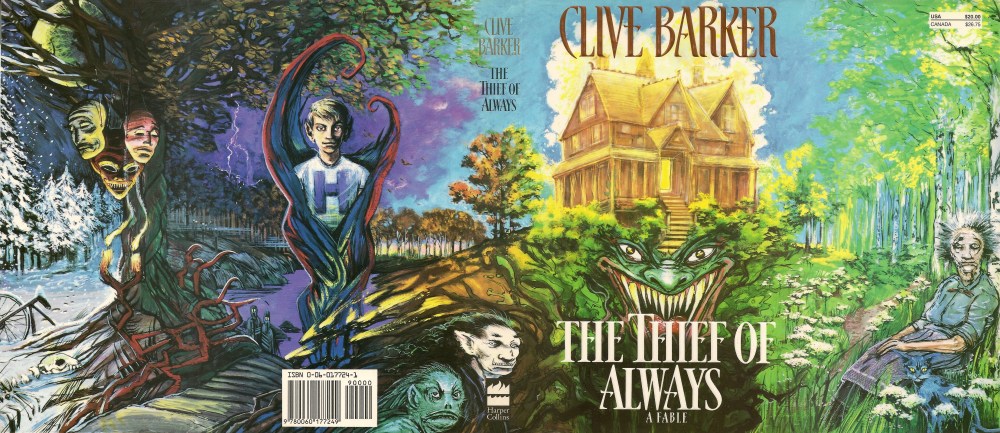
                • Cover of The Thief of Always
                  The Thief of Always

                  Clive Barker · standalone novel · 1992

                  similar byfantasydark

                  Ten-year-old Harvey Swick is bored out of his mind when a stranger named Rictus offers him a way out: Holiday House, a place where every season of the year -- Christmas, Halloween, summer -- arrives in a single glorious day, one after another. Once inside, Harvey meets fellow children Wendell and Lulu, the elderly caretaker Mrs. Griffin and her cats, and settles into a routine of enchantment that starts to feel too perfect. Their host, the mysterious Mr. Hood, never appears, rumors about a figure called Carna keep surfacing, and something in the nearby lake is very wrong. One of Clive Barker's best-known standalone books, written for younger readers.

                • Cover of Prospero and Roger Bacon
                  Prospero and Roger Bacon

                  series · 2 books · 1969

                  completed

                  similar byfantasydark

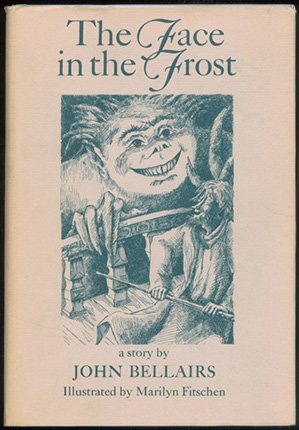
                  The Face in the Frost, John Bellairs's only adult fantasy novel, follows two aging wizards, Prospero and Roger Bacon, as they track down a rising magical evil that has started to unravel the world around them. Ursula K. Le Guin praised how quickly the book tips from whimsy into genuine nightmare and back; it stands alone rather than launching a series, unlike the children's books Bellairs is now best known for.

                • Cover of Lost Gods
                  Lost Gods

                  Brom · standalone novel · 2016

                  similar byfantasydarkafterlife & underworld

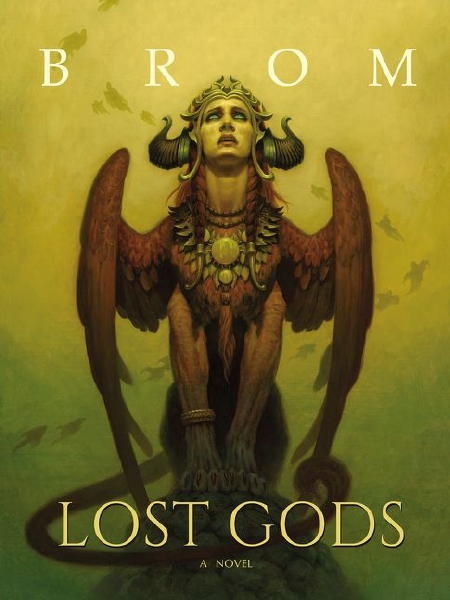
                  A young man descends into Purgatory to save his wife and unborn child in this vividly, illustrated novel of wonder and terror. (text from BromArt.com )

                • Cover of Wheel of the Infinite
                  Wheel of the Infinite

                  Martha Wells · standalone novel · 2000

                  similar byfantasydark

                  Wheel of the Infinite is a 2000 fantasy novel by Martha Wells. It was first published by Eos/HarperCollins.

                • TC
                  Thomas Covenant the Unbeliever

                  series · 11 books · 1977

                  similar bydarkfantasy

                  The Chronicles of Thomas Covenant is a series of ten high fantasy novels written by American author Stephen R. Donaldson. The series began as a trilogy, The Chronicles of Thomas Covenant the Unbeliever. This was followed by another trilogy, The Second Chronicles of Thomas Covenant, and finally a tetralogy, The Last Chronicles of Thomas Covenant.

                • Cover of Tender Morsels
                  Tender Morsels

                  Margo Lanagan · standalone novel · 2008

                  similar byfantasydark

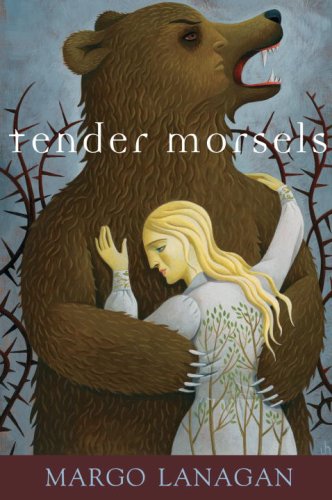
                  Tender Morsels (2008) is a novel by Australian author Margo Lanagan. It won the Ditmar Award in 2009 for Best Novel and was joint winner of the 2009 World Fantasy Award for Best Novel.

                • Cover of The Dark Star Trilogy
                  The Dark Star Trilogy

                  series · 2 books · 2019

                  similar byfantasydark

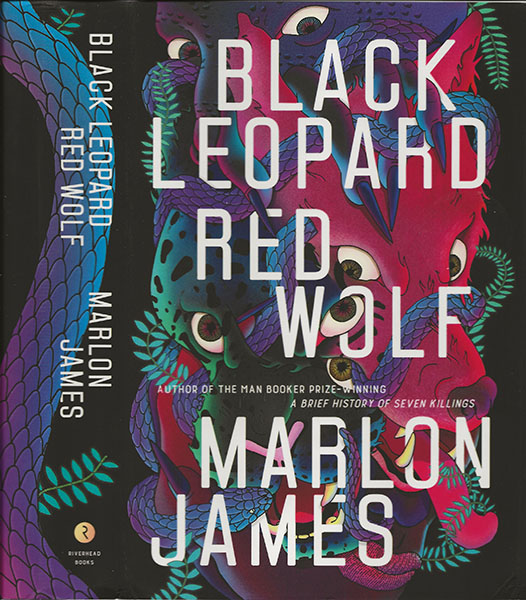
                  Marlon James's Dark Star Trilogy opens with Black Leopard, Red Wolf, in which a mercenary tracker is hired to find a missing boy and is drawn into a war between kingdoms across a continent built from African history and mythology. The second volume, Moon Witch, Spider King, retells much of the same span of time from the perspective of a rival witness, deliberately contradicting the first narrator's account. The trilogy is conceived as one conflict viewed through incompatible narrators rather than a linear continuation.

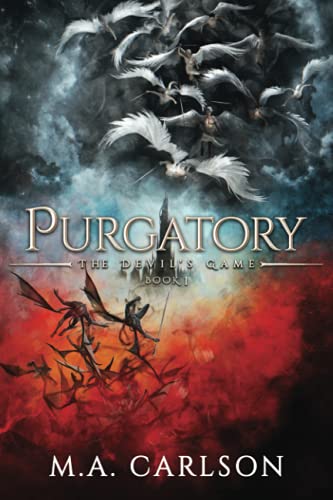
                • Cover of Purgatory: The Devil's Game
                  Purgatory: The Devil's Game

                  M. A. Carlson · standalone novel · 2021

                  similar byfantasydarkafterlife & underworld

                  ● "Every battle needs a battlefield, especially in the eternal struggle between good and evil. But the unfortunate souls who are sent here don't bide their time meekly awaiting judgment—they fight for their souls. Victor Goodspeed is a businessman, taken at the back end of his prime. He wasn't a bad man, but he was a businessman, which didn't tip the scales of morality in his favor. Now, he must fight for his life—his afterlife—with God and his armies of angels on one side, and the temptations of Lucifer and his minions on the other. Can Victor overcome these obstacles and secure his place in eternity?" ― quoted from this book's Amazon product page as of 2022-01-28.

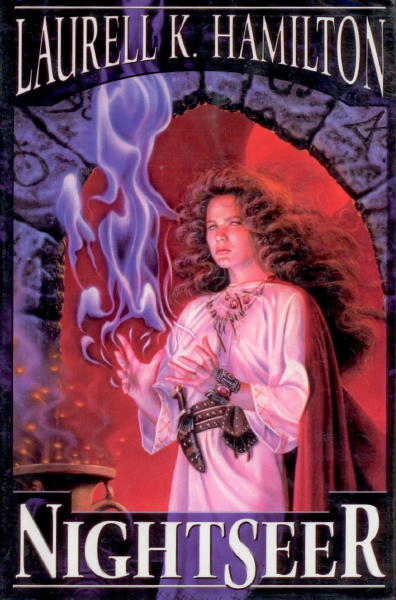
                • Cover of Nightseer
                  Nightseer

                  series · 5 books · 1989

                  similar byfantasydark

                  Laurell K. Hamilton's Nightseer (1992) follows Keleios, a half-elf seeking vengeance for her mother's murder, who is granted extraordinary powers along with a dangerous 'demonmark' that risks opening her to dark magic. A standalone fantasy adventure, it predates Hamilton's better-known Anita Blake and Merry Gentry series.

                • Cover of The House on the Borderland
                  The House on the Borderland

                  William Hope Hodgson · standalone novel · 1908

                  similar bydark+1 more

                  The House on the Borderland (1908) is a supernatural horror novel by British fantasist William Hope Hodgson. The novel is a hallucinatory account of a recluse's stay at a remote house, and his experiences of supernatural creatures and otherworldly dimensions.

                • Cover of Witches Steeped in Gold
                  Witches Steeped in Gold

                  series · 2 books · 2021

                  similar byfantasydark

                • Cover of Deeplight
                  Deeplight

                  Frances Hardinge · standalone novel · 2019

                  similar byfantasydark

                  Deeplight is a young adult fantasy novel by Frances Hardinge, published October 31, 2019 by Macmillan Children's Books. It is her 9th novel.

                • Cover of The Scholomance
                  The Scholomance

                  series · 3 books · 2020

                  similar byfantasydark

                  The Scholomance Trilogy is a series of three fantasy novels written by American author Naomi Novik. The books follow the adventures of Galadriel "El" Higgins during and after attending a dangerous and magical boarding school for wizards named after the magic school Scholomance from Romanian folklore.

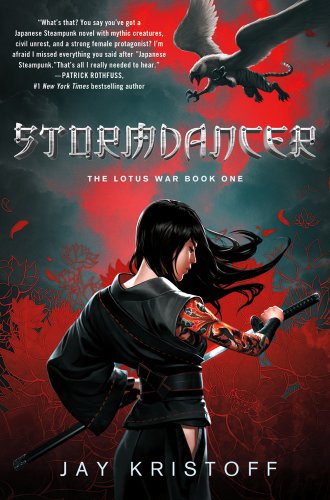
                • Cover of The Lotus War
                  The Lotus War

                  series · 4 books · 2012

                  similar byfantasydark

                  The Lotus War is Jay Kristoff's steampunk fantasy trilogy set in a pollution-choked, Japanese-inspired empire: Stormdancer (2012), Kinslayer and Endsinger, with the novella The Last Stormdancer as a coda. It follows a young woman who tames a griffin-like beast thought extinct, drawing her into a rebellion against the empire's oppressive Shogunate. It is a complete trilogy plus novella.

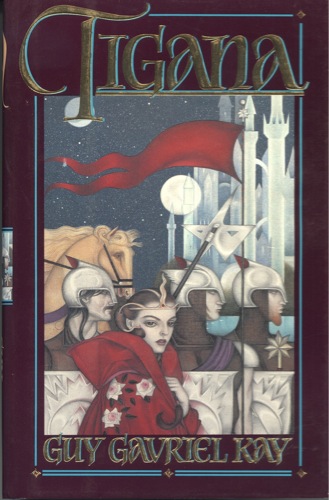
                • Cover of Tigana
                  Tigana

                  Guy Gavriel Kay · standalone novel · 1990

                  similar bydarkfantasy

                  Tigana is a 1990 fantasy novel by Canadian writer Guy Gavriel Kay. The novel is set in a region called the Peninsula of the Palm, which somewhat resembles Renaissance Italy as well as the Peloponnese in shape.

                • Cover of Skinjacker Trilogy
                  Skinjacker Trilogy

                  series · 4 books · 2006

                  similar byfantasyafterlife & underworld+1 more

                  Everlost strands two fourteen-year-olds, Nick and Allie, killed together in a car crash, in the afterlife-adjacent realm of Everlost — a shadow world where lost children (Afterlights) linger among perfect, unbroken echoes of buildings and places the living have destroyed or torn down. Neal Shusterman's Skinjacker trilogy takes its name from Allie's rare and dangerous power to "skinjack," or possess, the bodies of the living, which she and Nick explore across Everwild and Everfound as they try to understand what Everlost actually is.

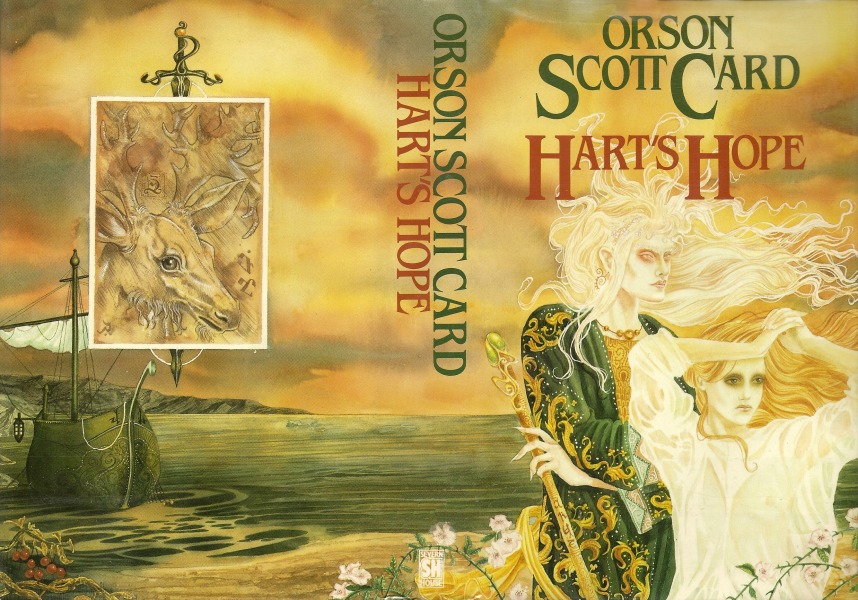
                • Cover of Hart's Hope
                  Hart's Hope

                  Orson Scott Card · standalone novel · 1983

                  similar byfantasydark

                  Hart's Hope (1983) is a fantasy novel by American writer Orson Scott Card. It is written in second person.