More like It's Only Temporary
anchored on:science fictionpost-apocalypticsurvivalour worldnear futuredark+1 more
but
- The Fireman
Joe Hillstandalone novel2016
similar bysurvivalour worldnear futurescience fictionpost-apocalypticdark
The Fireman is a novel set in a post-apocalyptic time by American author Joe Hill. The novel, Hill's fourth, tells the tale of a deadly spore that has infected most of the world's population. Hill first spoke of the novel in 2013 in promotional interviews for his then-new novel NOS4A2. The novel was released on May 17, 2016.
- Z for Zachariah
Robert C. O'Brienstandalone novel1975
similar bysurvivalour worldnear futurescience fictionpost-apocalyptic+1 more
Sixteen-year-old Ann Burden, on an Amish family farm in an isolated valley, believes she is the only survivor of nuclear war and nerve gas. One day a man arrives in a "safe-suit" that he and others have recently developed.
- The Road
Cormac McCarthystandalone novel2006
similar bysurvivalnear futurepost-apocalypticdarksadscience fiction
In this post-apocalyptic novel, a father and his son walk alone through burned America. Nothing moves in the ravaged landscape save the ash on the wind. It is cold enough to crack stones, and when the snow falls it is gray. They sky is dark. Their destination is the coast, although they don't know what, if anything, awaits them there. They have nothing; just a pistol to defend themselves against the lawless bands that stalk the road, the clothes they are wearing, a cart of scavenged food--and each other. This book boldly imagines a future in which no hope remains, but in which the father and his son, "each the other's world entire," are sustained by love. It is an unflinching meditation on the worst and the best that we are capable of: ultimate destructiveness, desperate tenacity, and the tenderness that keeps two people alive in the face of total devastation.--From publisher description.
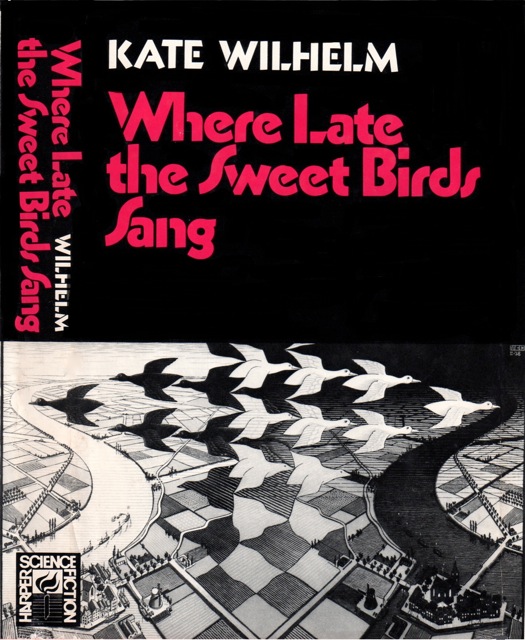
- Where Late the Sweet Birds Sang
Kate Wilhelmstandalone novel1976
similar bysurvivalour worldnear futurescience fictionpost-apocalypticdark
Where Late the Sweet Birds Sang is a science fiction novel by American writer Kate Wilhelm, published in 1976. The novel is composed of three parts, "Where Late the Sweet Birds Sang," "Shenandoah," and "At the Still Point," and is set in a post-apocalyptic era, a concept popular among authors who took part in the New Wave Science Fiction movement in the 1960s.
- Down to a Sunless Sea
David Grahamstandalone novel1979
similar bysurvivalour worldnear futurescience fictionpost-apocalypticdark
David Graham's Down to a Sunless Sea (1979) is a post-apocalyptic novel about a planeload of people during and after a short nuclear war, set in a near-future world where the USA is critically short of oil. The title of the book is taken from a line of the poem Kubla Khan by Samuel Taylor Coleridge.
- Wolf of Shadows
Whitley Strieberstandalone novel1985
similar bysurvivalour worldnear futurescience fictionpost-apocalypticdarksad
In the terrible aftermath of a nuclear holocaust, a wolf and a human woman form a mysterious bond that brings each close to the spirits of the shattered earth.
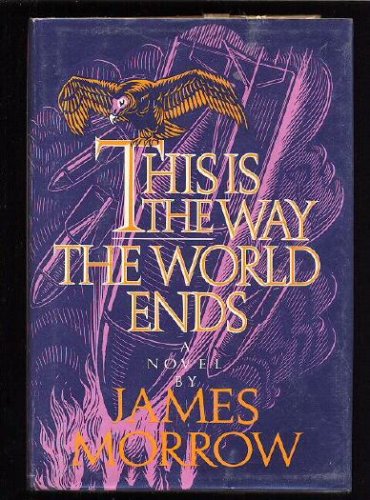
- This Is the Way the World Ends
James Morrowstandalone novel1986
similar bysurvivalour worldnear futurescience fictionpost-apocalypticdark
This Is the Way the World Ends is a post-apocalyptic novel by American writer James K. Morrow, published in 1986.
- I Am Legend
Richard Mathesonstandalone novel1954
similar bysurvivalour worldpost-apocalypticdarkscience fiction
The last human survivor of the vampire epidemic has to maintain his defences against their onslaught, while attempting to research the cause and possibly solution to the plague. Robert Neville is the last living man on Earth... but he is not alone. Every other man, woman and child on the planet has become a vampire, and they are hungry for Neville's blood. By day he is the hunter, stalking the undead through the ruins of civilization. By night, he barricades himself in his home and prays for the dawn. How long can a man survive like this?
- The Genocides
Thomas M. Dischstandalone novel1965
similar bysurvivalour worldnear futurescience fictiondarkpost-apocalyptic
The Genocides is a 1965 science fiction novel by American writer Thomas M. Disch, first published by Berkley Books as a Berkley Medallion paperback. It was Disch's first novel and was nominated for the Nebula Award for Best Novel for 1965.
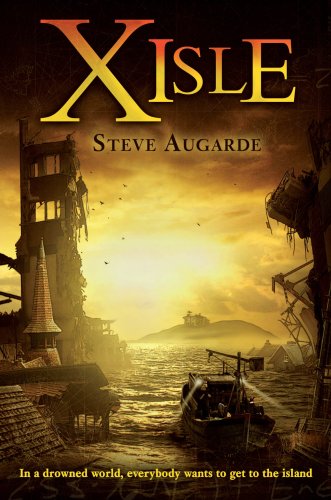
- X-Isle
Steve Augardestandalone novel2009
similar bysurvivalour worldnear futurescience fictionpost-apocalypticdark
X Isle is a young adult novel by Steve Augarde first published in 2009. It is set in the future, after floods have destroyed civilization. The novel follows the experiences of a boy named Baz on his arrival at "X Isle" from the equally miserable "mainland". The book has been nominated for the Carnegie Medal.
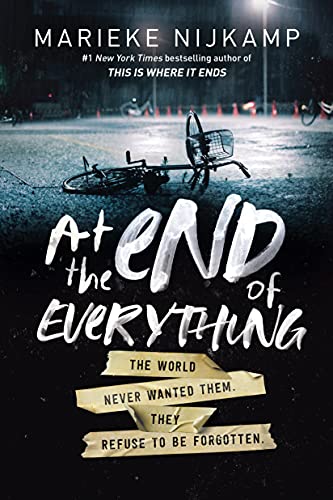
- At the End of Everything
Marieke Nijkampstandalone novel2022
similar bysurvivalour worldnear futurescience fictionpost-apocalypticdark
The Hope Juvenile Treatment Center is ironically named. No one has hope for the delinquent teenagers who have been exiled there; the world barely acknowledges that they exist. Then the guards at Hope start acting strange. And one day…they don't show up. But when the teens band together to make a break from the facility, they encounter soldiers outside the gates. There's a rapidly spreading infectious disease outside, and no one can leave their houses or travel without a permit. Which means that they're stuck at Hope. And this time, no one is watching out for them at all. As supplies quickly dwindle and a deadly plague tears through their ranks, the group has to decide whom among them they can trust and figure out how they can survive in a world that has never wanted them in the first place.
- The Hopkins Manuscript
R. C. Sherriffstandalone novel1939
similar bysurvivalnear futurescience fictiondarkour worldpost-apocalyptic
The Hopkins Manuscript is a dystopian science fiction novel by R. C. Sherriff, first published in 1939 by Victor Gollancz. In 1958 it was reissued in a revised edition as a Pan paperback under the title The Cataclysm. The novel was later republished under its original title by The Macmillan Company in 1963 and by Persephone Books in 2002.
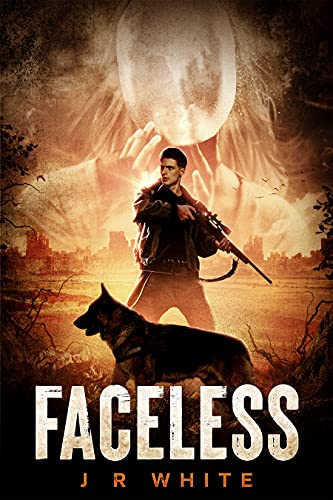
- Faceless
J. R. White (II)standalone novel2021
similar bysurvivalour worldnear futurescience fictionpost-apocalypticdarksad
● "The apocalypse wasn't the end, not for those who survived. Amidst the ruin of a crumbling world, Bash struggles to move on after the love of his life, Tempest, sacrificed herself to save him." ― quoted from this book's Amazon product page as of 2022-12-15.
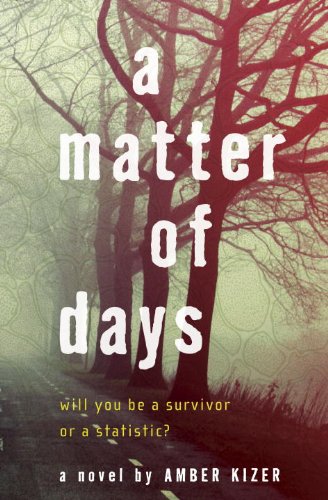
- A Matter of Days
Amber Kizerstandalone novel2013
similar bysurvivalour worldnear futurepost-apocalypticsadscience fiction+1 more
In the not-too-distant future when a global pandemic kills most of humanity, a teenaged girl and her younger brother struggle to survive.
- City at World's End
Edmond Hamiltonstandalone novel1951
similar bysurvivalour worldscience fictionpost-apocalypticdark
An experimental atomic weapons test in small-town America goes catastrophically wrong, hurling the entire town of Middletown, buildings, streets and all, untold ages into Earth's future, to a time when the sun is dying and humanity's last city struggles on beneath a darkening sky. Cut off from everything and everyone they knew, the townspeople have to find a way to survive in a world that has nothing left to spare for latecomers. Edmond Hamilton's novel strands a slice of mid-century America at the literal end of the world.
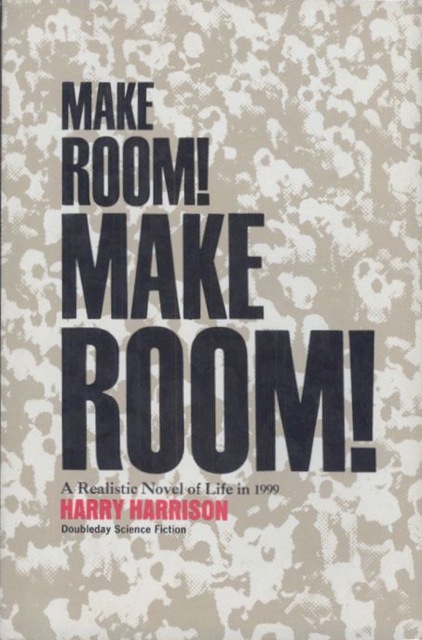
- Make Room! Make Room!
Harry Harrisonstandalone novel1966
similar bysurvivalour worldnear futurescience fictiondark
Make Room! Make Room! is a 1966 science fiction novel written by Harry Harrison exploring the consequences of both unchecked population growth on society and the hoarding of resources by a wealthy minority. It was originally serialized in Impulse magazine.
- Earthseed
series7 books1993
similar bysurvivalnear futurescience fictiondarkpost-apocalyptic
Octavia E. Butler's Earthseed novels, Parable of the Sower and Parable of the Talents, follow Lauren Olamina as she survives the collapse of a climate-ravaged, near-future United States and founds a belief system built on the idea that "God is Change." The two-book series was left unfinished at Butler's death; a planned third novel, Parable of the Trickster, was never completed. Later graphic-novel adaptations retell the same two stories rather than continuing the narrative.
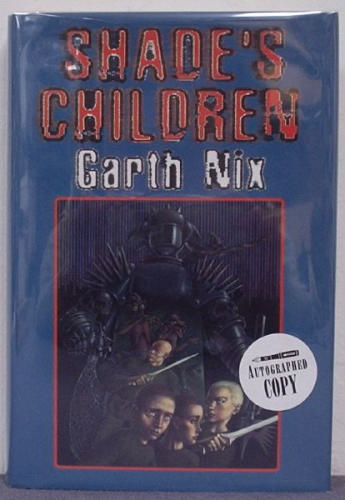
- Shade's Children milieu
series2 books1997
similar bysurvivalnear futurescience fictionpost-apocalypticdark+1 more
Shade's Children is set on an Earth where all adults vanished overnight fourteen years earlier, leaving children to be harvested at puberty by the machines that now run the world, unless they escape into hiding with Shade, a mysterious AI-like protector. Garth Nix's 1997 novel is a single, self-contained book rather than a series, though its bleak post-apocalyptic premise has drawn comparisons to his other work.
- Cell
Stephen Kingstandalone novel2006
similar bysurvivalour worldpost-apocalypticdarkscience fiction
In Cell, King taps into readers fears of technological warfare and terrorism. Mobile phones deliver the apocalypse to millions of unsuspecting humans by wiping their brains of any humanity, leaving only aggressive and destructive impulses behind. Those without cell phones, like illustrator Clayton Riddell and his small band of "normies," must fight for survival, and their journey to find Clayton's estranged wife and young son rockets the book toward resolution.
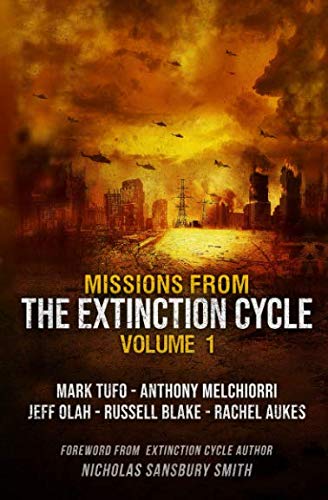
- Missions from the Extinction Cycle
series2 books2019
part of Extinction Cycle
similar bysurvivalour worldnear futurescience fictionpost-apocalypticdark
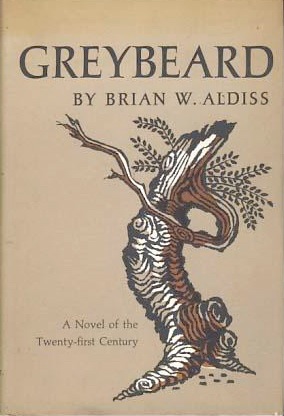
- Greybeard
Brian W. Aldissstandalone novel1964
similar bysurvivalour worldnear futurescience fictionpost-apocalyptic
Long after a catastrophe that has sterilized humans and most other mammals, the 54-year-old protagonists—Greybeard and Martha—take a tour of entropic England. In scattered self contained communities only the old survive, while outside these enclaves nature comes back into its own, peopling the land with new animal life.
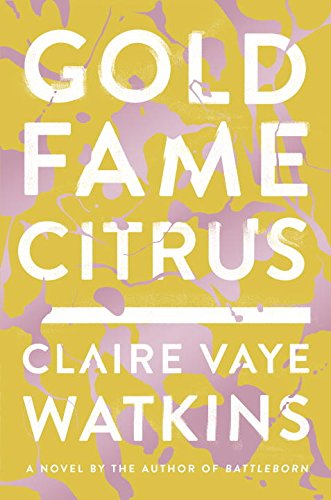
- Gold Fame Citrus
Claire Vaye Watkinsstandalone novel2015
similar bysurvivalour worldnear futurescience fictionpost-apocalypticdark
Gold Fame Citrus is a 2015 speculative fiction novel by Claire Vaye Watkins. It is her second book, but her first novel. The work received positive reviews.
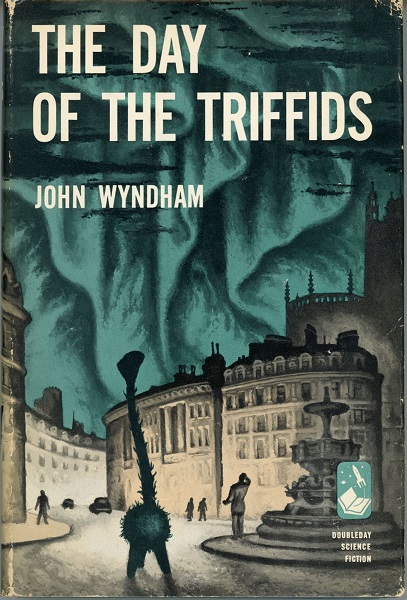
- The Triffids
series3 books1951
similar bysurvivalour worldscience fictiondarkpost-apocalyptic
John Wyndham's The Day of the Triffids (1951) opens with a meteor-shower-like event that leaves most of Britain's population blind, throwing civilization into collapse just as triffids, an aggressive and mobile species of poisonous plant, become free to hunt the helpless survivors. Simon Clark's authorized sequel The Night of the Triffids (2001) picks up a generation later, narrated by the original protagonist's son as he confronts a new triffid-dominated world, and John Whitbourn's The Age of the Triffids extends the shared setting further still. Together the three novels form a loose post-apocalyptic trilogy built on Wyndham's original premise rather than a tightly plotted single story.
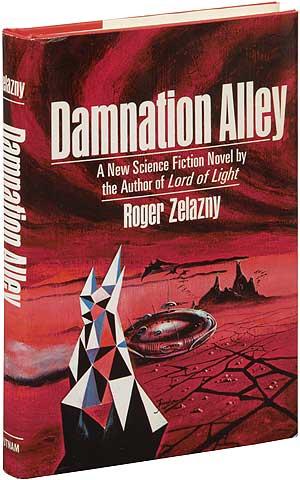
- Damnation Alley
Roger Zelaznystandalone novel1969
similar bysurvivalnear futurescience fictionpost-apocalyptic+1 more
Damnation Alley is a 1969 science fiction novel by American writer Roger Zelazny, based on a novella of the same name published in 1967. A film adaptation of the novel was released in 1977.