More like Jericho
but
- Blade Runner Universe
series6 books1968
similar bydarkscience fictionidentity+2 more
Philip K. Dick's 1968 novel Do Androids Dream of Electric Sheep? follows bounty hunter Rick Deckard as he tracks escaped androids through an irradiated, near-abandoned San Francisco, using the hunt to probe questions of empathy and what separates human from machine. The novel became the basis for Ridley Scott's 1982 film Blade Runner, and Marvel Comics later published an illustrated adaptation of that film. Together the two trace the story's path from prose original to screen and comic-page adaptation.
- The Hunger Games Universe
universe5 books2008
Start hereThe Hunger Games · Start here
similar bydarkscience fictiondystopiasurvivalrebellion and revolutionnorth americatense
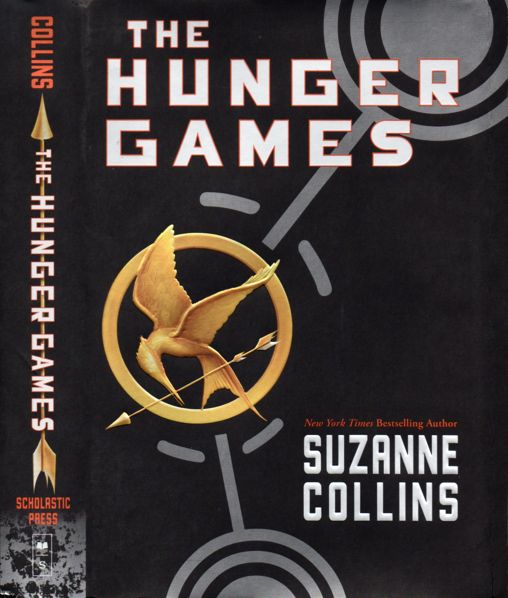
Panem, they call it now — a nation raised on the drowned bones of North America, a glittering Capitol ringed by twelve districts it once starved into obedience. Every year the Capitol collects its debt in children: two tributes from each district, drawn by lottery, dropped into an engineered arena, and made to kill one another on live television while the whole country is required to watch. This is the Hunger Games — entertainment, punishment, and government at once. Suzanne Collins tells it in a compact, unified body of work. The founding trilogy — The Hunger Games, Catching Fire, and Mockingjay — follows Katniss Everdeen, a girl from the coal-mining District 12 who volunteers in her sister's place and becomes something the Capitol never scripted. Two prequels reach back into the same machinery: The Ballad of Songbirds and Snakes traces a young Coriolanus Snow long before he is President, and Sunrise on the Reaping returns to District 12 a generation ahead of Katniss. Begin with the trilogy, in order — it is Katniss's voice, close and present-tense, that makes Panem breathe, and the prequels land hardest once you know how her story ends. Beneath the spectacle sits one steady, uncomfortable question: who profits when we agree to look away.
- The Hunger Games
series3 books2008
part of The Hunger Games Universe
similar bydarkscience fictiondystopiasurvivalrebellion and revolutionnorth americatense
The Hunger Games is a series of young adult dystopian novels written by American author Suzanne Collins. The series consists of a trilogy that follows teenage protagonist Katniss Everdeen, as well as two prequels. The Hunger Games universe is a dystopia set in Panem, a post-apocalyptic North American country consisting of the wealthy Capitol and 12 districts in varying states of poverty. As punishment for rebellion, the Capitol hosts an annual battle royale competition called The Hunger Games. Each of the 12 districts must send two children between the ages of 12 and 18 to participate, and the last surviving child is dubbed the victor.
- Ship Breaker
series3 books2010
similar bydarkscience fictionsurvivalnorth americatense+5 more
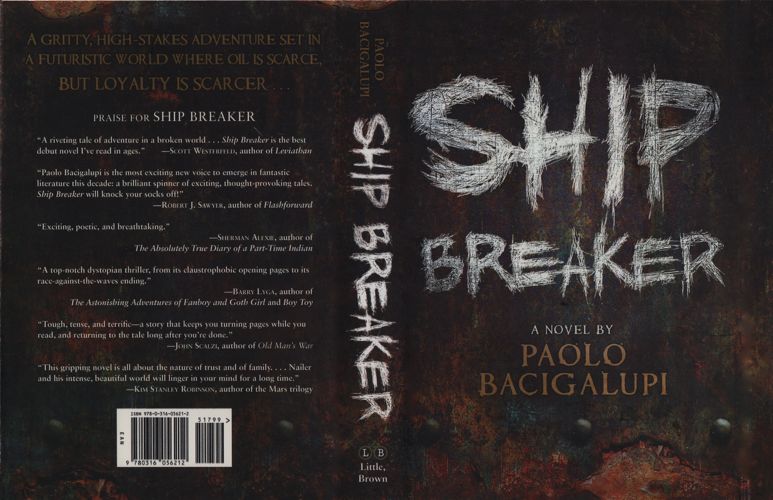
Nailer works a light-crew scavenging copper wire and scrap from beached oil tankers on a Gulf Coast reshaped by rising seas and vanished order, until a wrecked clipper ship washes ashore carrying a half-drowned girl from the wealthy world he'll never belong to. Paolo Bacigalupi's Ship Breaker follows Nailer as helping her pulls him out of his abusive father's orbit and into a much larger, more dangerous game involving her family's fortune. The sequels The Drowned Cities and Tool of War widen the same flooded, resource-scavenging future to new characters and coastlines.
- Unwind Dystology
series5 books2007
similar bydarkscience fictiondystopiarebellion and revolutionnorth americatensegenetic engineering+3 more
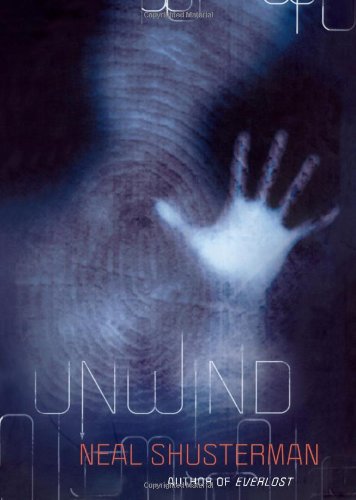
Neal Shusterman's Unwind Dystology opens in a United States reshaped by the resolution to a war over reproductive rights: parents can retroactively have a teenager "unwound," their body disassembled for transplant on the premise that nothing technically dies since every part lives on in someone else. The first novel follows three teens fleeing that fate, and the sequels widen the same dystopia's cast and consequences across a four-book arc plus companion material. It is grim speculative fiction built to ask hard bioethical questions rather than offer comfort.
- Divergent
series10 books2011
similar byscience fictiondystopiaidentitynorth americatense+2 more
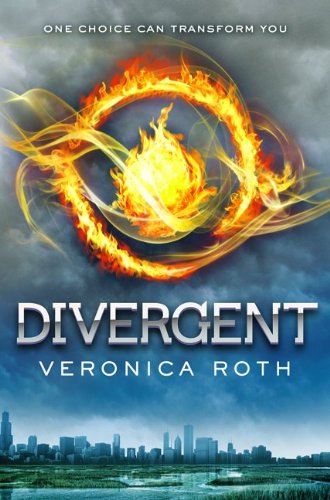
Divergent, also known as The Divergent Series, is a series of young adult dystopian novels by American novelist Veronica Roth set in a post-apocalyptic dystopian Chicago. The trilogy consists of Divergent (2011), Insurgent (2012), and Allegiant (2013). A related book, Four (2014), presents a series of short stories told from the perspective of one of the trilogy's characters, the male love interest Tobias. A later short story, We Can Be Mended (2018), serves as an epilogue five years after the events of the trilogy, again from Tobias/Four's perspective.
- I Am Legend
Richard Mathesonstandalone novel1954
similar bydarkscience fictiondystopiasurvivalour worldnorth americatense
The last human survivor of the vampire epidemic has to maintain his defences against their onslaught, while attempting to research the cause and possibly solution to the plague. Robert Neville is the last living man on Earth... but he is not alone. Every other man, woman and child on the planet has become a vampire, and they are hungry for Neville's blood. By day he is the hunter, stalking the undead through the ruins of civilization. By night, he barricades himself in his home and prays for the dawn. How long can a man survive like this?
- The Collected Science Fiction and Fantasy of Jack London
series6 books1906
completed
similar byscience fictionour world+5 more
- Maze Runner
series11 books2009
similar byscience fictiondystopiasurvivaltense+3 more
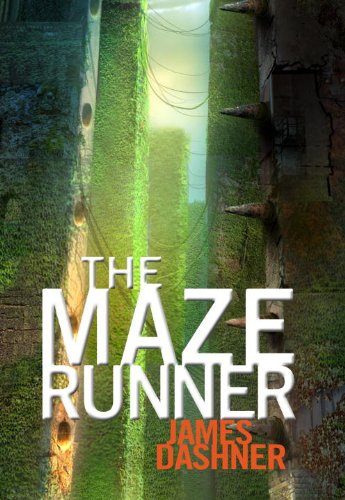
The Maze Runner is a series of young adult dystopian science fiction novels written by American author James Dashner. The series consists of the trilogy The Maze Runner (2009), The Scorch Trials (2010) and The Death Cure (2011), as well as two prequel novels, The Kill Order (2012) and The Fever Code (2016). A novella titled Crank Palace (2020) and a companion book titled The Maze Runner Files (2013) have also been released. A sequel trilogy in the series titled The Maze Cutter takes place 73 years following the events of The Death Cure and consists of the novels The Maze Cutter (2022), The Godhead Complex (2023), and The Infinite Glade (2025).
- Fahrenheit 451
series2 books1951
completed
similar byscience fictiondystopianorth america+2 more
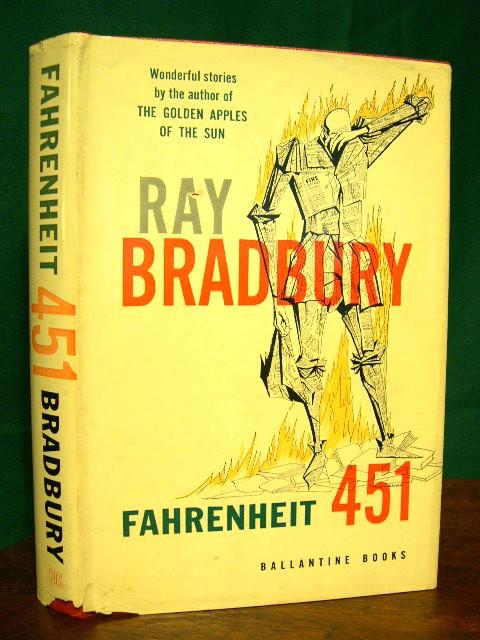
Fahrenheit 451 began life as "The Fireman," a novella Ray Bradbury published in 1951, which he then expanded into the full novel released in 1953 under its now-famous title. Set in a future where books are outlawed and firemen exist to burn them, it follows fireman Guy Montag as doubts about his job push him toward the very literature he's supposed to destroy. The novella and novel are one story's evolution rather than two separate books.
- The Idlewild Trilogy
series3 books2003
similar bydarkscience fictionsurvivalidentityour worldgenetic engineering+2 more
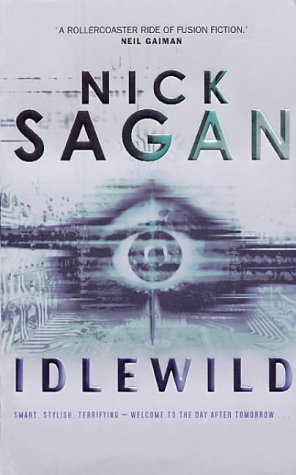
Nick Sagan's Idlewild trilogy opens with Idlewild (2003), a science-fiction novel that alternates between mid-21st-century interludes and events a generation later, following humanity's ten last survivors, cast in a modern mythological framework as god-like figures. It continues across Edenborn and Everfree.
- Shadow Children
series7 books1998
similar bydarkscience fictiondystopiasurvivalnorth americatense+2 more
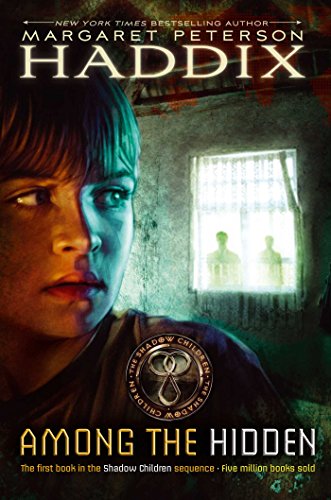
Shadow Children is a series of seven books by Margaret Peterson Haddix about a dystopian country which suffers food shortages due to a drought and the effects of the government's totalitarian attempts to control resources as a way to solidify its power. The Population Police enforce the government's Population Law, killing or imprisoning "shadow children," any child born after their first two siblings. In some cases, a parent may choose to forge a child's identification card so a shadow child can live a normal life.
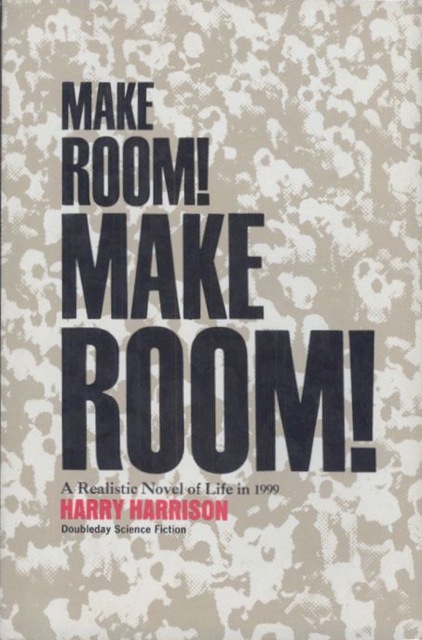
- Make Room! Make Room!
Harry Harrisonstandalone novel1966
similar bydarkscience fictiondystopiasurvivalour worldnorth americatense
Make Room! Make Room! is a 1966 science fiction novel written by Harry Harrison exploring the consequences of both unchecked population growth on society and the hoarding of resources by a wealthy minority. It was originally serialized in Impulse magazine.
- Cell
Stephen Kingstandalone novel2006
similar bydarkscience fictiondystopiasurvivalour worldnorth americatense
In Cell, King taps into readers fears of technological warfare and terrorism. Mobile phones deliver the apocalypse to millions of unsuspecting humans by wiping their brains of any humanity, leaving only aggressive and destructive impulses behind. Those without cell phones, like illustrator Clayton Riddell and his small band of "normies," must fight for survival, and their journey to find Clayton's estranged wife and young son rockets the book toward resolution.
- This Perfect Day
Ira Levinstandalone novel1970
similar bydarkscience fictiondystopiaidentityrebellion and revolutionour worldtense
This Perfect Day is a science fiction novel by American writer Ira Levin, about a technocratic dystopia. Levin won a Prometheus Award in 1992 for this novel. This Perfect Day is one of two Levin novels yet to be adapted to film.
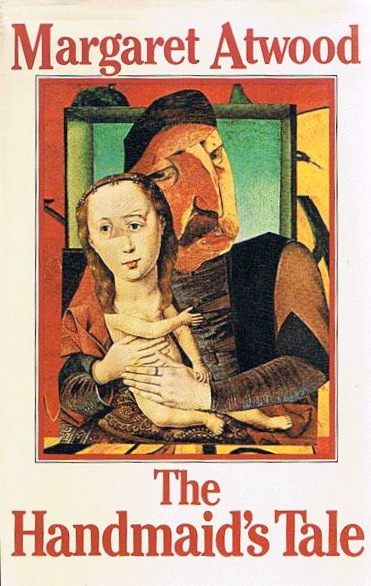
- The Handmaid's Tale
series3 books1985
similar bydarkscience fictiondystopiarebellion and revolutionnorth americatense
The Handmaid's Tale is Margaret Atwood's 1985 novel set in Gilead, a totalitarian theocracy that has overthrown the United States and forces fertile women into reproductive servitude as Handmaids; it is narrated by one such woman, Offred. Atwood returned to the world in her 2019 sequel The Testaments, set fifteen years later and narrated by three women, including the regime's Aunt Lydia. Together the two novels move from Gilead's grip on power toward the first cracks in it.
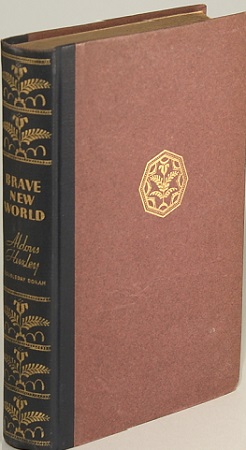
- Brave New World
series8 books1932
similar byscience fictiondystopia+4 more
Aldous Huxley's 1932 novel imagines a future World State where reproduction, social caste, and desire are all engineered before birth, and the population is kept content through conditioning, sleep-hypnosis, and a mood-altering drug called soma. The story follows the disruption this seemingly stable order suffers when an outsider raised beyond its reach is brought into it, exposing what the society traded away for comfort and order. Some editions pair the novel with Huxley's own 1958 nonfiction essay collection, Brave New World Revisited, which reassesses the book's ideas rather than continuing its story.
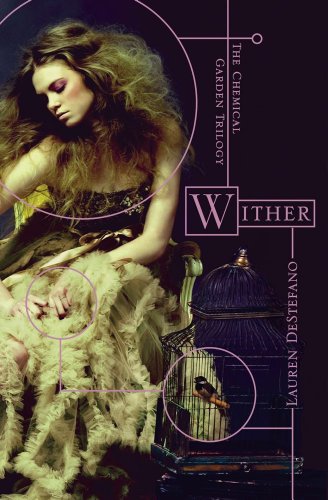
- The Chemical Garden Trilogy
series3 books2011
similar bydarkscience fictiondystopiasurvivalnorth americatensegenetic engineering+1 more
- Colony
Ben Bovastandalone novel1978
similar byscience fictiondystopiasurvivaltense+4 more
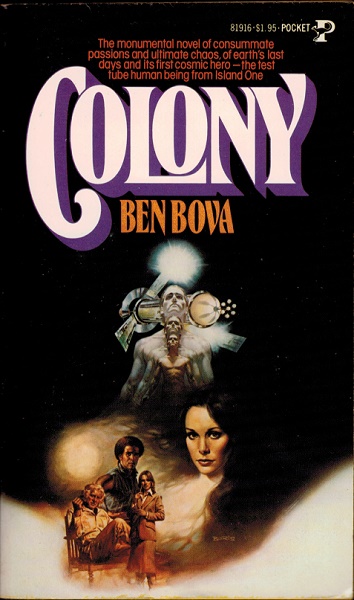
Colony continues the story Ben Bova began in Millennium, following astronaut-turned-administrator Chet Kinsman years later as the head of an orbiting space habitat that has become Earth's only real refuge from a planet buckling under overpopulation, food shortages and unrest. Getting a place in the habitat is a matter of life and death for millions who will never be chosen, and as Earth's governments grow more desperate to control or dismantle the colony outright, Kinsman has to decide how far he'll go to protect the world he's built off-world. Bova later folded both novels together into the omnibus The Kinsman Saga. Part of Ben Bova's Chet Kinsman series.
- Shade's Children milieu
series2 books1997
similar bydarkscience fictiondystopiasurvivalrebellion and revolutiontense+1 more
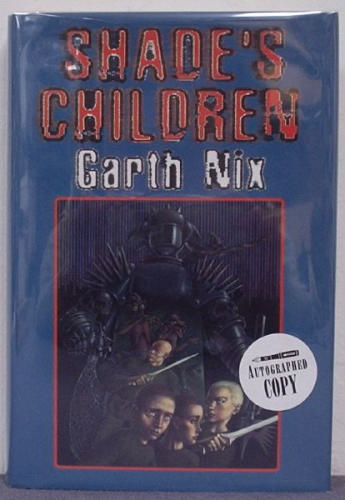
Shade's Children is set on an Earth where all adults vanished overnight fourteen years earlier, leaving children to be harvested at puberty by the machines that now run the world, unless they escape into hiding with Shade, a mysterious AI-like protector. Garth Nix's 1997 novel is a single, self-contained book rather than a series, though its bleak post-apocalyptic premise has drawn comparisons to his other work.
- Beyond This Horizon
Robert A. Heinleinstandalone novel1948
similar byscience fictiondystopiarebellion and revolutionour worldnorth americagenetic engineering+2 more
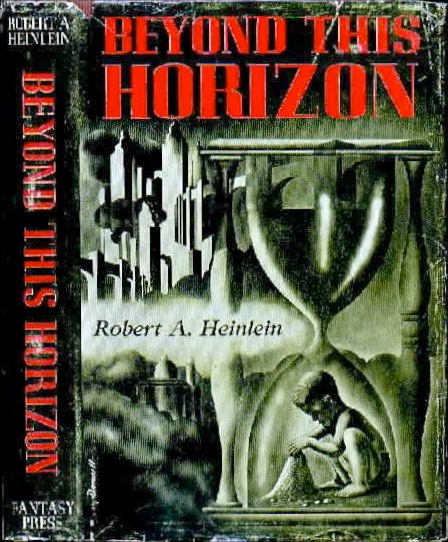
From the front flap of a 2001 Baen reprint: "Utopia has been achieved. For centuries, disease, hunger, poverty, and war have been things found only in the history tapes. And applied genetics has given men and women the bodies of athletes and a lifespan of over a century. They should all have been very happy... But Hamilton Felix is bored. And he is the culmination of a star line, each of his last thirty ancestors chosen for superior genes. Hamilton is, as far as genetics can produce one, the ultimate man. And this ultimate man can see no reason why the human race should survive, and has no intention of continuing the pointless comedy. However, Hamilton's life is about to become less boring. A secret cabal of revolutionaries who find utopia not just boring, but desperately in need of leaders who know just What Needs to be Done, are planning to revolt and put themselves in charge. Knowing of Hamilton's disenchantment with the modern world, they have recruited him to join their Glorious Revolution. Big mistake! The revolutionaries are about to find out that recruiting a superman was definitely not a good idea..."
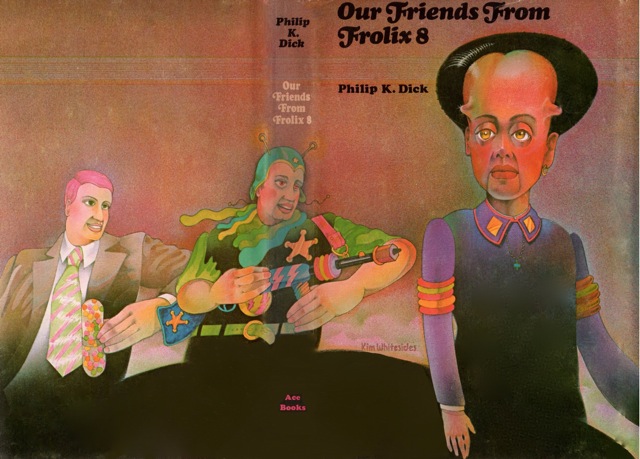
- Our Friends from Frolix 8
Philip K. Dickstandalone novel1970
similar byscience fictiondystopiarebellion and revolutionour worldtense+2 more
Our Friends from Frolix 8 is a science fiction novel by American writer Philip K. Dick. It was written from 1968 to 1969 and was published in 1970 by Ace Books. The novel is set in the 22nd century, when humanity is ruled by mutated humans, "New Men" and "Unusuals", while normal "Old Men" are discriminated against. The story follows Nick Appleton, a low-class Old Man worker who becomes a subversive to the system, and Willis Gram, the Unusual ruler of the Earth. Separately, resistance leader Thors Provoni has left the planet to find an ally to the Old Men, finally returning with an alien from far away in space. The novel is best known for a single scene where the characters discuss the dead body of God having been found in space.