Loreful
HomeDiscover
Search series, authors…⌘K
Loreful

Reading orders for SF/F series and shared universes — with your place kept in every one.

Explore

UniversesSeriesWorksAuthorsAtlas

Help

FAQAboutSite map

Account & legal

Sign inCreate accountPrivacyTerms

Data

Built on ISFDB, Wikipedia, Wikidata and Open Library. Curated reading orders carry their reasoning on the page; the rest follow publication order. Data sources & licenses

© Loreful · data: ISFDB · CC BY

More like Jerusalem

anchored on:literary & generalbritish isleschallengingmythic fantasyhistorical fictionafterlife & underworld+2 more

but

Mood

The mood the book leaves you in.

  • The reading experience is propelled by journeys, exploration, and physical risk; excitement and forward momentum dominate over dread or introspection.
  • Joy and loss are deliberately mixed; the resolution grants characters something real while taking something else away, leaving warmth and sorrow together.
  • The book demands work from the reader — dense prose, difficult structure, unfamiliar ideas, or morally uncomfortable material — as part of its intended effect.
  • Grim events, cruelty, or despair dominate the atmosphere, and the book does not soften them with comfort or comic relief.
  • The atmosphere is quietly unsettling — wrongness, unease, and the uncanny pervade the book without necessarily escalating into overt horror.
  • The book is built to move the reader; character feeling is foregrounded and major scenes aim at a strong emotional response.
  • Humor is a primary aim and the prose plays for laughs — comic situations, wit, or dialogue produce sustained comedy, not occasional levity.
  • The book insists that things can improve; effort and decency are shown to matter, and the arc bends toward better outcomes even through hardship.
  • The book teaches as it goes — real facts, history, science, or craft are conveyed in enough depth that learning is part of the reading experience.
  • The book is designed to uplift and motivate, presenting perseverance or achievement in a way that invites the reader to aspire or act.
  • The overall register is cheerful and easygoing; stakes are kept gentle and the book avoids dwelling on pain or dread.
  • Withheld information drives the experience; the book sustains enigmas and secrets the reader wants resolved, whatever its genre.
  • The book is contemplative and inward-looking, giving more weight to thought, memory, and meaning than to external events.
  • The book works as comfort reading — low tension, a soothing pace, and an atmosphere the reader can unwind in.
  • Grief, loss, or melancholy set the dominant register, and the book lets sorrow stand rather than resolving it into comfort.
  • Sustained suspense is the point; the book keeps the reader braced for what happens next through danger, pressure, or impending revelation.
  • Playful invention and charm define the register — fanciful conceits, light absurdity, and a narration that delights in its own oddity.

About

What the story runs on.

  • Stories centered on witches and the practice of witchcraft — covens, hedge magic, familiars, and the witch's place in her community.
  • Stories structured as a quest — a journey undertaken to find, deliver, or destroy something of great import.
  • Stories in which staying alive against nature, catastrophe, or scarcity is the central problem.
  • Stories of lovers kept apart by law, family, faith, or station, where the obstacle to love is the plot.
  • Stories in which a friendship — its making, testing, or loss — is the emotional center.
  • Stories of growing up — a young protagonist crossing from childhood into adult knowledge and responsibility.
  • Stories about who a character truly is — self-discovery, doubled lives, and the search for a self.
  • Stories about mourning — living through the death of a loved one and what loss does to the survivors.
  • Stories in which a buried family truth — hidden parentage, crimes, or shames — surfaces and reorders the present.
  • Stories driven by maneuvering for power — factions, conspiracies, and statecraft conducted in shadow.
  • Stories in which war itself is the subject — combat, occupation, and what warfare does to soldiers and civilians.
  • Stories organized around investigating a killing — the case, the clues, and the pursuit of the killer, in any genre's clothing.

Shelf

Where it sits in the library.

    • Fiction built on magic or other supernatural elements that have no scientific explanation.
    • Secondary-world fantasy at large scale, where the fate of nations or the world turns on the protagonists' struggle.
    • Fantasy set in a recognizably modern city or contemporary world where the supernatural intrudes on everyday life.
    • Fantasy that blends in horror's atmosphere and imagery, keeping a fantastical frame around grim or frightening material.
    • Action-driven fantasy following warriors or rogues with personal stakes against sorcerous threats, rather than world-spanning conflicts.
    • Fantasy set in a real historical period or a close analogue of one, with magic woven into the era.
    • Fantasy in which protagonists cross from the ordinary world into another world through a portal or similar passage.
    • Fiction that retells or reworks a traditional fairy tale in a new form or setting.
    • Fantasy drawing directly on myths, legends, and folklore, retelling them or building on their figures and logic.
    • Fantasy of ghosts, vampires, shapeshifters, psychics, and similar phenomena, usually set in an otherwise ordinary world.
    • Fiction mixing science-fictional trappings with overtly magical or impossible elements in one setting.
    • Low-stakes fantasy emphasizing comfort, community, and everyday pleasures over conflict and peril.
    • Speculative fiction of pervasive moral ambiguity, violence, and cynicism that rejects heroic conventions — fantasy and SF alike.
      • Fiction that extrapolates from science and technology — future societies, space travel, or speculative inventions — within at least nominally natural laws.
      • Science fiction of interstellar scope — starships, galactic polities, and adventure across star systems.
      • Science fiction committed to scientific rigor, where technical plausibility constrains the story.
      • Science fiction centered on armed forces and warfare, told largely from a military point of view.
      • Science fiction of networked, corporate-dominated near futures, pairing high technology with social decay.
      • Science fiction styled on nineteenth-century steam-powered technology, often in a Victorian or pseudo-Victorian setting.
      • Fiction depicting an oppressive or catastrophic society, presented as a warning.
      • Fiction set after civilization's collapse, following survivors in the ruins of the old world.
      • Fiction in which characters move between past and future, and the mechanics or consequences of that travel drive the plot.
      • Fiction exploring a world where a historical event went differently and history diverged from ours.
      • Science fiction about humanity's first encounter and communication with an alien intelligence.
      • Science fiction in which extraterrestrial forces attack or occupy Earth and humanity resists.
      • Fiction whose primary aim is to frighten or unsettle the reader through dread, menace, or the monstrous.
      • Horror of vast, indifferent, incomprehensible entities before which humanity is insignificant, in the Lovecraft tradition.
      • Horror of decaying houses, buried family secrets, and oppressive atmosphere in the Gothic literary tradition.
      • Horror centered on hauntings and the returning dead.
      • Horror located in the mind — paranoia, obsession, and unreliable perception rather than external monsters.
      • Horror built around the reanimated dead and survival amid their outbreaks.
      • Horror defined by explicit, transgressive gore that refuses to cut away from violence.
      • Speculative fiction of the strange and uncanny that resists both natural explanation and standard genre categories.
      • Fiction organized around solving a crime or puzzle, typically following an investigator toward the identification of a culprit.
      • A puzzle-first mystery that lays out clues so the culprit's identity can be deduced before the reveal.
      • Crime fiction of moral ambiguity, fatalism, and hard-edged style, set among the corrupt and the doomed.
      • A mystery following the realistic routines of police work — forensics, interviews, and case-building.
      • A gentle mystery with an amateur sleuth, a small community, and violence kept off the page.
      • A mystery set in a past era, where the investigation works within that period's methods and society.
      • Fast-paced fiction driven by imminent danger, pursuit, or high-stakes conspiracy, built to sustain tension.
      • A thriller of espionage — agents, tradecraft, and intelligence services in conflict.
      • A thriller centered on lawyers and the courtroom, where litigation carries the suspense.
      • A thriller driven by detailed contemporary or near-future technology, often military or scientific.
      • A thriller whose tension comes from mental states and manipulation between characters rather than external action.
      • Fiction whose central plot is a romantic relationship and its development toward an emotionally satisfying resolution.
      • Romance in which one or both partners are supernatural beings, blending fantasy elements into the love story.
      • A fantasy-romance hybrid in which the romantic arc and the fantasy plot carry equal weight.
      • Romance set in a past era, with courtship shaped by the period's society and manners.
      • Romance set in the present day, without supernatural or historical elements.
      • Fiction set in a real past period, where the historical setting materially shapes characters and events.
        • General and literary fiction emphasizing prose style, character interiority, or formal ambition over genre plot conventions.
        • Fiction in a realistic world where magical events occur and are treated as ordinary, in the tradition of Latin American literature.
        • Fiction that ridicules people, institutions, or society in order to criticize them.
        • Fiction of dreamlike, irrational imagery and logic that breaks from realistic representation.
        • Fiction that plays with narrative convention through metafiction, fragmentation, and self-reference.
        • Fiction propelled by journeys, exploration, and physical peril, where action and survival carry the plot.
        • Adventure fiction of ships and seafaring — naval engagements, voyages, and life at sea.
        • Fiction of the American frontier West — gunmen, ranchers, and lawmen, typically in the late nineteenth century.
        • Fiction centered on soldiers, campaigns, and the experience of warfare, historical or imagined.
          • Fiction written primarily to amuse, using comedic situations, wit, or parody as its organizing principle.
            • Multi-generational fiction following a family or dynasty across decades, with inheritance and kinship as the through-line.
              • Fiction whose world runs on explicit game mechanics — levels, stats, and skills that characters can see and exploit.
                • Fiction about costumed or superpowered heroes and their conflicts with comparable villains.

                Practical

                How long a commitment, whether it stands alone, and whether it has finished.

                Tap a chip to ask for it · tap again to rule it out · once more to clear. Numbers show what would be left.

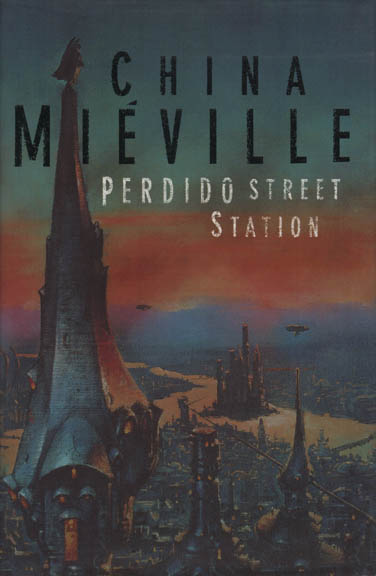
                • Cover of New Crobuzon
                  New Crobuzon

                  series · 4 books · 2000

                  similar bychallengingfantasy+2 more

                  The New Crobuzon books are three standalone novels by China Miéville set in and around New Crobuzon, a vast, corrupt industrial city in his invented world of Bas-Lag where magic, biopunk technology, and several sentient species coexist. Perdido Street Station follows a renegade scientist and his lover after an experiment unleashes something monstrous on the city, while The Scar and Iron Council return to the same setting with different casts and only loose continuity between books.

                • Cover of Erewhon
                  Erewhon

                  series · 4 books · 1872

                  completed

                  similar byclass conflictliterary & general+2 more

                • Cover of Cloud Atlas
                  Cloud Atlas

                  David Mitchell · standalone novel · 2004

                  similar bychallengingliterary & generalmultiple povhistorical fictionbritish isles+1 more

                  Cloud Atlas, published in 2004, is the third novel by British author David Mitchell. The book combines metafiction, historical fiction, contemporary fiction and science fiction, with interconnected nested stories in different writing styles that take the reader from the remote South Pacific in the 19th century to the island of Hawaii in a distant post-apocalyptic future. Its title references a piece of music by Toshi Ichiyanagi.

                • Cover of The Infernal Desire Machines of Doctor Hoffman
                  The Infernal Desire Machines of Doctor Hoffman

                  Angela Carter · standalone novel · 1972

                  similar bychallengingliterary & general+2 more

                  The Infernal Desire Machines of Doctor Hoffman, published in the United States as The War of Dreams, is a 1972 novel by Angela Carter. This picaresque novel is heavily influenced by surrealism, Romanticism, critical theory, and other branches of Continental philosophy. Its style is an amalgam of magical realism and postmodern pastiche. The novel has been called a theoretical fiction, as it clearly engages in some of the theoretical issues of its time, notably feminism, mass media and the counterculture.

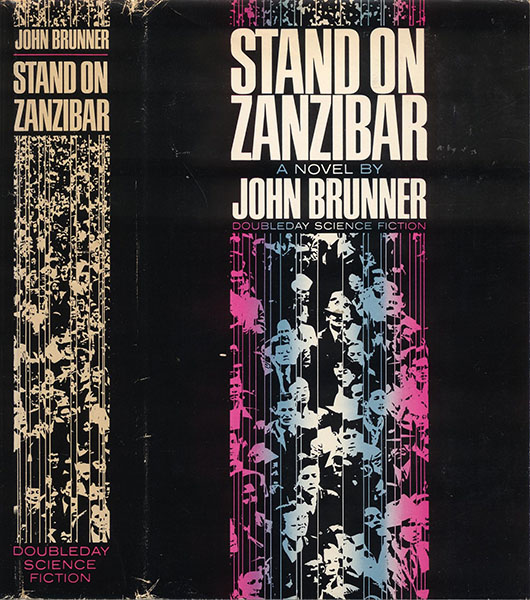
                • Cover of Stand on Zanzibar
                  Stand on Zanzibar

                  John Brunner · standalone novel · 1968

                  similar bychallengingmultiple povbig city+1 more

                  Stand on Zanzibar is a dystopian New Wave science fiction novel written by John Brunner and first in part published in New Worlds magazine in 1967 and in book form in 1968. The book won a Hugo Award for Best Novel at the 27th World Science Fiction Convention in 1969, as well as the 1969 BSFA Award and the 1973 Prix Tour-Apollo Award.

                • Cover of Gravity's Rainbow
                  Gravity's Rainbow

                  Thomas Pynchon · standalone novel · 1973

                  similar bychallengingliterary & generalmultiple povbritish isles+1 more

                  Gravity's Rainbow is a 1973 postmodern novel by Thomas Pynchon. The narrative is set primarily in Europe at the end of World War II and centers on the design, production and dispatch of V-2 rockets by the German military. In particular, it features the quest undertaken by several characters to uncover the secret of a mysterious device, the Schwarzgerät, which is slated to be installed in a rocket with the serial number "00000".

                • Cover of Millennium People
                  Millennium People

                  J. G. Ballard · standalone novel · 2003

                  similar byclass conflictchallengingliterary & generalbritish islesbig city

                  Millennium People is a novel by British writer J. G. Ballard, published in 2003. The novel is the story of a rebellion in the middle classes in an enclave of Greater London.

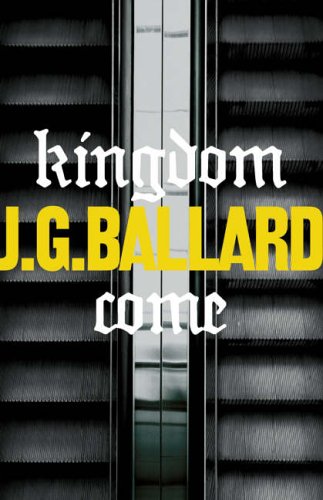
                • Cover of Kingdom Come
                  Kingdom Come

                  J. G. Ballard · standalone novel · 2006

                  similar bychallengingliterary & generalbritish islesbig city+1 more

                  In contemporary Britain, the suburban population falls prey to a combination of boredom, consumerism, xenophobia, sports hooliganism, and resentment of authority leading to the rise of a new fascism centered around a giant enclosed shopping mall.

                • Cover of Red Shift
                  Red Shift

                  Alan Garner · standalone novel · 1973

                  similar bychallengingliterary & generalbritish isleshistorical fiction+1 more

                  Quoting that 1978 review article by Brian Lee: Red Shift [after The Owl Service] was again about the relationship between two adolescents, but interwoven in their love story were two other strands: one about a group of Roman legionaires 'going tribal' among warring factions of the British (the parallel and the brutal language are obviously those of the Americans among the Viet Cong and the Viet Minh); the other strand is about the massacre of a village on the Welsh border during the Civil War.{{BREAK}} Undoubtedly, Red Shift is a brilliantly written and gripping book. The difficulty about it is that Garner makes no concessions to his readers (and on the book jacket he makes it clear that it is for children). It is told almost entirely in cryptic conversation with minimal clues to the identity of the speakers. He switches from strand to strand of the story without warning. The book cannot be understood and appreciated at one hasty reading. It is worth serious study, but will children persevere? In her introduction to the 1973 edition of Children's Books of the Year, critic and reviewer Elaine Moss says: Spurred on by the publication of Alan Garner's literary crossword puzzle Red Shift ... many of us asked ourselves where children's publishing should end and adult begin? For Children's Books of the Year I have drawn the line below Red Shift and excluded it ... Alan Garner, in deliberately choosing an avant-garde form, is also choosing an advanced, sophisticated audience for his book. Alan Garner himself seems to have come around to this view. This year a television adaptation of Red Shift was screened at peak viewing time with no mention of the fact that it was originally published as a children's novel. [end quotation from the review article; ellipses by Lee]

                • Cover of Neveryon
                  Neveryon

                  series · 19 books · 1979

                  similar bychallenging+2 more

                  Return to Nevèrÿon is a series of eleven sword and sorcery stories by Samuel R. Delany, originally published in four volumes during the years 1979–1987. Those volumes are:Tales of Nevèrÿon Neveryóna, or: The Tale of Signs and Cities Flight from Nevèrÿon Return to Nevèrÿon

                • Cover of Ann Veronica
                  Ann Veronica

                  H. G. Wells · standalone novel · 1909

                  similar bychallengingliterary & generalbritish isleshistorical fiction+1 more

                  Ann Veronica is a New Woman novel by H. G. Wells published in 1909. It describes the rebellion of Ann Veronica Stanley, a 21-year-old woman, against her middle-class father's stern patriarchal rule. The novel dramatizes the contemporary problem of the New Woman. It is set in Edwardian era-London and environs, except for an Alpine excursion. Ann Veronica offers vignettes of the women's suffrage movement in Great Britain and features a chapter inspired by the Grille Incident, a 1908 attempt of suffragettes to storm Parliament.

                • Cover of Super-Cannes
                  Super-Cannes

                  J. G. Ballard · standalone novel · 2000

                  similar byclass conflictchallengingliterary & generalbig city

                  Super-Cannes is a novel by the British author J. G. Ballard, published in 2000. It picks up on the same themes as his earlier Cocaine Nights, and has often been called a companion piece to that book. This is the third time that the author has used the concept of a closed society, a privileged community completely shut off from the outside world, as the theme for one of his novels, after High-Rise and Running Wild (novella).

                • Cover of The Book of All Hours
                  The Book of All Hours

                  series · 2 books · 2005

                  similar bychallengingmultiple povfantasy+1 more

                • Cover of Ragtime
                  Ragtime

                  E. L. Doctorow · standalone novel · 1975

                  similar byclass conflictliterary & generalhistorical fictionbig city+1 more

                  Ragtime is a 1975 historiographic metafiction novel by American author E. L. Doctorow. The novel mixes historical figures and fictional characters together in a sweeping narrative set in the New York City area from 1902 to 1915. With its layered storyline, Ragtime explores themes of racial injustice, class division, and the American Dream in American society.

                • Cover of Cards of Identity
                  Cards of Identity

                  Nigel Dennis · standalone novel · 1955

                  similar byclass conflictchallengingliterary & generalbritish isles

                  Cards Of Identity is a novel by Nigel Dennis, first published in 1955 by Weidenfeld & Nicolson in the UK and Vanguard Press in the US. A satire on psychology, identity theory and class prejudice, the novel is centred on the Identity Club, a group of men who call themselves psychologists and meet once a year to present case histories promoting their chosen theory of identity. The case histories are in fact fictional representations of a character in line with their theoretical biases, rather than analyses of real patients. Surrounding this plot is the story of the local townspeople, who are brainwashed into being servants for the Identity Club. The book culminates with the performance of a pastiche Shakespearian play, The Prince of Antioch.

                • Cover of Babel, or, The Necessity of Violence: An Arcane History of the Oxford Translators' Revolution
                  Babel, or, The Necessity of Violence: An Arcane History of the Oxford Translators' Revolution

                  R. F. Kuang · standalone novel · 2022

                  similar byclass conflictchallengingbritish islesfantasy

                  Babel, or The Necessity of Violence: An Arcane History of the Oxford Translators' Revolution is a 2022 novel of speculative fiction by R. F. Kuang set in a fantastical version of Oxford in 1830s England. Thematically similar to The Poppy War (2018–20), Kuang's first book series, the book criticizes British imperialism, racism and capitalism, and the complicity of academia, knowledge, and language in perpetuating and enabling them.

                • Cover of Atlas Shrugged
                  Atlas Shrugged

                  Ayn Rand · standalone novel · 1957

                  similar bychallengingclass conflict

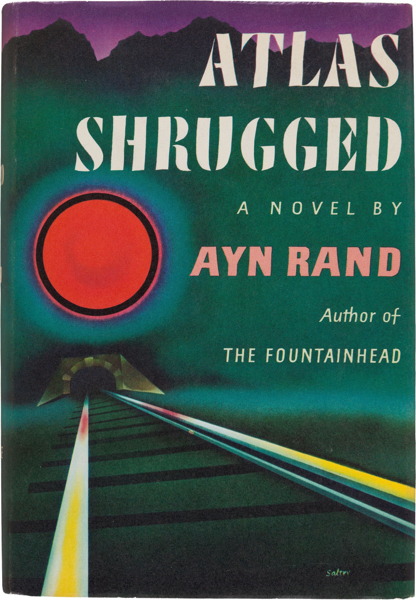
                  Atlas Shrugged is a 1957 novel by Ayn Rand. It is her longest novel, the fourth and final one published during her lifetime, and the one she considered her magnum opus in the realm of fiction writing. She described the theme of Atlas Shrugged as "the role of man's mind in existence" and it includes elements of science fiction, mystery, and romance. The book explores a number of philosophical themes from which Rand would subsequently develop Objectivism, including reason, property rights, individualism, rational egoism, and laissez-faire capitalism and depicts what Rand saw as the evil of altruism and governmental coercion. Of Rand's works of fiction, it contains her most extensive statement of her philosophical system.

                • Cover of Angel Down
                  Angel Down

                  Daniel Kraus · standalone novel · 2025

                  similar bychallengingangelshistorical fictionliterary & general

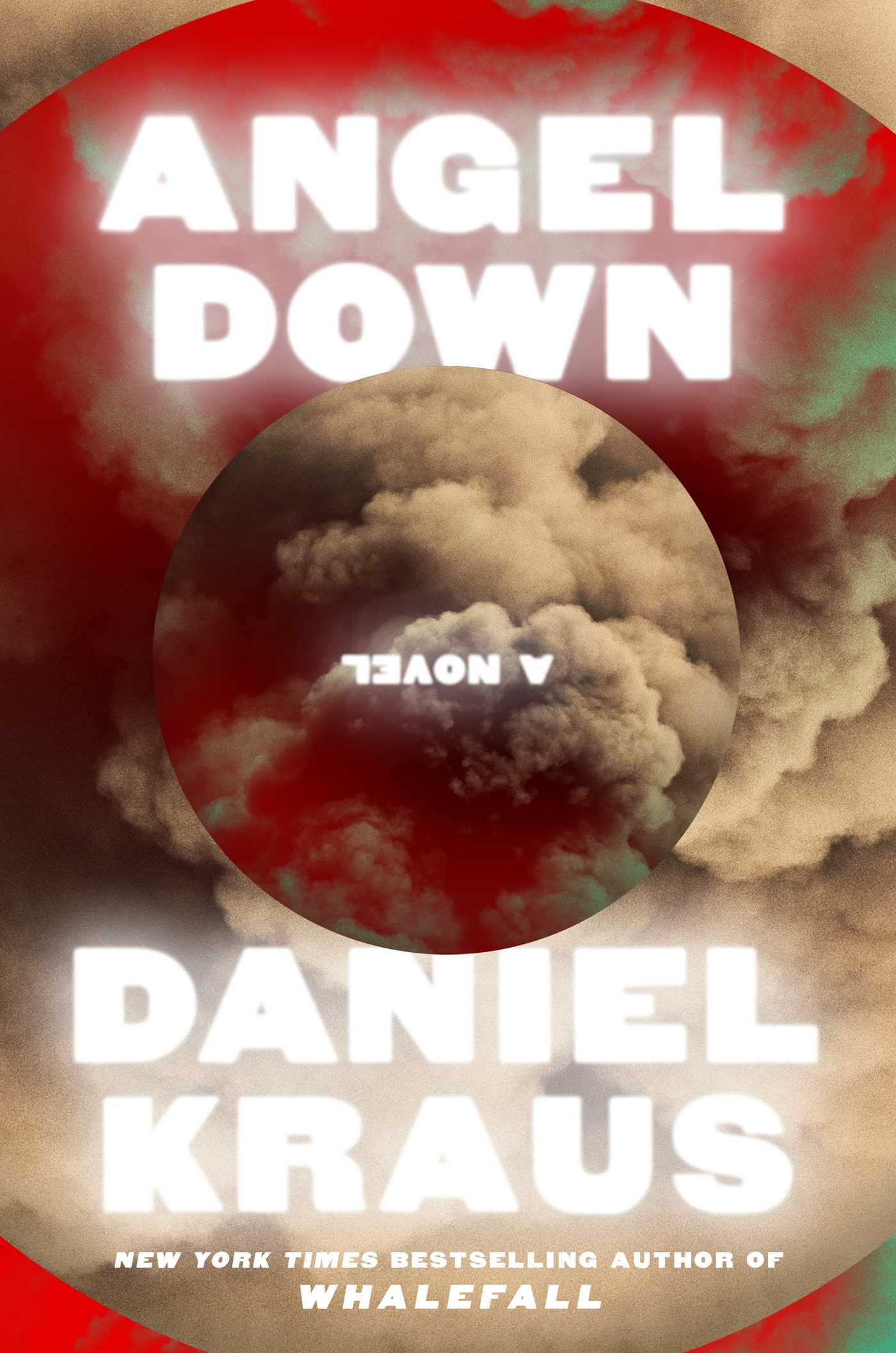
                  Angel Down is a World War I novel, written as a single unbroken sentence, by American author Daniel Kraus. The protagonist is a draft dodger and then an army private who encounters an angel on the battlefield. It was published by Atria Books, an imprint of Simon & Schuster, in July 2025. The book won the 2026 Pulitzer Prize for Fiction.

                • Cover of Great Apes
                  Great Apes

                  Will Self · standalone novel · 1997

                  similar bychallengingliterary & generalbritish isles+1 more

                  Great Apes is a 1997 novel by Will Self.

                • Cover of Malazan Book of the Fallen
                  Malazan Book of the Fallen

                  series · 20 books · 1999

                  part of Malazan

                  similar bymultiple povfantasy+1 more

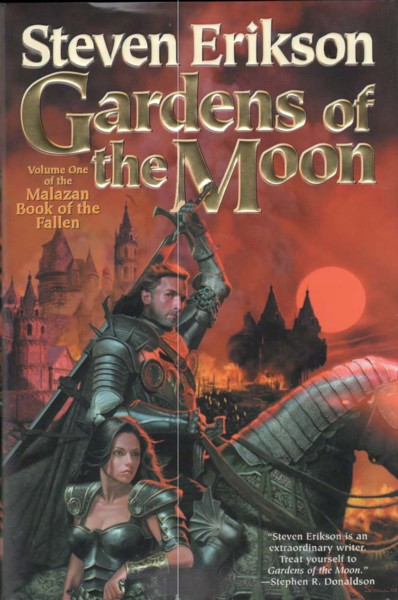
                  The Malazan Book of the Fallen is a series of epic fantasy novels written by the Canadian author Steven Erikson. The series, published by Bantam Books in the U.K. and Tor Books in the U.S., consists of ten volumes, beginning with Gardens of the Moon (1999) and concluding with The Crippled God (2011). Erikson's series presents the narratives of a large cast of characters spanning thousands of years across multiple continents.

                • Cover of Flatland
                  Flatland

                  series · 2 books · 1884

                  similar by+3 more

                  Edwin A. Abbott's 1884 novella Flatland: A Romance of Many Dimensions imagines a two-dimensional world of geometric beings, using its narrator's brush with higher dimensions as both a mathematical thought experiment and a satire of Victorian social rank. Ian Stewart's 2001 Flatterland follows a descendant of that narrator on a tour of stranger geometries, from curved and multidimensional space to relativity, as a knowing homage to Abbott's original. Together they pair a Victorian mathematical classic with its modern sequel.

                • Cover of Lapvona
                  Lapvona

                  Ottessa Moshfegh · standalone novel · 2022

                  similar byclass conflictchallengingliterary & generalhistorical fiction

                  Lapvona is a 2022 novel by Ottessa Moshfegh. It is Moshfegh's fourth novel.

                • Cover of Imperium in Imperio: A Study of the Negro Race Problem
                  Imperium in Imperio: A Study of the Negro Race Problem

                  Sutton E. Griggs · standalone novel · 1899

                  similar byclass conflictchallenginghistorical fictionliterary & general

                  "Self-published in 1899 and sold door-to-door by the author, this classic African-American novel -- a gripping exploration of oppression, miscegenation, exploitation, and black empowerment -- was a major bestseller in its day. The dramatic story of a conciliatory black man and a mulatto nationalist who grow up in a racist America and are driven to join a radical movement dedicated to the creation of an all-black nation in Texas, Imperium in Imperio had a profound influence on the development of black nationalism." description.

                • Cover of Brave New World
                  Brave New World

                  series · 8 books · 1932

                  similar byclass conflict+2 more

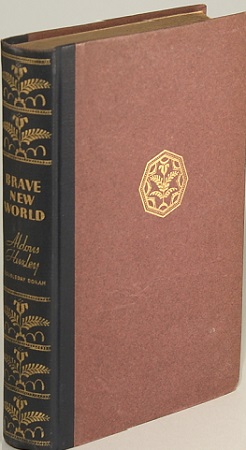
                  Aldous Huxley's 1932 novel imagines a future World State where reproduction, social caste, and desire are all engineered before birth, and the population is kept content through conditioning, sleep-hypnosis, and a mood-altering drug called soma. The story follows the disruption this seemingly stable order suffers when an outsider raised beyond its reach is brought into it, exposing what the society traded away for comfort and order. Some editions pair the novel with Huxley's own 1958 nonfiction essay collection, Brave New World Revisited, which reassesses the book's ideas rather than continuing its story.