Loreful
HomeDiscover
Search series, authors…⌘K
Loreful

Reading orders for SF/F series and shared universes — with your place kept in every one.

Explore

UniversesSeriesWorksAuthorsAtlas

Help

FAQAboutSite map

Account & legal

Sign inCreate accountPrivacyTerms

Data

Built on ISFDB, Wikipedia, Wikidata and Open Library. Curated reading orders carry their reasoning on the page; the rest follow publication order. Data sources & licenses

© Loreful · data: ISFDB · CC BY

More like Jess

anchored on:historical fictionafrica19th centurycolonialism

but

Mood

The mood the book leaves you in.

  • The reading experience is propelled by journeys, exploration, and physical risk; excitement and forward momentum dominate over dread or introspection.
  • Joy and loss are deliberately mixed; the resolution grants characters something real while taking something else away, leaving warmth and sorrow together.
  • The book demands work from the reader — dense prose, difficult structure, unfamiliar ideas, or morally uncomfortable material — as part of its intended effect.
  • Grim events, cruelty, or despair dominate the atmosphere, and the book does not soften them with comfort or comic relief.
  • The atmosphere is quietly unsettling — wrongness, unease, and the uncanny pervade the book without necessarily escalating into overt horror.
  • The book is built to move the reader; character feeling is foregrounded and major scenes aim at a strong emotional response.
  • Humor is a primary aim and the prose plays for laughs — comic situations, wit, or dialogue produce sustained comedy, not occasional levity.
  • The book insists that things can improve; effort and decency are shown to matter, and the arc bends toward better outcomes even through hardship.
  • The book teaches as it goes — real facts, history, science, or craft are conveyed in enough depth that learning is part of the reading experience.
  • The book is designed to uplift and motivate, presenting perseverance or achievement in a way that invites the reader to aspire or act.
  • The overall register is cheerful and easygoing; stakes are kept gentle and the book avoids dwelling on pain or dread.
  • Withheld information drives the experience; the book sustains enigmas and secrets the reader wants resolved, whatever its genre.
  • The book is contemplative and inward-looking, giving more weight to thought, memory, and meaning than to external events.
  • The book works as comfort reading — low tension, a soothing pace, and an atmosphere the reader can unwind in.
  • Grief, loss, or melancholy set the dominant register, and the book lets sorrow stand rather than resolving it into comfort.
  • Sustained suspense is the point; the book keeps the reader braced for what happens next through danger, pressure, or impending revelation.
  • Playful invention and charm define the register — fanciful conceits, light absurdity, and a narration that delights in its own oddity.

About

What the story runs on.

  • Stories in which extraterrestrial beings are central — as characters, cultures, or the object of the plot.
  • Stories structured as a quest — a journey undertaken to find, deliver, or destroy something of great import.
  • Stories in which staying alive against nature, catastrophe, or scarcity is the central problem.
  • Stories of lovers kept apart by law, family, faith, or station, where the obstacle to love is the plot.
  • Stories of growing up — a young protagonist crossing from childhood into adult knowledge and responsibility.
  • Stories about who a character truly is — self-discovery, doubled lives, and the search for a self.
  • Stories about mourning — living through the death of a loved one and what loss does to the survivors.
  • Stories in which belief, doubt, and religious life are the central subject, from crises of faith to life inside a religious community.
  • Stories in which a buried family truth — hidden parentage, crimes, or shames — surfaces and reorders the present.
  • Stories driven by maneuvering for power — factions, conspiracies, and statecraft conducted in shadow.
  • Stories in which war itself is the subject — combat, occupation, and what warfare does to soldiers and civilians.
  • Stories organized around investigating a killing — the case, the clues, and the pursuit of the killer, in any genre's clothing.

Shelf

Where it sits in the library.

    • Fiction built on magic or other supernatural elements that have no scientific explanation.
    • Secondary-world fantasy at large scale, where the fate of nations or the world turns on the protagonists' struggle.
    • Fantasy set in a recognizably modern city or contemporary world where the supernatural intrudes on everyday life.
    • Fantasy that blends in horror's atmosphere and imagery, keeping a fantastical frame around grim or frightening material.
    • Action-driven fantasy following warriors or rogues with personal stakes against sorcerous threats, rather than world-spanning conflicts.
    • Fantasy set in a real historical period or a close analogue of one, with magic woven into the era.
    • Fantasy in which protagonists cross from the ordinary world into another world through a portal or similar passage.
    • Fiction that retells or reworks a traditional fairy tale in a new form or setting.
    • Fantasy drawing directly on myths, legends, and folklore, retelling them or building on their figures and logic.
    • Fantasy of ghosts, vampires, shapeshifters, psychics, and similar phenomena, usually set in an otherwise ordinary world.
    • Fiction mixing science-fictional trappings with overtly magical or impossible elements in one setting.
    • Low-stakes fantasy emphasizing comfort, community, and everyday pleasures over conflict and peril.
    • Speculative fiction of pervasive moral ambiguity, violence, and cynicism that rejects heroic conventions — fantasy and SF alike.
      • Fiction that extrapolates from science and technology — future societies, space travel, or speculative inventions — within at least nominally natural laws.
      • Science fiction of interstellar scope — starships, galactic polities, and adventure across star systems.
      • Science fiction committed to scientific rigor, where technical plausibility constrains the story.
      • Science fiction centered on armed forces and warfare, told largely from a military point of view.
      • Science fiction of networked, corporate-dominated near futures, pairing high technology with social decay.
      • Science fiction styled on nineteenth-century steam-powered technology, often in a Victorian or pseudo-Victorian setting.
      • Fiction depicting an oppressive or catastrophic society, presented as a warning.
      • Fiction set after civilization's collapse, following survivors in the ruins of the old world.
      • Fiction in which characters move between past and future, and the mechanics or consequences of that travel drive the plot.
      • Fiction exploring a world where a historical event went differently and history diverged from ours.
      • Science fiction about humanity's first encounter and communication with an alien intelligence.
      • Science fiction in which extraterrestrial forces attack or occupy Earth and humanity resists.
      • Fiction whose primary aim is to frighten or unsettle the reader through dread, menace, or the monstrous.
      • Horror of vast, indifferent, incomprehensible entities before which humanity is insignificant, in the Lovecraft tradition.
      • Horror of decaying houses, buried family secrets, and oppressive atmosphere in the Gothic literary tradition.
      • Horror centered on hauntings and the returning dead.
      • Horror located in the mind — paranoia, obsession, and unreliable perception rather than external monsters.
      • Horror built around the reanimated dead and survival amid their outbreaks.
      • Horror defined by explicit, transgressive gore that refuses to cut away from violence.
      • Speculative fiction of the strange and uncanny that resists both natural explanation and standard genre categories.
      • Fiction organized around solving a crime or puzzle, typically following an investigator toward the identification of a culprit.
      • A puzzle-first mystery that lays out clues so the culprit's identity can be deduced before the reveal.
      • Crime fiction of moral ambiguity, fatalism, and hard-edged style, set among the corrupt and the doomed.
      • A mystery following the realistic routines of police work — forensics, interviews, and case-building.
      • A gentle mystery with an amateur sleuth, a small community, and violence kept off the page.
      • A mystery set in a past era, where the investigation works within that period's methods and society.
      • Fast-paced fiction driven by imminent danger, pursuit, or high-stakes conspiracy, built to sustain tension.
      • A thriller of espionage — agents, tradecraft, and intelligence services in conflict.
      • A thriller centered on lawyers and the courtroom, where litigation carries the suspense.
      • A thriller driven by detailed contemporary or near-future technology, often military or scientific.
      • A thriller whose tension comes from mental states and manipulation between characters rather than external action.
      • Fiction whose central plot is a romantic relationship and its development toward an emotionally satisfying resolution.
      • Romance in which one or both partners are supernatural beings, blending fantasy elements into the love story.
      • A fantasy-romance hybrid in which the romantic arc and the fantasy plot carry equal weight.
      • Romance set in a past era, with courtship shaped by the period's society and manners.
      • Romance set in the present day, without supernatural or historical elements.
      • Fiction set in a real past period, where the historical setting materially shapes characters and events.
        • General and literary fiction emphasizing prose style, character interiority, or formal ambition over genre plot conventions.
        • Fiction in a realistic world where magical events occur and are treated as ordinary, in the tradition of Latin American literature.
        • Fiction that ridicules people, institutions, or society in order to criticize them.
        • Fiction of dreamlike, irrational imagery and logic that breaks from realistic representation.
        • Fiction that plays with narrative convention through metafiction, fragmentation, and self-reference.
        • Fiction propelled by journeys, exploration, and physical peril, where action and survival carry the plot.
        • Adventure fiction of ships and seafaring — naval engagements, voyages, and life at sea.
        • Fiction of the American frontier West — gunmen, ranchers, and lawmen, typically in the late nineteenth century.
        • Fiction centered on soldiers, campaigns, and the experience of warfare, historical or imagined.
          • Fiction written primarily to amuse, using comedic situations, wit, or parody as its organizing principle.
            • Multi-generational fiction following a family or dynasty across decades, with inheritance and kinship as the through-line.
              • Fiction whose world runs on explicit game mechanics — levels, stats, and skills that characters can see and exploit.
                • Fiction about costumed or superpowered heroes and their conflicts with comparable villains.

                Practical

                How long a commitment, whether it stands alone, and whether it has finished.

                Tap a chip to ask for it · tap again to rule it out · once more to clear. Numbers show what would be left.

                • Cover of The Thousand Autumns of Jacob De Zoet
                  The Thousand Autumns of Jacob De Zoet

                  David Mitchell · standalone novel · 2010

                  similar byhistorical fictionreflectivecolonialismforbidden love

                  The Thousand Autumns of Jacob de Zoet is an historical fiction novel by English author David Mitchell published by Sceptre in 2010. It is set during the Dutch trading concession with Japan in the late 18th century, during the period of Japanese history known as Sakoku.

                • Cover of The Years of Rice and Salt
                  The Years of Rice and Salt

                  Kim Stanley Robinson · standalone novel · 2002

                  similar byreflectivecolonialismhistorical fiction

                  What if the Black Death had killed nearly everyone in Europe instead of a third of it? Kim Stanley Robinson opens on that premise with a Mongol scout named Bold, who finds a Hungarian city emptied by plague and only narrowly escapes execution meant to contain the contagion; sold into slavery, he ends up serving aboard a Chinese treasure fleet alongside a young African companion. From there the novel follows a recurring cast of souls, reincarnated across centuries and identifiable book to book by the first letter of their names, through an alternate history in which Islamic and Chinese civilizations, not a devastated Europe, shape the world's future.

                • Cover of Ghost Dance
                  Ghost Dance

                  John Norman · standalone novel · 1970

                  similar byhistorical fictioncolonialism+1 more

                  Ghost Dance is a 1970 historical fiction novel by John Norman. A Sioux man and his tradition comes into conflict with a white woman and her civilization as the Wounded Knee Massacre approaches. As with his Gor series, his main body of work, Norman displays both philosophical reaction and an affinity with incorporating historical events into the plotlines of fictional characters.

                • Cover of Zulu Nation
                  Zulu Nation

                  series · 1 book · 1892

                  similar byhistorical fictionafrica19th centuryforbidden love

                  H. Rider Haggard's Nada the Lily is set during the rise of the Zulu king Shaka, following Umslopogaas, Shaka's unacknowledged son, and his love for the celebrated beauty Nada. Haggard weaves real Zulu history and figures together with invented characters and supernatural elements, building a tragic story of forbidden love against a backdrop of war and court intrigue. It's a standalone 1892 novel rather than a series.

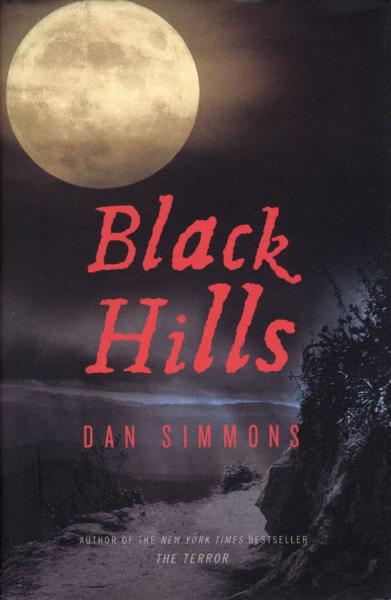
                • Cover of Black Hills
                  Black Hills

                  Dan Simmons · standalone novel · 2010

                  similar byhistorical fictionreflectivecolonialism

                  Haunted by Custer's ghost, and also by his ability to see into the memories and futures of legendary men like Sioux war-chief Crazy Horse, Paha Sapa plans to silence his ghost forever and reclaim his people's legacy--on the very day FDR comes to Mount Rushmore to dedicate the Jefferson face.

                • Cover of Midnight Is a Place
                  Midnight Is a Place

                  Joan Aiken · standalone novel · 1974

                  similar byhistorical fictionreflective19th century

                  In northern England in 1842, fourteen-year-old Lucas leads a lonely, monotonous existence in the house of his unpleasant guardian until the unexpected arrival of an unusual little girl presages a series of events that completely change his life.

                • Cover of Alias Grace
                  Alias Grace

                  Margaret Atwood · standalone novel · 1996

                  similar byhistorical fictionreflective19th century

                  Alias Grace is a historical fiction novel by Canadian writer Margaret Atwood. First published in 1996 by McClelland & Stewart, it won the Giller Prize and was shortlisted for the Booker Prize.

                • Cover of The Lovelock Version
                  The Lovelock Version

                  Maurice Shadbolt · standalone novel · 1980

                  similar byhistorical fictionreflectivecolonialism19th century

                  The Lovelock Version is a long historical novel by New Zealand writer Maurice Shadbolt that calls into question the interpretation of the past through the narrative process. Published in Auckland and London in 1980 and in New York in 1981, it won the New Zealand Book Award for Fiction and the James Wattie Award.

                • Cover of The Wizard
                  The Wizard

                  H. Rider Haggard · standalone novel · 1896

                  similar byhistorical fictioncolonialismafrica19th century

                  The Wizard is a novel by Henry Rider Haggard, first published by Longmans, Green, and Co., in 1896. The Wizard is one of the many examples of imperialist literature.

                • Cover of The Waterworks
                  The Waterworks

                  E. L. Doctorow · standalone novel · 1994

                  similar byhistorical fiction19th century+1 more

                  The Waterworks (1994) is a book by American writer E. L. Doctorow. It was his eighth published novel.

                • Cover of The Waters of Sul
                  The Waters of Sul

                  Moyra Caldecott · standalone novel · 1998

                  similar byhistorical fiction+3 more

                  It is 72 AD, and most of Britain is under Roman domination. At Aquae Sulis, a place of pilgrimage and healing, hot waters gush ceaselessly from the earth. Since ancient times the waters have been associated with the supernatural, and are under the protection of the Celtic Goddess Sul. The Romans have renamed her Sulis Minerva, and have tamed the steaming waters to form a complex of public baths.A statue of the hated Emperor Claudius is being erected in the precincts of the Temple of Sulis Minerva. The centurion Decius Brutus, a Celt, is ordered to return to his home town to protect the statue and prevent trouble. But the local people, led by his proud father and his fiery daughter, Megan, are threatening rebellion...Meanwhile, Megan's twin sister Ethne is torn between her destiny as Oracle of Sul, and her love for Lucius, who is caught up in his own quest for spiritual enlightenment, with the help of the Orphic priest Demosthenes.Twenty miles away, on Glastonia Island, a small Christian community struggles to establish a new religion in a hostile land, away from Roman persecution.Cults from Rome, Greece, Egypt and Judaea vie with the native Celtic beliefs and form a rich backdrop to the human dramas that unfold.The Waters of Sul is set in a time of transition and adjustment, when beliefs are questioned and loyalties are tested. Love and hate, conflict and reconciliation, troubled romance and an uneasy traffic with the supernatural all feature in this brilliantly conceived novel from a masterful storyteller.

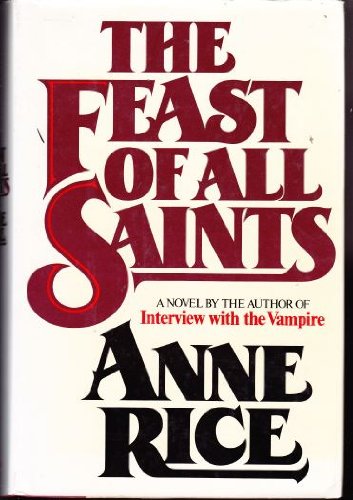
                • Cover of The Feast of All Saints
                  The Feast of All Saints

                  Anne Rice · standalone novel · 1980

                  similar byhistorical fictionreflective19th century

                  WorldCat: Rice explores a unique but little-known society, the "gens de couleur libre," free people of color, who flourished in New Orleans in the years prior to the Civil War.

                • Cover of The Old Drift
                  The Old Drift

                  Namwali Serpell · standalone novel · 2019

                  similar byhistorical fictioncolonialismafrica+1 more

                  The Old Drift is a 2019 historical fiction and science fiction novel by Zambian author Namwali Serpell. Set in Northern Rhodesia/Zambia, it is Serpell's debut novel and follows the lives of three interwoven families in three generations. It won the 2020 Anisfield-Wolf Book Award as well as the Arthur C. Clarke Award.

                • Cover of Martin Dressler: The Tale of an American Dreamer
                  Martin Dressler: The Tale of an American Dreamer

                  Steven Millhauser · standalone novel · 1996

                  similar byhistorical fictionreflective19th century

                  Martin Dressler: The Tale of an American Dreamer is a 1996 novel by Steven Millhauser. It won the 1997 Pulitzer Prize for Fiction and was a finalist for the 1996 National Book Award. It follows the exploits of Martin Dressler, a young, optimistic entrepreneur, in late nineteenth-century New York City. It vividly evokes its time and place through elaborate description.

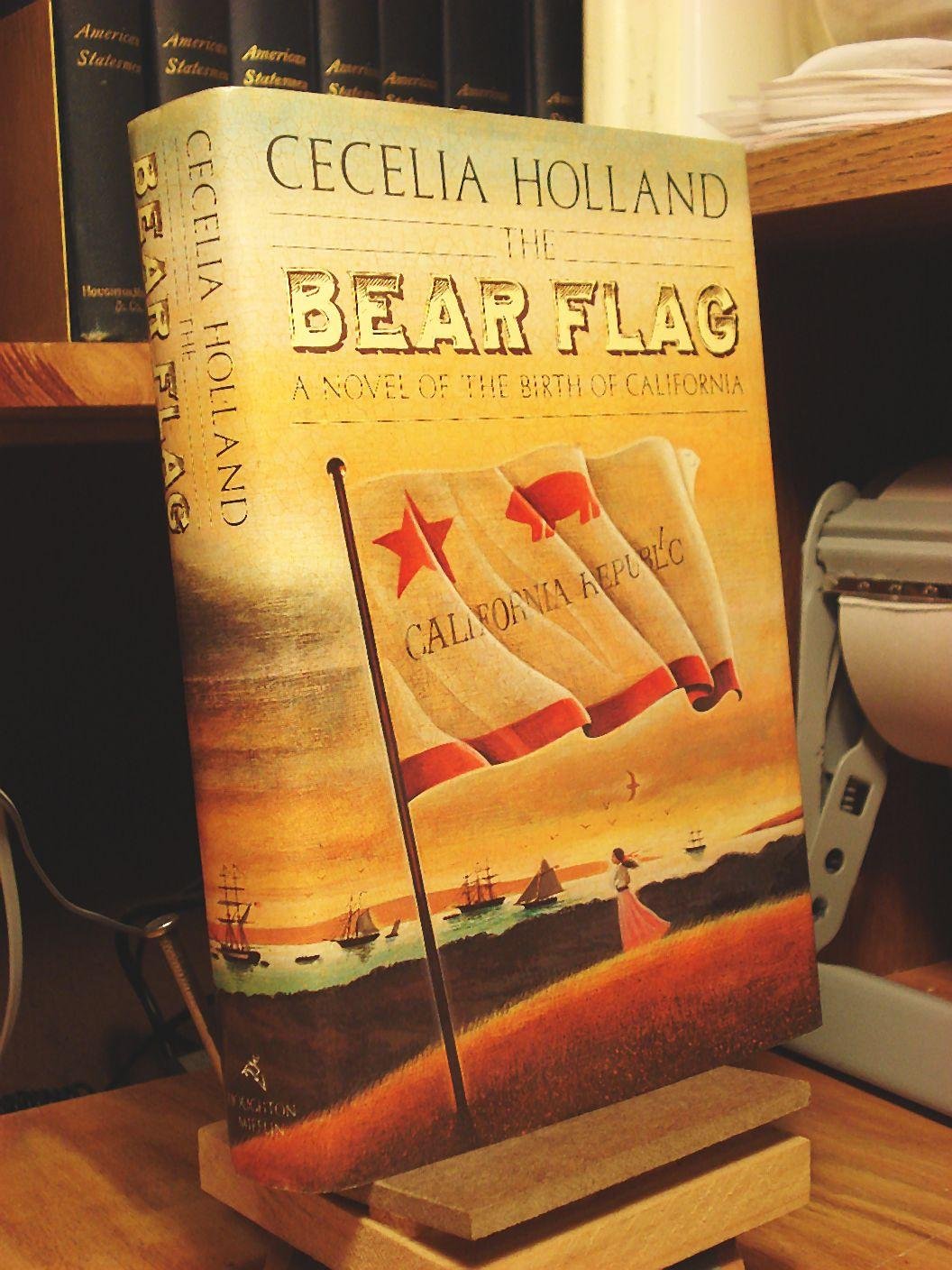
                • Cover of The Bear Flag
                  The Bear Flag

                  Cecelia Holland · standalone novel · 1990

                  similar byhistorical fiction19th century+2 more

                • Cover of A Thousand Perfect Things
                  A Thousand Perfect Things

                  Kay Kenyon · standalone novel · 2013

                  similar bycolonialism19th centuryforbidden love+1 more

                  A novel based on an alternate 19th century consisting of two warring continents on an alternate earth : the scientific Anglica (England) and magical Bharata (India). A young Victorian woman and aspiring botanist journeys to Bharata where she faces a choice between two suitors and two irreconcilable realms.

                • Cover of Traveller
                  Traveller

                  Richard Adams · standalone novel · 1988

                  similar byhistorical fictionreflective19th century

                  Traveller is a historical novel written by Richard Adams in 1988. It recounts the American Civil War through the viewpoint of Traveller, the favorite horse of Confederate General Robert E. Lee.

                • Cover of Earth's Children
                  Earth's Children

                  series · 6 books · 1980

                  similar byhistorical fiction+1 more

                  Earth's Children is a series of epic historical fiction novels written by Jean M. Auel set circa 30,000 years before the present day. There are six novels in the series. Although Auel had previously mentioned in interviews that there would be a seventh novel, publicity announcements for the sixth confirmed that it would be the final book in the sequence.

                • Cover of The Chymical Wedding
                  The Chymical Wedding

                  Lindsay Clarke · standalone novel · 1989

                  similar byreflectivehistorical fiction19th century+1 more

                  The Chymical Wedding is a 1989 novel by Lindsay Clarke about the intertwined lives of six people in two different eras. Inspired by the life of Mary Anne Atwood, the book includes themes of alchemy, the occult, fate, passion, and obsession. It won the Whitbread Prize for fiction in 1989.

                • Cover of The Hummingbird's Daughter
                  The Hummingbird's Daughter

                  Luis Alberto Urrea · standalone novel · 2005

                  similar byhistorical fictionreflective19th century

                  When sixteen-year-old Teresita, the illegitimate daughter of a late-nineteenth-century rancher, arises from death possessing the power to heal, she is declared a saint and finds her faith tested by the impending Mexican civil war.

                • Cover of Miss Betty
                  Miss Betty

                  Bram Stoker · standalone novel · 1898

                  similar byhistorical fiction19th centuryforbidden love+1 more

                  Miss Betty is a romance novel by Bram Stoker, written and published in 1898 in London by Arthur Pearson. It was published one year after the release of Stoker's Dracula.

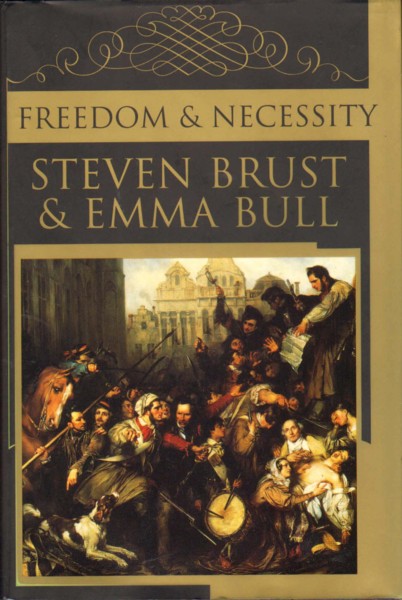
                • Cover of Freedom & Necessity
                  Freedom & Necessity

                  Steven Brust & Emma Bull · standalone novel · 1997

                  similar byhistorical fiction19th century+1 more

                • MI
                  Mr. Isaacs

                  F. Marion Crawford · standalone novel · 1882

                  similar byhistorical fiction19th century+2 more

                  "Mr Isaacs (1882), uses some of the teachings of Theosophy to enlighten an otherwise mundane romance." (underscore represents linked cross-reference) --Encyclopedia of Fantasy, biographical entry by Mike Ashley

                • Cover of Samuel Clemens Fowler
                  Samuel Clemens Fowler

                  series · 2 books · 1989

                  similar byhistorical fictionreflective19th century