Loreful
HomeDiscover
Search series, authors…⌘K
Loreful

Reading orders for SF/F series and shared universes — with your place kept in every one.

Explore

UniversesSeriesWorksAuthorsAtlas

Help

FAQAboutSite map

Account & legal

Sign inCreate accountPrivacyTerms

Data

Built on ISFDB, Wikipedia, Wikidata and Open Library. Curated reading orders carry their reasoning on the page; the rest follow publication order. Data sources & licenses

© Loreful · data: ISFDB · CC BY

More like John Crow's Devil

anchored on:literary & generalfaith and religionlatin americamid 20th centurymagical realismsmall town+1 more

but

Mood

The mood the book leaves you in.

  • The reading experience is propelled by journeys, exploration, and physical risk; excitement and forward momentum dominate over dread or introspection.
  • Joy and loss are deliberately mixed; the resolution grants characters something real while taking something else away, leaving warmth and sorrow together.
  • The book demands work from the reader — dense prose, difficult structure, unfamiliar ideas, or morally uncomfortable material — as part of its intended effect.
  • Grim events, cruelty, or despair dominate the atmosphere, and the book does not soften them with comfort or comic relief.
  • The atmosphere is quietly unsettling — wrongness, unease, and the uncanny pervade the book without necessarily escalating into overt horror.
  • The book is built to move the reader; character feeling is foregrounded and major scenes aim at a strong emotional response.
  • Humor is a primary aim and the prose plays for laughs — comic situations, wit, or dialogue produce sustained comedy, not occasional levity.
  • The book insists that things can improve; effort and decency are shown to matter, and the arc bends toward better outcomes even through hardship.
  • The book teaches as it goes — real facts, history, science, or craft are conveyed in enough depth that learning is part of the reading experience.
  • The book is designed to uplift and motivate, presenting perseverance or achievement in a way that invites the reader to aspire or act.
  • The overall register is cheerful and easygoing; stakes are kept gentle and the book avoids dwelling on pain or dread.
  • Withheld information drives the experience; the book sustains enigmas and secrets the reader wants resolved, whatever its genre.
  • The book is contemplative and inward-looking, giving more weight to thought, memory, and meaning than to external events.
  • The book works as comfort reading — low tension, a soothing pace, and an atmosphere the reader can unwind in.
  • Grief, loss, or melancholy set the dominant register, and the book lets sorrow stand rather than resolving it into comfort.
  • Sustained suspense is the point; the book keeps the reader braced for what happens next through danger, pressure, or impending revelation.
  • Playful invention and charm define the register — fanciful conceits, light absurdity, and a narration that delights in its own oddity.

About

What the story runs on.

  • Stories in which extraterrestrial beings are central — as characters, cultures, or the object of the plot.
  • Stories structured as a quest — a journey undertaken to find, deliver, or destroy something of great import.
  • Stories in which staying alive against nature, catastrophe, or scarcity is the central problem.
  • Stories of growing up — a young protagonist crossing from childhood into adult knowledge and responsibility.
  • Stories about who a character truly is — self-discovery, doubled lives, and the search for a self.
  • Stories about mental unraveling — descent into madness, delusion, and minds at war with themselves.
  • Stories about mourning — living through the death of a loved one and what loss does to the survivors.
  • Stories in which belief, doubt, and religious life are the central subject, from crises of faith to life inside a religious community.
  • Stories in which a buried family truth — hidden parentage, crimes, or shames — surfaces and reorders the present.
  • Stories driven by maneuvering for power — factions, conspiracies, and statecraft conducted in shadow.
  • Stories in which war itself is the subject — combat, occupation, and what warfare does to soldiers and civilians.
  • Stories organized around investigating a killing — the case, the clues, and the pursuit of the killer, in any genre's clothing.

Shelf

Where it sits in the library.

    • Fiction built on magic or other supernatural elements that have no scientific explanation.
    • Secondary-world fantasy at large scale, where the fate of nations or the world turns on the protagonists' struggle.
    • Fantasy set in a recognizably modern city or contemporary world where the supernatural intrudes on everyday life.
    • Fantasy that blends in horror's atmosphere and imagery, keeping a fantastical frame around grim or frightening material.
    • Action-driven fantasy following warriors or rogues with personal stakes against sorcerous threats, rather than world-spanning conflicts.
    • Fantasy set in a real historical period or a close analogue of one, with magic woven into the era.
    • Fantasy in which protagonists cross from the ordinary world into another world through a portal or similar passage.
    • Fiction that retells or reworks a traditional fairy tale in a new form or setting.
    • Fantasy drawing directly on myths, legends, and folklore, retelling them or building on their figures and logic.
    • Fantasy of ghosts, vampires, shapeshifters, psychics, and similar phenomena, usually set in an otherwise ordinary world.
    • Fiction mixing science-fictional trappings with overtly magical or impossible elements in one setting.
    • Low-stakes fantasy emphasizing comfort, community, and everyday pleasures over conflict and peril.
    • Speculative fiction of pervasive moral ambiguity, violence, and cynicism that rejects heroic conventions — fantasy and SF alike.
      • Fiction that extrapolates from science and technology — future societies, space travel, or speculative inventions — within at least nominally natural laws.
      • Science fiction of interstellar scope — starships, galactic polities, and adventure across star systems.
      • Science fiction committed to scientific rigor, where technical plausibility constrains the story.
      • Science fiction centered on armed forces and warfare, told largely from a military point of view.
      • Science fiction of networked, corporate-dominated near futures, pairing high technology with social decay.
      • Science fiction styled on nineteenth-century steam-powered technology, often in a Victorian or pseudo-Victorian setting.
      • Fiction depicting an oppressive or catastrophic society, presented as a warning.
      • Fiction set after civilization's collapse, following survivors in the ruins of the old world.
      • Fiction in which characters move between past and future, and the mechanics or consequences of that travel drive the plot.
      • Fiction exploring a world where a historical event went differently and history diverged from ours.
      • Science fiction about humanity's first encounter and communication with an alien intelligence.
      • Science fiction in which extraterrestrial forces attack or occupy Earth and humanity resists.
      • Fiction whose primary aim is to frighten or unsettle the reader through dread, menace, or the monstrous.
      • Horror of vast, indifferent, incomprehensible entities before which humanity is insignificant, in the Lovecraft tradition.
      • Horror of decaying houses, buried family secrets, and oppressive atmosphere in the Gothic literary tradition.
      • Horror centered on hauntings and the returning dead.
      • Horror located in the mind — paranoia, obsession, and unreliable perception rather than external monsters.
      • Horror built around the reanimated dead and survival amid their outbreaks.
      • Horror defined by explicit, transgressive gore that refuses to cut away from violence.
      • Speculative fiction of the strange and uncanny that resists both natural explanation and standard genre categories.
      • Fiction organized around solving a crime or puzzle, typically following an investigator toward the identification of a culprit.
      • A puzzle-first mystery that lays out clues so the culprit's identity can be deduced before the reveal.
      • Crime fiction of moral ambiguity, fatalism, and hard-edged style, set among the corrupt and the doomed.
      • A mystery following the realistic routines of police work — forensics, interviews, and case-building.
      • A gentle mystery with an amateur sleuth, a small community, and violence kept off the page.
      • A mystery set in a past era, where the investigation works within that period's methods and society.
      • Fast-paced fiction driven by imminent danger, pursuit, or high-stakes conspiracy, built to sustain tension.
      • A thriller of espionage — agents, tradecraft, and intelligence services in conflict.
      • A thriller centered on lawyers and the courtroom, where litigation carries the suspense.
      • A thriller driven by detailed contemporary or near-future technology, often military or scientific.
      • A thriller whose tension comes from mental states and manipulation between characters rather than external action.
      • Fiction whose central plot is a romantic relationship and its development toward an emotionally satisfying resolution.
      • Romance in which one or both partners are supernatural beings, blending fantasy elements into the love story.
      • A fantasy-romance hybrid in which the romantic arc and the fantasy plot carry equal weight.
      • Romance set in a past era, with courtship shaped by the period's society and manners.
      • Romance set in the present day, without supernatural or historical elements.
      • Fiction set in a real past period, where the historical setting materially shapes characters and events.
        • General and literary fiction emphasizing prose style, character interiority, or formal ambition over genre plot conventions.
        • Fiction in a realistic world where magical events occur and are treated as ordinary, in the tradition of Latin American literature.
        • Fiction that ridicules people, institutions, or society in order to criticize them.
        • Fiction of dreamlike, irrational imagery and logic that breaks from realistic representation.
        • Fiction that plays with narrative convention through metafiction, fragmentation, and self-reference.
        • Fiction propelled by journeys, exploration, and physical peril, where action and survival carry the plot.
        • Adventure fiction of ships and seafaring — naval engagements, voyages, and life at sea.
        • Fiction of the American frontier West — gunmen, ranchers, and lawmen, typically in the late nineteenth century.
        • Fiction centered on soldiers, campaigns, and the experience of warfare, historical or imagined.
          • Fiction written primarily to amuse, using comedic situations, wit, or parody as its organizing principle.
            • Multi-generational fiction following a family or dynasty across decades, with inheritance and kinship as the through-line.
              • Fiction whose world runs on explicit game mechanics — levels, stats, and skills that characters can see and exploit.
                • Fiction about costumed or superpowered heroes and their conflicts with comparable villains.

                Practical

                How long a commitment, whether it stands alone, and whether it has finished.

                Tap a chip to ask for it · tap again to rule it out · once more to clear. Numbers show what would be left.

                • Cover of Messiah
                  Messiah

                  Gore Vidal · standalone novel · 1954

                  similar byfaith and religionmid 20th centuryliterary & general+1 more

                  Messiah is a satirical novel by Gore Vidal, first published in 1954 in the United States by E.P. Dutton. It is the story of the creation of a new religion, Cavism, which quickly comes to replace the established but failing Christian religion.

                • Cover of Cat's Cradle
                  Cat's Cradle

                  Kurt Vonnegut & Jr. · standalone novel · 1963

                  similar byfaith and religiondarkmid 20th century+1 more

                  Cat's Cradle is a satirical postmodern novel, with science fiction elements, by American writer Kurt Vonnegut. Vonnegut's fourth novel, it was first published on March 18, 1963, exploring and satirizing issues of science, technology, the purpose of religion, and the arms race, often through the use of morbid humor. The novel was nominated for the Hugo Award for Best Novel in 1964.

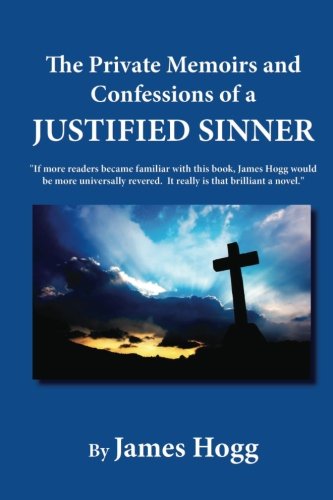
                • Cover of The Private Memoirs and Confessions of a Justified Sinner
                  The Private Memoirs and Confessions of a Justified Sinner

                  James Hogg · standalone novel · 1824

                  similar byfaith and religiondarkliterary & general

                  The Private Memoirs and Confessions of a Justified Sinner: Written by Himself: With a detail of curious traditionary facts and other evidence by the editor is a novel by the Scottish author James Hogg, published anonymously in 1824.

                • Cover of All Hallows' Eve
                  All Hallows' Eve

                  Charles Williams · standalone novel · 1945

                  similar byfaith and religiondarkmid 20th centuryeerie

                  All Hallows' Eve is the last of the seven novels of the supernatural written by Charles Williams. Published by Faber and Faber in 1945, it went through three impressions that year and another in 1947. In 1948 it was published in the US by Pellegrini & Cudahy with an introduction by T. S. Eliot. There were two later translations into Italian and Spanish.

                • Cover of The Scarlet Letter
                  The Scarlet Letter

                  Nathaniel Hawthorne · standalone novel · 1850

                  similar byfaith and religiondarkliterary & generalsmall town

                  In 17th-century Puritan Boston, Massachusetts of 1642-1649, a woman conceives a daughter through an adulterous affair, then struggles to create a new life of repentance and dignity.

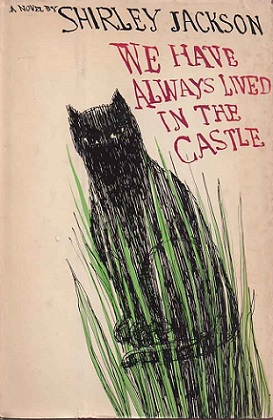
                • Cover of We Have Always Lived in the Castle
                  We Have Always Lived in the Castle

                  Shirley Jackson · standalone novel · 1962

                  similar bymid 20th centuryliterary & generaleeriesmall town+1 more

                  A young woman lives with her older sister and sickly uncle in their old family house, after a mysterious tragedy turns the townsfolk against them.

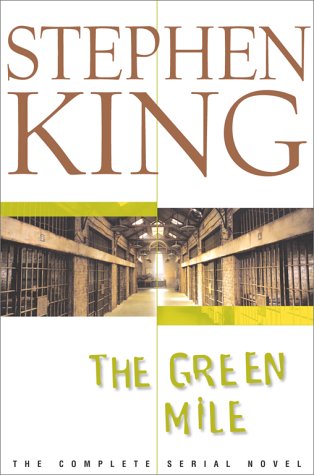
                • Cover of The Green Mile
                  The Green Mile

                  Stephen King · standalone novel · 1996

                  similar bymid 20th centuryliterary & generalmagical realism+1 more

                  The Green Mile is a 1996 serial novel by American writer Stephen King. It tells the story of death row supervisor Paul Edgecombe's encounter with John Coffey, an unusual inmate who displays inexplicable healing and empathetic abilities. The serial novel was released in six volumes before being republished as a single-volume work. The book is an example of magical realism. The subsequent film adaptation was a critical and commercial success. The Green Mile won the Bram Stoker Award for Best Novel in 1996. In 1997, The Green Mile was nominated as Best Novel for the British Fantasy Award and the Locus Award. In 2003 the book was listed on the BBC's The Big Read poll of the UK's "best-loved novel".

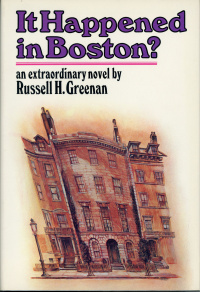
                • Cover of It Happened in Boston?
                  It Happened in Boston?

                  Russell H. Greenan · standalone novel · 1968

                  similar bydarkmid 20th centuryliterary & generaleerie+1 more

                  It Happened in Boston? (1968) is a novel by Russell H. Greenan. It tells the story of an unreliable narrator, who is a disillusioned, paranoid painter, whose goal in life is to someday meet God and destroy him. He decided he wanted to hold God accountable for the evils in the world. The book follows a bizarre series of events in the lives of him and his painter friends and effectively documents his descent into paranoid delusions as he becomes more and more unreliable as a narrator leaving the reader to become more and more unsure about what exactly is happening in Boston.

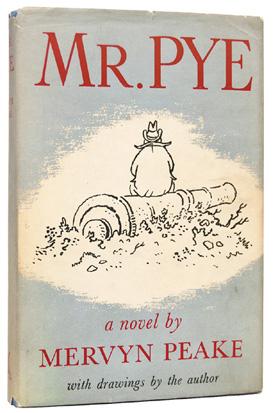
                • Cover of Mr. Pye
                  Mr. Pye

                  Mervyn Peake · standalone novel · 1953

                  similar byfaith and religionmid 20th centuryliterary & general+1 more

                  Mr Pye is a 1953 novel by English novelist Mervyn Peake, first published by Heinemann.

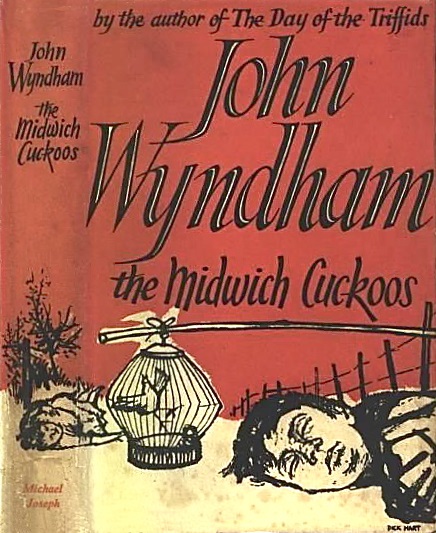
                • Cover of The Midwich Cuckoos
                  The Midwich Cuckoos

                  John Wyndham · standalone novel · 1957

                  similar bydarkmid 20th centuryeeriesmall town

                  The Midwich Cuckoos is a 1957 science fiction novel written by the English author John Wyndham. It tells the tale of an English village in which the women become pregnant by brood parasitic aliens. The book has been praised by many critics, including the dramatist Dan Rebellato, who called it "a searching novel of moral ambiguities", and the novelist Margaret Atwood, who called the book Wyndham's "chef d'œuvre". The book has been adapted for film, radio, and television.

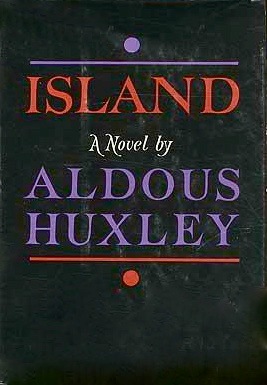
                • Cover of Island
                  Island

                  Aldous Huxley · standalone novel · 1962

                  similar byfaith and religionmid 20th centuryliterary & general

                  Island is a 1962 utopian manifesto and novel by English writer Aldous Huxley, the author's final work before his death in 1963. Although it has a plot, the plot largely serves to further conceptual explorations rather than setting up and resolving conventional narrative tension.

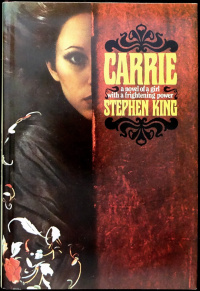
                • Cover of Carrie
                  Carrie

                  Stephen King · standalone novel · 1974

                  similar byfaith and religiondarksmall town+1 more

                  In one way or another, everybody abused Carrie. This sixteen-year-old misfit was forbidden everything that was young and fun by her fanatical mother. She was teased and taunted by her classmates, misunderstood by her teachers, and given up as hopeless by almost everyone. But Carrie had a secret: She possessed terrifying telekinetic powers that could make inanimate objects move, a lighted candle fall, or a door lock. Carrie could make all kinds of startling bizarre, and malevolent things happen. (WorldCat)

                • Cover of The Satanic Verses
                  The Satanic Verses

                  Salman Rushdie · standalone novel · 1988

                  similar byfaith and religionliterary & generalmagical realism

                  The Satanic Verses is the fourth novel by British–Indian writer Salman Rushdie. First published in September 1988, the book was inspired by the life of the Islamic prophet Muhammad. As with his previous books, Rushdie used magical realism and relied on contemporary events and people to create his characters. The title refers to the Satanic Verses, a group of Quranic verses about three pagan Meccan goddesses: Allāt, Al-Uzza, and Manāt. The part of the story that deals with the satanic verses was based on accounts from the historians al-Waqidi and al-Tabari.

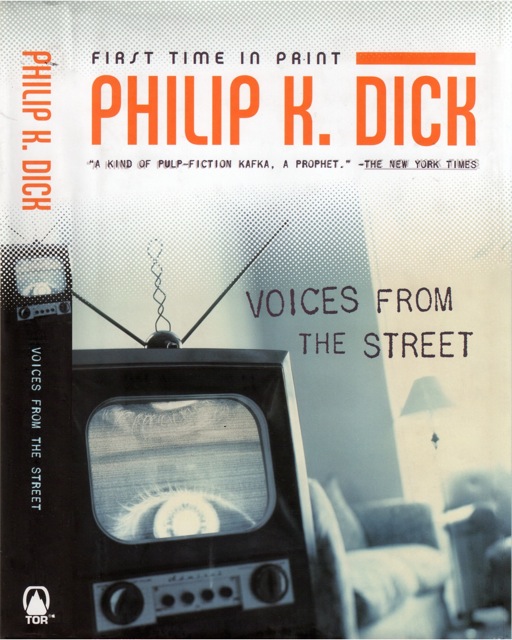
                • Cover of Voices from the Street
                  Voices from the Street

                  Philip K. Dick · standalone novel · 2007

                  similar bydarkmid 20th centuryliterary & general+1 more

                  A young salesman in a San Francisco radio and electronics store in 1952 feels a vague dissatisfaction with his job, his wife, and newborn son, wishing for better things. He encounters religious revivalists, Nazi magazine editors, socialists, and spirited women, but rather than provide an answer they just exacerbate his emotional pain, and he finally has a complete emotional breakdown.

                • Cover of To the Devil - a Daughter
                  To the Devil - a Daughter

                  Dennis Wheatley · standalone novel · 1953

                  similar byfaith and religiondarkmid 20th century

                  Beneath the azure sky of the French Riviera, Christina Mordant looks and behaves like any other attractive girl. But each night as darkness falls, the demon within her betrays its presence. A thousand miles away, deep in the Essex marshes, a priest of Satan is about to achieve his life's ambition: Canon Copely-Syle of Bentford Priory prepares for the virgin sacrifice which will give breath to the foul abomination he has created...

                • Cover of Of Love and Shadows
                  Of Love and Shadows

                  Isabel Allende · standalone novel · 1985

                  similar bydarkmid 20th centuryliterary & generallatin america

                  Of Love and Shadows is a novel written by Chilean novelist Isabel Allende in 1984. The plotline was inspired by journalistic accounts taken from magazines, newspapers, and interviews that Allende herself gathered both working as a journalist in Chile before her exile and during her later career as a writer in Venezuela.

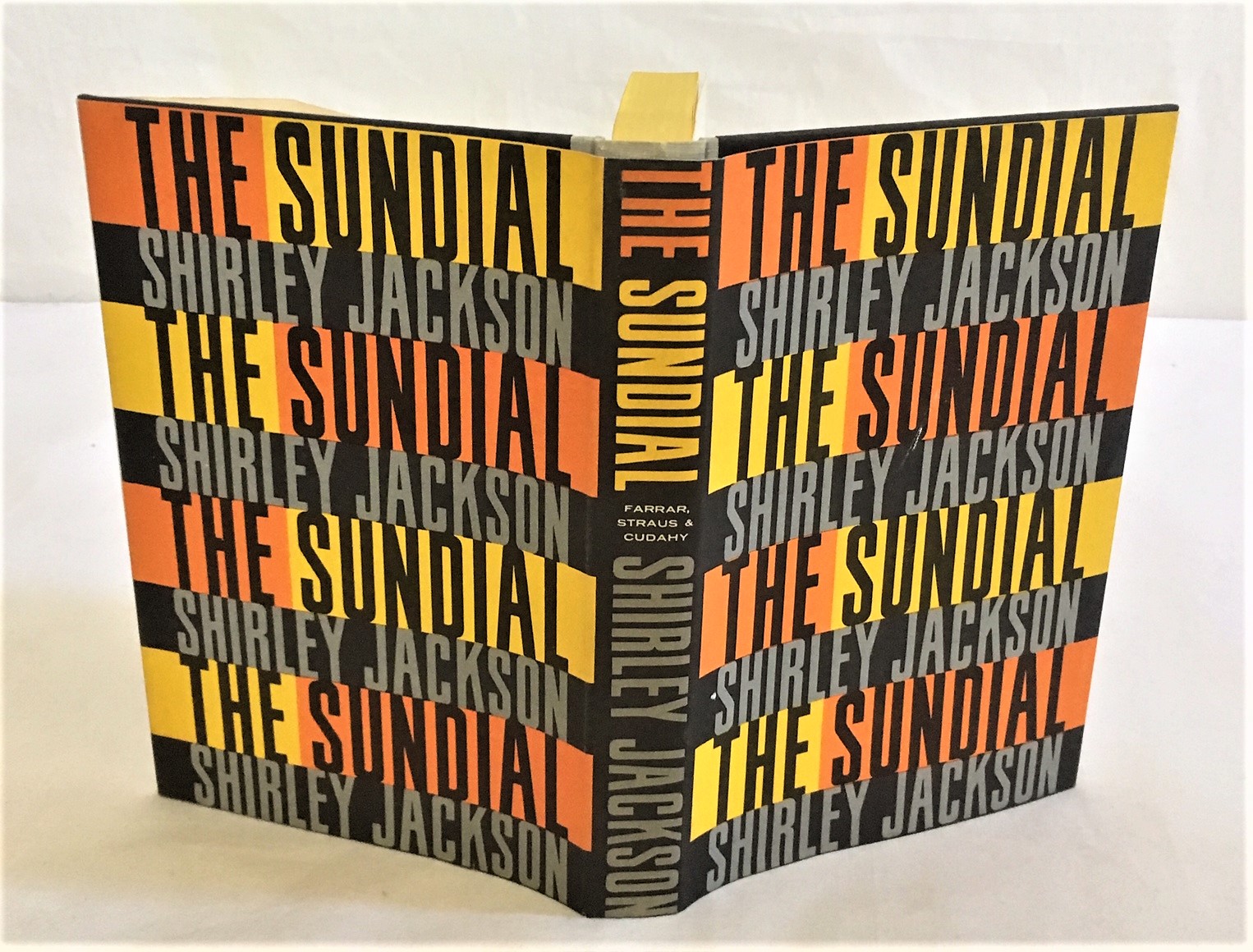
                • Cover of The Sundial
                  The Sundial

                  Shirley Jackson · standalone novel · 1958

                  similar bydarkmid 20th centuryliterary & general+1 more

                  The Sundial is a 1958 novel by American writer Shirley Jackson.

                • Cover of Lord of the Flies
                  Lord of the Flies

                  William Golding · standalone novel · 1954

                  similar bydarkmid 20th centuryliterary & general

                  Lord of the Flies is the 1954 debut novel of British author William Golding. The plot concerns a group of prepubescent British boys who are stranded on an uninhabited island and their disastrous attempts to govern themselves that lead to a descent into savagery. The novel's themes include morality, leadership, and the tension between civility and chaos.

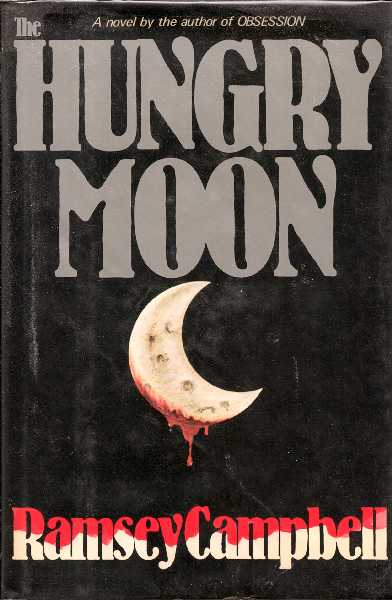
                • Cover of The Hungry Moon
                  The Hungry Moon

                  Ramsey Campbell · standalone novel · 1986

                  similar byfaith and religiondarkeeriesmall town

                  The Hungry Moon is a novel by Ramsey Campbell published in 1986.

                • Cover of The Magic Toyshop
                  The Magic Toyshop

                  Angela Carter · standalone novel · 1967

                  similar bymid 20th centuryliterary & generaleerie+2 more

                  The Magic Toyshop (1967) is the second novel by British author Angela Carter. It follows the development of the heroine, Melanie, as she becomes aware of herself, her environment, and her own sexuality.

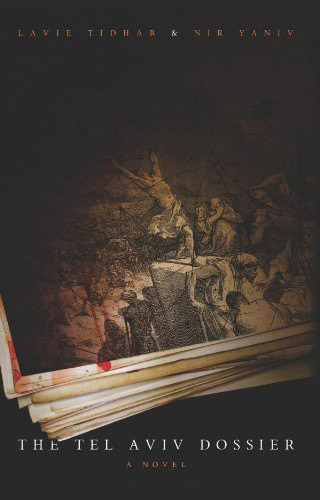
                • Cover of The Tel Aviv Dossier
                  The Tel Aviv Dossier

                  Lavie Tidhar & Nir Yaniv · standalone novel · 2009

                  similar byfaith and religiondarkeerie+1 more

                  Through a city torn apart by a violence they cannot comprehend, three disparate people—a documentary film-maker, a yeshiva student, and a psychotic fireman—must try to survive, and try to find meaning: even if it means being lost themselves. As Tel Aviv is consumed, a strange mountain rises at the heart of the city, and shows the outline of what may be another, alien world beyond. Can there be redemption there? Can the fevered rumours of a coming messiah be true? As the city loses contact with the outside world and closes in on itself, as the few surviving children play and scavenge in the ruins, can innocence survive, and is it possible for hope to spring amid such chaos? A potent mixture of biblical allusions, Lovecraftian echoes, and contemporary culture, The Tel Aviv Dossier is part supernatural thriller, part meditation on the nature of belief—an original and involving novel painted on a vast canvas in which, beneath the despair, humour is never absent. Experience the last days of Tel Aviv...

                • Cover of Slaughterhouse-Five or the Children's Crusade: A Duty-Dance with Death
                  Slaughterhouse-Five or the Children's Crusade: A Duty-Dance with Death

                  Kurt Vonnegut & Jr. · standalone novel · 1969

                  similar bydarkmid 20th centuryliterary & general

                  Vonnegut opens in his own voice, describing the twenty years it took him to face writing about surviving the firebombing of Dresden as a POW. He then hands the story to Billy Pilgrim, an awkward, fatalistic American chaplain's assistant swept into the Battle of the Bulge and captured by German forces alongside a soldier who dies blaming him for it. Imprisoned in a disused slaughterhouse in Dresden, Billy survives the firebombing that follows, and, we're told upfront, has also come 'unstuck in time,' living his life out of order, including a stretch on the alien world of Tralfamadore. Vonnegut's best-known novel folds war memoir into science fiction and black comedy.

                • Cover of The Wicker Man
                  The Wicker Man

                  Robin Hardy (UK) & Anthony Shaffer · standalone novel · 1978

                  similar byfaith and religiondarkeerie

                  The Wicker Man is a 1978 horror novel written by Robin Hardy and Anthony Shaffer. It was based on the 1973 cult horror film The Wicker Man, directed by Hardy and written by Shaffer. The novel includes a foreword by Allan Brown. The film itself is loosely based on the 1967 novel Ritual by the actor and novelist David Pinner.

                • Cover of Shadow Dance
                  Shadow Dance

                  Angela Carter · standalone novel · 1966

                  similar bydarkmid 20th centuryliterary & generaleerie

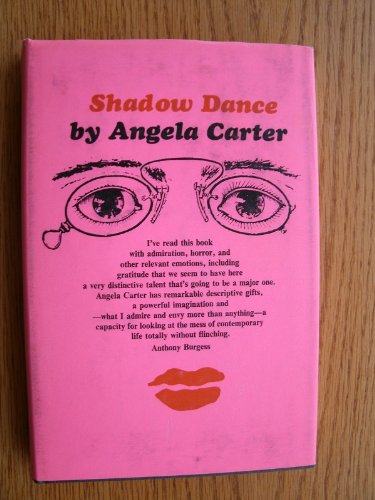
                  Shadow Dance was Angela Carter's first novel, published in England by Heinemann in 1966. It was published under the name Honeybuzzard in the United States. Upon publication it was acclaimed by Anthony Burgess, who wrote that he "read this book with admiration, horror and other relevant emotions... Angela Carter has remarkable descriptive gifts, a powerful imagination, and... a capacity for looking at the mess of contemporary life without flinching."