Loreful
HomeDiscover
Search series, authors…⌘K
Loreful

Reading orders for SF/F series and shared universes — with your place kept in every one.

Explore

UniversesSeriesWorksAuthorsAtlas

Help

FAQAboutSite map

Account & legal

Sign inCreate accountPrivacyTerms

Data

Built on ISFDB, Wikipedia, Wikidata and Open Library. Curated reading orders carry their reasoning on the page; the rest follow publication order. Data sources & licenses

© Loreful · data: ISFDB · CC BY

More like Junie

anchored on:historical fantasynorth america19th centurycoming of ageslaverydark

but

Mood

The mood the book leaves you in.

  • The reading experience is propelled by journeys, exploration, and physical risk; excitement and forward momentum dominate over dread or introspection.
  • Joy and loss are deliberately mixed; the resolution grants characters something real while taking something else away, leaving warmth and sorrow together.
  • The book demands work from the reader — dense prose, difficult structure, unfamiliar ideas, or morally uncomfortable material — as part of its intended effect.
  • Grim events, cruelty, or despair dominate the atmosphere, and the book does not soften them with comfort or comic relief.
  • The atmosphere is quietly unsettling — wrongness, unease, and the uncanny pervade the book without necessarily escalating into overt horror.
  • The book is built to move the reader; character feeling is foregrounded and major scenes aim at a strong emotional response.
  • Humor is a primary aim and the prose plays for laughs — comic situations, wit, or dialogue produce sustained comedy, not occasional levity.
  • The book insists that things can improve; effort and decency are shown to matter, and the arc bends toward better outcomes even through hardship.
  • The book teaches as it goes — real facts, history, science, or craft are conveyed in enough depth that learning is part of the reading experience.
  • The book is designed to uplift and motivate, presenting perseverance or achievement in a way that invites the reader to aspire or act.
  • The overall register is cheerful and easygoing; stakes are kept gentle and the book avoids dwelling on pain or dread.
  • Withheld information drives the experience; the book sustains enigmas and secrets the reader wants resolved, whatever its genre.
  • The book is contemplative and inward-looking, giving more weight to thought, memory, and meaning than to external events.
  • The book works as comfort reading — low tension, a soothing pace, and an atmosphere the reader can unwind in.
  • Grief, loss, or melancholy set the dominant register, and the book lets sorrow stand rather than resolving it into comfort.
  • Sustained suspense is the point; the book keeps the reader braced for what happens next through danger, pressure, or impending revelation.
  • Playful invention and charm define the register — fanciful conceits, light absurdity, and a narration that delights in its own oddity.

About

What the story runs on.

  • Stories structured as a quest — a journey undertaken to find, deliver, or destroy something of great import.
  • Stories in which staying alive against nature, catastrophe, or scarcity is the central problem.
  • Stories of lovers kept apart by law, family, faith, or station, where the obstacle to love is the plot.
  • Stories in which a friendship — its making, testing, or loss — is the emotional center.
  • Stories of growing up — a young protagonist crossing from childhood into adult knowledge and responsibility.
  • Stories about who a character truly is — self-discovery, doubled lives, and the search for a self.
  • Stories about mental unraveling — descent into madness, delusion, and minds at war with themselves.
  • Stories about mourning — living through the death of a loved one and what loss does to the survivors.
  • Stories in which a buried family truth — hidden parentage, crimes, or shames — surfaces and reorders the present.
  • Stories driven by maneuvering for power — factions, conspiracies, and statecraft conducted in shadow.
  • Stories in which war itself is the subject — combat, occupation, and what warfare does to soldiers and civilians.
  • Stories organized around investigating a killing — the case, the clues, and the pursuit of the killer, in any genre's clothing.

Shelf

Where it sits in the library.

    • Fiction built on magic or other supernatural elements that have no scientific explanation.
    • Secondary-world fantasy at large scale, where the fate of nations or the world turns on the protagonists' struggle.
    • Fantasy set in a recognizably modern city or contemporary world where the supernatural intrudes on everyday life.
    • Fantasy that blends in horror's atmosphere and imagery, keeping a fantastical frame around grim or frightening material.
    • Action-driven fantasy following warriors or rogues with personal stakes against sorcerous threats, rather than world-spanning conflicts.
    • Fantasy set in a real historical period or a close analogue of one, with magic woven into the era.
    • Fantasy in which protagonists cross from the ordinary world into another world through a portal or similar passage.
    • Fiction that retells or reworks a traditional fairy tale in a new form or setting.
    • Fantasy drawing directly on myths, legends, and folklore, retelling them or building on their figures and logic.
    • Fantasy of ghosts, vampires, shapeshifters, psychics, and similar phenomena, usually set in an otherwise ordinary world.
    • Fiction mixing science-fictional trappings with overtly magical or impossible elements in one setting.
    • Low-stakes fantasy emphasizing comfort, community, and everyday pleasures over conflict and peril.
    • Speculative fiction of pervasive moral ambiguity, violence, and cynicism that rejects heroic conventions — fantasy and SF alike.
      • Fiction that extrapolates from science and technology — future societies, space travel, or speculative inventions — within at least nominally natural laws.
      • Science fiction of interstellar scope — starships, galactic polities, and adventure across star systems.
      • Science fiction committed to scientific rigor, where technical plausibility constrains the story.
      • Science fiction centered on armed forces and warfare, told largely from a military point of view.
      • Science fiction of networked, corporate-dominated near futures, pairing high technology with social decay.
      • Science fiction styled on nineteenth-century steam-powered technology, often in a Victorian or pseudo-Victorian setting.
      • Fiction depicting an oppressive or catastrophic society, presented as a warning.
      • Fiction set after civilization's collapse, following survivors in the ruins of the old world.
      • Fiction in which characters move between past and future, and the mechanics or consequences of that travel drive the plot.
      • Fiction exploring a world where a historical event went differently and history diverged from ours.
      • Science fiction about humanity's first encounter and communication with an alien intelligence.
      • Science fiction in which extraterrestrial forces attack or occupy Earth and humanity resists.
      • Fiction whose primary aim is to frighten or unsettle the reader through dread, menace, or the monstrous.
      • Horror of vast, indifferent, incomprehensible entities before which humanity is insignificant, in the Lovecraft tradition.
      • Horror of decaying houses, buried family secrets, and oppressive atmosphere in the Gothic literary tradition.
      • Horror centered on hauntings and the returning dead.
      • Horror located in the mind — paranoia, obsession, and unreliable perception rather than external monsters.
      • Horror built around the reanimated dead and survival amid their outbreaks.
      • Horror defined by explicit, transgressive gore that refuses to cut away from violence.
      • Speculative fiction of the strange and uncanny that resists both natural explanation and standard genre categories.
      • Fiction organized around solving a crime or puzzle, typically following an investigator toward the identification of a culprit.
      • A puzzle-first mystery that lays out clues so the culprit's identity can be deduced before the reveal.
      • Crime fiction of moral ambiguity, fatalism, and hard-edged style, set among the corrupt and the doomed.
      • A mystery following the realistic routines of police work — forensics, interviews, and case-building.
      • A gentle mystery with an amateur sleuth, a small community, and violence kept off the page.
      • A mystery set in a past era, where the investigation works within that period's methods and society.
      • Fast-paced fiction driven by imminent danger, pursuit, or high-stakes conspiracy, built to sustain tension.
      • A thriller of espionage — agents, tradecraft, and intelligence services in conflict.
      • A thriller centered on lawyers and the courtroom, where litigation carries the suspense.
      • A thriller driven by detailed contemporary or near-future technology, often military or scientific.
      • A thriller whose tension comes from mental states and manipulation between characters rather than external action.
      • Fiction whose central plot is a romantic relationship and its development toward an emotionally satisfying resolution.
      • Romance in which one or both partners are supernatural beings, blending fantasy elements into the love story.
      • A fantasy-romance hybrid in which the romantic arc and the fantasy plot carry equal weight.
      • Romance set in a past era, with courtship shaped by the period's society and manners.
      • Romance set in the present day, without supernatural or historical elements.
      • Fiction set in a real past period, where the historical setting materially shapes characters and events.
        • General and literary fiction emphasizing prose style, character interiority, or formal ambition over genre plot conventions.
        • Fiction in a realistic world where magical events occur and are treated as ordinary, in the tradition of Latin American literature.
        • Fiction that ridicules people, institutions, or society in order to criticize them.
        • Fiction of dreamlike, irrational imagery and logic that breaks from realistic representation.
        • Fiction that plays with narrative convention through metafiction, fragmentation, and self-reference.
        • Fiction propelled by journeys, exploration, and physical peril, where action and survival carry the plot.
        • Adventure fiction of ships and seafaring — naval engagements, voyages, and life at sea.
        • Fiction of the American frontier West — gunmen, ranchers, and lawmen, typically in the late nineteenth century.
        • Fiction centered on soldiers, campaigns, and the experience of warfare, historical or imagined.
          • Fiction written primarily to amuse, using comedic situations, wit, or parody as its organizing principle.
            • Multi-generational fiction following a family or dynasty across decades, with inheritance and kinship as the through-line.
              • Fiction whose world runs on explicit game mechanics — levels, stats, and skills that characters can see and exploit.
                • Fiction about costumed or superpowered heroes and their conflicts with comparable villains.

                Practical

                How long a commitment, whether it stands alone, and whether it has finished.

                Tap a chip to ask for it · tap again to rule it out · once more to clear. Numbers show what would be left.

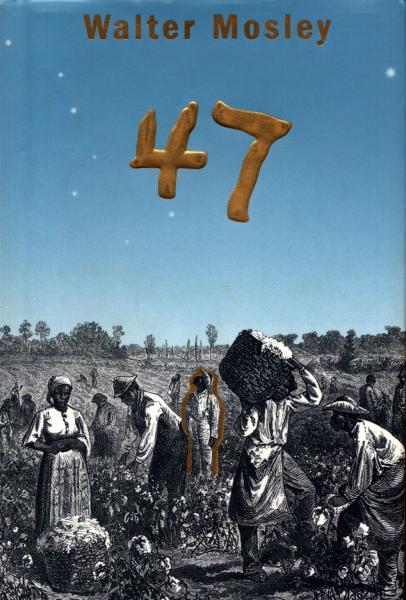
                • Cover of 47
                  47

                  Walter Mosley · standalone novel · 2005

                  similar byhistorical fantasydarknorth america19th centurycoming of ageslavery

                  Number 47, a fourteen-year-old slave boy growing up under the watchful eye of a brutal master in 1832, meets the mysterious Tall John, who introduces him to a magical science and also teaches him the meaning of freedom.

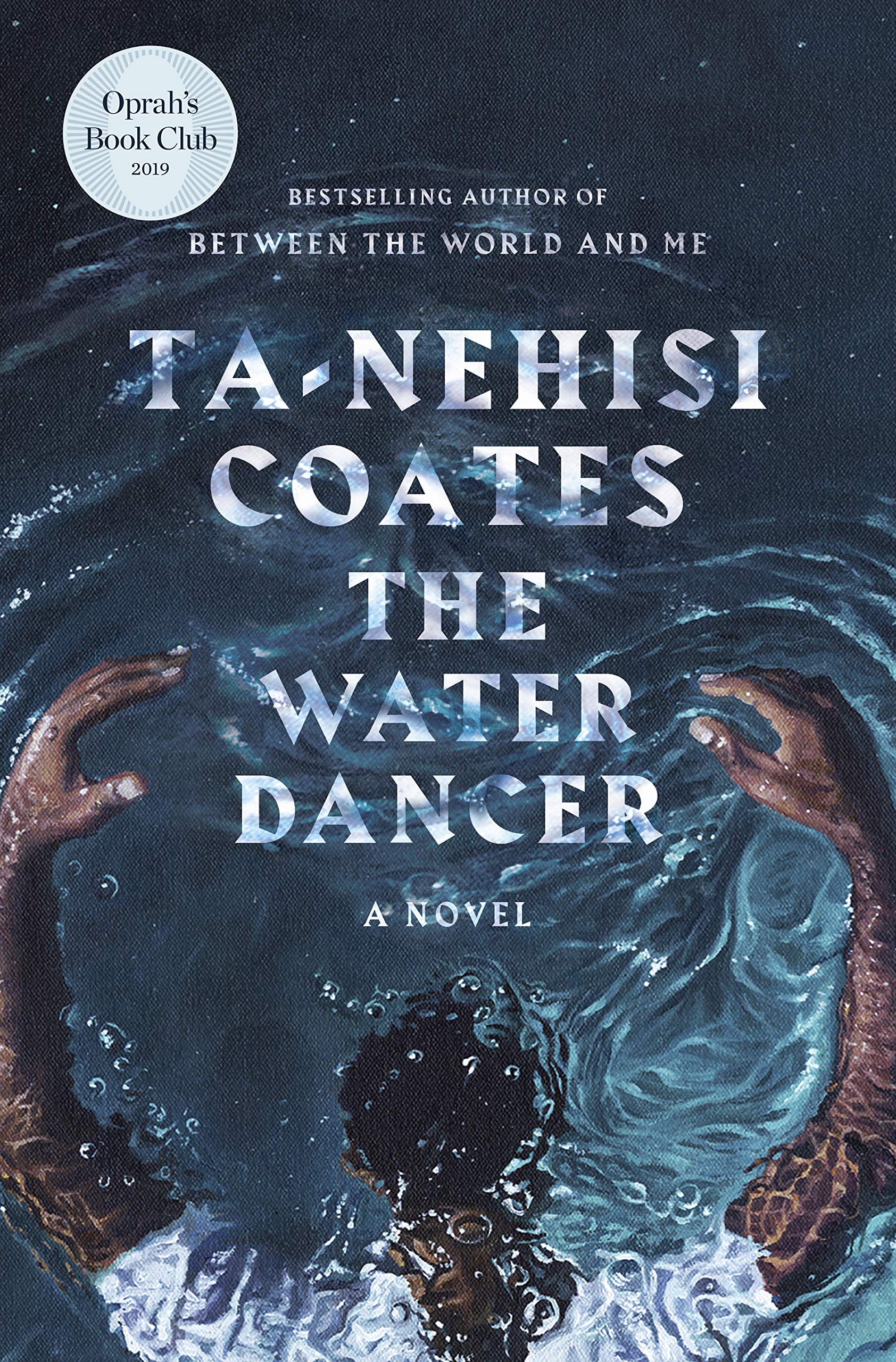
                • Cover of The Water Dancer
                  The Water Dancer

                  Ta-Nehisi Coates · standalone novel · 2019

                  similar bydarkhistorical fantasynorth america19th centuryslavery

                  A Virginia slave narrowly escapes a drowning death through the intervention of a mysterious force that compels his escape and personal underground war against slavery.

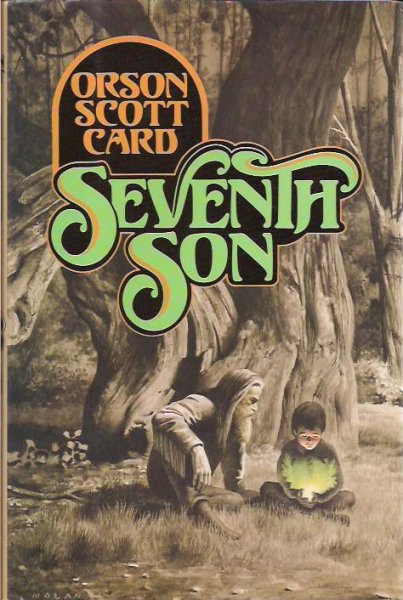
                • Cover of The Alvin Maker Saga
                  The Alvin Maker Saga

                  series · 15 books · 1986

                  similar byhistorical fantasy19th centurycoming of agenorth america

                  The Tales of Alvin Maker is a series of seven alternate history fantasy novels written by American novelist Orson Scott Card, published from 1987 to 2026. They explore the experiences of a young man, Alvin Miller, who realizes he has incredible powers for creating and shaping things around him.

                • Cover of Fevre Dream
                  Fevre Dream

                  George R. R. Martin · standalone novel · 1982

                  similar bydarknorth america19th centuryslavery

                  Fevre Dream is a 1982 vampire novel written by American author George R. R. Martin. It is set on the antebellum Mississippi River, beginning in 1857, and has been described by critics and Martin himself as "Bram Stoker meets Mark Twain". About writing the novel, Martin said that "It was strongly influenced by the time I spent in Dubuque, Iowa, where river steamboats were once built".

                • Cover of Henry Sturges
                  Henry Sturges

                  series · 2 books · 2010

                  similar byhistorical fantasydark19th centurynorth america

                • Cover of Beloved
                  Beloved

                  Toni Morrison · standalone novel · 1987

                  similar bydarknorth america19th centuryslavery

                  Beloved is a 1987 novel by American novelist Toni Morrison. Set in the period after the American Civil War, the novel tells the story of formerly enslaved people whose Cincinnati home is haunted by a malevolent spirit. Sethe, a formerly enslaved mother of four, grapples with her traumatic past. Morrison sought to depict the limitations that enslaved women faced and to present a physical manifestation that was lacking in the world of literature. Moreover, Beloved explores the interior life of the formerly enslaved.

                • Cover of Sweep: The Story of a Girl and Her Monster
                  Sweep: The Story of a Girl and Her Monster

                  Jonathan Auxier · standalone novel · 2018

                  similar byhistorical fantasydark19th centurycoming of age

                  Victorian London relied on climbing boys orphans owned by chimney sweeps to clean flues and protect homes from fire. Eleven-year-old Nan Sparrow is quite possibly the best climber who ever lived and a girl. With her wits and will, she s managed to beat the deadly odds time and time again.

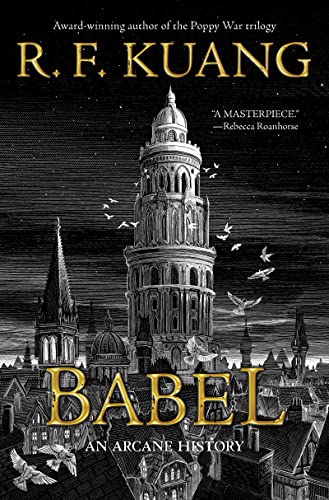
                • Cover of Babel, or, The Necessity of Violence: An Arcane History of the Oxford Translators' Revolution
                  Babel, or, The Necessity of Violence: An Arcane History of the Oxford Translators' Revolution

                  R. F. Kuang · standalone novel · 2022

                  similar byhistorical fantasydark19th century

                  Babel, or The Necessity of Violence: An Arcane History of the Oxford Translators' Revolution is a 2022 novel of speculative fiction by R. F. Kuang set in a fantastical version of Oxford in 1830s England. Thematically similar to The Poppy War (2018–20), Kuang's first book series, the book criticizes British imperialism, racism and capitalism, and the complicity of academia, knowledge, and language in perpetuating and enabling them.

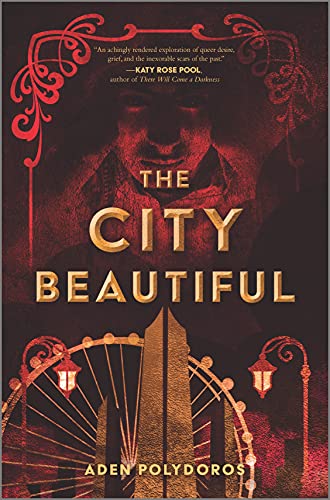
                • Cover of The City Beautiful
                  The City Beautiful

                  Aden Polydoros · standalone novel · 2021

                  similar byhistorical fantasydarknorth america19th century

                  The City Beautiful is a 2021 young adult and historical fantasy novel by Aden Polydoros, about a gay Jewish teenager possessed by a vengeful dybbuk in 19th-century Chicago. The novel won the Sydney Taylor Book Award, and was nominated for the National Jewish Book Award, the Lambda Literary Award, and the World Fantasy Award.

                • Cover of The Underground Railroad
                  The Underground Railroad

                  Colson Whitehead · standalone novel · 2016

                  similar bydarknorth america19th centuryslavery

                  The Underground Railroad is a historical fiction novel by American author Colson Whitehead, published by Doubleday in 2016. The alternate history novel tells the story of Cora, a slave in the Antebellum South during the 19th century, who makes a bid for freedom from her Georgia plantation by following the Underground Railroad, which the novel depicts as an actual rail transport system with safe houses and secret routes.

                • Cover of We Look Like Men of War
                  We Look Like Men of War

                  William R. Forstchen · standalone novel · 2001

                  similar bydarknorth america19th centurycoming of ageslavery

                  "Story of Samuel Washburn, born a slave in 1850. A young master's cruelty leads to an unforeseen confrontation, which forces Sam and his cousin to flee the plantation. They run north to freedom, only to return south to fight for the greater cause."--Jacket.

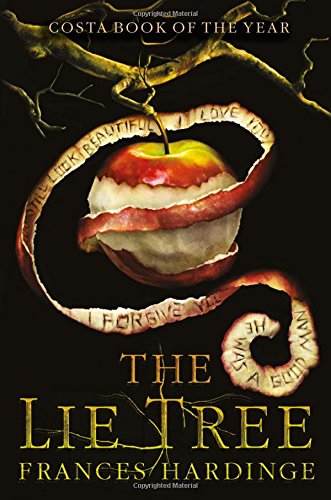
                • Cover of The Lie Tree
                  The Lie Tree

                  Frances Hardinge · standalone novel · 2015

                  similar byhistorical fantasy19th centurycoming of age+1 more

                  The Lie Tree is the seventh children's historical fantasy novel by Frances Hardinge, published in 2015 by Macmillan Publishers. The book won the 2015 Costa Book of the Year.

                • Cover of The Stress of Her Regard Universe
                  The Stress of Her Regard Universe

                  series · 3 books · 1989

                  similar bydarkhistorical fantasy19th century

                  Tim Powers's The Stress of Her Regard reimagines the lives of Byron, Shelley, and Keats through a secret history in which they are stalked and inspired by a nephilim, a shape-shifting vampiric being that acts as a deadly muse. Physician Michael Crawford is drawn into their orbit after inadvertently marrying himself to one of the creatures, setting off a pursuit across the Alps to break her hold on him. The 2012 sequel, Hide Me Among the Graves, moves the same secret history forward into Victorian London.

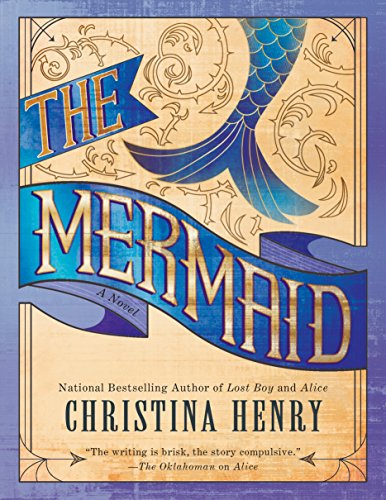
                • Cover of The Mermaid
                  The Mermaid

                  Christina Henry · standalone novel · 2018

                  similar byhistorical fantasydarknorth america19th century

                  Once there was a mermaid called Amelia who could never be content in the sea, a mermaid who longed to know all the world and all its wonders, and so she came to live on land. Once there was a man called P. T. Barnum, a man who longed to make his fortune by selling the wondrous and miraculous, and there is nothing more miraculous than a real mermaid. Amelia agrees to play the mermaid for Barnum and walk among men in their world, believing she can leave anytime she likes. But Barnum has never given up a money-making scheme in his life.

                • Cover of The Hunger
                  The Hunger

                  Alma Katsu · standalone novel · 2018

                  similar bydarknorth america19th century+1 more

                  Fictionalized supernatural/horror treatment of the Donner Party.

                • Cover of Gemma Doyle
                  Gemma Doyle

                  series · 4 books · 2003

                  similar byhistorical fantasy19th centurycoming of age+1 more

                  The Gemma Doyle Trilogy is a trilogy of fantasy novels by American writer Libba Bray. They are told from the perspective of Gemma Doyle, a girl in the late nineteenth century. The Gemma Doyle Trilogy consists of three books: A Great and Terrible Beauty, Rebel Angels, and The Sweet Far Thing.

                • Cover of Earthseed
                  Earthseed

                  series · 7 books · 1993

                  similar bydarknorth america+2 more

                  Octavia E. Butler's Earthseed novels, Parable of the Sower and Parable of the Talents, follow Lauren Olamina as she survives the collapse of a climate-ravaged, near-future United States and founds a belief system built on the idea that "God is Change." The two-book series was left unfinished at Butler's death; a planned third novel, Parable of the Trickster, was never completed. Later graphic-novel adaptations retell the same two stories rather than continuing the narrative.

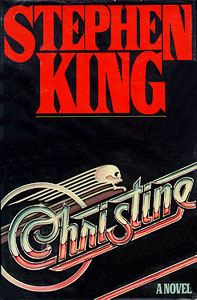
                • Cover of Christine
                  Christine

                  Stephen King · standalone novel · 1983

                  similar bydarknorth americacoming of age

                  Christine is a horror novel by American writer Stephen King, published in 1983. It tells the story of a car possessed by malevolent supernatural forces.

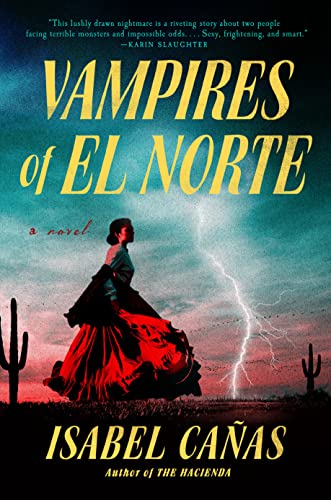
                • Cover of Vampires of El Norte
                  Vampires of El Norte

                  Isabel Cañas · standalone novel · 2023

                  similar byhistorical fantasynorth america19th century+1 more

                  Vampires of El Norte is a 2023 novel by Isabel Cañas. The novel centers on the romance between Nena, daughter of a ranchero, and the vaquero Néstor. The novel takes place during the Mexican–American War, with the addition of vampires.

                • Cover of My Brother's Keeper
                  My Brother's Keeper

                  Tim Powers · standalone novel · 2023

                  similar byhistorical fantasydark19th century

                  This is a ghost story. It is a story about werewolves, and things that go bump in the night. It is a story of an ill-fated land, the pathless moors of Northern England so well chronicled in Wuthering Heights. And it is the story of a real family whose destiny it is to deal with this darkly glamorous and dangerous world. When young Emily Brontë helps a wounded man she finds at the foot of an ancient pagan shrine in the remote Yorkshire moors, her life becomes contentiously entwined with his. He is Alcuin Curzon, embittered member of a sect working to eradicate the resurgent plague of lycanthropy in Europe and northern England. But Emily’s father, curate of the Haworth village church, is responsible for having unwittingly brought a demonic werewolf god to Yorkshire forty years ago—and it is taking possession of Emily’s beloved but foolish and dissolute brother. Curzon must regard Emily’s family as a dire threat. In spite of being at deadly odds, Emily and Curzon find themselves thrown together in fighting werewolves, confronting pagan gods, even saving each other from the lures of moorland demons. And in a final battle that sweeps from the haunted village of Haworth to a monstrous shrine far out on the moors, the two of them must be reluctant allies against an ancient power that seems likely to take their souls as well as their lives.

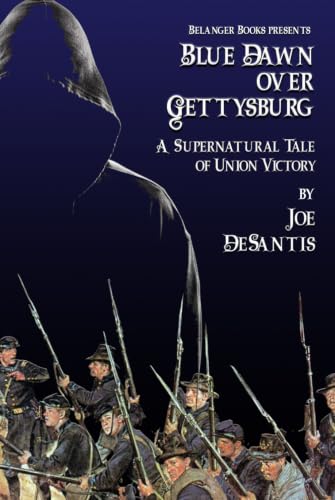
                • Cover of Blue Dawn Over Gettysburg
                  Blue Dawn Over Gettysburg

                  Joe DeSantis · standalone novel · 2008

                  similar byhistorical fantasynorth america19th century+1 more

                  A newly turned vampire escapes from his master and tries to use his abilities to win the battle of Gettysburg and the US Civil War for the North.

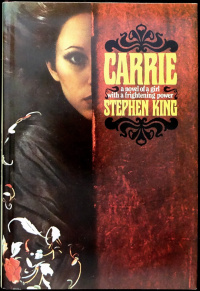
                • Cover of Carrie
                  Carrie

                  Stephen King · standalone novel · 1974

                  similar bydarknorth americacoming of age

                  In one way or another, everybody abused Carrie. This sixteen-year-old misfit was forbidden everything that was young and fun by her fanatical mother. She was teased and taunted by her classmates, misunderstood by her teachers, and given up as hopeless by almost everyone. But Carrie had a secret: She possessed terrifying telekinetic powers that could make inanimate objects move, a lighted candle fall, or a door lock. Carrie could make all kinds of startling bizarre, and malevolent things happen. (WorldCat)

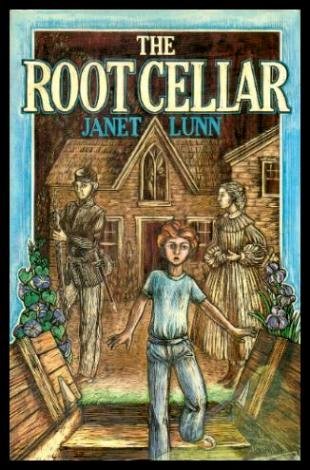
                • Cover of The Root Cellar
                  The Root Cellar

                  Janet Lunn · standalone novel · 1981

                  similar byhistorical fantasynorth america19th centurycoming of age

                  The Root Cellar is a children's historical novel by Janet Lunn that is set in the 1980s, although much of the action takes place in the 1860s. It follows Rose Larkin, an orphan, who travels temporally back and forth between Ontario, Canada, of the 1980s and various settings of U.S. Civil War in the 1860s. This time travel is done through the root cellar of the title.

                • Cover of Feed
                  Feed

                  M. T. Anderson · standalone novel · 2002

                  similar bydarknorth americacoming of age

                  Feed (2002) is a cyberpunk, satirical, dystopian, young-adult novel by M. T. Anderson, focusing on issues such as American hegemony, corporate power, consumerism, information technology, data mining, and environmental decline, with a sometimes sardonic, sometimes somber tone. From the first-person perspective of a teenaged boy, the book takes place in a near-futuristic American culture completely dominated by advertising and corporate exploitation, corresponding to the enormous popularity of internetworking brain implants called feeds.