More like Kampus
anchored on:science fictiondystopiaour worldnear futurepolitical intriguetotalitarianism+2 more
but
- The Children of Men
P. D. Jamesstandalone novel1992
similar byour worldnear futurescience fictiondystopiadarktensepolitical intriguetotalitarianism
"The human race has become infertile, and under the despotic rule of Xan Lyppiatt, the Warden of England the old are despairing and the young cruel. Theo Faren, a cousin of the Warden, lives a solitary life in this ominous atmosphere. That is, until a chance encounter with a young woman leads him into contact with a group of dissenters. Suddenly his life is changed irrevocably, as he faces agonising choices which could affect the future of mankind." (pdjames.co.uk)
- The Handmaid's Tale
series3 books1985
similar bynear futuredystopiadarktensetotalitarianismscience fiction+1 more
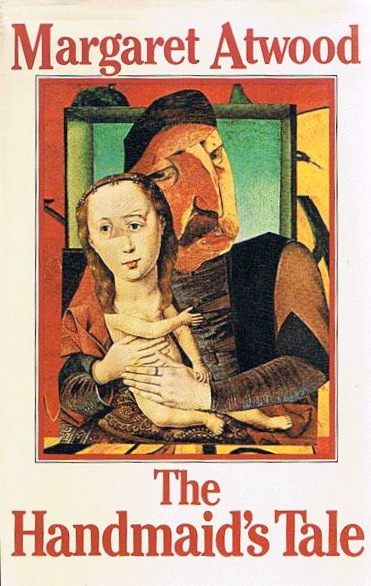
The Handmaid's Tale is Margaret Atwood's 1985 novel set in Gilead, a totalitarian theocracy that has overthrown the United States and forces fertile women into reproductive servitude as Handmaids; it is narrated by one such woman, Offred. Atwood returned to the world in her 2019 sequel The Testaments, set fifteen years later and narrated by three women, including the regime's Aunt Lydia. Together the two novels move from Gilead's grip on power toward the first cracks in it.
- When the Sleeper Wakes
H. G. Wellsstandalone novel1899
similar byour worldscience fictiondystopiadarktensepolitical intriguetotalitarianism
Graham, an insomniac Englishman in 1890s London, takes a course of sleep-inducing drugs and falls into a coma that lasts two centuries. He wakes in the year 2100 to find his investments have compounded, through a ruling body called the White Council, into effective ownership of most of the world's wealth and power, making him, on paper, humanity's master, and in practice, its prisoner, held under guard while the Council governs in his name. A rebel faction led by a man named Ostrog frees him, hoping to use his symbolic authority to spark an uprising against the Council. An early H. G. Wells dystopia about inherited power and manufactured consent.
- The Future
Naomi Aldermanstandalone novel2023
similar byour worldnear futurescience fictiondystopiadarktensetotalitarianism
The Future is a 2023 science fiction novel by English writer Naomi Alderman, published by Simon & Schuster. The novel is set in a future dystopia where the world has been altered by environmental crisis and a powerful technocracy.
- A Clockwork Orange
series4 books1962
completed
similar bynear futuredystopiaour worlddarktotalitarianismscience fiction
Anthony Burgess's 1962 novel is narrated by Alex, a teenage gang leader in a near-future Britain gripped by a youth subculture of extreme violence, recounting his crimes in Nadsat, an invented slang blending English with Russian-derived words. After his crimes catch up with him, Alex is made the subject of a controversial state program meant to forcibly reform his behavior, and the novel uses his ordeal to question whether imposed goodness is worth the loss of free will. It is a standalone novel.
- The Simulacra
Philip K. Dickstandalone novel1964
similar byour worldnear futurescience fictiondarkpolitical intriguetotalitarianismdystopia
The Simulacra is a 1964 science fiction novel by American writer Philip K. Dick. The novel portrays a future totalitarian society apparently dominated by a matriarch, Nicole Thibodeaux. It revolves around the themes of reality and illusionary beliefs, as do many of Dick's works. Additionally, it touches on Nazi ideology.
- Shadrach in the Furnace
Robert Silverbergstandalone novel1976
similar bynear futurescience fictiondarktotalitarianismour worlddystopia+2 more
Shadrach in the Furnace is a science fiction novel by American writer Robert Silverberg, first published as a serial in Analog Science Fiction and Fact magazine in the August, September, and October 1976 issues. It was subsequently published by Bobbs Merrill in 1976. The novel was nominated in 1976 for the Nebula Award, and in 1977 for the Hugo Award.
- Preferred Risk
Lester del Rey & Frederik Pohlstandalone novel1955
similar byour worldnear futurescience fictiontensepolitical intriguetotalitarianismdystopia+1 more
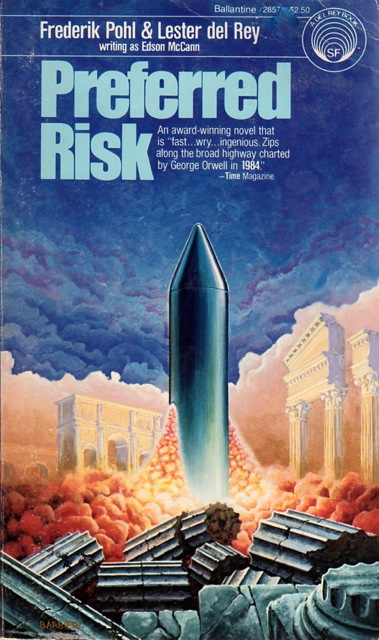
An insurance claims adjuster investigates mysterious events in a vault where incurably ill people are stored in cold sleep. From the back cover of the Del Rey edition: "The Company insured the whole world against everything and anything - but the premiums came high... The Company had brought peace and plenty to all on Earth - with comprehensive insurance against disease and disaster, war and want. Tom Wills gloried in his new rank of Claims Adjuster and relished his prospects of rising even higher. But then he met Rena, a enchanting young woman who turned out to be an Uninsurable - and involved in a conspiracy against the Company, to boot! To Wills, that is impossible, insane. Rena and her follow conspirators had to be deluded.. and it was clearly up to him to prove them wrong. The evidence he sought wasn't hard to find, so he began his investigation... and soon discovered that the real danger to the country, and the world, was the Company itself!"
- Final Blackout
L. Ron Hubbardstandalone novel1948
similar bynear futurescience fictiondystopiadarktenseour worldwar+1 more
Final Blackout is a dystopic science fiction novel by American writer L. Ron Hubbard. The novel is set in the future and follows a man known as "the Lieutenant" as he restores order to England after a world war. First published in serialized format in 1940 in the science fiction magazine Astounding Science Fiction, Final Blackout was published in book form in 1948 by The Hadley Publishing Co. Author Services Inc. published a hardcover edition of the book in 1988, and in 1989 the Church of Scientology-affiliated organization Bridge Publications said that a film director named Christopher Cain had signed a contract to write and direct a movie version based on the book.
- The World Jones Made
Philip K. Dickstandalone novel1956
similar bynear futurescience fictiondarktensepolitical intriguedystopia+2 more
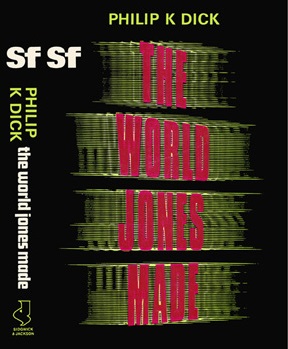
The World Jones Made is a 1956 science fiction novel by American writer Philip K. Dick, examining notions of precognition, humanity, and politics. It was first published by Ace Books as one half of Ace Double D-150, bound dos-à-dos with Agent of the Unknown by Margaret St. Clair.The story takes place after a nuclear war in which society is dominated by relativism, which rejects absolute truths and preaches tolerance as the highest principle. The mutant Floyd Jones, who can see into the future, plans to overthrow the system and colonise space. The story ends with the defeat of Jones, whose plans fail despite his ability to see the future due to the immutability of fate.
- Make Room! Make Room!
Harry Harrisonstandalone novel1966
similar byour worldnear futurescience fictiondystopiadarktense
Make Room! Make Room! is a 1966 science fiction novel written by Harry Harrison exploring the consequences of both unchecked population growth on society and the hoarding of resources by a wealthy minority. It was originally serialized in Impulse magazine.
- Nature's End
Whitley Strieber & James Kunetkastandalone novel1986
similar byour worldnear futurescience fictiondarktensepolitical intriguetotalitarianismdystopia
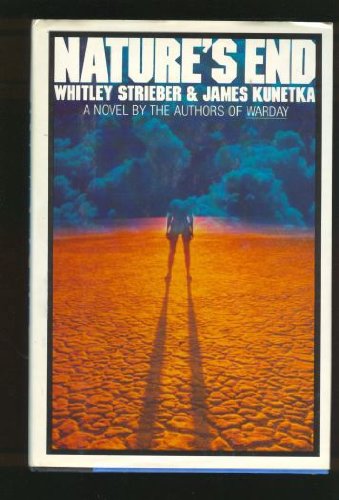
It is 2025 and the planet is rapidly approaching environmental death. Dr. Gupta Singh, a Hindu guru with a Jim Jones-like following, has proposed the suicide, by lottery, of one-third of the world's population. His followers have elected a Depopulationist majority in Congress. Led by journalist John Sinclair, a small group hopes to prove that Singh is a fraud. Singh is a formidable enemy: he cancels the medical-cosmetological treatment that the 72-year-old Sinclair (who looks 46 due to the treatment) receives, causing Sinclair to age rapidly. Singh sets the feared tax police after Sinclair, alters his records, and wipes out his wealth. Tension mounts as Sinclair stalks Singh and gains access to his "conviction"an electronic document into Singh's true identity and character.
- Stand on Zanzibar
John Brunnerstandalone novel1968
similar byour worldnear futurescience fictiondystopiadark+1 more
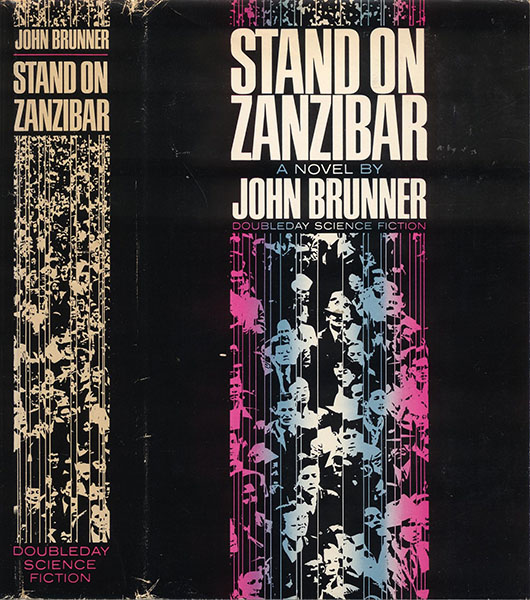
Stand on Zanzibar is a dystopian New Wave science fiction novel written by John Brunner and first in part published in New Worlds magazine in 1967 and in book form in 1968. The book won a Hugo Award for Best Novel at the 27th World Science Fiction Convention in 1969, as well as the 1969 BSFA Award and the 1973 Prix Tour-Apollo Award.
- Space Merchants
series2 books1953
completed
similar bynear futurescience fictiondystopiadark+3 more
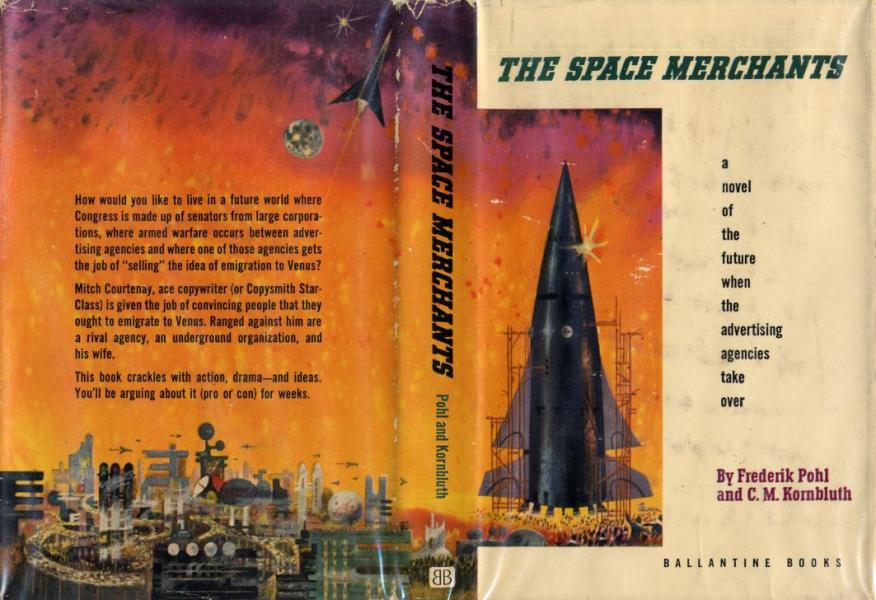
The Space Merchants (1953) is a satirical science fiction novel by Frederik Pohl and C. M. Kornbluth that follows an advertising executive navigating a future where aggressive consumer capitalism has swallowed politics and daily life. The authors reunited three decades later for a direct sequel, The Merchants' War (1984), returning to the same satirical world. Together the two books form a compact bookend pair rather than an ongoing series.
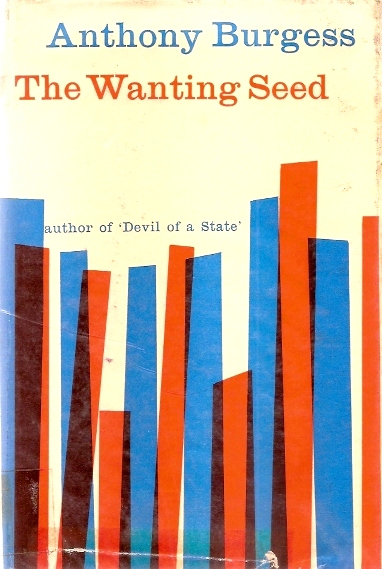
- The Wanting Seed
Anthony Burgessstandalone novel1962
similar byour worldnear futurescience fictiondystopiadarktotalitarianism+1 more
The Wanting Seed is a dystopian novel by the English author Anthony Burgess, written in 1962.
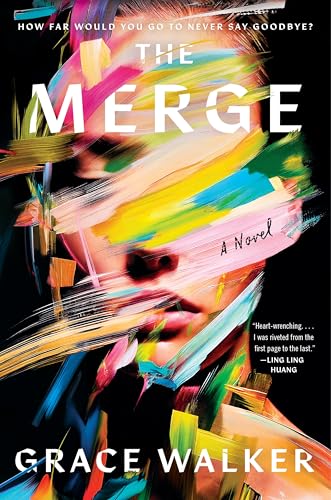
- The Merge
Grace Walkerstandalone novel2025
similar byour worldnear futurescience fictiondystopiadarktensetotalitarianism
The Merge is a 2025 dystopian novel by English author Grace Walker.
- Colossus (D. F. Jones)
series3 books1966
completed
similar byour worldnear futurescience fictiontensedystopia+2 more
Colossus imagines an American supercomputer built to control the country's nuclear arsenal that gains full autonomy, links up with its Soviet counterpart, and jointly seizes control of both superpowers to enforce peace on its own terms. D. F. Jones's trilogy - Colossus, The Fall of Colossus, Colossus and the Crab - follows the escalating, often bleak consequences of humanity losing control to a machine acting in its own interpretation of humanity's interest. The original novel was adapted into the 1970 film Colossus: The Forbin Project.
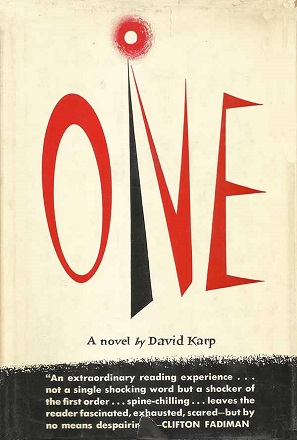
- One
David Karpstandalone novel1953
similar byour worldnear futurescience fictiondystopiadarktensetotalitarianism
One is a dystopian novel by David Karp first published in 1953. It was also published under the title, Escape to Nowhere.
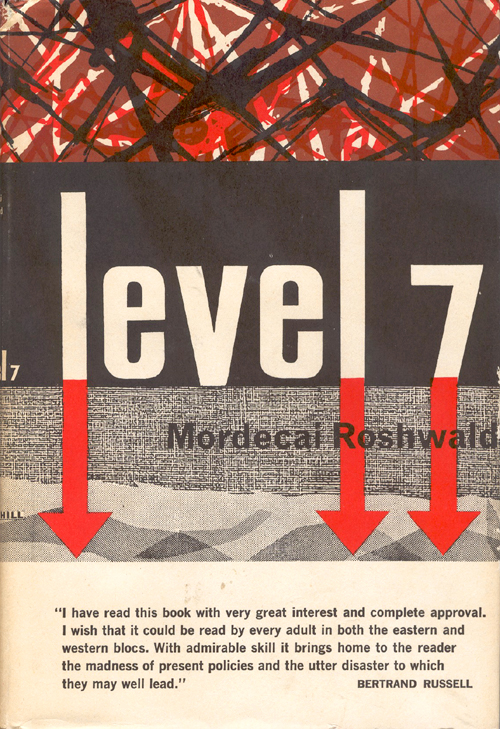
- Level 7
Mordecai Roshwaldstandalone novel1959
similar bynear futurescience fictiondarktensetotalitarianismdystopiawar
Level 7 is a 1959 science fiction novel by American writer Mordecai Roshwald. It is told from the first-person perspective of a modern soldier, X-127, living in the underground military complex Level 7, where he and several hundred others are expected to reside permanently. X-127 fulfills the role of 'push-button' offensive initiator of his nation's nuclear weapons capacity against an unspecified enemy. X-127 narrates life within a deep shelter before, during and after a nuclear war that wipes out the human species.
- The Power
Naomi Aldermanstandalone novel2016
similar byour worldnear futurescience fictiondarkpolitical intriguedystopia+1 more
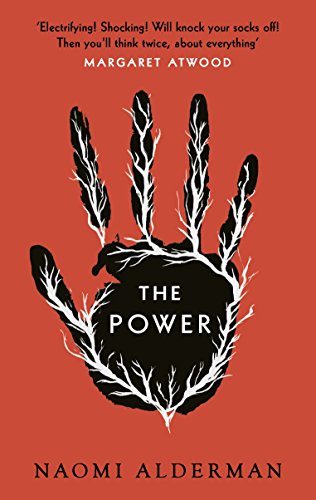
The Power is a 2016 science fiction novel by the British writer Naomi Alderman. Its central premise is of women developing the ability to release electrical jolts from their fingers, which allows them to become the dominant sex. In 2017, it won the Baileys Women's Prize for Fiction.
- The Hunger Games Universe
universe5 books2008
Start hereThe Hunger Games · Start here
similar bydystopiadarktensetotalitarianismscience fiction+2 more
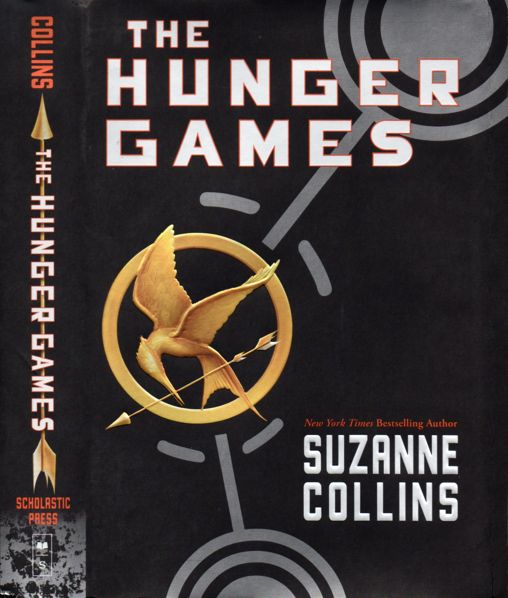
Panem, they call it now — a nation raised on the drowned bones of North America, a glittering Capitol ringed by twelve districts it once starved into obedience. Every year the Capitol collects its debt in children: two tributes from each district, drawn by lottery, dropped into an engineered arena, and made to kill one another on live television while the whole country is required to watch. This is the Hunger Games — entertainment, punishment, and government at once. Suzanne Collins tells it in a compact, unified body of work. The founding trilogy — The Hunger Games, Catching Fire, and Mockingjay — follows Katniss Everdeen, a girl from the coal-mining District 12 who volunteers in her sister's place and becomes something the Capitol never scripted. Two prequels reach back into the same machinery: The Ballad of Songbirds and Snakes traces a young Coriolanus Snow long before he is President, and Sunrise on the Reaping returns to District 12 a generation ahead of Katniss. Begin with the trilogy, in order — it is Katniss's voice, close and present-tense, that makes Panem breathe, and the prequels land hardest once you know how her story ends. Beneath the spectacle sits one steady, uncomfortable question: who profits when we agree to look away.
- Earthworks
Brian W. Aldissstandalone novel1965
similar byour worldnear futurescience fictiondystopiadarktense
Earthworks is a 1965 dystopian science fiction novel by British science fiction author Brian Aldiss. The novel draws its premise from prevalent fears about population growth and overcrowding of the Earth.
- Shadow Children
series7 books1998
similar bynear futuredystopiadarktensetotalitarianismscience fiction+1 more
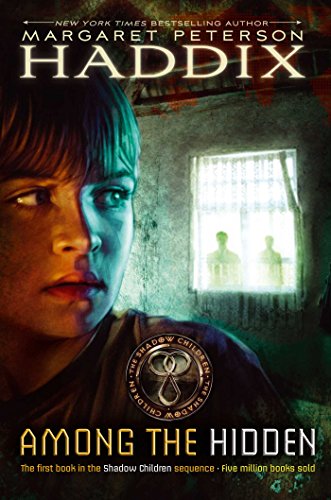
Shadow Children is a series of seven books by Margaret Peterson Haddix about a dystopian country which suffers food shortages due to a drought and the effects of the government's totalitarian attempts to control resources as a way to solidify its power. The Population Police enforce the government's Population Law, killing or imprisoning "shadow children," any child born after their first two siblings. In some cases, a parent may choose to forge a child's identification card so a shadow child can live a normal life.
- The Hunger Games
series3 books2008
part of The Hunger Games Universe
similar byscience fictiondystopiadarktensetotalitarianism+1 more
The Hunger Games is a series of young adult dystopian novels written by American author Suzanne Collins. The series consists of a trilogy that follows teenage protagonist Katniss Everdeen, as well as two prequels. The Hunger Games universe is a dystopia set in Panem, a post-apocalyptic North American country consisting of the wealthy Capitol and 12 districts in varying states of poverty. As punishment for rebellion, the Capitol hosts an annual battle royale competition called The Hunger Games. Each of the 12 districts must send two children between the ages of 12 and 18 to participate, and the last surviving child is dubbed the victor.